作者: admin

  • Valle Nuevo National Park remains public, Environment Ministry clarifies

    Valle Nuevo National Park remains public, Environment Ministry clarifies

    SANTO DOMINGO – Recent circulating speculation around the privatization of the Dominican Republic’s iconic Valle Nuevo National Park has been formally debunked by the nation’s Ministry of Environment and Natural Resources, which confirmed the protected conservation area remains fully public and open to all visitors.

    Tourists and local outdoor enthusiasts can still access and explore the full expanse of the park by paying the standard RD$150 entry fee, the same rate that has been in place for general admission for years.

    The confusion stemmed from a newly implemented separate camping fee that applies exclusively to a newly zoned section of the park called the “Garden of Eden”, a purpose-built area designed specifically to organize and accommodate overnight camping stays. Ministry authorities explained that the new zoning and fee structure was created to address longstanding issues with unregulated camping, which had gone unmonitored for years and caused measurable harm to the park’s fragile native ecosystem.

    First launched in 2021, the zoned camping initiative was developed to advance the goal of sustainable recreation across the country’s protected areas. The Garden of Eden operates with low-impact infrastructure, integrated environmental education programming for visitors, and strictly controlled visitor capacity to limit ecological disruption.

    Officials emphasized that the site operates under an ecotourism concession model, a framework that permits licensed private operators to manage visitor services within the zone – but does not in any way transfer ownership of the public land to private entities. Valle Nuevo National Park remains fully public property under continuous government oversight, and the new camping model is just one part of a broader national strategy to improve conservation outcomes and visitor management across the Dominican Republic’s National System of Protected Areas.

    This concession model is not new to the country’s protected park network. Several other well-known Dominican conservation and recreation sites already operate under the same structure, including Cotubanamá National Park (which encompasses the popular tourist destination Saona Island), Catalina Island, and Damajagua Falls.

  • Saint Kitts and Nevis Government slashes import duties for fully electric vehicles

    Saint Kitts and Nevis Government slashes import duties for fully electric vehicles

    Basseterre, Saint Kitts – In a bold policy move designed to accelerate the Caribbean nation’s transition to low-carbon transportation, the government of Saint Kitts and Nevis has announced a 35-percentage-point cut to import duties on fully electric vehicles under four years old. The sweeping reduction, which will lower import taxes from 45 percent to just 10 percent, takes effect May 1, 2026.

    Energy Minister Konris Maynard unveiled the new measure during an official launch ceremony for two groundbreaking national sustainability programs – Solar Integration for Sustainable Energy (SOLARISE) and Decarbonised Roadway Initiative for Vehicle Electrification (DRIVE) – held at the CUNA Conference Room on April 30.

    Maynard emphasized that the tariff cut is far more than a minor policy adjustment, framing it as a transformative shift for the country’s transportation and energy sectors. “This government is about accelerating the transition to electric mobility and electric vehicles,” he told attendees, noting that the steep reduction is intended to remove a key financial barrier to EV adoption for local residents and citizens.

    Beyond making the initial purchase of electric vehicles more accessible, Maynard – a personal EV owner himself – pointed to the ongoing financial benefits that come with electric transportation. Owners of EVs routinely see far lower costs for fuel, regular operation, and routine maintenance compared to drivers of traditional gas-powered vehicles, he explained.

    The policy forms a core part of the government’s broader long-term strategy to build a more resilient national energy system, modernize the country’s transportation infrastructure, diversify the local economy, and position Saint Kitts and Nevis to compete effectively in an increasingly decarbonized global economy.

    The launch of both the SOLARISE and DRIVE initiatives, along with the accompanying tariff cut, drew full high-level support from the national Cabinet, including Prime Minister Dr. Terrance Drew, Deputy Prime Minister Dr. Geoffrey Hanley, Tourism Minister Marsha Henderson, Sustainable Development Minister Dr. Joyelle Clarke, and Social Development Minister Isalean Phillip. This cross-government backing signals the country’s unified commitment to advancing its climate and sustainability goals.

  • Public Works announces temporary closure of Tiradentes Avenue overpass

    Public Works announces temporary closure of Tiradentes Avenue overpass

    A major infrastructure upgrade project in Santo Domingo is set to trigger a temporary full traffic shutdown on a key urban overpass, with local transportation authorities releasing detailed timelines and contingency context for the upcoming disruption.

    The country’s Ministry of Public Works and Communications confirmed that the overpass linking two of the city’s busiest thoroughfares, Tiradentes Avenue and 27 de Febrero Avenue, will be closed to all vehicle traffic starting at 10:00 p.m. on Saturday, May 2. The shutdown will extend through the weekend, with the overpass scheduled to reopen to motorists by 4:00 a.m. the following Monday.

    In a public statement addressing the closure, project leaders noted that the decision to concentrate all rehabilitation work within an overnight weekend window was a deliberate strategic choice. By scheduling the entire intervention during off-peak hours, authorities aim to strike a balance between advancing critical infrastructure updates and limiting the impact of the shutdown on the city’s daily commuting routines. This timing also creates a safer working environment for construction crews carrying out rehabilitation tasks, while reducing the risk of accidents that could occur if work progressed alongside active heavy traffic.

    Public works officials acknowledged that even with the carefully planned weekend timing, the temporary restriction will likely force thousands of regular drivers to adjust their travel routes over the closure period. However, they stressed that the long-term benefits of the project far outweigh the short-term inconvenience. The ongoing rehabilitation work is designed to address aging infrastructure, boost overall road safety for all users, extend the service life of the overpass, and improve the long-term functionality of this key urban connection for years to come.

  • Gonsalves attempts to use IMF report to rally ULP supporters

    Gonsalves attempts to use IMF report to rally ULP supporters

    Five months after the Unity Labour Party (ULP) ended its 24-year consecutive rule over St. Vincent and the Grenadines (SVG), veteran opposition leader and former prime minister Ralph Gonsalves is leveraging a newly released International Monetary Fund economic assessment to mobilize his base and push for an early reversal of the electorate’s decision. The 80-year-old leader, who remains head of the ULP despite the party’s historic electoral defeat, laid out his political campaign in an hours-long broadcast on the ULP-owned Star Radio’s popular “Morning Comrade” show Wednesday.

    In the December 2024 general election, the New Democratic Party (NDP) secured the most lopsided electoral victory in SVG since 1989, beating the ULP by more than 10,000 popular votes. The election saw a dramatic shakeup within the ULP: while Gonsalves retained his own parliamentary seat, both his son Camillo Gonsalves, the former finance minister, and Saboto Caesar, former agriculture minister and a leading contender to succeed the elder Gonsalves, lost their seats. With former deputy leader Montgomery Daniel, 70, retiring from politics last year, the ULP has not yet filled the deputy leadership position after delaying a vote at its 2022 convention.

    On Tuesday, one day before Gonsalves’ broadcast, sitting Prime Minister Godwin Friday upheld his pledge to government transparency by hosting a joint press conference with the Washington-based IMF team to announce the preliminary findings of the fund’s annual Article IV Consultation, a routine assessment SVG completed during every ULP administration. Friday confirmed that while the IMF identified a need for targeted economic reform, his NDP government will develop a locally led economic stabilization program that centers national ownership of the recovery process. He also emphasized that policy adjustments will prioritize protecting the country’s most vulnerable vulnerable populations from hardship. The full IMF staff report and executive board concluding statement are expected to be published at a later date, with additional detail on the fund’s full assessment and policy recommendations.

    Gonsalves seized on the consultation results to frame the new government’s economic approach as illegitimate, arguing that voters made a mistake when they ousted the ULP after more than two decades in power, and now have a political duty to correct that error as quickly as possible. He positioned the conflict as a clear clash of competing economic visions: rejecting what he called the IMF and NDP’s “austerity message,” he argued that the ULP’s platform prioritizes prudence, enterprise, and inclusive growth that benefits all segments of SVG society. Gonsalves called on all ULP party bodies, from constituency councils to national leadership, to activate immediately, announcing that a national council meeting is scheduled for next month to lay the groundwork for the ULP’s return to power.

    This is not the first time in less than a month that Gonsalves has leveraged a current policy debate to rally ULP supporters. Earlier in February, he mobilized opposition to a proposed constitutional amendment put forward by the NDP, framing the change as a self-serving “insurance policy” the governing party introduced to counter the ULP’s ongoing election petitions, which challenge the eligibility of Friday and Foreign Affairs Minister Dwight Fitzgerald Bramble over their dual Canadian citizenship. Friday responded that the amendment will be referred to a parliamentary select committee, and no floor vote or debate will be held until broad public consultation is completed.

  • Gonsalves rejects IMF proposals, embraces statements favourable to ULP

    Gonsalves rejects IMF proposals, embraces statements favourable to ULP

    A sharp political debate has erupted in St. Vincent and the Grenadines after the International Monetary Fund presented its annual economic assessment to the island nation’s new five-month-old administration, drawing fierce criticism from the former ruling party leader who claims the proposed austerity measures will disproportionately harm low-income workers and the growing middle class.

    Ralph Gonsalves, head of the Unity Labour Party (ULP), stepped into the fray shortly after the IMF concluded its 2026 Article IV consultation — the Fund’s mandatory annual economic health check for member states — with a public press conference hosted in Kingstown on Tuesday. The ULP, which held power for 25 consecutive years, was ousted in the November 2025 general election, winning just one of 15 parliamentary seats against Prime Minister Godwin Friday’s New Democratic Party (NDP).

    Gonsalves argues that the IMF’s proposed austerity framework directly contradicts the fiscally prudent, growth-focused economic philosophy his administration advanced during its time in office. “The main issue is they want to impose an austerity programme, which is a wrong and dangerous idea,” Gonsalves stated in his response to the Fund’s recommendations. He warned that the policies, which the IMF is pushing the young NDP government to adopt, would deepen poverty for the nation’s most vulnerable residents and reverse economic gains that lifted many working-class people into the middle class. “Those who are poor it gonna make you poorer… Those who came out of poverty and into the middle class it will drag you down, back into poverty,” he added.

    The Tuesday press conference marked a break from long-standing practice in SVG: for the first time, the IMF’s mission chief for the country presented the Fund’s conclusions directly to the public, rather than having findings filtered through the sitting administration’s partisan framing — a norm that prevailed during Gonsalves’ two-and-a-half decades in office. Prime Minister Friday, who also serves as the nation’s finance minister, spoke before IMF Mission Chief Sergei Antoshin at the event, framing the public presentation as a core commitment of his new government to open governance.

    Friday emphasized that the Article IV consultation is a necessary, routine process that his administration takes extremely seriously. “We have to deal with situations as they are, not as we would like them to be,” he noted, adding that his government is prepared to address the nation’s economic challenges with honesty and pragmatism, prioritizing the best interests of all Vincentians. Having held office for just five months, Friday reiterated that his administration campaigned on a pledge of transparency, saying the public press conference is part of a broader commitment to keep citizens informed of every major policy challenge and decision the government faces. “Today’s session is a part of that process of engaging with the people of this country on important matters that confront them,” he said.

    But Gonsalves took issue not only with the substance of the IMF’s recommendations, but also with Friday’s decision to share the stage with Antoshin. The former prime minister claimed he never invited an IMF mission chief to appear alongside him at a public press conference during his tenure, arguing that Friday’s move amounts to the NDP leader hiding behind the Fund to push unpopular “bitter medicine” on the Vincentian public. Gonsalves accused the NDP government of a “mentality of submission” to the IMF, rather than pursuing genuine dialogue and pushing back against harmful policy prescriptions when necessary.

    The debate has also centered on SVG’s long-running high debt burden, which the IMF has repeatedly flagged as a critical risk to economic stability. As of December 31, 2025, the nation’s total national debt stood at 3.5 billion Eastern Caribbean dollars, equal to an estimated 113% to 120% of gross domestic product, per World Bank calculations. Antoshin noted during Tuesday’s press conference that SVG has been classified at high risk of debt distress since 2016.

    Gonsalves, who served as finance minister for 17 of his 25 years as prime minister, defended his administration’s debt record, pushing back against framing that links the rising debt to reckless public spending. He cited Antoshin’s own comments that growing fiscal deficits were driven by post-disaster relief and reconstruction efforts, large public infrastructure projects, and rising current expenditures. Gonsalves clarified that the major construction projects completed under his administration included critical public assets: primary and secondary schools, coastal and riverine flood defenses, community clinics, a new national hospital, an upgraded port, an international airport, and a national sports stadium.

    He also disputed characterizations of the debt portfolio as overly expensive, noting that total debt sits at 3.3 billion Eastern Caribbean dollars, 2.1 to 2.3 billion of which is low-interest external debt, with less than 1 billion in domestic debt held primarily in government bonds. “When they’re talking about the debt … the bulk of the debt is cheap, overwhelmingly,” Gonsalves said. He added that his administration had already agreed on a framework with the IMF to gradually reduce the debt-to-GDP ratio to 60% to 65% by 2035, putting the nation’s debt on a sustainable long-term trajectory.

    Full details of the IMF’s assessment and policy recommendations are expected to be released publicly in the coming weeks when the Fund publishes its full Article IV staff report and Executive Board concluding statement.

  • Olieprijzen stijgen naar hoogste niveau in weken

    Olieprijzen stijgen naar hoogste niveau in weken

    Global crude oil markets delivered a historic jump on Wednesday, with prices climbing more than 6% to close at their highest levels in weeks, driven by escalating fears of prolonged Middle Eastern supply disruptions following stalled negotiations between the United States and Iran. A larger-than-expected drawdown in U.S. commercial oil and fuel inventories further amplified upward price momentum, compounding already tight market conditions.

    June Brent crude futures, the global benchmark for oil prices, notched an eighth consecutive day of gains on Wednesday, settling up $6.77, or 6.1%, at $118.03 per barrel — its highest closing level since March 31. In post-market trading, the benchmark extended its rally to hit $120 per barrel, a threshold not crossed since June 2022. U.S. West Texas Intermediate (WTI) crude futures for the same delivery month rose $6.95, or 7%, to settle at $106.88 per barrel, the highest peak since April 7.

    Market anxiety deepened after a White House official confirmed that former U.S. President Donald Trump has asked domestic oil producers to outline mitigation strategies for a potential months-long closure of Iranian ports by U.S. sanctions. Calculations from Reuters show the ongoing geopolitical conflict centered on Iran has already cut off more than $50 billion worth of crude oil from global markets. “An extended port blockage would worsen existing supply disruptions and push prices even higher,” warned Yang An, a senior analyst at Haitong Futures.

    Data from the U.S. Energy Information Administration (EIA) added further fuel to the rally, reporting that U.S. crude inventories fell by more than 6 million barrels last week. That drawdown far outpaced the 200,000 barrel decline analysts had forecast. Both gasoline and distillate fuel stockpiles, a category that includes diesel, also dropped more sharply than predicted. The inventory declines sparked fresh concerns over potential shortages in the world’s largest fuel consumer just as the summer peak driving season, a period of historically high fuel demand, gets underway. Analysts at RBC Capital Markets noted that growing seasonal summer demand paired with ongoing supply restrictions will likely provide additional upward support for oil prices in coming weeks.

    In another development that underscores the severity of current supply chain disruptions, the Abu Dhabi National Oil Company (ADNOC) has notified some customers that it may shift loading of two crude grades to ports outside the Persian Gulf next month, as the Strait of Hormuz, one of the world’s most critical energy chokepoints, remains closed, according to sources and a document reviewed by Reuters. The prolonged closure of the strait, through which roughly 20% of global oil trade passes daily, has already placed severe pressure on global oil and gas supplies.

    Beyond immediate supply disruptions, investors are also assessing the long-term market impact of the United Arab Emirates’ (UAE) decision to withdraw from OPEC. Callum Macpherson, head of commodities at Investec, noted that most analysts expect little near-term market impact, as Middle Eastern producers are projected to maintain maximum output levels to capitalize on high prices.

    However, research firm Wood Mackenzie warned that the UAE’s exit marks the most significant rupture in OPEC’s decades-long history, and increases the risk of global oversupply that could push oil prices lower starting in 2027. Simon Flowers, chief analyst at Wood Mackenzie, explained that the departure will have minimal impact on 2026 market dynamics even if the Strait of Hormuz reopens, but after that point, losing one of OPEC’s most productive members will make it far harder for the cartel to balance global markets, amplifying risks of oversupply and downward price pressure.

    Amid widespread geopolitical and economic uncertainty, gold has also emerged as a standout asset for investors. On April 30, 2026, gold settled at $4,541 per troy ounce, marking a 44% increase from April 2025 and hitting an all-time record high. The sharp rally is widely attributed to growing geopolitical tensions, persistent inflation concerns, and broad global economic uncertainty. Top Wall Street banks are split on how high prices can go: analysts from JPMorgan and Bank of America project gold will climb toward $5,000 per troy ounce by the end of 2026, while strategists at UBS and Deutsche Bank forecast prices could surge above $6,000 per ounce this year.

  • CNTT President warns employment growth is concentrated in informal work

    CNTT President warns employment growth is concentrated in informal work

    On the occasion of International Workers’ Day, the top leader of the Dominican Republic’s largest transport workers’ organization has drawn public attention to a worrying discrepancy behind the country’s nominal employment gains over the last two years. Juan Marte, president of the National Confederation of Transport Workers (CNTT), revealed that total employment across the nation has expanded by roughly 5 percent since 2022 – but the overwhelming majority of these new positions have been created in the unregulated informal sector, not in formal, protected work arrangements.

    Marte specifically highlighted unregulated motorcycle taxi services as one of the single biggest drivers of informal job growth in the country. A large portion of the Dominican Republic’s registered and unregistered motorcycles are now deployed for commercial passenger transport, he explained, absorbing tens of thousands of workers who cannot find formal employment opportunities. Beyond motorcycle taxis, Marte outlined that the entire domestic transport sector – including licensed taxis, urban public transit, intercity bus routes, freight logistics, and other passenger services – generates approximately 200,000 total jobs across both formal and informal segments of the economy.

    A key point of concern raised by Marte is the rapidly growing share of immigrant workers filling informal transport roles, especially in the motorcycle taxi segment. He added that this pattern of over-reliance on informal immigrant labor extends beyond the transport sector, noting that core Dominican industries including agriculture, construction, and commercial food production have increasingly turned to non-domestic workers to fill labor gaps left by the absence of formal, attractive working conditions for local citizens.

    In his remarks centered on International Workers’ Day, Marte launched sharp criticism of the Dominican government for failing to implement targeted policy measures to protect formal workers and expand the number of regulated formal employment opportunities. He argued that systemic gaps in state support and labor regulation have pushed thousands of low-income Dominican citizens into unstable, high-risk informal work that offers little to no social protection or labor rights. Marte’s public comments echo widespread concerns shared by labor analysts and advocacy groups across the Dominican Republic, where informal labor has long persisted as one of the most defining structural characteristics of the national workforce.

  • Severe weather keeps four provinces on red alert in Dominican Republic

    Severe weather keeps four provinces on red alert in Dominican Republic

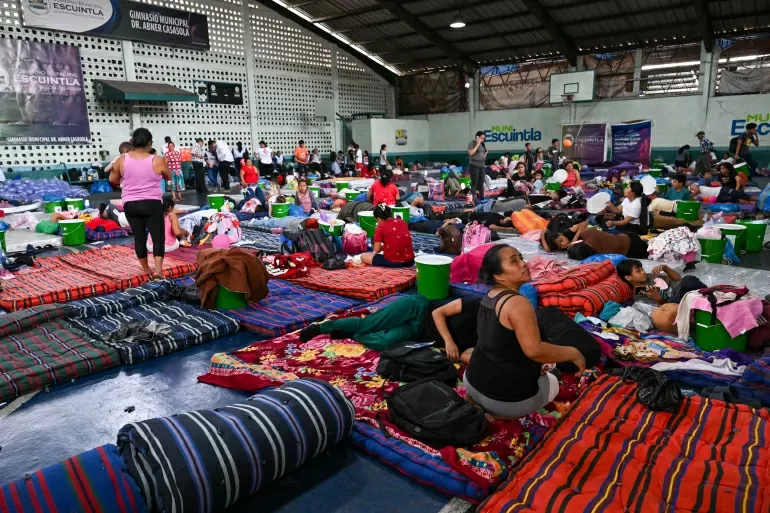
    A slow-moving atmospheric trough continues to dump relentless heavy rainfall across large swathes of the Dominican Republic, triggering a cascade of natural hazards that have left thousands displaced and critical infrastructure damaged, the nation’s Emergency Operations Center (COE) has confirmed. As of the latest official update, a three-tiered alert system remains in place, with four northern provinces – Monte Cristi, Puerto Plata, Valverde and Santiago Rodríguez – placed under the highest-level red alert, 15 additional regions under yellow alert, and a further seven under precautionary green alert.

    The unrelenting downpour has spawned a range of hazards across both urban and rural communities. Flash flooding has inundated low-lying neighborhoods and farmland, multiple rivers and small streams have burst their banks, and saturated hillsides have given way to landslides in scattered settlements across the affected zones. Official damage assessments paint a grim picture of the disaster’s human toll: more than 5,000 local residents have been forced to evacuate their homes to emergency shelters, while over 1,000 residential properties have sustained impacts ranging from minor flood damage to total destruction. Dozens of homes have suffered major structural compromise, and four dwellings have been completely lost to the weather event.

    Transportation networks have been heavily hit, with damaged roads and bridges cutting off access to 42 isolated communities that are yet to regain connection to surrounding areas. The nation’s water distribution network has also taken significant damage: 22 regional aqueducts are currently out of operation, cutting running water service to more than 300,000 registered users across the country. In response to the unfolding crisis, emergency response teams have been deployed across the hardest-hit zones, with 15 residents rescued from floodwaters in Santiago Rodríguez alone as of the latest report.

    Authorities have issued urgent public advisories warning all residents to avoid attempting to cross flooded roadways or swollen rivers, even if crossings appear passable. Drivers have been urged to reduce speeds and exercise extreme caution, as ongoing rainfall continues to cut visibility on roads across the alert zones. Meteorologists with the COE have extended warnings for continued precipitation across much of the nation in the coming days, with officials warning that the risk of further flooding and landslides will remain elevated until the trough system moves out of the region.

  • OPINION: Do Workers Feel Safe at Their Place of Work?

    OPINION: Do Workers Feel Safe at Their Place of Work?

    Workplaces hold dual realities for the global workforce: for too many, they are spaces rife with conflict, discrimination, chronic stress, and preventable hazards, while for others, they become protective environments where fundamental human rights are upheld. With the World Health Organization (WHO) estimating that nearly 60 percent of the global population participates in formal and informal work, the quality of workplace conditions directly shapes public health outcomes worldwide, making safe and healthy working conditions an inalienable human right rather than a discretionary perk.

    To draw global attention to the preventable burden of occupational harm, the international community marks April 28 annually as the World Day for Safety and Health at Work. The annual observance functions as a global awareness campaign, designed to highlight the scale of work-related injury and illness, and advocate for building a proactive culture of safety that cuts preventable deaths and disabilities across all industries.

    Decades of data from two leading global labor and health bodies, the WHO and the International Labour Organization (ILO), underscore the severity of the crisis: in 2016 alone, work-related accidents and diseases claimed an estimated 1.88 million lives, a toll that continues to rise as new threats emerge. Beyond long-recognized physical hazards, climate change has added a new layer of risk: climate-fueled extreme weather events cut working hours and output while exposing outdoor and vulnerable workers to life-threatening health and safety dangers.

    In recent years, the global conversation around occupational health has expanded far beyond physical injury and chemical exposure to prioritize mental health and psychosocial well-being, a shift accelerated dramatically by the COVID-19 pandemic. The crisis laid bare how unaddressed workplace mental health risks undermine both individual workers and economic productivity: the WHO estimates untreated depression and anxiety—conditions highly prevalent in toxic work environments—cost the global economy $1 trillion annually in lost output and reduced performance. A safe working environment that supports mental well-being, in turn, drives higher productivity, creating a mutually beneficial cycle for workers and employers.

    The psychosocial work environment, shaped by how roles are defined, work is organized, management practices are implemented, and workplace culture is cultivated, is a core determinant of worker health. Factors including unmanageable workloads, unclear role expectations, lack of autonomy, discrimination, and inadequate social support act as silent hazards that can trigger burnout, chronic stress, depression, and anxiety, just as surely as physical machinery or toxic chemicals pose tangible risks. Discriminatory scheduling practices, such as the overloading of teachers who lack administrative favor in educational systems, are just one common example of how harmful psychosocial working conditions erode worker well-being over time.

    Addressing these growing threats requires shared responsibility across all stakeholders. Governments bear the core obligation to build robust regulatory frameworks, enforce compliance through regular inspection systems, and establish public health infrastructure that supports sustainable, safe work for all. Employers are accountable for proactively designing safe working environments that address both physical and psychosocial hazards, including providing accessible mental health support, implementing fair scheduling and workload management, and offering regular health screenings and preventive care. Individual workers, meanwhile, have a role to play in following safety protocols, protecting themselves and their colleagues, and exercising their rights to participate in preventive safety measures.

    As the global community marks this annual observance, public health and labor advocates are calling for renewed commitment to prioritizing occupational health as a foundation for equitable, sustainable global development. As safety advocate Jerry Smith famously noted, “Safety isn’t expensive, it’s priceless”—a reminder that investing in worker well-being delivers returns that extend far beyond the workplace, to healthier communities and more inclusive economic growth.

  • Labour Week Message from the General Secretary, David Massiah

    Labour Week Message from the General Secretary, David Massiah

    As Antigua and Barbuda prepares to mark its annual celebration of workers, the Antigua & Barbuda Workers’ Union (ABWU) has launched this year’s Labour Week around the central theme: “Strengthening our Commitment to Social Development and Equity”. As a progressive, worker-first organization, the union emphasizes that decades-old labor protections are no longer sufficient to address the shifting demands of the modern workforce.

    This year’s commemoration carries deep historical roots: 74 years ago, in May 1951, Antigua and Barbuda officially recognized Labour Day as a public holiday for the first time. Working conditions in that era bore little resemblance to today’s landscape, defined by grueling 48-hour workweeks, minimal legal protections, widespread exploitation, and little guarantee of basic dignity on the job.

    The tide began to shift 16 years later, when the ABWU was founded in 1967, ushering in a new era of worker empowerment. Organized collective action through the union accelerated the creation of the Antigua Labour Code, a piece of legislation still widely considered one of the most comprehensive and progressive labor frameworks in the Caribbean region. This legal structure enshrined core protections for working people and set a regional benchmark for fair employment practices. The subsequent establishment of the national Social Security Scheme further strengthened worker stability, delivering critical support for retirement, guaranteed paid sick leave, and maternity protections that serve as a lifeline for working families across the twin island nation.

    Many of the ABWU’s earliest gains are traced to the tireless advocacy of founding leader Bro. Malcolm Daniel, whose landmark negotiations secured the reduction of the standard workweek from 48 hours to 40. That win was far more than a change to scheduling: it was a victory for human dignity, work-life balance, and the fundamental right of workers to spend quality time with their families.

    Today, standing on the foundation built by generations of organizers, activists, and striking workers, the ABWU celebrates the significant progress that has transformed work in Antigua and Barbuda, cementing fundamental labor rights and raising quality of life for workers across both islands. But union leaders warn that the global world of work is changing at an unprecedented pace, bringing new challenges that demand renewed commitment. The rise of artificial intelligence is reshaping entire industries, the informal gig economy is expanding rapidly, and remote work has become a permanent fixture for many sectors. These shifts bring new opportunities for flexibility and growth, but also create widespread uncertainty for working people, leaving gaps in existing protections.

    Against this backdrop, the ABWU says the core question facing workers and policymakers is how to continue advancing social development and equity in this new era. The union’s answer is sustained solidarity: remaining united, adaptive to change, and vigilant in protecting worker interests. Leaders stress that no matter how the workforce evolves, every worker is entitled to dignity, protected rights, and new benefits that boost quality of life. Workplaces, they argue, must never prioritize profit over the well-being of workers, and all people deserve fair living wages, financial stability, and freedom from exploitation and systemic discrimination.

    This Labour Week, the ABWU is issuing two key calls: first, for all workers across Antigua and Barbuda to stand together in collective solidarity, and second, for the national government to begin developing a formal framework for mandatory disability insurance for workers. Currently, the union notes that existing workers’ compensation programs fall far short of supporting workers who sustain permanent disabilities on the job, failing to cover ongoing living costs and leaving working families in vulnerable financial positions. This gap remains a top priority concern for the ABWU.

    As the nation heads toward Labour Day, the union is calling on all workers to renew their collective commitment to building a more equitable future for working people. All residents are invited to join this year’s official Labour Day Rally and March, scheduled for Monday, May 4 at the ABWU Headquarters on Lower Newgate Street. The event will serve as a public demonstration of worker unity, honoring the hard-won gains of the past while reaffirming the movement’s commitment to fighting for a better future for all working people in Antigua and Barbuda.