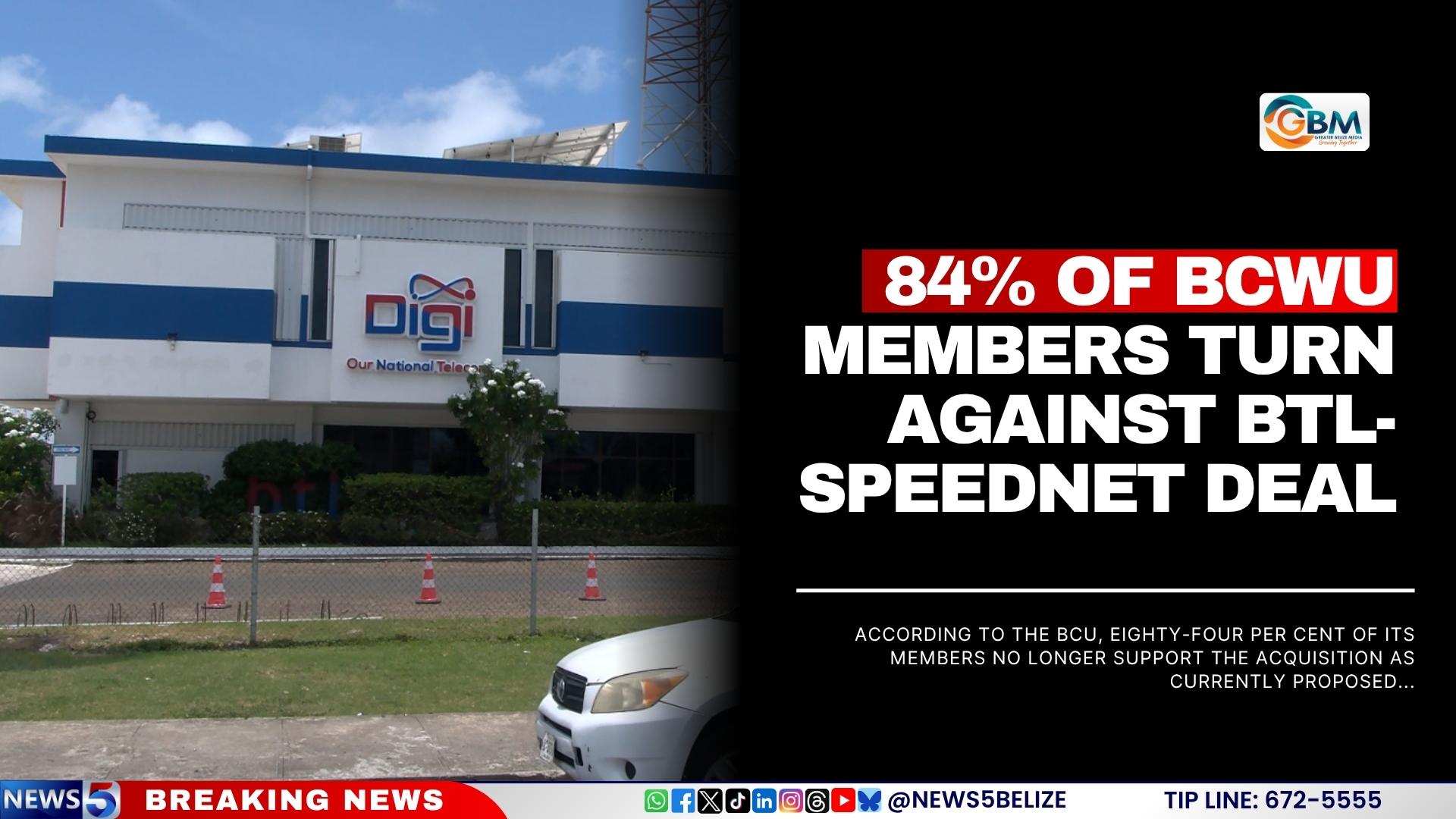
Nearly four years after initial reports of a potential industry consolidation first emerged in Belize’s telecommunications sector, a major turning point has arrived: 84 percent of members from the Belize Communications Workers Union (BCWU) have formally withdrawn their support for Belize Telemedia Limited’s (BTL) planned takeover of mobile network operator Speednet, which trades under the brand name SMART. This decisive shift in member sentiment followed an emergency gathering of union representatives held last Thursday, where votes were cast on the proposed deal after seven months of unresolvable negotiations with BTL leadership. The road to this rejection stretches back to January 9 of this year, when unconfirmed media reports first leaked word of BTL’s plans to acquire Speednet and associated cable assets. Reacting quickly to the lack of official communication, the BCWU requested an emergency meeting with BTL management just three days after the reports broke. At that initial meeting, union leaders emphasized that their members occupied multiple critical roles beyond just being BTL employees: many are also BTL shareholders, taxpayers contributing to national public funds, Social Security contributors, and private citizens with a direct personal and financial stake in how the acquisition shapes the country’s telecommunications industry. During that first meeting, the BCWU laid out a clear list of non-negotiable issues that required transparent clarification from BTL before any member support could be secured. Top priorities included binding guarantees for job security for all current BTL employees, a full breakdown of the real financial costs and long-term economic implications of the merger, public confirmation that all required procurement and regulatory approval processes had been followed correctly, answers to outstanding questions about post-merger corporate governance and public disclosure, clarity on whether existing Speednet employees would be allowed to join the BCWU after the acquisition is completed, and a commitment to a phased approval process that includes full, good-faith consultation with the National Trade Union Congress of Belize (NTUCB). In the months following that initial meeting, BTL leadership has only distributed a general employee bulletin that outlines the claimed national benefits of the deal, according to the BCWU. Union representatives note that this surface-level communication fails to address any of the specific, detailed concerns raised by their members, and far more direct engagement with affected workers is required to resolve open questions. Throughout the entire negotiation process, the BCWU says it has maintained a consistent stance calling for full transparency, timely two-way communication, formal consultation with relevant labor bodies, and good-faith negotiations with BTL’s executive team. The overwhelming vote against the current proposal, the union argues, directly reflects the fact that none of these core demands have been met, and none of the outstanding concerns have been resolved. Moving forward, the BCWU announced it will coordinate closely with the NTUCB to map out its next steps in opposing the deal as currently structured. In an official statement released after the emergency vote, the union reiterated that BTL’s workers are key stakeholders in the acquisition, and their legitimate concerns cannot be sidelined in the push to complete the merger. “The workers of BTL are stakeholders in this process, and their voices must be heard,” the statement read.
作者: admin
-

JCE spent more than $34,000 on Spain trip for two members, Diario Libre reports
A controversial official travel expense report from the Dominican Republic’s Central Electoral Board (JCE) has sparked renewed demands for accountability and transparency in public spending, after local newspaper Diario Libre published details of exorbitant costs tied to a 2025 cybersecurity conference trip to Spain.
Via a mandatory public information request filed by Diario Libre covering all JCE international official travel between January 2025 and July 2026, the electoral authority confirmed that it spent a minimum of RD$2.03 million, equal to roughly $34,000 U.S. dollars, for just two senior JCE officials to attend the event: board members Hirayda Fernández and Samir Chami Isa. The pair traveled to the Spanish city of León from July 12 to 26, 2025, to take part in the Cybersecurity Summer BootCamp, an international working program focused on addressing digital threats, strengthening cyber defenses, and advancing cross-border cooperation on cybersecurity issues. Three additional lower-ranking JCE staff also joined the mission: Ángel Valentín Díaz, head of the JCE’s Civil Security division; Ana Margarita Gómez Pontón, deputy director of the Institutional Management Monitoring Unit; and Major General Juan Carlos Jiménez, deputy leader of the Electoral Military Police.
Itemized spending documents reviewed by Diario Libre show that each of the two senior board members received $12,000 U.S. dollars in per diem for the 15-day trip, amounting to an $800 daily allowance. Combined round-trip airfare for the two senior officials added a further $9,294.27 U.S. dollars to the total public cost of the trip. What has drawn the most public criticism is the gap between the JCE’s daily allowance and widely accepted international benchmarks: the $800 per diem is more than three times the $259 daily reference rate set by the United Nations International Civil Service Commission for travel to Spain in July 2025, which already covers full costs of accommodation, meals, and incidental expenses. By comparison, the European Union caps daily official mission allowances for travel to Spain at €255, roughly $275 U.S. dollars, less than a third of the rate the JCE paid its senior officials. While Diario Libre notes the JCE faces no legal requirement to adopt UN or EU allowance standards, the global benchmarks serve as a key reference point to evaluate the reasonableness of public spending on official travel.
The León cybersecurity trip stands out as the single most expensive international mission approved by the JCE in the 18-month period covered by the public information request. In total, the electoral authority reported 71 separate official international trips between January 2025 and July 2026, with cumulative public spending hitting $529,438.19 U.S. dollars, equal to approximately 32.3 million Dominican pesos, covering all per diems, out-of-pocket expenses, and airfare.
Despite the large public investment in the León mission, a review of official JCE records shows no clear tangible outcomes tied to the trip. After returning, the Dominican delegation submitted a trip report to the JCE Plenary, but the official minutes from the August 28, 2025 plenary meeting only note that the body received the report, with no documentation of specific benefits, policy changes, or actionable takeaways generated by the participation.
The revelation of excessive spending and unclear outcomes has prompted cross-party criticism from Dominican political leaders, who are now calling for stricter spending rules, greater transparency, and mandatory measurable outcome tracking for all public-funded international official travel. Javier Ubiera, delegate of the opposition Fuerza del Pueblo party to the JCE, acknowledged that international travel can be a legitimate part of the electoral body’s core work, but stressed that all public spending must meet global standards of efficiency and deliver concrete, verifiable results for the Dominican public. Tácito Perdomo, delegate of the Social Christian Reformist Party (PRSC), echoed these calls, saying the JCE must conduct a full review of the purposes and outcomes of all official international trips and provide clear public justifications for all public spending.
-

The Dominican Republic in the AI Economy starts with venture capital
Across Latin America and the Caribbean, nations are racing to position themselves as leaders in high-growth, future-focused sectors: artificial intelligence, semiconductor manufacturing, advanced production, and nearshoring operations. The Dominican Republic is no exception. It has rolled out a national AI strategy, secured a landmark sovereign AI partnership with global tech giant NVIDIA, and actively markets itself as a regional tech hub to international investors via its trade and investment promotion agency ProDominicana. This strategic push is far more than superficial nation branding; it represents a deliberate effort to lift the Dominican economy into higher-productivity sectors that generate robust intellectual property (IP) and high-value export revenue. But beneath these bold policy announcements lies an unresolved, critical question: who will provide the risk capital needed to back homegrown Dominican companies competing in these new industries?
Current financing mechanisms in the country are not built to meet this need. The Dominican financial sector is well-versed in traditional credit lending, which relies on collateral, established revenue streams, predictable cash flow, and credit history to assess risk. These tools work effectively for mature businesses and traditional small and medium-sized enterprises, but they are fundamentally incompatible with early-stage innovation. A startup developing proprietary AI, cutting-edge software, new fintech infrastructure, or advanced materials often spends years building intangible assets like code, research datasets, and team expertise before turning a profit. Its most valuable holdings are not physical real estate that can be seized as loan collateral—they are future growth potential that traditional banks are not structured to evaluate or fund.
This is where venture capital fills a unique gap: it takes on the uncertainty of early-stage innovation in exchange for equity, aligning risk with the potential for outsized growth. When this distinction is ignored and all entrepreneurial funding is lumped into a single category of “business financing,” systemic confusion emerges. Founders chase debt products they can never realistically repay, banks are forced to take on risks they cannot price, and potential investors lack clear regulatory and structural frameworks to deploy capital. The end result is not just less funding for startups—it is weaker competition in the very industries the country is trying to build.
Competition policy, as it is currently practiced, often only intervenes after companies have already grown to dominate a market. Regulators step in to review mergers, break up abusive monopolies, or investigate price gouging only when market concentration has already occurred. But in technology-intensive sectors, the competitive landscape is shaped years before any dominant player emerges. One startup secures the risk capital it needs to hire top talent, acquire customers, and survive years of unprofitability, while its potential competitor cannot close a funding round and disappears before regulators ever learn its name. This gap is especially acute across Latin America and the Caribbean, where the Inter-American Development Bank (IDB) has documented that pre-existing market concentration, regulatory barriers, and weak enforcement already limit new entry, innovation, and economic opportunity.
As regional competition grapple with new challenges posed by AI, digital platforms, and data-driven market power—including network effects, outsized scale advantages, and platforms that become critical infrastructure for other businesses—a modern approach to competition must expand its focus. It cannot only question whether large incumbents are behaving fairly; it must also ask whether new, independent challengers can access the capital they need to enter the market, scale, and ultimately compete. This does not mean competition authorities should become venture capital funds, but it does mean that the development of a local venture capital ecosystem is directly tied to their core mission: ensuring markets remain genuinely open to new competitors.
While the Dominican Republic already hosts a small number of successful startups—including Santo Domingo-based AlterEstate, which has secured backing from 500 Global, and cacao-focused startup Inaru, which has raised roughly $12 million—these isolated success stories do not add up to a functional, measurable national venture market. The country has general frameworks for entrepreneurship, foreign investment, and securities regulation, as well as sophisticated financial institutions and investment vehicles. But it lacks a coherent, well-defined venture capital architecture that answers core questions for both local and international investors: Which institution is responsible for developing the national venture ecosystem? Which local financial institutions are permitted to allocate capital to the venture asset class? How should early-stage funds, convertible investment instruments, and cross-border venture portfolios be regulated and taxed? What tax rules apply when capital gains from exits are reinvested into new startups? How can public and multilateral de-risking reduce early-stage losses without crowding out private investment?
The absence of clear answers to these basic questions does not ban venture investment—it makes the market illegible. Foreign investors do not require the elimination of risk; they require risk to be clearly defined and structured. The Dominican Republic is far from alone in facing this gap. A 2025 IDB study of five Caribbean economies found that most regional venture ecosystems remain nascent, marked by limited investment activity, widespread financing gaps, weak exit mechanisms, and a need for regulatory reform, stronger investor networks, and public de-risking.
The urgency of addressing this gap has grown as global venture capital has become more concentrated. The Latin American Venture Capital Association (LAVCA) reports that regional venture investment is increasingly concentrated in a smaller number of larger deals, with follow-on funding for existing portfolio companies representing half of all early-stage investment between 2023 and 2025. At the same time, UN Trade and Development data shows that while digital economy foreign investment grew 14% recently, just 10 countries capture 80% of all new digital projects. Declaring a goal to become a regional tech hub is no longer enough; countries are now competing to build the full ecosystem of infrastructure, talent, regulation, and risk capital that allows homegrown tech companies to form and scale locally.
Before the Dominican Republic designs new tax incentives or rewrites regulations, author Jonathan Joel Mentor argues it first needs to map the existing venture market to build a shared evidence base for policy. He proposes a national Venture-Market Competitiveness Map that assesses five core layers of the ecosystem: strategic demand (which strategic sectors require venture capital to develop local Dominican technologies and competitors), capital supply (which investors, ticket sizes, stages, and vehicles currently exist), regulatory legibility (can local and foreign investors clearly understand legal, tax, and compliance requirements), commercial access (can funded startups access corporate clients, public procurement contracts, and export markets), and liquidity (can investors exit positions and recycle returns into new generations of startups).
No single public institution owns all parts of this ecosystem: competition authorities oversee market entry and contestability, trade and investment agencies attract foreign capital and support internationalization, industrial development bodies focus on productivity growth, financial regulators oversee investor protection and legal structures, multilateral institutions prioritize private sector development, and private financial institutions manage capital allocation. The map would give all these stakeholders a shared evidence base to align their decisions, budgets, and interventions.
To build this map, the country first needs to answer a set of basic empirical questions that currently lack public answers: How much venture capital is currently being deployed in the Dominican Republic? Which sectors is it going into? What stages of company growth receive funding? Where does this capital come from? Through what legal and financial structures is it invested? Where do promising startups hit dead ends trying to raise their next funding round? Why do most Dominican founders choose to register their companies abroad? Which regulatory frictions deter investment from both local and foreign backers? How does the venture financing gap shape competition in strategic sectors from AI to fintech to tourism technology?
Answering these questions would require collecting transaction-level data, conducting legal analysis, interviewing investors, benchmarking against peer markets, and establishing a formal institutional process to maintain an updated baseline. A national State of Venture Capital and Innovation report would give all relevant public and private stakeholders a shared foundation for future policy and intervention.
Mentor emphasizes that the Dominican Republic’s strategic ambition to build tech-intensive, high-value industries is correct. But ambition alone cannot build new industries. New sectors only emerge when talent, regulation, customers, and capital operate as a connected system. Without a functional local venture market, Dominican founders will continue to build their companies domestically but finance them abroad, foreign technology will scale more easily in the local market than Dominican homegrown tech can, and the country will end up consuming innovation while other jurisdictions capture the IP, equity value, and economic benefits. The competition for the future of the Dominican economy does not start when the first large AI tech giant ends up before a regulator—it starts now, with building the market architecture that determines whether a Dominican challenger can get funded at all.
-

Asonahores calls for free beach access and clear rules
A long-simmering debate over coastal access in the Dominican Republic has gained new clarity after a top tourism industry executive laid out a balanced path forward that protects both public rights and private investment. Aguie Lendor, executive vice president of the Dominican Hotel and Tourism Association (Asonahores), laid out the organization’s official stance in a recent interview with local news outlet El Despertador, making clear that the group supports permanent, free access to the country’s iconic coastline for all people — both Dominican citizens and international visitors. Lendor emphasized that the public holds an inherent right to enjoy the country’s beaches, a position that aligns with widespread public sentiment across the Caribbean nation. However, she also pushed for the introduction of clear, structured regulations that can foster peaceful coexistence between members of the public visiting beaches and the hotel properties that line much of the Dominican coastline. In her argument for targeted regulation, Lendor highlighted the significant investments hotels make to maintain the coastal areas adjacent to their properties. These investments cover a wide range of critical services, from regular beach cleaning and waste management to on-site security personnel, ongoing infrastructure upkeep, and public amenities that benefit all beachgoers, not just hotel guests. These ongoing responsibilities, she argued, must be factored into any new regulatory framework governing coastal space use. Ultimately, Lendor stressed that the core goal of any policy should be striking a fair, sustainable balance: one that preserves the public’s right to access and enjoy Dominican beaches, while avoiding harm to the tourism sector — the single largest driver of economic activity and employment in the Dominican Republic. “We need to make harmonious use of our resources,” Lendor told El Despertador, framing the issue as a key priority for the long-term health of both the Dominican public and its vital tourism economy.
-
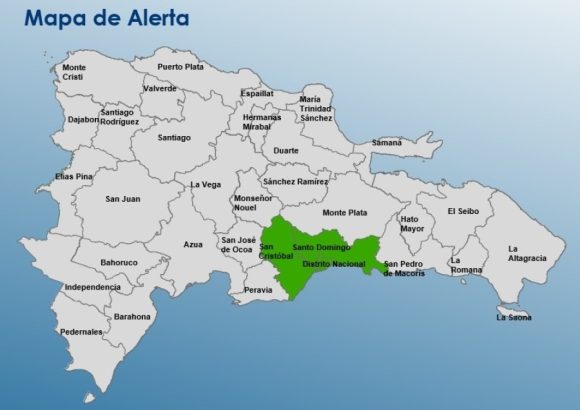
COE places Greater Santo Domingo and San Cristóbal under green alert
On Tuesday, authorities in the Dominican Republic activated a green alert for the country’s two most populated regions — Greater Santo Domingo and San Cristóbal — as an approaching tropical wave is set to bring widespread wet weather across multiple parts of the island nation.
Forecasts predict the most intense precipitation will hit the two alerted regions by Tuesday afternoon, with conditions ranging from steady moderate downpours to heavy thunderstorms accompanied by sudden gusty winds. While the highest impact is concentrated in Greater Santo Domingo and San Cristóbal, rainy weather is also expected to extend across a swath of eastern and southern provinces, including La Altagracia, El Seibo, Hato Mayor, La Romana, Monte Plata, and San José de Ocoa, among other localities.
Beyond the immediate tropical wave affecting the country, the Dominican Institute of Meteorology (Indomet) has launched continuous monitoring of three separate atmospheric systems developing across the Atlantic Ocean that have the potential to strengthen into tropical weather events.
Per the agency’s latest forecast update, one low-pressure system positioned roughly 500 miles southwest of the Cape Verde Islands carries a 70% probability of developing into a tropical cyclone over the coming seven-day period. The other two systems being tracked include a scattered, disorganized cluster of showers and thunderstorms linked to a separate tropical wave located around 600 miles east of the Windward Islands, and a low-pressure trough situated several hundred miles northeast of Bermuda that is also generating active rainy and stormy conditions.
-
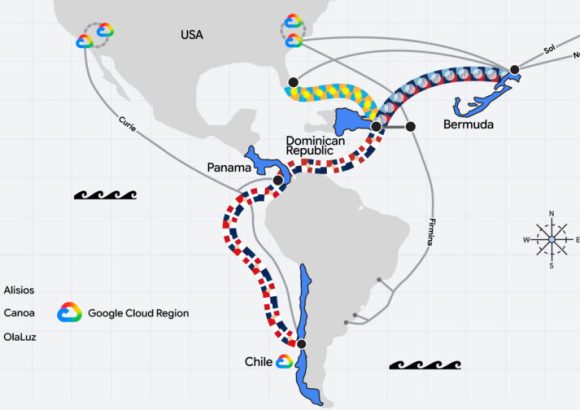
Google expands submarine cable network to Dominican Republic
Tech giant Google has unveiled an ambitious expansion of its trans-American submarine cable network, bringing the Dominican Republic into a new web of four international connectivity routes that will link the Caribbean nation to the United States, South America, the broader Caribbean region and Europe. As part of Google Cloud’s high-profile Americas Connect initiative, the infrastructure upgrade includes three entirely new cable systems dubbed Alisios, Canoa and OlaLuz, alongside a brand-new branch extension of the company’s existing Firmina cable route. The core goal of the project is to boost overall network capacity, route diversity and long-term resilience for digital infrastructure across the Western Hemisphere.
Each of the new routes is designed to fill critical gaps in regional connectivity. The Alisios system will create a direct data pathway between the Dominican Republic, Panama and Chile, establishing the first dedicated direct corridor connecting the Caribbean and South America along this route. Meanwhile, the Canoa cable will link the Dominican Republic straight to Bermuda, and OlaLuz will connect the country directly to Florida, significantly increasing data transmission capacity between the Caribbean basin and the U.S. East Coast. Beyond the three new systems, Google is also extending its Firmina submarine cable to reach the Dominican Republic; when paired with the company’s existing Nuvem and Sol cable systems, this new infrastructure will open up redundant, additional connection pathways between Latin America, the Caribbean, the U.S. and Europe.
Google officials emphasize that diversifying these routes serves a key functional purpose: by spreading data traffic across multiple independent cables, the network reduces overreliance on any single line, drastically improving resilience if a cable experiences an outage or external disruption. Submarine cables form the invisible backbone of the global internet, carrying roughly 99% of all international data traffic that powers core modern digital services, from cloud computing and artificial intelligence model training to e-commerce platforms, cross-border communications and telemedicine. Today, Google maintains more than 10 million kilometers of combined terrestrial and submarine fiber infrastructure across the globe.
Dominican Republic President Luis Abinader has publicly praised the move, welcoming his country’s inclusion in the expansion project. Abinader noted that enhanced cross-border digital connectivity will help the Dominican Republic narrow its domestic digital divide, nurture homegrown technological talent, and unlock new economic opportunities in the fast-growing global digital economy. The expansion announcement was made official by Brian Quigley, Vice President of Global Network Infrastructure at Google Cloud. Beyond the benefits for the Dominican Republic, the project will also cement Panama’s status as a leading regional connectivity hub, thanks to its new strategic link to both the Dominican Republic and Chile via the Alisios cable system.
-
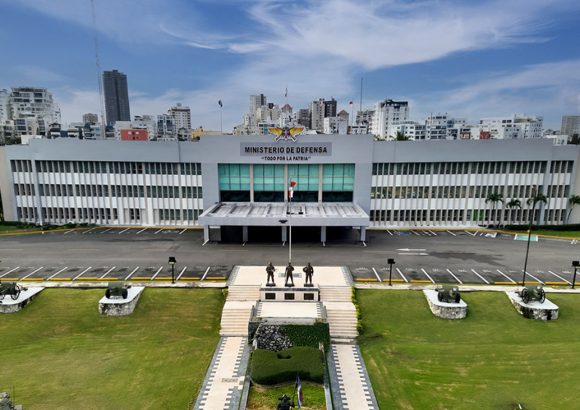
Dominican government opens collection center for earthquake aid to Colombia
In a show of regional solidarity following Colombia’s devastating earthquake, the government of the Dominican Republic has formally announced it will provide critical humanitarian assistance to impacted communities, responding to an initial international appeal for support issued by Colombia’s Ministry of Foreign Affairs.
To turn this commitment into tangible action, the Dominican Ministry of Defense has established a dedicated centralized donation collection point at the Dominican Navy’s iconic “27 de Febrero” Naval Base. The facility is strategically located on Avenida España in Punta Torrecilla, Sans Soucí, in the eastern district of Santo Domingo, making it accessible for members of the public and local organizations wishing to contribute.
The collection center will run on a daily operating schedule, open to donors from 8:00 a.m. to 5:00 p.m. Authorities have outlined the most urgently needed items to support relief operations, including prescription and over-the-counter medicines, sterile medical supplies, canned goods and other non-perishable food products, oral hydration fluids, non-perishable dry goods, and wet hygiene wipes—all supplies that are in critically short supply in earthquake-hit regions.
Specially trained assigned personnel will manage the entire process at the center, from receiving incoming donations to sorting, categorizing, and securely storing all contributions before they are shipped to Colombia as part of the coordinated international humanitarian response.
For individuals, nonprofits, or local businesses seeking to coordinate large-scale donations or clarify any questions about contributing, a dedicated contact line has been set up: 829-762-2054.
In a formal statement, the Dominican government emphasized that this solidarity initiative underscores the longstanding ties between the Dominican Republic and the Colombian people, and reaffirms the country’s unwavering commitment to standing with Colombia during its emergency response and post-disaster relief work.
-
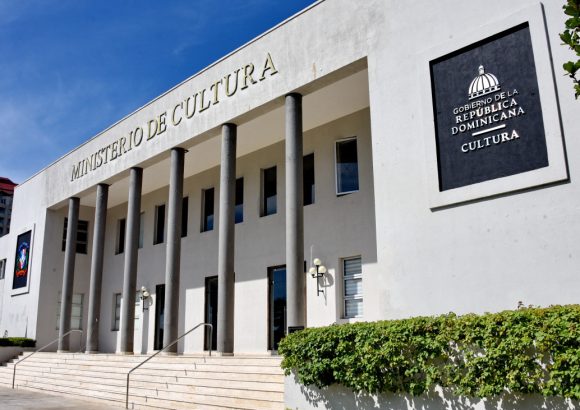
Ministry of Culture announces Restoration Day program in Santiago
Residents and history enthusiasts across the Dominican Republic are gearing up for a rich lineup of cultural events honoring Restoration Day, with the bulk of commemorations centered in the historic northern city of Santiago de los Caballeros. The country’s Ministry of Culture has unveiled a two-day schedule of activities that blend national heritage, artistic performance and historical reflection, anchored by the flagship “Concert for the Homeland” scheduled for August 16 at the iconic Gran Teatro del Cibao.
Helmed by Amaury Sánchez, the Vice Minister of Culture who serves as the event’s artistic director, the headline concert will bring together one of the nation’s most acclaimed ensembles, the Santo Domingo Philharmonic Orchestra, with a roster of leading Dominican performers. Fan-favorite vocalists Carlos Alfredo Fatule, Adalgisa Pantaleón and Jessy Savery will take the stage alongside the renowned Koribe choir, delivering a curated program spanning the full breadth of Dominican musical tradition. From time-honored folk melodies to vibrant popular hits and moving choral works, every selection is crafted as a tribute both to the fallen heroes of the Dominican Restoration and the country’s centuries-old vibrant musical legacy.
Festivities will kick off a day earlier, on Saturday August 15, with a family-focused “Park Afternoon” gathering surrounding the Monument to the Heroes of the Restoration. Attendees of all ages can enjoy a full slate of activities, including live performances of traditional Dominican music and folk dance, a showcase from a local youth orchestra, rotating exhibitions of works by Dominican visual artists and local craftspeople, and a dramatic immersive light show projected directly onto the historic monument itself.
In an official statement, the Ministry of Culture emphasized that the full slate of events is designed to honor the 1863 Dominican Restoration movement, a defining turning point in the nation’s history that originated right here in Santiago. The movement ultimately succeeded in restoring Dominican sovereignty after the country was annexed by Spain in the years prior. Working in coordination with local cultural organizations, educational institutions and multiple government agencies, the ministry says the commemorations aim to reinforce shared national identity and preserve critical collective historical memory for current and future generations of Dominicans.
-

“Taste Paradise” draws thousands to Sánchez, showcasing its tourism potential
After two days of immersive celebrations blending culinary craft, cultural heritage, and lively entertainment that drew thousands of local residents and international travelers alike, the Dominican Republic Ministry of Tourism has officially closed the doors of the highly anticipated “Taste Paradise” festival, held in the coastal municipality of Sánchez in the Samaná province.
Centered on spotlighting the region’s unrivaled coastal culinary identity, the festival turned the spotlight on Sánchez’s world-renowned seafood-focused menu, highlighting a wide range of signature dishes that draw on both local fishing traditions and centuries of Dominican culinary culture. Attendees sampled everything from fresh-caught shrimp and whole grilled fish to zesty citrus ceviche, chilled seafood cocktails, and creamy coconut-infused specialties that reflect the region’s tropical agricultural roots. Standout signature creations created specifically for the event included the fan-favorite “Bocaito Sanchero” and the innovative “Ceviche Mango y Mar,” which paired fresh local seafood with ripe tropical mango for a bright, unique flavor profile.
Speaking on the sidelines of the closing celebrations, Carlos Peguero, the Dominican Republic’s Vice Minister of Tourism for International Cooperation, emphasized the strategic purpose behind the popular festival. Peguero walked attendees and attendees through Sánchez’s rich mix of historical, cultural, and natural draws, framing the food festival as a core part of the government’s ongoing campaign to position this quiet coastal town as a must-visit world-class tourism destination. He also teased upcoming growth for the region, noting that the upcoming inauguration of the Arroyo Barril port will open the region up to thousands of additional cruise ship passengers, creating new jobs and driving sustained expansion of the local tourism-driven economy.
One of the most interactive elements of this year’s festival was a public fan vote for the best dish, which allowed attendees to cast their ballot quickly via a scannable QR code. When the votes were counted, Anabel Coplin of the local food brand Food Yummy took home the top prize for her signature creation “La Paila Costera.” As a reward for her win, Coplin will travel next to the ANATO international tourism fair in Colombia, where she will represent the Dominican Republic’s thriving culinary tourism sector on a global stage. Organizers also announced that all of the standout recipes featured at the festival will be compiled into a dedicated printed cookbook, which will serve as a permanent celebration of Sánchez’s unique gastronomic identity.
Long known as the Dominican Republic’s “shrimp capital” and the primary gateway to the idyllic Samaná Peninsula, Sánchez has quietly emerged as one of the country’s most promising emerging tourism destinations. The municipality blends its centuries-old seafood heritage with well-preserved Victorian-era architecture, a rich railway history, world-class ecotourism trails, and easy access to the iconic Los Haitises National Park, giving it a unique mix of attractions that appeals to a wide range of international and domestic travelers. With growing investment in tourism infrastructure and events like “Taste Paradise” driving global attention, local leaders expect the region to see steady growth in visitor arrivals and economic opportunity in the coming years.
-
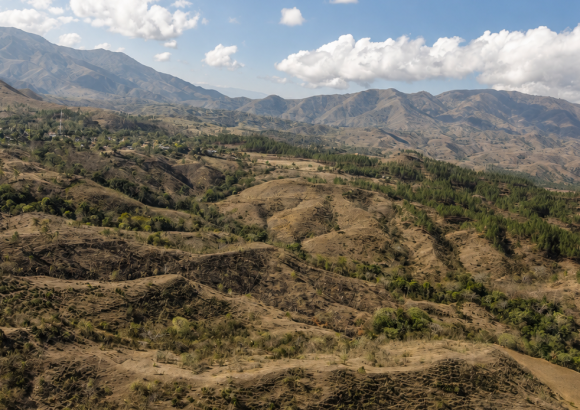
Barahona residents demand environmental review before mining activities
In the coastal Dominican province of Barahona, local community organizations in the El Cachón district are taking a formal stand to protect their regional natural resources from unregulated extractive development. The leaders of the Los Almendros and Reyes Gómez Neighborhood Associations have submitted an official policy proposal to the nation’s Ministry of Environment, pushing for a binding requirement that local residents be given full consultation before any government permits are issued for mining, raw material extraction, or large-scale vegetation clearing in El Cachón’s ecologically sensitive mountain zones.
The community groups have issued a clear warning that moving forward with extractive projects without early and meaningful input from local residents puts critical regional water resources and fragile mountain ecosystems at severe risk. They emphasized that even if a project secures all required legal permits from national authorities, it cannot move forward legitimately without explicit buy-in from the people who live alongside these natural landscapes — what they describe as a necessary “social license” to operate.
Beyond their formal proposal, the associations have organized a public community vigil to be held in the coming days at the exit point of a new road currently under construction in El Cobo, one of El Cachón’s sub-sectors. According to local residents, this road development has proceeded without securing the required environmental and construction permits, and it poses a direct threat to intact forest areas and underground aquifers that supply drinking water to the district.
Community leaders have also leveled specific allegations against local businessman Mayker González, claiming he has already conducted multiple unauthorized extraction projects across different parts of El Cachón that have left lasting damage to the local environment. These documented claims are being included as core evidence in the community’s broader campaign to block further unregulated extractive activity across the district, as residents push for greater local control over decisions that shape their natural environment and long-term livelihoods.