作者: admin

  • 10 years as a ‘temporary’ public servant

    10 years as a ‘temporary’ public servant

    A profound systemic issue within the public sector has come to light as long-serving temporary employees break their silence about enduring over a decade of provisional employment status. These dedicated professionals, despite possessing extensive qualifications and accumulating years of invaluable institutional knowledge, remain trapped in a cycle of employment uncertainty that undermines their financial stability and professional recognition.

    These temporary public servants perform identical duties to their permanently-employed counterparts across various ministries and national services, often operating on the front lines of public service delivery. Yet they consistently receive inferior compensation packages, lack essential benefits, and face persistent job insecurity despite their demonstrated commitment and expertise. The situation represents what many describe as an institutionalized form of neglect that has persisted through multiple administrations.

    The core of the grievance centers on the fundamental disparity between temporary workers’ substantial contributions and their inadequate compensation and recognition. Many have developed specialized practical skills through years of hands-on experience that cannot be replicated in academic settings, yet their employment status fails to reflect their proven capabilities and dedication.

    With recent governmental changes, temporary employees express renewed hope for substantive reform. They seek clear answers regarding the new administration’s plans to address their plight, specifically questioning whether there will be established pathways to permanency for those who already meet employment criteria. Central to their concerns are demands for transparent processes, time-bound regularization procedures, and equitable valuation of experience alongside formal qualifications.

    The movement emphasizes that these appeals stem not from requests for special treatment but from fundamental expectations of workplace fairness. Job security and appropriate compensation are framed not as privileges but as legitimate rights earned through years of faithful service. The temporary workers position themselves as essential contributors to national development—parents, caregivers, and community members deserving of stability and recognition.

    This collective call to action represents both an expression of prolonged frustration and an optimistic appeal to new leadership. Temporary public servants urge the current administration to acknowledge what they characterize as a long-standing injustice and implement meaningful corrective measures that properly value their demonstrated contributions to public service excellence.
  • “This is a miracle,” Venezuelans celebrate in the Dominican Republic the fall of Nicolás Maduro

    “This is a miracle,” Venezuelans celebrate in the Dominican Republic the fall of Nicolás Maduro

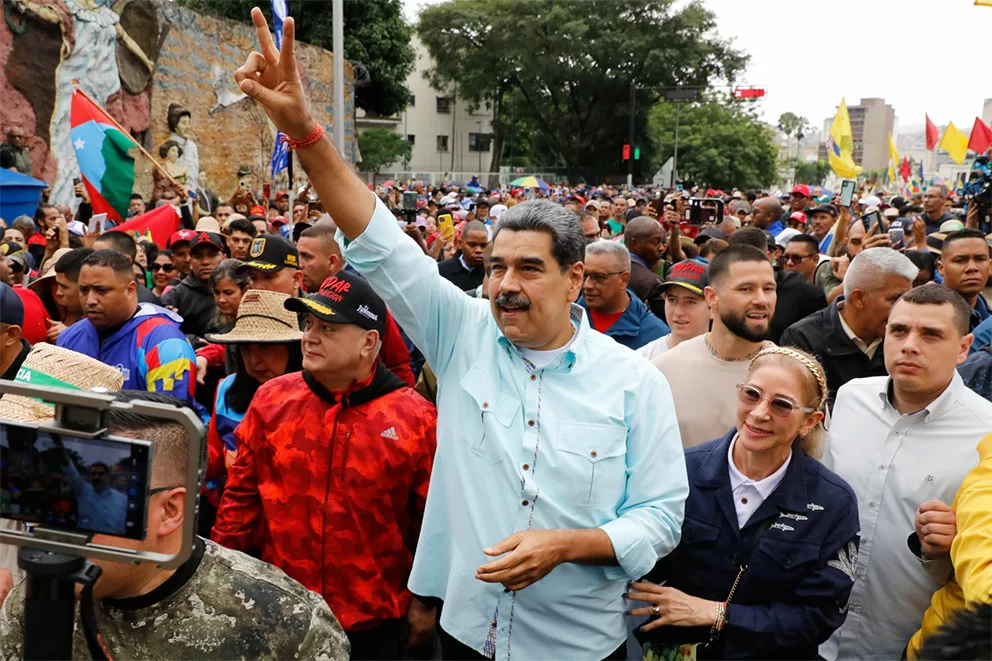
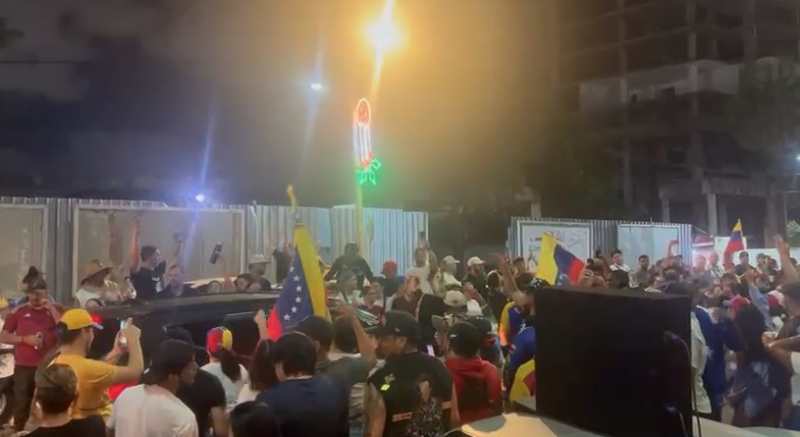
    Santo Domingo witnessed an outpouring of emotion as hundreds of Venezuelan expatriates flooded the streets of the National District, celebrating the dramatic arrest of Venezuelan President Nicolás Maduro. The vibrant gathering, centered along the Malecón waterfront, transformed into a massive demonstration of national pride and political liberation.

    Clad in the distinctive yellow, blue, and red of the Venezuelan flag, the crowd created an atmosphere of collective catharsis. Chants echoing from Güibia beach captured the raw sentiment of the moment, with participants openly expressing their long-suppressed frustrations with the Chavista regime. The emotional spectrum ranged from tearful embraces to triumphant cheers, symbolizing a renewed hope for political transformation in their homeland.

    Luis Felipe, a 32-year-old naturalized Dominican citizen originally from Caracas, described the development as “miraculous.” Having fled Venezuela over five years ago seeking refuge from governmental oppression and economic instability, he represented countless others who found sanctuary in the Dominican Republic. His narrative was echoed by José López, another participant who viewed Maduro’s detention as the realization of a long-awaited dream for liberation.

    Despite the celebratory atmosphere, many acknowledged practical limitations. While viewing the arrest as a critical first step toward democratization, numerous expatriates recognized they might not permanently return to Venezuela, having established new lives and families in their host country.

    The spontaneous celebration extended along George Washington Avenue, where participants temporarily halted traffic to share their joy with bystanders. The gathering gained cultural significance with the appearance of Venezuelan musical artist Danny Ocean (Daniel Alejandro Morales Reyes), who publicly endorsed both the celebration and the U.S. military intervention that facilitated Maduro’s capture.

    Local authorities, including dozens of National Police officers, intervened to ensure public order, successfully redirecting protesters to pedestrian walkways to maintain traffic flow without incident.

    Background: Maduro was transferred to the Metropolitan Detention Center in Brooklyn following his arrest, facing serious charges including narcotics trafficking, terrorism, and crimes related to automatic weapons. His wife, Cilia Flores, was similarly detained. Meanwhile, Venezuela’s Supreme Court of Justice has appointed Vice President Delcy Rodríguez as interim leader, characterizing Maduro’s capture as an unlawful kidnapping orchestrated by the Trump administration.

  • COMMENTARY: Governor General To Call National Inquiry Independent Of The Prime Minister

    COMMENTARY: Governor General To Call National Inquiry Independent Of The Prime Minister

    Political commentator Yves Ephraim has advanced a compelling case for constitutional amendments in Antigua and Barbuda, focusing specifically on constraining executive authority and enhancing governmental accountability mechanisms. The proposal centers on two fundamental reforms: establishing prime ministerial term limits and empowering the Governor General to initiate independent national inquiries.

    The analysis begins with a philosophical foundation that constitutions must serve as vigilant guardians against state power concentration. Historical evidence demonstrates that nations can unfortunately elevate individuals with criminal tendencies to their highest offices, making constitutional safeguards essential for preserving rule of law, protecting individual rights, and ensuring blind justice administration.

    Ephraim identifies a critical vulnerability in Antigua and Barbuda’s current constitutional framework: the Prime Minister wields absolute power to such an extent that even criminal acts committed publicly cannot be investigated by the Police Commissioner. This creates a perception that legal equality remains absent for those in leadership positions.

    Regarding term limits, the proposal notes that Antigua and Barbuda already mandates term restrictions for directors of public companies and credit unions—a practice established for over fifteen years. The argument follows logically that if term limits protect financial institutions, they become exponentially more crucial for national leaders who can potentially damage entire countries.

    The commentary dismantles counterarguments about losing effective leadership through term limits. Historical analysis reveals that truly capable leaders inherently cultivate successors as part of their leadership philosophy, recognizing that effective delegation and succession planning constitute essential leadership qualities. By contrast, ineffective leaders typically micromanage and surround themselves with inferior talent, creating unhealthy power dynamics.

    Empirical observations indicate that administrative corruption frequently emerges during third-term administrations, with most productive governance occurring during initial terms. International examples include Margaret Thatcher’s British government, where early economic successes became overshadowed by corruption scandals during later tenure. Nations with regular leadership transitions, such as the United States and Barbados, demonstrate greater prosperity and democratic resilience.

    The specific proposal recommends a maximum of two successive terms (not exceeding ten years) for any Prime Minister, followed by a mandatory five-year hiatus before potential reelection. This structure balances experience with regular leadership renewal.

    Regarding inquiry mechanisms, the proposal highlights the fundamental legal principle ‘Nemo debet esse judex in propria causa’ (no one should be judge in their own cause). The current requirement for government consent to investigate itself represents an obvious conflict of interest. The reformed system would empower the Governor General to initiate national inquiries based on Senate recommendations and citizen petitions (minimum 1,000 signatures), particularly in cases involving fraud allegations. The Prime Minister would be excluded from the process, with the Governor General receiving authority to revoke ministerial appointments for process obstruction.

    These proposed constitutional amendments aim to establish robust accountability frameworks and enhance civil liberty protections in Antigua and Barbuda’s democratic system.

  • 2 women among 5 people on gun, ammo charges

    2 women among 5 people on gun, ammo charges

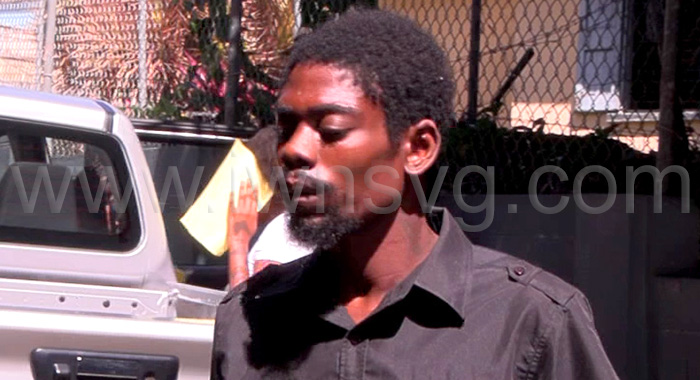
    A significant firearms case unfolded at the Serious Offences Court in Kingstown, St. Vincent, resulting in divergent legal paths for five defendants facing weapon possession charges. Tevin Snagg became the sole individual to admit guilt on Old Year’s Day (December 31, 2026) for illegally possessing a .22 caliber revolver and corresponding ammunition without proper licensing under the Firearms Act. The alleged offenses occurred in Canouan on December 30, 2025.

    Meanwhile, co-defendants Michael Simmons, Ashura Davis, Shantel Sharpe, and Javon Barnwell maintained their innocence by entering not guilty pleas to identical charges. The prosecution, led by Sergeant of Police Shamrack Pierre, requested a continuance until Monday to consult with the Director of Public Prosecutions regarding case strategy.

    The courtroom atmosphere grew tense as female defendants attempted to conceal their identities upon arrival. Prosecutors did not oppose bail for the four pleading not guilty but successfully argued for Snagg’s remand pending sentencing proceedings. Defense attorney Grant Connell, representing all five accused, raised no objections to the prosecution’s requests.

    Chief Magistrate Colin John implemented a bifurcated approach: Snagg remains incarcerated until Monday’s factual hearing and sentencing, while the other defendants secured release against EC$10,000 bail each with one surety. All accused individuals maintain residential connections to Canouan and Barrouallie according to court documents.

  • Van buschauffeur tot president: Nicolás Maduro bleef altijd in de schaduw van Chávez

    Van buschauffeur tot president: Nicolás Maduro bleef altijd in de schaduw van Chávez

    In a dramatic turn of events, Venezuelan President Nicolás Maduro was apprehended during an early morning US military operation in Caracas on Saturday, marking a stunning conclusion to his controversial leadership that witnessed Venezuela’s descent into economic collapse and democratic erosion.

    The operation, announced via social media by US President Donald Trump, resulted in Maduro and his wife Cilia Flores being taken into custody. Venezuelan Vice President Delcy Rodríguez confirmed their whereabouts remained unknown shortly after the operation. US Attorney General Pam Bondi stated both would face trial on American soil for serious charges including drug trafficking and corruption.

    Maduro’s capture represents the culmination of mounting US pressure across multiple fronts. The Venezuelan leader had spent his final months in power anticipating military intervention aimed at dismantling the socialist revolution initiated by his mentor Hugo Chávez in 1999. Throughout his presidency, Maduro consistently portrayed the United States as Venezuela’s primary antagonist, resisting efforts by both Democratic and Republican administrations to restore democratic norms.

    Maduro’s extraordinary political journey began over four decades ago. After receiving ideological training in Cuba in 1986—his only formal education beyond high school—he returned to Caracas as a bus driver for the metro system, quickly rising through union ranks. By the 1990s, intelligence agencies identified him as a left-wing radical with close Cuban ties.

    His political ascent accelerated when he joined Chávez’s movement following the latter’s presidential pardon after a failed military coup. Maduro progressed through party ranks, serving six years in parliament before becoming National Assembly president. He additionally held the foreign ministry portfolio for six years and briefly served as vice president.

    Chávez formally anointed Maduro as his political heir during his final address before dying in 2013. Though the choice surprised many, Chávez’s substantial electoral capital secured Maduro a narrow victory and his first term. However, he never achieved his predecessor’s popularity levels.

    Maduro’s presidency became characterized by profound socio-political and economic crisis. Millions were plunged into poverty, over 7.7 million Venezuelans fled the country, and thousands of government opponents faced imprisonment and frequent torture—sometimes allegedly ordered by Maduro himself. Critical voices were systematically purged from state institutions.

    The crisis erupted during his first year with protests resulting in 43 deaths and numerous arrests. In 2015, Maduro’s party lost parliamentary control after sixteen years, prompting him to establish a pro-government constituent assembly in 2017 to sideline opposition. This triggered months of protests with over 100 fatalities and thousands injured. Maduro survived an assassination attempt involving explosives detonated during a military parade in 2018.

    The US-led capture operation signifies the lowest point of Maduro’s rule, forming part of broader American strategy to end socialist governance and reestablish influence in Venezuela. The arrest has provoked strong global reactions, with US allies applauding the action while other nations warn against escalation and emphasize peaceful, lawful transition needs.

    Regional countries are closely monitoring developments given the ongoing humanitarian crisis and refugee flows. Venezuela’s political and economic situation remains extremely fragile, with recovery expected to require years amid significant stability and security challenges. The international community now faces the complex task of facilitating Venezuela’s transition toward democratic and economic recovery while respecting human rights and sovereignty.

  • Former NDP chair says opposition will not be easy for ULP

    Former NDP chair says opposition will not be easy for ULP

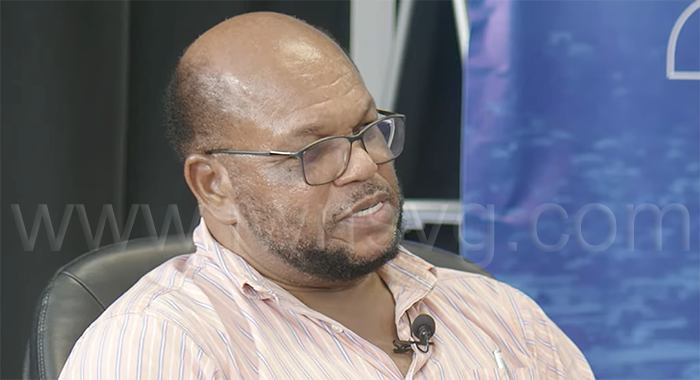
    In the wake of a seismic political shift in St. Vincent and the Grenadines, veteran political figure Linton Lewis has delivered a sobering assessment of the challenges facing the defeated Unity Labour Party (ULP). The former New Democratic Party (NDP) chairman drew upon his own extensive experience to outline the difficult path ahead for the party that governed for nearly a quarter-century.

    The November 27th election results delivered a stunning blow to the ULP, relegating them to opposition status with a mere single parliamentary seat against the NDP’s commanding 14-seat victory. This dramatic reversal marks the end of 24 years of continuous ULP governance, echoing the NDP’s own transition to opposition in 2001 after 17 years in power.

    Lewis, appearing as an analyst during the national election broadcast, emphasized the psychological and social challenges of opposition life. “It is not an easy experience,” he noted, describing how former allies often distance themselves from defeated parties. “People feel more comfortable keeping their distance and gravitating towards the winning side. You sometimes become very lonely.”

    The veteran politician highlighted the particular significance of the ULP’s defeat under Ralph Gonsalves, a remarkably successful political leader who had represented North Central Windward since 1994. Gonsalves’ solitary victory amidst the electoral landslide represents both a personal endorsement and a party rejection.

    Lewis raised crucial questions about the ULP’s future resilience, noting that Vincentian voters historically grant extended mandates to governing parties. With the NDP having governed for 17 years (1984-2001) and the ULP for 24 years (2001-2025), the psychological preparation for potentially lengthy opposition becomes paramount.

    The electoral statistics reveal the depth of the ULP’s defeat. The NDP secured 37,207 popular votes against the ULP’s 27,152—a decisive margin of 10,055 votes. Lewis suggested this indicated discontent beyond the traditional voter base, noting that “the rank and file alone cannot bring about this result. There must have been people at a higher level.”

    Several key constituency results underscored the electoral revolution. In West St. George, political newcomer Kaschaka Cupid defeated experienced ULP incumbent Curtis King by 1,081 votes. Similarly, in East St. George, Laverne Gibson-Velox unseated Finance Minister Camillo Gonsalves by 1,043 votes—a particularly symbolic defeat given Gonsalves’ status as a presumed ULP successor.

    Lewis predicted a period of political isolation for ULP supporters, drawing parallels with his own experiences during the NDP’s transition to opposition. He questioned whether the ULP’s newer, younger members possess the political grounding and loyalty to withstand the rigors of extended opposition.

    The analysis gains additional complexity given Lewis’s own recent endorsement of the ULP just four days before the election, during which he praised the party’s developmental record and questioned the NDP’s policy offerings. This context adds depth to his current assessment of the challenges facing his former political rivals.

  • America First en de hertekening van het Guiana Shield

    America First en de hertekening van het Guiana Shield

    The escalating crisis in Venezuela represents not an isolated incident but the most visible manifestation of a comprehensive geopolitical repositioning by the United States across the Western Hemisphere. This strategic shift, formalized in the December 2025 National Security Strategy under the ‘America First’ doctrine, demonstrates a calculated integration of energy interests, governance influence, and regional power projection.

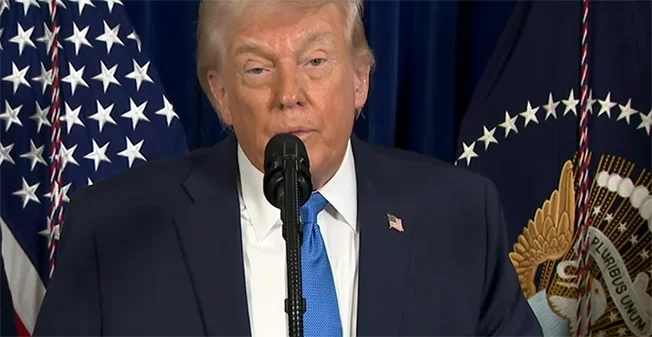
    Venezuela has transitioned from sovereign nation to geopolitical testing ground following a unilateral US military intervention that resulted in the capture and extradition of President Nicolás Maduro and his wife to New York. Conducted without Congressional authorization or UN Security Council mandate, the operation has drawn international condemnation while revealing Washington’s broader ambitions. President Donald Trump has explicitly stated that military action constitutes merely the initial phase, with plans for direct involvement in Venezuela’s governance and development of its oil resources by American corporations—effectively establishing elements of externally imposed administration.

    International legal experts warn these actions violate fundamental principles of the UN Charter regarding prohibitions on force, non-interference in domestic affairs, and self-determination rights.

    Venezuela’s strategic significance stems from possessing the world’s largest proven reserves of heavy crude oil—a resource particularly suited to US refinery infrastructure despite years of sanctions and economic decline. This explains why American discourse encompasses not merely resource extraction but complete governance restructuring, positioning Venezuela as a demonstration case for how far the US will go to secure strategic energy interests.

    Neighboring Guyana exemplifies alternative approach within the same framework. As the world’s fastest-growing oil producer—approaching one million barrels daily under predominantly US corporate leadership—Guyana maintains formal sovereignty while becoming deeply integrated into American economic and security arrangements. Though Venezuelan claims over oil-rich Essequibo remain unresolved, Washington views Guyana as proof that energy development can occur within its strategic framework without overt confrontation.

    Suriname emerges as the next strategic focal point, poised to commence large-scale offshore oil production within the same geographic corridor. Recent replacement of the US ambassador to Suriname—part of broader diplomatic reshuffling affecting 29 nations—signals heightened American interest in the country’s future direction, with embassies increasingly functioning as strategic hubs connecting economic, security, and political interests.

    Regional bodies including the Organization of American States (OAS) and Caribbean Community (CARICOM), alongside Surinamese President Jennifer Simons, advocate counterbalancing power politics with normative frameworks emphasizing de-escalation, international law, constitutional order, and regional stability. For smaller nations, this represents not merely diplomatic rhetoric but essential self-protection in an era where resources increasingly drive geopolitical maneuvers.

    The Venezuela crisis demonstrates that energy has transcended economic status to become geopolitical currency attracting influence that seeks administrative control. Resource-rich nations consequently face heightened vulnerability when institutions, oversight mechanisms, and regional solidarity remain underdeveloped. As Suriname contemplates its oil future, it must consider not merely production partnerships but institutional strengthening to preserve governance autonomy amid great power competition.

  • Dominican Republic shatters record for arrivals with 11.6 million visitors in 2025

    Dominican Republic shatters record for arrivals with 11.6 million visitors in 2025

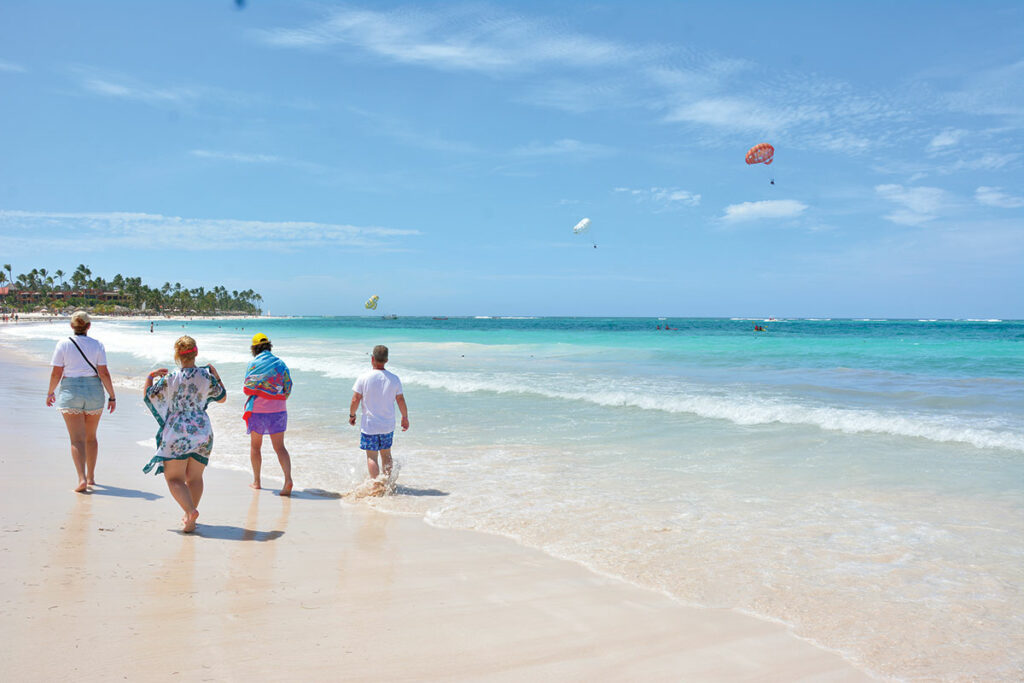
    The Dominican Republic concluded 2025 with an extraordinary tourism achievement, recording approximately 960,000 air arrivals in December alone—a monumental 10% growth that represents the highest monthly figure in the nation’s history. This remarkable performance culminated in an unprecedented annual total of 11.6 million visitors, solidifying the country’s position as a regional tourism powerhouse.

    This accomplishment transcends mere post-pandemic recovery, demonstrating instead the resilience and strategic diversification of the Dominican tourism model amid global geopolitical tensions, economic uncertainties, and shifting travel patterns. Notably, these results significantly surpass pre-pandemic benchmarks of 667,000 monthly tourists, achieved during a more favorable international climate without the adverse impacts of the Russia-Ukraine conflict, which previously cost the destination over 500,000 annual visitors.

    Despite challenges in traditional markets including slowed growth from the United States, the Dominican tourism sector accelerated dramatically during the final quarter of 2025. Critical to this success has been enhanced air connectivity, strategic demand management, and the seamless integration of approximately 2,500 new hotel rooms while maintaining robust occupancy rates and sustained investor confidence.

    Concurrently, cruise tourism emerged as a strategic pillar with 2.8 million passengers welcomed throughout the year. The arrival of large-scale vessels and expanded international itineraries validated the country’s modernized port infrastructure, reinforcing its status as a leading Caribbean cruise destination.

    Leadership under Tourism Minister David Collado received widespread recognition from global industry leaders including Gabriel Escarrer, Sabina Fluxá, and Frank Rainieri, who praised the administration’s strategic vision and execution. Uniquely, this acclaim extended beyond private sector figures to governmental peers, with tourism ministers throughout the Americas identifying Collado as a regional leader for his exceptional management in challenging times.
    This consensus was formally recognized when UN Tourism designated Collado as Minister of Tourism for the Americas—a distinction that highlights both his leadership and the Dominican Republic’s model of effective tourism policy. The year’s achievements reflect institutional maturity driven by clear strategy, consistent execution, and strong public-private collaboration, establishing new historical benchmarks for Caribbean tourism.

  • The fall of Maduro and its impact on Dominican tourism

    The fall of Maduro and its impact on Dominican tourism

    The U.S. Federal Aviation Administration (FAA) issued a significant airspace advisory on Saturday, warning commercial carriers to avoid Caribbean air corridors due to what it described as a ‘potentially hazardous situation.’ This development coincides with confirmed U.S. military operations aimed at apprehending Venezuelan leader Nicolás Maduro.

    The aviation regulator’s official notification attributed the airspace closure to ‘flight safety risks associated with ongoing military activity,’ without providing further operational specifics. This precautionary measure has precipitated immediate and widespread disruption across the region’s aviation network.

    The directive has triggered an immediate wave of flight cancellations, with the Dominican Republic’s capital, Santo Domingo, experiencing particularly severe disruptions to its connections with Puerto Rico and neighboring nations. Norberto Negrón, Executive Director of the Puerto Rico Ports Authority, confirmed that operational suspensions extended beyond San Juan’s primary international airport to include six additional facilities across the island.

    The unprecedented scale of these restrictions has effectively paralyzed the Caribbean’s busiest air routes, creating logistical chaos for airlines and passengers alike. Aviation experts note that such comprehensive airspace warnings are exceptionally rare and indicate serious underlying security concerns. The FAA continues to monitor the situation closely, though no timeline has been provided for the restoration of normal flight operations.

  • Venezuela condemns US military aggression; declares state of emergency

    Venezuela condemns US military aggression; declares state of emergency

    The Venezuelan government has issued a formal declaration condemning what it characterizes as unprecedented military aggression by the United States against its sovereign territory. Official reports indicate multiple strikes targeted both civilian infrastructure and military installations across several regions including Caracas, Miranda, Aragua, and La Guaira.

    In a strongly worded statement, Venezuelan officials decried the attacks as a direct violation of fundamental principles enshrined in the United Nations Charter, specifically citing Articles 1 and 2 which guarantee respect for national sovereignty and prohibit the use of force between states. The government warned that these actions pose a severe threat to regional stability throughout Latin America and the Caribbean, potentially endangering millions of civilians.

    The administration accused the United States of attempting to orchestrate a resource-grab operation aimed at Venezuela’s extensive oil reserves and mineral wealth through the destabilization of its democratically elected government. Venezuelan authorities emphatically stated that such efforts to undermine the nation’s political independence would ultimately fail, emphasizing their unwavering commitment to preserve national sovereignty that has endured for over two centuries.

    Drawing parallels to historical resistance against foreign intervention, the statement referenced President Cipriano Castro’s defiance during the 1902 naval blockade and invoked the revolutionary legacy of national heroes Simón Bolívar and Francisco de Miranda.

    In response to the crisis, President Nicolás Maduro has implemented sweeping emergency measures including the activation of comprehensive national defense protocols and the declaration of a nationwide State of External Emergency. This presidential decree aims to ensure civilian protection, maintain institutional functionality, and prepare for potential armed resistance scenarios.

    The government has mobilized civilian populations to demonstrate unity through street protests, coordinating social and political organizations alongside the Bolivarian National Armed Force and law enforcement agencies. Defense command structures have been deployed throughout the country while Venezuela’s diplomatic corps prepares to formally present grievances before the UN Security Council, UN Secretary-General, CELAC, and the Non-Aligned Movement.

    Citing Article 51 of the UN Charter, Venezuela asserted its inherent right to self-defense and called upon international communities throughout Latin America, the Caribbean, and global allies to demonstrate solidarity. The statement concluded with an inspirational quotation from former President Hugo Chávez emphasizing unity and victory in the face of adversity.