作者: admin

  • Two charged with murder following July Bath Estate Bridge shooting

    Two charged with murder following July Bath Estate Bridge shooting

    Nearly 14 months after a fatal daytime shooting left one local man dead and two other people wounded along a busy roadside near Dominica’s Bath Estate Bridge, two accused suspects have officially been arraigned on murder and attempted murder charges.

    The July 8, 2025, shooting unfolded just steps from the Alliance Française building, when three working-age men had gathered along the side of the road waiting for public transit to commute to their jobs. Gunfire rang out unexpectedly, striking all three: 26-year-old Jean Yves Bruno, a resident of Canefield, was hit multiple times and died at the scene, while his two companions — Curtison Charles of Silver Lake and Maclet Dorceli, a Haitian national living in the area — suffered non-fatal gunshot wounds.

    Police Public Relations Officer Fixton Henderson confirmed the updated case details to media this week, naming the two defendants as Jamaal Ismael Alexis, a Silver Lake resident, and Sherlon Ryner, who hails from Mahaut. The pair made their first in-person court appearance on the charges on the same day the announcement was made, where the full counts of murder and attempted murder were formally read into the court record.

    Following the hearing, both Alexis and Ryner have been remanded into state custody. Their preliminary inquiry, a procedural step to review the evidence against the pair before any full trial proceeds, has been scheduled for December 7, 2026, after the court granted an adjournment of the proceeding.

  • Kings lose despite Auguste blitz

    Kings lose despite Auguste blitz

    The 2024 Republic Bank Caribbean Premier League (CPL) delivered another edge-of-your-seat contest on Sunday, as the Barbados Tridents claimed a tense nine-run victory over hosts Saint Lucia Kings at the Daren Sammy Cricket Ground. The defeat marks the Saint Lucia side’s second loss of the tournament, dropping them in the regional T20 league standings despite a valiant late batting chase.

    Even with persistent wet weather threatening to cut the event short entirely, thousands of passionate cricket fans turned out to support their teams. The popular Johnson Charles Stand was filled to near capacity, with smaller clusters of spectators spread across other viewing areas of the stadium, eager not to miss the high-profile fixture.

    Ongoing rain forced match officials to reduce the contest from the standard 20 overs per side to 18 overs. Saint Lucia Kings captain Roston Chase won the pre-match coin toss and elected to bowl first, putting the Tridents’ batting lineup under early pressure. The strategy paid off quickly, as the Kings’ bowling attack removed opening batter Zachary Carter in the early overs. However, Tridents wicketkeeper-batter Quinton de Kock and top-order batter Brandon King steady the innings, combining for a 56-run second-wicket partnership that put the side back on track. De Kock contributed 38 runs to the stand, while King added 39 before his dismissal.

    The game-changing innings came from middle-order batter Sherfane Rutherford, who launched a devastating attacking onslaught against the Kings’ bowling attack. Rutherford smashed an unbeaten 61 runs from just 31 deliveries, including five towering sixes and three cracking fours, that propelled the Tridents to a competitive total of 177 runs for five wickets at the end of their allotted overs.

    Chasing a revised target to win, the Saint Lucia Kings got off to a flying start, led by their captain. Chase smashed 34 runs from 21 deliveries to get the chase off to a rapid start, giving the home side early momentum. After Chase was dismissed and batter Jewel Andrew exited the game with an injury, Saint Lucian local star Ackeem Auguste stepped up to deliver a sensational performance. Auguste played some of the most spectacular stroke play of the match, scoring a game-high 63 runs from only 34 deliveries, with six sixes and three fours that sent the home crowd into repeated cheers. Despite Auguste’s heroic knock, the Kings lost wickets at regular intervals through the middle and late overs, leaving them with a mountain to climb in the final over.

    With 29 runs still needed to win from the last six deliveries, the Kings gave their fans a late glimmer of hope, as Matthew Forde smashed 14 runs from the first three balls of the over. However, Tridents pace bowler Ramon Simmonds held his nerve under pressure, restricting the Kings to just five runs from the remaining three deliveries to secure a nine-run victory for his side.

    Following the defeat, the Saint Lucia Kings have dropped to second place in the CPL overall standings, holding a 50% win rate after four matches. The team will look to bounce back quickly, with their next fixture scheduled for Wednesday against the Guyana Amazon Warriors.

  • Dengue Cases Expected to Rise as Rainy Season Sets In

    Dengue Cases Expected to Rise as Rainy Season Sets In

    As daily rainfall becomes consistent across Belize, public health officials have issued an urgent warning to residents: the warm, wet conditions created by the rainy season create the perfect environment for dengue virus transmission, and case numbers are projected to climb in the coming weeks.

    The Ministry of Health and Wellness is leading a public outreach campaign urging all Belizeans to take proactive steps to eliminate mosquito breeding grounds on their personal property before a preventable pest problem turns into a widespread public health crisis.

    Dengue, a viral infection spread exclusively by female Aedes aegypti mosquitoes, relies on standing water to complete the insect’s reproductive cycle. Public health experts note that these mosquitoes can breed in even tiny volumes of trapped water – as little as the amount held in a discarded bottle cap. Common breeding sites around residential properties include unused old tires, empty aluminum cans, clogged storm drains that do not drain properly after rainfall, and overgrown, unkempt yards that collect standing water.

    Symptoms of a dengue infection vary widely from person to person. Most patients experience mild to moderate reactions that include high fever, intense persistent headaches, severe joint and muscle pain, and characteristic skin rashes. In severe, untreated cases, however, the infection can progress to life-threatening complications including internal bleeding and acute respiratory distress. Health officials emphasize that anyone who develops these symptoms should seek immediate professional medical care, rather than delaying treatment to see if symptoms resolve on their own.

    Beyond eliminating breeding sites, the Ministry of Health has outlined a set of simple, everyday precautions residents can take to reduce their risk of being bitten. These include regularly applying CDC-recommended insect repellent, wearing long-sleeved clothing and long pants during the mosquito’s peak feeding hours at dawn and dusk, and ensuring windows and doors have intact screens to block mosquitoes from entering indoor living spaces.

    Health authorities confirmed that they are already working in close coordination with municipal governments, local community organizations, and other stakeholders to expand nationwide dengue surveillance and implement large-scale mosquito control measures across the country. Despite these ongoing systemic efforts, officials stress that individual action remains the most critical line of defense, repeating their core public appeal: every Belizean should take time today to check their yard for standing water.

  • The Dominican Republic is becoming legible to foreign capital. Are its startups?

    The Dominican Republic is becoming legible to foreign capital. Are its startups?

    When assessing the Dominican Republic’s evolving standing in global investment and innovation ecosystems, one concept stands out above the rest: legibility. Global capital naturally gravitates toward markets it can clearly understand. Investors demand transparency around core metrics including regulatory frameworks, tax incentives, physical and digital infrastructure, skilled talent pools, risk profiles, market access routes, and institutional stability. For multinational corporations weighing new operational locations, standardized, comparable data is non-negotiable to separate credible operating environments from unfulfilled potential.

    For decades, the Dominican Republic struggled to boost its national legibility for international stakeholders. Today, that narrative is shifting rapidly. Preliminary data released by ProDominicana, the country’s investment and export promotion agency, shows foreign direct investment (FDI) inflows reached $3.28 billion in the first half of 2026, marking a 7.7% year-over-year increase. Notably, roughly two-thirds of this inflow consists of new capital commitments, rather than reinvestment of existing earnings, signaling growing outside confidence in the market.

    Beyond rising FDI totals, the Dominican Republic is also becoming far more strategic about the types of investment it pursues. Earlier this year, the Ministry of Industry, Commerce and MSMEs (MICM) unveiled a 20-year national strategy spanning 2026 to 2036 focused on attracting high-value technology investment in priority sectors including semiconductor manufacturing, software development, health technology, and specialized business services. These moves represent clear progress: the country is now framing its investment proposition in the clear, sophisticated language that global institutional investors expect.

    Yet as the Dominican Republic solves the first challenge of making itself visible as an investment destination, a second, far less discussed challenge has emerged. Once a multinational corporation establishes a local presence, can it easily identify and vet capable Dominican suppliers to integrate into its global supply chains?

    This question goes far beyond the simple existence of local producers. The core barrier is that foreign procurement teams, unfamiliar with the domestic market, struggle to quickly identify which Dominican firms meet the strict requirements of modern multinational supply chains: verified capacity, industry certifications, proven operational experience, financial stability, and consistent quality control. In short, while the Dominican Republic as an investment destination is growing more legible by the day, large swathes of its domestic productive base remain opaque to incoming foreign investors.

    ## The Second Half of the FDI Development Equation

    FDI delivers widely acknowledged economic benefits: job creation, capital injections, technology transfer, infrastructure upgrades, expanded export volumes, and new domestic demand. But the long-term development impact of FDI depends far less on the initial investment announcement than on what happens after capital arrives.

    A multinational can turn a profit operating in the Dominican Republic while continuing to import nearly all of its production inputs and specialized services from overseas suppliers. Alternatively, it can gradually integrate domestic firms into its supply chain, transferring critical assets to the local economy: global quality standards, operational knowledge, process discipline, and commercial credibility that open doors to other international opportunities.

    These two paths produce drastically different long-term development outcomes. A Dominican firm that meets the rigorous requirements of a multinational buyer gains far more than a single new client. It earns trusted industry references, refines its operational processes, adopts global standards, and builds the experience needed to win contracts with other large buyers and compete in cross-border markets.

    This is the core logic of productive linkages between foreign investors and domestic firms, and the Dominican government has already recognized the strategic value of these connections. For example, the National Council of Export Free Zones operates a dedicated Productive Linkages Division, which maps the input and service purchasing needs of free zone-based multinationals, identifies potential local suppliers, supports domestic firms to upgrade their standards to meet global requirements, and facilitates direct business connections between local companies and foreign buyers.

    Similarly, recent flagship investment initiatives led by MICM in partnership with global firms like DP World have explicitly tied new capital inflows to the goal of integrating Dominican micro, small, and medium enterprises (MSMEs) into international commerce and expanding these productive linkages. Top-down institutional commitment to this goal already exists. The harder, unmet challenge is translating that policy intention into a scalable, accessible commercial system that works for both foreign buyers and domestic suppliers.

    ## The Dominican FDI Legibility Gap

    The central barrier to deeper supplier integration is not necessarily a lack of capable Dominican suppliers. In most cases, capable firms exist, but they are simply too difficult for unacquainted foreign buyers to identify and verify. A senior global procurement executive needs clear, verifiable information: which suppliers can meet their specific needs, what production capacity they hold, what quality standards they adhere to, and what proof they have of past successful performance. When this information is fragmented across disparate platforms or impossible to independently verify, even highly competent local companies become commercially invisible to foreign buyers.

    This disconnect can be formalized as the *Dominican FDI Legibility Gap*, which contrasts what foreign investors can now clearly see about the country against what remains hidden to most buyers:

    | What foreign investors clearly see about the Dominican Republic | What foreign buyers still struggle to identify about Dominican suppliers |
    | —————————————————————- | ————————————————————————- |
    | Transparent national investment incentives | Verified company production and service capabilities |
    | Clearly defined priority investment sectors | Documented production and service capacity |
    | Invested in modern transportation and digital infrastructure | Up-to-date industry certifications and global quality standards |
    | Growing pool of skilled technical and professional talent | Proven track record of relevant multinational contract experience |
    | Mature, well-regulated free zone ecosystem | Pre-vetted procurement readiness for global supply chains |
    | Improved national and international logistics connectivity | Verified financial and operational stability and maturity |
    | Clear 10-year national investment growth strategy | Documented ability to meet specific multinational purchasing requirements |

    This is why supplier legibility should be treated as a core piece of national economic infrastructure, on par with roads, ports, and broadband internet. The challenge cannot be solved by simply publishing another generic directory with thousands of company names: a name and contact detail alone do not amount to actionable commercial intelligence.

    What matters is framing supplier information in the specific language that global procurement teams actually use: technical capabilities, third-party verified certifications, production output, past client contracts, export experience, geographic service coverage, regulatory compliance, and documented readiness to meet specific purchasing timelines and quality requirements. The more clear and comparable this information is, the lower the transaction cost of finding and qualifying a local supplier, and the higher the chance that domestic firms win multinational contracts.

    ## From National Visibility to Commercial Readiness

    There are three distinct layers of legibility that determine a country’s ability to maximize the development benefit of FDI:

    1. **Country legibility**: Can global investors easily understand why the Dominican Republic is a strong location to deploy capital? The country has made significant, measurable progress on this front in recent years, reflected in its rising FDI inflows and strategic sector planning.

    2. **Supplier legibility**: Once investors establish local operations, can they easily identify which Dominican firms have the capability to meet their purchasing needs? This remains a largely unaddressed gap.

    3. **Commercial legibility**: Can both foreign buyers and local suppliers clearly navigate the path from capability verification to qualification, contracting, and long-term repeat business? This systemic clarity is still lacking in the Dominican market.

    The Dominican Republic has secured meaningful gains on the first layer of legibility. The next major economic multiplier for the country will depend almost entirely on progress with the second and third layers.

    This means the country should continue tracking total FDI inflows as a core economic metric, but it must also more consistently measure how that FDI impacts and integrates the domestic business base. Key questions for policymakers should include: How much of the input and service demand from foreign firms is met by local suppliers? How many Dominican firms successfully qualify as multinational suppliers each year? How many use these new relationships to upgrade their standards, expand production capacity, or win additional multinational contracts? How many eventually use these credentials to launch their own export activities?

    These questions shift the policy conversation from just attracting investment to *converting* investment into broad-based domestic growth.

    ## Making Opportunity Visible for Domestic Firms

    The most important impact of a new FDI announcement rarely appears in the headline announcing the project. It emerges years later, when a Dominican firm that once only served the local market wins its first multinational contract, uses that relationship to refine its operations, secures additional major clients, and eventually builds the capability to compete in global markets on its own.

    This is how foreign capital ultimately reproduces sustainable capability within the domestic economy. The Dominican Republic has made impressive strides in learning how to make itself legible to the world’s top investors. The next critical competitive challenge is ensuring that the country’s domestic companies are equally legible to the new opportunities that this incoming investment brings.

    The true test of successful FDI attraction is not only whether capital flows into the country. It is whether Dominican businesses can clearly see a path to enter the global value chains that arrive alongside that capital.


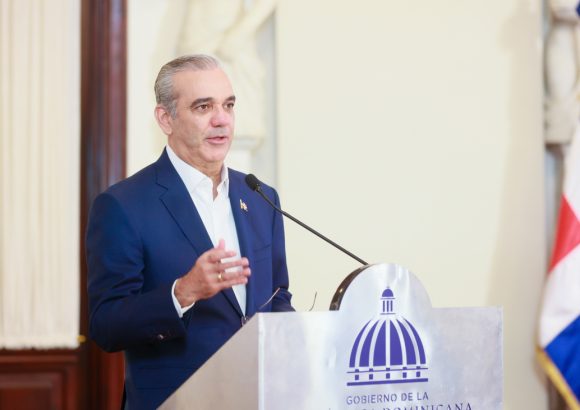
  • Abinader launches Eficompras, Dominican Republic’s first government virtual store

    Abinader launches Eficompras, Dominican Republic’s first government virtual store

    On Tuesday, Dominican Republic President Luis Abinader officially opened Eficompras, the country’s first government-owned virtual procurement store, built to reshape how state agencies source common goods while opening new doors for small domestic businesses. Developed in-house by the General Directorate of Public Procurement (DGCP), the new platform integrates directly into the nation’s existing Electronic Public Procurement System (SECP) and is designed to cut through red tape for low-value purchases capped at 268,111.38 Dominican pesos.

    Previously, government procurement for everyday goods required multi-day approval and processing workflows that often put smaller suppliers at a disadvantage. With Eficompras, participating vendors can upload their full product inventories to a searchable online catalog, allowing public institutions to browse, select, and complete purchases in just minutes, rather than waiting days for bureaucratic sign-off.

    Following a smooth successful pilot program hosted at the Dominican Ministry of Finance, the platform is now rolling out to all state institutions connected to the country’s Integrated Financial Management System (SIGEF). Per official Resolution PNP-07-2026, use of Eficompras will be mandatory for all government entities covered under Law 47-25, with a 90-business-day window granted for agency staff adaptation and training.

    DGCP Director General Carlos Pimentel outlined that a core policy goal of the platform is to expand participation in public procurement for micro, small, and medium-sized enterprises (MSMEs), with a targeted focus on supporting women-owned business operations. The initiative also prioritizes boosting purchases from local and regional producers, as well as scaling up acquisition of environmentally friendly goods. Unlike many large-scale government digital projects, Eficompras was fully developed by DGCP internal teams rather than outsourced to third-party private firms. Its full intellectual property is officially registered with the Dominican National Copyright Office (ONDA) and held exclusively by the Dominican state.

    The purchasing process is structured for maximum simplicity: users complete transactions in just three steps, selecting desired products, adding items to a virtual cart, and confirming the final order. Every transaction generates a fully traceable public record, addressing longstanding transparency concerns in public procurement, and all purchases are tied directly to suppliers’ current available inventory to prevent delivery delays.

    Speaking at the launch event, President Abinader emphasized that Eficompras marks a key milestone in his administration’s push to modernize public administration. He noted that since taking office, the total number of registered government suppliers has grown by roughly 25%, a shift he attributes to ongoing policy reforms designed to make public contracting more accessible to a broader range of businesses.

  • UN Summit opens with urgent call to restore the world’s degraded lands

    UN Summit opens with urgent call to restore the world’s degraded lands

    The 17th Conference of the Parties to the UN Convention to Combat Desertification (COP17) kicked off on Monday in Ulaanbaatar, Mongolia, uniting over 10,000 stakeholders from across the globe to confront three interconnected planetary crises: accelerating desertification, widespread land degradation, and intensifying drought events.

    Running for two weeks under the unifying slogan “Restore the land, restore hope,” the summit brings together delegations from all 197 member parties of the convention, alongside senior government officials, business executives, and civil society leaders to collaborate on actionable solutions. For host nation Mongolia, the urgency of the issue hits close to home: Prime Minister Nyam-Osoryn Uchral opened the summit by highlighting that roughly 80% of the country’s total territory already suffers from damaging soil degradation. In his opening address, Uchral pushed global parties to move past non-binding past pledges and deliver tangible, on-the-ground outcomes. He outlined three core priorities for global action: scaling up targeted investment in large-scale and local land restoration initiatives, expanding the meaningful participation of frontline local communities and traditional pastoralists who depend on healthy land for survival, and integrating cutting-edge science and innovative technologies into restoration strategies.

    Yasmine Fouad, Executive Secretary of the UN Convention to Combat Desertification, echoed this call for urgent action, warning that ongoing land degradation and drought are already placing critical systems at risk globally. She emphasized that these environmental threats are already undermining global food production, destabilizing potable water supplies, and eroding the economic resilience of vulnerable communities worldwide. Fouad made clear that the core mission of COP17 should be to rebrand itself as an “implementation summit,” one that translates years of international climate and land commitments into measurable, verifiable progress that improves outcomes for people and the planet.

    Over the course of the summit, delegates will tackle a broad, interconnected policy agenda that covers drought preparedness and mitigation, cross-border management of sand and dust storms, large-scale land restoration target setting, sustainable financing mechanisms, resilient food systems, integrated water management, climate-induced migration linked to land degradation, and equitable land rights for Indigenous and local communities. UN data underscores the scale of the crisis: an estimated 3.2 billion people around the world already face daily impacts from land degradation, drought, and the cascading crises they trigger.

    The summit’s second week, running from August 24 to 28, will feature high-level engagement, with ministers and other senior government leaders taking part in cross-border dialogues and issue-focused thematic sessions. A key priority for negotiators during this period will be finalizing a long-awaited legally binding global framework on drought. Negotiations on this framework were not completed at the 2024 COP16 held in Riyadh, leaving delegates in Ulaanbaatar to resolve outstanding differences and deliver a final agreement to guide global action.

  • Asonahores calls for sargassum solutions that benefit tourism

    Asonahores calls for sargassum solutions that benefit tourism

    SANTO DOMINGO — As the Caribbean region grapples with one of its most persistent marine ecological challenges, a leading tourism industry official in the Dominican Republic is pushing for a holistic, community-centered approach to tackling the growing sargassum invasion threatening the nation’s iconic coastlines. Aguie Lendor, Executive Vice President of the Dominican Hotel and Tourism Association (Asonahores), has emphasized that any long-term strategy to address the influx of brown seaweed along the country’s shorelines must deliver shared benefits to both the $10 billion-a-year tourism sector and the local coastal communities that depend on healthy marine ecosystems for their livelihoods.

    In a public interview on the popular local morning news program *El Despertador*, Lendor issued a clear warning: climate and ocean current projections indicate that exceptionally large volumes of sargassum will drift to Dominican shores by 2026, making urgent, proactive planning non-negotiable to mitigate damage to popular beaches and ecologically sensitive coastal zones. Without sustained, coordinated action now, she argued, the incoming seaweed surge could erode the country’s reputation as a top tropical travel destination and disrupt the daily lives of residents who live along affected coastlines.

    Already, many private tourism operators have moved ahead with independent mitigation measures to protect their guest-facing beachfronts. Lendor confirmed that a large number of the country’s major hotels have deployed layered containment systems, including dual offshore barriers engineered to block massive clumps of sargassum from reaching the recreational beaches used by tourists. While these private efforts have proven effective for individual properties, Lendor noted that they do not solve the broader, nationwide problem, highlighting the need for coordinated public sector leadership.

    She added that a dedicated inter-ministerial government cabinet is currently assessing a range of potential long-term management solutions, from innovative harvesting technologies to offshore diversion strategies and commercial repurposing of collected sargassum for products like fertilizer, biofuel, and construction materials. Throughout the evaluation process, Lendor stressed, policymakers must center a balanced approach that prioritizes both the economic needs of the tourism industry — which supports more than half a million jobs across the country — and the health, safety, and economic well-being of local coastal communities and the general public. Any successful strategy, she argued, cannot protect tourist beaches at the expense of leaving residential and public coastlines buried under tons of rotting seaweed.

  • Five Haitians injured in DGM vehicle accident in San Juan

    Five Haitians injured in DGM vehicle accident in San Juan

    A mid-morning road collision on one of the Dominican Republic’s major highways has left five Haitian migrants and one driver injured, disrupting an operation to transfer irregularly positioned foreign nationals to the country’s border for deportation.

    The incident unfolded just after 8:40 a.m. on Tuesday at the San Juan intersection, which sits along the busy Francisco del Rosario Sánchez highway. The two vehicles involved were both owned and operated by the Dominican Republic’s General Directorate of Migration (DGM), tasked with moving people who entered or stayed in the country without valid immigration documentation.

    Preliminary information from the DGM confirms the crash was triggered by a sudden tire blowout on the lead vehicle. When the first vehicle slowed abruptly after the tire failure, the driver of the following DGM truck reacted quickly, slamming on brakes and swerving to avoid impact, but could not prevent a collision with the rear end of the disabled first vehicle.

    Five Haitian nationals being transported in the collision suffered minor injuries, and the driver of one of the two vehicles also required medical attention. Responding teams from the Dominican Republic’s National Emergency Care System arrived swiftly at the scene, transporting all injured people to the Dr. Alejandro Cabral Regional Hospital for treatment. Local authorities have confirmed that as of initial assessments, every person affected by the crash is in stable condition.

    While the collision caused significant material damage to both DGM vehicles, emergency response teams cleared the roadway quickly to restore full traffic flow. Once road safety was reestablished and all injured parties were cared for, DGM officials resumed their planned migration operation.

    In total, 304 Haitian nationals were being transported by the two vehicles ahead of the crash. The DGM confirmed that the uninjured migrants continued their journey to the Carrizal border crossing in Elías Piña, where they were scheduled to be formally transferred to Haitian border authorities as planned.

  • Bahamian dad seeks answers after teen son drowns in US

    Bahamian dad seeks answers after teen son drowns in US

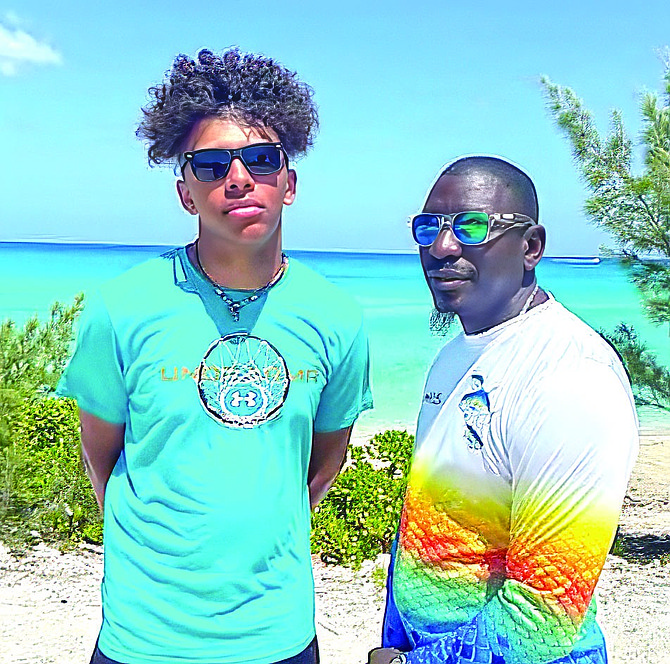
    A devastating accidental drowning has claimed the life of a 16-year-old Bahamian-American teenager, a skilled and passionate swimmer whose death has left his family grappling with shock and unanswered questions about the tragedy that unfolded on a popular Michigan lake.

    Kaden Dean Smith was enjoying a family gathering at Gun Lake, located in Orangeville Township, when he went missing while swimming on August 12. After a two-day search conducted by local emergency crews, his body was recovered from the lake on August 14 by response teams working with Michigan State Police out of Barry County. Initial official records note the teen was last seen swimming on the evening of August 12.

    For Kaden’s father Audley Dean, a resident of Grand Bahama with years of professional experience in the diving industry, the tragedy feels unfathomable. He describes his son as a confident, experienced swimmer who spent countless hours in and around water, and who knew Gun Lake well from regular family trips to the area. He says he has yet to receive a clear, full account of the incident; Kaden’s mother, who was at the gathering when the accident occurred, was too overwhelmed by distress to share a detailed timeline of events.

    Dean shared that Kaden was swimming with a group of friends when trouble struck as the teen was heading back to shore. “They tried to get to him in time,” Dean said in an interview, his voice heavy with grief.

    Born in the U.S. to an American mother and Bahamian father, Kaden maintained a deep, meaningful connection to his father’s home in Grand Bahama. That bond grew even stronger during a summer visit just last year, when Kaden spent months staying with Dean on the island. The pair spent nearly all their free time together on local beaches, with Dean never once worrying about his son’s water safety thanks to his proven swimming ability and the teen’s obvious love for the ocean.

    “It was awesome,” Dean recalled of their time together, pulling out photographs of the pair’s summer outing. He had hoped this annual trip would become a beloved family tradition, with Kaden returning to Grand Bahama every one to two years to reconnect with his Bahamian roots.

    Now, Dean is left to reconcile his deep confidence in his son’s skills with the sudden loss. He reflected on the unforgiving, unpredictable nature of open water, a truth he has learned from decades of working around the ocean that makes this tragedy no less devastating.

    “It’s just one of those freaky things,” he said. “The ocean and water in general just don’t respect anybody, I can tell you that. I mean, I’ve watched people drown in shallow water. It’s tough.”

  • GB mom overcomes stage two breast cancer

    GB mom overcomes stage two breast cancer

    For 30-year-old Desire Sands of Grand Bahama, the past year has been defined by parallel grief and grit: just seven months after laying her mother to rest following a breast cancer battle, she received a diagnosis of stage two breast cancer herself. Now, after months of grueling treatment, Sands is celebrating the milestone of being declared cancer-free, a win she calls nothing short of a second chance at life.

    When Sands received her diagnosis in April 2025, her daily routine shifted dramatically. What had been days spent playing with her three-year-old young son turned into a grueling cycle of regular trips from Grand Bahama to New Providence, where she underwent chemotherapy appointments at Princess Margaret Hospital’s Oncology Clinic. Through every step of the treatment process, she carried the memory of her mother, who had lost her own fight with the same genetic-linked disease just months prior.

    The life-changing confirmation of her remission came on August 10, when a close friend accompanied her to a routine appointment with her oncologist on Grand Bahama. As her care provider reviewed her pathology reports and blood work, he delivered the news Sands had waited months to hear: she was officially cancer-free. “My initial reaction was emotional because that’s something I’ve been waiting to hear,” Sands shared in an interview. “I’m still processing it honestly, and I was excited to give the good news to the same persons I gave the bad news to when I first got diagnosed.”

    Sands says the clean bill of health feels like a new beginning, an opportunity to live with even more intentionality than she did before her diagnosis. Her oncologist echoed that sentiment, encouraging her to pursue new goals from going back to school to learning a new skill, reminding her it was finally time to embrace the next chapter.

    But Sands’ road to remission was far from easy. A person living with sickle cell disease, she faced amplified complications during her final four rounds of chemotherapy. The powerful treatment triggered severe joint pain that was hard to distinguish from a sickle cell crisis, leaving her struggling to cope with unrelenting discomfort. She was admitted to hospital twice during this period, and at one point required three blood transfusions to stabilize her health.

    Even at her lowest points, however, Sands never allowed fear of death to take root. “I never allowed negative thoughts to overwhelm me,” she explained. “Anytime something happened I just took it as “I’m not going to rush my process” even though I wanted to be done quickly.”

    One of the hardest parts of her journey, she said, was maintaining a sense of strength for her young son, who often noticed when she was fatigued or unwell. Sands made a deliberate effort to explain her illness to her son in age-appropriate terms, and he soon developed a gentle understanding of what she was going through. After treatments, he would kiss her treatment port and check in to ask how she was feeling. That small, consistent support kept her going, she said: “I know I needed to keep going for him because he saw me at my lows and I wanted him to see the good too.”

    Sands credits her unwavering faith in God as a core source of strength throughout her battle, alongside the support of friends and family. Cancer has touched multiple generations of her family, and even as she grieved her mother’s death while fighting her own diagnosis, she said her mother’s memory remained a constant inspiration.

    Now stepping into what she calls her new chapter, Sands wants to share a message of hope with other women navigating breast cancer treatment. Too often, she said, society frames a cancer diagnosis as an automatic death sentence, and doesn’t celebrate enough the stories of people who fight and win. But that narrative doesn’t have to hold, she said: “Cancer isn’t a death sentence. Once you lean on God’s strength and do as your doctor says your journey will be a good one.”