作者: admin

  • PM Skerrit says now is the time for greater unity in Dominica

    PM Skerrit says now is the time for greater unity in Dominica

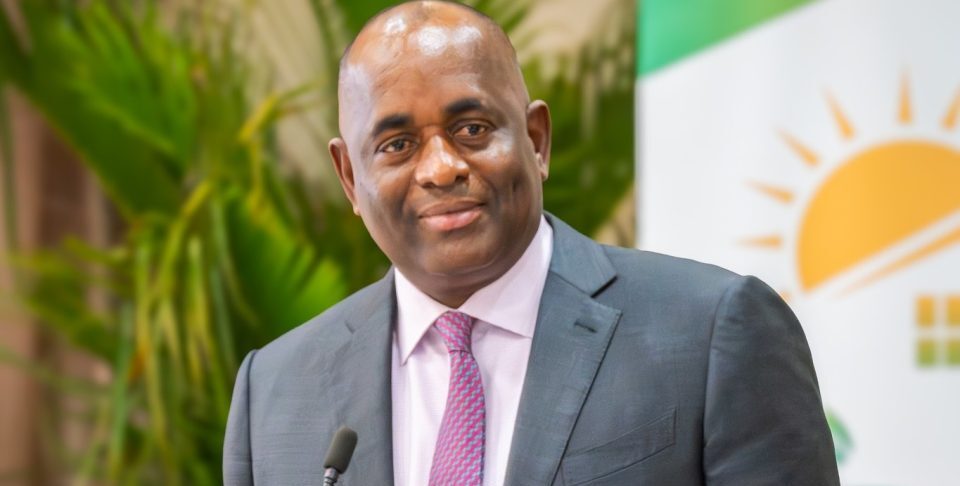
    Prime Minister Roosevelt Skerrit of Dominica has issued a compelling appeal for national solidarity as the Caribbean nation confronts significant diplomatic challenges with the United States. Speaking at a recent press conference, Skerrit addressed the dual developments that have placed Dominica under international scrutiny: its inclusion on the U.S. travel restriction list and a new visa bond requirement imposed by the Trump administration.

    The restrictions, enacted through a presidential proclamation on December 16, 2025, cite national security concerns and deficiencies in foreign identity-management systems. Concurrently, the U.S. State Department has classified Dominica among 38 nations whose citizens must now post financial bonds—typically ranging from $5,000 to $15,000—when applying for B1/B2 visas, creating substantial financial barriers for Dominican travelers.

    Skerrit emphasized that these external pressures should transcend political divisions, stating, ‘There are moments in time when we have to stand in solidarity with each other.’ He rejected opposition narratives that frame international challenges as opportunities for political gain, noting that crises affect all citizens regardless of political affiliation.

    The Prime Minister highlighted his administration’s consistent leadership through various national challenges, both natural and external. ‘I maintain a calm and level head when challenges confront us,’ Skerrit asserted, positioning himself as a steady leader capable of navigating complex international relations. He called for collective problem-solving, urging citizens to contribute their ‘skills and talent at the disposal of the state.’

    Looking forward, Skerrit expressed hope for increased national unity in 2026, emphasizing shared responsibility and mutual benefits for all Dominicans amidst these diplomatic hurdles.

  • VS trekt zich terug uit 66 internationale organisaties

    VS trekt zich terug uit 66 internationale organisaties

    In a sweeping move that signals a profound shift in foreign policy, the Trump administration has formally suspended U.S. financial support to 66 international organizations through a presidential executive order signed Wednesday. The targeted entities span multiple United Nations agencies and global partnerships, with particular focus on climate, labor, and social initiatives that the administration has characterized as “woke” overreach.

    The extensive list includes both UN-affiliated bodies and independent international forums such as the Partnership for Atlantic Cooperation and the Global Counterterrorism Forum. Secretary of State Marco Rubio defended the action, stating many organizations were “redundant, poorly managed, wasteful of resources, and threatened U.S. sovereignty and prosperity.”

    This withdrawal represents an acceleration of the administration’s selective approach to global engagement, following previous exits from the World Health Organization, UN Refugee Agency (UNRWA), and UN Human Rights Council. Critics describe the approach as a “my-way-or-the-highway” strategy that only embraces international cooperation when perfectly aligned with Washington’s interests.

    The policy shift coincides with heightened U.S. military activities that have unsettled both allies and adversaries. Recent actions include the capture of Venezuelan leader Nicolás Maduro and signals that the U.S. might consider acquiring Greenland. On Wednesday morning, U.S. authorities seized two Venezuelan-linked oil tankers under sanctions, part of broader efforts to control the world’s largest proven oil reserves.

    Among the most significant withdrawals is from the UN Framework Convention on Climate Change (UNFCCC), the foundation of the Paris Climate Agreement that the U.S. previously abandoned under Trump. Climate experts and former advisors have condemned the move as “shortsighted and damaging” to global climate policy.

    The disengagement extends to humanitarian efforts, including defunding the UN Population Fund, which supports global sexual and reproductive healthcare. While Republican critics had previously accused the organization of promoting forced abortions, a subsequent State Department evaluation found no evidence supporting these claims.

    The administration indicates it will redirect resources to strengthen U.S. influence in strategic international institutions where competition with China is intensifying, particularly the International Telecommunication Union and International Labor Organization.

    This mass withdrawal forces the UN and related bodies into significant restructuring and budget cuts while highlighting the growing divide between the U.S. and other nations on multilateral cooperation. The repercussions may fundamentally reshape global approaches to climate change, human rights, and security challenges.

  • BCCI Warns Against BTL-SMART Acquisition Without Competition Safeguards

    BCCI Warns Against BTL-SMART Acquisition Without Competition Safeguards

    The Belize Chamber of Commerce and Industry (BCCI) has issued a stark warning regarding the proposed acquisition of Speednet/SMART by state-owned Belize Telemedia Limited (BTL), asserting that the transaction could dramatically reconfigure the nation’s telecommunications landscape with profound implications for consumers, businesses, and national financial stability.

    While acknowledging potential efficiency gains and enhanced investment capacity through market consolidation, the BCCI emphasized that the absence of a robust legal framework and protective measures makes any current endorsement of the deal premature and potentially detrimental to national interests.

    The Chamber delineated four critical areas of concern. First, it highlighted significant transparency deficits, particularly regarding the limited disclosure of ownership structures and valuation methodologies, which obstruct public and stakeholder assessment of the deal’s fairness and underlying motivations. Second, reported connections between Speednet ownership and politically exposed individuals have created perceptions of conflict of interest, raising fundamental questions about whether the acquisition serves public welfare or private advantage.

    Third, the BCCI expressed apprehension about the financial exposure of the Social Security Board as a major shareholder, warning that inadequate oversight could jeopardize its capacity to fulfill benefit obligations to contributors. Finally, the Chamber cautioned that market consolidation without stringent safeguards could precipitate higher consumer prices, diminished service quality, reduced innovation, and weakened bargaining power for both individual consumers and corporate entities.

    The political dimension emerged when Prime Minister John Briceño, addressing the matter in December 2025, distanced himself from the negotiations, characterizing BTL as a private entity despite government ownership and emphasizing that any transaction would require comprehensive public justification.

    Earlier, in July 2025, business magnate Lord Michael Ashcroft provided context during a media appearance, revealing that the Waterloo Charitable Trust—which also controls Universal Health Services—holds majority ownership of Speednet. Ashcroft contended that monopoly concerns should be balanced against BTL’s predominantly government-owned status, suggesting profits ultimately benefit the state. He further argued that strategic consolidation might be necessary for Belize to compete effectively against emerging global competitors like Starlink, warning that failure to adapt could result in foreign dominance of the telecommunications market.

    The BCCI concluded that any consideration of the acquisition must be predicated on the prior establishment and implementation of comprehensive competition and merger control legislation, mirroring frameworks adopted in Jamaica and Trinidad and Tobago. Essential prerequisites include full verified disclosure of beneficial ownership, independent third-party valuation, transparent public consultation processes, binding commitments on pricing and service quality, and absolute protection of public pension funds. The Chamber urgently called upon the Government of Belize and all involved parties to suspend consolidation efforts until these fundamental safeguards are formally enacted.

  • ANNOUNCEMENT: Creole Heartbeat says thankyou for the success of 2025 Dominica Music Awards

    ANNOUNCEMENT: Creole Heartbeat says thankyou for the success of 2025 Dominica Music Awards

    WhatsApp, the globally renowned messaging platform owned by Meta, has unveiled a transformative feature that converts voice messages into written text. This innovation addresses a fundamental challenge of modern digital communication by allowing users to read voice messages when listening is inconvenient or impossible.

    The technology employs sophisticated speech recognition algorithms capable of processing audio messages in real-time. Users now have the option to view transcribed text alongside received voice notes, providing unprecedented flexibility in how they consume audio content. The feature includes customizable playback speeds and maintains WhatsApp’s signature end-to-end encryption throughout the transcription process.

    This development responds to growing user needs for accessible communication tools, particularly in environments where audio playback is impractical. Early testing indicates significant improvements in user experience, especially for those with hearing impairments or professionals navigating workplace communication constraints.

    The rollout represents WhatsApp’s continued evolution beyond simple messaging into a comprehensive communication platform. Industry analysts note this positions WhatsApp competitively against other messaging services that have begun implementing similar functionality, though WhatsApp’s implementation benefits from Meta’s extensive AI research infrastructure.

  • Five contestants announced for upcoming Miss Teen Dominica 2026

    Five contestants announced for upcoming Miss Teen Dominica 2026

    The Commonwealth of Dominica has officially presented its five distinguished finalists for the upcoming Miss Teen Dominica 2026 pageant. The candidates made their inaugural public debut during a ceremonial launch event hosted at the Alliance Française on Wednesday, marking the commencement of this highly anticipated national competition.

    The selected cohort represents various educational institutions across the island: Jeffrine Joseph from Castle Bruce Secondary School, sponsored primarily by the Waitukubuli Dance Theatre Company; Joyette Carbon of Portsmouth Secondary School, backed by Climate Limited and several beauty and wellness enterprises; Janeece Williams from Goodwill Secondary School, supported by New India Insurance Co. Ltd.; Marina Jno Baptiste from Operation Youth Quake, sponsored by the Department of Social Services; and Ladira Dyer of Isaiah Thomas Secondary School, with sponsorship from Springfield Trading and S-Mart Pharmacy.

    This prestigious event, celebrating youth excellence and cultural representation, is scheduled for Sunday, February 8th, with the coronation ceremony commencing at 5:00 PM. The pageant serves as a platform to showcase the talents, intelligence, and cultural awareness of Dominica’s younger generation, while simultaneously promoting community engagement and national pride through its sponsorship network involving local businesses and governmental departments.

  • Centenarian, family celebrate milestone

    Centenarian, family celebrate milestone

    The tranquil neighborhood of Ealing Park in Christ Church became a scene of national celebration as Doreen Claudine Irene Cummins, Barbados’ latest centenarian, was honored with a special presidential visit. Marking her 100th birthday on Wednesday, Mrs. Cummins received President Jeffrey Bostic at her home where she shared laughter, wisdom, and remarkable life stories with distinguished guests and family members.

    Displaying sharp wit and vibrant personality, Cummins greeted President Bostic with historical perspective, noting that while a governor general had previously visited her mother in the same household, she particularly valued the current presidential acknowledgment. “Thank God the best president get to sit down with me,” she remarked with cheerful appreciation.

    Born in 1926, Cummins asserted her continued mental acuity despite her advanced age. “I was born in 1926, and you know that I know everything,” she confidently declared to the assembled company.

    President Bostic praised her milestone achievement with cricketing analogy, observing: “This is a significant achievement. It seems as though now we are having more centenarians than we are having batsmen making hundreds for us. This is really wonderful.”

    Cummins reflected on her extensive working life that began at age 13 after attending St Thomas Girls’ School. She detailed her professional journey from Spring Farm, St. Thomas to St. Michael, where she initially worked as a shop assistant earning $7 weekly before advancing to entrepreneurship. “I keep a rum shop for 40 years,” she recounted of her business tenure.

    When soliciting advice for contemporary youth, Cummins emphasized the foundational value of respect that characterized her generation. “Listen to me, in my day it was the same thing. All that is different, we had respect for old people. If you saw an old person you would run and hide. But the young people ain’t care,” she observed regarding evolving social norms.

    The mother of five attributed her longevity to simple culinary pleasures and traditional practices. When questioned about her secret to extended vitality, she humorously cited “breadfruit coucou” accompanied by white rum. Upon inquiry regarding current consumption, she responded with unequivocal frankness: “Of course I do… every day whenever I eat my food. That is what is keeping me good.”

    The celebration included family members and local MP Wilfred Abrahams, creating an intergenerational gathering that honored both Cummins’ personal journey and Barbados’ cultural heritage.

  • Dominica introduces national gospel festival, ‘Glory in Paradise’

    Dominica introduces national gospel festival, ‘Glory in Paradise’

    The Commonwealth of Dominica has unveiled an ambitious new cultural initiative with the official launch of the National Gospel Festival, branded as ‘Glory in Paradise.’ Spearheaded by the Ministry of Tourism and Discover Dominica Authority, this groundbreaking event represents a strategic fusion of spiritual celebration and tourism development, scheduled for February 28, 2026, at Windsor Park Sports Stadium.

    The festival emerges as a collaborative endeavor between government entities, faith-based organizations, and community stakeholders, designed to enhance Dominica’s event calendar while attracting international visitors. Unlike traditional music festivals, ‘Glory in Paradise’ will offer free admission while encouraging voluntary donations, making it accessible to both residents and tourists alike.

    Tourism Minister Denise Charles Pemberton emphasized the government’s serious commitment to the event, noting that it receives identical strategic prioritization and operational resources as the internationally acclaimed World Creole Music Festival. This parallel treatment underscores the administration’s conviction that faith-based tourism represents a growing market segment worthy of institutional support.

    Marva Williams, CEO of Discover Dominica Authority, reinforced this stance, confirming that the festival benefits from the same professional production standards and promotional machinery typically reserved for flagship events. The organizational approach signals a deliberate diversification of Dominica’s tourism offerings beyond conventional sun-and-sand vacations.

    The musical lineup reflects both local talent and international acclaim, featuring Dominican artists including DJ Alfie, J-Cro, and Sanctified alongside Caribbean gospel stars Carlene Davis (Jamaica) and Positive (Trinidad and Tobago). The international roster includes Nigerian powerhouses Sinach and Ada Ehi, complemented by American gospel sensation Travis Greene.

    Beyond musical performances, the event will incorporate elements of prayer, fellowship, and thematic devotions focusing on family unity, youth development, national progress, and environmental stewardship. Organizers specifically highlight opportunities for Christian youth and local artists to gain exposure through collaboration with established regional and international acts.

    The Ministry of Tourism has extended gratitude to faith leaders and community advocates who contributed to the festival’s conceptualization, acknowledging that continued cooperation across governmental, private, and religious sectors will prove essential for the inaugural event’s success. Further details and updates will be disseminated through official channels in coming weeks.

  • GDB vacancy: Climate Finance Officer

    GDB vacancy: Climate Finance Officer

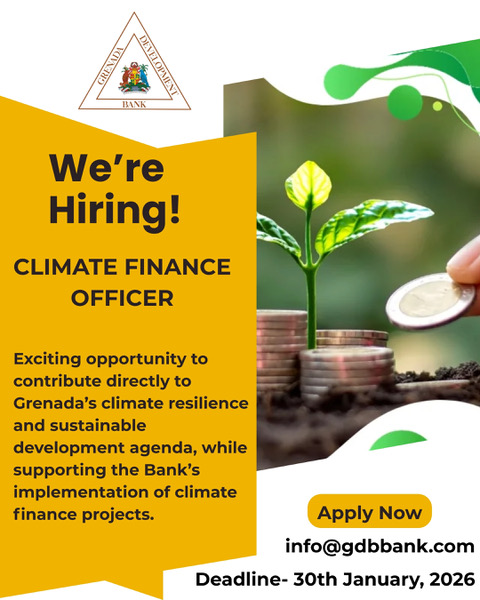
    The Grenada Development Bank (GDB) has announced a strategic recruitment initiative for a Climate Finance Officer to join its specialized Strategic Projects and Climate Finance Unit. This professional appointment represents a critical component of Grenada’s comprehensive strategy to enhance climate resilience and advance sustainable economic development.

    The newly created position offers a unique opportunity for qualified professionals to contribute directly to the nation’s environmental sustainability objectives while supporting the Bank’s pursuit of accreditation with the Green Climate Fund (GCF). The successful candidate will play an instrumental role in developing and managing climate finance initiatives focused on mitigation, adaptation, and resilience-building projects.

    Primary responsibilities include supporting the mobilization and management of climate finance from multilateral, bilateral, and donor partners. The officer will assist in meeting operational, reporting, and compliance requirements for various climate finance mechanisms while contributing to the preparation of technical submissions and board documentation.

    The role encompasses substantial project development duties, including the review of climate finance concept notes and proposals aligned with national priorities. The position requires active stakeholder engagement with government agencies, development partners, and relevant entities, in addition to supporting project implementation, monitoring, and evaluation activities.

    Qualifications require a Bachelor’s degree in Economics, Finance, Environmental Science, Development Studies, or related fields, with a Master’s degree in Climate Policy, Finance, or Sustainability considered a distinct advantage. Applicants must possess 3-5 years of experience in climate finance, development projects, or sustainable finance, with familiarity of environmental safeguards and results-based frameworks.

    The position operates primarily from an office environment with occasional fieldwork across Grenada, Carriacou, and Petite Martinique. Interested candidates must submit a comprehensive cover letter and curriculum vitae to the Human Resource Manager by January 30, 2026. GDB emphasizes its commitment to equal opportunity employment and encourages applications from qualified professionals throughout Grenada and the Caribbean region.

  • Belize, Guatemala, and the ICJ: Preparing for All Possible Outcomes

    Belize, Guatemala, and the ICJ: Preparing for All Possible Outcomes

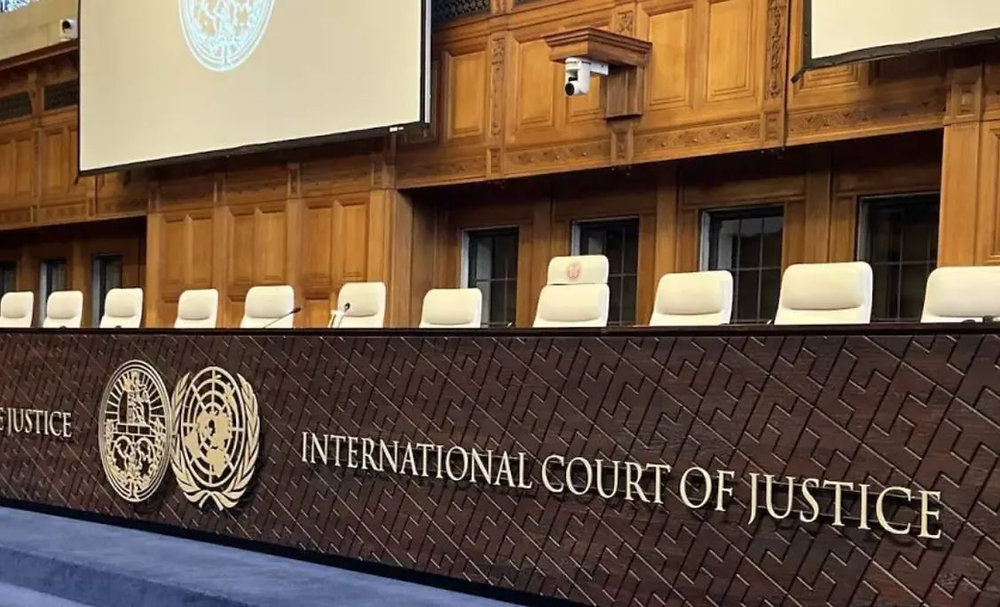
    As Belize approaches the pivotal 2026 International Court of Justice ruling on its longstanding territorial dispute with Guatemala, the nation finds itself at the intersection of historical sovereignty claims and evolving global power dynamics. The impending verdict represents a critical juncture for Belizean national identity, with potential outcomes ranging from definitive resolution to heightened regional tensions.

    The historical context of this dispute traces back to 19th century colonial agreements and subsequent interpretations. Guatemala has persistently asserted claims over Belizean territory based on treaties with Britain, while Belize has maintained its sovereignty through international law principles and self-determination rights. The mutual agreement to seek ICJ arbitration, ratified through national referenda, demonstrates both nations’ commitment to peaceful resolution despite decades of unsuccessful negotiations.

    Contemporary geopolitical considerations introduce additional complexity through the modern reinterpretation of the Monroe Doctrine under recent US administrations. Originally articulated in 1823 to deter European colonization in the Americas, this doctrine has experienced significant evolution. The Trump administration’s ‘America First’ approach reinvigorated its principles through explicit linkages to current foreign policy objectives, particularly regarding countering Chinese and Russian influence in the Western Hemisphere.

    This reformulated doctrine carries profound implications for small nations like Belize. While the United States has historically supported Belize’s sovereignty since its 1981 independence—consistently recognizing its borders and opposing Guatemalan claims—the transactional nature of contemporary US foreign policy introduces uncertainty. The strategic partnership developing between Guatemala and the US regarding immigration control and security cooperation potentially alters traditional diplomatic alignments.

    Belize’s unique position as one of few Western Hemisphere nations maintaining diplomatic relations with Taiwan rather than China further complicates its geopolitical positioning. This stance has traditionally aligned with US interests in limiting Chinese regional influence but becomes potentially negotiable within a transactional foreign policy framework.

    The convergence of these factors—the impending ICJ decision, reinterpreted Monroe Doctrine principles, and changing regional alliances—creates a multidimensional challenge for Belizean diplomacy. This situation demands sophisticated navigation of international relations while preserving national sovereignty interests.

    Strategic recommendations for Belize include maintaining diplomatic vigilance through strengthened alliances with CARICOM and United Nations partners, pursuing strategic independence through economic diversification and institutional strengthening, fostering domestic unity regarding territorial integrity, and fully engaging with the ICJ process while preparing for all possible outcomes.

    The broader lesson for small nations emphasizes that sovereignty requires continuous active defense rather than reliance on external guarantees. While historical partnerships remain valuable, ultimate responsibility for national destiny rests with domestic institutions and united citizenry.

  • The New Monroe Doctrine

    The New Monroe Doctrine

    The historical paradigm of global dominance has consistently favored powerful entities throughout civilization. From ancient tribal conflicts over territory and resources to modern ideological confrontations, the pursuit of control has remained humanity’s enduring constant. This pattern evolved significantly following World War II with the emergence of superpower rivalry between the United States and Soviet Union, transforming geopolitical competition from mere territorial expansion to ideological warfare through unconventional persuasion methods.

    The collapse of the USSR left America as the singular global superpower until China’s recent ascent, reestablishing the perpetual competition for supremacy. This dynamic creates exceptional challenges for smaller nations like Belize with limited resources, population, and global influence. Their strategic alignments have become critically consequential, where missteps in alliance selection can provoke severe repercussions.

    Venezuela’s situation exemplifies contemporary power struggles. Despite possessing the world’s largest oil reserves, the nation became an ideological battleground where China, Russia, Iran, and Cuba established significant economic, military, and governance influence. This penetration represented not benevolent cooperation but strategic resource acquisition and control expansion.

    The recent extraction of Maduro demonstrated remarkable operational effectiveness against sophisticated Russian, Chinese, and Iranian defense systems. This operation delivered multiple strategic advantages: it potentially reverses Chinese economic fortunes by controlling vital energy resources, undermines Cuba’s oil-dependent economy, and exposes limitations in rival capabilities. Russia’s engagement in Ukraine, Iran’s focus on Israel, and China’s hesitation regarding Taiwan further constrain their response options.

    This development significantly enhances hemispheric security by reducing oppressive influences and affirming democratic values. The operation serves as a potent reminder to Belize and similar nations about governance accountability and the perils of external manipulation. It underscores that global power dynamics ultimately favor decisive action and strategic capability, presenting smaller nations with clear choices between competing visions of international order.