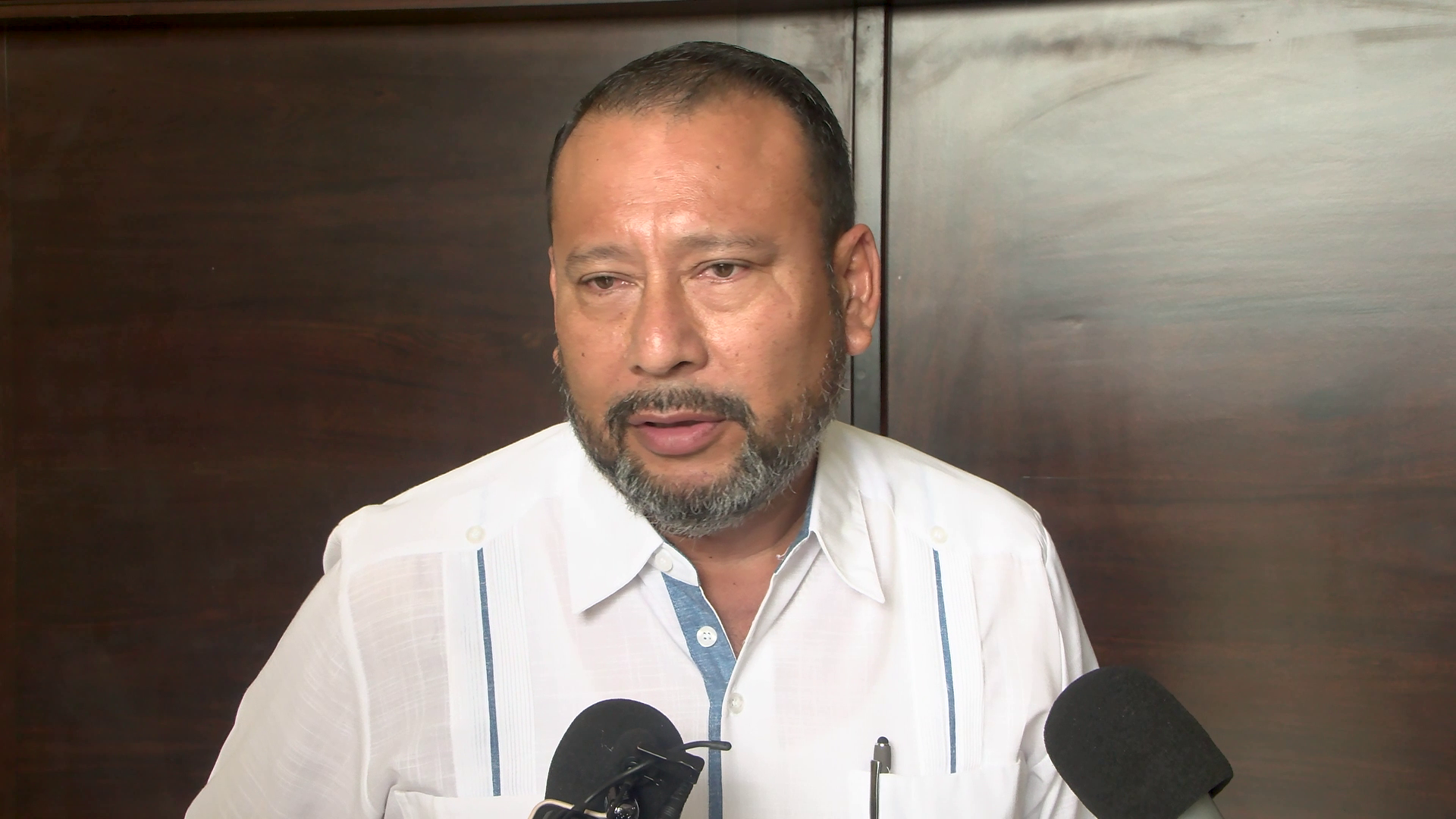
In a stark warning issued ahead of expected industry shifts, former Belizean Agriculture Minister José Mai has sounded the alarm over a historic downturn in the country’s sugar sector, revealing that national sugar output has plummeted to its lowest level in 35 years. Speaking out on the ongoing crisis, Mai emphasized that the traditional business model for sugar production in northern Belize can no longer be sustained, calling for urgent systemic changes to support struggling agricultural producers across the region.
作者: admin
-

Nineteen Shells Recovered After Supermarket Shooting
In the early hours of a Friday morning in northern San Pedro, a violent shooting incident has left a local tour guide recovering in hospital, with law enforcement currently working to track down the perpetrators.
Thirty-one-year-old Jean Villatoro became an accidental victim of the attack after he went to investigate an unusual disturbance near Palm Supermarket, according to initial reports from the scene. It was around 2:40 a.m. when Villatoro heard suspicious sounds coming from the supermarket property. Choosing to check what was happening, he approached the rear of the building, shining a flashlight into the dark to locate the source of the noise.
That is when he came face to face with four masked men, all dressed in full black clothing. Preliminary accounts indicate the men were in the process of attempting to break into the supermarket when Villatoro stumbled upon them. Before Villatoro could react, the group opened fire. The tour guide suffered two gunshot wounds to his abdomen in the hail of gunfire.
Following the shooting, Villatoro was quickly rushed to the San Pedro Polyclinic to receive urgent medical care for his injuries. As investigators began piecing together what happened, an additional key detail emerged: a security guard stationed at a nearby resort told police he heard a water vessel departing the area around the exact time shots were fired, suggesting the attackers used a boat to make their escape.
Forensic teams processing the crime scene have recovered a total of 19 spent bullet casings from the area, a find that underscores the volume of shots fired during the incident. As of the latest update, no suspects have been taken into custody, and the investigation into the shooting remains active and ongoing.
-

Security: The Ministry of Defense, the FAd’H and the UEH have signed a MoU for a strategic partnership
A landmark strategic partnership agreement was signed on August 21, 2026 between Haiti’s Ministry of Defense, the Armed Forces of Haiti (FAd’H), and the State University of Haiti (UEH), during the opening day of the National Forum on the Vision and Future of the Armed Forces of Haiti. The high-profile opening ceremony was attended by Haitian Prime Minister Alix Didier Fils-Aimé, alongside senior representatives from public sector bodies, the FAd’H High Command, the national academic community, civil society organizations, and international diplomatic stakeholders.
This memorandum of understanding (MoU) is designed to boost the academic, scientific, and professional capabilities of all serving FAd’H personnel, and to cultivate long-term collaborative ties between Haiti’s military establishment and its leading academic institution. During his opening remarks at the forum, Defense Minister Mario Andrésol framed the new partnership as a critical catalyst for advancing the long-delayed modernization and professionalization of Haiti’s national armed forces.
Andrésol emphasized that contemporary military training must extend far beyond foundational operational capabilities, arguing that robust knowledge development is the cornerstone of building a fully functional modern army. Addressing junior officers and non-commissioned officers in attendance, he noted, “The Nation entrusts you with its weapons, but the University will equip you with the most powerful tool of all: knowledge.”
UEH Rector Dieuseul Predelus echoed this sentiment, framing the signing ceremony as far more than a bureaucratic agreement. “What we are accomplishing together today, by signing this Framework Partnership Agreement, is an act of faith in Haiti, an act of responsibility toward our people, and an act of clear-sightedness in the face of the challenges of our time,” he said.
Predelus drew on global precedents to contextualize the importance of the new collaboration, noting that the world’s most powerful states consistently invest heavily in university and research infrastructure to reinforce national defense capabilities. “The United States built its scientific and technological hegemony on university campuses intimately linked to its military-industrial complex. In France, the Grandes Écoles were founded on the conviction that the training of intellectual elites is inseparable from the nation’s defense capacity. In Haiti, we must rediscover and honor this fundamental imperative,” he explained.
Since the official remobilization and rebuilding of the Haitian Armed Forces began, the institution has faced persistent gaps in specialized training and skilled personnel. Predelus stressed that the newly reconstituted FAd’H requires leadership trained to meet the most rigorous international academic and scientific standards, with expertise extending far beyond core military tactics. Officers and technicians need proficiency in geopolitics, emerging digital technologies, history, and core natural sciences to meet 21st-century defense challenges, he added.
The newly signed agreement directly addresses these unmet needs. It establishes pathways for FAd’H personnel to complete accredited degree programs and access ongoing continuing education courses, and creates a framework for joint scientific research into pressing national security and defense strategic issues. UEH has committed to developing and delivering all training programs in line with global academic standards, while ensuring curricula are rooted in Haitian national context and tailored to the unique operational missions of the FAd’H.
“By uniting knowledge and defense, the University and the Army, knowledge and security, we are returning to the deepest vision of our founders: that of a free, educated people capable of defending and governing themselves,” Predelus concluded.
In a separate announcement, Defense Minister Andrésol confirmed that the Haitian government will support integrating key conclusions from the national forum into two foundational policy documents: an updated FAd’H institutional doctrine and a new National Defense White Paper. According to Andrésol, these documents will form the backbone of a formal national Strategic Defense Plan, which will be submitted to relevant Haitian state authorities and released publicly to uphold government transparency commitments.
-

OJ Elrington Warns CitCo Over Jun’s Meat Shop Closure
A long-running local business dispute in Belize’s Belize District is on track to become a formal legal battle, after the Belize City Council moved to shut down two popular businesses operated by veteran Finnegan Market vendor Aaron Castillo. In mid-August 2026, council officials enforced a stop work order and locked Castillo out of his Jun’s Meat Shop and adjacent supermarket, prompting his legal team to issue a formal pre-litigation notice challenging the council’s actions.
Orson “OJ” Elrington, Castillo’s attorney, argued that the city council’s ejection of his client violates core Belizean legal procedure. Under local law, any eviction of a commercial tenant requires a prior court order — a requirement Elrington emphasizes is not a convoluted legal technicality, but a basic rule of due process that the council openly ignored.
The council has framed the closure as part of a broader crackdown on uncompliant businesses, saying the stop order against Jun’s Meat Shop was one of 39 issued to operators that failed to meet trade license requirements. But Elrington refutes that claim entirely, noting that his client holds a valid court-approved consent order that sets out a structured payment schedule for license renewal. According to the agreement, which was negotiated between legal representatives for Castillo and the Belize City Council, Castillo would receive his active trade license once he completed all scheduled payments. Elrington confirmed that Castillo has fully honored his obligations under the consent order, putting him in full compliance with both the court’s terms and local business regulations.
As the legal process moves forward, the full extent of Castillo’s financial losses remains unquantified. Elrington explained that Castillo and his team have been unable to access the property since the lockout, leaving large stocks of perishable goods — including the meat shop’s core inventory — vulnerable to spoilage. Until Castillo regains entry to assess the damage, the total cost of losses cannot be calculated, but Elrington made clear that the council will be held responsible for all damages his client has incurred as a result of the unauthorized closure. The pre-litigation notice formally puts the council on notice of the upcoming legal challenge, as Castillo fights to regain control of his businesses and secure compensation for his losses.
-
No Lights For Hoopers Staying on Right Path
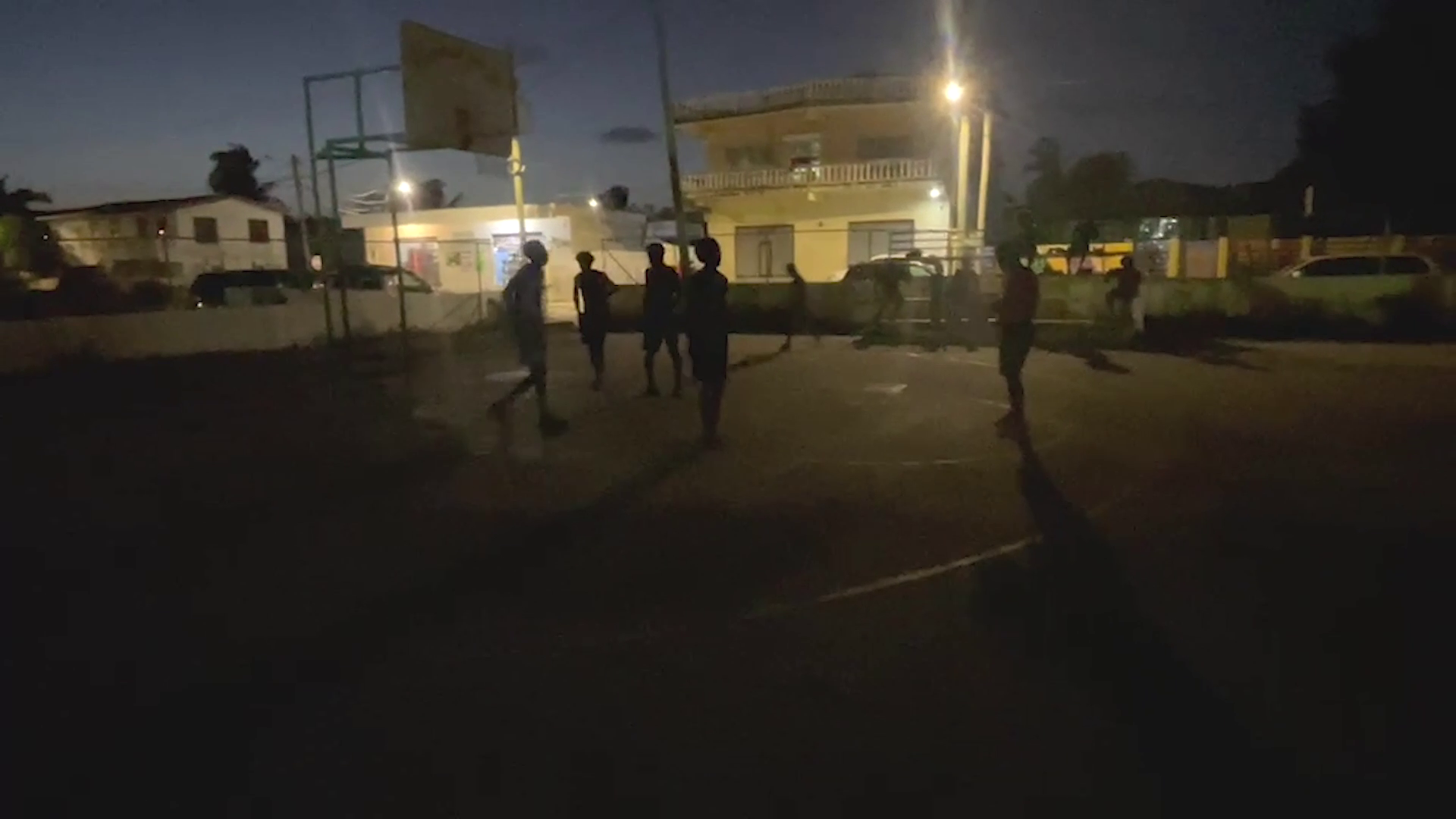
In the Belize District, a group of dedicated young basketball players has captured public attention after a viral video shared late last week showed them honing their skills on the St. John’s neighborhood court under near-total darkness. Unable to clearly make out the rim after sunset, the athletes say they are not demanding elaborate upgrades or costly renovations—they are only asking for one basic, life-changing improvement: functional lighting for their community playing space.
For these young men, the cracked outdoor court is far more than a place to shoot hoops or pickup games after a long day. In a community where young people face disproportionate risks of falling into harmful, negative lifestyles, the court acts as a rare, stable positive outlet that keeps them engaged, connected, and focused on healthy activity. That stabilizing role has become even more critical in recent weeks, after the Leadership Intervention Unit’s local employment program—one of the few structured opportunity pipelines for area youth—shut down permanently, leaving many with fewer daily activities and fewer pathways to stable work.
Now, the group is issuing a public call to action to local residents, community organizations, and business leaders across Belize. They are asking any individual or group with the capacity to donate materials, fund installation, or contribute labor to help bring lighting to the St. John’s court. For these young athletes, the impact of this small change would extend far beyond being able to see the basket after dark. A reliable set of lights would not only extend their playing hours, it would also keep the court a safe, active hub that helps them stay grounded, avoid negative influences, and continue moving forward on the right path in life.
-

Woman remanded on ammunition, cannabis charges
A 31-year-old self-employed Barbadian woman is now being held at Dodds Prison after facing multiple weapons and drug charges in a Bridgetown district court this week. Marisa Kathey-Ann Jackson, a resident of 9 Rendezvous Ridge in Christ Church, appeared before Acting Chief Magistrate Douglas Frederick at District ‘A’ Magistrates’ Court No. 1 to answer to four separate offences, all alleged to have occurred on August 18.
The first charge accuses Jackson of being in possession of 40 rounds of ammunition without the required legal license, a offence that falls under the country’s strict firearms control regulations. Under local court procedure, defendants in such matters are not required to enter an initial plea during their first appearance, so no plea was formally recorded from Jackson during the hearing. Three additional drug-related charges are also laid against her: simple possession of cannabis, trafficking of the controlled substance, and possession of cannabis with the explicit intent to supply it to others.
Jackson, who is being represented by defense attorney Shakira Emtage, was remanded into custody by Acting Chief Magistrate Frederick, with her next scheduled court date set for September 18. This step was taken to allow law enforcement officials to complete their ongoing investigation into the allegations, and to prepare the case for trial proceedings moving forward.
-
34 students earn national academic awards
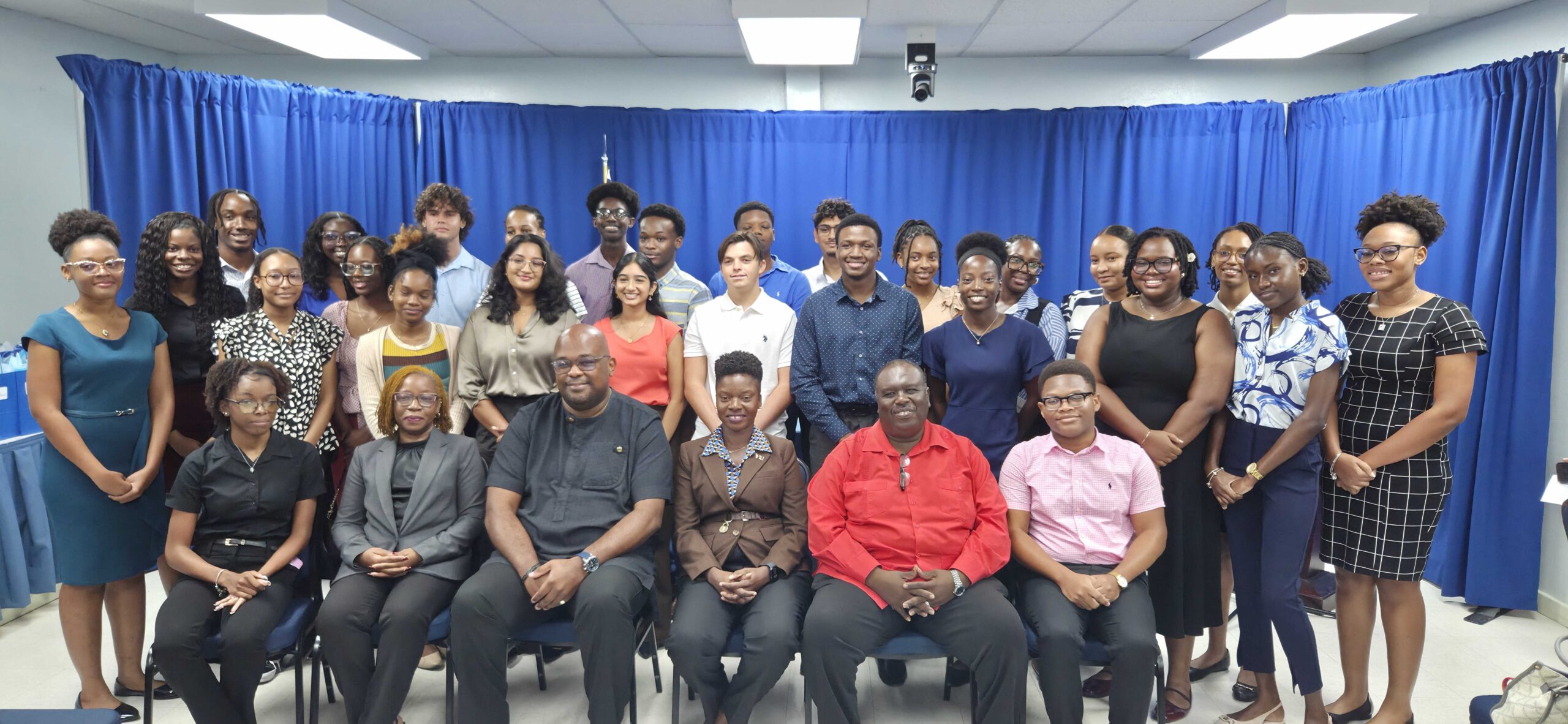
Thirty-four outstanding young scholars across Barbados have been awarded the country’s highest national academic distinctions for 2026, following exceptional performance across regional secondary examinations and post-secondary associate degree programs. The cohort includes 12 recipients of the prestigious Barbados Scholarship, 21 winners of the Barbados Exhibition, and one student honored with the exclusive Award of Excellence.
Leading the pack of scholarship recipients, Queen’s College secured seven of the 12 available awards, with the seven honorees named as Azani Blades, Ethan Dear, Chaya Griffith, Kaela Hinds, Joshua Jemmott, Amaris Nicholls and Arrielle Thompson. Two additional scholarships went to Accalia Ince and Asia Inniss of Harrison College, while Abiygayil Wiggins from The St Michael School and two Barbados Community College (BCC) students, Maliqua Cherubin and Kamani Holder, rounded out the scholarship cohort.
In the Exhibition category, BCC dominated the results, claiming 13 of the 21 available honors. The college’s winning students are Diamond Anthony, Leila Archer, Tremaine Bynoe, Paige Corbin, Krystiana Depeiza, Adannah Farley, Dominic Garner, Nyeka Gibson, Cherisse Mallett, Aziz Mehter, Decara Prescod, Savannah Small and Zyanna Waithe-Marshall. Two Harrison College students, Narisha Ashwanauth and Benjamin King, three from The St Michael School — Kamari Cummings, Sariah Mc Lean and Kaylee Lynch-Proverbs — and three Queen’s College scholars, Anaya Moore, Brandon Squires and Daniel Wickham, also secured Exhibition awards. Salena Rudder is the only recipient of this cycle’s Award of Excellence.
The results were formally announced by the Ministry of Education Transformation, with Chief Education Officer Dr. Ramona Archer-Bradshaw extending official congratulations to all honorees during the announcement. She framed the recognition as a powerful reminder of why education stands as one of the most critical investments a nation can make in its future. “At this moment, Barbados honours a remarkable group of young people whose performance in the 2026 Caribbean Advanced Proficiency Examination, the Barbados Community College’s Associate Degree programme, and in the Caribbean Secondary Education Certificate has earned them the nation’s highest academic awards,” Dr. Archer-Bradshaw stated.
Addressing the award-winning students, she emphasized that their success was no accidental outcome, but the direct result of consistent hard work and deliberate sacrifice. “Behind every grade one, every exceptional GPA, and every scholarship qualification lies a story that very few people see,” she explained. “It is a story of very early mornings and very late nights, of balancing internal assessments with examinations, of choosing commitment over convenience… Today your names are being called because your hard work spoke louder than your obstacles.”
In an inclusive gesture, Dr. Archer-Bradshaw also took time to recognize students who did not walk away with top national honors, but still achieved meaningful personal academic growth. “Additionally, I acknowledge those students who did not receive grade ones but whose dedication and perseverance were no less,” she said. “Your performance in the exam was your best performance to date. You put your best foot forward and achieved what you thought was not possible. We are proud of you too.”
Dr. Archer-Bradshaw also stressed that student achievements are never the product of individual effort alone, and highlighted the critical contributions of educators, school leaders, and family members. She extended gratitude to teachers for the long hours invested in lesson planning, assignment grading, practical skill training, and consistent encouragement that helps students believe excellence is within reach. She also celebrated parents and guardians, noting their quiet sacrifices to fund educational opportunities, steady support during periods of uncertainty, and ongoing reminders to stay focused have been foundational to shaping the young scholars honored across the country.
-

Court file delays leave cases hanging for years
Barbados’ Magistrates’ Courts are grappling with a systemic crisis of crippling delays in the completion of case files, with some accused individuals waiting three years or longer to receive the documentation needed to move their cases forward, two top legal experts have revealed. This backlog has extended pre-trial remand stays for many defendants and left both people accused of crimes and their accusers in prolonged legal limbo, creating significant threats to the fairness of the island nation’s justice system.
Last week, acting Chief Magistrate Douglas Frederick publicly voiced his frustration over the repeated adjournments that result from incomplete files prepared by investigating officers. He noted that while Barbados Police Force is widely regarded as one of the most efficient in the world, capable of apprehending suspects within a week of most reported crimes, the failure to finalize case files after an arrest remains an intractable bottleneck. “Today, the prosecution would have gotten up and would have said: ‘We have no file. We have no file.’ And if you look at the dates of the matter, you will see that it is a little frustrating to people coming and they don’t have the files,” Frederick said.
Senior Counsel Angella Mitchell-Gittens, speaking in an interview with Barbados TODAY, explained that file delays have become so routine that legal professionals no longer expect files to be ready within the first 12 months after an individual is charged. “I guess generally speaking you expect that there’s going to be a period when there is no file. So on average I would say within the first year I don’t have any expectation of a file and maybe sometimes even approaching the second year you have no expectation of a file,” she stated.
Mitchell-Gittens traced the root of the issue to systemic under-resourcing, noting that a small pool of overstretched police investigators are responsible for handling all active cases, especially the more complex investigations that require significant time and resources. The human cost of these delays, she emphasized, is far-reaching. For defendants held in pre-trial detention, the delays translate to months or years of unnecessary incarceration before their case even begins. Even for defendants granted bail, the lingering open case can derail employment opportunities and upend daily life for years. Some cases remain unresolved for as long as five or six years, with defendants repeatedly appearing in court only for the matter to be adjourned once again due to a missing file.
While some judicial officers choose to dismiss straightforward cases that have gone without a file for two years, Mitchell-Gittens noted that there is no universal rule for when dismissal is required – the decision is left to the discretion of individual judges. Crucially, she added, even a dismissal does not always bring closure for the accused. If a case is thrown out without a full adjudication on its merits, prosecution can refile the charges at a later date, leaving defendants in a permanent state of uncertainty about their future.
Mitchell-Gittens also pointed out that even defendants who wish to plead guilty and resolve their cases quickly are trapped by the backlog. Many people who have admitted wrongdoing have been forced to return to court every 28 days for months on end, simply waiting for their file to be completed. She proposed a procedural change to ease this backlog: courts could accept partial evidence to establish that a case is triable, then transfer the matter directly to the High Court without waiting for a full, finalized file.
Fellow Senior Counsel Andrew Pilgrim echoed these concerns, calling the failure to deliver complete case files the “fundamental and principal cause of delay in the [Barbados justice] system.” He questioned the logic of arresting and charging individuals when years pass without investigators compiling the evidence needed to proceed with a trial. “What did you charge a person for if you don’t have evidence?” Pilgrim asked, noting that the delays touch both low-level and serious criminal cases. In some instances, he added, arrests are made prematurely, before investigators have done enough foundational work to build a complete file.
To push the system to reform, Pilgrim urged judges and magistrates to set firm, non-negotiable deadlines for prosecution to complete files. “Give the prosecution a deadline, say ‘I’m going to give you a year to be ready and if you’re not ready in a year, I’m going to dismiss it’, it will have a greater impact on the police,” he argued. He noted that while courts have historically granted police additional leeway to account for chronic understaffing, this flexibility has ultimately removed any incentive for the system to address the backlog and improve efficiency. Beyond prolonged detention and uncertainty, Pilgrim added that delays also weaken the quality of evidence, as witnesses’ memories fade years after the alleged crime – a problem that impacts both civilian and expert witnesses alike.
-

UWI scientists eye non-chemical alternatives to curb vector-borne diseases
Barbados is poised to become the next site for cutting-edge mosquito-borne disease control research, as scientists from The University of the West Indies (UWI) Cave Hill’s Centre for Biosecurity Studies move forward with plans to test a locally developed lethal ovitrap and evaluate a globally successful biological control method that has drastically cut dengue rates abroad.
For years, Caribbean nations like Barbados have relied heavily on chemical insecticides to curb populations of disease-carrying mosquitoes, particularly Aedes aegypti and Aedes albopictus – the primary vectors for dangerous illnesses including dengue, chikungunya, yellow fever and Zika. Growing concerns over chemical resistance and environmental impacts have pushed researchers to pursue sustainable, targeted alternatives, and two promising options are now moving toward local assessment.
The first tool under development at UWI is the lethal ovitrap, a purpose-built trap designed to mimic the small, dark water-filled breeding grounds that container-breeding Aedes mosquitoes prefer. The design is deceptively simple: a dark water-holding container fitted with a fine mesh screen positioned below an egg-laying surface. When female mosquitoes enter the trap to lay eggs, the eggs drop through the mesh into the water below. Larvae hatch and develop, but any emerging adult mosquitoes become trapped beneath the mesh and cannot escape to continue spreading disease. Centre director Dr. Kirk Douglas calls the device a mass adult mosquito removal tool that expands the existing vector control toolkit and reduces dependence on chemical interventions.
“It’s an innovation we have started at the Centre for Biosecurity Studies at UWI Cave Hill,” Douglas explained in an interview with Barbados TODAY. “We are hoping to launch a formal field trial soon, where we will monitor treatment areas to measure how these mass removal devices reduce transmission of not just dengue, but a range of other vector-borne diseases.”
Alongside the ovitrap project, the centre is closely tracking the global performance of Wolbachia pipientis, a naturally occurring endosymbiotic bacteria that has emerged as a leading biological control alternative. The bacteria, which lives naturally inside the cells of many insect species, works by blocking viral replication inside mosquito bodies, preventing them from spreading dangerous diseases to humans.
Wolbachia-based control relies on two core mechanisms. When male mosquitoes carrying the bacteria are released into wild populations and mate with uninfected wild females, the resulting eggs do not develop due to cytoplasmic incompatibility, gradually reducing overall mosquito populations. In the population replacement strategy, both male and female Wolbachia-carrying mosquitoes are released, establishing a bacteria-carrying local mosquito population that cannot transmit viral diseases. The approach has already delivered dramatic results in large-scale international trials, with an Indonesian cluster randomized trial recording a 77% drop in confirmed symptomatic dengue cases and an 86% reduction in dengue-related hospitalizations compared to untreated control areas.
Initial skepticism about the method’s scalability and real-world effectiveness has largely been laid to rest by growing empirical evidence, Douglas noted. Currently, the United States is conducting final evaluations ahead of rolling out Wolbachia releases in warm, high-risk states including California and Florida, where mosquito-borne disease outbreaks are a recurring public health threat.
For Barbados, where dengue outbreaks regularly strain public health resources, the method offers a long-term, sustainable way to manage vector populations at the source. “When you target the mosquito itself through biological control, you prevent new infections at the root, which makes outbreak management far more effective,” Douglas said. The UWI centre will continue monitoring global research and trial results to assess whether the Wolbachia method is a viable strategy for Barbados, alongside advancing the upcoming lethal ovitrap field trials. As public health officials around the world grapple with rising mosquito-borne disease cases linked to climate change, the research in Barbados could offer a model for other small island nations facing similar vector control challenges.
-

Cash stolen from unnamed religious organisation
GEORGETOWN, Guyana – Authorities have confirmed an armed robbery targeting an unconfirmed religious organization on Georgetown’s Woolford Avenue that took place earlier this week, with four masked attackers stealing an undisclosed sum of money and assaulting an on-duty security guard, the Guyana Police Force announced in a statement Friday. The update, first released to local media on August 21, 2026 at 20:06 by correspondent Denis Chabrol, places the incident at approximately 2:45 a.m. on Tuesday, August 18.
The victim of the confrontation is a 63-year-old security guard employed by the organization. According to police accounts of the incident, the guard was completing a routine perimeter check of the facility’s compound when he was suddenly confronted by the four attackers. Law enforcement details confirm one suspect was armed with a knife, while a second carried a crowbar. The group immediately restrained the guard and seized his personal cellphone as a precaution to prevent an early emergency call. One attacker stayed behind to guard the restrained guard while the remaining three forced entry into the main organization building.
Investigators confirmed the suspects accessed the structure through a window on the building’s western side. Once inside, they ransacked the entire lower floor of the facility before fleeing with the stolen cash. Police have not released any details about the specific religious group targeted, declining to confirm whether the site is either the Central Islamic Organisation of Guyana or the Mahatma Gandhi Youth Organization, which both operate in the area. This lack of transparency aligns with longstanding patterns from the Guyana Police Force’s public relations division, which regularly fails to respond to follow-up media queries about ongoing investigations.
Following the incident, the suspects successfully fled the compound before law enforcement arrived. Investigators have confirmed they have obtained closed-circuit television footage from the area and surrounding buildings, which is currently being reviewed to identify suspects and map out the timeline of the attack. No arrests have been announced as of Friday evening, and police have not indicated when further updates on the investigation may be released.