作者: admin

  • American Airlines launches new Santiago–Philadelphia route

    American Airlines launches new Santiago–Philadelphia route

    As the 2025 peak summer travel period gets underway, American Airlines has launched a new seasonal air route linking Cibao International Airport (STI) in Santiago, Dominican Republic, to Philadelphia International Airport (PHL), marking another step in the carrier’s decades-long expansion of services between the two countries.

    This new seasonal service between Santiago and Philadelphia deepens American Airlines’ long-standing footprint in the Dominican Republic, where the airline has maintained continuous operations for more than half a century. Following the launch of the route, American Airlines’ current service portfolio out of Santiago includes two daily flights to Miami alongside the four weekly services to Philadelphia. Alongside this new connection, the carrier also restarted daily operations on its existing Santo Domingo-Philadelphia route on May 21; this seasonal service will run through September 9, utilizing Boeing 737 aircraft for all trips.

    Alexandre Cavalcanti, American Airlines’ Commercial Director for Florida, Latin America and the Caribbean, emphasized that the expanded route network will open greater access for international visitors to experience the rich cultural heritage and top tourism offerings that Santiago and the broader Dominican Republic have to offer. “With this new service to Philadelphia, we are connecting more parts of the world with the Dominican Republic and Santiago,” Cavalcanti said in a statement marking the route launch.

    Looking ahead to the 2026 summer travel season, American Airlines has laid out aggressive expansion plans that will see it operate as many as 27 daily departures from airports across the Dominican Republic bound for the United States. The planned 2026 schedule breaks down to six daily flights from Santo Domingo’s main airport, up to 14 daily peak-season departures from the popular tourist hub of Punta Cana, three peak-day flights from Puerto Plata, multiple daily services out of Santiago, and daily operations from La Romana.

    Airline representatives noted that this planned network growth directly responds to rapidly rising consumer demand for travel to the Dominican Republic, which has solidified its position as one of the most visited and popular tourism destinations across the entire Caribbean region.

  • Women inmates transferred from Venezuelan prison after uprising

    Women inmates transferred from Venezuelan prison after uprising

    A prison uprising at a detention facility in Venezuela’s western city of Barinas has prompted authorities to transfer more than 100 incarcerated women out of the complex, an independent prison monitoring group confirmed this week.

    The Venezuelan Prison Observatory (OVP), a non-governmental organization that tracks conditions across the country’s correctional system, announced Monday that a senior prison official had notified family members of the full evacuation of 112 female inmates. The official did not disclose the new location where the women would be held, the NGO added in a post on the social platform X.

    Per the OVP’s update, the official also outlined next steps for the facility: male prisoners at the Barinas complex will be eligible for voluntary transfer, and a joint working group made up of judges and prosecutors will be deployed to the site to conduct a full review of all inmates’ cases.

    The unrest unfolded Sunday, when 1,200 male and more than 100 female inmates at the prison—located roughly 500 kilometers from the capital Caracas—launched a coordinated protest over poor treatment. By Monday morning, hundreds of detainees had set fire to mattresses and bed linens, gathered on the prison roof, and unfurled large banners reading “No more torture.” The OVP confirmed that a small group of protesters remained stationed on the prison’s watchtowers at dawn. Dozens of anxious relatives gathered outside the facility’s gates throughout the day, waiting for updates on their loved ones.

    Inmates allege they have been systematically subjected to beatings and torture at the complex, OVP spokesperson confirmed. As of Tuesday, Venezuelan national authorities have not issued any public statement in response to the riot or the allegations of abuse.

    This uprising is the latest in a years-long string of crises to rock Venezuela’s correctional system, where activists and human rights groups have long decied chronic overcrowding, endemic violence, insufficient food rations, and near-total lack of access to basic medical care. Just months prior, in April, the government confirmed that five people were killed during a separate riot at the high-security Yare III prison outside Caracas.

    The unrest comes amid a period of major political transition in Venezuela. After U.S. special forces carried out a surprise raid that captured former autocratic leader Nicolas Maduro in Caracas on January 3, the country’s new government under President Delcy Rodriguez passed a landmark amnesty law in February under pressure from Washington. The legislation has paved the way for the release of hundreds of political detainees held under the Maduro regime. Even so, many Venezuelans have voiced public frustration over the slow pace of releases and broader prison reform, highlighting the gap between promised policy changes and on-the-ground conditions inside the country’s facilities.

  • Collado says Dominican Republic needs world-class baseball stadium

    Collado says Dominican Republic needs world-class baseball stadium

    MIAMI — During a recent interleague matchup between the Miami Marlins and New York Mets at LoanDepot Park, Dominican Republic’s Tourism Minister David Collado laid out an ambitious vision to elevate the country’s beloved national pastime into a powerhouse driver of family-friendly entertainment and international sports tourism. Drawing direct comparisons to the polished, multi-purpose spectator experiences offered at top U.S. baseball venues, Collado argued that the Caribbean nation urgently needs a state-of-the-art modern stadium to unlock this untapped economic potential.

    Collado stressed that investment in world-class sports infrastructure is far more than a upgrade for local fans: it is a strategic move to draw international visitors, supercharge the broader tourism sector, and reimagine what a baseball venue can offer local communities. Unlike the country’s current facilities, which primarily see activity during championship matches, a modern stadium should operate as a year-round destination for family recreation, community events, and entertainment, he explained.

    “As a nation that is defined by baseball, we need a venue that can welcome international audiences and serve as a space for all-family leisure and recreation,” Collado said. Beyond attracting out-of-country visitors, he noted that upgraded facilities would also create strong incentives for Dominican-born Major League Baseball superstars to compete in local domestic leagues, a pull that would draw even more baseball fans from across the globe. For example, he pointed out that a appearance by star Juan Soto at the country’s iconic Quisqueya Stadium would instantly generate significant tourist interest.

    The push for a new stadium aligns with the Dominican Republic’s broader strategy to diversify its $10 billion-plus tourism industry, with sports tourism framed as one of the fastest-growing segments of the market. Collado shared preliminary projections showing that more than 400,000 international travelers will visit the country specifically for golf tourism in 2025, a benchmark that demonstrates the massive demand for specialized sports-focused travel. He added that ongoing partnerships with leading U.S. sports organizations like the Miami Marlins have helped strengthen the country’s global tourism promotion, with Florida emerging as a critical source market: the state sends more than 600,000 visitors to the Dominican Republic each year, making it the country’s second-largest source of American tourists.

  • WATCH: Woman in custody for suspected arson in St Mary

    WATCH: Woman in custody for suspected arson in St Mary

    A shocking act of alleged arson has rocked a rural community in St Mary, Jamaica, leaving a local industrial compound damaged and a 59-year-old woman in police detention. The incident unfolded at the Surrey and Aggregate premises in the Georgia district of the parish around 2:00 p.m. on Sunday, according to official law enforcement accounts.

    The compound’s on-site caretaker, who first encountered the woman before the fire broke out, told investigators she was behaving aggressively and disruptively on the property. After multiple attempts to convince her to leave the premises peacefully failed, the caretaker made the decision to travel to the nearest police station in Annotto Bay to file a report and request assistance.

    When the caretaker returned to the Surrey and Aggregate compound alongside law enforcement, they discovered both targeted office buildings were already engulfed in raging flames. In addition to the structural damage, two privately owned vehicles — a pickup truck and a standard passenger car — were also caught in the blaze, suffering significant damage.

    Emergency response teams from the Annotto Bay Police Department and the local fire service quickly deployed to the scene to contain the fire and begin documenting evidence. By the time first responders secured the area, the suspect 59-year-old woman was taken into custody without further incident. Authorities have confirmed that formal investigations into the motive behind the alleged attack are currently ongoing, with no additional details on potential charges released to the public as of the latest update.

  • Sabrina Dockery sets 100m PB while taking sprint double in Florida

    Sabrina Dockery sets 100m PB while taking sprint double in Florida

    A rising star in Jamaican track and field has put her talent on full display across competitive meets on three continents, highlighted by a stunning personal best and two national victories at Florida’s top-tier sprint competition. Sabrina Dockery, a former gold medalist from the World Under-20 Championships relay event, dominated the women’s 100-meter sprint at Sunday’s Pure Athletics Sprint Elite, hosted at the Claremont Complex, crossing the finish line with a new personal record of 11.05 seconds in legal wind conditions of 1.6 m/s.

    Dockery had already signaled her strong form earlier in the day, clocking a wind-assisted 11.00 seconds with a 4.9 m/s tailwind to advance from the preliminary rounds. Her winning time in the final beat her own previous personal best of 11.08 seconds, which she set back in March 2023. Fellow Jamaican sprinter Niesha Burgher took second place in the 100-meter final with a time of 11.18 seconds.

    Not content with a single win, Dockery added a second gold medal to her haul in the women’s 200-meter event, where she notched another wind-aided personal best of 22.61 seconds with a 3.0 m/s tailwind. Great Britain’s Olympic sprinter Dina Asher-Smith finished just behind Dockery to claim second place in 22.78 seconds (1.4 m/s), with Burgher rounding out the podium in third at 22.79 seconds in the same wind conditions.

    Other Jamaican competitors also turned out strong performances at meets across the United States and Europe over the same competition window. At Florida’s meet, sprinter Leah Anderson secured second place in the women’s 400-meter race with a time of 52.58 seconds.

    At the Tucson Elite Classic, held at Arizona’s Roy P. Drachman Stadium, Jamaican throwers notched several top-five finishes. Samantha Hall took third place in the women’s discus event with a throw of 60.03 meters, while teammate Adrienne Adams posted a mark of 53.28 meters. On the men’s side, Chad Wright claimed fourth place in the discus with a 61.05-meter throw. Lloydricia Cameron placed fourth in the women’s shot put with an 18.59-meter throw. Elvis Graham finished fifth in the men’s javelin with a 74.37-meter throw, and Nayoka Clunis notched a 69.78-meter mark in the women’s hammer throw.

    Across the Atlantic at the 61st Pentecost Sports Festival in Germany, Jamaican long jumper Akelia Smith turned out a season-best performance to claim a close second place on the podium. Smith jumped 6.81 meters in legal 1.1 m/s wind conditions, falling just one centimeter short of gold, which went to German Olympic medalist Malaika Mihambo, who posted a winning jump of 6.82 meters in 0.2 m/s wind. Shot putter Danniel Thomas-Dodd also competed in Germany, finishing fourth with an 18.73-meter throw.

  • Union leader warns motorcycle growth has become national security concern

    Union leader warns motorcycle growth has become national security concern

    In Santo Domingo, prominent union leader and legal practitioner Mario Díaz has issued a stark warning about the mounting public challenges created by the explosive expansion of motorcycle taxis and the overall surge in motorcycle ownership across the Dominican Republic. Díaz characterizes the unregulated growth of two-wheeled vehicles as a pressing national crisis that is severely undermining road safety, disrupting urban mobility flows, and eroding public security across the country. He is calling on the national Government’s Transportation Cabinet to implement immediate, targeted interventions to reverse the current trend.

    As a core component of a comprehensive regulatory strategy designed to curb rising traffic accidents and crack down on motorcycle-enabled criminal activity, Díaz has put forward a bold proposal: a two-year temporary moratorium on all motorcycle imports. He argues that the uncontrolled proliferation of motorcycles over recent years has directly fueled a cascade of public safety crises, including thousands of preventable road accidents, widespread disregard for traffic rules, chronic urban congestion, and a spike in criminal acts ranging from street robbery to more violent offenses that rely on motorcycles for quick getaways.

    Beyond the import ban, Díaz has laid out a suite of additional regulatory reforms. He is pushing for more stringent eligibility requirements for motorcycle driver licensing, the rollout of more robust and traceable vehicle registration systems, tighter ongoing oversight of commercial motorcycle taxi operations, and targeted restrictions banning motorcycle traffic on major national highways and other high-speed intercity roads.

    Díaz also emphasized the need for updates to the country’s existing traffic legislation, arguing that current laws fail to provide adequate legal protection for licensed four-wheel vehicle drivers who are involved in collisions caused by reckless and unqualified motorcyclists. He further stressed that sustained national public education campaigns on road safety, stepped-up targeted police enforcement of existing traffic rules, and harsher punitive penalties for repeat traffic violators are all critical to turning the tide. In closing, Díaz reiterated that the unregulated motorcycle taxi sector must be treated as a top national priority, as its impacts are deeply intertwined with public health outcomes, citizen safety, and the maintenance of orderly urban life across the Dominican Republic.

  • Prime Minister Holness’ National Labour Day Message 2026

    Prime Minister Holness’ National Labour Day Message 2026

    As Jamaica prepares to mark its annual Labour Day, the nation’s leader has delivered a stirring address tying the holiday’s core ethos of service to the ongoing work of recovering from Hurricane Melissa, while laying out a bold vision for long-term national renewal. Unlike common framing that frames nation-building as the exclusive responsibility of official leadership, the address opens with a core reminder: every Jamaican carries a stake in shaping the future of their country, through collective effort, intentional discipline, and generous community spirit. This year, the call to service carries uncommon urgency, coming months after Hurricane Melissa carved a path of destruction across the island, leaving thousands of families and communities grappling with lasting damage. While many areas have made incremental progress in recovery, hundreds of households still lack adequate shelter, access to critical public services, and stable pathways to rebuild their livelihoods. For those still facing hardship, the leader offered a clear reassurance: no Jamaican left affected by the storm will be forgotten. Outlining the government’s ongoing recovery commitments, the address confirms that more than JMD 67 billion has already been earmarked for relief and reconstruction work. A substantial portion of that funding, JMD 10 billion, has been allocated to the ROOFS Programme, which provides direct grants to eligible households to fix storm-damaged roofs and complete essential home repairs. Critical public infrastructure is also being restored: damaged schools and residential properties are undergoing repairs, a strategic loan to the Jamaica Public Service (JPS) is accelerating the full restoration of power across the island, and one of the largest debris clearance operations in the nation’s history has been completed across all affected parishes. In partnership with the National Housing Trust, the Ministry of Housing, and the Government of China, the Jamaican government has secured more than 2,700 semi-permanent modular housing units for families whose homes were completely destroyed and who lack the resources to rebuild immediately. The units are awaiting the completion of reinforced concrete foundations before they can be installed, the address confirmed. Reaffirming a commitment made last December, the leader emphasized that all public and donated funds for hurricane recovery would be directed toward tangible, long-lasting, and verifiable projects. Of the JMD 1.4 billion donated to recovery efforts, JMD 600 million will fund the construction of foundations for the first 900 prefabricated units, which have already arrived on the island. The remaining donated funds will be used to restock roofing material supplies to support the ongoing government-led roof repair programme. “Our commitment is simple: to use donated funds in ways that are tangible, resilient, accountable, and traceable,” the address stated. “We will not spend recklessly. We will not be profligate. We will spend responsibly and strategically.” Repaired roofs, poured foundations, and restored homes serve as visible, undeniable proof that recovery resources are being managed honestly and effectively, the leader noted, adding that the government stands ready to allocate additional funding for affected communities as more accurate damage assessments are completed. Beyond public investment, the address highlighted the immeasurable value of volunteer effort, collective sacrifice, and international goodwill that has emerged in the wake of the storm. Images of neighbours sharing resources, communities lifting up vulnerable households, and strangers offering help to those they had never met embody the very spirit of service, sacrifice, and solidarity that Labour Day was created to honour. With that in mind, every Jamaican is encouraged to see themselves as an active participant in national reconstruction this Labour Day. The effort underway is not merely about replacing what was lost, the leader stressed: it is about rebuilding Jamaica to be better, safer, stronger, and more resilient than before. This is a chance to address longstanding vulnerabilities, reduce future climate risk, and create communities that can withstand the storms and other shocks that lie ahead. While full national recovery cannot be achieved in a single day, every small action adds up to transformative change. Jamaicans are invited to contribute in tangible ways: repairing a leaking classroom at the local basic school, replacing a broken window at the community clinic, clearing overgrown grounds at the community centre, or simply cleaning residential yards, gateways, drains and sidewalks. Just weeks ahead of the 2026 Atlantic Hurricane Season, the address also used Labour Day as an opportunity to jumpstart national preparedness efforts. By now, Jamaicans have seen firsthand how critical advance preparation is to reducing storm damage, the leader noted, and called on every household to use the holiday to inspect their property and surroundings, identify potential hazards to homes, community infrastructure and personal safety, check emergency supplies, service generators, complete affordable roof repairs, trim hazardous trees, and clear blocked drains and culverts. “Let this Labour Day be the beginning of your hurricane preparedness,” the address urged. Beyond physical reconstruction, the address turned to a deeper national duty: transforming Jamaica into a more productive, disciplined, and efficient nation. Productivity determines how quickly the nation can grow its output, while efficiency determines how wisely it uses its existing resources, and the leader argued that this critical conversation demands honest, serious engagement from all Jamaicans. For too long, the address noted, outdated mindsets have held the nation back: some have embraced the false idea that prosperity can be achieved without collective work, or that effort equals exploitation, while others have hidden behind bureaucracy and obstruction, quick to criticize but slow to create, and unwilling to take responsibility for building national value. That outdated mindset cannot build a modern, competitive Jamaica. Instead, the nation needs a new generation of doers: Jamaicans who understand risk, are willing to innovate, are prepared to work both harder and smarter, and who step forward to build, produce, solve problems, and lead. The leader emphasized a core economic truth that the next generation must embrace: rising wages without corresponding growth in productivity only fuels inflation, and sustained improvements in wages, prosperity, and living standards can only come from increased output, stronger efficiency, and better national performance. Jamaicans must embrace a new national ethos, where performance matters and performance is rewarded. This principle is particularly critical for the public sector, where accountability, efficiency, and performance-based management must become standard practice. Jamaica is globally renowned for the speed, agility, and resilience of its people, the leader noted; now, the nation must also earn a reputation for getting things done efficiently and effectively. To advance that goal, the government has established the National Reconstruction and Resilience Authority (NaRRA), with a clear mission: to drive the nation’s reconstruction forward with urgency, coordinated action, transparency, and speed. “We will prove that Jamaica can build quickly. We will prove that Jamaica can build well. And we will prove that Jamaica can recover stronger than before,” the address stated. Closing, the leader reminded Jamaicans that Labour Day is ultimately about more than work: it is about purpose, service, discipline, and national pride. If every Jamaican does their part, no storm, no setback, and no challenge can defeat the nation. “Together, let us build. Together, let us prepare. Together, let us recover. Together, let us strengthen Jamaica.”

  • U.S. Embassy processes more than 54,000 immigrant visas in Dominican Republic

    U.S. Embassy processes more than 54,000 immigrant visas in Dominican Republic

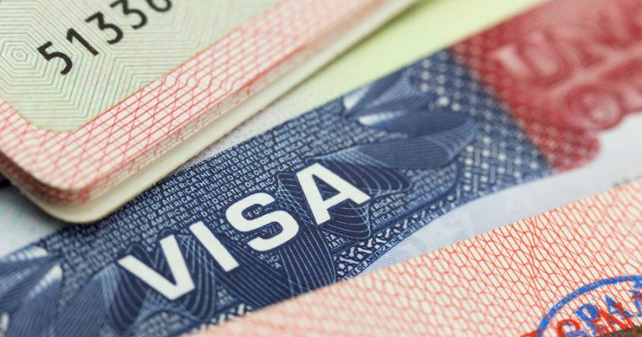
    In a recent official announcement from its mission in Santo Domingo, the United States Embassy has revealed a striking milestone in consular operations: over 54,000 immigrant visas were processed for Dominican applicants in the latest reporting period. This volume places the Dominican Republic in the unrivaled second position globally for U.S. immigrant visa issuance, outpaced only by neighboring Mexico.

    Diplomatic representatives noted that this visa processing figure is twice the size of the volume recorded by any other nation in the Caribbean and Latin American region. Beyond just a numerical metric, the embassy framed the data as a tangible reflection of the deep, longstanding connections that bind the two countries — particularly close family ties that span the border, and decades of steady diplomatic collaboration.

    In addition to permanent immigrant travel, the mission also highlighted growing demand for temporary entry to the United States across multiple categories: tourism, academic study, and short-term employment. A standout example cited is the popular Summer Work Travel program, a cultural exchange initiative that facilitates visas for roughly 4,000 Dominican university students to live and work in the U.S. during their summer break each year.

    The announcement went on to underscore that the bilateral relationship between the U.S. and the Dominican Republic is reinforced by dynamic integration across three key areas: trade, tourism, and migration. On the tourism front alone, more than five million American travelers visited the Dominican Republic over the previous 12 months, making it one of the top Caribbean destinations for U.S. vacationers. Conversely, more than 250,000 U.S. citizens currently call the Dominican Republic their home, a testament to the country’s enduring appeal for American expats and retirees.

    To conclude the statement, the diplomatic mission reaffirmed its longstanding commitment to two core priorities: ensuring the safety and protecting the interests of U.S. citizens residing in or traveling to the Dominican Republic, and streamlining processes for legitimate cross-border travel between the two nations. The embassy emphasized it will continue to work in close coordination with local Dominican authorities to deliver reliable, accessible consular services for all applicants.

  • BCRD projects US$900 million increase in Dominican energy bill

    BCRD projects US$900 million increase in Dominican energy bill

    Santo Domingo – The Dominican Republic is confronting a steeper-than-projected financial burden on its energy sector this year, as geopolitical tensions involving Iran send global oil prices soaring and ripple through domestic fuel costs and inflation, new data from the Central Bank of the Dominican Republic (BCRD) shows. The national energy bill is now on track to hit roughly $5.4 billion in 2024, a jump of almost $900 million from the government’s original forecast.

    In its latest economic analysis, BCRD attributes the unexpected price surge to global oil supply disruptions triggered by the ongoing Iran-linked conflict. The standoff has placed unprecedented pressure on the global economy, most acutely through inflated fuel and energy costs that are felt across import-dependent nations like the Dominican Republic. A key contributing factor, the central bank notes, is heightened risk to shipping traffic through the Strait of Hormuz, the critical chokepoint that carries nearly a fifth of the world’s daily oil and gas trade. Even minor disruptions or security threats to this route have an outsized impact on global crude pricing, pushing costs far higher than pre-conflict projections.

    These global headwinds have already pushed domestic inflation beyond the central bank’s target range. In April, the Dominican Republic’s annual inflation rate clocked in at 5.11%, exceeding the official 4% ±1% target that policymakers have anchored for macroeconomic stability.

    Even amid these mounting challenges, BCRD highlights that the Dominican economy has maintained surprising resilience. First-quarter 2024 economic growth hit 4.1%, outperforming many regional peers, and the country’s international reserves have grown to more than $15.8 billion, providing a robust buffer against external volatility. The bank projects that inflationary pressures will gradually subside through the second half of the year if global oil supply conditions stabilize. Under that baseline scenario, inflation is expected to end 2024 at around 4.5%, close to the upper bound of the official target. Notably, core inflation – which strips out volatile food and energy prices to reflect underlying domestic price trends – has stayed within the target range for nearly three consecutive years, a sign of broad macroeconomic stability.

  • Five injured in crash on Punta Cana–Miches highway

    Five injured in crash on Punta Cana–Miches highway

    A serious roadway collision between two passenger vehicles left at least five people injured Saturday afternoon along a busy Dominican Republic highway, local emergency authorities confirmed. The crash unfolded on the Punta Cana–Miches corridor, just a short distance from the popular Hard Rock Hotel and Casino, a top tourist destination in the coastal resort region.

    Among those hurt was Yunior Bienvenido García Macea, the operator of a red Daihatsu GS. Macea’s vehicle flipped during the incident, coming to a rest upside down on the roadway. He suffered enough harm that responding teams transferred him to the Nuestra Señora de La Altagracia General and Specialty Hospital, located in nearby Higüey to receive urgent care.

    The driver of the second vehicle involved, Luis Aquino Ortiz, was also rushed to a local medical facility for evaluation and treatment, being admitted to the Punta Cana Medical Center. Three other people who were riding in the vehicles — Hitel Arias, Nadieli Aybar, and Naideli Adames — sustained non-life-threatening injuries and were transported to Verón Hospital to address their conditions.

    Preliminary official accounts place the time of the accident at approximately 4:45 p.m. local time. Multiple emergency response agencies, including the national 911 emergency dispatch service, the Dominican Republic Fire Department, RD Vial road management authority, and Digesett traffic police, were dispatched to the scene to clear the roadway, extract trapped occupants, and provide on-site first aid. As of the latest update, law enforcement and transportation officials are continuing their probe into what caused the collision, with no preliminary findings on fault or contributing factors released to the public yet.