作者: admin

  • Foreigners at PMH have not shown any symptoms of Ebola

    Foreigners at PMH have not shown any symptoms of Ebola

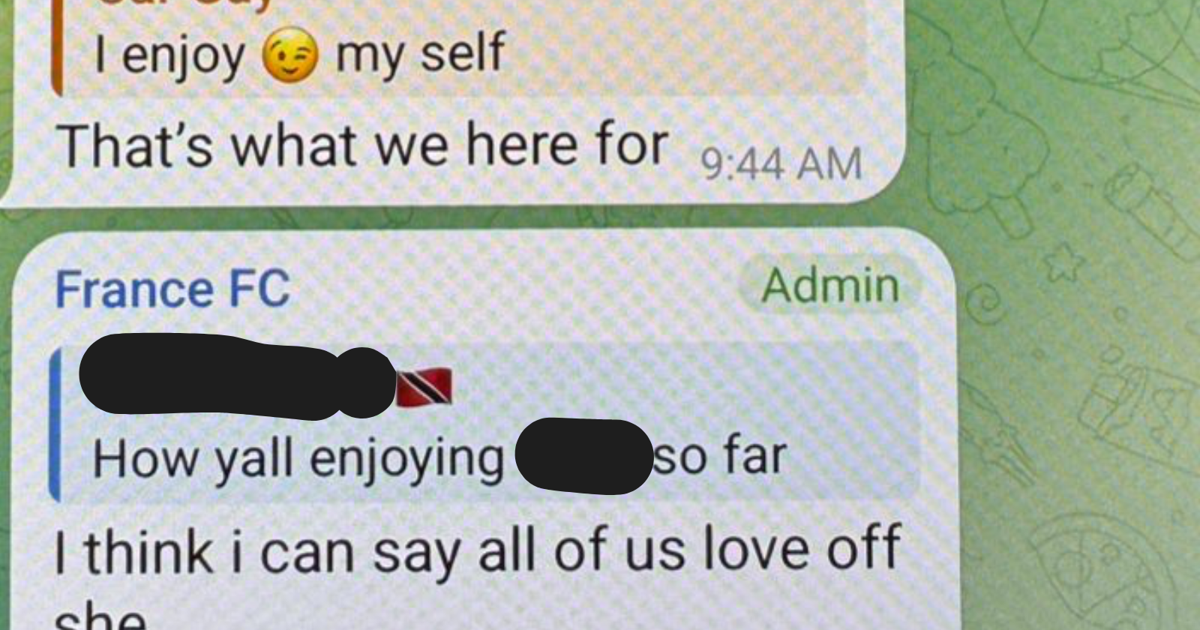
    Bahamian health authorities have issued an update confirming that two foreign nationals, placed under monitoring following travel from the Democratic Republic of Congo (DRC), remain in stable good health with no signs of Ebola virus infection. The two men, one British and one French, work as cargo pilots and were first flagged for screening on Friday upon landing at Lynden Pindling International Airport. Arriving on a British Airways flight originating from London’s Heathrow Airport, the pair presented with mild fever-like symptoms during routine entry health checks and were immediately moved into isolation as a precaution.

    The health incident triggered rapid precautionary action from officials, including an emergency press conference held the same day, after the pilots disclosed they had spent approximately three weeks in the DRC before traveling onward to Ethiopia and then to The Bahamas. The alarm came as an ongoing Ebola outbreak across several parts of Central Africa has already claimed hundreds of lives, stoking global fears of cross-border spread.

    However, health officials have clarified key context that eases immediate risk concerns: the specific regions of the DRC the pilots visited do not currently report active Ebola transmission or confirmed cases. Investigations also found the pair had no contact with confirmed Ebola patients, did not attend any high-risk gatherings such as funerals, and never handled potentially infectious materials like bodily fluids. After their initial fever was detected, no further Ebola-compatible symptoms have developed in either man.

    By Sunday, the two pilots had been transferred to the specialized Modular Unit isolation and monitoring ward at Nassau’s Princess Margaret Hospital (PMH), in full compliance with World Health Organization global health safety protocols. In an official statement, the Bahamas Ministry of Health emphasized that as of the latest update, neither individual has developed any symptoms consistent with Ebola Virus Disease. Officials also stressed that the overall risk to the Bahamian public remains extremely low, and no confirmed Ebola cases have ever been recorded in the country. All 216 other passengers and crew members on the incoming flight were screened, cleared, and released without incident.

    This monitoring case unfolded against a backdrop of growing international response to the DRC outbreak, with multiple nations implementing new travel measures to slow potential spread. The United States, for example, has enacted temporary entry restrictions for lawful permanent residents who have traveled to the DRC, Uganda, or South Sudan within the prior 21 days. When questioned Friday about potential Bahamian travel restrictions for arrivals from Ebola-affected regions, Health and Wellness Minister Dr Michael Darville noted that any such policy change would require full discussion and review by the entire national government.

    For context, Ebola is a severe, often fatal viral illness caused by strains of the Orthoebolavirus genus. Early symptoms typically include fever, intense headache, fatigue, muscle and joint pain, sore throat, and general weakness. In advanced severe cases, the disease progresses to vomiting, diarrhea, and abdominal pain.

  • Mother of murdered man calls for justice

    Mother of murdered man calls for justice

    A heartbroken Bahamas mother is pleading for clarity and justice after her 21-year-old son was gunned down in a cold-blooded ambush during what was supposed to be a routine online cellphone purchase, leaving a shattered family grappling with unfathomable loss. Vandashia Johnson, mother of Dario Butler, a quiet hardworking security officer, broke down in an exclusive interview with The Tribune over the weekend, questioning why her innocent son had to lose his life over a petty transaction when the attacker could have simply stolen his belongings and spared him.

    The tragedy unfolded on Friday night, when Butler headed to a meeting spot near Columbus Primary School, across from a local soccer field, to buy an iPhone advertised through an online platform. According to initial police accounts, the young man was ambushed by an unidentified assailant shortly after he arrived at the location. Shot in the left upper torso, Butler made a desperate bid for survival by climbing over a wall to escape, but eventually collapsed on the elementary school’s grounds. The suspect fled the scene in a light blue Suzuki Swift, heading north along Collins Avenue, with no clear license plate information available to investigators.

    “I don’t mind if y’all came to rob him, take the money and let my child go. Why my innocent son?” Johnson said through tears. “Y’all take my son away from me.” A mother of six, Johnson described the crippling toll her son’s murder has taken on her physical and mental health: she now struggles to eat, suffers from persistent insomnia, and ignores family pleas to keep up with her blood pressure medication as she navigates the overwhelming heartbreak of losing her child.

    The fatal encounter came just hours after Butler called his mother to ask if he could borrow his brother’s car to meet the seller, Johnson recalled. When her older son returned home, he handed over the keys without a second thought, and the family waited for Butler to come back with his new device. No one in the family imagined the routine online secondhand purchase would end in death.

    When word spread of a shooting near Columbus Primary School, one of Johnson’s other children called her with a sinking sense of worry, because Butler had not yet returned home. Urged by her family to check the scene, Johnson arrived and gave police a description of her son and the car he was driving. Within moments, her worst nightmare was confirmed: Dario was dead.

    Law enforcement officials confirmed they responded to the shooting after receiving an anonymous tip, finding Butler unresponsive from his gunshot wound. Investigators have confirmed the young man was ambushed en route to meet the iPhone seller, but have not yet publicly identified a suspect or clear motive. This killing marks the 26th murder recorded in the country this year, per The Tribune’s public tracking, and police say investigations are still ongoing.

    Johnson told reporters that her son often purchased secondhand items online, and that sellers almost always agreed to meet the young man at the family’s home. She told The Tribune she believes Butler may have had at least a passing acquaintance with the seller, which would explain why he agreed to meet at an off-site location. Butler’s sister has also shared that she believes her brother knew he was in danger before the shooting, though no further details have been confirmed.

    Family members describe Butler as a quiet, introverted young man who worked as a security officer, kept to himself, and almost never went out unnecessarily. He spent nearly all of his free time at home with his family, and shared an extraordinarily close bond with his mother. Their last conversation before the shooting was a lighthearted discussion about a planned family beach gathering for Labour Day, where the pair laughed about what food Butler planned to bring to the event. In hindsight, Johnson said, she was unknowingly planning for her son’s funeral just days before his death.

    The murder has compounded a year of unthinkable grief for the Butler family. Dario’s grandmother died on June 10 last year — on her own birthday — and Dario’s killing comes just days before the first anniversary of that loss. “This is very hurtful,” Johnson cried through her tears. The family is now calling for police to expedite their investigation, identify the person responsible for Butler’s death, and deliver the justice they say their beloved son deserves.

  • 66-year-old mother’s partially decomposed body discovered in bushes off Coral Road

    66-year-old mother’s partially decomposed body discovered in bushes off Coral Road

    What began as a desperate, hope-filled search for a missing elderly mother in Freeport ended in heartbreak for a Bahamian family Sunday, when investigators recovered Barbara Lewis’ partially decomposed body from dense foliage off Coral Road, closing the door on any chance the 66-year-old would be brought home alive.

    The grim discovery was made shortly before 4 p.m., after police working alongside Lewis’ close relatives launched a drone search of an overgrown area along an unpaved track behind Pioneer’s Loop Subdivision. Lewis, a resident of Spinney Road, was first reported missing to authorities the previous Wednesday, three days after she was last seen by family.

    The chain of events that led to her disappearance traces back to a hospital stay for barracuda poisoning. After being treated and discharged from Rand Memorial Hospital, Lewis was set to head home. On the day of her discharge, she waited for her boyfriend, who had brought her to the facility but was later arrested following an outburst over long wait times for care. Unaware of his detention, Lewis eventually began walking home on foot when he failed to return.

    Surveillance camera footage captured Lewis along her route home, showing her pausing repeatedly as she traveled. Her daughter, Kenya Adderley, who flew in from Florida to join the search just two days before the body was found, told reporters her mother was already visibly weak and dehydrated from the poisoning, which had caused vomiting and diarrhea. Combined with Lewis’ pre-existing history of seizures, Adderley said the conditions could easily have triggered a fatal episode during the walk.

    A key tip from a passing motorist ultimately guided search teams to the area. Adderley told reporters she received information Friday that her mother had been seen crossing from Nansen toward the unpaved track, with food in her hand, as drivers stopped to let her pass. She immediately brought the new intelligence to the Criminal Investigation Department, provided a personal clothing item to help the police K9 unit track Lewis’ scent, and accompanied officers to the site.

    When the drone took flight, searchers spotted a buzzard circling overhead and followed the bird’s path. In less than two minutes, the drone captured clear footage of Lewis’ body, roughly 300 feet into the thick underbrush. Family members had actually searched the same general area days earlier, but were unable to navigate the dense foliage on foot to reach the spot where Lewis was found.

    Even amid overwhelming grief, Adderley said the family found some small measure of peace in finally locating Lewis, ending the week of uncertainty. She expressed sincere gratitude to law enforcement and local community volunteers who dedicated time and resources to the search. “I was prepared for the worst but hoping for the best. But at least I know we found her,” Adderley said, surrounded by supportive family members at the scene.

    Her aunt Barbara Lewis echoed that sentiment, noting the family never abandoned hope of finding her through the days of searching.

    In a scathing critique of the hospital that treated her mother, Adderley said she holds Rand Memorial Hospital responsible for Lewis’ death, criticizing staff for discharging her mother without contacting any family members first, given her known seizure disorder. “All of this, unfortunately, is what caused the death of my mom,” she said.

    Police have stated they do not currently suspect foul play in Lewis’ death, but investigations remain ongoing. An autopsy has been scheduled to determine the official cause of death. For the Lewis family, the next painful step is moving through the formal identification process and making funeral arrangements to lay their loved one to rest.

  • Over 6,000 motorcycles impounded during weekend operations in Greater Santo Domingo

    Over 6,000 motorcycles impounded during weekend operations in Greater Santo Domingo

    Authorities in the Dominican Republic have launched a sweeping enforcement push targeting road safety violations and organized criminal activity, with Interior and Police Minister Faride Raful outlining key progress and upcoming initiatives following a high-level strategic meeting on citizen security.

    Led by Vice President Raquel Peña, the Citizen Security Plan meeting brought together top officials to coordinate ongoing efforts to curb road violence and restore public order across the country’s capital region. Raful confirmed that over the most recent weekend, joint enforcement operations across Greater Santo Domingo screened more than 19,000 motorcyclists as part of the national government’s long-running campaign to reduce reckless driving and traffic-related harm.

    Of the motorcyclists inspected, more than 6,000 had their vehicles impounded for violations of national traffic laws. Common infractions included operating a motorcycle without required safety gear (most notably helmets), driving without valid registration or licensing documents, traveling on pedestrian sidewalks, and failing to stop at red traffic signals. These operations are centrally coordinated by the government’s dedicated Road Task Force, a interagency body that convenes on a weekly basis to refine and deploy new measures designed to cut down on reckless driving and violent incidents on public roadways. Raful emphasized that the intensified inspection regime will continue indefinitely, and stressed that all motorcyclists operating on Dominican roads are required to comply fully with existing traffic regulations.

    Looking ahead, the minister announced that senior government officials will hold upcoming working sessions with multiple stakeholders, including representatives of local motorcycle taxi associations, leadership from the National Police, the National Institute of Traffic and Land Transportation (Intrant), and the Ministry of Public Works. The goal of these discussions is to establish clear, standardized regulations for motorcycle taxi pickup and drop-off points across urban areas, as well as to implement a systematic review to confirm that all licensed drivers have no outstanding arrest warrants or unresolved legal cases pending against them.

    In a separate update on ongoing law enforcement actions, Raful confirmed that legal proceedings are moving forward against a motorcyclist charged with assaulting a driver employed by TRAE, the country’s national school transportation system. The case remains active as the judicial process progresses.

    Beyond road safety initiatives, Raful also outlined new progress in the government’s crackdown on organized criminal networks operating in the country’s southern region. She highlighted a recent joint intervention carried out by the National Police and the Dominican Criminal Investigations Directorate (Dicrim) that targeted a well-established criminal syndicate operating across the Elías Piña and San Juan provinces.

    Despite the success of the operation in disrupting the group’s activities, Ranller Encarnación Vicente, the alleged leader of the organization, remains at large. Encarnación Vicente already has a 30-year prison sentence in place for his conviction on a raft of violent charges, including multiple murders, arson, drug trafficking, and other serious violent offenses. Officials also issued a public call for Yunior Mena Vicente, another alleged member of the network who is currently wanted under arrest warrant No. 0093-2026, to turn himself in voluntarily to authorities.

  • Dominican Republic launches electronic passport services at Punto GOB Santiago

    Dominican Republic launches electronic passport services at Punto GOB Santiago

    In a landmark move advancing the Dominican Republic’s national digital modernization and public service overhaul agenda, the country’s General Directorate of Passports officially launched electronic passport operations at the Punto GOB service center in Santiago on Monday.

    The launch event was co-headed by Lorenzo Ramírez, Director of the General Directorate of Passports, and Edgar Batista, Director of the Dominican Office of Information and Communications Technology (OGTIC). Both senior leaders framed the expansion of e-passport access to the Santiago service hub as a transformative leap forward for three core priorities: enhancing travel document security, improving cross-agency data interoperability, and upgrading the quality of services delivered to ordinary citizens.

    First rolled out nationwide in January 2026, the new Dominican electronic passport is embedded with an encrypted integrated chip that securely stores holders’ biometric and personal identifying information. This embedded technology delivers far more robust identity verification protocols than traditional paper passports, creating substantial new barriers to document forgery and unauthorized alteration. Government officials confirmed that the e-passport design meets all global standards for electronic travel documentation, a change that will not only speed up and simplify immigration processing for Dominican travelers at border checkpoints worldwide but also strengthen domestic border security protocols.

    Beyond the introduction of the new passport itself, officials also spotlighted the purpose-built technological infrastructure installed at the Punto GOB Santiago facility to support e-passport services. These capabilities include on-site high-precision biometric data capture, fully digital application processing workflows, and an integrated end-to-end customer service management system. Collectively, these upgrades are designed to cut down on processing inefficiencies and drastically reduce wait times for residents applying for or renewing their passports.

    Batista emphasized that adding e-passport services to Punto GOB Santiago reinforces the centralized citizen service model that the Dominican government has rolled out across the national Punto GOB network, which consolidates multiple public services in single, accessible locations. For his part, Ramírez noted that the expansion marks a meaningful milestone in the country’s broader digital transformation journey, and will ultimately make cross-border travel far smoother and more convenient for all Dominican citizens.

  • Environment Ministry denies illegal extraction on Haina River, cites restoration project

    Environment Ministry denies illegal extraction on Haina River, cites restoration project

    In Santo Domingo, recent active construction along the Haina River in the Manoguayabo district sparked widespread rumor and resident anxiety, with many local community members claiming the activity was unregulated illegal material mining. On Wednesday, the Dominican Republic’s Ministry of Environment and Natural Resources issued an official statement to dispel these claims, confirming that the ongoing operations form part of a state-backed environmental recovery and sanitation initiative for the degraded river basin.

    The intervention is authorized under Resolution No. 0002-2026, which designated the full-scale restoration of the Haina River basin as an official environmental emergency. For decades, unmanaged development and pollution have left the river system in worsening condition, prompting the government to fast-track a coordinated intervention to reverse damage and protect at-risk local populations. The project focuses on high-priority zones of the basin, including Palavé and adjacent stretches along the Haina industrial corridor. Preliminary technical surveys have documented a range of critical hazards in these areas: extreme sediment accumulation that clogs water flow, accelerated riverbank erosion, severely diminished drainage capacity, and unauthorized human settlement inside designated river protection zones.

    According to ministry officials, the scope of work extends far beyond basic cleanup. Crews are conducting full riverbed restoration, implementing engineered bank stabilization measures, replanting native riparian vegetation, and removing accumulated waste and debris. All works are designed explicitly to cut flood risk for nearby residential areas and critical infrastructure, a pressing concern during the region’s annual heavy rainfall seasons. A key sustainable innovation of the stabilization work is the use of gabion structures constructed from repurposed recycled tires, turning waste material into a cost-effective, eco-friendly flood defense tool.

    The official clarification was triggered after residents of Palavé, Lechería, and other nearby Manoguayabo neighborhoods raised public alarms over the presence of heavy construction equipment along the river. In response, the ministry stressed that all operations are carried out under constant official oversight, with backing from multiple partner agencies including SENPA, the national Environmental Prosecutor’s Office, and other institutions tasked with preventing and enforcing environmental crime. Officials have called on local residents to set aside their concerns, noting that the Haina River restoration project is one of the regional government’s top priorities for both environmental recovery and community safety.

  • MIVHED reports 93% surge in construction licenses in early 2026

    MIVHED reports 93% surge in construction licenses in early 2026

    In Santo Domingo, the Dominican Republic’s Ministry of Housing, Habitat and Buildings (MIVHED) has reported a dramatic 93% year-over-year increase in construction permits issued through the first four months of 2026, a milestone that underscores the success of the government’s sweeping efforts to streamline permitting workflows and upgrade institutional operations.

    The new data was presented by Housing Minister Víctor “Ito” Bisonó at the official launch of “MIVHED en Marcha,” a new regular media outreach program designed to keep the public informed about the ministry’s institutional progress, ongoing digital transformation efforts and major strategic infrastructure projects across the country.

    Between January and April 2026, MIVHED approved a total of 594 construction permits, which are tied to more than 230 billion Dominican pesos (RD$) in private sector investment. That represents a 126% jump in the total value of approved investment compared to the same four-month period in 2025, when just RD$101 billion in projects received permits.

    Bisonó explained that the series of administrative and regulatory reforms driving this growth were crafted to resolve longstanding public and industry complaints about lengthy permit approval delays, limited institutional operational capacity and low administrative efficiency. He also shared complementary positive indicators for the national construction sector: the industry grew 6.6% in the first quarter of 2026, while cement sales rose 6% year-over-year to hit a total of 1.5 million tons, signaling expanding on-the-ground construction activity.

    As a core component of its broader modernization strategy, MIVHED has already launched “MIVHED Intelligence,” a new digital platform that gives applicants and the public the ability to track permit applications online, bringing greater transparency and accessibility to the permitting process. The ministry also confirmed that its highly anticipated new Single Window for Construction system is currently 50% complete. Once launched, the system will feature updated technical evaluation frameworks aligned with the country’s latest construction regulations.

    Beyond permitting reforms, Bisonó outlined the wide range of ongoing national public works projects being advanced under the ministry’s “Route of Works that Unite” initiative. These projects include new correctional facilities across the country, affordable housing developments and urban renewal programs, new hospital construction, and targeted upgrades to sports infrastructure in preparation for the 2026 Central American and Caribbean Games.

  • SKYhigh Dominicana flight returns to AILA after technical indicator alert

    SKYhigh Dominicana flight returns to AILA after technical indicator alert

    In a recent operational incident handled according to global aviation standards, SKYhigh Dominicana, the Dominican Republic-based carrier, has confirmed that one of its scheduled services, flight DO850 set for operation on May 25, 2026, was forced to execute an unplanned precautionary return to its departure point, Las Américas International Airport (AILA) based in Santo Domingo. The disruption was triggered after the flight crew detected an unexpected system alert on board the aircraft mid-flight.

    Following strict international aviation safety protocols that are mandatory for all commercial air carriers, the flight’s operating pilots made the deliberate decision to turn back to the Santo Domingo airport as a proactive preventive measure, prioritizing the well-being of all people on board over on-time performance. In a statement released by the airline, officials confirmed that the aircraft touched down safely and remained fully under crew control throughout the landing process, with no reports of physical injuries to passengers or crew, and no additional unexpected incidents occurring during the return and landing.

    SKYhigh Dominicana’s official communication stressed that the safety of every passenger and crew member was never placed at risk at any point during the incident. The entire response to the technical alert was carried out in strict alignment with the company’s pre-established contingency procedures for in-flight technical issues, which are designed to mitigate risk effectively in unexpected scenarios.

    To reduce the impact of the incident on passenger travel plans and keep the airline’s service network operating as close to schedule as possible, all passengers originally booked on flight DO850 were swiftly transferred to an alternative standby aircraft. This arrangement allowed travelers to continue on to their intended destinations according to their original scheduled itineraries, with only limited delays incurred.

    In closing, the carrier issued a public statement of gratitude to the affected passengers for their patience and understanding during the unplanned disruption. The airline also took the opportunity to reaffirm its long-standing commitment to operational safety, noting that protecting the wellbeing of everyone on board remains the company’s number one priority across every one of its flight operations.

  • KINGS AGAIN!

    KINGS AGAIN!

    Nearly 20 years after lifting the Jamaica Premier League (JPL) trophy as a Portmore United player, football icon Rodolph Austin has etched his name into Jamaican football folklore once again – this time as a head coach, steering the St Catherine-based side to a historic record-breaking eighth top-flight national crown.

    The memorable title decider unfolded on a tense Sunday evening at Kingston’s National Stadium, where Portmore United ousted three-time defending champions Cavalier FC in a dramatic penalty shootout that ended 5-3 to Austin’s side after 120 minutes of regulation and extra time finished locked at 2-2.

    The match got off to a flying start for Portmore, as midfielder Ronaldo Robinson broke the deadlock just four minutes after kickoff, putting the underdogs ahead early. But Cavalier, gunning for an unprecedented third consecutive league title, quickly turned the tide, with rising young star Kimarly Scott netting two unanswered strikes in the 26th and 42nd minutes to hold a 2-1 lead going into halftime.

    What looked set to be a routine title defense for Cavalier shifted dramatically in the second half, when Tarick Ximines found the back of the net in the 60th minute to level the score. Neither side could find a winning goal in the remaining regulation time or the subsequent 30 minutes of extra time, sending the championship to penalties – marking the third straight season the JPL title has been decided from the spot.

    The shootout kept fans on the edge of their seats: both teams converted their first three penalties without issue, before Portmore substitute Matthew Bell slotted home his effort to put his side ahead. That advantage held when Cavalier substitute Terence Williams’ strike, coming off an unconventional run-up, was saved by Portmore goalkeeper Daniel Russell. With the pressure on, Javier Brown calmly hammered home the decisive penalty, triggering wild celebrations from Portmore players, staff and their packed contingent of supporters.

    The title ends a six-year trophy drought for Portmore United, whose last top-flight win came back in 2019. The club struggled through a prolonged slump in the wake of the COVID-19 pandemic, missing out on JPL playoff qualification entirely between 2021 and 2023, and crashing out in the quarterfinals in both 2024 and 2025 before their breakthrough 2026 campaign.

    For Austin, the fairytale win marks a full-circle moment with the club where his professional career began back in 2005. The former Reggae Boyz national team midfielder returned to Portmore as a player in 2022 following a 13-year stint playing professional football across Europe. He retired from playing just 20 months later, stepping into the head coaching role unexpectedly in September 2024 after the sudden departure of previous manager Davion Ferguson. At the time of his appointment, Austin set just one core goal: returning Portmore United to its historic status as one of Jamaica’s elite football clubs.

    Speaking to the Jamaica Observer after the historic win, Austin expressed his pride in his squad’s resilience through a turbulent season. “It’s a good feeling to get the club back where the club belongs and I’m happy for the players; they did really well throughout the season,” he said. “It’s been a roller-coaster season. Sometimes you have good times, sometimes you have bad times, but you just have to get the players together all the time because it’s football; it’s ups and downs and it’s like that.”

    A decorated veteran of the game, Austin competed at the highest levels of European football, featuring in England’s second-tier Championship and the UEFA Europa League during his playing career. He also earned 100 caps for the Reggae Boyz, won multiple Caribbean Cup titles, and played a central role in Jamaica’s historic run to the 2015 Concacaf Gold Cup final. Now, just 18 months into his coaching career, Austin already holds one of the most impressive trophy records in Jamaican club football – but he insists the moment belongs entirely to his players, not him.

    “It’s good but I don’t dwell on those things. I’m more happy for the players,” he added. “It’s not about me, it’s for the players. A lot of them haven’t won the Premier League before, and they get the chance to win it and they did that, and it’s all about them. The game is about the players.”

    Beyond ending the club’s domestic trophy drought, the 2026 JPL title also books Portmore United’s return to regional competition, with a spot in the upcoming Concacaf Caribbean Cup – a competition the club previously won in 2005 and 2019, when the tournament was known as the Caribbean Club Championship. Austin says the side is already turning its attention to competing against the best teams across the Caribbean.

    “That’s where the club wants to be and we have worked hard to try and get it there and we are here now so we have to just continue it,” Austin said. “We just have to enjoy the night, enjoy the few days, and then we start to look towards that, get the team up and ready again.”

    For runners-up Cavalier, the night ended in heartbreak, as the side missed out on a fifth JPL title and was unable to defend the back-to-back crowns it claimed in 2023 and 2024. Cavalier was also without head coach Rudolph Speid for the final, who travelled to London with the Reggae Boyz for the Unity Cup. Still, assistant coach David Laylor emphasized pride in his young squad – the youngest group across the entire JPL – whose core includes many players recently transitioning out of schoolboy football.

    “That’s football, mistakes win games and lose games at the end of the game; either you’re going to commit a mistake or your opponents will and we made a mistake in not concentrating on the defensive aspect of our game at that point,” Laylor told the Jamaica Observer. “Although we played against a good team, we believe we really could have won again, but it was not to be tonight. But, I’m just proud of the youngsters and the adjustments that they made coming from schoolboy football and transitioning into the Premier League.”

    Despite the penalty shootout defeat, Cavalier will also join Portmore United in the upcoming Concacaf Caribbean Cup, marking their fourth consecutive appearance in the regional tournament.

  • Blending Traditions: Planning a Multicultural Wedding in 2026

    Blending Traditions: Planning a Multicultural Wedding in 2026

    As global mobility and digital connection break down geographic and cultural barriers, more and more couples from differing cultural, religious and traditional backgrounds are uniting in marriage — turning their weddings into far more than a celebration of romantic love. These events are joyful merging of two personal stories, two family lineages, and often two distinct faiths, bringing a rich depth of meaning that sets them apart from homogeneous cultural ceremonies. Yet for all their beauty, multicultural weddings present a unique, common question: how can couples honor both partners’ cultural identities fully, without leaving one side feeling sidelined or their traditions diluted?

    Multicultural marriages have grown steadily more common in recent decades, and this trend shows no sign of slowing. Widespread access to international travel, cross-border career opportunities, and digital dating platforms that connect people across continents have created more space for intercultural love to bloom. Today’s couples increasingly want their weddings to reflect not just their shared future, but the unique individual identities each partner brings to the relationship. When planned with intention and care, these events stand out as some of the most personal, memorable and meaningful wedding celebrations possible.

    Historically, the most common approach for intercultural couples was to host two separate wedding events: one dedicated to each culture’s religious or traditional rituals. This model remains a perfectly valid and effective choice today, particularly when certain ceremonies are sacred, require a specific structure, or are too lengthy to combine comfortably. However, a growing number of modern couples are opting for a more integrated alternative: a single, thoughtfully designed celebration that weaves both partners’ cultural traditions together in a seamless, respectful way.

    The first step to building a successful multicultural wedding is figuring out which structure aligns best with the couple’s values and circumstances. Couples need to weigh whether two distinct ceremonies will feel more authentic to their backgrounds, or if one combined event will better reflect the unified dynamic of their relationship. Key practical considerations include logistics, travel requirements for family members, visa processes, destination plans, overall timing, and available budget. A rising middle ground gaining popularity particularly in popular wedding destinations like Jamaica is the multi-day wedding weekend: couples can highlight one culture during a welcome event, the other during the official ceremony, and center both shared identities during the main reception.

    Honoring both cultures relies on intentional inclusion, rather than last-minute token gestures. Couples can weave meaningful traditions into every layer of the wedding experience, from the structure of the ceremony and musical selections to the menu, wedding attire, decor, core rituals, and evening entertainment. For example, a couple with one Jamaican partner might hire a traditional mento band to perform during cocktail hour, incorporate a sacred ceremonial ritual from the other partner’s culture into the vow exchange, and craft a menu that highlights signature dishes from both family backgrounds. Food, in particular, is a powerful vessel for cultural storytelling, whether it takes the form of signature cocktails, themed tasting stations, homemade family recipes, or late-night snacks inspired by each partner’s childhood.

    Open early communication is another non-negotiable element of successful multicultural wedding planning. These events can trigger strong emotions, especially when family members feel protective of their cultural or religious traditions. Couples should hold frank conversations with each other first, then extend those discussions to key family members early in the planning process. Important topics to cover include religious requirements, dress codes, non-negotiable rituals, and any customs that must be preserved intact. At the same time, couples need to be honest about what is feasible given their budget, venue constraints, timeline, and overall vision for the day. The end goal is not perfect execution for every guest, but a fair balance that honors what matters most to the couple.

    Before trying to accommodate every request from family and guests, couples should first carve out time to identify their own core priorities. What elements matter most to both of them as a pair? Is it a specific ancestral blessing, a traditional cultural dance, a sacred garment passed down through generations, a beloved family heirloom to display, a specific song that holds meaning, or a favorite childhood meal? Once the couple locks in their non-negotiable elements, the rest of the wedding can be structured around these meaningful anchors.

    There is no shame in choosing two separate ceremonies if blending traditions feels forced or inauthentic. In many cases, separating events allows each culture or faith to be honored fully and true to its origins, rather than being altered to fit a combined format. That said, couples choosing this path should go into the process aware that multiple events almost always require additional planning time, more coordination, and a larger overall budget. With global travel costs continuing to rise and guest expectations evolving, careful financial planning is particularly critical for couples planning multiple events.

    Communicating clearly with guests is another often-overlooked key to a smooth experience. Couples should use their invitations, wedding website, or digital itineraries to clearly outline dress codes, explain unique religious customs, set expectations for ceremony behavior, and share the full event timeline. This is especially helpful for guests who have never attended the cultural traditions being featured. In 2026, modern tools like QR-coded invitations, custom wedding websites, and private wedding apps make it easier than ever to guide guests clearly and respectfully through unfamiliar customs.

    Finally, couples planning a multicultural wedding are strongly advised to partner with an experienced wedding planner who specializes in these types of events. Every wedding involves dozens of moving parts, but multicultural weddings often add extra layers of coordination that generalist planners may not be equipped to handle. These extra tasks can include collaborating with clergy from multiple faiths, scheduling multiple outfit changes for the couple, sourcing specialty cultural decor, balancing the timing of different ceremonial elements, and ensuring every tradition is represented respectfully and accurately. A planner with deep experience in multicultural weddings brings far more than organizational skills: they bring cultural sensitivity, practical problem-solving, and careful attention to the nuanced details that make these events special.

    At its core, a multicultural wedding is about unity, not uniformity. It is a celebration of the unique paths that brought two people together, and the new shared life they are choosing to build. With thoughtful planning, honest communication, and intentional attention to meaningful details, a multicultural wedding can be more than just a beautiful event — it can be a deeply meaningful experience that sets the tone for a shared life built on respect for difference and shared love.

    Expert commentary from Shikima Hinds, Managing Director of Shikima Hinds Events Concierge: Planning a multicultural wedding begins with intention. From wedding attire to musical selections, couples should prioritize authentic ways to weave cultural rituals and decor throughout the entire wedding experience. If merging traditions feels strained and unnatural, hosting two separate ceremonies allows each culture’s traditions to shine authentically on their own. This is a graceful, valid solution, as long as couples account for the extra time, planning work, and budget required to pull it off successfully.