作者: admin

  • CWI president salutes Windies Women

    CWI president salutes Windies Women

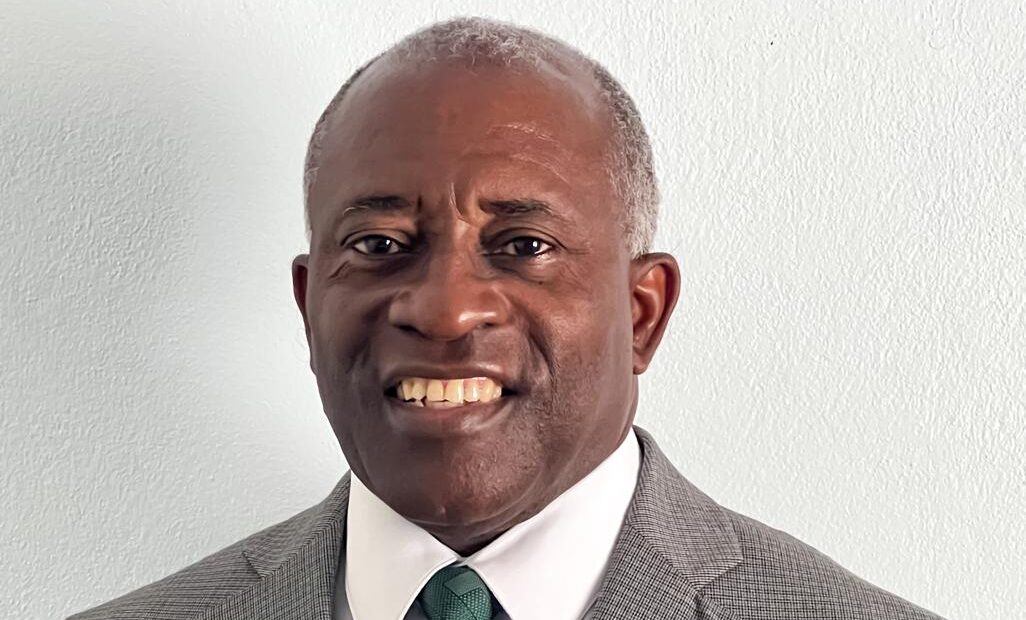
    After the West Indies Women’s cricket team bowed out of the ICC Women’s T20 World Cup in the semifinal stage on Tuesday, Cricket West Indies President Dr. Kishore Shallow has issued a public statement celebrating the team’s determined performance throughout the global tournament, even in the face of an early exit.

    Dr. Shallow extended commendation not only to the entire playing squad but also to head coach Shane Deitz and every member of the team’s backroom support staff. While he openly acknowledged that the team’s failure to advance to the tournament’s final has left fans and cricket stakeholders across the region disappointed, he emphasized that the side has every reason to take pride in their accomplishments.

    “Reaching the semifinals of a World Cup is a significant achievement that reflects the talent, commitment, and fighting spirit that this team has consistently displayed throughout the tournament,” Dr. Shallow noted in his statement. “It further confirms that we remain one of the elite competing nations in global women’s cricket.”

    The president reserved special praise for skipper Hayley Matthews, highlighting her steady and effective leadership across every match of the campaign. He also called out the critical contributions of every player in the squad and support team, stressing that competitive success at the international level is always the product of collective work. This run of form, he argued, is further proof of the strong, positive culture that is taking root in West Indies women’s cricket.

    Looking ahead, Dr. Shallow reaffirmed Cricket West Indies’ unwavering commitment to investing in the ongoing growth and development of the regional women’s cricket program. The governing body’s priority, he said, will continue to be providing elite players with all the resources, training, and opportunities they need to compete consistently for top international honors.

    Dr. Shallow closed by thanking the team for serving as outstanding ambassadors for the Caribbean region, adding: “The entire Caribbean stands with you today, just as we have throughout this campaign, and we look forward with great optimism to what lies ahead.”

  • Qpid says ‘Backup Plan’ is about survival, not distrust

    Qpid says ‘Backup Plan’ is about survival, not distrust

    Veteran Saint Lucian musician Melissa “Qpid” Moses is turning a silent, widespread crisis for women across the Caribbean into a compelling call to action with her brand-new single, *Backup Plan*. Far from targeting romantic relationships or encouraging partner distrust, the track carries a deeply personal message of empowerment, born from decades of observing women trapped in harmful dynamics they cannot escape.

    In an exclusive interview with *St Lucia Times*, Qpid pushed back against early misinterpretations of the track’s core thesis, clarifying that the song is rooted in lived reality rather than cynicism about love. “The song isn’t about promoting distrust at all; it’s about reality,” she emphasized.

    Contrary to some assumptions, *Backup Plan* was not inspired by Qpid’s own romantic experiences. Instead, it grew out of years of witnessing women suffer in abusive, toxic, and unstable relationships solely because they lacked the resources to leave. This unspoken crisis has long been an overlooked elephant in the room across many communities, Qpid explained: women spend years trapped in damaging partnerships because they see no viable exit. Without access to higher education, independent income, or a strong support network, leaving an unhealthy relationship can feel completely out of reach. Watching so many women end up stranded and broken after relationship collapse, with no safety net to catch them, was the catalyst that pushed Qpid to put this message to music.

    The track’s narrative follows a fictional woman who is left with nothing after her long-term partner abandons her for another person. While the story is fictional, Qpid notes that it mirrors the experiences of countless women across the Caribbean region.

    Qpid stresses that building a “backup plan” does not mean going into a relationship expecting it to fail. It is an act of self-love and preparation for life’s inherent unpredictability. When a relationship becomes irreparably harmful, having a backup plan ensures women do not have to remain trapped out of helplessness. For the artist, this preparation extends far beyond just building a savings account. A comprehensive backup plan includes financial independence, emotional resilience, prioritizing physical and mental well-being, and consistent practice of deep self-love. Qpid points out that society already widely encourages people to have contingency plans for their careers and finances, so there is no logical reason to treat personal relationships any differently.

    Beyond economic independence, Qpid also uses the single to challenge the harmful stigma attached to ended relationships. Too often, society frames a marriage or relationship that does not last as a personal failure, but Qpid argues this narrative needs to change. Even when two people give everything they have to a partnership, it can still come to an end. When a partner chooses to leave, women need to be emotionally and financially stable enough to walk away with their dignity intact. There is no shame in Plan A not working out, she says—all that matters is being able to pivot gracefully to Plan B.

    Qpid’s ultimate goal for *Backup Plan* is to spark broad, open conversations about independence and what healthy relationships actually look like. For women, her message is clear: it is possible to love deeply while still investing in your own security and growth. She encourages women to start saving early, build their own support networks, and position themselves so they never have to face being left stranded with no resources.

    She adds that the song’s message is just as relevant for men. Qpic hopes the track encourages dialogue about mutual respect and individual autonomy within partnerships. The core takeaway for all audiences, regardless of gender, is that walking away from an unhealthy dynamic should always be a viable option. No one should ever have to stay trapped in a harmful relationship purely for economic or emotional survival.

  • WhatsApp introduceert gebruikersnamen voor betere privacy: wat verandert er?

    WhatsApp introduceert gebruikersnamen voor betere privacy: wat verandert er?

    One of the world’s most widely used messaging platforms, WhatsApp, which boasts close to 3 billion active users across the globe, is rolling out a transformative privacy-focused update that will redefine how users connect on the service. For years, the platform has relied on phone numbers as the primary identifier for accounts, but that long-standing system is getting a major overhaul later this year: users will soon be able to create and use unique custom usernames to connect with others, eliminating the need to share personal contact information to start a conversation.

    The new functionality is being rolled out in phases, with early access already open to a small test group of users to reserve their preferred handles ahead of a broader launch in the coming months. To secure a username, users are required to update their mobile WhatsApp application to the latest version, then set their unique handle through the app’s settings menu. Notably, the reservation process can only be completed via the native smartphone app, and is not supported on WhatsApp Web or the desktop version of the platform.

    To address ongoing concerns around unwanted contact, spam, and privacy breaches, WhatsApp has built multiple layers of protection into the new system. Unlike many other social and messaging platforms, WhatsApp will not maintain a public searchable directory of usernames, nor will it suggest accounts to users based on existing contacts or usage data. This means that a user can only be found and contacted by a new person if that person already knows their exact username.

    For an extra level of security, users will also have the option to add a unique personal key to their account. With this optional feature enabled, a new contact can only reach out if they know both the user’s username and their personal key, creating an additional barrier that drastically reduces the risk of unsolicited messages from strangers and spam senders.

    The update also includes special provisions for businesses and public figures, who will get the opportunity to reserve their official usernames ahead of the general rollout. WhatsApp will hold control over high-demand and brand-related usernames to prevent impersonation, fraud, and misleading activity on the platform.

    Alice Newton-Rex, Vice President of Product at WhatsApp, emphasized that the entire feature was built from the ground up as a core privacy tool for users. “We recognize that sharing a personal phone number is a big ask for many people,” she explained, noting that users often want to start new conversations without exposing sensitive personal contact information. For years, WhatsApp has only offered reactive tools to address unwanted contact, such as the ability to block individual accounts or mute calls from unknown numbers. This new update marks a shift to proactive privacy protection, giving users control over who can reach them before any contact is made.

    As the rollout progresses, WhatsApp will notify users directly through the app once the feature becomes available in their specific region. The company has advised all users to keep their mobile application updated to ensure they can access the new privacy settings as soon as they launch.

  • Today in history: Hurricane Beryl 1 July 2024

    Today in history: Hurricane Beryl 1 July 2024

    On July 1, 2024, a meteorological anomaly that would go down in Atlantic storm history tore through the eastern Caribbean, leaving irreversible early-season destruction in its wake. Hurricane Beryl, which defied all typical seasonal timelines to become the earliest Category 5 hurricane ever recorded in the Atlantic basin and the strongest storm to form before the start of July, made landfall directly across Grenada and its neighboring island chain of St. Vincent and the Grenadines.

    Unlike the traditional Caribbean storm lore that holds “June too soon, August a must” for major hurricane activity, Beryl’s rapid, unexpected intensification caught the region off guard. Forecasters tracked the quickly strengthening storm’s trajectory toward northern Grenada and the small outlying sister isles of Carriacou and Petite Martinique through the early morning of July 1, and by mid-morning, the high-end Category 4 storm made its devastating direct hit on the two tiny islands.

    While portions of mainland Grenada sustained severe damage, Beryl’s eye tracked directly over Carriacou and Petite Martinique, turning their postcard-perfect tropical landscapes into a scene of widespread catastrophe within hours. Grenadian government officials confirmed that roughly 95% of all structures across the two isles suffered damage or were completely destroyed, with the vast majority of remaining buildings losing their roofs. When Prime Minister Dickon Mitchell conducted an early aerial survey of the damage, he summed up the scene simply as “complete devastation.”

    The storm claimed three lives in total, including one fatality on mainland Grenada when a falling tree collapsed onto a residential home. The near-total destruction of local communication networks delayed initial damage assessments for hours, leaving the central government unable to coordinate emergency response until lines of contact were finally reestablished. Once access was restored, first responders and assessment teams encountered a landscape stripped bare: uprooted, bare trees stood amid mountains of debris from collapsed buildings, and what had been a thriving community of cultural and natural beauty was left decimated.

    One year on from the catastrophic storm, however, a quiet story of resilience is unfolding across Carriacou and Petite Martinique. With support from mainland Grenada and international partners, local residents have made measurable progress picking up the pieces and rebuilding their lives and communities. While vegetation has regrown across the scarred landscape, the work of recovery remains far from complete. Countless private homes still await full reconstruction, many local businesses have yet to reopen, damaged coastal mangrove ecosystems need replanting, and daily life has not fully returned to pre-storm norms.

    Even amid the ongoing work, the islands’ vibrant cultural heritage has become a cornerstone of the recovery effort. Communities are looking forward to the return of beloved annual traditions, from Maroon Fest and Big Drum Dance to Sugaring the Piton, when the colorful performances of Shakespeare Mas will once again fill the streets of Hillsborough. These returning traditions stand as a testament to the enduring spirit of the islands, signaling that Carriacou and Petite Martinique are steadily working their way back to full strength.

  • Eight Years On, Carlisle Bay Robbery Suspect Still at Large

    Eight Years On, Carlisle Bay Robbery Suspect Still at Large

    It has been eight years since a brazen heist shook the exclusive Carlisle Bay Resort in Antigua and Barbuda, and law enforcement officials are still actively searching for the man they accuse of masterminding the multimillion-dollar theft. Anthony “Thug Life” Govia, the alleged ringleader of the scheme that stole more than 98,000 Eastern Caribbean dollars from the luxury property, remains at large eight years after the 30 June 2018 incident, topping the country’s most wanted list.

    Investigators have pieced together that the plot was a joint conspiracy between Govia and Kathy-Ann Isaac, a long-tenured accounts clerk who had served the resort for 14 years. Initially, the robbery was staged to look like the work of a lone armed intruder. The story that unfolded from security camera footage told a different truth: two insiders had first withdrawn cash from the resort’s on-site safe, before a masked gunman entered the location and fled with the stolen funds. For a time, Isaac was counted among the victims of the crime, with investigators suspecting no internal involvement at first. That changed as the case deepened, and police ultimately brought conspiracy charges against her. She entered a guilty plea in 2019, and was handed a 30-month prison sentence the following year, a penalty she has already fully completed.

    Govia, by contrast, is believed to have fled Antigua within days of the robbery pulling off, and no arrest has ever been made in his case. As the eighth anniversary of the heist approaches, local police have renewed their public appeal for any tips or information that could lead to his capture. Officials have issued a clear warning to the public: anyone found knowingly aiding Govia by providing shelter or assistance will face criminal prosecution themselves.

    The unsolved Carlisle Bay Resort robbery retains its status as one of the most high-profile unresolved theft investigations in Antigua and Barbuda’s recent history, with authorities stressing that the manhunt for the alleged mastermind remains an active priority for the force.

  • Minister Welcomes Preliminary Findings on Regional Conservation Initiative

    Minister Welcomes Preliminary Findings on Regional Conservation Initiative

    A regional initiative to embed cross-party political commitment to environmental conservation across the Eastern Caribbean is moving forward in Antigua and Barbuda, after researchers from the University of the West Indies Five Islands Campus (UWI FIC) delivered the program’s preliminary findings to senior national government officials this week.

    Led by the International Conservation Caucus Foundation (ICCF), the Advancing Conservation in the Eastern Caribbean Programme was created to address growing climate and biodiversity risks across the small island developing states of the region by building sustained parliamentary support for conservation action. The initiative’s core model supports participating nations to establish inclusive, cross-party parliamentary conservation caucuses that embed environmental stewardship into formal legislative and policy processes.

    To date, three regional nations – Saint Lucia, Grenada, and Suriname – have already fully completed the program and launched their own non-partisan parliamentary conservation caucuses. Antigua and Barbuda is now on track to become the fourth participating country, following bilateral consultations between the UWI FIC research team and key local stakeholders. A national validation workshop to finalize the next steps for the country’s caucus is scheduled for July 22 at Antigua and Barbuda’s Department of Environment.

    The UWI FIC delegation that presented the preliminary findings included Dr. Branson Belle, Executive Director of the institution’s Centre of Excellence for Oceanography and Blue Economy, and marine and conservation researcher Dr. Christopher Waters. The findings were shared with Hon. Michael Joseph, Antigua and Barbuda’s Minister of Health, Wellness, Environment and Civil Service Affairs, and Jaabari Reynolds, Biodiversity Focal Point at the national Department of Environment.

    To ensure broad buy-in from all segments of national life, the upcoming July validation workshop will be split into two separate sessions designed to accommodate input from a wide range of groups. The structure aligns with the program’s emphasis on a “Whole of Society” approach to conservation and sustainable development, which brings together actors across public and private sectors to tackle shared environmental challenges.

    Minister Joseph welcomed the initiative, emphasizing that collective, coordinated action is the only effective way to confront the accelerating impacts of climate change across small island states. “The effects of climate change are far-reaching and touch every aspect of our lives. Addressing these challenges requires a coordinated Whole of Society approach that brings together government, civil society, the private sector, academia and our communities,” Joseph stated in remarks following the presentation.

    He added that cross-sector initiatives like the ICCF program play a critical role in strengthening national conservation commitments, while nurturing innovative solutions and building long-term climate resilience for current and future generations.

    When fully rolled out across the region, the program is expected to create a standardized framework for deeper parliamentary engagement in environmental policy-making, and strengthen cross-border collaboration to advance shared goals for biodiversity protection and climate resilience across the Eastern Caribbean.

  • Sturge: MiLAT  suspended, not closed

    Sturge: MiLAT suspended, not closed

    Trinidad and Tobago’s Defence Minister Wayne Sturge has formally confirmed that the Military-Led Academic Training Programme (MiLAT), a long-standing initiative aimed at rehabilitating at-risk young people, has been temporarily paused. The confirmation came this week following swirling public speculation after all contracted teachers and civilian administrative staff attached to the programme were sent off-site on Monday, leaving nearly 100 junior trainees in limbo and sparking widespread questions about the initiative’s long-term future.

    Contrary to circulating reports that the programme had been permanently shut down, Sturge emphasized that the suspension is only a temporary measure while the government carries out a full-scale structural and financial restructuring of MiLAT. Speaking to local media outlet the Express, Sturge outlined that two key factors drove the decision: mounting financial pressures on the state and the programme’s current unsustainable business model.

    “The programme has not been closed down but temporarily suspended pending ongoing structural reform,” Sturge explained. “It was necessary to suspend at this time having regard to severe financial constraints coupled with the fact that it was not economically viable in its present form.”

    The minister added that the government deliberately timed the suspension to follow the completion of Caribbean Secondary Education Certificate (CSEC) examinations for the current Form Five cohort, minimizing disruption to students who were already close to finishing their academic cycle. Currently, government agencies are collaborating to redesign the programme to address its shortcomings: the Ministry of Defence is working in lockstep with the Trinidad and Tobago Defence Force Reserves and the Ministry of Tertiary Education to develop a revised framework that will allow remaining Form Four students to resume their training as quickly as possible.

    A core critique of the current MiLAT model laid out by Sturge is its disproportionately high operating costs. He noted that official data shows the per-student cost of the programme is significantly higher than the cost of educating a student at a public university, a gap that has made the current model unfeasible for continued state funding.

    Since its launch, MiLAT has been framed as a key public safety intervention: it combines military-style discipline, formal academic instruction, and practical life skills training for vulnerable youth, with the explicit goal of reducing youth engagement in crime and supporting rehabilitation for at-risk young people. Opposition critics have already raised alarms that pausing the initiative will remove a critical crime prevention tool and lead to a spike in criminal activity among disconnected youth.

    Sturge pushed back firmly against these claims, rejecting the opposition’s narrative outright. He argued that the link between MiLAT’s suspension and rising crime is unfounded, pointing out that even when the programme operated at full capacity under the previous national administration, crime rates surged to unprecedented historic highs. “I am firmly of the view that temporarily suspending the programme will have little to no effect on crime and criminality, given that the last administration had these programmes yet crime skyrocketed to record levels previously unseen. I don’t buy that narrative which has become a trademark of the Opposition,” he said.

    The minister declined to address two key outstanding questions raised by reporters: he did not directly confirm or deny reports that the contracts of all non-military staff would not be renewed, leaving the employment status of these workers unclear. He also declined to provide a specific timeline for when the restructured programme will resume operations, only stating that the government is committed to completing the restructuring process “in the shortest possible time.”

  • Moonilal: Act of sabotage

    Moonilal: Act of sabotage

    A deliberate act of vandalism targeting an energy infrastructure pipeline in Barrackpore has caused an oil leak, prompting a large-scale emergency response and clean-up operation led by national energy authorities and private industry partners. Trinidad and Tobago’s Minister of Energy Dr. Roodal Moonilal confirmed the incident occurred along GP Road, where thieves deliberately damaged a joint pipeline operated by a private firm in partnership with state-owned Heritage Petroleum Ltd. The attackers removed a 6-foot section of the pipeline to steal the metal, leaving the line compromised and spilling crude hydrocarbon into the surrounding area.

    Minister Moonilal shared details of the incident with reporters on the sidelines of a graduation ceremony for Grant Memorial Presbyterian School, held at Susamachar Presbyterian Church in San Fernando. The case has been formally registered with local law enforcement as an act of sabotage, marking a troubling escalation of criminal targeting of critical national energy assets.

    “Individuals unlawfully entered the facility, destroyed the pipeline, and their clear intention was to steal large lengths of this critical infrastructure,” Moonilal explained to the press. “This is an act of vandalism and theft that we unreservedly condemn, and it has reached a point where criminals are directly targeting operational pipeline networks.”

    In the immediate aftermath of the incident being reported, Heritage Petroleum and multiple state agencies mobilized rapidly to contain the spill and mitigate environmental harm. Clean-up crews have already deployed specialized resources to protect nearby residential communities, active agricultural lands, and local livestock populations, while formal criminal investigations are underway.

    “We have mobilized all necessary resources for clean-up and have implemented scientific environmental monitoring protocols to protect the environment, private property, crops, livestock and all other at-risk assets,” Moonilal added. The national government is collaborating closely with law enforcement to advance the investigation and identify the perpetrators responsible for the attack.

    Looking ahead to prevent future incidents, Moonilal confirmed the government will partner with Heritage Petroleum to boost security protocols across all national oilfield operations, hardening critical infrastructure against criminal tampering and theft.

    In an official public statement released yesterday, Heritage Petroleum also joined in condemning the sabotage, echoing the minister’s concerns over public safety and environmental risk. The company confirmed that a preliminary on-site assessment verified the removal of approximately six feet of pipeline by the attackers. Immediately after receiving reports of the leak, Heritage activated its formal Incident Command System, rolling out pre-planned emergency response protocols to manage the incident.

    The company has deployed vacuum trucks and heavy industrial equipment to recover spilled oil, and has placed containment booms in nearby waterways to stop the spread of hydrocarbon contamination. Company representatives have been in direct communication with local residents and other stakeholders to provide real-time updates and any necessary support. As a precautionary public health measure, ongoing air quality testing and monitoring is being conducted to confirm that pollutant levels in the surrounding area remain within safe limits.

    “Heritage Petroleum unequivocally condemns all acts of sabotage against our infrastructure,” the company’s statement read. “These incidents not only cause loss of containment but also create unacceptable risks to public safety, the natural environment, and the critical national energy infrastructure that supports our country’s economy. In response, we have already expanded proactive precautionary measures to increase monitoring and security across all of our hydrocarbon assets.”

    The matter has been formally referred to local law enforcement for full criminal investigation, and all relevant national regulatory bodies including the Ministry of Energy and Energy Industries and the Environmental Management Authority have been notified of the incident, with investigations continuing as clean-up operations progress.

  • TOTING FOR TOILETS

    TOTING FOR TOILETS

    Decades of unaddressed infrastructure failures have left both correctional officers and incarcerated people at Trinidad and Tobago’s Port of Spain Prison trapped in unacceptable living and working conditions, leading the national Prison Officers’ Association (POA) to publicly pressure the Ministry of Homeland Security to approve the purchase of critical replacement water pumps.

    POA Public Secretary Lester Logie outlined the gravity of the crisis during an address to union members on Wednesday, urging the ministry’s permanent secretary to issue immediate authorization to acquire the three pumps the facility has lacked for an extended period. Without functioning pumping equipment, every section of the prison – from senior leadership offices to correctional officer dormitories and the facility’s Emergency Response Unit quarters – has been cut off from reliable running water.

    Logie detailed the grim daily reality for people at the prison: correctional staff are forced to manually carry water to flush toilets and bathe, a burden that even extends to the superintendent’s own office. Incarcerated people face the same dehumanizing conditions, hauling water to their cells for hygiene and toilet use.

    What makes the situation even more unacceptable, Logie argued, is that funding for the low-cost pumps already exists through revenue generated by the prison’s on-site commissary. The commissary, where family members purchase personal items for incarcerated people, generates consistent profits that Logie says should be allocated to improving core prison operations. He questioned where these accumulated profits have been diverted, noting that the small cost of three 3-horsepower pumps should not be an insurmountable barrier.

    “We cannot have officers continuing to work in these conditions, making requests to the association for these types of basic items when there is an available source of funds that are clearly being used for other things that are not critical for the running of the prison,” Logie said. The union leader is now calling for a full public accounting of all commissary revenue, to ensure funds are directed toward the improvement of the Prison Service as they were intended.

    The water crisis is not the only unaddressed hazard at the facility, Logie added. He revealed the prison recently faced a severe rat infestation in its ration storage room, but management took no action until the POA escalated the issue directly to the Minister of Homeland Security. Rather than prioritizing pest control to protect food supplies, Logie said prison leadership focused instead on disciplining officers who reported the problem, launching an investigation to identify which staff member shared information with the union.

    Logie urged correctional officers to continue reporting unsafe working conditions to the union regardless of potential pushback from management, emphasizing that exposing these failures is the only path to reform. He has now called for direct intervention from Homeland Security Minister Roger Alexander and Prime Minister Kamla Persad-Bissessar to resolve the crisis.

    As of Wednesday, repeated attempts by journalists to reach Minister Alexander and acting Commissioner of Prisons Carlos Corraspe for comment on the allegations went unanswered.

  • Advocate slams Govt’s delay explanation

    Advocate slams Govt’s delay explanation

    Migration and human rights activists in Trinidad and Tobago are pushing back against the government’s official justification for widespread delays in processing migration and residency applications, arguing that the policy punishes law-abiding migrants who have followed all regulatory requirements to gain legal status. The criticism comes in direct response to recent remarks from Minister of Homeland Security Roger Alexander, who blamed the backlog on undocumented migrants crossing the country’s porous borders to sneak into the ongoing registration exercise, falsely claiming long-term residency in the nation.

    Speaking via telephone with the Express on Thursday, leading migrant rights advocate Sofia Figueroa-Leon rejected Alexander’s explanation as logically inconsistent and fundamentally unfair. She emphasized that there is no connection between the alleged illegal entry of new arrivals and the thousands of migrants who already completed all pre-requisite steps for registration, including submitting online applications and attending mandatory in-person appointments.

    Figueroa-Leon argued that if the government is facing operational challenges in securing its borders or managing the registration process, those issues should be addressed directly rather than shifting the burden onto compliant applicants. “If they lack sufficient staffing or the capacity to manage the process, that is an administrative failure on the government’s part, not a problem that migrants should have to bear,” she noted. “Migrants came forward voluntarily to complete the registration process because they want to live legally in this country. They fulfilled their end of the agreement, so it is the government’s responsibility to hold up its end. Putting all applications on hold because of border control failures is unprofessional and not a serious policy response. The ball is now firmly in the government’s court to move forward with processing.”

    Her criticism was echoed by other migrant support leaders and registered applicants, who echoed the call for the government to separate border enforcement from the processing of lawfully completed applications. Angie Ramnarine, coordinator of the Romaine Migrant Support Group, noted that it was predictable that registered migrants would encourage family members to join them after the government launched the regularization exercise, adding that securing national borders has always been the government’s core responsibility. “Rather than punishing people who already followed all the rules, the government should focus on doing its job to stop unauthorized new arrivals,” Ramnarine said.

    Gabriela Alvarado, a 40-year-old migrant who completed her registration years ago and has lived in the country with her family for more than a decade, also called Alexander’s comments unfair. “I stood in long lines, filled out all the required paperwork, paid my $700 fee, and did everything by the book, and we are still waiting for approval,” Alvarado said. “It’s unjust that we have to pay for the government’s failures.”

    The controversy comes as the country’s first-ever Migrant Registration Framework wraps its initial phase, which has already drawn nearly 30,000 applications from people representing more than 60 nationalities. Venezuelan nationals make up the overwhelming majority of applicants, with children accounting for more than half of the total registered population. The regularization program grants approved applicants temporary legal status to live and work in Trinidad and Tobago through September 2026.

    Even before the latest delay controversy, the program has faced widespread criticism from civil society groups. After the initial online registration portal closed earlier this year, hundreds of undocumented migrants who missed the deadline due to system glitches or a lack of clear public outreach pleaded with authorities for a final extension to sign up. Civil society organizations have also raised ongoing concerns about a lack of transparency from national security officials, documenting multiple cases where migrants who visited immigration offices to ask for application updates were instead served deportation orders.