
A key stretch of Codrington Road located in the parish of St Michael is set to be fully closed to all vehicular and pedestrian traffic starting Thursday, August 27, local infrastructure authorities have announced. The closure, which will impact the section between Stadium Road and Waterford Road, has been scheduled to support the ongoing construction and upgrade efforts of the National Stadium Redevelopment Project. The Ministry of Transport and Works, which is overseeing the related infrastructure adjustments for the project, has issued an official advisory to all road users in the area outlining new travel protocols. To minimize travel disruption, the ministry has designated adjacent Stadium Road as the official diversion route for all motorists who would normally travel along the closed segment of Codrington Road. Officials are also warning drivers to plan ahead for unexpected hold-ups on alternative routes, as the change in traffic flow is expected to cause temporary congestion during peak travel hours. In addition to pre-planned route adjustments, authorities are urging all road users to pay close attention to newly installed directional and warning signs placed throughout the affected zone to ensure public safety and smooth traffic movement. No exact timeline for the re-opening of the road segment has been released as of this advisory, with the duration of the closure tied to project progress. Updates on construction timelines and road access will be issued to the public as work advances, the ministry confirmed.
作者: admin
-

Tim Curry, star of ‘Rocky Horror Picture Show’ and ‘Clue,’ dead at 80
Beloved British character actor Tim Curry, whose decades-long career on stage and screen cemented his status as one of the most enduring cult figures in entertainment, has died at the age of 80. He passed away peacefully on Tuesday at his Toluca Lake, Los Angeles home, according to a public statement released on behalf of his longtime manager and close friend Marcia Hurwitz.
In the statement, those close to Curry honored his legacy far beyond his iconic performances: “Though widely known for his inimitable, flamboyant characters and colorful stage performances, his greatest legacies to those who knew him were his curious, expansive mind and generous, gentle heart, both of which remained open and filled with anticipation until his final breath.”
Los Angeles law enforcement and emergency services confirmed they responded to reports of a death of an 80-year-old male at the address Tuesday evening. An immediate cause of death has not been released publicly. Curry suffered a major stroke in 2012 and had lived with ongoing health complications in the decade following the event.
Born Timothy James Curry in 1946 in Grappenhall, England, Curry’s early life was shaped by loss and movement. The son of a Royal Navy chaplain, he grew up moving across multiple international cities before his family settled in Plymouth after his father suffered a stroke. When Curry was 12, his father passed away, an experience he later described as a “huge turning point” that forced him to grow up far faster than his peers. After the family relocated to London, Curry pursued acting, earning a theater degree in 1968 and landing his first professional role in a production of *Hair*.
After several years of struggling to land breakout roles, working small parts in a tiny 60-seat London theater while scraping by, Curry was cast in Richard O’Brien’s subversive 1973 stage production *The Rocky Horror Show*. Originally planning to play the lead role of mad scientist Dr. Frank-N-Furter with a German accent, Curry reimagined the character mid-preproduction, basing the character’s playful upper-class drawl on his own mother and Queen Elizabeth, and repurposing a corset from a previous stage role for the iconic costume.
The stage production found massive success in London and Los Angeles before flopping on Broadway, but the 1975 film adaptation *The Rocky Horror Picture Show* would go on to redefine cult cinema. After a slow start outside of Los Angeles, the film was revived as a midnight movie at New York’s Waverly Theater, sparking a global phenomenon that endures to this day. Fans packed sold-out late-night screenings in full costume, yelling call-and-response lines at the screen and even throwing toast during iconic scenes. Weekly midnight screenings still run in cities across the world, and a new Broadway revival of the musical is currently running.
Curry’s gender-bending, bold portrayal of Frank-N-Furter made him an overnight star, but he long maintained a gentle detachment from the role that made him famous. He declined to participate in the 1981 follow-up *Shock Treatment*, and rarely discussed the film for more than two decades after its release. He once told NPR that the outrageous role was so far from his own quiet personality that he intentionally kept a low profile early on to make clear the character was not a reflection of himself, remembering the role with what he called “bemused tolerance.”
Even as he distanced himself from *Rocky Horror*, the role left an indelible mark on generations of performers. Current Broadway Frank-N-Furter Luke Evans, who earned a Tony nomination for the role this year, shared a prewritten letter he sent to Curry ahead of his exit from the production, praising Curry’s “fearless performance” that inspired generations of creators. “There will only be one Tim Curry,” Evans wrote. “All the rest of us will just have to do our best to emulate some of the magic of that role that I’ve just spent 7 months playing.” Even Princess Diana was a self-proclaimed fan, once telling Curry the film “quite completed my education.”
Beyond *Rocky Horror*, Curry built a prolific, versatile career across stage, film, television, and voice acting. He became famous for his mastery of complex, menacing villains — a role type he embraced openly, once noting that “the bad guys are always much better-written than the good guys, and they’re kind of irresistible to play, because they’re so much more fun.” He was widely celebrated for his 1990 portrayal of Pennywise the demonic clown in the *It* miniseries, still considered one of the best Stephen King adaptations ever made, his role as the charismatic Lord of Darkness in Ridley Scott’s 1985 fantasy *Legend*, and his turn as Wadsworth the butler in the 1985 cult comedy *Clue*.
Curry also found major success returning to the stage, starring in productions of Tom Stoppard’s *Travesties*, *My Favorite Year*, and *A Christmas Carol*, and landed a career-defining role as King Arthur in the 2005 hit Broadway musical *Monty Python’s Spamalot*, which earned 14 Tony nominations and won the award for Best Musical, with Curry himself earning a Tony nomination for Best Actor in a Musical. He also earned a Grammy nomination for his audiobook narration of Lemony Snicket’s *A Series of Unfortunate Events*, and voiced iconic villain Darth Sidious in *Star Wars: The Clone Wars*.
Fellow performers have long celebrated Curry’s singular talent. Carol Burnett, who starred alongside him in the 1982 *Annie* film adaptation, called him a dear friend and noted, “Nobody could play lovable villains better than he could.”
Even after his 2012 stroke left him reliant on a wheelchair and affected his speech, Curry retained his signature sharp, dry wit and connection to fans. In 2015, he accepted a lifetime achievement award from the Actors Fund, and made a viral surprise appearance at the 50th anniversary screening of *The Rocky Horror Picture Show* at Los Angeles’ Hollywood Forever Cemetery in 2024, where he received multiple standing ovations from a multigenerational crowd of fans. He opened his appearance by joking, “I’d like to tell you that I haven’t been legless before tonight, but it wouldn’t be true. I’m, unfortunately, currently sitting in a wheelchair, so get over it!” He also teased his longtime co-star Barry Bostwick, who introduced him, joking that the “OG” title Bostwick received must stand for “old geezer.”
Bostwick remembered Curry’s warmth from the earliest days of *Rocky Horror*, telling the crowd: “When we got off the plane, you hugged us and you said, ‘Welcome, welcome, welcome to your world’ – and we’ve been there for 50 years. Thank you, Tim. We love you.”
CNN contributors David Mack, Zoe Sottile and Dan Heching contributed reporting to this piece.
-

U.S. Strike on Suspected Drug Vessel in Caribbean Kills Four
A U.S. military counter-narcotics operation targeting a suspected smuggling vessel in the Caribbean has left four people dead, U.S. Southern Command (SOUTHCOM) has confirmed.
The strike, carried out on August 25, was conducted by Joint Task Force Western Hemisphere under the direct oversight of SOUTHCOM Commander General Francis L. Donovan. Prior to the operation, intelligence gathering confirmed that the high-speed “go-fast” vessel was engaged in active narcotics trafficking and was traversing one of the region’s well-documented smuggling corridors, according to SOUTHCOM’s official statement.
Military officials have classified the four people killed in the operation as “narco-terrorists”, but have so far released few additional details about the incident. No information has been provided on the identities or nationalities of those killed, nor the exact coordinates where the strike took place. SOUTHCOM also declined to specify what type of narcotics were believed to be on board the vessel, or whether any illicit contraband was seized following the operation.
In comments on the operation, General Donovan emphasized the task force’s ongoing commitment to dismantling transnational criminal networks operating in the region. “Joint Task Force Western Hemisphere continues executing precise, lethal operations against the cartels,” Donovan said. “We will hunt, disrupt and defeat these narco-terrorist networks.”
SOUTHCOM’s statement reaffirmed the command’s longstanding strategic priority: countering cartel-linked violence that destabilizes communities across the Caribbean and Latin America, and blocking the flow of illegal drugs into U.S. territory. The operation marks the latest in a series of aggressive enforcement actions targeting drug trafficking networks that use the Caribbean as a key transit route for narcotics moving north to the United States.
-

Fire destroys building in Yorks
A devastating fire has completely destroyed a building in Yorkshire, triggering a large-scale emergency response from local fire and rescue services in the area. According to initial emergency service briefings, crews were called to the scene shortly after the blaze was first reported by passing members of the public. Multiple fire engines and specialist teams were deployed to contain the spread of the fire, which had already taken hold of the structure when first responders arrived.
Emergency crews worked for several hours to bring the inferno under control, prioritizing the safety of nearby residents and preventing the fire from spreading to adjacent properties. As of the latest update, authorities have not yet released details about the identity of the building, whether any occupants were inside at the time of the blaze, or the potential cause of the fire. Local residents have been advised to avoid the area while investigations into the incident get underway.
Local law enforcement and fire investigation units are set to launch a full inquiry to determine the origin of the fire and assess the full extent of the damage. No official updates on injuries have been released to the public at this stage, with emergency services continuing to process the scene and clear debris from the site. The incident has disrupted local traffic in the surrounding area, with several nearby roads closed to allow emergency operations to proceed safely.
-

Tax Workers Walk Out in Protest of Revenue Authority Bill
On August 26, 2026, hundreds of employees from the Belize Tax Service Department (BTSD) launched a sudden full-day work stoppage, launching coordinated industrial action to oppose the newly proposed Revenue Authority Bill 2026. The strike has thrown a major wrench into tax administration operations across the Belize District, bringing widespread attention to deep-seated tensions between labor groups, government leadership, and senior department management over the controversial legislation.
Dean Flowers, president of the Public Service Union (PSU) which represents the striking tax workers, has emerged as the most vocal critic of the bill and the handling of the reform process. In an impassioned address following the walkout, Flowers commended tax staff for unified action to defend their employment rights, noting that participation across all regional BTSD offices exceeded union expectations. “What we have seen today proves that these workers are ready to take control of their own future, not sit back and accept changes that threaten their livelihoods,” Flowers stated, adding that the widespread turnout reflects the depth of anxiety the bill has sparked among frontline tax employees.
Flowers reserved his sharpest criticism for BTSD’s senior management team, accusing top leaders of abandoning rank-and-file staff instead of advocating for their concerns. He slammed management for parroting the government’s official line rather than addressing widespread fears of job insecurity triggered by the legislation. “When your team is drowning in anxiety over whether they will still have a job in six months, true leadership means stepping in to ease those fears, not repeating empty government talking points,” Flowers said. “These managers have failed their basic duty: instead of building up staff capacity to help workers adapt and grow, they are preparing to cast them aside. That is a disgrace, and every member of that management team should be ashamed.”
Beyond targeting department leadership, Flowers also lambasted elected area representatives who have backed the bill, arguing that its provisions concentrate unprecedented power over public spending in a single political appointee while eliminating all independent oversight. The bill, he claims, removes legislative and public checks on nearly $1 billion in public revenue, handing full control over procurement, contracting, and expenditure to one individual. “These representatives were elected by the Belizean people to serve the public interest, yet they have backed this dangerous legislation,” Flowers argued. “There are only three explanations for this: they did not read the bill, they failed to understand what they read, or they have put party loyalty ahead of the needs of the Belizean people. None of these is acceptable.”
The walkout is not an isolated action, but the culmination of months of growing friction between the PSU and the Belizean government over the revenue authority reform. The union has long alleged that the government completely excluded organized labor from the legislative drafting process. The reform plans to transition the BTSD into a semi-autonomous government body, overseen by a Project Steering Committee that the PSU says never meaningfully incorporated union feedback before advancing the legislation. Even a formal submission compiled by BTSD staff in July outlining their collective concerns was never presented to the Finance and Economic Development Committee during that body’s August 12 review of the bill, according to the union.
Looking ahead, Flowers has laid out the union’s next steps to block the legislation. He is calling on all Belizean residents to read the full text of the bill for themselves and organize against its passage. He also confirmed that the PSU will mount a direct lobbying campaign targeting social partner senators, urging them to reject the bill if it advances to a vote in the Senate. “This legislation is bad for workers, bad for public accountability, and bad for Belize,” Flowers said. “We will use every tool at our disposal to stop it from becoming law.”
-

Two Caribbean women offered historic acceptance into African Political Leadership Academy
In a groundbreaking step that deepens institutional and political ties between Africa and the Caribbean, two senior female political leaders from Eastern Caribbean nations have earned acceptance into the African Academy for Women in Political Leadership — a development initiative originally designed exclusively for women based on the African continent. This historic inclusion marks a tangible milestone for the African Union’s long-standing recognition of the African Diaspora as the body’s Sixth Region.
According to an official press statement from the Organization of Eastern Caribbean States (OECS) Commission, Hon. Lanien Blanchette, Speaker of the National Assembly of Saint Kitts and Nevis, and Hon. Lisa Jawahir, a sitting Cabinet Minister of the Government of Saint Lucia, were nominated and formally approved for participation in the academy. Both leaders traveled to Kigali, Rwanda, to attend the initiative’s official launch event, which was held between August 2 and August 7, 2026.
The African Union brings together 55 sovereign member states across the African continent, making the admission of two Caribbean citizens into the continent-led leadership initiative an especially notable moment for transatlantic political cooperation. OECS officials emphasize that this inclusion formalizes a direct, substantive connection between Caribbean political leadership circles and a governance development initiative rooted in African institutional frameworks. The move aligns with the African Union’s formal designation of the global African Diaspora as its Sixth Regional bloc, expanding the body’s scope beyond the African continent to connect with diaspora communities across the globe.
The academy itself is coordinated by the United Nations Development Programme (UNDP), in strategic partnership with three key African institutions: the African Union Commission, the African Women Leaders Network, and the African School of Governance. Its core training curriculum covers high-priority skills for women in political office, including electoral campaign strategy, cross-party coalition building, legislative reform processes, ethical public governance, and evidence-based public policy design.
The OECS credits the breakthrough inclusion to the work of Aisha Maina, the commission’s Strategic Advisor for Africa-Caribbean Cooperation. Maina led the nomination process for Blanchette and Jawahir, and worked directly with academy organizers to expand the initiative’s traditional geographic reach to include Caribbean participants. The OECS press statement frames Maina as a leading architect of modern institutional collaboration between Africa and the Caribbean, noting her long-held position that meaningful transatlantic alignment goes far beyond trade and commercial exchange. True partnership, she argues, requires deep collaboration on governance systems, shared investment in women’s political empowerment, and cross-continental exchange between generations of leaders.
Dr. Didacus Jules, Director General of the OECS, called the acceptance of the two Caribbean leaders a transformative milestone for the entire Eastern Caribbean region. He added that the opportunity will open new doors to deepen long-term transatlantic political and governance cooperation between African and Caribbean institutions.
Blanchette, a trained lawyer by profession, has built her public service career around advancing youth inclusion in politics, upholding constitutional integrity, and strengthening democratic governance across Saint Kitts and Nevis. Jawahir brings extensive experience in executive leadership, strategic communications, and public administration to her role in the Saint Lucian Cabinet, with a track record of delivering public sector reforms across the island nation.
-

Saint Lucia make history at Pan Am table tennis
Guatemala City is playing host to the 2025 ITTF-Americas Youth Championships, and a little-known Caribbean under-19 boys’ table tennis squad from Saint Lucia has pulled off a stunning turnaround, capturing the first two international team wins in the nation’s youth table tennis history. The Saint Lucian side entered the tournament facing unique disadvantages from the start, and their opening matches reflected those unplanned struggles, but a dominant performance from a talented 15-year-old prodigy powered the team to back-to-back 3-2 upset wins over Costa Rica and Mexico on the tournament’s second competition day.
The Saint Lucia delegation features three male under-19 competitors – national junior champion Manie Eleuthere, runner-up Leshon Francis, and Khamari Harris – plus a single female entrant, Shatal Charles, who is set to compete in girls’ singles and mixed doubles after the team event wraps. The squad ultimately finished the team phase of the tournament in ninth place, a result that feels far more celebratory than it might on paper given the challenges the team overtook to get there.
In an interview after the turnaround wins, head coach Chris Wells opened up about the unexpected hurdles his team faced before they even stepped onto the competition court. The squad arrived in Guatemala City, which sits roughly 5,000 feet above sea level, and was denied any opportunity to practice on the official venue ahead of their opening matches. This lack of preparation hit the team particularly hard, because Saint Lucia’s highest natural peak stands just over 3,000 feet above sea level – meaning the team was competing 2,000 feet higher than the highest point in their home country, with no prior chance to acclimatize to the thin air.
“The ball travels differently through the air at this altitude,” Wells explained. “The first two days were really tough, as we tried to adjust to the conditions and play the way we do when we train back home. We had no way to replicate this environment in preparation.”
Those early obstacles showed in the team’s opening group stage matches on day one, where Saint Lucia dropped back-to-back 3-0 defeats to Peru and Canada. Even in those losses, however, there were signs of the team’s potential: Eleuthere pushed his higher-ranked Canadian opponent to a full five-set thriller before narrowly falling 3-2.
By the second day of competition, the team had started to acclimatize, and they pulled off a historic turnaround no one saw coming. Against Costa Rica and Mexico, the squad notched their first-ever wins in international team play, both by a tight 3-2 score. Leading the charge was 15-year-old Leshon Francis, who was competing up an age group against the older U19 field, and finished the day undefeated across both matches.
Against Costa Rica, Francis took both of his singles matches, including a dominant straight-set win in the do-or-die fifth match that sealed the historic victory for Saint Lucia. Against Mexico, he repeated the feat, again winning both of his matches in straight sets – including a victory over the defending Central American U19 champion, one of the highest-profile upsets of the day. The performance cemented Francis as the catalyst for Saint Lucia’s historic comeback, captured in official tournament photos credited to the Saint Lucia National Table Tennis Association.
The ITTF-Americas Youth Championships run through August 31, and the Saint Lucian team is far from done. After the conclusion of the team event, Charles will continue her run in girls’ singles and mixed doubles, while all three male competitors will move on to compete in individual singles and doubles events in the coming days.
-
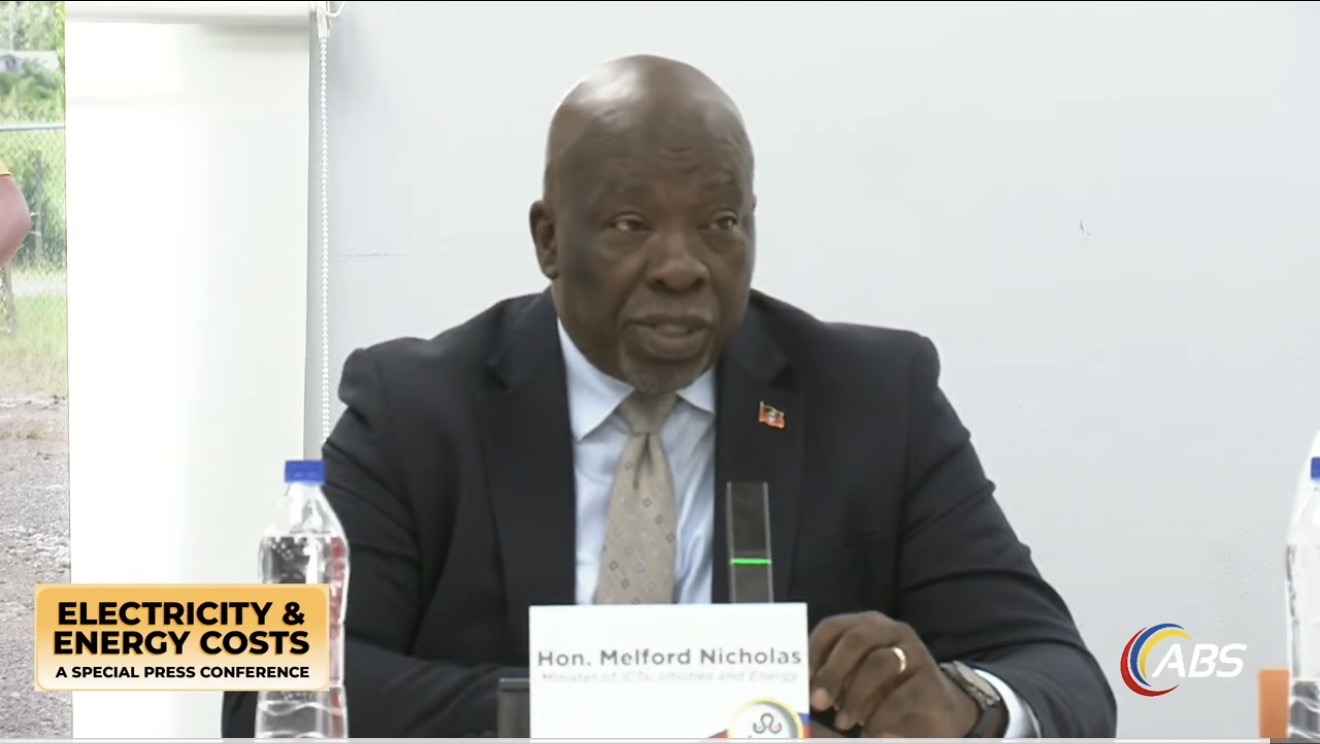
Barbuda’s Special Electricity Tariff Could Be Reviewed
Antigua and Barbuda’s Utilities Minister Melford Nicholas has announced plans to initiate a review of Barbuda’s longstanding preferential electricity tariff, a move that comes as the Antigua Public Utilities Authority (APUA) advances projects to expand and upgrade the island’s power infrastructure to meet surging post-development demand.
For decades, Barbudan consumers have operated under a separate, more favorable tariff structure than their counterparts on the neighboring main island of Antigua. Nicholas, however, has framed the existing arrangement as outdated and unfair to Antigua’s ratepayers, arguing that the current split regime creates an inequitable burden across the twin-island nation. “The way that the tariffs work in Barbuda is a little different to Antigua, and it’s not equitable as far as consumers here in Antigua are concerned,” Nicholas explained, noting the current model is anachronistic even as he acknowledged Barbuda’s unique geographic and economic circumstances set it apart from the main island.
Before any adjustments are finalized, Nicholas emphasized that the process will follow a deliberate, consultative path: he plans to first bring the proposal before the national Cabinet for discussion, then engage directly with the Barbuda Council and local residents to gather input. No fixed timeline has been set for the review, with the minister stressing that meaningful stakeholder outreach will take priority over a rushed decision.
The review coincides with a pressing need to expand Barbuda’s electricity capacity, driven by growing residential development across the island following recent reforms to land tenure rules. APUA Electricity Business Unit Manager Andre Mathias explained that power delivery to Barbuda inherently carries higher costs than in Antigua: all equipment and fuel must first be shipped to Antigua, then transferred to smaller vessels for transport to Barbuda, adding logistical expenses. Additionally, Barbuda’s grid relies almost entirely on more costly diesel fuel for generation, while some of Antigua’s generating units use lower-priced heavy fuel oil, further widening the cost gap between the two islands.
Barbuda first launched its hybrid renewable energy system years ago, pairing a 741-kilowatt solar array with an 800-kilowatt-hour battery storage facility to cut reliance on fossil fuels. When the system was installed, total electricity demand across Barbuda sat just above 500 kilowatts, enough for the solar and battery infrastructure to fully power the island during daylight hours and allow diesel generators to be shut down completely. But rapid population and economic growth has pushed peak demand to more than 800 kilowatts, outstripping the capacity of the existing renewable system and forcing diesel generators to run during daytime hours.
To address this growing demand, APUA is moving forward with an expansion of the island’s power network, and the project will continue to prioritize hybrid renewable energy, with financial and technical support from the International Solar Alliance. “We’re going to have to expand, and we’re going to have to expand with a hybrid arrangement,” Nicholas said. “It works, and we want to have more of it, not less of it.”
In addition to expanding renewable generation capacity, APUA has already completed work to move Barbuda’s main transmission line serving the capital Codrington underground. The upgrade is designed to reduce the risk of catastrophic, widespread outages during hurricane season, a critical resilience improvement for the hurricane-prone Caribbean island. Nicholas noted that burying key grid infrastructure aligns with APUA’s long-term strategy to build a more robust, climate-resilient electricity network across the country.
-
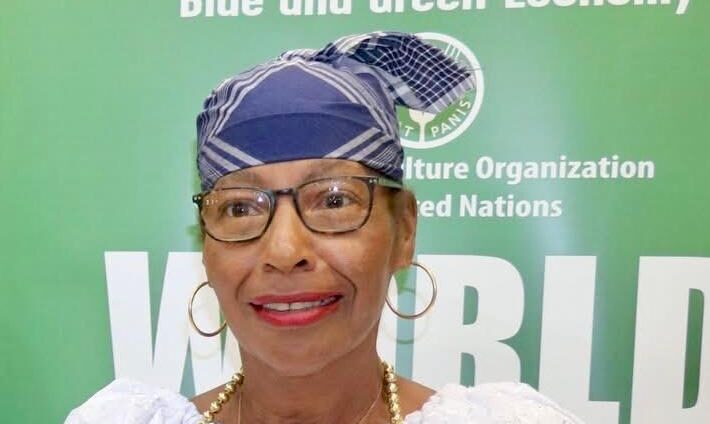
Dominican farmer Gilles Carbon-Jno Baptiste named FAO woman hero
A veteran smallholder farmer from the Caribbean nation of Dominica has earned a spot on the United Nations Food and Agriculture Organization’s first-ever global list of 100 Women Heroes in Agrifood Systems and Rural Development, marking a major international recognition of her decades-long work strengthening local food systems and sustainable rural development.
Gilles Carbon-Jno Baptiste, a 40-plus-year farming veteran based in Dominica’s Capuchin community, was chosen from a pool of more than 600 nominees across 131 countries, following a rigorous, competitive global selection process, according to an official statement from Dominica’s Office of the Prime Minister. The FAO highlighted her exceptional leadership, innovative approach to farming, unwavering dedication, and far-reaching contributions to building more resilient agrifood systems and empowered rural communities.
Carbon-Jno Baptiste runs a seven-acre diversified farm that supplies fresh produce and animal products to local consumers and market vendors across Dominica. Her operation combines a wide range of fruit and vegetable crops—including citrus, plantain, avocado, turmeric, potatoes, and onions—with livestock production, covering goats, broiler chickens, and layer hens. She is a key regional supplier of fresh eggs and leafy vegetables to local supermarkets and small-scale street vendors, playing a critical role in Dominica’s domestic food security.
Beyond consistent food production, Carbon-Jno Baptiste has built her farming practice around a core commitment to ecological sustainability. She implements a range of low-carbon, nature-positive practices across her land, including green manuring, integrated mixed farming, rainwater harvesting, on-site composting, reforestation, and the use of natural alternative inputs, all while adhering to internationally recognized Good Agricultural Practices frameworks.
As president of the Capuchin Farmers’ Group, Carbon-Jno Baptiste also devotes significant time to lifting up other producers in her community. She regularly hosts hands-on agricultural training sessions and on-farm demonstration workshops to share her sustainable techniques with new and emerging farmers. Outside of farming, she holds active leadership roles in local community, cultural, and civic organizations, and already received national recognition for her work when she was awarded Dominica’s Best Woman in Sustainable Farming Award in 2023.
Roland Royer, Dominica’s Minister for Agriculture, Fisheries and Blue and Green Economy, celebrated Carbon-Jno Baptiste’s international recognition in comments included in the OPM release. “Mrs. Carbon-Jno Baptiste represents the dedication, resilience and innovation of our farmers. For more than four decades, she has contributed to food production and to the development of other farmers and her community. We are extremely proud that her work has now received this important international recognition,” Royer said.
The FAO noted that Carbon-Jno Baptiste’s selection also spotlights Dominica’s longstanding national commitment to expanding and elevating women’s leadership in agrifood systems. She will be officially honored at the FAO’s headquarters in Rome, Italy, during the flagship World Food Forum event scheduled for October 12 to 16, 2026. The recognition comes as part of global programming for the 2026 International Year of the Woman Farmer, a United Nations designation dedicated to centering the contributions of women in global agriculture.
-

Officials Working to Revive Stalled Five-Megawatt Wind Energy Project
Against a backdrop of skyrocketing international fossil fuel prices that have strained energy budgets across small island nations, Antigua and Barbuda has launched renewed efforts to bring a long-stalled five-megawatt wind energy project online, according to the country’s Utilities Minister Melford Nicholas.
The initiative, which was first envisioned as a core part of the country’s clean energy transition, has been stuck in limbo for an extended period, with administrative and logistical delays halting progress for months. But following the appointment of new leadership at the nation’s Department of Environment and Department of Energy, government teams have restarted work to advance the project, Nicholas confirmed in a recent statement.
“Both teams are working fastidiously to ensure that we can bring on board that wind energy project,” the minister said, noting that the new leadership has injected fresh momentum into what had become a stagnant initiative. The project was originally engineered to deliver up to five megawatts of power to the national grid, a capacity that would make a meaningful contribution to cutting the country’s reliance on imported fossil fuels. However, Nicholas issued a cautious note: because the project’s equipment has been stored in Antigua and Barbuda for years without being deployed, ongoing inspection work could uncover hidden wear and tear that reduces the facility’s final operating output.
“Because of issues that may be uncovered, because the facilities have been here for quite a while, it may result in less [generation capacity],” Nicholas explained. Even if the final output falls short of the original target, he emphasized, the project will still represent a key step forward for the country’s energy diversification goals, and it will not be the only wind energy development the government pursues in the coming years.
The revitalized wind project sits at the center of a broader national push to shield consumers from volatile global fossil fuel markets. Right now, the Antigua Public Utilities Authority (APUA), the country’s main electricity provider, relies almost entirely on diesel and heavy fuel oil to generate power. That dependence has hit public finances hard in recent months: APUA’s monthly fuel bill jumped from 11 million Eastern Caribbean dollars (roughly $4 million USD) in January to 21.8 million Eastern Caribbean dollars by July, a near-doubling that has put massive pressure on the authority’s budget and threatened higher rates for consumers.
Nicholas argued that the recent sharp spike in fuel prices has laid bare the critical vulnerability of small island nations that rely entirely on imported fossil fuels to meet their energy needs. That vulnerability has given the clean energy transition a new urgency, he said, with policymakers no longer able to delay action. “The urgency is now,” Nicholas stressed. “It’s a fierce urgency because we cannot sit idly by and allow another fuel spike to occur.”
Beyond the revived wind project, APUA is also exploring the development of a large-scale solar energy facility, with plans to integrate utility-scale battery storage to stabilize the national grid. Andre Mathias, APUA’s Electricity Business Unit Manager, explained that adding variable renewable energy sources like wind and solar requires careful grid planning, as their output fluctuates with weather conditions. To maintain consistent, reliable power for homes and businesses, Mathias said targeted upgrades to the national grid and widespread battery storage will be essential to balance variable renewable output.
Ultimately, Nicholas said, Antigua and Barbuda is working to build a hybrid energy system that combines wind power, solar generation, battery storage, and liquefied natural gas. This mixed system will cut the country’s dependence on fossil fuels dramatically, he noted, but will not eliminate the use of carbon-based fuels entirely in the near term, as the nation gradually scales up its renewable energy capacity.