作者: admin

  • Cuba criticizes inhumane treatment of migrants on US southern border

    Cuba criticizes inhumane treatment of migrants on US southern border

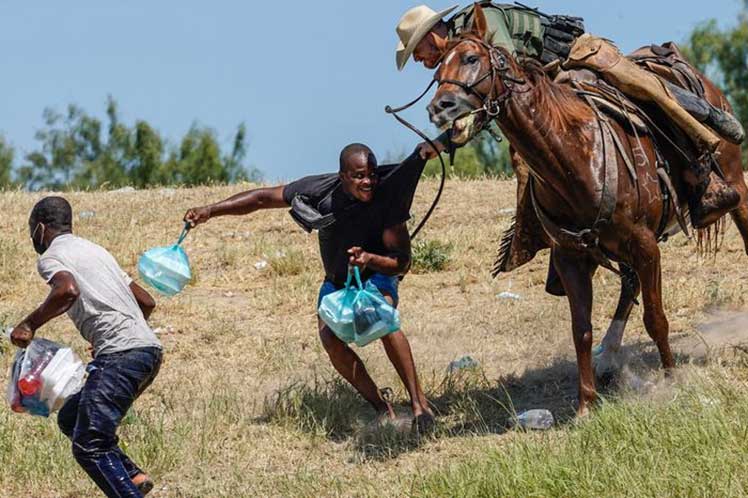
    The United States is confronting widespread international criticism following the emergence of disturbing images showing border patrol agents on horseback aggressively pursuing Haitian migrants near the Texas-Mexico border. The incident has sparked diplomatic protests and raised serious questions about America’s treatment of asylum seekers.

    Cuban President Miguel Díaz-Canel launched a sharp critique via social media, posting photographs of the border operations with the pointed question: “Who spoke of Human Rights?” This sentiment was echoed by Cuban Foreign Minister Bruno Rodríguez, who characterized the treatment of Haitian migrants as demonstrating “racist contempt” among US border enforcement personnel.

    The controversy centers around the Del Río sector where approximately 500 Haitian nationals had established a makeshift camp beneath the international bridge connecting Acuña, Mexico with Del Río, Texas. Following a significant border crossing attempt last Sunday, US authorities initiated mass deportations of the predominantly Haitian migrants.

    The visual documentation of mounted border officers charging toward migrants triggered immediate international repudiation, with critics condemning the operation’s apparent brutality. Haiti’s state Office for Citizen Protection formally criticized the treatment and urged US authorities to collaborate with involved governments to develop humane solutions.

    In response to the expulsions, a coalition of US-based Haitian lawyers announced plans to pursue legal action to halt what they characterize as summary removals that potentially violate asylum protocols.

    The current migration surge stems from Haiti’s severe multidimensional crisis as the poorest nation in the Western Hemisphere. A combination of recent natural disasters, political instability following President Jovenel Moïse’s assassination, and pandemic-related economic collapse has created desperate conditions driving population displacement.

  • Cuba reported 7,151 Covid-19 cases and 59 deaths

    Cuba reported 7,151 Covid-19 cases and 59 deaths

    Cuban health authorities have provided a comprehensive update on the nation’s COVID-19 situation, revealing significant epidemiological data since the pandemic’s onset. Dr. Francisco Durán, the National Director of Epidemiology at the Ministry of Public Health, delivered the latest statistics during his regular televised briefing, offering a detailed breakdown of the country’s pandemic response.

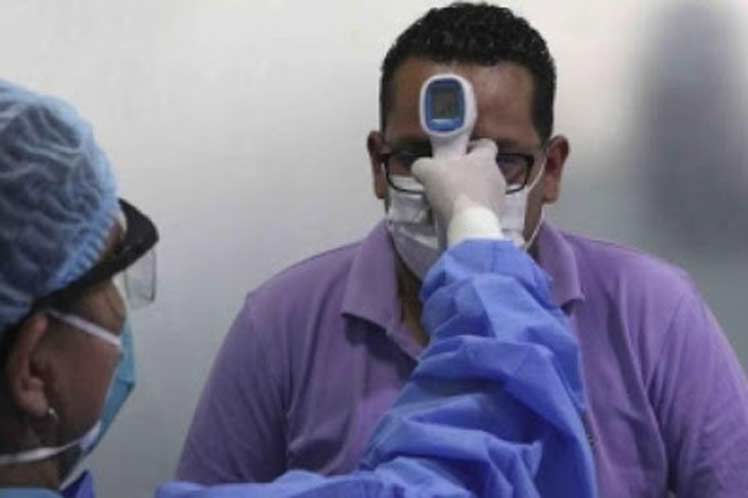
    According to the official figures, Cuba has recorded a cumulative total of 825,351 confirmed coronavirus cases since March 11, 2020, with the pandemic claiming 6,978 lives on the island nation. The current hospitalization numbers present a complex picture of the pandemic’s status, with 90,027 individuals receiving medical care in hospitals across the country.

    The hospitalization data reveals three distinct patient categories: 46,548 individuals are classified as suspected cases undergoing observation and testing; 3,162 people are under formal epidemiological surveillance due to confirmed exposure risks; and 40,317 are confirmed active patients receiving treatment for COVID-19.

    Testing capacity remains a critical component of Cuba’s pandemic response. Health officials reported that 53,249 laboratory samples were processed this Tuesday alone to detect the SARS-CoV-2 virus. This daily testing effort contributes to a substantial national total of 9,165,377 real-time PCR tests conducted since the pandemic began, demonstrating the country’s extensive diagnostic capabilities.

    The regular briefings by Dr. Durán have become a cornerstone of Cuba’s public health communication strategy, providing transparent data to citizens and international observers alike. These updates offer valuable insights into both the historical progression and current status of the pandemic within Cuba’s unique healthcare system.

  • Iberostar consolidates operations in Cuba

    Iberostar consolidates operations in Cuba

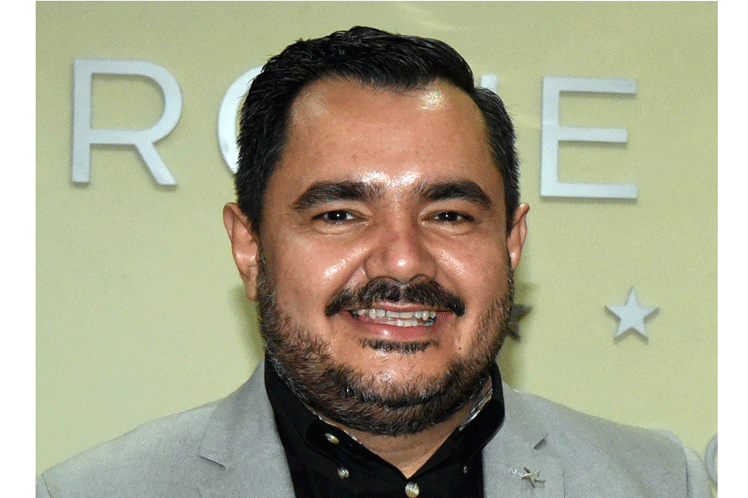
    In a strategic move to enhance the Caribbean tourism sector’s competitive edge, Iberostar Group has unveiled a comprehensive vertical integration strategy. Marketing Director Alexeis Torres disclosed to Prensa Latina that the hospitality giant established Caribbean Hotel Logistics, a specialized supplying company operating within Cuba’s Special Development Zone (ZEDM) two years ago.

    This supply chain venture, while functioning as an independent entity, serves as a critical component in Iberostar’s value chain by providing diverse food, beverage, and raw material provisions not only to Iberostar properties but also to other hotel operators throughout the Caribbean region.

    Torres emphasized that this logistical infrastructure represents a significant value-added enhancement that completes the tourism service ecosystem. The integration strategy extends beyond supply chain management with Wednesday’s scheduled inauguration of Worldtofly airline’s inaugural flight in Cuba. As another Iberostar-owned subsidiary, the aviation venture will further strengthen the group’s comprehensive service offering.

    Addressing pandemic recovery challenges, Torres noted that the COVID-19 crisis had previously forced a global tourism pause, making reactivation a gradual process. He identified improved air connectivity as a crucial factor in facilitating the Caribbean tourism industry’s recovery, with Worldtofly positioned to contribute significantly to this revitalization effort.

  • Cuban vaccine Abdala highly effective in severe Covid-19 cases

    Cuban vaccine Abdala highly effective in severe Covid-19 cases

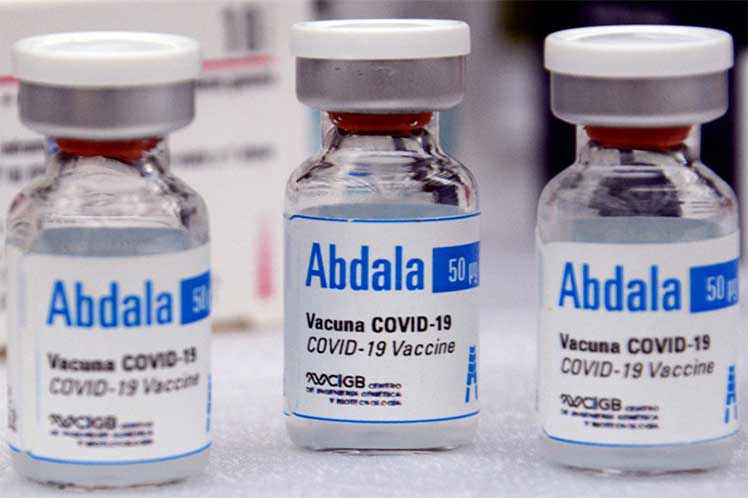
    Cuba’s leading scientific institutions have achieved a significant breakthrough in COVID-19 vaccine development, with the Abdala immunogen demonstrating remarkable efficacy against the virus. According to official reports from Granma newspaper, the vaccine received emergency use authorization in July following rigorous clinical trials that established a 92.28% efficacy rate in disease prevention.

    The vaccine’s effectiveness was confirmed during a critical period of Delta variant propagation across global populations, providing crucial data on its performance against this highly contagious strain. Dr. Marta Ayala, General Director of the Center for Genetic Engineering and Biotechnology (CIGB), provided important scientific clarification regarding the terminology: ‘Efficacy should not be confused with effectiveness, as the former is determined within the controlled environment of clinical studies under ideal research conditions, while effectiveness is analyzed in real-world circumstances.’

    Cuban researchers from both CIGB and the Finlay Vaccine Institute have recently presented their comprehensive scientific findings to the World Health Organization. The submission includes complete documentation of the research methodology, formulation processes, production standards, testing protocols, and application results. This presentation marks a significant step toward obtaining international validation and WHO emergency use listing, which would facilitate global distribution and recognition of Cuba’s sovereign vaccine development capabilities.

  • Cuban FM meets with counterparts from Qatar and S. Africa at UN

    Cuban FM meets with counterparts from Qatar and S. Africa at UN

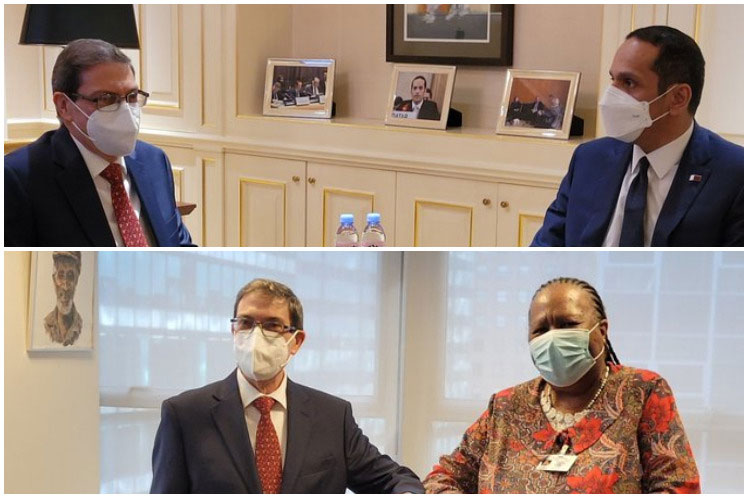
    Cuban Foreign Minister Bruno Rodríguez has conducted a series of high-level diplomatic meetings during the 76th session of the United Nations General Assembly in New York. The senior diplomat engaged with prominent international counterparts, including Qatar’s Deputy Prime Minister and Foreign Minister Sheikh Mohammed bin Abdulrahman Al-Thani, and South Africa’s Minister of International Relations and Cooperation, Naledi Pandor.

    Through his official Twitter account, Minister Rodríguez expressed considerable satisfaction with the current state of Cuba’s political relationships with both nations. The discussions, held within the framework of the UNGA’s high-level segment running through September 27th, focused on strengthening international cooperation and bilateral partnerships.

    Regarding the meeting with Qatari officials, Rodríguez emphasized the positive development of political relations between Havana and Doha. In his separate engagement with South African representatives, the Foreign Minister highlighted the excellent condition of bilateral relations, noting the historical friendship and solidarity between the two nations that has been notably strengthened throughout the challenges presented by the global pandemic.

    These diplomatic exchanges form part of Cuba’s ongoing efforts to maintain and enhance its international relationships through multilateral forums like the United Nations, where matters of global significance are addressed through diplomatic dialogue and cooperation.

  • Cuba and Syria confirm positive political relations at the UN

    Cuba and Syria confirm positive political relations at the UN

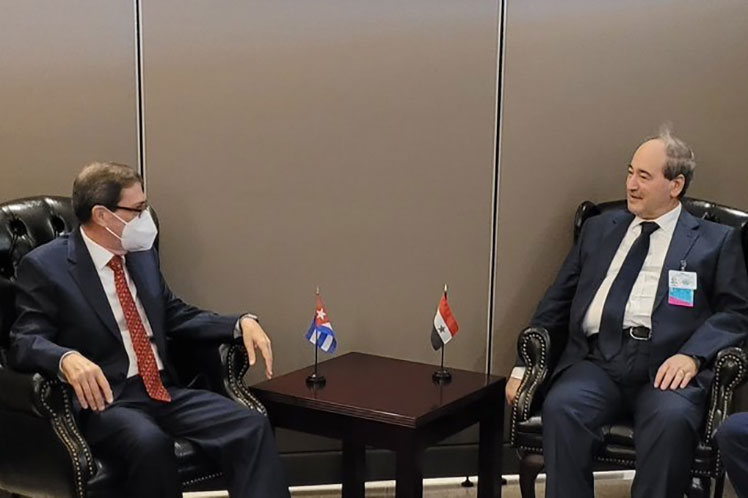
    Cuban Foreign Minister Bruno Rodríguez has utilized his official Twitter platform to announce a concerted diplomatic push to deepen economic and cooperative relationships with partner nations. The declaration comes as the minister participates in the high-level segment of the 76th United Nations General Assembly (UNGA) in New York, a premier gathering for global diplomacy set to conclude on September 27th.

    Minister Rodríguez is actively engaging in a series of bilateral meetings with his counterparts from various nations on the sidelines of the assembly. This practice is a standard feature of the annual UN event, providing a critical forum for high-ranking dignitaries and diplomatic envoys to conduct in-person negotiations and strengthen multilateral ties.

    The broader context of these diplomatic exchanges is the UNGA’s high-level general debate, where the international community’s focus is sharply trained on two paramount global challenges: the ongoing COVID-19 pandemic and the escalating climate crisis. These overarching themes are shaping discussions and fostering alliances aimed at crafting coordinated international responses.

  • Cuba welcomes new donation of syringes from Germany

    Cuba welcomes new donation of syringes from Germany

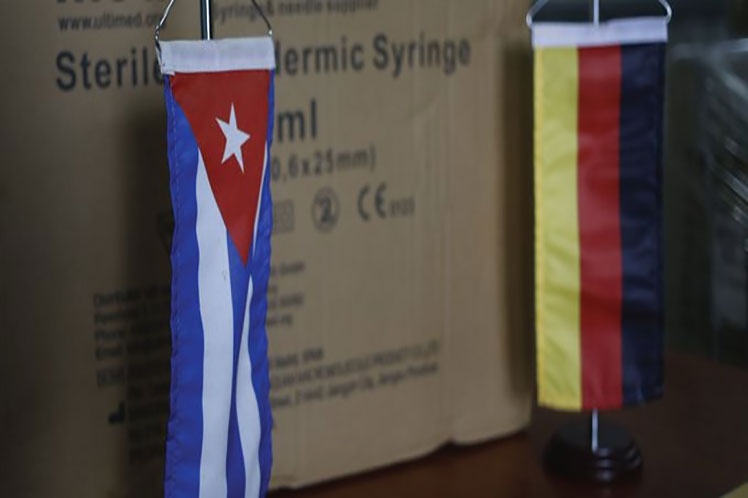
    In a significant display of international solidarity, German travel agency AvenTOURa GmbH has delivered humanitarian assistance to support Cuba’s ongoing battle against the COVID-19 pandemic. The donation arrives as the Caribbean nation continues its immunization campaign amid challenging economic circumstances.

    Aldo Grandal Sosa, Head of Medical Collaboration at Cuba’s Ministry of Public Health (MINSAP), confirmed that the medical supplies would be promptly distributed across vaccination centers nationwide. He emphasized the critical timing of this support, noting Cuba’s ongoing efforts to maintain adequate resource coverage against SARS-CoV-2 despite external pressures.

    The official specifically referenced what Cuban authorities describe as ‘the genocidal and criminal economic, commercial and financial blockade’ imposed by the United States government, which they assert has been intensified throughout the pandemic period. This context, according to Sosa, magnifies the importance of international humanitarian cooperation.

    Christoph Blaha, legal representative of AvenTOURa GmbH in Cuba, articulated the company’s philosophical approach to international relations. ‘Our mission centers on building bridges rather than walls, bringing cultures closer instead of separating them, and fostering mutual understanding,’ Blaha stated. The aid package specifically aims to enhance Cuba’s capacity to combat COVID-19 effectively.

    Established in 1995, AvenTOURa GmbH specializes in organizing small-group and individual tourism experiences. The company has included Cuba as a destination since 1997, developing substantial ties with the country over nearly a quarter-century of operation. This donation represents an extension of their long-standing relationship with the Cuban people, transcending typical commercial interests to address urgent public health needs.

  • Cuba defends application of data science at PAHO

    Cuba defends application of data science at PAHO

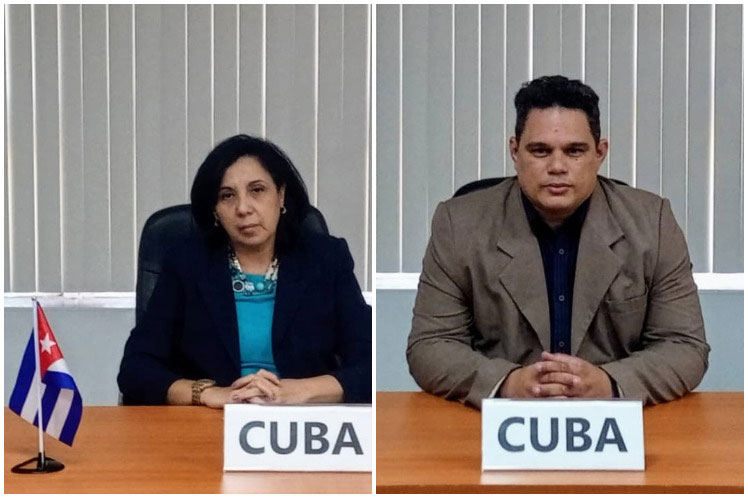
    Cuban health officials presented the nation’s advanced digital health strategy during the 59th Executive Council meeting of the Pan-American Health Organization (PAHO), highlighting how technological innovation has strengthened pandemic response capabilities. Dr. Ileana Morales, Director of Science and Technological Innovation at Cuba’s Ministry of Public Health (MINSAP), detailed how digital tools have enabled real-time data processing for more effective epidemiological management throughout the COVID-19 crisis.

    Dr. Morales emphasized Cuba’s comprehensive approach to health information systems development, which centers on specialized training for professionals in technology and university programs. The country has made significant advancements in cutting-edge medical fields including medical robotics, precision medicine, nanoscience, and neuroscience—all disciplines that demand sophisticated data processing capabilities for large-volume information assimilation.

    Karel Barthelemy, MINSAP’s Director of Information Technology and Communications, addressed the substantial challenges of digital transformation in healthcare, stressing the necessity for tailored designs that accommodate each nation’s unique characteristics. He outlined several operational computer solutions currently deployed in Cuba, including research platforms, laboratory results monitoring systems, hospital bed availability trackers, clinical laboratory information management, and vaccinated population databases.

    A critical component of Cuba’s strategy involves employing Big Data analytics and mathematical modeling to predict viral behavior patterns within populations. These predictive tools enable health authorities to refine national response plans and continuously update patient care protocols based on empirical evidence.

    Both officials emphasized the importance of regional cooperation, noting that successful implementation of digital transformation roadmaps across the Americas requires strengthened collaboration between PAHO and member states. Such partnerships would facilitate knowledge exchange and accelerate progress toward developing shared technological platforms that benefit the entire region.

  • Central Report to the Eighth Congress of the Communist Party of Cuba

    Central Report to the Eighth Congress of the Communist Party of Cuba

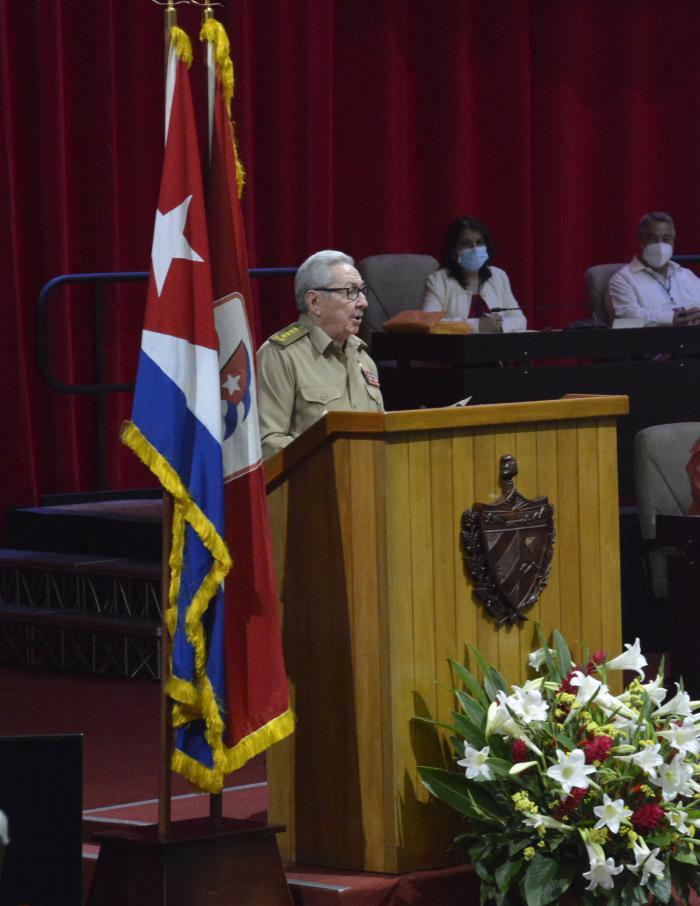
    On April 16, 2021 – a date etched into Cuban history as the 60th anniversary of Fidel Castro Ruz’s proclamation of the Revolution’s socialist character – Army General Raúl Castro Ruz delivered the opening address to the Eighth Congress of the Communist Party of Cuba (PCC). The date carried layered historical meaning: it fell on the eve of the 60th commemoration of Cuba’s 72-hour victory over the CIA-backed Playa Girón mercenary invasion, launched by the United States government in 1961 to crush the revolutionary experiment and reimpose neocolonial rule on the island with the complicity of the Organization of American States. Castro opened by honoring the over 3,400 Cubans killed and 2,099 disabled by six decades of U.S.-backed state terrorism, whose sacrifice forms the foundation of the country’s modern sovereignty.

    The Congress convened two years after the adoption of Cuba’s 2019 Constitution, a milestone that came 150 years after the first Mambi Constitution of Guáimaro. To align national legislation with the new constitutional framework, the National Assembly of People’s Power has advanced a scheduled legislative overhaul, approving 11 new laws to structure core state and government bodies, while the Council of State has issued 33 decree laws, with input from universities and research centers strengthening the process. Due to COVID-19 pandemic restrictions, delegate numbers were limited to 300, democratically selected from the PCC’s more than 700,000 members organized across 58,000 local cells – a timeline held to despite extraordinary circumstances, in line with the party’s rule that congresses are held every five years save for war, major disaster or existential exceptional crisis.

    Castro highlighted key demographic and organizational shifts within the PCC: after a period of membership decline starting in 2006, the party has grown by 27,000 new members, with an average of more than 39,400 new militants joining annually, one-third coming from the Young Communist League (UJC). Still, he acknowledged growing pains: shifting national demographics have pushed the average age of membership upward, with 42.6% of members over 55, creating a priority to recruit more young people from agricultural sectors, small farming and key economic industries with untapped potential for party growth.

    A central section of the address focused on Cuba’s unprecedented response to the COVID-19 pandemic, guided by a national plan approved by the PCC Political Bureau in January 2020 that centered intersectoral coordination, mass public participation, and a core commitment to protecting universal public health. Castro emphasized that only a socialist system could deliver the coordinated, equitable response that had contained the virus through case tracking, targeted isolation, and homegrown Cuban pharmaceutical treatments – noting that five domestic vaccine candidates were in clinical trials, a achievement he credited to the scientific ecosystem Fidel Castro built decades earlier. He acknowledged a global resurgence of the virus had reached Cuba, driven in part by relaxed adherence to public health rules, but credited Cuban scientists and medical professionals for turning public health innovation into a global public good.

    The Eighth Congress structured its work around three core commissions led by top Cuban leaders: the first, chaired by Prime Minister Manuel Marrero Cruz, evaluates economic and social progress since the Seventh Congress, updates the Party and Revolution’s Economic and Social Policy Guidelines, and assesses the government’s strategy to boost the economy amid the COVID-19 global crisis; the second, led by Central Committee Second Secretary José Ramón Machado Ventura, reviews progress on party functioning, ideological work and mass outreach set by the 2012 First National Party Conference; the third, headed by President of the Republic Miguel Díaz-Canel Bermúdez, assesses cadre policy across the party, youth organizations, mass groups, and state institutions.

    Turning to economic policy, Castro reaffirmed that economic development, the struggle for peace, and ideological firmness are the PCC’s core missions. Over the past five years, he noted, the Cuban economy has demonstrated extraordinary resilience in the face of a drastically intensified U.S. economic, commercial and financial blockade, allowing the country to preserve core revolutionary achievements in free public healthcare, universal education and social security, while maintaining its commitment to international solidarity. Still, he acknowledged deep structural challenges: excessive bureaucracy, weak resource controls, systemic corruption, and an economic model that has failed to deliver sufficient incentives for work and innovation.

    To address these gaps, Castro called for a more dynamic updating of Cuba’s economic and social model, balancing centralized planning with greater decentralization and autonomy for enterprises and local governments. He highlighted the recent expansion of permitted self-employment activities from 127 to over 2,000, a reform that drew both public support and criticism from proponents of rapid mass privatization. Castro drew a clear line on the boundaries of reform: the fundamental means of production will remain under public ownership, a foundational principle of Cuban socialism that protects free universal healthcare and education. Any turn to full privatization, he warned, would irreversibly destroy the core of Cuban socialism and erode national sovereignty, echoing Fidel Castro’s 1992 warning that without unwavering resolve, the revolution would not survive.

    Castro outlined concrete priorities for the state enterprise sector: it must prove its role as the dominant form of economic management through increased productivity, efficiency, and a top-to-bottom shakeup of bureaucratic inertia, replacing a culture of waiting for top-down orders with proactive, autonomous entrepreneurship. He emphasized the need to boost domestic food production, reduce overreliance on imports, and expand diversified competitive exports, noting that Cubans must adapt to living within their means and prioritize savings as a core driver of growth. The international tourism sector, once a steady source of foreign income until 2018, was hit hard by new U.S. restrictions and the COVID-19 pandemic, but Castro noted that Cuba used the industry shutdown to upgrade hotel infrastructure, and he expressed confidence the sector will recover for the benefit of all Cubans.

    Addressing the controversial reintroduction of convertible currency sales in retail and wholesale outlets, Castro explained the measure was a temporary necessity born of extreme liquidity shortages caused by the blockade, intended to curb black market activity and leverage remittances to guarantee a steady supply of basic goods priced in Cuban pesos. He acknowledged that poor communication caused public confusion, but clarified that the policy will remain in place until the economy recovers enough to support full convertibility of the national currency. He also called for eliminating outdated prejudices against foreign investment, highlighting the Mariel Special Development Zone as a successful hub for investment that continues to grow despite U.S. blockade efforts.

    Castro also addressed the implementation of the 2021 Reordering Task, a sweeping monetary and labor reform that unified Cuba’s dual currency, restructured salaries and pensions, and reduced excessive unsustainable subsidies. He noted that while the reform has achieved important milestones, it has also exposed implementation gaps: poor preparation, weak communication, excessive price hikes, and errors in salary restructuring that the government has moved quickly to correct. The reform, he emphasized, will proceed on schedule to lay the foundation for sustainable, prosperous Cuban socialism, and will eliminate the harmful paternalistic myth that Cubans can prosper without working.

    Turning to the role of the Communist Party, Castro reaffirmed the constitutional provision – personally drafted by Fidel Castro – that names the PCC as the superior leading force of Cuban society and state, a principle rooted in more than a century of revolutionary struggle from José Martí’s original Cuban Revolutionary Party to the unification of anti-Batista revolutionary forces. He emphasized that Cuba’s single-party system has been the constant target of U.S. “divide and conquer” tactics, but the unity of the Cuban people around the party and revolution has been the country’s most effective strategic weapon against foreign aggression. Within that framework, he added, the party fosters broad internal democratic debate, strengthens ties with working people, and promotes youth participation while preserving the UJC’s organizational independence.

    Castro acknowledged that ideological work, while centered on truth-telling, still requires profound transformation: he called for an end to triumphalism, superficiality, and stridency in media coverage of national issues, urging more creative, accessible communication that conveys optimism and teaches Cuban history to counter intensified U.S. ideological subversion. He detailed how the U.S. government funds covert social media campaigns, fake news, radio and television outlets, and cyberattacks on Cuban critical infrastructure to paint a false picture of a collapsing revolution and incite social unrest. He noted that domestic counterrevolution lacks any meaningful social base or public support, and remains confined to online activism, but warned against naivety around new technologies and the need to defend information security.

    On cadre policy, Castro highlighted progress in promoting young people, women, and Black and mixed-race Cubans to leadership positions based on merit, but acknowledged that progress remains insufficient, with persistent problems of formalism, weak ties to the public, and failure to train new generations of leaders. He proposed expanding a longstanding policy requiring all higher education students to complete military service before admission – a policy already in place at the Institute of International Relations that builds on the constitutional principle that defending the socialist homeland is every Cuban’s supreme duty – pointing to President Díaz-Canel’s own voluntary military service as an example to follow.

    Turning to foreign policy, Castro outlined a drastically changed global context since the 2016 Seventh Congress, marked by an unprecedented escalation of U.S. aggression against Cuba. He traced the history of U.S. hegemony over Cuba from the 1898-1902 military occupation, the imposition of the Platt Amendment, and the 1934 Treaty of Relations that consolidated neocolonial rule until the 1959 revolution. Over the past four years, he noted, the U.S. has abandoned any pretense of multilateral normativity, using its economic, military and technological power to impose its will globally, creating a context that has drastically amplified the harm of the 60-year-old blockade. The blockade, which Castro called the longest, most comprehensive economic war in modern history, has been drastically tightened during the COVID-19 pandemic, with 240 new coercive measures adopted since 2017 that target core sectors of the Cuban economy, restrict remittances, cut off fuel supplies, restrict tourism, and intimidate foreign investors.

    Castro detailed the human cost of the tightened blockade: it forces Cuba to source essential medical equipment and supplies from distant, indirect markets, drives up the cost of foreign trade, creates shortages of essential consumer goods and food, and complicates Cuba’s ability to honor its international financial commitments. He also condemned the U.S. campaign to discredit Cuba’s global medical internationalism, which has saved millions of lives in vulnerable communities around the world, calling the attack on Cuba’s medical missions a crime against the universal human right to health. He noted the 2019 activation of Title III of the Helms-Burton Act – a law that codifies the blockade and enshrines U.S. political intervention in Cuba – as an unprecedented escalation that allows U.S. courts to sue foreign companies operating in Cuba, a violation of international law that exposes the U.S.’s goal of destroying Cuban sovereignty.

    Castro reaffirmed Cuba’s willingness to build a respectful, civilized relationship with the United States based on mutual respect, but stressed that Cuba will never renounce its revolutionary principles, sovereignty or independence to achieve normalized relations. “We do not consider the U.S. people our enemy,” he emphasized, “but we will never negotiate our sovereignty under threat of aggression.”

    Turning to Latin America and the Caribbean, Castro noted that the region has faced a coordinated imperial and oligarchic counteroffensive against progressive and leftist governments, rolling back gains against neoliberalism and undermining regional integration bodies such as UNASUR and CELAC. He reaffirmed Cuba’s unwavering solidarity with Venezuela, Nicaragua, Bolivia’s Luis Arce, Mexico’s Andrés Manuel López Obrador, Argentina’s Alberto Fernández, and former Brazilian president Luiz Inácio Lula da Silva, reaffirmed Cuba’s support for Argentine sovereignty over the Malvinas, Puerto Rican self-determination, and Caribbean demands for reparations for slavery and colonialism. He noted that Cuba has strengthened ties with socialist partners in Asia including China, Vietnam, Laos and the DPRK, deepened relations with Russia, expanded cooperation with the European Union, and maintained longstanding solidarity with African nations and the causes of Palestine and the Sahrawi people.

    Closing the address, Castro confirmed that the Eighth Congress marks the completion of the orderly transfer of power from the revolutionary generation to a new cohort of younger leaders. He praised President Miguel Díaz-Canel, who has risen through the party ranks from local leadership to the presidency, and has performed strongly in office over the past three years, uniting the party, state and government behind a shared vision. Castro announced that he is stepping down as First Secretary of the PCC Central Committee, and will not seek a position on the party’s highest governing bodies, though he will remain an active revolutionary fighter committed to defending the homeland for the rest of his life.

    “Let no one doubt,” he closed, “as long as I live I will be ready to defend the homeland, the Revolution and socialism. Viva Free Cuba! Long live Fidel! Homeland or Death! We will win!”
  • Central Report to the Eighth Congress of the Communist Party of Cuba

    Central Report to the Eighth Congress of the Communist Party of Cuba

    On April 16, 2021, Army General Raúl Castro Ruz delivered a pivotal address at the opening of the Eighth Congress of the Communist Party of Cuba, marking the 60th anniversary of the proclamation of the socialist character of the Cuban Revolution. The event coincided with the commemoration of the 1961 victory at Playa Girón, a defining moment in Cuba’s resistance against U.S.-backed aggression. Castro’s speech highlighted the historical significance of the Revolution, its enduring principles, and the challenges facing Cuba today. He emphasized the importance of unity, ideological firmness, and the need to adapt to contemporary global realities while preserving socialist values. Castro also addressed Cuba’s response to the COVID-19 pandemic, the country’s economic reforms, and the ongoing U.S. economic blockade, which he described as the most comprehensive and prolonged economic war ever waged against a nation. He underscored the resilience of the Cuban people and the necessity of strengthening the Party’s role in guiding the nation’s development. The Congress concluded with a reaffirmation of Cuba’s commitment to socialism, sovereignty, and international solidarity, particularly with Latin America and the Caribbean. Castro’s address served as both a reflection on Cuba’s revolutionary legacy and a roadmap for its future, emphasizing the importance of generational leadership transitions and the continued defense of socialist principles.