
The ongoing debate surrounding the Age of Civil Responsibility (ACR) Bill has brought to light critical issues concerning adolescent sexual health in the Caribbean. Recent findings reveal that only 5% of parents engage in conversations with their children about puberty and responsible sexual behavior. Alarmingly, some parents fail to cooperate with legal authorities in cases involving sexual predators, and in extreme instances, even exploit their children for financial gain. The Caribbean region holds the dubious distinction of having the second-highest adolescent fertility rate globally, the second-earliest sexual debut, and three countries ranking among the top ten for gender-based violence. While the ACR Bill alone cannot resolve these deep-seated issues, it serves as a catalyst for broader initiatives. These include promoting abstinence, overcoming parental reluctance to discuss sex, enhancing sexuality education in schools and churches, and improving access to contraceptives and counseling for sexually active individuals of all ages. Studies indicate that 99% of women visiting public health clinics are aware of at least one contraceptive method. However, 80% report that their most recent or current pregnancy was unplanned. The primary reasons for not using contraceptives include fear of side effects (55%), partner objection (22%), and cost (8%). Addressing these challenges requires dispelling myths about modern contraceptives, combating patriarchal attitudes, and implementing policies that eliminate legal and economic barriers to contraceptive access. World Contraception Day serves as a poignant reminder of these ongoing struggles. Sincerely, Tonia Frame, President, Grenada Planned Parenthood Association (GPPA) and Fred Nunes, Consultant, Advocates for Safe Parenthood: Improving Reproductive Equity (ASPIRE). NOW Grenada is not responsible for the opinions, statements, or media content presented by contributors. In case of abuse, click here to report.
作者: admin
-

Sudden Appearance of Giant Statue on All Saints Road Raises Questions
A towering statue has unexpectedly appeared along All Saints Road in Antigua, leaving residents both intrigued and puzzled. The imposing figure, which rises above the treetops, features a helmet-like headpiece, a skirted lower half, and folded arms, exuding an air of authority. Positioned on a high platform with scaffolding still visible, the structure has become a dominant feature of the local landscape, visible from afar.
Inquiries have revealed that the installation is the work of Elder Claude Weaver of the nearby Glorious Hope Church. While Weaver has yet to disclose the purpose of the monument, he has promised to share more details soon. The statue’s sudden appearance has sparked a wave of reactions. Some residents draw parallels to biblical visions, while others remain skeptical about its significance.
Bishop Charles Browne has expressed concern, questioning the timing of the monument’s unveiling amidst global and national challenges. “With all that’s going on in the country and the world, I don’t know why it is necessary,” Browne remarked, referencing the biblical story of King Nebuchadnezzar’s dream.
Until Elder Weaver provides an explanation, the statue remains a subject of intense speculation. Some view it as a profound work of devotion or art, while others dismiss it as an ill-timed or misplaced symbol. The mystery surrounding the statue continues to captivate the community, making it a focal point of local conversation.
-
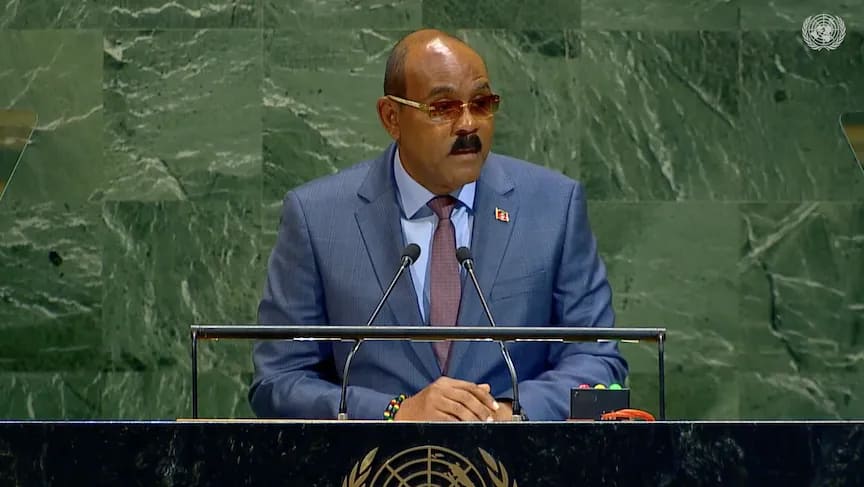
Antigua and Barbuda Calls for Justice, Peace, and Practical Reform at UN General Assembly
In a compelling address at the 80th Session of the United Nations General Assembly, Prime Minister Gaston Browne of Antigua and Barbuda called for a renewed commitment to the principles of the UN Charter, emphasizing the urgent need for global action on climate change, unsustainable debt, and rising inequalities. Representing a small island nation on the frontlines of the climate crisis, Browne warned that the retreat from multilateralism and the erosion of human rights mark a critical juncture for humanity. He urged the international community to prioritize compassion, solidarity, and justice in addressing these pressing challenges. On climate action, Browne proposed a just energy transition, including a phased reduction of fossil fuels, a fair carbon levy on major emitters, and enhanced access to climate finance for vulnerable nations. He also reiterated Antigua and Barbuda’s support for the Multidimensional Vulnerability Index (MVI) and climate-resilient debt clauses. Browne highlighted ocean conservation priorities, such as combating illegal fishing and plastic pollution, and reaffirmed his nation’s stance against seabed mining until scientific evidence confirms its safety. Addressing global peace and security, he condemned violence in Gaza, called for a two-state solution, and advocated for diplomatic resolutions in Ukraine and Haiti. Browne also emphasized the importance of mental health and non-communicable diseases in global development, urging the UN to adopt a resolution recognizing mental health as a fundamental component of sustainable development. Concluding his speech, Browne stressed the need for collective accountability to all nations and future generations, asserting that true progress can only be achieved through unity and shared responsibility.
-
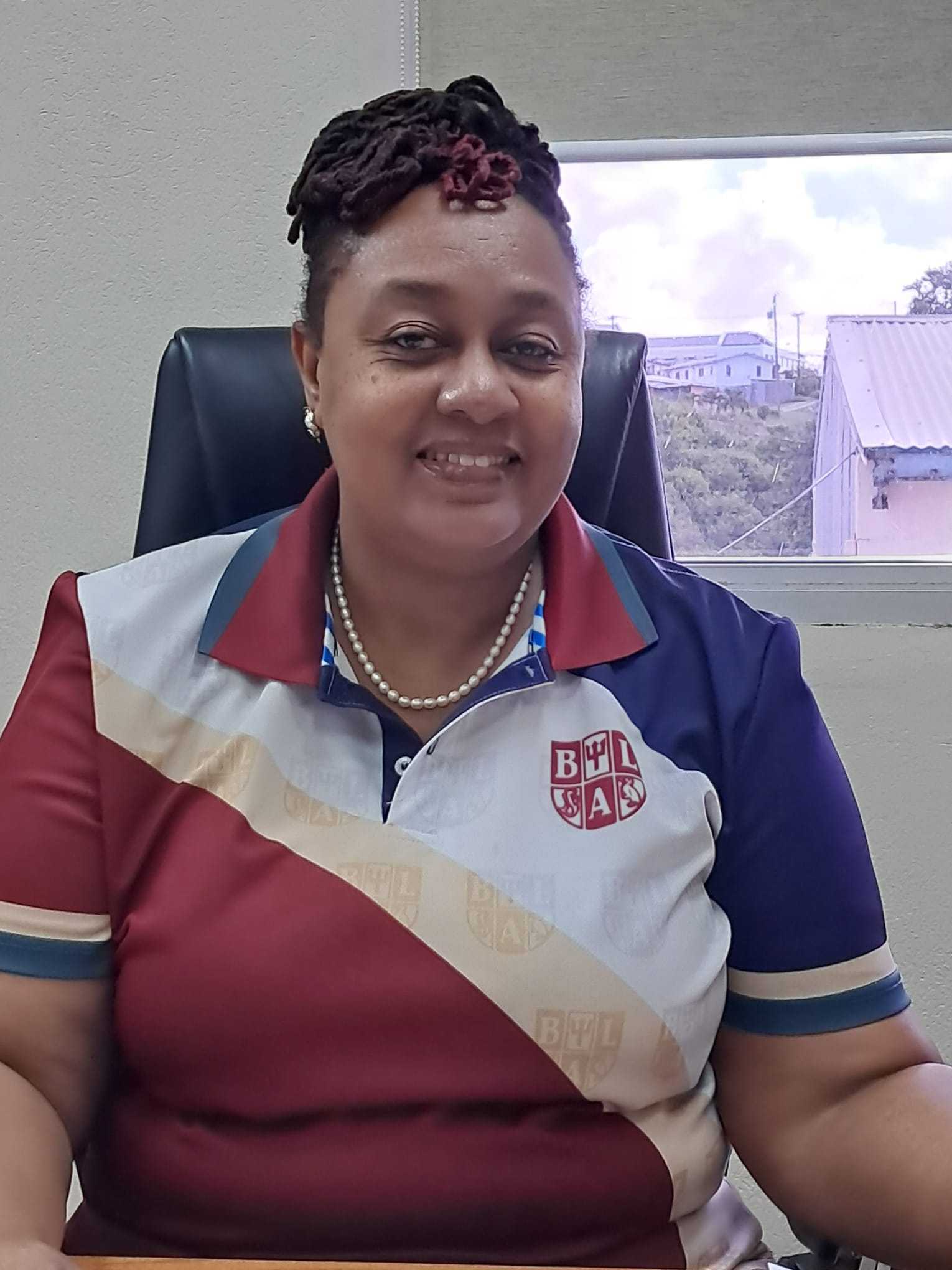
BLA rolls out online services, boosts staff to improve service
The Barbados Licensing Authority (BLA) has unveiled a comprehensive upgrade to its service delivery system, aiming to streamline processes and improve efficiency for the public. Chief Licensing Officer Treca McCarthy-Broomes announced the launch of a new online platform, effective immediately, which will allow citizens to access a range of services digitally. These include scheduling and paying for regulation exams, registering for new Public Service Vehicle (PSV) examinations, renewing learners’ permits, and processing payments for new or renewed driver’s licenses. This initiative is part of the Authority’s broader strategy to modernize its operations and enhance user convenience. Additionally, McCarthy-Broomes highlighted ongoing efforts to address staffing shortages in the driving test section. The recruitment of additional testing officers is underway and is expected to be finalized within the coming months, ensuring smoother and more timely service delivery. This dual approach of digital innovation and workforce expansion underscores the BLA’s commitment to meeting the evolving needs of Barbados’ citizens.
-
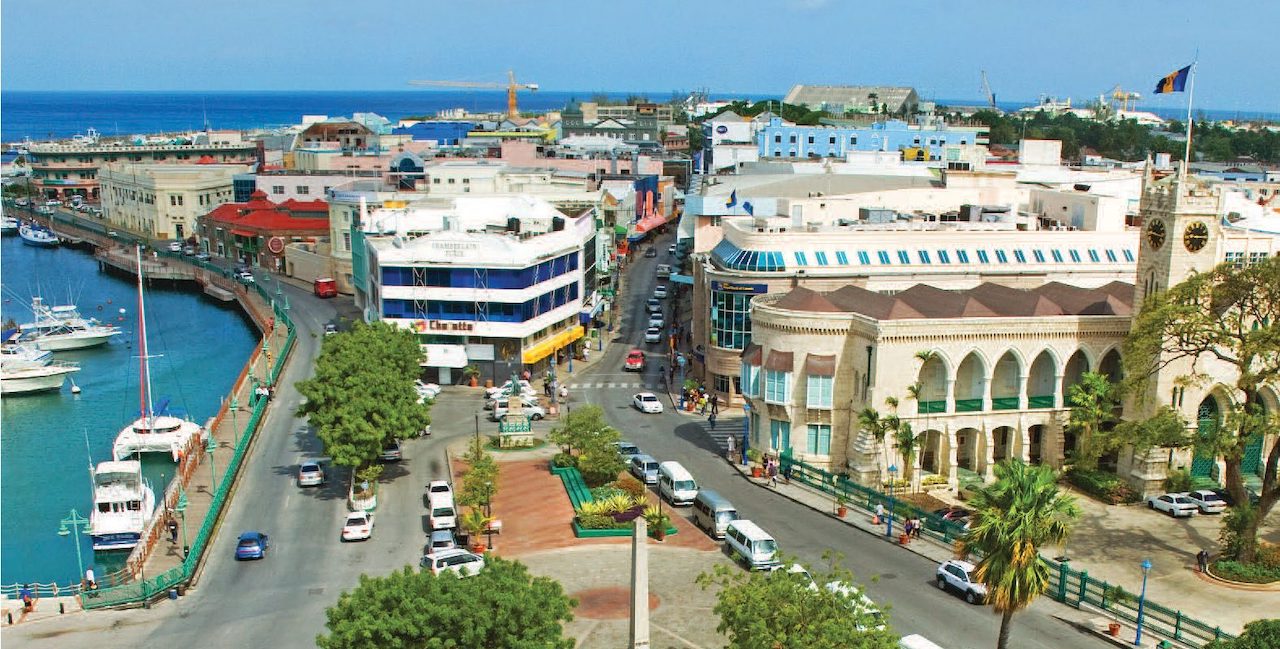
Barbados to host major disability conference in October
Barbados is set to host the second Caribbean Global Disability Conference from October 17 to 22, 2023, under the theme “Breaking Barriers: Advancing Inclusive Education for All Abilities.” Organized by the Caribbean Disability Network (CDN) in partnership with the Ministry of People Empowerment and Elder Affairs and the Barbados Council for the Disabled, the event will convene hundreds of stakeholders in Bridgetown to craft a unified regional action plan aimed at enhancing educational access for individuals with disabilities. Attendees will include government officials, educators, researchers, disability advocates, and civil society leaders from across the Caribbean and its diaspora. Andrew Sharpe, President and Founder of CDN, emphasized the conference’s role as a critical platform for Caribbean nations to collaborate on shared objectives. “We are excited to focus on inclusive education as the cornerstone of genuine community inclusion,” he stated. The conference will culminate in the drafting of a Regional Declaration on Inclusive Education, intended to guide future legislative and institutional reforms across the region. Over six days, sessions will address key topics such as inclusive education policy and legislation, curriculum development, teacher training, assistive technology, and social inclusion, particularly where disability intersects with poverty and gender. Local voices, including students, teachers, and disability advocates, will play a pivotal role in shaping discussions and outcomes. Barbados is expected to reap significant benefits from hosting the event, including heightened awareness of local disability issues, strengthened regional partnerships, and increased visibility for its inclusive education initiatives. Sharpe highlighted the broader goal of fostering a robust Caribbean-wide network of advocates and policymakers dedicated to inclusive development. “This is more than a conference; it’s the foundation of a movement,” he remarked. Anticipated outcomes include the regional declaration, policy recommendations, and the publication of resources to support the implementation of inclusive education practices throughout the Caribbean.
-
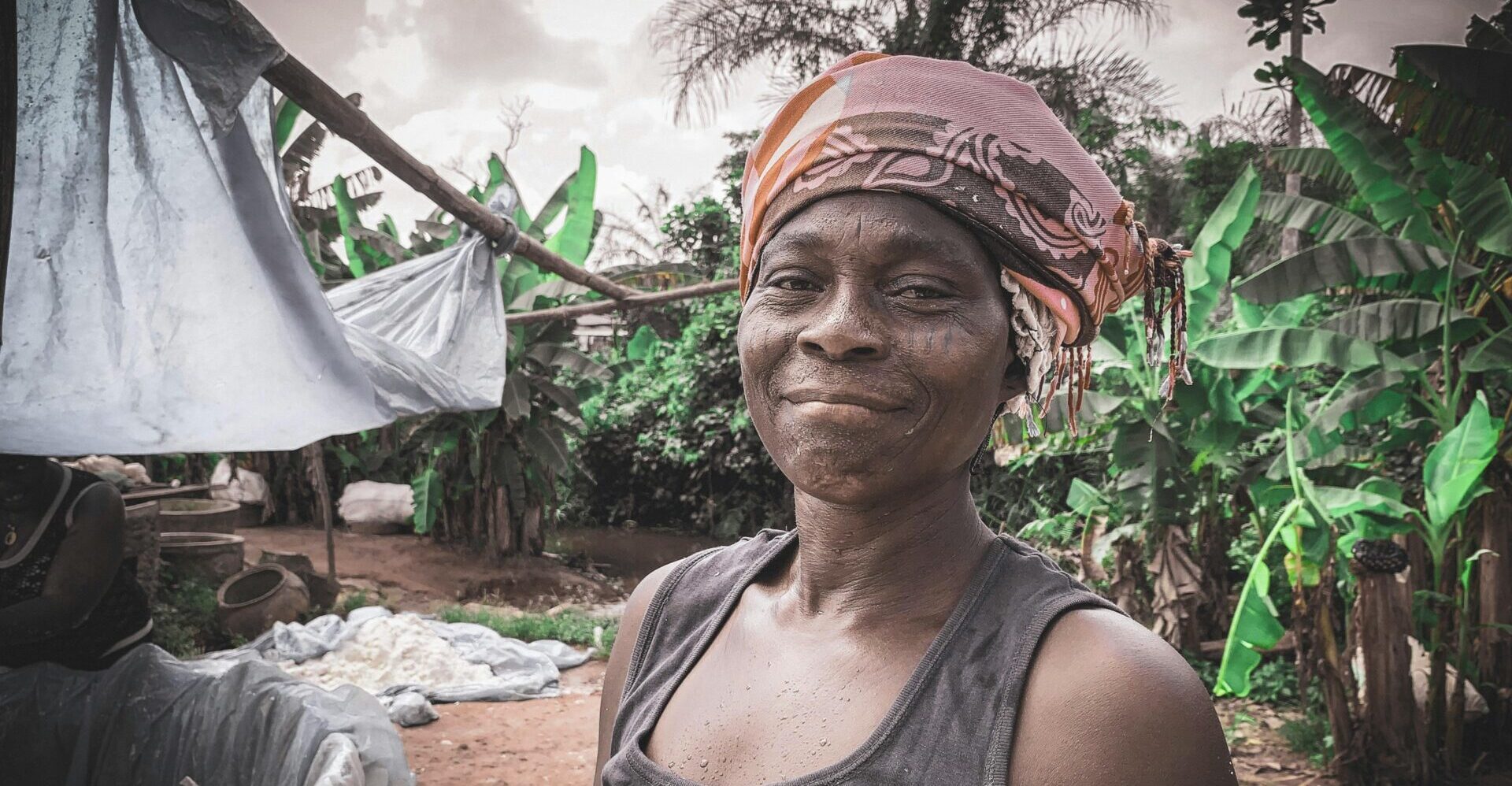
Collective progress continues to be stymied by global inequalities, reports Int’l Labour Organization
Despite significant strides in education, poverty reduction, and productivity over the past three decades, entrenched inequalities, eroding trust in institutions, and sluggish advancements in key areas continue to impede global social justice, according to a recent report by the International Labour Organization (ILO). Titled ‘The State of Social Justice: A Work in Progress,’ the report reveals that 71 percent of an individual’s income is still heavily determined by factors such as their country of birth and gender. Published ahead of the Second World Summit for Social Development in Doha and marking the 30th anniversary of the 1995 Copenhagen Summit on Social Development, the study acknowledges that while global wealth, health, and education levels have improved since 1995, these benefits have not been equitably distributed, and progress in reducing inequality has stagnated. The report highlights a steady decline in public trust in institutions since 1982, fueled by widespread dissatisfaction with perceived unfair rewards for effort. The ILO warns that without urgent efforts to strengthen the social contract, this erosion of trust could undermine democratic governance and international cooperation. On a positive note, the report points to notable achievements, including a 50 percent reduction in child labor among children aged 5 to 14, a drop in extreme poverty from 39 to 10 percent, a ten percentage point increase in primary education completion rates, and social protection coverage for over half of the global population. However, persistent challenges remain: 58 percent of workers are still in informal employment, the gender participation gap in the workforce has only slightly decreased since 2005, and closing the global gender wage gap could take a century at current rates. These issues are exacerbated by rapid environmental, digital, and demographic changes reshaping labor markets at an unprecedented pace. The ILO emphasizes that without targeted policies, disparities will deepen, but strategic interventions—such as investing in skills development, social safety nets, equitable wage policies, and active labor market programs—can foster inclusion and resilience. ILO Director-General Gilbert F. Houngbo stressed, ‘Social justice is not only a moral imperative—it is essential for economic security, social cohesion, and peace.’ The report calls for immediate action to address unequal access to opportunities, promote fairer economic benefits distribution, and manage global shifts in a way that leaves no one behind. It also advocates for embedding social justice at the core of all policy frameworks and enhancing collaboration among governments, international agencies, and social partners. The findings are expected to shape discussions at the upcoming World Social Summit in November and support the initiatives of the Global Coalition for Social Justice, led by the ILO, which unites stakeholders committed to building fairer and more inclusive societies.
-
UK nursery worker jailed for abusing 21 babies
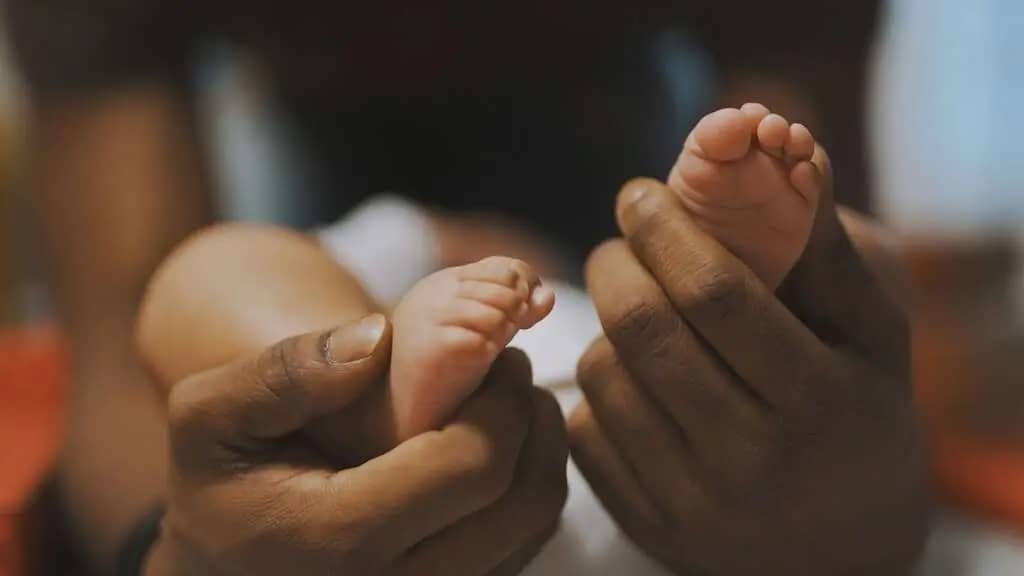
A London nursery worker has been sentenced to eight years in prison for a series of brutal and sadistic attacks on babies under her care. Roksana Lecka, 22, admitted to seven counts of cruelty to children under 16 and was convicted of an additional 14 counts following a trial. The shocking details of her crimes, described as “gratuitous” and “sadistic” by Judge Sarah Plaschkes, included pinching, slapping, punching, and even kicking infants. In one particularly egregious incident, Lecka repeatedly kicked a young boy in the face. The judge noted that Lecka often targeted children who were quietly minding their own business, inflicting pain deliberately and without provocation. Her actions were captured on nursery CCTV, leading to her arrest in June 2024. During the sentencing at Kingston Crown Court, victim impact statements from parents revealed the profound emotional toll of her actions. One mother described the children as “innocent and vulnerable,” emphasizing their inability to defend themselves or communicate the abuse. Lecka, who blamed her behavior on cannabis addiction, apologized in a letter to the court, claiming the drug had altered her personality. However, she was found not guilty of three additional counts of child cruelty. The case has sparked outrage and raised questions about safeguarding measures in childcare facilities.
-
UPP Delegation Meets With Attorney General Over Gun Crime Concerns (VIDEO)
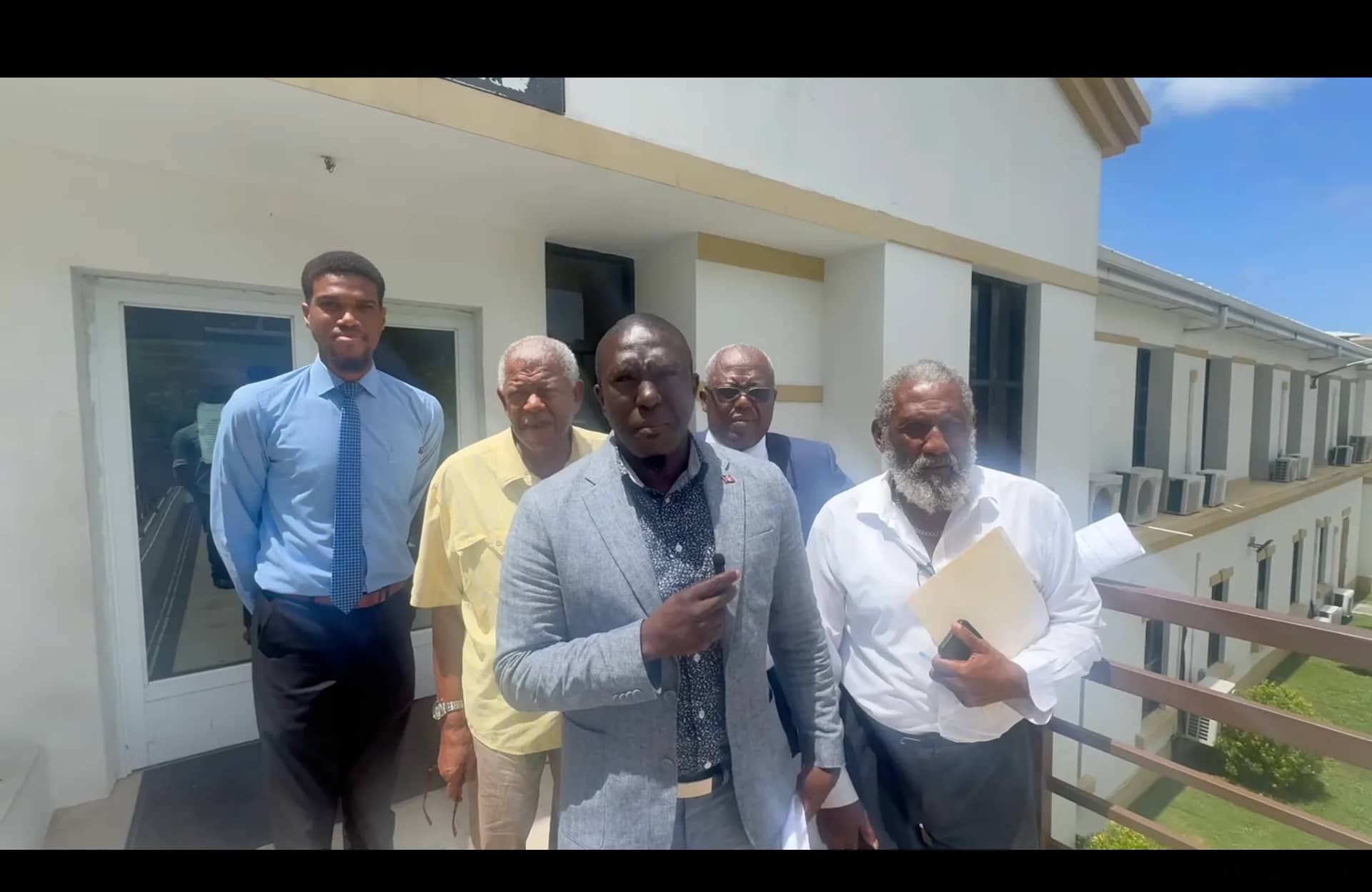
In a significant move to address the escalating gun-related crimes in Antigua and Barbuda, Opposition Leader Jamale Pringle spearheaded a United Progressive Party (UPP) delegation in a high-level meeting with the Attorney General and Minister of Public Safety on Friday. The delegation, comprising former Prime Minister Baldwin Spencer, St. Philip’s South MP Sherfield Bowen, attorney Leon Symister, and Acting PRO Jonathan Wehner, sought to understand the government’s current strategies and proposed actionable recommendations to combat the crisis. Pringle described the discussions as ‘quite fruitful,’ emphasizing the importance of bipartisan collaboration in tackling crime, which he noted affects all citizens regardless of political affiliation. The Attorney General’s team provided insights into ongoing efforts to curb gun violence, and both parties agreed on the necessity of continued dialogue involving not just political organizations but also the broader community, law enforcement, and other stakeholders. Pringle highlighted the need for enhanced communication between the police, legal authorities, and the public to ensure Antigua and Barbuda remains a safe haven. The meeting, initiated by Pringle’s formal request earlier this month, reflects the growing national concern over the surge in gun-related violence and the urgent need for collective action.
-

Human Rights Watch to UN Security Council: Take decisive action to protect Haitians
Human Rights Watch has called for the United Nations Security Council to urgently authorize a comprehensive international peacekeeping mission in Haiti to address the escalating violence fueled by criminal factions. The organization stresses the critical need for adequate funding, personnel, and robust human rights protections to ensure the mission’s effectiveness. Criminal groups have expanded their control beyond Port-au-Prince, intensifying violence in previously safer regions and severely disrupting access to essential services and humanitarian aid. The UN has reported over 3,137 fatalities in the first half of 2025, with nearly 1.5 million people displaced and half the population facing severe food insecurity. Currently, the Security Council is considering transforming the Kenyan-led Multinational Security Support (MSS) mission into a more robust ‘Gang Suppression Force’ (GSF). The MSS, operational since June 2024, has been hindered by insufficient resources and personnel. Nathalye Cotrino, a senior researcher at Human Rights Watch, emphasized the urgency, stating, ‘Time is running out to stop Haiti from falling entirely into the hands of abusive criminal groups.’ She urged the UN to ensure any new force is properly staffed, funded, and equipped with human rights safeguards. The proposed GSF would comprise up to 5,500 personnel, including police, military, and civilians, and operate independently or alongside the Haitian National Police. A new UN Support Office in Haiti (UNSOH) would oversee the GSF, providing logistical and technical support. Human Rights Watch warned that without adequate resources and human rights protections, the GSF risks repeating the MSS’s shortcomings. The organization also called for strict vetting procedures, comprehensive human rights training, and an independent accountability mechanism involving Haitian civil society. Cotrino concluded, ‘It has been two years since Haitian authorities asked for international help, and so far, that help has fallen far short.’
-

Latest Consumer Price Index Shows Lower Prices Overall, Meat and Seafood Show Small Rise
The Statistics Division, operating under the Ministry of Finance and Corporate Governance, has released the Consumer Price Index (CPI) data for May 2025, revealing a continued downward trend in inflation. Over the twelve months ending in May, the CPI declined by 0.6%, following a 1.2% drop in April. Similarly, the All Items Less Food and Energy index fell by 1.4% during the same period. These declines were primarily driven by reductions in housing, water, electricity, gas, transport, and household maintenance costs. Notably, the index for Furnishings, Household Equipment, and Routine Household Maintenance plummeted by 5.1%, while Transport Services saw a significant 13.0% decrease. Collectively, these categories account for 45.7% of the All Items Less Food and Energy index. On a monthly basis, the CPI decreased by 0.6%, with the Food and Non-Alcoholic Beverages Index dropping by 0.3%. The Food Index experienced a slight decline of 0.4%, with six out of nine major supermarket food groups recording decreases. Key contributors to this decline included Milk, Cheese and Eggs (-3.1%), Bread and Cereals (-2.5%), and Vegetables (-1.0%). However, Meat and Meat Products and Fish and Seafood saw increases of 3.4% and 1.1%, respectively. The Non-Alcoholic Beverage Index rose by 1.5%, driven by a 5.7% increase in Fruit and Vegetable Juices. The CPI, a key measure of inflation, tracks the average price changes of goods and services purchased by households. Prices are collected monthly and quarterly from supermarkets and other suppliers, with expenditure patterns derived from household budget surveys. For more detailed methodology and access to the full CPI report for May 2025, visit the Statistics Division’s official website at www.statistics.gov.ag.