作者: admin

  • DIGESETT sanctions driver for reckless driving on Autovía del Este

    DIGESETT sanctions driver for reckless driving on Autovía del Este

    SANTO DOMINGO – Dominican Republic’s traffic enforcement agency DIGESETT has imposed sanctions against a motorist captured on video traveling extensively in the wrong direction along the Autovía del Este highway. The dangerous incident occurred near San Pedro de Macorís, with digital evidence rapidly circulating across social media platforms prompting official investigation.

    Following detailed analysis of the viral footage, authorities identified the vehicle and its operator, applying penalties stipulated in Article 252 of the nation’s Transit and Transportation Law 63-17. The legislation provides clear frameworks for addressing severe traffic violations that endanger public safety.

    DIGESETT officials emphasized their ongoing commitment to roadway safety through a formal statement, urging all drivers to adhere to traffic regulations designed to protect all highway users. The agency additionally highlighted collaborative surveillance efforts, noting that both official patrols and civilian documentation contribute to identifying hazardous behaviors.

    This enforcement action demonstrates the growing intersection between digital evidence and traffic management, where publicly shared content can directly support regulatory interventions. The case serves as a cautionary example against reckless driving practices while showcasing authorities’ responsiveness to community-reported incidents.

  • Booby Alley Housing Project Expected to Be Substantially Completed by June

    Booby Alley Housing Project Expected to Be Substantially Completed by June

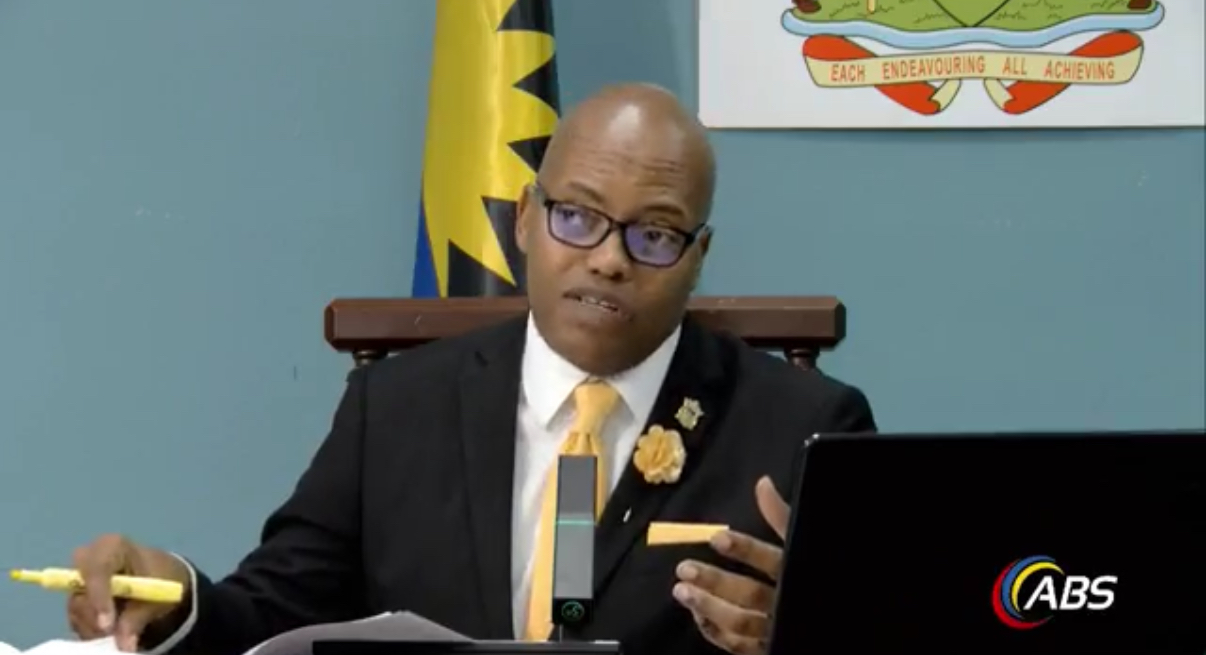
    Antigua and Barbuda’s Prime Minister Gaston Browne has announced significant progress on the Booby Alley housing redevelopment initiative, projecting substantial completion by June with final unit handovers anticipated for August. The announcement came during the Prime Minister’s regular weekly address on Pointe FM, where he provided updates on the transformative urban renewal project.

    Construction of the modern residential complex in the Point district is advancing consistently toward its concluding phases. “I anticipate substantial completion around June, with formal handover procedures commencing in August, after which we will initiate the distribution process,” Browne stated regarding the project timeline.

    This redevelopment represents a cornerstone of the government’s comprehensive strategy to revitalize the historically marginalized Booby Alley community. The initiative involves replacing outdated residential structures with contemporary housing units and enhanced infrastructure systems designed to modern standards.

    Prime Minister Browne characterized the development as a substantial enhancement for the area, simultaneously highlighting the necessity for corresponding upgrades to adjacent roadway networks. He emphasized that the surrounding infrastructure must reflect the quality of the new construction, noting: “This is an exceptional facility that will require roadways commensurate with the superior homes we’re constructing.”

    The Booby Alley transformation constitutes a pivotal element of the administration’s broader urban regeneration campaign, targeting improved living conditions and comprehensive community rehabilitation in one of St. John’s most historically underserved neighborhoods.

  • Iran benoemt Khamenei’s hardline zoon Mojtaba als nieuwe Opperste leider

    Iran benoemt Khamenei’s hardline zoon Mojtaba als nieuwe Opperste leider

    In a decisive move that solidifies hardline control, Iran’s Assembly of Experts has appointed Mojtaba Khamenei as the nation’s third Supreme Leader, succeeding his father Ali Khamenei who perished in recent attacks. The midnight announcement came amid escalating hostilities that have entered their ninth day, with Tehran witnessing massive explosions at fuel storage facilities that illuminated the night sky with orange flames.

    Mojtaba Khamenei, a cleric with extensive influence within Iran’s security apparatus and business networks, secured the position through a conclusive vote by the 88-member clerical body responsible for leadership succession. The appointment grants him ultimate authority over all state matters in the Islamic Republic.

    The transition occurs against a backdrop of intensified military conflict that has claimed at least 1,332 Iranian civilian lives according to Iran’s UN ambassador, with thousands more injured. U.S. forces confirmed a seventh American casualty from injuries sustained during Iran’s initial counterattack one week ago.

    The expanding warfare has severely disrupted global oil markets, with U.S. oil futures surging over 20% to reach July 2022 peaks amid supply concerns and potential disruptions to Hormuz Strait shipments. Attacks on energy infrastructure have created toxic atmospheric conditions throughout Tehran, described by residents as blanketing the city in thick black smoke.

    Iranian military leadership has pledged allegiance to the new Supreme Leader, with Revolutionary Guard commanders expressing readiness to follow his directives. Security chief Ali Larijani confirmed the Assembly convened despite explicit threats targeting the body, emphasizing Mojtaba’s capability to lead under current sensitive conditions.

    The appointment has drawn sharp international reactions, with President Trump asserting Washington should have approval rights over the selection, while Israel previously threatened to attack any appointed successor. Iranian officials have responded defiantly, with Parliament President Mohammad Bagher Qalibaf stating Tehran seeks no ceasefire and will punish aggressors.

    As combat operations intensify, Israeli forces continue targeting high-ranking Iranian officials, including recently appointed military office head Abolqasem Babaian, killed in a Saturday strike. The conflict has entered what Iranian foreign ministry spokesperson Esmaeil Baghaei termed a “dangerous new phase,” characterizing attacks on fuel depots as war crimes due to hazardous material release.

  • NDP govt’s first 100 days a ‘wonderful experience,’ says PM Friday

    NDP govt’s first 100 days a ‘wonderful experience,’ says PM Friday

    Prime Minister Godwin Friday has characterized his New Democratic Party (NDP) administration’s initial 100 days in office as “a wonderful experience,” citing significant progress on campaign promises and policy implementation. The NDP’s landslide victory on November 27, which ended the Unity Labour Party’s 25-year reign with a decisive 14-1 parliamentary majority, has ushered in a new era of governance for St. Vincent and the Grenadines.

    In a recent appearance on Hot 97 FM alongside cabinet colleagues, Friday expressed satisfaction with his government’s ability to deliver on key pledges within the promised timeframe. “We said within 60 days we will do certain things to ease the cost-of-living crisis on the people in this country, and we did so,” the Prime Minister stated, emphasizing ongoing efforts to identify additional measures for public benefit.

    The administration has implemented several cornerstone policies, including the reinstatement of public sector workers terminated under the previous government’s COVID-19 vaccine mandate. Friday described this as honoring both campaign commitments and principled positions, noting his government is “not mincing words with reinstating” and working with unions to ensure a smooth transition for affected individuals who “have been through hell.”

    Economic measures have featured prominently in the government’s early actions. The December 19 VAT-free shopping day, which Friday characterized as “a serious measure to put money back in people’s pockets” rather than a gimmick, provided both consumer relief and business stimulation. The administration has also distributed approximately EC$22 million in tax-free bonuses to approximately 12,000 public servants, pensioners, and daily-paid workers as promised during election campaigning.

    Looking forward, the government plans to reduce Value Added Tax from 16% to 13% later this year, a move Friday described as strategic rather than delayed, requiring proper implementation planning. Additionally, public assistance payments will increase to EC$500 monthly beginning in March, exceeding the EC$360 proposed by the previous administration.

    Despite inheriting what some describe as a challenging fiscal situation with public debt at EC$3.5 billion (110.3% of GDP), Friday maintains a forward-looking perspective. His EC$1.9 billion budget presentation in February introduced no new taxes, focusing instead on efficient collection of existing revenues and creating economic opportunities through private sector development and foreign investment.

  • Cuba regrets the Jamaican government’s decision to cease medical cooperation, yielding to pressure from the United States

    Cuba regrets the Jamaican government’s decision to cease medical cooperation, yielding to pressure from the United States

    The Cuban Ministry of Foreign Affairs has expressed profound regret over Jamaica’s decision to discontinue their longstanding medical cooperation agreement, attributing the move to undue pressure from the United States government. On March 4, Jamaican authorities formally notified Cuba’s embassy of their unilateral termination of the health collaboration that has connected both Caribbean nations for over three decades.

    Cuban officials characterized this development as a capitulation to US geopolitical interests that disregards the healthcare needs of the Jamaican population. The termination effectively deprives Jamaican communities of essential medical services traditionally provided by Cuban healthcare professionals.

    In response to Jamaica’s actions, Havana has exercised its sovereign right to recall the entire Cuban Medical Brigade from Jamaican territory. These medical personnel depart with an enduring legacy of service, returning home with the professional satisfaction of duties fulfilled and continued readiness to extend their solidarity elsewhere.

    This collaboration represents a paradigm of genuine international cooperation. Historical data reveals extraordinary achievements: approximately 4,700 Cuban medical professionals have served in Jamaica over the past 30 years alone. The current contingent of 277 specialists has made substantial contributions to strengthening Jamaica’s healthcare infrastructure.

    The partnership’s quantitative impact demonstrates remarkable scope:
    – Over 8.17 million patient consultations conducted
    – Performance of 74,302 surgical interventions
    – Assistance in 7,170 childbirth procedures
    – Preservation of more than 90,000 lives through medical intervention

    Additional initiatives include Operation Miracle, which has restored or enhanced vision for approximately 25,000 Jamaicans since 2010. Cuban medical expertise has also proven instrumental in disease control programs addressing malaria and COVID-19 pandemic response.

    The Brigade’s dedication was particularly evident following Hurricane Melissa’s recent devastation, where Cuban medical teams maintained continuous 72-hour shifts while supporting hospital and community recovery efforts.

    Despite this diplomatic setback, Cuba reaffirms its commitment to fraternal relations with the Jamaican people, emphasizing that selfless cooperation remains available whenever needed.

    Official statement issued in Havana, March 6, 2026.

  • Column: De lente die niet wijkt

    Column: De lente die niet wijkt

    Across conflict-ravaged regions from Gaza to Afghanistan, an extraordinary juxtaposition unfolds as communities simultaneously observe Nowruz celebrations and Ramadan fasting rituals amidst unimaginable devastation. While international observers document the destruction, local residents continue centuries-old traditions with profound determination.

    In Tehran’s Tajrish Bazaar, women smile while holding flower bouquets in preparation for Nowruz, the Persian New Year that coincides with Ramadan this year. This visual symbolism contrasts sharply with scenes from Afghanistan where families clean homes surrounded by unrecovered rubble, plant flowers in pots while the earth thirsts for blood, and prepare feasts despite countless empty tables.

    The convergence of these observances creates powerful philosophical contradictions: Muslims worldwide engage in soul purification through fasting and prayer while in Gaza, Iran, Afghanistan, Syria, Yemen, and Sudan, bodies are prepared for burial with nothing but silence. Children are extracted from rubble rather than breaking their fast with dates at sunset. Mothers are buried by daughters who should be fitting new dresses for Eid celebrations.

    This persistent adherence to tradition represents what analysts term the ‘Mahdi concept’ – not a messianic figure descending from heaven, but a collective spiritual resilience that refuses to surrender to imposed circumstances. The act of cleaning homes, laying new carpets, watering flowers, and extending invitations becomes revolutionary resistance against destruction.

    Historical parallels emerge from Islamic teachings, notably Prophet Mohammed’s saying: “If the Day of Judgment arrives while one of you holds a seedling, let him plant it.” This ethos of planting despite impending doom, celebrating life within death’s shadow, forms the indestructible core of human spirit currently manifesting across conflict zones.

    The profound wisdom underlying these traditions suggests that as long as communities maintain cultural practices – cleaning, planting, inviting, fasting, praying, hoping – victory does not belong to those who believe violence holds the final word. This dual observance of Nowruz and Ramadan transcends cultural ritual to become what anthropologists identify as the most subversive resistance: refusing to stop living.

    The immense irony between what these holy days represent and what they have become creates nearly unbearable tension. Yet within this tension germinates the unbreakable seed of human resilience, demonstrating that true spring is not a season but a conscious decision to embody renewal despite surrounding destruction.

  • Raúl congratulates our exemplary women

    Raúl congratulates our exemplary women

    In a special commemorative message marking International Women’s Day, Army General Raúl Castro Ruz extended heartfelt congratulations to Cuba’s exemplary women, acknowledging their profound dedication and sustained contributions to the nation’s revolutionary endeavors. The statement, released from Havana on March 8th, 2026, emphasized the critical role women have played in shaping Cuba’s social and political landscape.

    Castro’s tribute highlighted the multifaceted participation of Cuban women across various sectors of society, recognizing their ongoing commitment to revolutionary principles. The message conveyed both admiration and affection, concluding with a symbolic embrace and kiss—gestures representing the nation’s appreciation for women’s past achievements and future potential.

    This public acknowledgment from one of Cuba’s most prominent revolutionary leaders underscores the official recognition of women’s integral role in the country’s development. The statement serves as both a celebration of International Women’s Day and a reaffirmation of women’s central position within Cuba’s revolutionary narrative, reflecting the government’s continued emphasis on gender equality as a fundamental component of socialist ideology.

  • In food production, turning challenges into opportunities

    In food production, turning challenges into opportunities

    Despite facing significant economic constraints, Cuba is demonstrating remarkable innovation in renewable energy adoption, particularly in photovoltaic solar technology. The Caribbean nation is leveraging solar power to transform its industrial operations, achieving substantial energy savings while reducing environmental impact.

    In Villa Clara province, the local dairy industry has emerged as a pioneering example of this sustainable transition. The Villa Clara Dairy Company has implemented a comprehensive solar energy system featuring 400 photovoltaic panels installed across its facility rooftops. This strategic investment has yielded impressive results: the company eliminated its previous daily consumption of 2,200 liters of diesel for milk collection operations, reducing fuel requirements to just 259 liters through optimized transportation logistics.

    The technological transformation extends beyond mere fuel conservation. The Santa Clara dairy plant now conducts all milk pasteurization processes using exclusively solar-generated electricity. This shift produced dramatic environmental benefits in 2025 alone, saving 47 tons of diesel fuel while preventing approximately 131 tons of carbon dioxide emissions from entering the atmosphere.

    Engineer Gilberto León Gonzalez, Transportation and Energy Director at the dairy company, revealed ambitious expansion plans: “We aim to install 1,364 additional panels this year, which would guarantee 10% of the complex’s total energy consumption for various production processes.” The operation further enhances sustainability through using traditional cooking methods (firewood or charcoal) for employee meals and planning to acquire 18 electric tricycles for internal transportation.

    The renewable revolution extends across multiple industries. The “La Purísima” food processing factory, known for its popular mayonnaise and dressings, has installed solar panels to ensure continuous production despite energy challenges. According to Gustavo Benítez Fumero, regional director for the Food and Fishing Industry sector, this represents “the first major investment in the sector’s energy transition,” with additional facilities in Remedios and other locations preparing similar implementations.

    Other significant adopters include the UEB Matadero «Chichi Padrón» slaughterhouse, which is installing 272 solar panels to generate approximately 300 kilowatts for its operations, and the “Agustín Rodríguez Mena” Central Rum Distillery in Santo Domingo, which has operated since 2016 using 2,752 panels that generate surplus energy for the national grid.

    These developments demonstrate how necessity-driven innovation is enabling Cuban industries to overcome external economic pressures while building more sustainable operational models. The widespread adoption of photovoltaic technology across diverse sectors highlights both the viability and economic benefits of renewable energy solutions in challenging circumstances.

  • Directeur SBB krijgt ontslag aangezegd en kondigt juridisch verweer aan

    Directeur SBB krijgt ontslag aangezegd en kondigt juridisch verweer aan

    Suriname’s forest management authority faces leadership turmoil as Ruben Ravenberg, Director-General of the Foundation for Forest Management and Production Control (SBB), has been issued a dismissal notice. The controversy centers on conflicting employment contracts discovered during an internal investigation.

    An oversight committee review revealed two distinct employment agreements in Ravenberg’s personnel file. The initial contract, dated December 22, 2023, established a five-year term from January 1, 2024, through December 31, 2028, based on official government authorization.

    However, investigators uncovered a second agreement signed June 13, 2025, that allegedly appointed Ravenberg as indefinite-term director with enhanced compensation. This subsequent contract referenced the same governmental approval that originally authorized only a fixed-term arrangement.

    The supervisory board determined the indefinite contract was executed without proper nomination or involvement from the foundation’s board of directors, violating organizational statutes that mandate board recommendation for director appointments. The report further noted absence of formal performance evaluation or official resolution authorizing the transition to permanent status.

    Citing these procedural irregularities, the board advised Lands Policy and Forest Management Minister Stanley Soeropawiro to negotiate voluntary termination with Ravenberg to avoid potential litigation and maintain organizational stability.

    The dismissed director has vigorously contested these findings, maintaining he acted in good faith throughout the process. Ravenberg asserts the permanent appointment resulted from direct initiative by the former minister following positive performance assessment. He argues that administrative errors in supervisory decision-making cannot justify consequences for an employee who fulfilled duties appropriately.

    Ravenberg highlights his academic credentials—including advanced degrees in biodiversity and nature conservation—and emphasizes his successful implementation of organizational reforms during his tenure. He has retained legal counsel to formally challenge the dismissal, with potential court action pending ministerial response.

    This leadership crisis emerges during a critical period for Suriname’s forestry sector, where SBB plays vital regulatory roles in forest conservation and timber industry oversight.

  • Culture : Support for artistic creation, Call for Projects

    Culture : Support for artistic creation, Call for Projects

    In response to Haiti’s escalating security crisis, UNESCO’s Port-au-Prince office has initiated a comprehensive support program for the nation’s cultural sector. The project, titled “Support for Artistic Creation, the Resumption of Cultural Events, and Access to Cultural Life in Haiti in the Face of the Security Crisis,” leverages resources from UNESCO’s Emergency Fund for Cultural Heritage to assist cultural professionals severely impacted by ongoing instability.

    The initiative specifically targets creative individuals and organizations operating in security-compromised regions, with particular focus on the capital region. Eligible beneficiaries include musicians, visual artists, writers, actors, creative collectives, cultural operators, performing arts technicians, and cultural mediators from areas most affected by violence.

    This cultural stabilization program operates through two distinct mechanisms. The first component provides financial backing for cultural projects that address community expression, resilience, and social mobilization in crisis-affected zones. The second component delivers specialized training in crisis management, offering participants strategic modules on risk assessment, emergency resource mobilization, strategic planning, and effective communication during turbulent periods.

    UNESCO has announced substantial support opportunities, with grants of up to $8,000 available for qualifying artistic creation projects and cultural events. The application portal is currently active through an online submission system, with a strict deadline of March 20, 2026. This intervention underscores UNESCO’s continued commitment to cultural resilience in Haiti and its support for the creators and institutions essential to preserving the nation’s vibrant cultural identity during challenging times.