作者: admin

  • Simons: Goudsector kan geen ‘free-for-all’ blijven

    Simons: Goudsector kan geen ‘free-for-all’ blijven

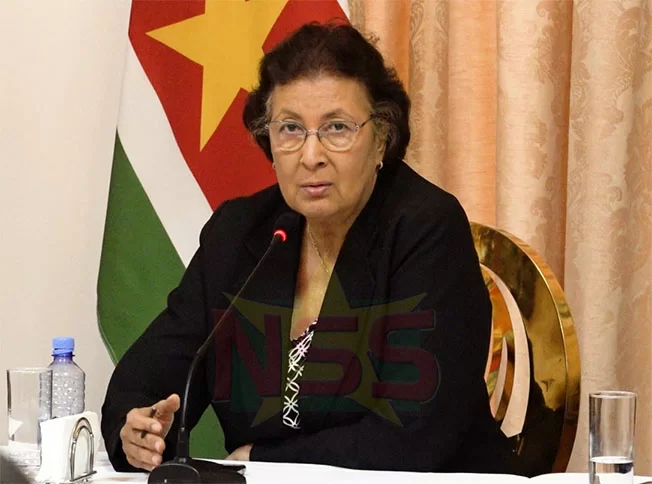
    Suriname’s President Jennifer Simons has announced a sweeping, structural overhaul of the country’s unregulated gold mining sector, responding to growing environmental damage highlighted by recent mass fish deaths in the Saramacca River. After decades of laissez-faire management and ineffective incremental reforms, the government is moving to end the longstanding pattern of ad-hoc intervention that only acts after irreversible harm occurs.

    In a press conference held Thursday, Simons framed the Saramacca River fish mortality incident not as an isolated failure by a single operator, but as a wake-up call for systemic change across Suriname’s gold mining industry. “We have gold across almost all of Suriname, but we cannot allow prospecting everywhere,” Simons told reporters, emphasizing that clear geographic boundaries must be drawn to separate permitted mining areas from protected lands.

    As an immediate first step, the government has instituted a total temporary moratorium on new mining permits, permit extensions, and ownership transfers. The pause will allow authorities to conduct a comprehensive sector-wide audit to map legal and illegal mining operations, document the extraction techniques being used, and verify widespread compliance with existing regulations.

    Following the audit, all legal artisanal mining operations will face systematic, routine inspections — a break from the current model that only triggers action after a pollution incident or public outcry. To improve monitoring across Suriname’s vast, remote interior, the government will integrate satellite imagery to detect unreported new mining and deforestation activity in real time. Special joint teams composed of police, military personnel, and intelligence services will then be deployed to respond rapidly to unauthorized operations.

    To fund this expanded enforcement effort, Simons announced the government will require the gold mining sector itself to cover the costs of regulatory operations, including staffing for the National Mining Authority (NMA), laboratory testing, and security support. “These costs must ultimately come from the gold sector itself,” she noted.

    A core pillar of the new regulatory framework is the phase-out of dangerous toxic chemicals used in artisanal extraction. Despite a national ban on mercury, the substance remains widely used, and accumulates steadily in ecosystems and water supplies. Simons has laid out a target of fully eliminating mercury use from the sector within five to seven years, though final timelines will be negotiated with industry stakeholders. The administration also is moving to block small-scale prospectors from shifting to cyanide — a toxic alternative that requires strict safety protocols that most small operators lack the training or infrastructure to implement. Unregulated cyanide use, Simons warned, carries an even higher risk of catastrophic environmental accidents.

    To support the transition to cleaner practices, the government will promote and help fund chemical-free alternative extraction techniques, including gravity separation methods such as shaking tables and centrifuges that eliminate the need for toxic inputs.

    The regulatory overhaul also expands protection for community residential lands and critical river source watersheds, with new specially protected protected areas where all mining activity will be permanently banned. To improve coordinated response to environmental threats, the government will end the siloed management of mining pollution, requiring cross-agency collaboration between public health authorities, agricultural agencies, environmental regulators, and land management bodies. The country will also expand domestic capacity for environmental testing, creating a coordinated network of government and academic laboratories that eliminates the need to send most samples for testing overseas.

    Simons acknowledged that the scale of the challenge is significant. Decades of unregulated activity have left large portions of the sector outside effective government control, and the state lacks the personnel to maintain a permanent presence across the entire interior. For this reason, she noted, technological monitoring, targeted inspections, and cross-agency cooperation will be critical to closing enforcement gaps.

    While the government does not promise a quick fix to decades of accumulated damage, Simons emphasized that the administration is committed to breaking from the status quo of inaction until a crisis occurs. “We are starting this process, and we will see it through — without favor or exception,” she said. Gold mining remains a core part of Suriname’s national economy, she noted, but it can no longer operate as an unregulated free-for-all with no clear limits on activity.

  • Saim Ayub’s century leads Jamaica Kingsmen to 11-run win over St Kitts and Nevis Patriots – WIC News

    Saim Ayub’s century leads Jamaica Kingsmen to 11-run win over St Kitts and Nevis Patriots – WIC News

    The 2026 edition of the Caribbean Premier League (CPL) delivered another gripping contest on August 27, as a career-defining performance from Saim Ayub carried the Jamaica Kingsmen to an 11-run victory over the St Kitts and Nevis Patriots at Warner Park Sporting Complex in Basseterre.

    Hosts St Kitts and Nevis Patriots won the pre-match coin toss and opted to send Jamaica Kingsmen in to bat first, a decision that would ultimately set up a tense, low-margin final encounter. The Kingsmen got off to a rocky start early, losing top-order batters Keacy Carty and Maaz Sadaqat for just two combined runs before Ayub stepped onto the pitch.

    The emerging star turned the innings on its head, smashing an explosive 102 runs off only 58 deliveries to anchor the Kingsmen’s total. Supported by consistent late-order contributions from Rovman Powell (21 off 17 balls) and Keemo Paul (an unbeaten 25 off 13 deliveries), the Kingsmen closed their 20 overs at 7 wickets for 182 runs, setting a challenging target of 183 for the Patriots to chase.

    St Kitts and Nevis Patriots responded with a hard-fought batting effort that kept the match neck-and-neck until the final over. Andre Fletcher led the home side’s charge with 55 runs off 38 balls, while late cameos from Jason Holder (34 off 23 balls) and Dasun Shanaka (an unbeaten 35 off 18 balls) brought the Patriots within striking distance of the winning target. When the 20 overs concluded, the Patriots finished at 6 wickets for 171 runs – 11 runs short of the mark needed to secure the win. Beyond his batting heroics, Ayub also claimed one wicket during the Patriots’ chase to cap off a dominant all-round display.

    Ayub was named Player of the Match for his performance, which marked the first T20 century of his professional career. Speaking to reporters after the game, he shared his calm approach to the standout innings. “I enjoy everything; the atmosphere and the people. It’s just love. Nothing much. I think I just played with the flow and had some planning about what to do in the middle, which bowler to hit and which one not to hit, and just going sensible,” he said.

    Following the 18th match of the 2026 CPL season, the result reshuffled the tournament’s points table. Jamaica Kingsmen now hold fourth position, having earned 6 points from three wins across seven matches. Meanwhile, the St Kitts and Nevis Patriots remain at the bottom of the rankings in seventh place, with just 2 points from a single win in five outings.

    The CPL 2026 action continues on August 28, with Trinbago Knight Riders set to face off against Barbados Tridents in the next scheduled fixture.

  • School grants by next week

    School grants by next week

    As the 2026 September academic term approaches, the Ministry of Education has announced that disbursement of its needs-based School Supplies and Book Grant will commence next Wednesday, August 26, just five days ahead of the official term opening on September 7. This targeted financial assistance program is designed to offset the cost of educational materials for low-income and vulnerable student populations across the country.

    Administrative teams at the ministry have already wrapped up the initial screening phase for all submitted applications, with a total of 45,953 requests received from students enrolled across 668 educational institutions. The eligible institution pool includes government-run and government-supported primary and secondary schools, state-sponsored private secondary campuses, specialized special education facilities, and Servol junior life centres. Currently, ministry staff are working through the final mandatory eligibility verification stage, a step officials say is critical to upholding program integrity, protecting public tax dollars, and ensuring support reaches only the most qualifying vulnerable applicants.

    Per an official statement released by the ministry this week, roughly 10,000 applications are on track to complete final verification by the end of the current day, with the remaining batch of applications scheduled to be fully processed by the disbursement start date of September 2. This year’s processing cycle represents a notable challenge for administrative teams: not only is the total number of applications significantly higher than in previous years, but the entire review and verification timeline has also been compressed. The application window for the 2026 program ran from June 22 to July 11, 2026, marking a shorter implementation period than past grant cycles.

    Priority for the grant is given to high-need groups, including households with children requiring special education support and families already receiving other forms of government social assistance. Grant amounts are tiered based on a student’s grade level during the 2025/2026 academic year. Students enrolled from Infant One through Standard Five, as well as those in Form One and Form Three through Upper Six, will receive a one-time grant of TT$1,000. Students progressing to Form Two in September 2026 (previously enrolled in Form One for the 2025/2026 term) will receive a TT$500 grant; the reduced allocation reflects the ministry’s separate provision of six specially designed learning support textbooks integrated for use with student-issued laptops.

    To keep applicants informed, the ministry has set up a dedicated online application tracking portal at bookgrant.moe.gov.tt, where parents and guardians can check the status of their request in real time. Applicants will also receive automatic email updates regarding their eligibility status and upcoming payment details. In its statement, the ministry acknowledged the critical role the grant plays in easing financial strain for families preparing for the new school year, and reaffirmed its commitment to moving through the verification and payment processes as quickly and efficiently as possible. Additional updates regarding cheque distribution and program next steps will be posted to the ministry’s official communication channels as processing continues.

  • Water spouts high  from Maraval pothole

    Water spouts high from Maraval pothole

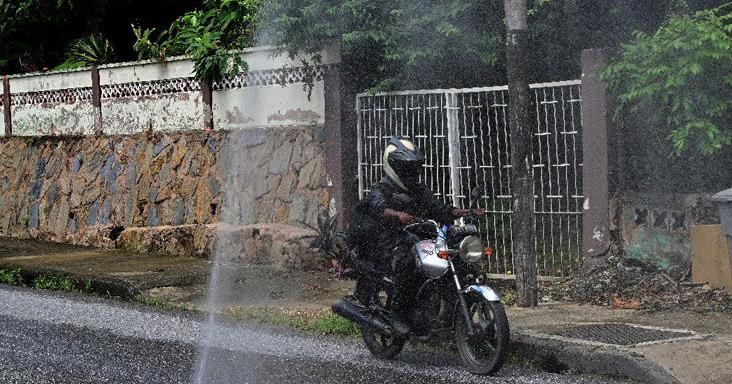
    Commuters traveling along Saddle Road in Maraval, Trinidad, faced unexpected navigation challenges on Thursday, when a nearly 3-foot-wide pothole began forcing pressurized water several feet into the air, creating a major road hazard that slowed travel through the area. Situated just past the popular Monique’s Guest House, the unstable crater has forced drivers to approach the stretch with extreme caution, with many coming to a full stop to yield to oncoming traffic before maneuvering around the damage to avoid costly tire and undercarriage repairs to their vehicles. When local newspaper Trinidad Express visited the troubled site Thursday afternoon, the water spout remained active, drawing the attention of frustrated commuters and long-time local residents.

    Local residents confirm this is not a new problem: the combination of burst water infrastructure and worsening pothole damage has plagued the corridor for months, with repeated failed repair attempts. Taniel Davis, a Maraval resident who lives just a short distance from the damaged stretch of road, explained that crews from the Water and Sewerage Authority (WASA) have patched the site multiple times, but the issue keeps reemerging shortly after work is completed. According to Davis, the patch jobs fail to hold up under the weight of regular heavy goods vehicle traffic, which repeatedly ruptures the underlying water main and creates a new pothole each time. “WASA would fix it, but anytime a heavy truck drives over it, the main would burst again and then another hole develops,” Davis told the Express. A local employee who works near the site echoed Davis’ frustration, confirming the hazard has been growing worse for months with no permanent resolution.

    The dangerous state of Saddle Road has also become a point of political friction, with opposition MP Colm Imbert, who represents the Diego Martin North-East constituency that includes the road, publicly calling out the current national government over its failure to address the issue. In a post to his official X (formerly Twitter) account, Imbert said he has been raising alarms over the “atrocious condition” of Saddle Road with the sitting administration for more than a year, noting that both unaddressed potholes and WASA water leaks have been left unattended for months. During an opposition press conference held the same day the water-gushing pothole was reported, Imbert doubled down on his criticism, labeling the hole a dangerous “crater” and also highlighting separate complaints of overgrown vegetation reaching six feet high in parts of his constituency. Imbert added that the scale of the hazard was unprecedented, noting he had never seen a problem this bad in the 45 years he has represented the area.

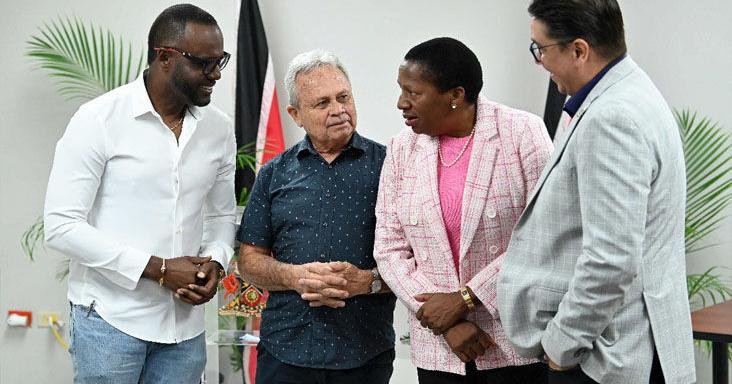
    In response to requests for comment from the Express, Public Utilities Minister Barry Padarath acknowledged the issue Thursday. While Padarath said he had not yet seen Imbert’s public social media post about the pothole, he pledged to immediately reach out directly to WASA leadership to alert the agency to the hazard and coordinate a response.

  • Padarath confirms  hike in WASA fees

    Padarath confirms hike in WASA fees

    A contentious 100% to 700% fee increase for core services at Trinidad and Tobago’s Water and Sewerage Authority (WASA) has ignited a fierce political dispute, with the opposition calling for high-level resignations and the governing side defending the move as a long-overdue modernization effort. The revised charges, applied to services delivered by WASA’s Infrastructure and Compliance Department, took effect on July 1, 2024 (corrected from the original 2026 transcript error), bringing long-unupdated rates in line with current operational costs, according to Public Utilities Minister Barry Padarath. These one-time fees cover regulatory inspections, design reviews, and approvals for new residential, commercial, and industrial water and wastewater connections, as well as plumbing and pool infrastructure work, a service area that had not seen rate adjustments since the 1980s, Padarath confirmed.

    In a press conference held at the Office of the Opposition Leader in Port of Spain on Tuesday, former Public Utilities Minister and Opposition MP Marvin Gonzales slammed the government for what he called an underhanded, unconsulted rate hike that imposes new financial strain on already burdened Trinbagonian residents. Gonzales, who shared documentation of the new fee structure with reporters, pointed out that while outdated rates are still listed on WASA’s public website, in-person customers are now being charged the dramatically higher rates with no advance warning to consumers, industry stakeholders, or elected opposition representatives. Specific increases range from a 100% jump for commercial/institutional swimming pool connections (rising from TT$1,000 to TT$2,000) to a staggering 700% increase for multi-family residential per-unit connection inspections, from TT$150 to TT$1,200. Other hikes include a 650% increase for commercial unit inspections (TT$200 to TT$1,500), a 300% increase for industrial connections (TT$450 to TT$1,800), and a 260% rise for residential swimming pool connections (TT$500 to TT$1,800).

    Gonzales accused the ruling government of “acting in the dark of night”, framing the unannounced fee increase as part of a broader pattern of quiet hikes to government service fees and traffic fines that shift greater cost burdens to households. The opposition has formally called for Padarath’s immediate resignation, alongside the full removal of WASA’s board of directors and executive management team, over the lack of public consultation and transparency around the changes.

    Padarath rejected these accusations in comments to the Trinidad Express, denying any secrecy around the adjustment and stressing the new rates have been published on all WASA service forms as of the July 1 effective date. He emphasized that the fees are one-time charges, not recurring costs to customers, and that updating the decades-old fee structure is a critical step to modernize WASA’s overall operations. The revised rates, he argued, will boost operational efficiency in the Infrastructure and Compliance Department and reduce long-term operating expenditures for the state-owned utility. In a sharp counterattack on Gonzales, Padarath dismissed the opposition’s criticism as a distraction from ongoing internal political infighting within the main opposition People’s National Movement (PNM), claiming the former minister was acting as a “bacchanalist” (provocateur) to draw attention away from a contested internal party battle for the San Fernando East constituency seat.

  • ‘Take it to the police’

    ‘Take it to the police’

    A brewing internal conflict within Trinidad and Tobago’s main opposition party, the People’s National Movement (PNM), took center stage this week as Opposition Leader Pennelope Beckles addressed public claims of inaction on alleged corruption from sitting San Fernando East MP Brian Manning. Speaking at a formal press briefing held at her Port of Spain office, Beckles confirmed she held a constructive, productive meeting with Manning earlier the same day, but chose not to disclose specific details of their closed-door discussion to reporters.

    Manning recently went public with criticism, claiming Beckles had been reluctant to confront suspected corrupt actors within the party’s ranks, in the wake of a public split between the MP and his now-resigned San Fernando East constituency executive. In her response, Beckles pushed back against claims that she or the party bear primary responsibility for investigating criminal allegations of corruption. She emphasized that she is not a law enforcement official, and that the PNM operates according to its longstanding internal constitutional procedures, which cannot be bypassed for public pressure.

    “If at any time there is any allegation of wrongdoing, of any corruption by anybody as it relates to the PNM, if a person is making such an allegation and you have the evidence, you must take it to the police,” Beckles reiterated during the briefing. She stressed that accusations alone do not equal a finding of guilt, and that all party members retain the fundamental right to due process and a fair hearing. While she noted that parties can review allegations brought forward to them per internal rules, Beckles made clear that the PNM lacks the statutory authority to conduct formal criminal investigations into corruption claims.

    Beckles pushed back against growing criticism of her leadership style in handling the ongoing rift, noting that the PNM, a 70-year-old established political institution, is bound by its own constitution that requires sensitive internal matters to be handled through established channels rather than public spectacle. “Not everything which is happening in the PNM will be aired in the public,” she said, adding that she is choosing to focus on pressing policy issues affecting the national population rather than engaging in internal drama or unsubstantiated rumors. She also committed that the party would protect the integrity of members found to be innocent of any wrongdoing.

    Addressing recent public speculation around a US$187,000 condominium purchased in Florida’s Broward County, which local Homeland Security Minister Roger Brown previously referenced when he stated public fund corruption allegations belong with police investigators, Beckles denied having any knowledge of who owns the property. She clarified that the core question is not ownership itself, but whether the property was acquired through illicit corrupt means, a question that falls to law enforcement to resolve, not the political party.

    Beckles confirmed that the annual general meeting for the San Fernando East PNM constituency has been postponed, while AGMs for other PNM constituencies across the country are already underway. Internal party processes have been initiated to address the conflict, she said, but details of those processes will not be released publicly per party rules. She also confirmed that the entire former San Fernando East constituency executive chose to resign of their own accord, as they determined that step was in their best interest. On the topic of former Education Minister Hazel Manning, Brian Manning’s relative, who is seeking a position on the new constituency executive, Beckles said she has no objections, noting Hazel Manning’s decades of experience and commitment to the party.

    When asked whether the PNM would consider requesting Brian Manning’s resignation over his decision to air internal party disputes publicly, Beckles dismissed the question, reaffirming the party’s longstanding norm of not washing internal dirty linen in public. She did acknowledge, however, that shifting political norms, particularly the rise of social media, have changed how internal party conflicts play out in the public space.

  • Panama en El Salvador roepen noodtoestand uit vanwege door El Niño

    Panama en El Salvador roepen noodtoestand uit vanwege door El Niño

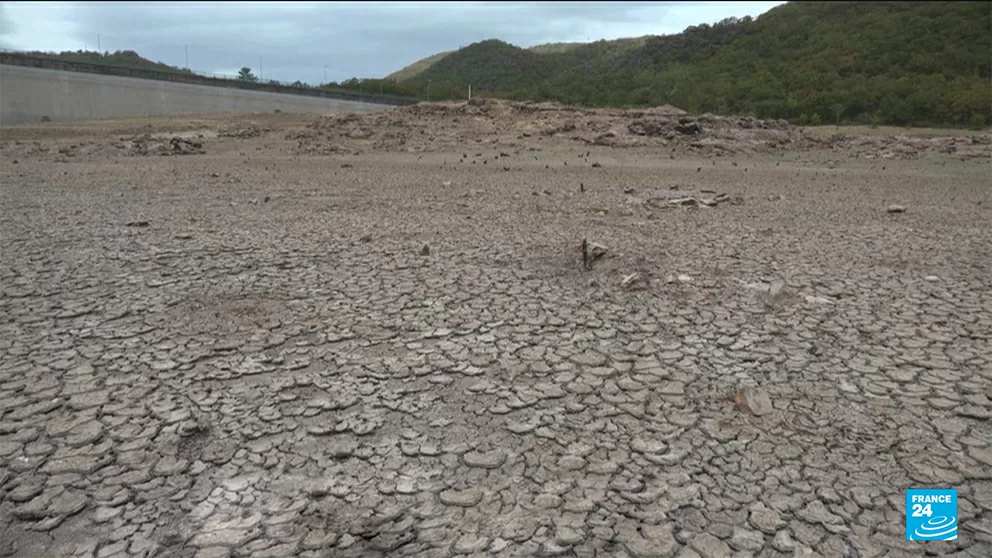
    Three Central American nations now face escalating climate-driven crisis after Panama and El Salvador followed Honduras in declaring national emergencies over an extreme drought fueled by one of the strongest El Niño events in decades. The devastating dry conditions have already disrupted critical global shipping through the Panama Canal and stoked widespread fears of acute food shortages across the drought-stricken region.

    Panama’s Interior Minister Dinoska Montalvo confirmed that the emergency declaration will grant national and local authorities expanded powers to prepare for and respond to the far-reaching impacts of this El Niño event, which has already inflicted severe damage to regional crop yields and pushed hunger risks to multi-year highs. Alongside Panama’s emergency order, El Salvador has enacted a state of maximum preparedness to step up surveillance, real-time monitoring, and emergency relief delivery to communities devastated by the drought. The country’s civil protection ministry issued a nationwide red alert for both meteorological and agricultural drought across all of its territory via social media.

    El Niño is a recurring climate pattern marked by elevated sea surface temperatures in the central and eastern equatorial Pacific Ocean. This shift triggers widespread disruptions to global wind patterns and rainfall cycles, resulting in unseasonable, often extreme weather across every inhabited continent. This year’s event is ranked among the most intense recorded in recent memory, and it is a key contributor to the ongoing surge in global average temperatures that are on track to hit the highest levels ever documented.

    For Central America, this powerful El Niño has translated to prolonged, record-breaking dry conditions. Honduras was the first to act, placing roughly 80% of its national territory under heightened alert earlier this year. At the Panama Canal, which connects the Atlantic and Pacific Oceans and handles roughly 5% of global maritime trade, falling water levels from lack of rain have forced authorities to cut daily transits and impose draft restrictions on larger vessels, snarling global supply chains.

    In El Salvador, the near-total absence of the heavy seasonal rains that normally fall at this time of year has led to widespread crop failure across large swathes of the country. The nation’s ministry of agriculture has announced targeted food aid distributions for rural households that lack access to irrigation infrastructure to sustain their crops through the drought. Many affected municipalities in El Salvador fall within the Central American Dry Corridor, an arid zone stretching across parts of Honduras, Nicaragua, and El Salvador that has long been identified as one of the most climate-vulnerable regions in the Western Hemisphere.

    All three affected nations broke monthly temperature records in June and July, adding to growing alarm over impending food insecurity. In El Salvador alone, 14 new national temperature records were broken in the first weeks of August. The crisis is not limited to Central America: last week, Peru declared a national emergency for more than a third of its cities, as the same El Niño event brings a dangerous mix of extreme heat and torrential rainfall that threatens to disrupt the South American nation’s food production as well.

  • Column: Reciprociteit

    Column: Reciprociteit

    Fifty years after Suriname gained full independence from the Netherlands, long-standing diplomatic rhetoric around the two nations’ “special, equal bond” is facing fresh scrutiny, as voices in Paramaribo highlight a striking gap between stated values and on-the-ground reality for ordinary citizens.

    For decades, official meetings and state visits between the two governments have consistently leaned on warm diplomatic language: shared history, unique cultural ties, diaspora connection, friendship, mutual respect, equality and cooperation. There is no question these terms have roots in reality: centuries of shared history have woven the two nations closely together, with cross-ocean family ties, hundreds of thousands of Suriname-born people residing in the Netherlands, and overlapping cultural, linguistic and educational bonds that include both joyful memories and the heavy, painful legacy of colonial rule. But according to commentator Wilfred Leeuwin, one critical term is missing from this diplomatic lexicon: reciprocity.

    Equality, Leeuwin argues, is not defined by statements issued during state summits. It is felt by everyday citizens navigating cross-border travel. For a Surinamese resident seeking to visit family or take a short holiday in the Netherlands, a strict, burdensome visa requirement remains in place. Travelers must fill out extensive forms, gather supporting documentation, schedule in-person appointments, submit sensitive personal and financial information, pay processing fees, and wait for final approval on their application. All requests are processed in Paramaribo via third-party vendor VFS Global, under rules set by the Dutch government that require in-person attendance, fingerprint collection and detailed questioning about travel plans. For many Surinamese, the frustration extends far beyond the visa requirement itself: it stems from the cumbersome process and the often dismissive treatment applicants receive during the procedure.

    This week, new Dutch ambassador to Suriname Marjolein Busstra acknowledged in her debut radio interview with ABC that Surinamese citizens widely view the process as unnecessarily burdensome, noting that high costs, long wait times, extensive documentation requirements, and demands for private financial data create significant barriers. She also pledged to take complaints about poor treatment by VFS Global seriously. But Busstra repeated a familiar explanation for the status quo: the Netherlands cannot unilaterally eliminate the visa requirement, as it is bound by European Union rules as a member of the Schengen Area. While this argument holds formal legal weight, Leeuwin argues it is socially and politically insufficient. If the Netherlands cannot deliver on this basic measure of equal treatment, it ought to stop claiming it shares a deeply special, warm and equal relationship with Suriname – a claim that was repeated just recently when Busstra presented her credentials to the Surinamese government, with officials saying the two nations would deepen their “close, equal bonds.” Equality, Leeuwin insists, must be visible in tangible practice, not just diplomatic statements.

    The contrast in policy becomes even starker when looking at travel in the opposite direction. For Dutch citizens traveling to Suriname for tourism or family visits, no comparable visa process exists. In 2022, Suriname unilaterally eliminated visa requirements for citizens of dozens of countries, including the Netherlands, allowing short-term visits with just a simple entry fee payment (different rules remain in place for work and long-term study placements). This creates a jarring imbalance: the citizen of the former colonial power can enter Suriname with relative ease, while the citizen of the former colony must jump through dozens of bureaucratic hoops to travel in the opposite direction. This imbalance opens a larger, uncomfortable question: how much of the old colonial power dynamic remains embedded in how the two nations interact, 50 years after Suriname’s independence?

    This is not an accusation that the Netherlands still governs Suriname as a colony. Suriname has been an independent republic since November 25, 1975, and it carries full responsibility for its own policy successes and failures. But political independence does not automatically equal psychological equality, a warning first sounded by late Surinamese president Ronald Venetiaan 28 years ago. On the 20th anniversary of independence in 1995, Venetiaan cautioned that positive ties with the Netherlands must not devolve into Dutch dominance, and clear boundaries were needed to prevent Dutch influence from becoming counterproductive. Most notably, he observed that while the formal colonial era had ended, the colonial mindset still persisted among the former colonizing power.

    Three decades later, Venetiaan’s warning carries new urgency, Leeuwin argues. A colonial mindset does not need to manifest through formal governors, occupying troops or a colonial flag flying over government buildings. It can be felt in an imbalanced dynamic where one side sets the rules, imposes conditions and exercises control, while the other is expected to explain itself, prove its eligibility and conform to the terms set by the more powerful partner. That is the feeling shared by many Surinamese, and the issue goes far beyond visa rules alone.

    Look at other areas of bilateral cooperation: internships, development projects, research exchanges, knowledge sharing and technical assistance. Dutch students, experts, consultants and organizations face few barriers to entering Suriname to conduct research, gain field experience or implement projects. This collaboration is valuable, and Suriname benefits from access to global knowledge and partnership. But Leeuwin argues that the critical reverse question is rarely asked: how easy is it for Surinamese citizens to access the same opportunities in the Netherlands? How reciprocal are internship exchanges? How reciprocal is joint knowledge sharing? How many Surinamese experts are invited to lead work in the Netherlands? How often do Surinamese institutions help set the agenda for bilateral projects? Who gets to define what Suriname needs? Who sets the terms of cooperation? Who controls funding? Who provides the core expertise? The issue is not that all these interactions are imbalanced, but that 50 years after independence, Suriname is mature enough to ask these questions openly.

    Suriname must also take responsibility for advancing its own interests, Leeuwin argues. It cannot simply blame four centuries of colonialism for every challenge and avoid taking action. If the Netherlands claims changing the visa requirement requires approval from European institutions, the Surinamese government should map out all available diplomatic pathways and pursue them aggressively – not just hold one cursory meeting, issue a gentle statement during a bilateral visit, or appoint yet another unproductive study committee. If full visa-free travel is not immediately achievable, Suriname should negotiate concrete, immediate easing of restrictions. The government should also be transparent with the public about what steps have been taken, what the Netherlands can do unilaterally, what requires approval from Brussels, and where the current barriers lie. Suriname’s own policy must also shift: why has the country unilaterally offered travel concessions to Dutch citizens without first negotiating reciprocal measures in return? Why is it often seen as improper for Suriname to set clear conditions for foreign partners, when it is accepted as normal for other countries to set those conditions for Surinamese citizens?

    Reciprocity does not mean Suriname should retaliate by imposing the same burdensome bureaucratic barriers on Dutch travelers tomorrow – that would be counterproductive and childish. Instead, reciprocity means two sovereign nations take each other seriously enough to build a relationship where rights, opportunities, obligations and benefits are as balanced as possible. This requires Suriname to practice self-respect, Leeuwin argues: there is nothing wrong with the Netherlands defending its own national interests, that is what all sovereign states do. But it is equally essential for Suriname to defend its own interests consistently and forcefully.

    Some of this imbalance, Leeuwin notes, stems from a less discussed part of colonial legacy: the mindset that remains among the formerly colonized, a habit of looking to the former colonizer for approval, funding, solutions and even validation. It is this mental slavery that must be overcome, echoing Bob Marley’s famous lyrics: “Emancipate yourselves from mental slavery, none but ourselves can free our minds.”

    Suriname does not need to beg for favors because of its colonial history, and the Netherlands does not need to grant favors out of colonial guilt. What Suriname can and should demand is far simpler: equal treatment, because it is no longer a colony. Equality should not only be heard when an ambassador presents credentials, a minister makes a state visit, or both governments issue a joint statement calling relations “excellent.” It should be felt by ordinary citizens when they interact with the bilateral relationship: at the visa counter, when applying for an internship, when enrolling in study programs, when working on joint projects, and when accessing equal opportunities. It should shape how the two nations talk to each other as equals.

    After more than 50 years of independence, it remains entirely appropriate for the Netherlands and Suriname to celebrate their unique shared relationship. History and people-to-people ties do make the bond special. But moving forward, every time the word “equality” is invoked by either side, it is time to ask one simple question: where is the reciprocity? No favors, no retaliation, no nostalgia for colonial rule, no perpetual anger at the former colonizer. Just two mature, sovereign nations, mutual respect for each other’s citizens, and equal rights and obligations on both sides. There is no better word for that than reciprocity.

  • Miskin: 15% wordt uitbetaald, vakbeweging houdt vast aan verdere onderhandelingen

    Miskin: 15% wordt uitbetaald, vakbeweging houdt vast aan verdere onderhandelingen

    Starting September 1, public sector civil servants and equivalent employees in Suriname will receive an immediate 15% salary increase, following a joint announcement from the government and the country’s main trade union umbrella body, the Confederation of Suriname Trade Unions (CLO). However, the deal carries an unusual caveat: while unions do not oppose the payout of the raise, they have refused to accept the 15% figure as the final outcome of ongoing wage negotiations, leaving talks set to continue for an additional three months.

    CLO President Michael Miskin clarified the unusual arrangement in an interview with local outlet Starnieuws, explaining that unions could not defend the 15% increase to their members when their original opening demands were far higher. To avoid any misunderstanding, the joint statement released by unions and the government explicitly confirms that no final collective agreement has been reached. “It would be wrong to create the impression that unions agreed to 15% after negotiations,” Miskin said. “We would have to answer to our members for a figure that is drastically lower than the demands we brought to the table.”

    The gap between the government’s offer and union demands is substantial. The Ravaksur PLUS union tabled an initial demand for a 25% salary increase, while joint education unions called for a 400% rise, seeking an immediate minimum increase of 75% up front. Security sector unions have asked for 55% total, with an initial 25% first tranche. None of these demands come close to the 15% the government is currently willing to roll out, Miskin noted.

    A core part of the interim arrangement is the establishment of a 15-member mixed working group, with 8 representatives from the government and 7 from the trade union movement. The group has been given a three-month mandate to develop further proposals on employment terms and sustainable long-term salary adjustments for public sector workers, cementing that negotiations are far from over. “The process continues,” Miskin emphasized. “This working group will work through all the remaining outstanding issues.”

    Beyond public sector wages, unions have pushed for additional adjustments, including changes to Suriname’s tax brackets. Private sector union C-47 has specifically highlighted that workers outside the public sector do not benefit from the announced salary increase and also need urgent purchasing power support. Miskin added that the union movement remains committed to dialogue with the government to navigate the two-year transition period before projected oil export revenues begin to flow into the country’s budget, with all these broader issues set to be addressed by the joint working group.

    Miskin stressed that signing the joint statement does not equal union acceptance of the 15% figure. “The statement only records what was agreed during consultations, including the creation of the working group and the government’s standalone decision to implement this increase. That is why we explicitly included language confirming no final agreement has been reached,” he explained.

    The 15% increase will be rolled out in two installments to limit near-term inflationary pressure: 10% will be paid in September, with the remaining 5% following in October. The government chose the phased approach specifically to avoid triggering additional inflation, a choice unions have accepted while still maintaining that negotiations are not closed. This distinction explains why both sides were able to sign a joint statement that simultaneously confirms no final deal has been reached.

    Suriname President Jennifer Simons confirmed the arrangement during a Thursday press conference, reiterating that the 15% increase takes effect September 1 and that negotiations will proceed as planned. “This is not a final agreement, we are still at the negotiating table,” Simons said, framing the immediate increase as a first step to address longstanding erosion of public sector pay.

    Simons acknowledged that public sector workers have seen a significant decline in their disposable income over recent years, a situation the government is keen to remedy. At the same time, the administration is committed to avoiding overly large public spending increases that could put new pressure on the country’s exchange rate and reaccelerate inflation.

    The President noted that the available fiscal space for the increase has been fully vetted and calculated in advance by the Ministry of Finance. “If this spending would disrupt the economy, I would not approve it,” she stated, adding that the government does not expect the 15% phased increase to generate meaningful inflationary pressure.

  • Cuban Education prepares for a school year with increased in-person learning and differentiated responses

    Cuban Education prepares for a school year with increased in-person learning and differentiated responses

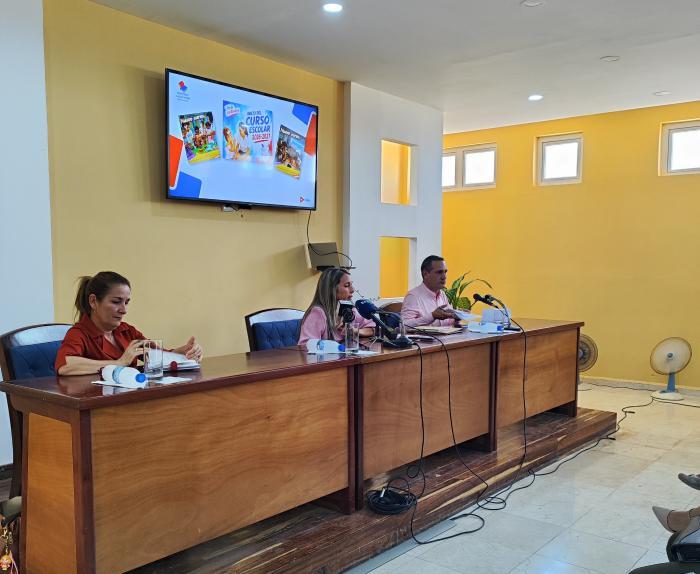
    As Cuba prepares to welcome the 2026-2027 academic year, which is set to launch nationwide on September 1, education officials have outlined a flexible, community-adapted framework designed to preserve access to learning amid a series of persistent operational and resource challenges. Minister of Education Naima Trujillo Barreto detailed the new school year’s structure during a Thursday press conference, emphasizing that the Cuban Ministry of Education (MINED) has centered its priorities on protecting the fundamental right to education and ensuring educational continuity, with customized solutions that account for varying local capabilities across regions, individual schools, and local communities.

    This academic year will serve roughly 1.4 million enrolled children and adolescents across all education levels. Officials will also maintain targeted outreach to students who disengage from formal in-person learning during the 2025-2026 school year and received alternative remote or community-based support. During the previous academic term, between 17,000 and 23,000 students were unable to attend school in person regularly. For the coming year, MINED has rolled out a re-engagement plan for approximately 17,000 of these students, with only 400 to 500 students continuing to receive exceptional off-site support. Trujillo Barreto noted that the core goal for 2026-2027 is to achieve higher in-person attendance rates than the previous term, though conditions will not return to pre-crisis levels that existed before challenges escalated in February 2026.

    ### Prioritizing In-Person Learning With a Reimagined School Model
    In-person instruction remains a top priority for students in general education, Trujillo Barreto explained, as younger learners lack the independent study skills of higher education students, making direct interaction with educators and peers critical to academic progress. However, current constraints require a restructured approach to the academic calendar and school operations. The school year is split into three distinct terms, each with scheduled breaks, targeted intensive remedial coursework to address learning gaps, and potential temporary closures to adjust to changing local conditions.

    Operational structures will vary widely across institutions: some schools will continue to run daily double shifts, while others will only hold double shifts on specific days of the week. Many schools will adjust entry times or reduce the frequency of in-person attendance to match local resources. Trujillo Barreto clarified that all local adjustments are made based on five core factors: available transportation, student accommodation capacity, food access, teaching staff availability, and unique community characteristics.

    From September 1 to September 7, all schools will host a week of collaborative reflection on their local educational plans, with participation from family groups and national pioneer youth organizations. During this week, each school will finalize and share its context-specific operational plan. “No two institutions have to be alike, because communities are not all the same,” Trujillo Barreto summarized. “What will be common are the educational aspirations at each level, while the paths to achieving them may vary.”

    ### Targeted Adjustments to School Operations and Resource Allocation
    Transportation infrastructure is one of the most impactful factors shaping school operations, as many students and educators travel long distances to reach campus. As a result, MINED has rejected a one-size-fits-all approach to reorganizing the national school network. Ongoing network reorganization will continue, but any changes that would create new barriers to access related to transportation or food services will be delayed until conditions improve. The goal of reorganization is to maximize existing resource use without limiting access to education for vulnerable students.

    Adjustments are also being made to the national scholarship program: students attending secondary and pre-university schools far from their homes will be allowed to stay on campus for extended blocks of time, with less frequent trips home. Many educators have also agreed to stay on campus with students for multiple consecutive days, ranging from a few days to up to two weeks, depending on local transportation constraints.

    Food security is a second major priority for the coming school year. While basic food access is guaranteed for all semi-residential and residential schools launching classes this fall, coverage levels vary dramatically across regions: some schools have enough supplies for 15 days of operations, others have 20 days of stock, and many are still waiting for additional supply deliveries. To create more reliable food supply chains, MINED has established formal contractual partnerships with both state and non-state business sectors, replacing the previous ad-hoc support model with long-term supply commitments. Food availability will also shape local school schedules: some schools can maintain full double shifts, while others will need to reduce or adjust in-person time, and school snack programs will operate differently across regions based on local resources.

    ### Addressing School Uniform Shortages With Flexible Policies
    Trujillo Barreto publicly acknowledged that not all students will receive their required school uniforms in time for the first day of classes. Domestic uniform production only reached 12% of the primary school uniform target by the end of August, with slightly higher progress for secondary school uniforms. “Electricity problems, the transportation of fabrics, and limitations on importing supplies have affected production,” she explained.

    To mitigate the shortage, MINED has leveraged existing inventory in domestic trade warehouses, mobilized local sewing workshops, and encouraged community participation: many regions have organized community sewing sessions, and some students have sewn uniforms at home. Priority distribution has been given to preschool students and seventh graders, though Trujillo Barreto confirmed that even these priority groups will not have full uniform coverage on opening day.

    Production will continue through September and October, with additional government funding approved to keep manufacturing moving. In the interim, students are allowed to wear alternative clothing consistent with school guidelines: primary school students may wear their required school headscarves without the full uniform, and all schools are required to adopt flexible policies that do not enforce strict color or clothing requirements for students without complete uniforms. “No student should be denied school for lacking the uniform,” Trujillo Barreto stated, adding that MINED will develop custom solutions to provide uniforms and footwear for students from vulnerable socio-economic backgrounds.

    ### Centering Equity: Leaving No Student Behind
    Differentiated targeted support will be a defining feature of the 2026-2027 school year, with MINED conducting localized needs assessments across all regions to identify individual student needs. Some students will require guaranteed daily transportation, others will need subsidized or free meal support, and many will require adjusted start times to accommodate personal or local constraints. “The principle of leaving no one behind must become a concrete response,” Trujillo Barreto emphasized.

    Special education services retain top national priority, with specialized support allocated to foster care centers, orphanages for children without parental care, and residential education centers. For special education students, MINED will continue to provide personalized support, and where possible, implement transition programs to support integration into mainstream general education classrooms. Almost all municipal schools for students with intellectual disabilities are fully prepared to launch classes on schedule, and the three regional schools for students with physical disabilities that remained open through the end of the last term will retain their priority funding and operational status for the coming year.

    Children without parental care receive specific targeted attention: MINED has completed a full review of their feeding and care conditions, and has arranged for additional energy support to ensure reliable power during critical daily periods including meal times and rest hours.

    ### Addressing Workforce Gaps and Learning Resource Needs
    gTeacher staffing remains one of the most pressing challenges for the coming school year. Currently, Cuba has 73% coverage of teaching positions by trained, permanent instructional staff, with gaps being filled through a range of targeted strategies. Staffing shortages are not uniform across the country: Havana faces one of the most complex staffing scenarios, while other provinces have greater capacity to reallocate existing staff. The province of Camaguey, for example, has faced persistent shortages of qualified mathematics teachers, and eastern Cuban provinces report mixed conditions, with some regions holding enough reserve staff to cover gaps through internal reorganization.

    To address shortages, the country’s Resolution 10 will remain in effect, which provides additional pay for teachers who take on extra instructional loads. MINED is also restructuring school and regional education departments to reallocate staff, and recruiting university students and professionals from other non-teaching sectors to fill open positions.

    For learning materials, MINED confirmed that all students and educators will receive full sets of updated textbooks for all grade levels under the country’s Third Education Improvement Program by September, alongside core basic supplies including notebooks and pencils. Digital learning support will continue to be developed in partnership with the Ministry of Communications, though national connectivity limitations prevent a return to pre-crisis digital resource access. The national CubaEduca learning platform will remain a core digital resource, with new content added focused on respectful parenting and training for educators to identify and report vulnerable student situations.

    ### Updates to Technical Vocational and Higher Education Transitions
    Technical and Vocational Education (TVE) will undergo a targeted renewal and monitoring process, as TVE students begin work-aligned training as early as ninth grade in preparation for entry into the national workforce. MINED will also maintain close coordination with higher education institutions to support incoming first-year university students, providing detailed background information on students who were unable to complete twelfth grade under normal traditional conditions, alongside their official exam and assessment results.

    Outstanding student achievement will also be prioritized in university admissions: students who graduated from secondary or pre-university with perfect scores, and students who won awards at international academic olympiads, will receive targeted support. Trujillo Barreto noted that nearly 70% of Cuban students participating in international science olympiads won medals, demonstrating the continued strength of Cuban academic achievement even amid operational challenges. The shared student data will allow higher education institutions to provide customized support to first-year students to address any learning gaps from disrupted secondary education.

    The nationwide network of Pre-University Vocational Institutes of Exact Sciences will reopen for the coming year, though not all campuses will launch in-person classes on September 1. Some will delay opening by one week, and others by two weeks, to accommodate transportation and organizational constraints, and some campuses will adjust the frequency of shuttle service for commuting students.

    ### A Focus on Adaptive Management Amid Uncertainty
    Trujillo Barreto acknowledged that the challenging conditions for the 2026-2027 school year will inevitably impact the high quality of educational services that Cuba has historically provided. The national education sector’s goal is to minimize this impact through flexible decision-making, differentiated local responses, and ongoing evaluation of operations at every individual school. To succeed, Trujillo Barreto noted that increased participation from families and local communities is essential: local educational plans must be built using the resources available in each region, and leverage the skills and capacity of educators, students, professionals, and community members.

    MINED will conduct ongoing evaluations of all operational strategies throughout the school year and adjust policies and local plans as conditions change. At its core, Trujillo Barreto emphasized, the national priority remains unchanged: to ensure that current challenges do not block access to education for Cuban children and adolescents, and that all students can access a quality learning experience even under reimagined operating conditions.