
The Cabinet of Antigua and Barbuda has officially declared that the nation’s 44th Independence Ceremonial Parade and Food Fair will take place on Monday, November 3, 2025. This decision aligns with the Public Holidays (Amendment) Act of 2019, which stipulates that when November 1, the official Independence Day, falls on a weekend, the subsequent Monday is observed as a public holiday. This year, November 1 coincides with a Saturday, prompting the shift to November 3 for all official celebrations. The event will feature a grand ceremonial parade and a national food fair, showcasing the country’s rich cultural heritage and culinary traditions. Further details regarding the venue and program for the festivities are anticipated to be unveiled in the coming weeks. The celebration marks a significant moment for Antigua and Barbuda, reflecting on its journey to independence and its vibrant national identity. Additionally, the announcement highlighted opportunities for businesses to advertise with the nation’s most visited news site, offering customizable digital marketing packages to reach a broad audience.
作者: admin
-
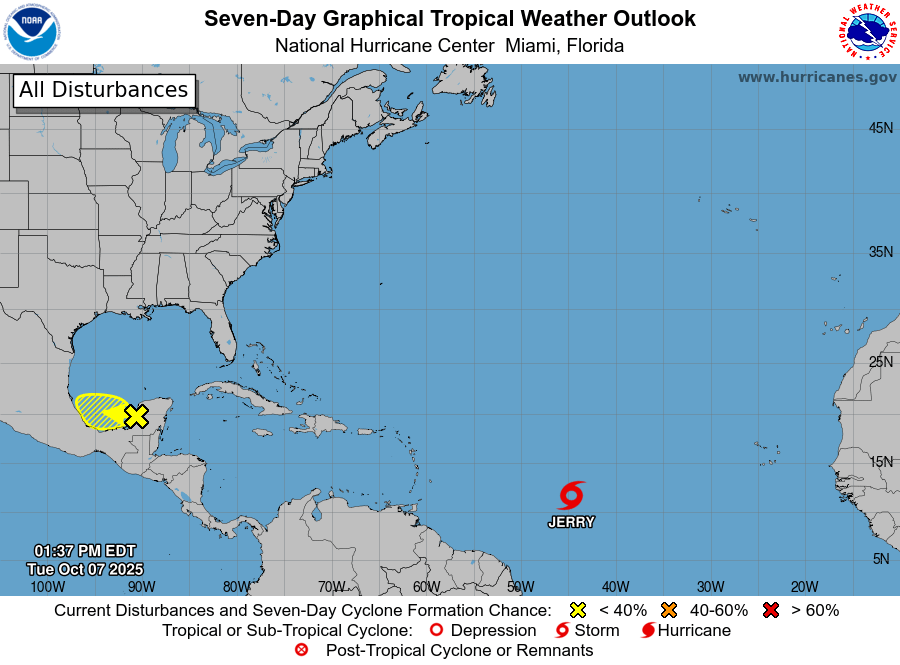
Tropical Storm Watch Remains in Effect for Antigua and Barbuda
Tropical Storm Jerry is rapidly gaining strength as it advances toward the northern Leeward Islands, posing significant risks to the region. According to the National Hurricane Center’s 5 a.m. advisory on October 9, 2025, the storm is moving west-northwest at 20 mph (31 km/h) and is currently located approximately 395 miles (640 km) east-southeast of the islands. With maximum sustained winds of 65 mph (100 km/h), Jerry is expected to intensify further, potentially reaching hurricane status by late Friday or Saturday. A Tropical Storm Watch is in effect for Antigua, Barbuda, Anguilla, St. Kitts, Nevis, Montserrat, St. Barthelemy, St. Martin, Sint Maarten, Saba, St. Eustatius, Guadeloupe, and nearby islands. The storm’s center is forecasted to pass near or northeast of the northern Leeward Islands later today, bringing heavy rainfall of 2 to 4 inches, with isolated totals up to 6 inches. This rainfall increases the risk of flash flooding in low-lying and steep areas. Additionally, tropical-storm-force winds extending up to 175 miles (280 km) east of the storm’s center could cause widespread damage. Marine hazards, including life-threatening surf and rip currents, are already affecting the Leeward and Windward Islands and are expected to spread to the Virgin Islands and Puerto Rico. Residents in the affected areas are urged to stay informed through official updates and prepare for deteriorating conditions. The National Hurricane Center will issue its next full advisory at 11 a.m. AST.
-

Central Bank Makes It Easier for Ordinary People to Invest in Government Bonds
The Eastern Caribbean Central Bank (ECCB) and member governments of the Eastern Caribbean Currency Union (ECCU) have unveiled a groundbreaking Retail Bond Initiative, designed to democratize access to government securities for individual investors. This initiative, launched in collaboration with the Regional Government Securities Market (RGSM), aims to transform household savers into active participants in the financial market.
Over the past two decades, the RGSM has successfully mobilized approximately EC$20.7 billion for regional development. However, household involvement has been minimal, accounting for only 1.5% (EC$310.3 million) of total investments, with a mere 600 individuals participating. To address this gap, the ECCB’s Research, Statistics, and Data Analytics Department (RSDAD) conducted a survey, identifying three primary barriers: high minimum investment thresholds (EC$5,000), excessive fees, and a lack of financial literacy.
In response, the Regional Debt Coordinating Committee (RDCC) and the ECCB developed the Retail Bond Initiative, which significantly lowers the entry barrier. The minimum investment is now set at EC$500, with increments of EC$100, and a maximum cap of EC$50,000 per investor. The bonds offer an annual interest rate of 4.25% and a two-year term, with principal repayment at maturity.
Juletta Edinborough, Fiscal and Debt Specialist at the ECCB, emphasized the initiative’s goal of empowering individuals. ‘This is a pivotal step in transitioning savers to investors,’ she stated. ‘We encourage all ECCU citizens and residents to seize this opportunity.’
The inaugural retail bonds will be issued by the governments of Grenada and Saint Christopher (St Kitts) and Nevis. Investors can participate through six licensed brokers, including the Bank of Saint Lucia Limited, Grenada Co-operative Bank Limited, and St Kitts-Nevis-Anguilla National Bank Limited.
This initiative not only enhances financial inclusion but also strengthens regional economic resilience and sustainable development. For more details, visit www.ecseonline.com/broker-dealer and www.eccuretailbond.com.
-
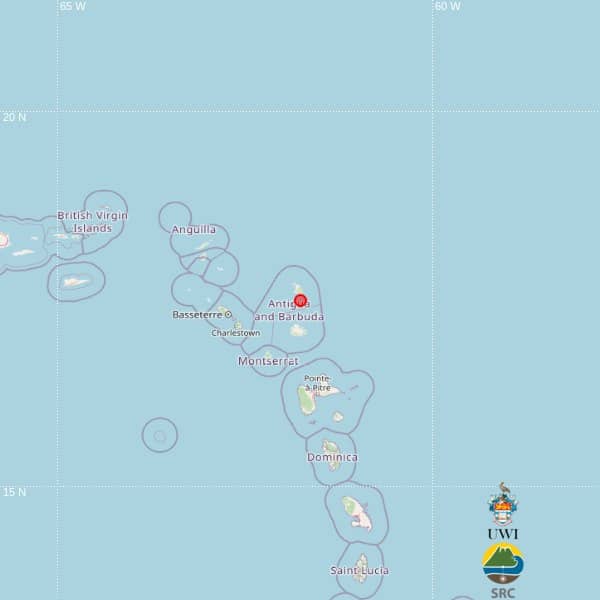
Magnitude 3.5 Earthquake Recorded North of Antigua
The UWI Seismic Research Centre (SRC) has confirmed a magnitude 3.5 earthquake that occurred at 10:57 p.m. local time on Wednesday, October 8, 2025. The seismic event was centered at latitude 17.49°N and longitude 61.77°W, with a depth of 19 kilometers. The epicenter was situated approximately 43 kilometers north-northeast of St. John’s, Antigua; 91 kilometers northeast of Brades, Montserrat; and 109 kilometers east-northeast of Basseterre, St. Kitts and Nevis. The SRC emphasized that the earthquake was automatically recorded and that further analysis may lead to revisions in its location and magnitude. Fortunately, there have been no immediate reports of damage or injuries. The region, known for its seismic activity, remains on alert as authorities continue to monitor the situation. The SRC has urged residents to stay informed and prepared for potential aftershocks. This event underscores the importance of robust seismic monitoring systems in earthquake-prone areas.
-

Caribbean Airlines Named “Caribbean’s Leading Airline Brand 2025” For Ninth Consecutive Year
Caribbean Airlines has once again soared to new heights, securing the coveted title of ‘Caribbean’s Leading Airline Brand 2025’ at the 32nd Annual World Travel Awards™. This marks the ninth consecutive year the airline has been honored in this prestigious category, solidifying its reputation as a leader in regional aviation. The award was accepted by Samantha Faucher, Caribbean Airlines’ Airport Representative for St. Lucia, during the gala ceremony held on October 4 at Sandals Grande Saint Lucian. Since its establishment in 1993, the World Travel Awards™ have been a global benchmark for excellence in the travel, tourism, and hospitality industries. Caribbean Airlines’ latest achievement underscores its commitment to delivering exceptional service, expanding its route network, and enhancing the passenger experience. Over the past year, the airline has extended its reach into the French Caribbean, now connecting 28 destinations across North and South America and the wider Caribbean. Additionally, it has introduced innovative upgrades to its baggage handling systems and refined its product offerings to better cater to evolving customer needs. Beyond this top honor, Caribbean Airlines was also nominated in three other categories: ‘Caribbean’s Leading Airline,’ ‘Caribbean’s Leading Cabin Crew,’ and ‘Caribbean’s Leading In-flight Magazine (Caribbean Beat).’ These accolades highlight the airline’s dedication to regional integration and its mission to provide a uniquely Caribbean travel experience.
-
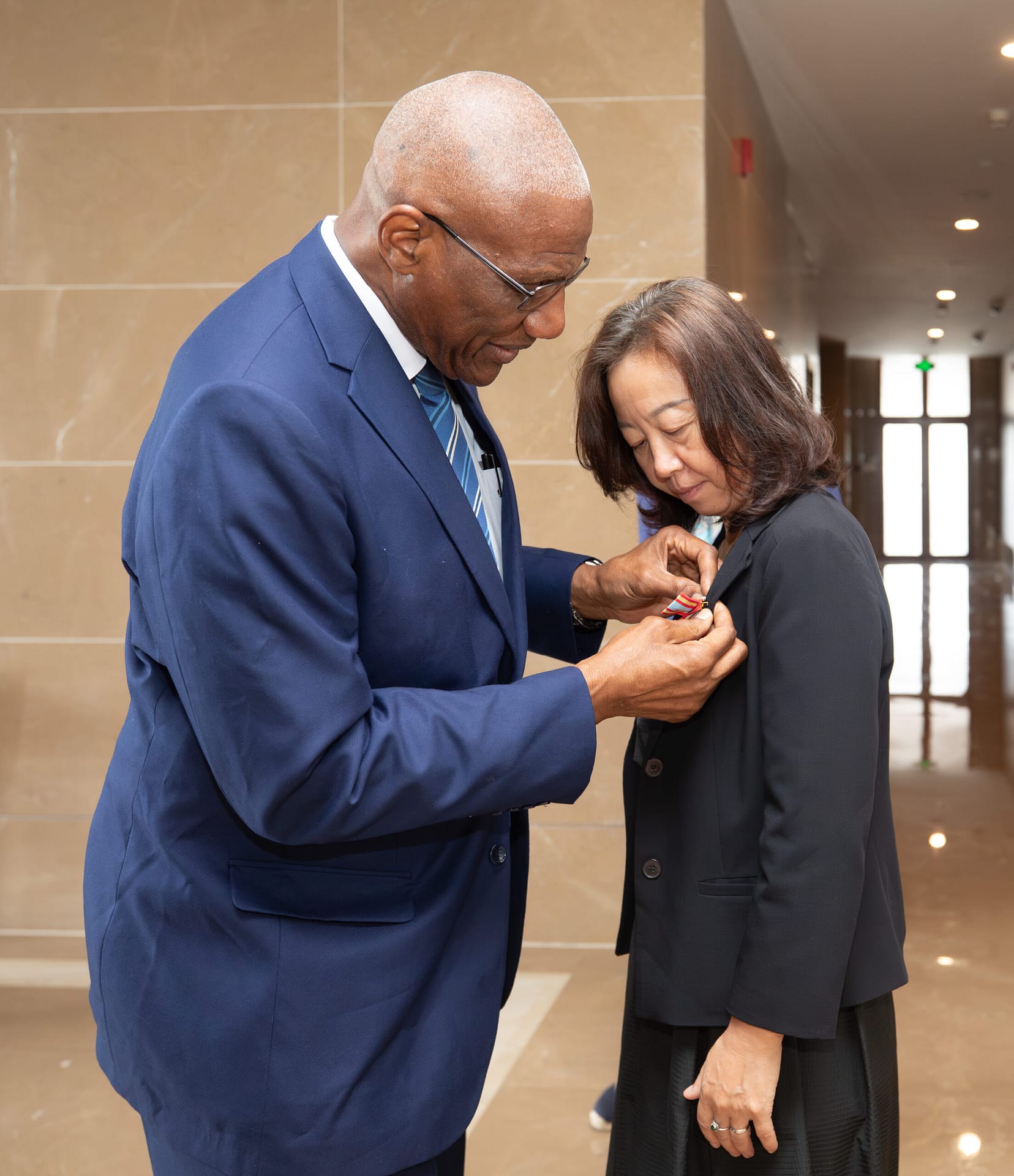
Chinese Ambassador Zhang Yanling Presented Governor General’s Faithful and Meritorious Service Cross
In a distinguished ceremony held at the Embassy of the People’s Republic of China in St. John’s, Their Excellencies Sir Rodney Williams, Governor General of Antigua and Barbuda, and Lady Williams, presented the Governor General’s Faithful and Meritorious Service Cross (FMC) to Her Excellency Zhang Yanling, the Chinese Ambassador to Antigua and Barbuda. The event, held on Monday, marked the culmination of Ambassador Zhang’s four-year tenure (December 2021 – October 2025) and celebrated her exceptional contributions to bilateral relations between the two nations.
Ambassador Zhang’s tenure was characterized by her unwavering dedication to fostering friendship, practical cooperation, and cultural exchange. Her efforts spanned multiple sectors, including education, agriculture, fisheries, security services, health, culture, and housing, significantly advancing Antigua and Barbuda’s national development priorities. She also spearheaded capacity-building initiatives that left a lasting impact on local institutions.
Beyond her diplomatic achievements, Ambassador Zhang played a pivotal role in strengthening people-to-people ties. Through sustained cultural outreach programs, Children’s Day activities, Chinese New Year receptions, and National Day observances, she brought Chinese culture closer to the Antiguan and Barbudan communities. Her support for local charitable initiatives further underscored her commitment to community well-being.
In his remarks, Sir Rodney Williams lauded Ambassador Zhang’s leadership, stating, ‘Her tenure has been marked by faithful service and practical partnership. She translated goodwill into real benefits for our people—strengthening institutions, building capacity, and nurturing cultural understanding.’ Lady Williams echoed these sentiments, praising Ambassador Zhang’s warm engagement with schools, cultural groups, and charitable organizations.
Upon accepting the award, Ambassador Zhang expressed her gratitude and reaffirmed China’s commitment to continued cooperation and friendship with Antigua and Barbuda. The conferment of the FMC entitles her to use the post-nominals ‘FMC,’ a testament to her distinguished service.
-

Coast Guard captain Don Polo takes charge — Defence Force shake-up
In a significant leadership transition, Captain Don Polo, the Commanding Officer of the Coast Guard, has been appointed as the new Chief of Defence Staff (CDS) of the Trinidad and Tobago Defence Force (TTDF). This decision, advised by the government to President Christine Kangaloo, marks a pivotal shift in the nation’s military hierarchy. The appointment comes amidst a state of emergency and escalating military tensions in the Caribbean region, particularly between US forces and Venezuela. Captain Polo’s predecessor, Air Vice Marshal Darryl Daniel, whose contract was set to expire in March 2026, was relieved of his duties. The Ministry of Defence confirmed that the decision to replace Daniel was made after thorough deliberations, ensuring it would not disrupt the operational effectiveness of the TTDF. Captain Polo, described as a leader with a wealth of experience and unwavering dedication to maritime security, has been praised for his commitment to national sovereignty. His promotion, however, has raised eyebrows within military circles, as it bypasses several senior officers. The Defence Force, one of the largest in the English-speaking Caribbean, plays a critical role in national security, community development, and international objectives. This leadership change underscores the government’s focus on addressing internal challenges and enhancing the Defence Force’s capabilities in a volatile geopolitical landscape.
-

Why no celebration of drop in murders?
In a remarkable turn of events, the country has witnessed a dramatic decline in violent crimes, particularly murders, under the new government and leadership of Commissioner of Police Allister Guevarro. As of October 1, the murder toll has plummeted to 270, a stark contrast to the 474 recorded on the same date last year. This represents a 43% reduction, a figure that underscores the effectiveness of recent law enforcement strategies.
-

Stability not optional for Trinidad and Tobago
As Trinidad and Tobago (TT) prepares for the 2025-2026 national budget presentation on October 13, the nation stands at a critical juncture. Finance Minister Davendranath Tancoo faces the daunting task of addressing deep-rooted economic challenges that have plagued the country for years. Persistent issues such as low national savings, fragile foreign exchange reserves, stagnant productivity, and institutional inefficiencies have hindered growth and competitiveness. The upcoming budget must transcend the incremental adjustments of the past and deliver a decisive policy reset to restore economic stability and resilience.
Global uncertainties, including energy market volatility, rising US interest rates, and geopolitical risks, compound TT’s domestic pressures. Chronic fiscal deficits, an unstable foreign exchange market, and eroding buffers have weakened confidence in the economy. On the real economy front, weak productivity growth, distorted wages, and sluggish non-energy investment further exacerbate the situation. Policy measures often clash rather than complement each other, creating a cycle of inefficiency and diminishing credibility.
Drawing lessons from successful economies like the Gulf states and the Asian tigers, TT must prioritize long-term strategies over short-term fixes. These nations leveraged energy windfalls and mobilized savings to build robust sovereign wealth funds, reduce dependency on rents, and drive efficiency. In contrast, TT has seen low savings, inefficient public projects, and hesitant private investment. The lack of institutional adaptability has further hindered coherent policy design.
The 2025-2026 budget must focus on four key priorities: external stability, national savings mobilization, capital efficiency, and institutional reinforcement. A transparent and credible foreign exchange regime, robust savings frameworks, smarter public investment, and strengthened institutions are essential for sustainable growth. The budget should balance short-term stabilization with long-term reforms, demonstrating a clear trajectory for citizens, investors, and international partners.
This budget is not just a fiscal exercise; it is a moment for leadership. TT must move beyond improvisation and chart a durable course anchored in savings, efficiency, and credibility. The government’s choice is clear: continue with patchwork measures and risk decline, or seize this opportunity to transform the economic model and secure a stable future.
-

Budget for homeless, hungry
On July 1, Newsday published an article titled “Homeless man killed near Grand Bazaar,” highlighting the tragic death of an unidentified man in a hit-and-run accident on June 29. This incident, though overlooked by many media outlets, underscores the plight of the homeless, who often remain invisible to society. These individuals, resilient yet vulnerable, are frequently seen sleeping on sidewalks, scavenging for food, and begging for money. Despite past and future budget allocations aimed at addressing homelessness and hunger, the impact remains minimal, as funds often fail to reach those in need. In contrast, the Jubilee Memorial Presbyterian Church in Caroni has taken a proactive approach through its Feed the Need initiative. Every Sunday for over six years, the church prepares and distributes 130 meals to the homeless, funded not by the church’s coffers but by its members and even non-Presbyterians. This program, inspired by the teachings of Jesus Christ, serves as a model of volunteerism and compassion. The initiative not only provides sustenance but also fosters a sense of community and hope among the recipients. The author, witnessing this effort, reflects on the broader issue of hunger in the country and the Caribbean, questioning who will feed the hungry on the other six days of the week. The church’s dedication to alleviating poverty through direct action challenges the notion that religious institutions are stagnant or irrelevant. Instead, it demonstrates how faith can translate into tangible support for the destitute, emphasizing that helping the poor should be a fundamental human desire, not just a religious duty.