
The People’s National Party (PNP) has urged the Jamaica Labour Party (JLP) to provide immediate clarification regarding a reported payment of US$201,538 from Cemex, a Mexico-based company and parent of Caribbean Cement Company Limited (CCC). The payment, initially disclosed in Cemex’s filing with the U.S. Securities and Exchange Commission (SEC), was later omitted in an amended filing, raising questions about its nature and purpose.
作者: admin
-

King Charles, Pope Leo pray together in historic first
In a landmark event bridging centuries of religious division, King Charles III of the United Kingdom participated in a public prayer service with Pope Leo XIV at the Vatican’s Sistine Chapel. This historic gathering, held on Thursday, marked the first time a reigning British monarch has prayed publicly with a pope since the 16th-century schism initiated by King Henry VIII. The 76-year-old monarch, accompanied by Queen Camilla, joined the US-born pontiff for a 30-minute ceremony that seamlessly blended Catholic and Anglican traditions. The service, held beneath Michelangelo’s iconic frescoes, symbolized a significant step toward reconciliation between the two Christian denominations. King Charles, who serves as the Supreme Governor of the Church of England, and Pope Leo, leader of the world’s 1.4 billion Catholics, underscored their shared commitment to environmental conservation during the event. The ceremony featured choirs from both the Sistine Chapel and Saint George’s Chapel at Windsor Castle, further highlighting the unity of the occasion. The visit also comes amid renewed scrutiny of the British royal family, following Prince Andrew’s decision to relinquish his Duke of York title amid ongoing controversies.
-
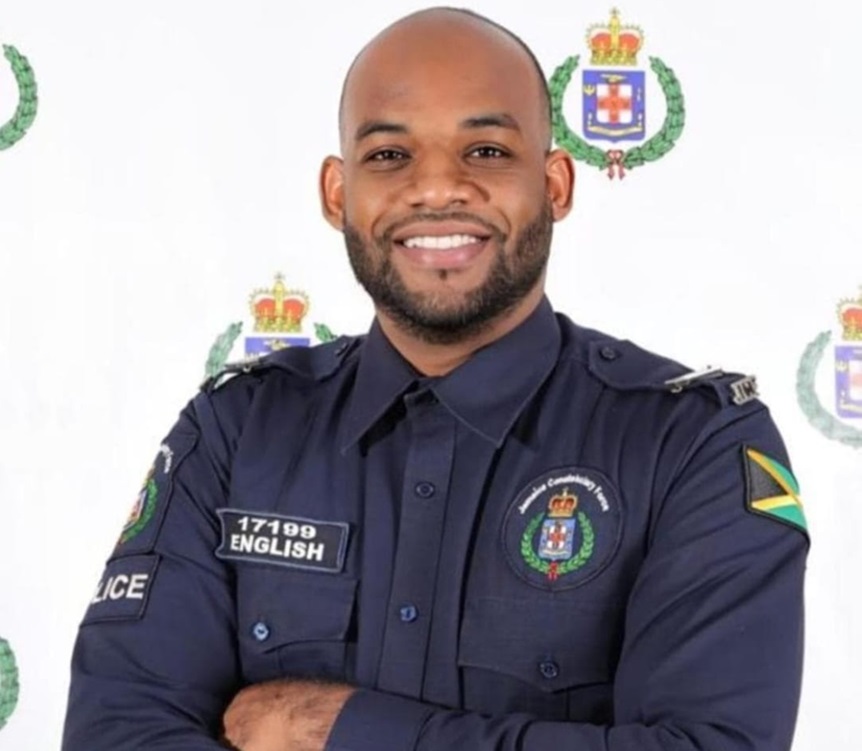
Police corporal dies after Bog Walk crash
A fatal collision occurred in Bog Walk, St. Catherine, on Wednesday night, resulting in the death of a police officer. The victim has been identified as Corporal Nevada English, who was stationed at the Spanish Town Police Station in St. Catherine North. Details regarding the incident remain scarce, with authorities yet to disclose the exact circumstances leading to the crash. Investigations are ongoing, and further updates are expected as more information emerges. The community mourns the loss of a dedicated officer, and the police force has expressed its condolences to the family and colleagues of Corporal English.
-

Colombia calls for US to stop deadly boat attacks
BOGOTA, Colombia—The Colombian government has formally requested the United States to cease its maritime strikes in the Pacific and Caribbean, which Washington claims are part of an anti-drug smuggling operation. The appeal follows a recent announcement by US Secretary of Defense Pete Hegseth regarding attacks on two alleged drug-running vessels in the Pacific, resulting in five fatalities. According to US figures, these strikes bring the total number of such operations to at least nine, with 37 casualties reported. Colombia’s foreign ministry issued a statement on Wednesday evening, urging the US to halt these actions and adhere to international law. The statement emphasized the government’s rejection of the destruction of a vessel allegedly linked to drug trafficking in the Pacific Ocean. The diplomatic tension escalated further as Colombian President Gustavo Petro and former US President Donald Trump exchanged heated remarks. Trump labeled Petro a ‘thug’ and accused him of leading Colombia to ruin, while Petro vowed to defend himself legally with American lawyers. The US also announced the suspension of military aid to Colombia, with Secretary of State Marco Rubio calling Petro a ‘lunatic.’ Colombia reiterated its call for diplomatic dialogue to continue the joint fight against drug trafficking in the region, a collaboration that has spanned decades.
-
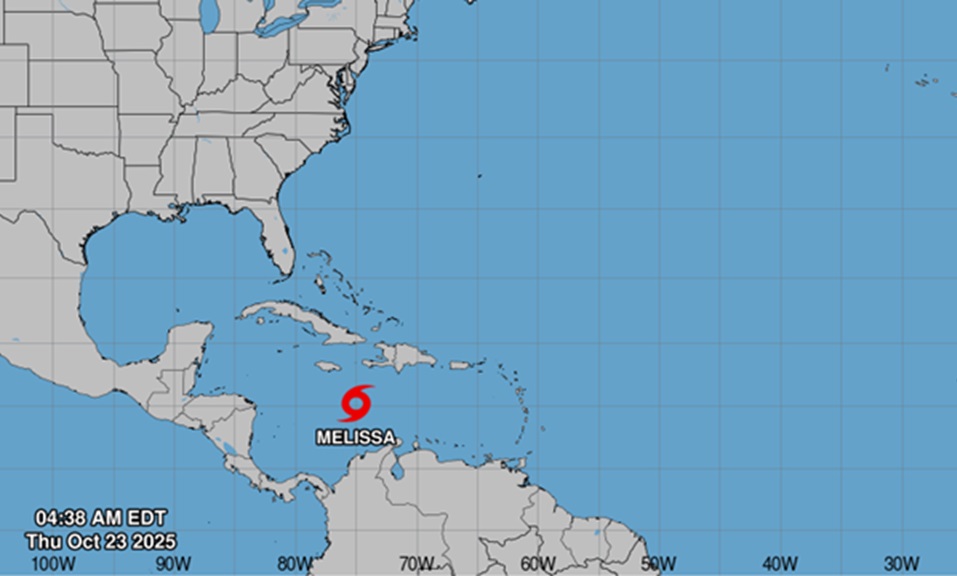
#EyeOnMelissa: Jamaica now under tropical storm warning as Melissa crawls across Caribbean
Jamaica is on high alert as Tropical Storm Melissa advances toward the island, prompting the issuance of a tropical storm warning and a hurricane watch. The Meteorological Service of Jamaica announced in its early Thursday bulletin that tropical storm conditions could impact the island within 36 hours, with hurricane conditions likely to follow within 48 hours. As of 4:00 am, the storm’s center was positioned approximately 353 kilometers south-southeast of Morant Point, Jamaica, and 390 kilometers south-southeast of Kingston. Melissa is currently moving westward at a sluggish pace of 6 km/h, with a projected shift toward the northwest or north-northwest in the coming days. Maximum sustained winds are near 85 km/h, with potential for intensification into a hurricane by late Friday or over the weekend. The storm is expected to bring moderate to heavy rainfall, strong gusty winds, and hazardous marine conditions, particularly affecting eastern and southern parishes initially. The Meteorological Service has urged small craft operators and fishers to seek shelter and complete safety preparations promptly. Authorities continue to monitor the storm closely, advising residents and stakeholders to stay updated on further developments.
-

End this fireworks assault on peace, sanity
Every year, the uncontrolled use of fireworks across the nation brings distress to countless citizens, pets, and wildlife, turning moments of celebration into nights of trauma and environmental disruption. Despite existing laws under the Summary Offences Act (Chap 11:02) and the Explosives Act (Chap 16:02), which regulate the use, importation, and sale of fireworks, enforcement remains virtually nonexistent. Fireworks continue to explode indiscriminately in communities, often causing widespread harm. The Environmental Management Authority (EMA) has recommended banning the importation of loud fireworks, restricting their use to specific occasions and government-managed venues, and promoting quieter alternatives. This approach is both logical and compassionate. Roger Neckles, in a letter to the editor, advocates for a total ban on the public sale and use of fireworks, with exceptions only for Independence Day and New Year’s Eve celebrations at authorized, government-supervised venues. This proposal aims to balance cultural traditions with public safety, animal welfare, and environmental responsibility. Fireworks cause significant suffering to pets, wildlife, and vulnerable populations, including the elderly, the sick, and children on the autism spectrum. The loud detonations disorient nesting birds, bats, and forest animals, often leading to death or abandonment of their young. Neckles urges citizens to express joy through kindness, such as supporting charities or community causes, rather than through harmful smoke, debris, and noise. He calls on leaders to enforce existing laws and protect people and wildlife from this annual assault on peace and sanity.
-

Useful and unsafe revolutions
The concept of ‘revolution’ has historically been linked to upheaval, violence, and the overthrow of regimes. From the 18th to the 20th century, nations like France, Haiti, Cuba, Russia, and the United States underwent transformative revolutions. Yet, these events did not universally lead to stability or prosperity. In 2025, democracy and progress remain elusive for many citizens in these countries. Revolutionary leaders often romanticize their successes, yet the reality is marred by inequality, social strife, and undemocratic practices such as the suppression of dissent. Revolutions can exacerbate racial, religious, and class tensions, and their outcomes are frequently exaggerated, leaving supporters disillusioned. Counter-revolutions often lead to regression rather than progress. Frantz Fanon, a psychiatrist and advocate of the Algerian revolution, viewed violence as a ‘cleansing force’ that restores self-confidence to the oppressed. Similarly, Walter Rodney argued that violence aimed at achieving equality should not be equated with violence used to maintain oppression. However, in 2025, the world no longer needs justifications for violence or ideologues promoting it. Instead, there is a pressing need for peaceful, constructive revolutions that uplift society. Movements promoting literacy, clean water, healthy living, kindness, and recycling are essential. A 2022 article in New Scientist, titled ‘The Happiness Revolution,’ highlighted the importance of creating a joyful society. Citizens must shift their focus to intellectual empowerment, reducing discrimination, and fostering equality. Effective leadership is crucial for any meaningful revolution, yet many are resistant to unorthodox ideas. A true revolution requires maturity, a paradigm shift in societal interactions, and a focus on the marginalized. Developing countries face unique challenges, as revolutions can lead to uncontrollable outcomes and reversed progress. Global protests indicate that societies are increasingly volatile, with even developed nations susceptible to unrest due to societal imperfections and disguised dictatorships. Politicians must embrace concepts like ‘consensus democracy’ and ‘politics of inclusion’ to foster stability. The Caribbean, in particular, must address economic and political disparities to create a suitable environment for progress. A merit-based revolution is needed to end nepotism and corruption, ensuring appointments and promotions are based on qualifications rather than ethnicity, religion, or political ties. Continuous efforts are essential to combat the misuse of taxpayer funds and build a just society.
-

Global performer at risk
The longstanding partnership between Nutrien, the world’s largest upstream fertilizer producer, and Trinidad and Tobago (TT) is now at risk due to a financial impasse with the state-owned National Gas Company (NGC). The dispute, centered around a $610 million debt owed by companies using the Point Lisas port, has forced Nutrien to initiate a phased shutdown of its operations in the region. This development threatens not only the company’s future but also the livelihoods of hundreds of workers and TT’s reputation as a global leader in the petrochemical sector.
Nutrien, formed in 2018 through the merger of PCS and Agrium Inc., has been a key player in TT’s economy, leveraging the country’s natural gas resources to produce ammonia and urea for global markets. However, declining natural gas production, exacerbated by the COVID-19 pandemic, has strained operations. In 2020, Nutrien announced the indefinite closure of one of its four ammonia plants, and production levels have since fallen significantly from their peak.
Despite these challenges, Nutrien has shown commitment to TT, investing $130 million in 2024 for facility upgrades and maintenance. However, the recent shutdown announcement on October 21, set to take effect on October 23, has raised concerns among local business and energy chambers. The American Chamber of Commerce (Amcham TT) and the Energy Chamber have called for collaboration to resolve the issue, emphasizing the need to maintain TT’s attractiveness as an energy investment destination.
NGC’s subsidiary, the National Energy Corporation (NEC), has issued formal notices to companies with significant arrears, warning of suspended access to port facilities if payments are not cleared. NEC has also mandated that service tariffs be paid exclusively in US dollars, a move that has added to the financial pressure on operators.
Minister of Energy Roodal Moonilal confirmed ongoing discussions with Nutrien and other stakeholders, but no resolution has been reached. The shutdown’s potential impact on TT’s economy and employment has sparked calls for urgent negotiations to avert a crisis. As the situation unfolds, the fate of Nutrien’s operations in TT remains uncertain, casting a shadow over the country’s petrochemical ambitions.
-

The struggles to establish a regional air carrier
The story of British West Indian Airways (BWIA) is a testament to the resilience and strategic foresight of the Caribbean aviation industry. Established in 1941 during the tumultuous years of World War II, BWIA emerged as a vital lifeline for the British colonies in the West Indies, which were isolated due to the suspension of air services by major international carriers like Pan American World Airways and Royal Dutch Airlines. The UK Air Ministry proposed the creation of a regional airline based in Trinidad and Tobago (TT), a vision that materialized with the involvement of Lowell Yerex, founder of Transportes Aeros Centro Americanoes (TACA).
Yerex, with the support of Lady Young, wife of Governor Sir Hubert Young, initiated BWIA as a public limited liability company in 1943. The airline began operations with two Lockheed Model 18 Lodestar aircraft, offering daily services from TT to Barbados. The initial share capital of $1 million was allocated with 60% to Yerex, 20% to TT, and 20% to the West Indian public. Over time, the shareholding structure evolved, with Yerex selling 40% of his stake to American interests in TACA, prompting a strategic decision to ensure British control over the airline.
BWIA rapidly expanded its route network, connecting islands across the Eastern Caribbean and extending services to Dominica, Jamaica, and Belize by 1944. The airline also secured contracts with the United States Army Engineer Department, operating flights between Miami and Trinidad. Airmail services were introduced, charging five cents per half-ounce letter, further solidifying BWIA’s role in regional connectivity.
In 1947, British South American Airways Corporation (BSAA) acquired BWIA, restructuring it as a private limited company in 1948. The new entity, British West Indian Airways Ltd, inherited exclusive rights to operate inter-island services and carry mail, supported by government subsidies and infrastructure provisions. The merger of BOAC and BSAA in 1949 further strengthened BWIA’s position, integrating operations with British Caribbean Airways Ltd and establishing navigation and engineering schools in Trinidad to enhance technical standards.
By the 1950s, BWIA had fully paid up its issued capital of $2.5 million and expanded its services to include routes between Jamaica and the Cayman Islands, marking a significant milestone in its evolution as a regional aviation leader. The story of BWIA continues in Part II, highlighting its enduring legacy in Caribbean aviation.
-

How AI is transforming dentistry
Artificial intelligence (AI) is no longer confined to Silicon Valley or futuristic concepts like self-driving cars. In Trinidad and Tobago, Dr. Shenilee Hazell, founder of Smile Inn Dental, is pioneering the use of AI in dentistry, transforming how patients receive dental care. Her clinic has become the first in the Caribbean to adopt Dental Monitoring, an AI-powered system that allows patients to monitor their oral health from home, eliminating the need for frequent in-person visits.
Patients are provided with a ScanBox device that connects to their smartphones. Once a week, they record a short video of their teeth, which the AI analyzes for over 130 factors, including aligner fit and gum health. Within hours, patients receive personalized feedback, such as whether to proceed to the next aligner or wait a few more days. This innovative approach offers continuous, adaptive care without the hassle of leaving home.
Dr. Hazell emphasizes that time is a significant barrier to oral health. By integrating AI into patients’ lifestyles, Smile Inn Dental delivers precision care while saving valuable time. Studies show that AI-assisted monitoring can reduce diagnostic time by nearly half and detect issues earlier than traditional methods, leading to faster treatments, fewer complications, and better outcomes.
Globally, AI is reshaping dentistry, with machine learning systems reading X-rays, mapping facial structures, and even guiding surgical procedures. Companies like Pearl AI, VideaHealth, and Align Technology have developed algorithms trained on millions of images, enabling faster detection of decay, bone loss, and gum disease. At Smile Inn, Dr. Hazell uses Invisalign’s ClinCheck AI and Smile Architect software to design personalized smiles based on each patient’s facial symmetry.
Beyond treatment, Smile Inn employs near-infrared light to identify weak enamel before cavities form, aligning with global trends in predictive dentistry. This proactive approach allows patients to focus on preventive care rather than waiting for problems to arise.
Despite its benefits, AI in dentistry can evoke concerns about dehumanization and algorithmic bias. Dr. Hazell addresses these issues by ensuring AI remains a supportive tool, not a replacement for clinicians. She also advocates for regional data partnerships to ensure AI systems reflect the Caribbean’s diversity.
AI-enabled tele-dentistry has the potential to revolutionize healthcare in the Caribbean, where geography often limits access. Patients in remote areas, such as Tobago, can now receive weekly monitoring from specialists in Port of Spain without incurring travel costs. This innovation also enhances the region’s medical tourism appeal, offering world-class precision care locally.
Dr. Hazell’s leadership extends beyond technology. She is training her all-female team, piloting AI-driven X-ray diagnostics, and even 3D-printing aligners in-house. Her efforts inspire young Caribbean professionals, particularly women, to merge science, technology, and creativity in healthcare.
AI has entered the dental chair, offering precision, transparency, and time savings for both practitioners and patients. Dr. Hazell and Smile Inn Dental exemplify how innovation thrives in the Caribbean, proving that cutting-edge technology isn’t limited to overseas markets.