
In a historic move, the Organisation of Eastern Caribbean States (OECS) is set to launch the first-ever region-wide Student Census on November 11, 2025. This groundbreaking initiative will enable students from kindergarten to Form 5 across the OECS to directly influence the future of education by sharing their authentic voices and experiences. Unlike traditional surveys or samples, this census will include every student, ensuring that no child’s perspective is overlooked. Dr. Didacus Jules, Director General of the OECS, emphasized the significance of this initiative, stating, ‘Transformation begins with listening. This census gives every child the chance to be heard.’ Mrs. Sisera Simon, Head of the Human and Social Division at the OECS Commission, highlighted the transformative potential of the census, noting that it will provide accurate, up-to-date data to shape policies that truly address students’ needs and aspirations. The census will also play a pivotal role in informing the new 10-Year OECS Education Sector Strategy (2027-2037), ensuring that it is grounded in the lived experiences of students. Parents, caregivers, and community members are encouraged to support the initiative by promoting student participation. The census will be conducted confidentially and securely, with all data anonymized to protect students’ privacy. By amplifying the voices of over 100,000 learners, the OECS Student Census aims to build more inclusive, equitable, and student-centered education systems across the region.
作者: admin
-

National Clean-up Campaign Sees 13 Tons of Waste, 75 Vacant Lots Cleared
The National Solid Waste Management Authority (NSWMA) launched its ‘Love Where You Live’ cleanup initiative in October, marking a significant step toward fostering cleaner and healthier communities. Spanning three weeks, the campaign focused on the Villa Area, encompassing Dickenson Bay Street, Anchorage Road, and Fort James Drive. Through meticulous efforts, the NSWMA team revitalized the neighborhood, setting a new standard for environmental stewardship.
-

Ambassador Ruleta Camacho-Thomas Champions Caribbean Voices on Climate Mobility and Loss and Damage at COP30 in Brazil
At the COP30 Conference in Belém, Brazil, Antigua and Barbuda’s Ambassador for Climate Change, Ruleta Camacho-Thomas, delivered a compelling address at a high-level event focused on Climate Mobility and Loss and Damage. Her speech shed light on the profound and multifaceted challenges faced by Caribbean communities due to climate-induced displacement. Ambassador Camacho-Thomas emphasized that the displacement caused by climate change extends beyond physical relocation, deeply affecting mental health, community cohesion, and cultural heritage. Drawing from Antigua and Barbuda’s experience with Hurricane Irma and Jamaica’s ongoing struggles after Hurricane Melissa, she illustrated how natural disasters can rapidly dismantle the social fabric of entire populations. The Ambassador stressed the urgent need for access to the Fund for Responding to Loss and Damage, a critical resource to alleviate the human, economic, and cultural toll of displacement. She asserted that climate mobility is not a distant threat but a present reality reshaping Caribbean life. Ambassador Camacho-Thomas called for a collective response that prioritizes the protection of people, culture, and dignity. Her participation at COP30 highlights Antigua and Barbuda’s leadership in advocating for climate justice, equity, and resilience, particularly for small island developing states on the global stage.
-

Zonnige vrijdag, het blijft droog
This Friday begins predominantly sunny, with occasional clouds drifting in, yet the sunshine persists throughout the day. Temperatures are expected to rise to a peak of 33°C in the afternoon, accompanied by a gentle breeze from the east-southeast. As evening approaches and night falls, the skies remain mostly clear, with the wind gradually losing its intensity. Overnight, temperatures are forecasted to drop to a comfortable 23°C. The day remains entirely dry, offering ideal weather conditions for outdoor activities.
-
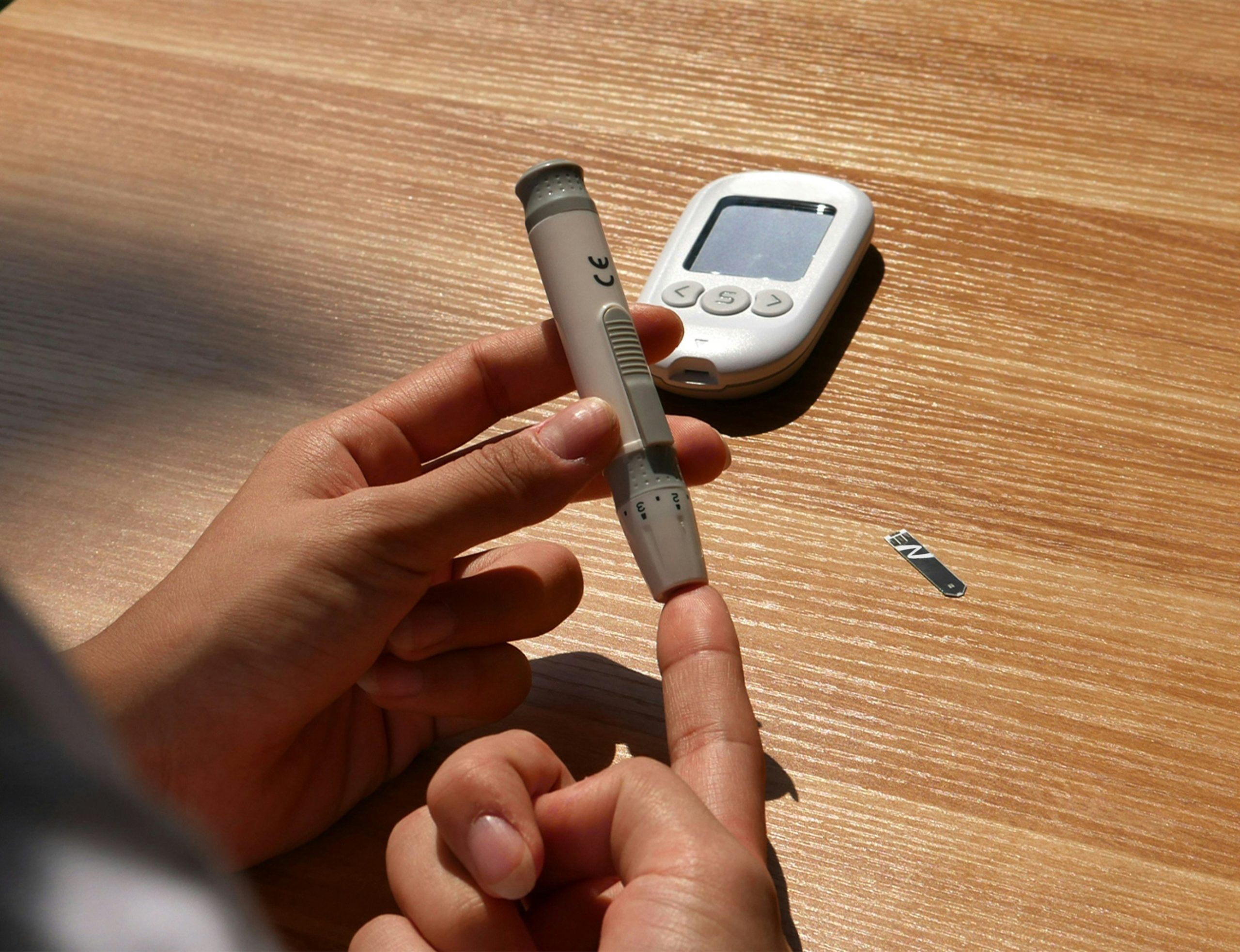
World Diabetes Day: a growing epidemic
Santo Domingo – On World Diabetes Day, health experts across Latin America issued a compelling call for early diagnosis, enhanced patient education, and the eradication of widespread myths that obstruct effective diabetes management. With regional data revealing that 112 million adults are living with diabetes—a figure that has tripled since 1990—the condition has emerged as one of the region’s most pressing public health crises.
-

Amerikaanse vliegdekschip nabij Venezuela: signaal van macht
The USS Gerald R. Ford, the United States’ most advanced aircraft carrier, is set to arrive in waters off the coast of Venezuela within days, marking a rare display of American military power in Latin America. This deployment, the first of its kind in generations, has sparked widespread speculation and concern across the region. While experts are divided on whether the carrier will launch combat missions against Venezuelan targets, its presence is widely interpreted as a strategic move to pressure authoritarian President Nicolás Maduro. Some analysts suggest the carrier’s primary role is to patrol the Caribbean and support anti-drug operations, but its sheer size and capabilities send a strong message. Elizabeth Dickinson, a senior analyst at the International Crisis Group, noted, ‘This is a clear demonstration of U.S. military might in Latin America, raising concerns not just in Venezuela but across the region.’ The deployment is part of the Trump administration’s broader campaign in South America, officially framed as an anti-drug operation. However, critics argue that the move is more about exerting political pressure on Caracas than combating drug trafficking. Bryan Clark, a former naval officer and defense analyst, emphasized that the Trump administration would not deploy the carrier without the intent to use it, suggesting potential military action if Maduro does not step down. Meanwhile, the Venezuelan government has responded with a massive mobilization of troops and civilians, preparing for potential U.S. aggression. The situation has also drawn criticism from regional leaders and human rights organizations, with Colombia temporarily halting intelligence sharing with the U.S. In contrast, Mexico has strengthened its cooperation with the U.S. in combating drug trafficking. As the USS Gerald R. Ford enters the Caribbean, analysts warn that its prolonged presence could have significant global implications.
-

Santo Domingo to host CyberWeek@LAC4 2025
Santo Domingo is set to host CyberWeek@LAC4 2025, a pivotal regional forum from November 17 to 20, organized by the European Union, the LAC4 Cyber Competence Center, and Dominican platform FACTOR. The event aims to tackle the alarming surge in cyberattacks across Latin America, which has seen a staggering 108% year-over-year increase. This rise has severely impacted sectors such as government, education, telecommunications, and healthcare, making the forum a critical platform for fostering digital resilience and international collaboration. The event will bring together cybersecurity experts, government officials, researchers, and business leaders from Europe and Latin America to share insights and strategies. Supported by initiatives like EU CyberNet, EL PACCTO 2.0, and the EU–LAC Digital Alliance, alongside private-sector sponsors, the forum underscores the urgency of addressing cybersecurity as a regional priority. Juan Luis Vargas Molina, a prominent Dominican mathematician and founder of FACTOR, will be a featured speaker. Molina, a former contributor to the NSA, emphasized the importance of treating digital trust infrastructure as critical national infrastructure. He highlighted the potential risks of compromised cryptographic keys, which could destabilize both public and private systems. Molina also stressed the need for stringent traceability and verification under Law 126-02, noting that FACTOR provides essential tools for auditing cryptographic security.
-
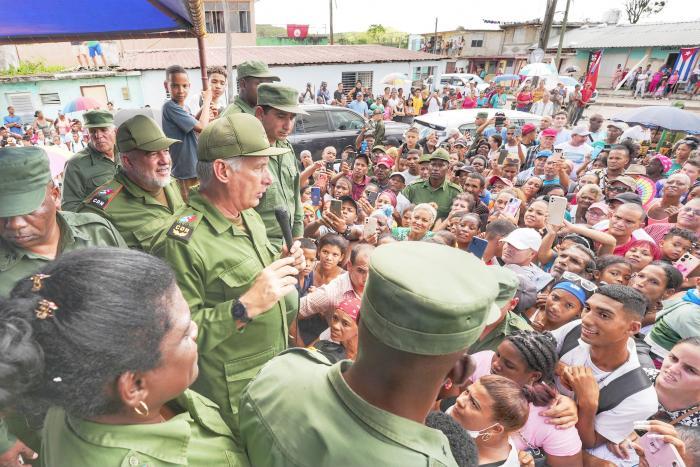
the most difficult moments, we must stand by the people
In the wake of Hurricane Melissa, Cuban authorities, led by President Miguel Díaz-Canel Bermúdez, have acknowledged the severe and ongoing challenges faced by the eastern provinces. During a National Defense Council (CDN) working session in Santiago de Cuba, Díaz-Canel emphasized the persistent disruptions to essential services, including electricity and drinking water, and the extensive damage to housing and infrastructure. He called for strengthened local management and increased citizen participation to aid recovery efforts. Manuel Marrero Cruz, head of the Economic and Social Body of the CDN, outlined the priorities, including caring for the affected, restoring basic services, and addressing the chronic water shortage exacerbated by the hurricane. The restoration of electricity and communications is progressing, with brigades from across the country working tirelessly. However, many communities remain isolated due to damaged roads and bridges. Housing recovery is a significant challenge, with over 47,000 homes confirmed damaged. The agricultural sector is also focusing on intensive planting of short-cycle crops to recover food supplies. Authorities are also addressing the spread of arboviruses, particularly chikungunya, with vector control measures and community involvement. Despite the difficulties, officials remain optimistic, emphasizing transparency and community decision-making in aid distribution and recovery efforts.
-

Operation El Toque: A maneuver against the Cuban people
In a televised broadcast on Wednesday night, Cuban authorities unveiled the intricate network of illegal activities orchestrated by the U.S. government as part of its destabilization strategy against Cuba. The focal point of the denunciation was El Toque, a media outlet allegedly financed by the U.S. State Department and intelligence services, which was exposed as a covert instrument of subversion targeting the Caribbean nation. For decades, the U.S. has relentlessly pursued efforts to undermine Cuba, employing various tactics to provoke social unrest and replicate scenarios seen in other parts of the world. In recent years, the U.S. has significantly increased its budget for this multifaceted campaign, aiming to inflict maximum suffering on the Cuban populace. The strategy includes leveraging economic hardship, hunger, and other adversities to erode the nation’s resilience and morale. The economic blockade, coupled with psychological warfare, has been executed with surgical precision, targeting key sectors such as housing, industry, transportation, and daily life. A critical component of this strategy involves distorting Cuban finances and inducing inflation within the domestic market. The U.S. intelligence community has implemented a multi-stage economic warfare plan, encompassing shortages, induced inflation, supply boycotts, and a financial blockade to restrict foreign currency inflows, particularly dollars. Tourism and medical services have been particularly affected. The second phase of this strategy involves the use of U.S.-funded platforms like El Toque to stimulate inflation. Similar tactics have been employed in Nicaragua, Zimbabwe, Argentina, and Venezuela. El Toque, masquerading as an independent and objective news source, manipulates exchange rates to degrade the population’s income levels. The director of El Toque, José Jasán Nieves, has been identified as a recipient of U.S. State Department funds, which are purportedly used to cultivate ‘leaders of change’ within the private sector. The media outlet operates akin to professional speculators, profiting from the poverty of the majority without any legitimate economic justification. Cuban authorities have condemned currency trafficking, financial speculation, and mercenary activities as lucrative crimes that exploit the Cuban people, all of which are severely punishable under international law.
-
Column: De schuld van de boodschapper
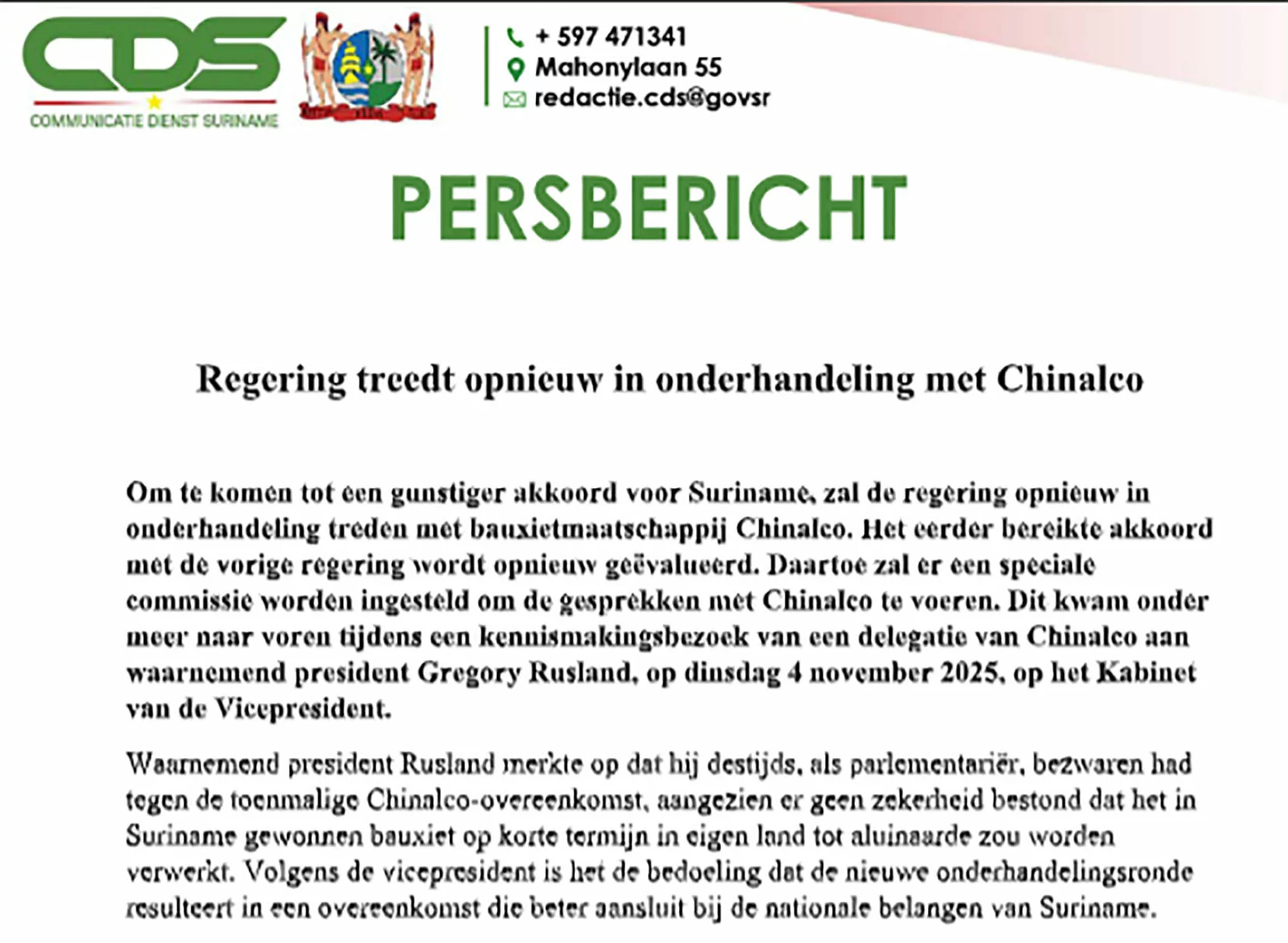
In a recurring pattern, the Surinamese government has once again shifted blame onto journalists for miscommunication, rather than addressing its own messaging errors. The latest incident involves Vice President Gregory Rusland, who, while acting as interim president, engaged in discussions with representatives from the Chinese mining company Chinalco. Following these talks, the Directorate of Public Communication issued an official statement titled ‘Resumption of Talks with Chinalco,’ which detailed plans for renewed negotiations aimed at securing a better agreement for Suriname. This statement was subsequently disseminated by the Suriname Communication Service (CDS) under the headline ‘Government Re-enters Negotiations with Chinalco.’
However, upon her return from Brazil, President Jennifer Simons publicly contradicted the statement, asserting that no negotiations were taking place with Chinalco and that no bauxite would be exported. She emphasized that ‘the government consists of the president, the vice president, and the Council of Ministers,’ indirectly rebuking Rusland. This contradiction has left journalists and media outlets in a difficult position, as they had reported based on official government communications.
The opposition has seized upon this incident, suggesting a lack of unity within the government. The core question remains: what truly transpired? The original statement from the Directorate of Public Communication implies that Rusland either acted independently, driven by his ego as interim president, or that his office fabricated the information. Both scenarios are equally troubling. Despite the viral spread of the government’s statement, Rusland did not refute it before Simons’ remarks.
Yet, the media bore the brunt of the blame. Rusland denied any negotiations, and Simons accused journalists of ‘writing something incorrect.’ However, the fault lies not with the media but with the vice president’s office, which released the misleading information. Journalists merely reported based on official sources.
This is not the first instance where politicians have made politically inconvenient statements only to later blame the press. While journalists are not infallible, it is detrimental to democracy when those in power systematically shift the blame for their communication failures onto the media. True credibility comes from acknowledging mistakes, not denying or distorting them. A healthy democracy requires a mature relationship between the government and the press, built on mutual respect rather than distrust and blame.