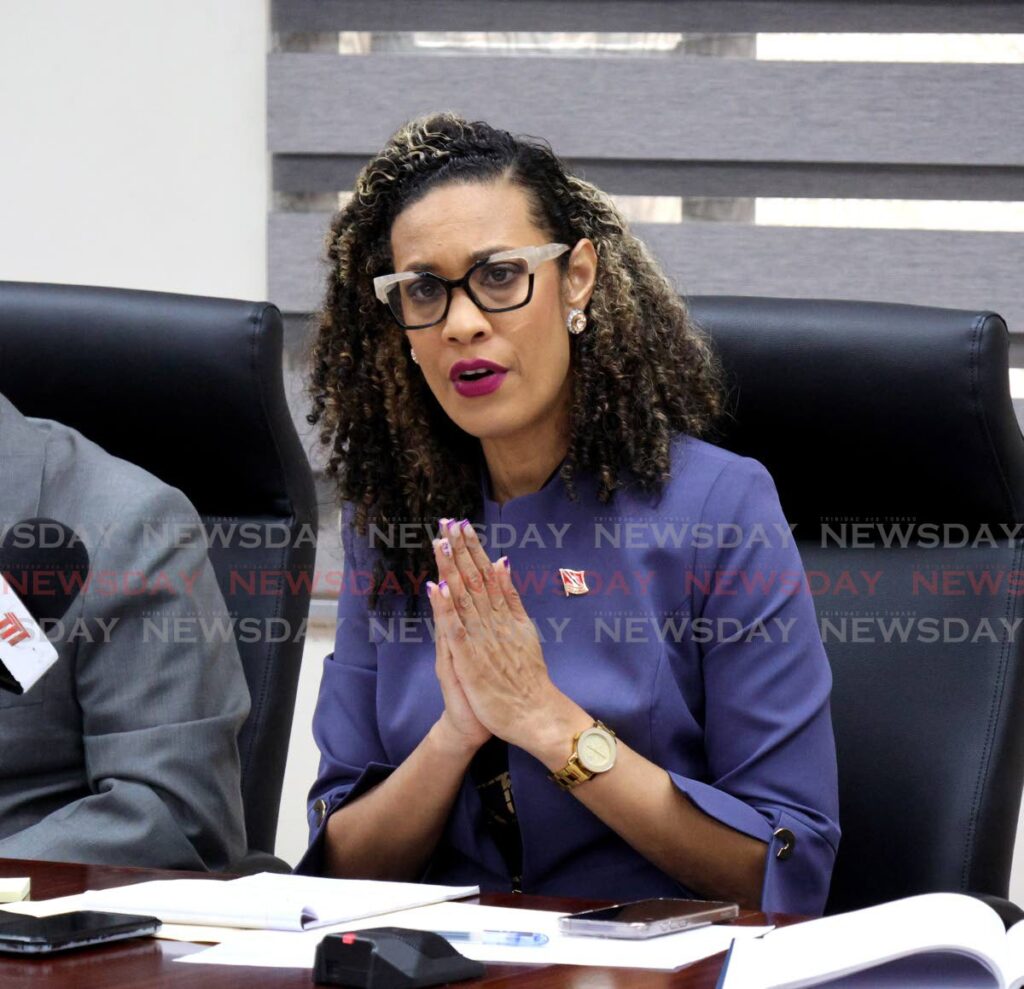
Khadijah Ameen, Minister of Rural Development and Local Government, has called on regional corporations to adopt innovative approaches in fulfilling their functions. Speaking on November 20, Minister Ameen emphasized the need for proactive measures and creative solutions, despite the significant challenges faced by local governments. With a background as a former councillor, Ameen brings a can-do attitude to her role, but acknowledges that unlocking creativity is no easy task. Funding for local governments has remained stagnant over successive administrations, with $1.5 billion allocated for recurrent expenses between 2020 and 2025, and no increase expected for 2026. The anticipated revenue from property taxes, once seen as a major funding source, has been scrapped. Additionally, a $94.5 million provision for road rehabilitation across 14 municipalities was largely unspent, highlighting capacity limitations. However, Minister Ameen sees untapped potential in local government, particularly through public-private partnerships. At the commissioning of the refurbished Tunapuna/Piarco Municipal Police Post, she urged corporations to leverage their assets and explore alternative funding mechanisms. While the central government may restrict additional fee collections, corporations are encouraged to devise their own fundraising projects. The Tunapuna/Piarco Regional Corporation, with a $160 million budget allocation, serves as a model of innovation. Under Chairman Josiah Austin, the corporation has launched initiatives like the Eagle Eye project, which collaborates with local businesses to expand CCTV coverage. Minister Ameen’s call for innovation and collaboration serves as a blueprint for other regional corporations to follow.
作者: admin
-

Congrats,Dr Warner
In a heartfelt letter to the editor, Arthur Dash extends his congratulations to Jack Austin Warner on earning a PhD from the University of TT at the remarkable age of 82. Dash emphasizes that age is merely a number and urges Warner to embrace his new role with vigor. He calls on Warner to leverage his extensive knowledge and experience to lead the effort in securing a spot for their team in the 2030 FIFA World Cup, which will be jointly hosted by Morocco, Spain, and Portugal. Dash reminds Warner that while football may seem simple, it is a challenging sport to master, and his leadership will be crucial in navigating the complexities ahead. The letter, signed by AV Rampersad from Princes Town, serves as both a celebration of Warner’s academic achievement and a rallying cry for his continued contributions to the world of football.
-

Caribbean must be respected as zone of peace
The Caribbean, long celebrated as a zone of peace, faces a grave challenge as the United States under the Trump administration continues its military incursions into Caribbean waters. These actions, which have resulted in the tragic deaths of innocent civilians, starkly violate the principles of sovereignty, non-interference, and mutual respect upheld by the Caribbean Community (Caricom) and the United Nations. The Trump administration’s aggressive maneuvers, justified under the guise of ‘security operations,’ echo a troubling pattern in US foreign policy—one marked by the manipulation of facts and the use of propaganda to legitimize military intervention. From Vietnam to Iraq and now Venezuela, the US has consistently exploited fabricated narratives to advance its geopolitical and economic interests. The Caribbean, a region of small but sovereign nations, must resist being drawn into this imperialist agenda aimed at regime change and control over Venezuela’s oil resources. The Caribbean Sea, a vital lifeline for commerce, culture, and cooperation, must not become a theater for war. Caricom nations, alongside regional civil society, must unite to defend the Caribbean’s status as a zone of peace. This commitment is not merely symbolic but a moral and legal obligation to ensure the region’s peoples live free from fear, militarization, and foreign manipulation. The Global African Congress (GAC) stands in solidarity with Caribbean and Latin American nations in opposing any form of military aggression or coercion. The Caribbean’s message to Washington is unequivocal: the region’s peace and sovereignty are non-negotiable. History has shown that silence in the face of injustice breeds impunity. The Caribbean, forged through resistance to slavery, colonialism, and imperialist exploitation, must once again rise in defense of its freedom and sovereignty. The GAC calls for a full international investigation into US military operations in the Caribbean and demands accountability under international law. The geopolitical landscape has shifted, and the Caribbean now has the means to assert its sovereignty and development as a zone of peace. The world must recognize that the Caribbean Sea is not a zone of war, and its people are not pawns in imperialist schemes.
-

PM holds ‘productive’ talks with Nutrien amid shutdown
Prime Minister Kamla Persad-Bissessar of Trinidad and Tobago recently convened a high-level meeting with Nutrien’s top executives, including President and CEO Ken Seitz, Senior Vice President of Nitrogen Operations Dean Perkins, Vice President and Managing Director of Nutrien Trinidad Edmund Thompson, and Manager of Government and Industry Affairs Nneka Mentore. The meeting, held on November 21, also included Energy Minister Dr. Roodal Moonilal and NGC Chairman Gerald Ramdeen. This engagement followed Nutrien’s phased shutdown of its Point Lisas Estate operations, which began on October 23 due to port access issues and unreliable natural gas supply, leaving nearly 600 workers unemployed. Nutrien, a major exporter of ammonia to North America, has been a significant contributor to Trinidad and Tobago’s foreign exchange earnings. The government emphasized its commitment to safeguarding jobs and fostering continued investment in the energy sector. Energy Minister Moonilal reiterated the government’s open-door policy with Nutrien and other energy companies, signaling readiness to discuss future investments and projects. Meanwhile, NGC Chairman Ramdeen noted that the shutdown has spurred increased output from other companies at the Point Lisas Industrial Estate.
-

Trade minister tells Trinbago Express Shipping protesters: Wrong ministry
Customers of Trinbago Express Shipping Inc. staged a protest outside the Ministry of Trade at Nicholas Towers in Port of Spain on November 12, demanding action over their undelivered parcels, some of which have been stuck at the port for over a year. The protest was led by Umar Abdullah, leader of the First Wave Movement, who argued that the ministry has both the authority and responsibility to intervene. However, Parliamentary Secretary Dr. Colin Gosine expressed sympathy for the customers but clarified that the Ministry of Trade lacks jurisdiction over the Port of Port of Spain, which falls under the Ministries of Finance and Works. Meanwhile, Lidmer Murray, managing director of Trinbago Express TT Ltd, refuted allegations that his company had collected payments without delivering goods. In a letter published in the Trinidad Express on November 19, Murray emphasized that Trinbago Express TT Ltd and Trinbago Express Shipping Inc. are distinct entities, with the latter being responsible for the outstanding debts preventing the release of the goods. Trinbago Express TT Ltd has since ended its association with the US-based shipper and ceased operations.
-

Educator, football administrator Azaad Mohammed-Khan falls seriously ill
Azaad Mohammed-Khan, a revered educator and football administrator, remains in stable condition as he continues to fight a severe neuromuscular respiratory illness. Hospitalized since August, Mohammed-Khan, known for his extensive contributions to Malick Secondary School, the Secondary Schools Football League (SSFL), the Trinidad and Tobago Football Association (TTFA), and San Juan Jabloteh Football Club, fell ill on 31 August. Initially appearing as a mild cold, his condition rapidly deteriorated, necessitating emergency medical intervention. His daughter, Jamila Mohammed-Khan, expressed shock at the sudden diagnosis, stating, ‘It was overwhelming because it came out of nowhere. He is a very active person.’ Following emergency tests, doctors identified a severe neuromuscular respiratory condition, requiring ventilator support and a prolonged stay in the High Dependency and Intensive Care Units at the Eric Williams Medical Sciences Complex. Recently transferred to Arima Hospital ICU, Mohammed-Khan has shown signs of improvement, with a device on his tracheostomy tube enabling faint speech. ‘He can’t speak normally. We can hear him but he could not speak at all for two and a half months,’ Jamila noted. Despite being bedridden and limited in movement, his family remains hopeful, focusing on securing support for his extensive rehabilitation needs, including 24-hour nursing care, respiratory and physiotherapy, specialized nutrition, and critical home equipment. The family has received assistance from friends, former colleagues, and the football community, including the TTFA and Malick Secondary School. Jamila emphasized the urgency of support, stating, ‘He has spent his life giving to others, and now he needs our help.’ The family aims to secure urgent financial assistance by 5 December to cover immediate medical expenses. Contributions can be made to Jamila Mohammed-Khan’s Republic Bank Limited account (Savings Account Number: 560008986431).
-
MP told in Parliament: ‘Go an take yuh lil man’
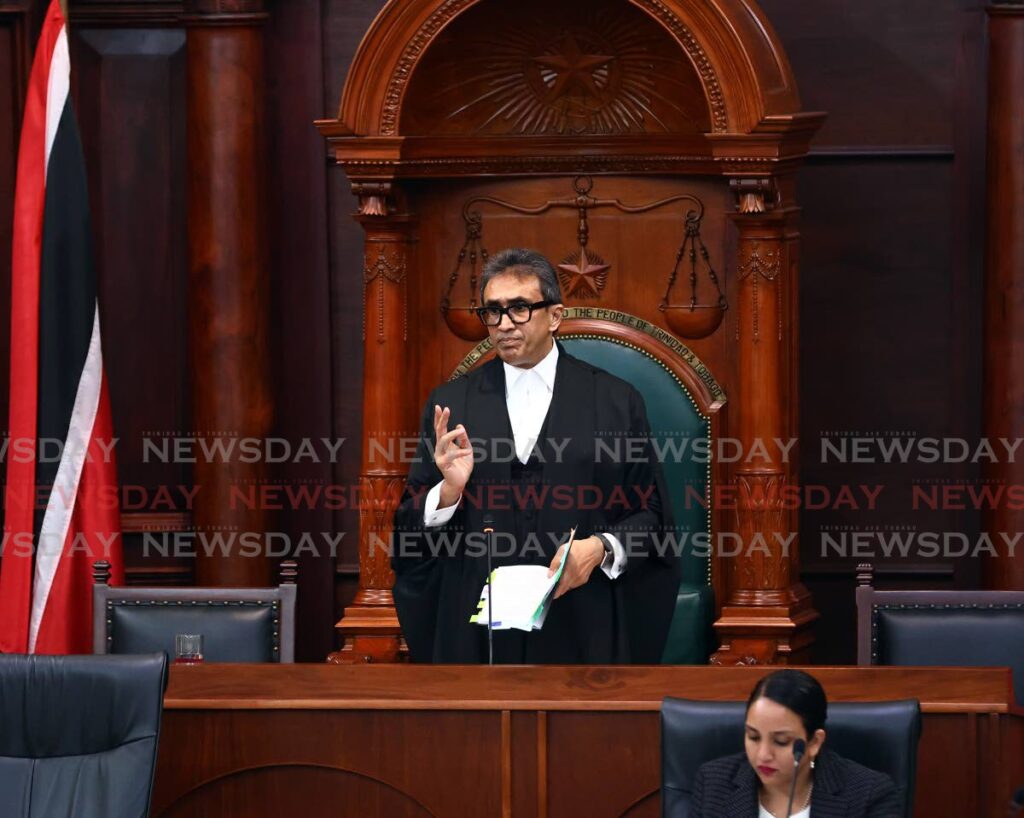
A recent parliamentary session in Trinidad and Tobago was marred by a hot-mic incident that has sparked widespread controversy. During the debate on the Virtual Assets and Virtual Assets Service Providers Bill, 2025, proceedings were temporarily halted as House Speaker Jagdeo Singh addressed a standing order objection raised by the opposition. However, microphones remained active, capturing a voice from the government benches uttering what appeared to be a derogatory remark: ‘Hush yuh mouth, boy. Go and take yuh lil man.’ The rest of the comment was inaudible, and all microphones were muted shortly thereafter. Newsday attempted to contact the government minister believed to be responsible for the comment but received no response by the time of publication. This incident echoes a similar controversy in October 2024, when then-energy minister Stuart Young was heard on an open microphone making homophobic remarks. Young avoided being referred to the Privileges Committee by issuing a public apology. House Speaker Bridgid Annisette-George had condemned Young’s comments as ‘reprehensible’ and ‘despicable,’ urging MPs to refrain from making ‘misogynistic, homophobic, and disparaging’ remarks. The recurrence of such incidents raises concerns about the conduct of parliamentarians and the need for greater accountability in public discourse.
-
Government passes crypto-currency bill after ‘pappy-show’ debate
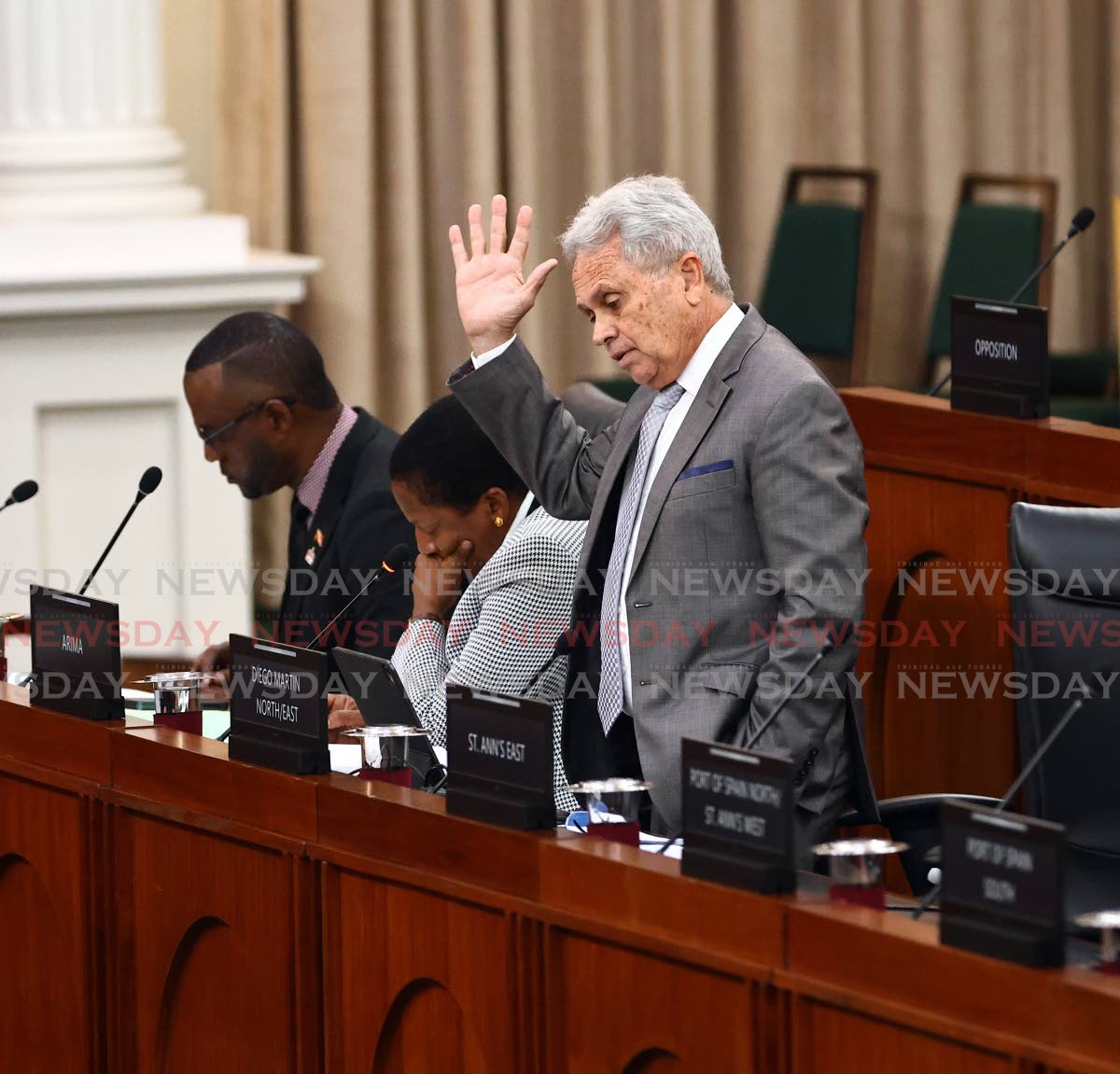
The Trinidad and Tobago Parliament witnessed a tumultuous session on November 21, 2025, as the debate over the Virtual Assets and Virtual Assets Service Providers Bill descended into procedural chaos. The bill, aimed at regulating the cryptocurrency industry, became a focal point of contention when over 200 proposed amendments were handed to the opposition mere minutes before the debate commenced. Finance Minister Davendranath Tancoo, who introduced the bill in September, had previously engaged with stakeholders, including Attorney General John Jeremie, Central Bank Governor Larry Howai, and crypto industry representatives, to refine the legislation. However, the late disclosure of amendments sparked outrage among opposition members. Diego Martin East MP Colm Imbert led the charge, accusing the government of undermining parliamentary principles by failing to provide adequate time for review. Imbert described the amendments as a ‘contempt of Parliament,’ arguing that they fundamentally altered the bill’s structure and intent. The procedural impasse left both sides unable to meaningfully debate the proposed changes, leading to what Imbert termed a ‘pappy-show.’ Despite the controversy, the bill was eventually passed with a vote of 25-11 after amendments were discussed in the committee stage. The legislation is critical for Trinidad and Tobago’s compliance with Caribbean Financial Action Task Force (C-FATF) recommendations ahead of a March 2026 on-site assessment. While the opposition supports cryptocurrency regulation, they criticized the bill as draconian and anti-innovation, warning it could stifle entrepreneurship and drive away innovators. Jeremie defended the government’s approach, emphasizing the need for stakeholder consultation and timely compliance with international standards.
-

Lee: 48 HDC maintenance contractors cut
In a recent address to the House of Representatives on November 21, Housing Minister David Lee disclosed that the Housing Development Corporation (HDC) has decided not to renew the contracts of 48 maintenance workers whose terms had expired. This announcement came in response to inquiries from Arima MP Pennelope Beckles regarding the current employment status within the HDC. Lee clarified that the HDC currently employs 765 individuals, and the 48 affected workers have been compensated with a 20% gratuity. Beckles also sought information on the status of monthly-paid maintenance contractors. Lee acknowledged that the HDC is still evaluating the full scope of these contracts, which collectively exceed $10 million. He highlighted that the HDC board has identified significant issues and irregularities in the procurement process over recent years, necessitating thorough investigations and audits. This decision aligns with broader cost-cutting measures as the HDC grapples with financial pressures, including substantial losses and increasing liabilities. The board is scrutinizing both staff and contractor arrangements to address these challenges effectively.
-

Babwah: Trinidad and Tobago could be ‘dumping ground’ for used vehicles
Visham Babwah, President of the Trinidad and Tobago Automotive Dealers Association (TTADA), has voiced significant concerns regarding the government’s recent decision to extend the permissible age for importing foreign-used private vehicles. The new policy, announced by Minister of Transport and Public Aviation Eli Zakour on November 20, allows the importation of vehicles up to eight years old, a notable increase from the previous three-year limit. Additionally, the permissible age for light commercial vehicles, pickups, and panel vans with diesel engines has been raised from seven to ten years.
Babwah, who also serves as CEO of P&V Marketing Co Ltd, criticized the move, warning that it could position Trinidad and Tobago as a ‘dumping ground’ for older, less reliable vehicles. He emphasized the potential environmental and safety risks associated with importing vehicles that may have already exceeded 50% of their lifespan. ‘In 2010, we successfully lobbied for a six-year limit because vehicles older than that are often unreliable and harmful to the environment,’ Babwah stated.
While acknowledging that cheaper vehicles might appeal to some consumers, Babwah cautioned that older cars could pose significant financial and safety challenges. He highlighted potential issues with financing and insurance, noting that banks and insurance companies are often reluctant to support vehicles nearing the end of their lifespan. ‘People would have to conduct extensive checks on these vehicles, and they might face difficulties securing loans or comprehensive insurance,’ he explained.
The decision has sparked debate over its potential impact on the local automotive market and the broader implications for road safety and environmental sustainability. Babwah questioned the rationale behind the policy shift, stating, ‘It was announced in the budget that the permissible age would move from three to six years. I am not sure who advised the Minister to increase it to eight.’
Minister Zakour also mentioned that Trinidad and Tobago currently lacks a legal framework for the recognition, registration, and regulated use of classic, antique, and vintage vehicles, further complicating the issue.