作者: admin

  • CARPHA and Guyana’s Ministry of Health Launch its 70th Annual Health Research Conference: A Historic Milestone for Regional Public Health

    CARPHA and Guyana’s Ministry of Health Launch its 70th Annual Health Research Conference: A Historic Milestone for Regional Public Health

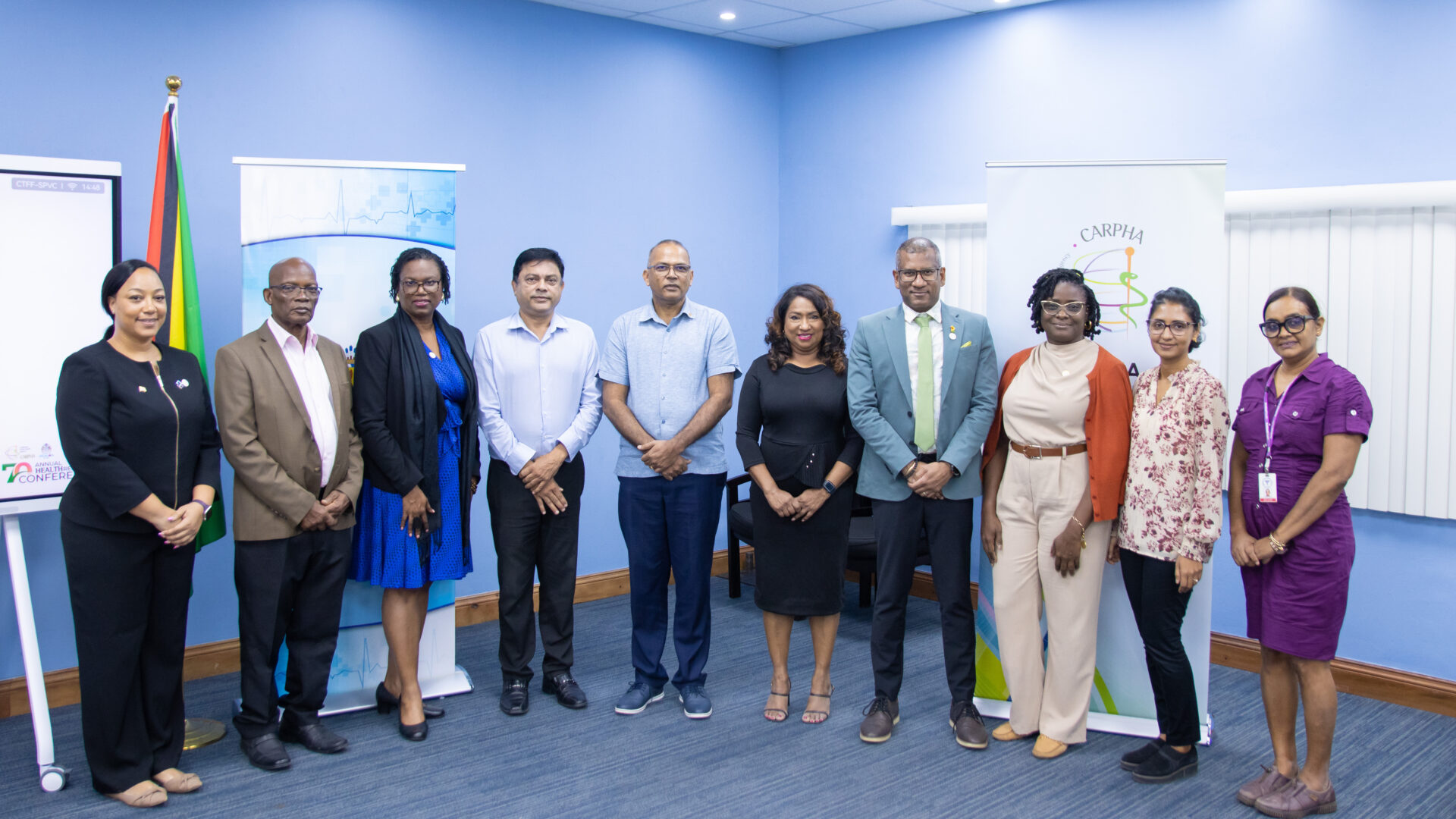
    GEORGETOWN, GUYANA – The Caribbean Public Health Agency (CARPHA), in collaboration with the Government of Guyana, has officially announced the 70th Annual Health Research Conference (AHRC), scheduled for April 22-24, 2026. The event will be hosted at the Arthur Chung Convention Centre in Georgetown, marking a historic milestone as the longest-running health research gathering in the English-speaking Caribbean.

    Under the theme “Innovations in Health,” the conference will celebrate seven decades of scientific advancement, regional collaboration, and evidence-based policy-making in public health. Executive Director of CARPHA, Dr. Lisa Indar, emphasized the transformative power of innovation, stating: “Public health innovations are engines of modern well-being—they turn deadly outbreaks into manageable obstacles, extend life expectancy, and bring quality health services to remote corners of the world.” She highlighted cutting-edge tools such as AI-driven epidemic prediction systems and smart vaccines as key examples.

    Guyana’s role as host reflects its significant investments in health infrastructure and digital medicine. Honourable Dr. Frank Anthony, Guyana’s Minister of Health, outlined the country’s pioneering work in telemedicine, drone-based medicine delivery, and AI-assisted medical imaging. He also noted Guyana’s progress toward eliminating five neglected tropical diseases by 2030, offering valuable lessons for regional partners.

    The conference will gather researchers, medical professionals, policymakers, and international partners to explore technological advancements shaping disease prevention, diagnostic accuracy, and health equity. It aims to strengthen collective preparedness against emerging health threats while honoring CARPHA’s legacy of regional cooperation.
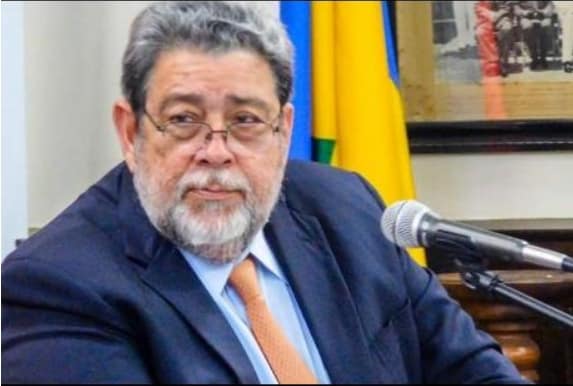

  • Gonsalves says Unity Labour Party very much alive despite election defeat

    Gonsalves says Unity Labour Party very much alive despite election defeat

    In a defiant concession speech delivered on Saturday, former St. Vincent and the Grenadines Prime Minister Dr. Ralph Gonsalves declared his Unity Labour Party (ULP) remains politically viable despite suffering a crushing electoral defeat that ended their 25-year governance. The New Democratic Party (NDP) secured a commanding victory, capturing 14 of the 15 parliamentary seats in Thursday’s general election.

    Gonsalves, who previously served as Opposition Leader from 1998 to 2001, announced he would resume that role but offered no direct congratulations to Prime Minister-designate Dr. Godwin Friday or the NDP. Instead, he delivered a stark warning to the incoming administration, suggesting their triumph marked the beginning of their eventual decline.

    “At this very height of the NDP’s triumphalism, it is the moment of the start of their descent,” Gonsalves proclaimed. “The unravelling usually commences imperceptibly and then becomes a flood of disarray, as the centre cannot hold and things fall apart. History and experience so teach, and in our fast-changing world, the clock of their demise is already ticking.”

    The veteran politician pledged to lead the opposition with “dignity, duty and love,” emphasizing his readiness to confront political challenges. “Please be assured that the menace of the years finds and shall find me unafraid; it is my lot to accept, indeed prefer, a strenuous life to one of ignoble ease,” he stated.

    Gonsalves outlined immediate plans to convene the ULP’s collective leadership on Sunday to select two senatorial appointments. While acknowledging the opposition would be “routinely out-voted” due to the NDP’s overwhelming majority, he promised to maintain high parliamentary standards and indicated the party would focus on internal renewal ahead of the next scheduled election in 2030.

    “Renewal, rebuilding, is sweet. Indeed, it is the sweetest of life’s experiences,” Gonsalves reflected. “And within and outside the Labour family, there is abundant material, some even hidden or submerged, which is available for renewal.”

  • Trump maintains pressure campaign on Venezuela, saying its airspace should be considered closed

    Trump maintains pressure campaign on Venezuela, saying its airspace should be considered closed

    The Trump administration has dramatically intensified its campaign against the Venezuelan government of Nicolás Maduro, declaring the complete closure of airspace above and surrounding Venezuela through a presidential post on Truth Social. This unprecedented announcement represents the latest maneuver in Washington’s sustained effort to force a change in leadership, officially framed as a measure to combat illegal migration and narcotics trafficking.

    Venezuelan Foreign Minister Jorge Arreaza immediately condemned the directive as a ‘colonialist threat’ and an ‘extravagant, illegal, and unjustified aggression.’ While the United States lacks legal authority to close another nation’s airspace, the Federal Aviation Administration had previously warned airlines of potentially hazardous conditions when flying over Venezuelan territory. U.S. passenger and cargo carriers have maintained a suspension of direct flights since 2019, though some commercial routes continue to traverse Venezuelan airspace for South American destinations.

    This escalation follows a series of aggressive measures including the designation of Maduro and his associates as members of a foreign terrorist organization, which administration officials argue expands military options. President Trump has acknowledged authorizing CIA operations within Venezuela and suggested imminent land strikes during remarks to service members on Thanksgiving. ‘We’ll be starting to stop them by land also,’ Trump stated, referencing drug trafficking routes. ‘The land is easier, but that’s going to start very soon.’

    Republican Senator Lindsey Graham endorsed the president’s approach, applauding the determination to confront what he termed ‘drug caliphate countries’ in America’s backyard. The Pentagon has deployed over a dozen warships and 15,000 troops to the region under ‘Operation Southern Spear,’ an anti-trafficking campaign that has already resulted in dozens of casualties from boat interdictions.

    Despite the bellicose rhetoric, diplomatic channels remain partially open. Multiple administration officials confirm that Maduro and his associates have reached out through various means, and discussions about communication frameworks continue. The New York Times and Wall Street Journal reported that Trump and Maduro spoke recently, with Trump suggesting a potential willingness to engage directly ‘if we can save lives.’ Earlier informal talks reportedly included Maduro signaling openness to eventually stepping down, though not for at least 18 months—a timeline rejected by Washington, which insists on immediate departure.

    Within Venezuela, citizens face the escalating geopolitical tension with apprehension amid economic collapse and political instability. While public life maintains a semblance of normalcy with seasonal celebrations continuing, the threat of government repression remains tangible. Human rights group PROVEA documented at least 54 detentions for dissent in October alone, including arrests for sharing anti-Maduro messages on WhatsApp. As one Caracas waitress summarized: ‘Will they bomb? Will they not bomb? Who knows… nobody knows nothing.’

  • Dennery Segment – the new soundtrack to political campaigning

    Dennery Segment – the new soundtrack to political campaigning

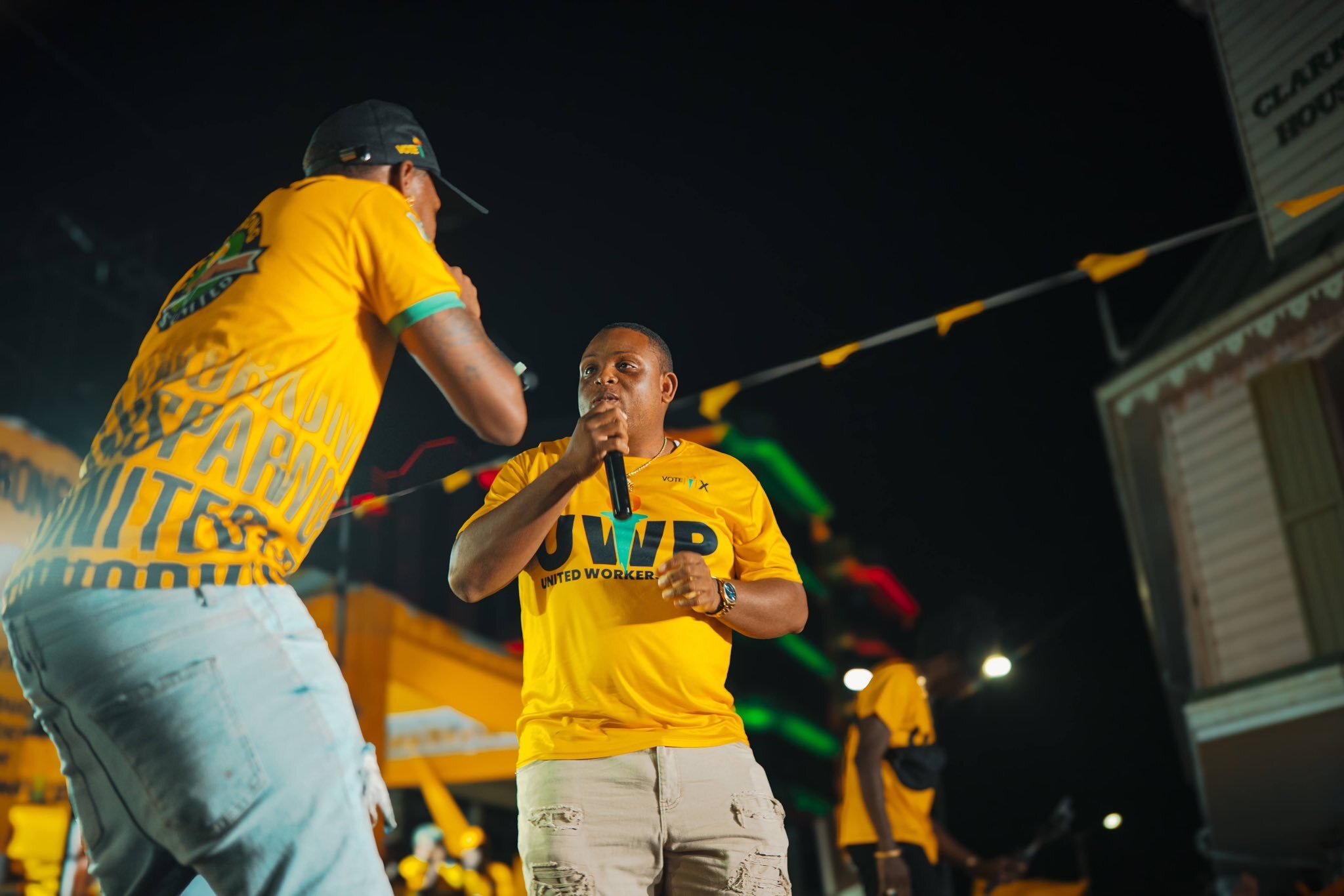
    Saint Lucia’s political arena has undergone a profound sonic transformation since Prime Minister Philip J. Pierre initiated the election cycle on November 9. The traditional campaign elements—rallies, posters, and slogans—now share the stage with an unexpected powerhouse: the infectious beats of Dennery Segment music that have become the soundtrack of this election season.

    This distinctive Saint Lucian musical genre, characterized by its percussive intensity and catchy hooks, has revolutionized political mobilization strategies. Campaign events have evolved into carnival-like festivities where Dennery Segment artists perform customized tracks supporting various parties and candidates. The phenomenon has particularly resonated with younger demographics, creating an unprecedented fusion of political messaging and musical entertainment.

    The current musical landscape contrasts sharply with historical approaches. During the 1970s political awakening, conscious reggae from icons like Bob Marley and Peter Tosh underpinned the Saint Lucia Labour Party’s messaging. Later eras incorporated calypso’s social commentary and even international pop hits, such as the UWP’s strategic use of Bryan Adams’ “Everything I Do, I Do It for You” in 1992.

    Sociologist and former Labour Party MP Damian Greaves observes: “Politics, to some extent, is a vibe and it has to be the vibe of the times. What we’re witnessing represents a shift from the anti-colonial intellectualism of previous generations to a new ethos shaped by social media dynamics.”

    The digital dimension has proven crucial to Dennery Segment’s political ascendancy. Tracks like Ricky T’s “Ring the Bell” and General Bakes’ “Flambeau Off” have generated viral memes and TikTok trends, amplifying their reach beyond physical rallies. Music industry expert Ian Sanchez notes: “The creativity of these artists makes their songs easily adaptable to suit any party or candidate, while their social media mastery ensures maximum visibility.”

    However, concerns emerge regarding substantive political discourse potentially being drowned out by rhythmic entertainment. Some observers question whether the musical spectacle might overshadow critical policy discussions, reducing complex electoral decisions to emotional responses to musical performances.

    Adding to the conversation, creative promoter Sant Justin highlights economic implications: “Campaign season now rivals traditional peak periods for creative professionals. But we must address the troubling practice of importing foreign talent when our local artists possess superior cultural understanding and creative capability.”

    This musical politicization represents more than temporary campaign strategy—it signifies a fundamental evolution in how democratic engagement manifests in the digital age, where cultural expression and political messaging increasingly intertwine.

    (Note: All photographic credits remain with original sources as indicated in source material)

  • Sir Lester Bird Medical Centre Issues Urgent Call for O-Negative Blood Donations

    Sir Lester Bird Medical Centre Issues Urgent Call for O-Negative Blood Donations

    The Sir Lester Bird Medical Centre has declared a critical shortage of O-negative blood supplies, prompting an emergency public appeal for immediate donations. This universal blood type, essential for emergency trauma care and surgical operations, has dropped to dangerously low levels that could compromise patient care.

    Medical authorities at the hospital’s blood bank issued a formal notice urging all eligible O-negative carriers to come forward without delay. The unique biological properties of O-negative blood make it medically invaluable as it can be safely administered to patients of any blood classification, particularly during critical emergencies when standard cross-matching procedures aren’t feasible.

    To facilitate urgent donations, the hospital has extended operational hours at its blood collection facility, which remains accessible daily between 9:00 AM and 6:00 PM. Healthcare officials emphasize that community participation in blood donation drives directly impacts survival rates in life-threatening situations, with each contribution potentially saving multiple lives.

    The medical institution continues to monitor the situation closely while implementing contingency measures to stabilize blood inventory levels. Additional public announcements are anticipated as the hospital manages this critical supply challenge.

  • Rotary Club of Antigua’s “Meals on Wheels” Project Expands Reach Thanks to Mark Raab and WIOC

    Rotary Club of Antigua’s “Meals on Wheels” Project Expands Reach Thanks to Mark Raab and WIOC

    A landmark corporate partnership has dramatically expanded the reach of a longstanding community support program in Antigua this November. The Rotary Club of Antigua’s “Meals on Wheels” project, operational since 1985, has received substantial backing from patron Mark Raab and the West Indies Oil Company (WIOC), enabling an unprecedented scale-up in operations.

    Traditionally sustained by proceeds from the annual Colours Fete, the initiative typically distributes approximately 100 bags of dried groceries monthly to vulnerable community members. For the third consecutive year, Raab’s dedicated funding has provided a significant temporary enhancement to the program’s capabilities.

    This month, with combined support from both Raab and WIOC, Rotarians have assembled and distributed 285 grocery bags—a remarkable 185% increase over their regular monthly output. This supplemental contribution of 191 additional bags represents one of the most substantial single-month expansions in the program’s 38-year history.

    The enhanced distribution effort has effectively tripled the club’s regular outreach capacity, ensuring essential nutritional support reaches significantly more households during the critical pre-holiday period. Community leaders emphasize that such corporate-community partnerships create powerful multipliers for social impact.

    The Rotary Club of Antigua continues to welcome public engagement through both financial contributions and volunteer participation. Sustained community support remains vital to maintaining this legacy initiative that has served Antigua’s most vulnerable residents for nearly four decades.

    Established in September 1972, the Rotary Club of Antigua operates as part of Rotary International’s global network of 1.4 million members dedicated to creating lasting positive change through local action and international cooperation.

  • Police Investigate Fatal Traffic Collision on Popeshead Street

    Police Investigate Fatal Traffic Collision on Popeshead Street

    A tragic pre-dawn traffic incident in St. John’s has claimed the life of a young Antiguan man, prompting an ongoing investigation by the Royal Police Force of Antigua and Barbuda. The fatal collision occurred approximately at 2:00 a.m. on Sunday, November 30, 2025, along Popeshead Street near the Pita Pocket establishment. Preliminary investigative findings indicate that 23-year-old Joshua Alexander from Light Foot was operating a black scooter traveling north to south at considerable velocity when he apparently lost control of his vehicle. The subsequent impact with a roadside wall and sidewalk on the eastern side of Popeshead Street resulted in catastrophic multiple injuries. Emergency Medical Services personnel arrived promptly at the scene but detected no vital signs during their initial assessment. The young man was formally pronounced deceased by a medical professional at 3:16 a.m. The Royal Police Force has extended profound sympathies to Alexander’s bereaved family and friends while continuing their thorough investigation into the precise circumstances surrounding this devastating incident.

  • The barriers facing women in politics

    The barriers facing women in politics

    As Saint Lucia approaches its 2025 general elections, an unprecedented six female candidates—three from each major party—are mounting a historic challenge to the island nation’s male-dominated political landscape. This record number of women contenders represents a potential turning point in Saint Lucian politics, yet their campaigns reveal how deeply entrenched gender barriers remain.

    Historical context underscores the magnitude of their challenge. Over the past fifteen years, female representation among general election candidates has consistently languished below 25%, with elected women in the House of Assembly rarely exceeding two simultaneously. The 2021 election saw merely 11 women among 45 total candidates, with only two securing seats—maintaining parliamentary representation at approximately 11%, far below modern democratic standards.

    The campaigns of these six women illuminate the persistent obstacles facing female politicians. Marcella Johnson, United Workers Party candidate for Gros Islet, describes enduring weekly televised character assaults from male opponents. “Every single week, a minister uses his television show to shame women, insult women, demean women,” Johnson revealed to St. Lucia Times, noting her personal life becomes fodder for fabricated narratives despite being unknown to her detractors.

    Similarly, Labour Party Senator Lisa Jawahir, candidate for Castries South East, confronted gender-based opposition when UWP Deputy Leader Guy Joseph dismissed a $250,000 allocation for addressing period poverty in schools as unnecessary spending. Jawahir’s swift rebuttal resonated particularly with young female constituents, galvanizing support from women demanding recognition that “our voices matter.”

    Perhaps most unexpectedly, political newcomer Leeana “Lady Lee” Johannes-Paul entered the race despite previous disdain for politics, describing her decision as a divine calling. Her campaign in Vieux Fort has faced overt misogyny, with critics asserting male candidates possess superior experience and strength. This lack of institutional support forced Johannes-Paul to largely self-fund her early campaign, though adversity strengthened her resolve to bring what she terms a “feminine touch” to governance focused on community care rather than personal enrichment.

    Veteran politician Alvina Reynolds, who entered politics in 2011 and now serves as President of the Senate, provides historical perspective. While she experienced greater party support than current candidates, Reynolds still faced condescension from male colleagues who depicted her as a “headless chicken” and used musical metaphors to suggest she was an unprepared child needing maternal guidance. She emphasizes that contemporary candidates face comparatively less hostility than pioneers like Heraldine Rock, who endured public humiliation from within her own party.

    Reynolds advises the new generation: “Don’t be tokenized. Be strong. Negotiate. Represent your constituencies with confidence.” She maintains an open-door policy for all female candidates across party lines, embodying her belief that women must uplift each other.

    These six candidates are consequently campaigning on dual fronts: seeking electoral victory while simultaneously battling historical stereotypes about political leadership. Their collective effort represents a referendum on whether Saint Lucia will continue male-dominated governance or embrace leadership reflective of its entire population.

  • Suriname krijgt hulp van Brazilië om cassaveziekte tegen te gaan

    Suriname krijgt hulp van Brazilië om cassaveziekte tegen te gaan

    In a significant trilateral agreement, Brazil has expanded its agricultural cooperation to include Suriname in combating Cassave Witches’ Broom Disease, a devastating crop infection that causes substantial yield reductions in cassava production. While the disease hasn’t yet been detected in Surinamese territory, the preventive measures represent a strategic regional initiative that also includes French Guiana.

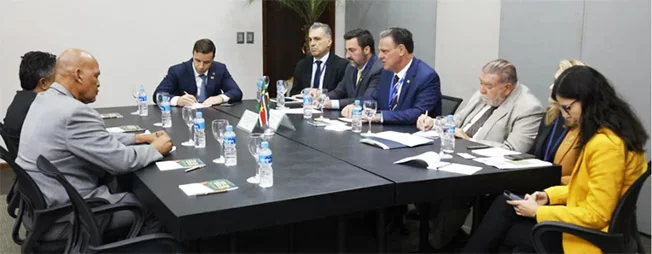
    The collaborative framework, formalized earlier this month, establishes cross-border monitoring systems, technology transfer protocols, and specialized training programs. Surinamese Minister of Agriculture, Animal Husbandry and Fisheries Mike Noersalim expressed particular satisfaction with Brazil’s support, noting that the partnership extends beyond disease control to broader agricultural development.

    The agreement emerged from bilateral meetings between Noersalim and agricultural ministers from Chile, Dominican Republic, Haiti, and Trinidad & Tobago. These discussions resulted in market access expansions and enhanced trade relationships between Brazil and participating nations. Technical cooperation agreements and technology exchange mechanisms featured prominently in the negotiations.

    Suriname has specifically requested Brazilian assistance in developing rice varieties suitable for both dryland and irrigated conditions. “Brazil represents an agricultural powerhouse with extensive research capabilities in crop and livestock development,” Minister Noersalim stated. “We seek collaboration to advance our agricultural sector and reduce import dependency.”

    Additional outcomes include increased Brazilian meat exports to Suriname and a formalized technical cooperation agreement targeting the eradication of carambola fruit flies. Brazilian Minister Carlos Fávaro confirmed his country’s readiness to “discuss agricultural development with focus on sugarcane, rice, and coconut production, including provision of genetic materials to strengthen both technical and commercial cooperation between our nations.”

    These developments coincided with the 2025 Conference of Agriculture Ministers of the Americas, organized by the Inter-American Council for Agriculture—the highest governing body of the Inter-American Institute for Cooperation on Agriculture (IICA). During the conference, Guyana’s Muhammad Ibrahim was elected as IICA’s new Director-General for 2026-2030, receiving 24 of 32 votes including Suriname’s endorsement.

  • New cabinet could be sworn in on eve of NDP’s 50th anniversary

    New cabinet could be sworn in on eve of NDP’s 50th anniversary

    Newly inaugurated Prime Minister Godwin Friday has confirmed the imminent formation of his administration’s cabinet, with swearing-in ceremonies anticipated for Tuesday. This development follows the New Democratic Party’s (NDP) decisive electoral triumph, securing 14 of 15 parliamentary seats after a quarter-century in opposition.

    The Prime Minister revealed that majority cabinet appointments have been finalized, though specifics remain undisclosed until formal notifications are delivered to designated ministers. Friday emphasized the deliberate selection process, noting the exceptional range of talent available within his parliamentary cohort following Thursday’s electoral sweep.

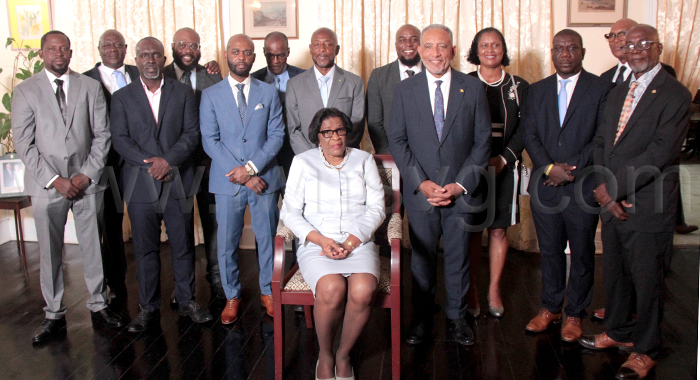
    In a departure from constitutional conventions, only the Prime Minister took oath during Friday’s ceremony at Government House. Friday attributed this anomaly to unresolved technical considerations requiring additional resolution time, assuring full cabinet inauguration would proceed next week.

    The administration is immediately engaging with critical governance structures, including police leadership and senior civil servants, to ensure seamless transition. Friday acknowledged ongoing celebratory activities among newly elected representatives but emphasized the urgency of convening parliamentary colleagues to establish governance priorities.

    Addressing diplomatic attendance concerns, the Prime Minister characterized the minimal foreign representation at his inauguration as purely logistical, anticipating broader international participation during Tuesday’s comprehensive swearing-in event.

    Geographic representation emerged as a significant theme, with Friday becoming the second Bequia-native to assume Vincentian leadership. While acknowledging regional pride, he stressed national unity across the archipelago, particularly highlighting development initiatives for historically neglected northern regions including North Leeward and North Windward.

    The Prime Minister expressed profound gratitude for the electorate’s emphatic mandate—37,002 votes compared to the incumbent’s 27,148—interpreting the result as both validation of change demands and foundation for stable governance. This victory marks the NDP’s most significant achievement since its founding December 3, 1975, by former Prime Minister Sir James Mitchell.