作者: admin

  • Mexico Raises Wages, Proposes Shorter Workweeks; Could Belize be Next?

    Mexico Raises Wages, Proposes Shorter Workweeks; Could Belize be Next?

    In a significant overhaul of its labor policies, Mexico has announced a dual-pronged approach to worker compensation and work-life balance. The administration of President Claudia Sheinbaum confirmed a substantial 13% increase to the national minimum wage, set to take effect in January 2026. This adjustment will elevate daily earnings to 315.04 pesos ($17.27 USD), with a higher rate of 440.87 pesos ($24.27 USD) established for the northern border zone to address economic disparities.

    Concurrently, the government has put forward a groundbreaking legislative proposal to reduce the standard workweek. The plan outlines a gradual transition from the current 48-hour benchmark down to 40 hours, with a target completion date of 2030. This initiative represents one of the most progressive shifts in working conditions in the region’s recent history.

    President Sheinbaum defended these economic policies against traditional criticisms, highlighting that minimum wage rates have surged by 154% since 2018 without deterring foreign investment. “Contrary to long-held economic doctrines that warned against wage increases, we are experiencing record levels of foreign investment,” Sheinbaum stated during her weekly press briefing.

    These developments emerge against a backdrop of recent economic contraction, with Mexico’s GDP reporting a 0.3% decline in the last quarter. Meanwhile, neighboring Belize appears to be observing these changes with interest. Prime Minister John Briceño announced in September plans to raise the national minimum wage to $6 BZD per hour ($3 USD) in the coming year, potentially signaling a broader regional trend toward enhanced worker compensation standards.


  • Driver arrested after high‑speed chase ends in crash

    Driver arrested after high‑speed chase ends in crash

    Saint Lucia law enforcement authorities have taken a suspect into custody after a dramatic high-speed pursuit culminated in a vehicular collision on Friday morning. The incident unfolded when officers from the Road Safety and Traffic Investigation division, while attending to an unrelated accident near Vieux Fort Comprehensive Secondary School at approximately 11:20 a.m., witnessed a white Toyota Corolla executing dangerous overtaking maneuvers along the left shoulder at excessive speeds.

    Despite clear instructions from police to halt, the motorist persisted in reckless driving behavior, prompting an immediate pursuit. The chase reached its critical juncture at the intersection of La Ressource Highroad and St Jude Highroad, where officers discovered the suspect vehicle had collided with another automobile. Both vehicles suffered substantial structural damage from the impact, though remarkably no injuries were reported among involved parties.

    Subsequent police investigation uncovered multiple regulatory violations: the driver was operating the vehicle without a valid driver’s license, the automobile was found to be uninsured, and the license plate displayed on the vehicle was improperly registered to another car. The apprehended individual was transported to Vieux Fort Police Station and remains in custody pending formal charges related to the incident.

  • Cuban President commemorates Battle of Alegria de Pio

    Cuban President commemorates Battle of Alegria de Pio

    The President of Cuba has reignited a pivotal phrase from the nation’s revolutionary history, invoking Commander Juan Almeida Bosque’s iconic declaration, “Here, no one surrenders.” This statement, originally proclaimed during the critical battle of December 5, 1956, was highlighted on social media as a continuing emblem of the Cuban Revolution’s enduring spirit and resilience.

    The historical context of this slogan traces back to the landing of the Granma yacht on December 2, 1956, near Playas Las Coloradas in eastern Cuba. The expeditionaries, led by Fidel Castro, faced their first major combat just three days later at Alegría de Pío. This initial engagement, though resulting in a tactical defeat and the dispersal of revolutionary forces, proved to be a formative experience. Despite the setback, the core leaders of the Rebel Army regrouped within two weeks, demonstrating the unwavering determination that would eventually lead to their ultimate success. The president’s commemoration serves to connect Cuba’s present-day political identity with its foundational struggles, reinforcing revolutionary values for a contemporary audience.

  • Cuba congratulates Thailand on its national day

    Cuba congratulates Thailand on its national day

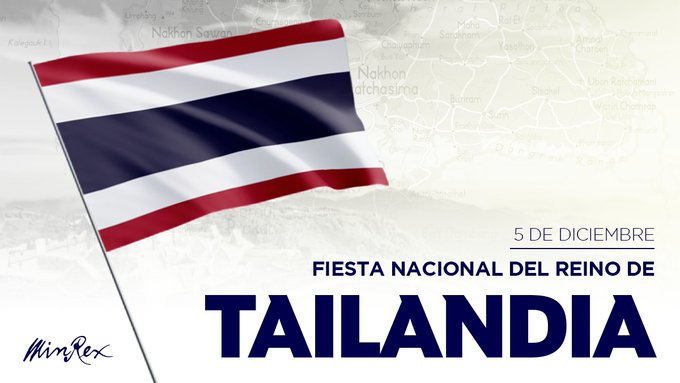
    The Cuban Ministry of Foreign Affairs has publicly conveyed its heartfelt congratulations to the nation of Thailand commemorating its annual National Day observance. In an official communiqué disseminated via the social media platform X, Cuban diplomatic authorities extended sincere well-wishes to both the Thai populace and government leadership.

    This significant date, marked annually on December 5th, holds profound cultural and historical importance for the Thai people. The celebration simultaneously honors Father’s Day while paying tribute to the enduring legacy of the late King Bhumibol Adulyadej the Great (Rama IX), whose birth occurred on this date in 1927. King Bhumibol remains a deeply revered figure in Thai society, having presided over the nation’s development through seven decades of transformative leadership.

    The diplomatic exchange underscores the enduring international relationship between the Caribbean nation and Southeast Asian kingdom. Historical records indicate that formal diplomatic engagement between Bangkok and Havana was initially established on May 15, 1958, creating over six decades of continuous bilateral engagement.

    Beyond ceremonial congratulations, the Cuban statement notably emphasized Havana’s renewed commitment to enhancing mutual cooperation frameworks. This diplomatic gesture signals ongoing interest in strengthening international partnerships across geopolitical boundaries, highlighting how nations continue to foster diplomatic relationships despite geographical separation and cultural differences.

  • Duits luchtvaartbedrijf Aerothrive ingeschakeld om EU-veiligheidsverbod te beëindigen

    Duits luchtvaartbedrijf Aerothrive ingeschakeld om EU-veiligheidsverbod te beëindigen

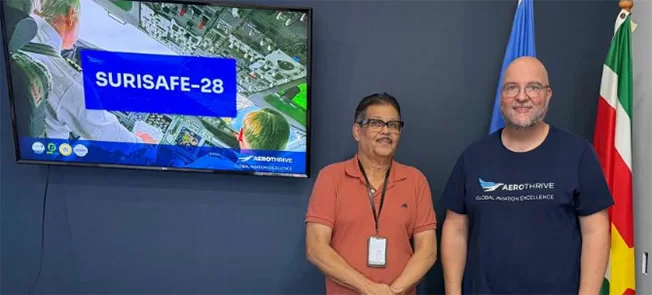
    Suriname has initiated a comprehensive multi-year aviation safety overhaul program to remove the country from the European Union’s Air Safety List. The Civil Aviation Authority Suriname (CASAS) has formally contracted German-based international aviation security firm Aerothrive to lead the ambitious ‘SuriSafe-28’ initiative, designed to address critical deficiencies identified in recent audits conducted by both the International Civil Aviation Organization (ICAO) and the European Union.

    The partnership was officially sealed during a signing ceremony in Paramaribo, where CASAS Director Brian de Souza and Aerothrive CEO Patrick Lutz finalized the collaborative agreement. Aerothrive, a globally recognized aviation safety organization with a network of over 110 senior aviation experts worldwide, will coordinate the extensive program aimed at achieving full compliance with international aviation standards.

    CEO Lutz emphasized that the project extends beyond technical assistance, stating: ‘Our focus encompasses strengthening CASAS’s institutional capabilities, streamlining all improvement trajectories, and facilitating collaboration with key international partners including ICAO and the EU. Only through a coordinated, multifaceted approach can we achieve our shared objective.’

    Director de Souza characterized the initiative as a national priority, confirming: ‘This project enjoys the full support of our government. Removing the EU flight ban is absolutely crucial for our aviation safety standards, traveling public, and economic development. With Aerothrive’s expertise, we’re taking a substantial step toward sustainable improvement.’

    The aviation audits revealed decades of systemic underfunding and structural deficiencies within Suriname’s oversight system. According to CASAS officials, current conditions for recovery appear favorable, with increased political commitment, enhanced funding, and strategic international partnerships creating a solid foundation for meaningful progress.

  • Russia awaits US reaction to Putin’s meeting with Witkoff

    Russia awaits US reaction to Putin’s meeting with Witkoff

    The Kremlin has confirmed it is anticipating a formal response from American officials following high-level discussions held this Tuesday regarding the ongoing conflict in Ukraine. Yuri Ushakov, a senior foreign policy advisor to President Vladimir Putin, addressed reporters but declined to provide specifics about the confidential dialogue, emphasizing that both parties had agreed to maintain discretion about the precise details negotiated.

    Ushakov characterized the meeting, which included Russian Direct Investment Fund CEO Kirill Dmitriev—a key envoy for international economic cooperation—as “highly productive” and indicated that diplomatic contacts are expected to continue. However, he offered no clarity regarding the timing of a potential follow-up telephone discussion between President Putin and U.S. President Donald Trump.

    The talks centered on Washington’s recently proposed initiative to advance a negotiated resolution to the armed conflict in Ukraine. The U.S. government has similarly avoided publicizing details, citing the sensitive and ongoing nature of the diplomatic process.

    Earlier, on November 21, President Putin had acknowledged that President Trump’s peace proposal might serve as a viable foundation for a political settlement. However, he noted that the United States appeared hesitant to engage Russia in detailed discussions before first securing consent from the Ukrainian government.

  • WHO warns of challenges to malaria elimination

    WHO warns of challenges to malaria elimination

    A recent World Health Organization (WHO) global malaria report presents a dual narrative of significant progress and persistent challenges in the fight against the disease. The data reveals a devastating concentration of the malaria burden, with an estimated 95% of all fatalities occurring within the WHO African Region, predominantly affecting children under five years of age.

    Despite this sobering reality, the expanded deployment of innovative interventions has yielded substantial positive outcomes. The widespread introduction of new tools, including dual-ingredient insecticide-treated nets and malaria vaccines, proved highly effective in 2024, preventing an estimated 170 million infections and averting approximately one million deaths. A key preventive strategy, seasonal malaria chemoprevention, has seen remarkable growth. Now implemented across 20 nations, this approach reached 54 million children in 2024—a dramatic surge from a mere 200,000 children covered in 2012.

    Certification milestones further underscore the global advancement. To date, the WHO has officially recognized 47 countries and one territory as malaria-free. Cabo Verde and Egypt attained this esteemed status in 2024, with Georgia, Suriname, and Timor-Leste joining their ranks in 2025.

    However, the report sounds a strong alarm on emerging threats that jeopardize these gains. A growing resistance to antimalarial medications is significantly impeding elimination efforts. WHO Director-General Dr. Tedros Adhanom Ghebreyesus emphasized this precarious balance, stating, ‘New tools for malaria prevention give us new hope, but we still face significant challenges.’ He specifically warned that rising case numbers and mortality rates, compounded by the escalating drug resistance threat and the repercussions of funding cuts, risk reversing the hard-won progress achieved over the last twenty years. Consequently, a central objective of the Global Malaria Technical Strategy 2016–2030—the radical reduction of malaria deaths—remains distressingly out of reach.

  • Russia opens two drone production plants in the Middle East

    Russia opens two drone production plants in the Middle East

    Russian technology consortium Futurelab has announced a significant expansion of its strategic operations in the Middle East with the establishment of two comprehensive unmanned aerial systems (UAS) facilities. According to Deputy Director Ilya Shevelev’s statements to Sputnik news agency, these newly inaugurated centers represent a major advancement in the region’s drone technology landscape.

    The facilities, located in two unspecified Middle Eastern nations, will serve dual purposes as both advanced training academies for drone operators and serial production hubs for light and medium-class unmanned aircraft. Shevelev characterized this development as foundational to creating ‘a complete ecosystem for unmanned technologies’ in the region, emphasizing the company’s commitment to fostering long-term technological partnerships.

    Beyond their educational and manufacturing functions, the centers feature exhibition spaces showcasing current drone models, enabling potential clients to evaluate technical specifications and operational capabilities firsthand. Each facility also houses dedicated sales offices responsible for contract negotiations and export coordination, creating an integrated business environment for regional partners.

    Shevelev highlighted that these comprehensive centers represent a strategic milestone in global market penetration for Russian drone technology while simultaneously accelerating the development of the Middle East’s domestic drone industry. This expansion reflects growing international demand for civilian UAS applications and Russia’s increasing role as a technology exporter to emerging markets.

  • Ukrainian drone attack damages Russian port infrastructure

    Ukrainian drone attack damages Russian port infrastructure

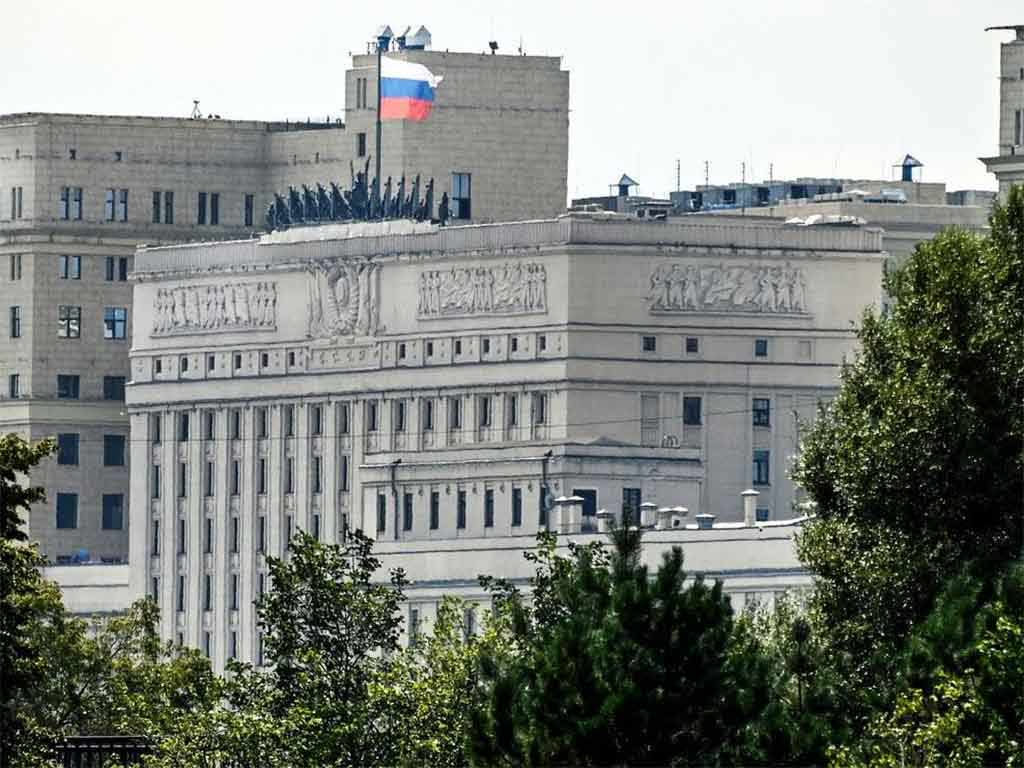
    Russian military authorities reported significant drone activity over its southwestern territories, announcing the interception of 41 Ukrainian unmanned aerial vehicles (UAVs) within a 24-hour period. The defensive operations occurred across multiple regions including Samara, Crimea, Saratov, Volgograd, Rostov, and Krasnodar.

    According to an official statement released by the Defense Ministry on Friday, port facilities in Temryuk sustained damage from what was described as “an attack by the Kiev regime.” The assault triggered a fire at the strategic Black Sea port infrastructure, though preliminary assessments confirmed no casualties as port personnel had been safely evacuated before the incident.

    Emergency response teams deployed extensively to contain the blaze, with 32 specialized personnel and eight heavy machinery units engaged in firefighting operations. The ministry emphasized that all necessary measures were being taken to secure the area and assess the full extent of the damage.

    Concurrently, Russia’s federal air transport agency, Rosaviatsia, implemented temporary flight restrictions at ten regional airports including Saratov, Krasnodar, Sochi, and Grozny. These precautionary measures were enacted to ensure civilian aviation safety amid the heightened security situation. The coordinated aviation security protocol affected airports across southern and western Russia, demonstrating the broad geographical impact of the reported drone incursions.

    The military’s comprehensive report detailed precise interception numbers: nine UAVs neutralized in Samara region, nine over Crimea, eight in Saratov region, seven in Volgograd region, seven in Rostov region, and one in Krasnodar region. This systematic breakdown illustrates the widespread nature of the alleged aerial offensive and corresponding defensive response.

  • PAHO launches tool to assist survivors of sexual violence

    PAHO launches tool to assist survivors of sexual violence

    The Pan American Health Organization (PAHO) has launched a groundbreaking assessment instrument designed to revolutionize care for survivors of sexual violence across Latin America. This initiative emerges against a distressing regional backdrop where epidemiological studies indicate approximately one in three women endures physical or sexual violence during their lifetime.

    Unveiled during a specialized webinar focused on enhancing support systems for female survivors, this evidence-based tool equips public health authorities with a standardized methodology to evaluate emergency room and clinic services. Its primary function is to identify critical deficiencies in post-assault medical care and facilitate data-driven improvements in clinical response protocols.

    Britta Monika Baer, PAHO Advisor on Violence and Injury Prevention, emphasized the ethical imperative behind the initiative: “Every woman and girl who has been sexually assaulted deserves timely, sensitive, and comprehensive health care. This tool represents a significant advancement toward ensuring that standard.”

    The development process incorporated extensive collaboration with Ministry of Health teams and regional specialists on gender-based violence, ensuring the tool’s design reflects the operational realities and specific challenges faced by healthcare facilities throughout Latin America. By translating high-level regional commitments into practical action, the instrument enables countries to measure current service quality against survivor needs and implement targeted enhancements.

    This strategic intervention addresses one of the region’s most pressing public health and human rights challenges, creating a pathway toward systemic improvement in trauma-informed care for violence survivors.