作者: admin

  • Officiële erkenning inheemse volken als wet ingediend bij DNA

    Officiële erkenning inheemse volken als wet ingediend bij DNA

    Lawmakers from Suriname’s governing coalition have introduced landmark legislation to formally recognize indigenous communities as the nation’s original inhabitants through constitutional amendment. The proposed bill, submitted to the National Assembly, establishes that the presence and profound connection of indigenous peoples with the land constitute an inseparable component of Suriname’s national identity and historical narrative.

    According to the explanatory memorandum accompanying the legislation, this recognition transcends symbolic significance, serving as a constitutional anchor for protecting and promoting indigenous rights. These encompass territorial claims, linguistic preservation, cultural heritage, and self-determination principles that have previously lacked explicit constitutional foundation.

    The initiative addresses a decades-long legal and societal void wherein Suriname’s Constitution contained no specific provisions regarding the status of indigenous populations, despite their historically undisputed presence and role in nation-building. The proposed constitutional modification aligns with international treaties and standards binding to Suriname, including the International Covenant on Civil and Political Rights, the Universal Declaration of Human Rights, the American Convention on Human Rights, and the UN Declaration on the Rights of Indigenous Peoples.

    This constitutional recognition will provide directional guidance for future legislation, policy development, and judicial interpretations across multiple domains: land rights protocols, consultation mechanisms for major development projects, native-language education systems, and cultural preservation frameworks. The government acknowledges that Suriname has been inhabited since time immemorial by Kalina, Lokono, Trio, Wayana, Akurio, and Warao peoples, whose cultural traditions, community structures, and spiritual relationships with natural environments form essential elements of national identity, despite their continued marginalization.

    By embedding this recognition within the Constitution’s preamble, the measure establishes a robust legal foundation for subsequent reforms, including potential legislation governing collective land rights—a longstanding unresolved issue. Legislators characterize the initiative as both a necessary and equitable step that delivers historical validation while harmonizing domestic legal frameworks with international obligations. The proposal further establishes groundwork for a more inclusive society and contributes to national reconciliation within a post-colonial context.

  • Staatsolie brengt petroleumkennis Suriname samen in nieuwe GeoAtlas

    Staatsolie brengt petroleumkennis Suriname samen in nieuwe GeoAtlas

    Suriname’s state-owned energy company Staatsolie has unveiled a comprehensive geological publication that consolidates decades of petroleum research into a single authoritative reference. The GeoAtlas of Suriname represents a monumental achievement in documenting the nation’s oil and gas potential, offering stakeholders an integrated overview of the country’s petroleum geology.

    During a ceremonial presentation on Friday, President Jennifer Simons received the first printed copy of the groundbreaking publication. In a symbolic gesture, the president then presented an edition to Sirahmpersad Eduard ‘Eddie’ Jharap, the founding director and visionary behind Staatsolie, to whom the atlas is dedicated.

    The GeoAtlas stands as a tribute to Jharap’s pioneering work as both geologist and industry architect. Under his leadership from Staatsolie’s establishment on December 13, 1980, until his retirement in 2005, the company evolved from an ambitious concept into an integrated national oil enterprise with international partnerships. His guiding philosophy of ‘Confidence in One’s Own Abilities’ continues to shape the company’s operational ethos.

    This comprehensive geological compilation resulted from the collaborative efforts of multiple generations of earth scientists inspired by Jharap’s vision. The research team synthesized over a century of exploration data to create detailed descriptions of Suriname’s subsurface structures and their development. The publication presents cutting-edge insights into the presence and potential of both onshore and offshore oil and gas reserves.

    According to Staatsolie officials, the GeoAtlas delivers both scientific significance and practical utility. Investors gain access to a clear, integrated perspective on Suriname’s petroleum geology within a single document, while the accessible language makes it suitable for broader audiences interested in the nation’s natural resources.

    The digital version of the GeoAtlas of Suriname is now available free of charge through Staatsolie’s official website, democratizing access to this valuable geological knowledge.

  • Rosebel Community Fund ondersteunt 15 sociale instellingen met kerstgiften

    Rosebel Community Fund ondersteunt 15 sociale instellingen met kerstgiften

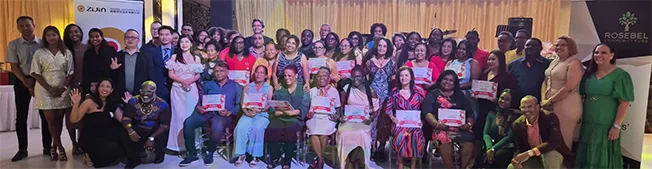
    In a significant holiday philanthropic initiative, the Rosebel Community Fund (RCF), established by Zijin Rosebel Gold Mines, has extended financial support to fifteen social institutions across multiple districts in Suriname. Each organization received a Christmas grant of US$2,500 during a ceremonial event held Thursday at the Ballroom Prince venue.

    RCF Chairman Soetjipto Verkuijl emphasized the fund’s commitment to recognizing organizations operating under challenging circumstances. “These groups perform essential work that deserves both recognition and support,” Verkuijl stated. “Providing encouragement during the holiday season represents our commitment to standing with those who serve our communities.”

    The annual Christmas Event, maintained since 2022, serves multiple purposes: acknowledging social institutions, appreciating their dedication, and offering participants a moment of respite from their demanding responsibilities.

    Beneficiary organizations span various social services, including children’s homes (Johanna, Elim van de Heer, and Sukh-Dhaam), the Mr. Huber Foundation, the National Foundation for the Blind and Visually Impaired, and institutions serving physically and mentally disabled individuals. Additional recipients include the Kennedy Foundation, Mytylschool, Lotjeshuis, Huize Tyltyl, and several girls’ hostels including Balingsoela, Siswa Tama, Wisma Karijawatie, and Soender Singh, along with the Elizabethshof Student House.

    The RCF primarily focuses on community development around the Brokopondo district gold mining operations. Verkuijl revealed that the fund has invested over US$2 million in socio-community projects throughout the past year, spanning healthcare, education, and small business development support.

    Among notable ongoing initiatives is the development of an educational complex with accompanying dormitory facilities, representing the fund’s commitment to sustainable improvement of educational infrastructure in the region.

  • Minister Pokie: Georganiseerd patroon misstanden rond Moni Karta

    Minister Pokie: Georganiseerd patroon misstanden rond Moni Karta

    Suriname’s Minister of Social Affairs and Housing Diana Pokie has revealed extensive and organized corruption within the Moni Karta program, the government’s flagship anti-poverty initiative. During a high-level government briefing, Pokie disclosed that both ministry officials and employees of the Surinamese Postal Savings Bank (SPSB) are implicated in what she described as a deeply rooted pattern of systematic misconduct.

    The minister confirmed that disciplinary measures, including terminations, have already been implemented at the banking institution following the detection of irregularities. While exact numbers of implicated individuals remain undisclosed pending official documentation from SPSB, Pokie emphasized the complexity of the scheme that cannot be resolved within months.

    Multiple investigations are currently underway, with several formal complaints already filed with authorities. In a significant operational shift, employees directly involved with matters under investigation will be placed on mandatory leave starting January 2nd, effectively suspending an entire department and potentially disrupting service continuity.

    Pokie asserted that all necessary evidence exists to prosecute offenders once investigations conclude. The coordinated response involves multiple government agencies working to address the corruption while preventing further harm to vulnerable citizens who depend on the financial assistance program.

    The minister stressed that restoring public trust in the welfare system remains the highest priority, with protection of legitimate beneficiaries guiding all subsequent actions. The government faces the dual challenge of rooting out corruption while maintaining essential services for Suriname’s most economically disadvantaged populations.

  • St. Kitts And Nevis Beach Volleyball Pairs Compete At Crucial NORCECA Circuit Stop In Juan Dolio – SKN PULSE

    St. Kitts And Nevis Beach Volleyball Pairs Compete At Crucial NORCECA Circuit Stop In Juan Dolio – SKN PULSE

    JUAN DOLIO, DOMINICAN REPUBLIC – The Federation of St. Kitts and Nevis is being represented by two formidable beach volleyball duos at the conclusive 2025 NORCECA Beach Volleyball Circuit event, hosted in Juan Dolio through December 14. This tournament marks the eleventh and final stop of the regional circuit, carrying substantial implications for international qualifications.

    On the women’s side, the pairing of Shanicia Dyer and Shajunae Gumbs confronts intense competition in Pool B, squaring off against teams from Venezuela and Puerto Rico. Despite the formidable opposition, the duo maintains an optimistic outlook and strategic determination to progress beyond the preliminary rounds.

    The men’s team featuring Zendai Richards and Julian Bristol has been placed in Pool A, where they will challenge squads from the host nation Dominican Republic, Belize, and Martinique. Demonstrating consistent improvement throughout the past half-year, the pair has established quarterfinal advancement as their minimum objective.

    This gathering features 14 women’s and 16 men’s teams representing nations across North America, Central America, and the Caribbean. The Juan Dolio stop distinguishes itself by awarding double points toward NORCECA continental rankings and contributing significantly to FIVB World Ranking calculations. Additionally, the tournament provides a vital qualification pathway for the 2026 Central American and Caribbean Games, scheduled to take place in Santo Domingo.

    Both St. Kitts and Nevis teams have expressed resolute commitment to advancing beyond pool play into the knockout stages, recognizing this event as a pivotal opportunity to elevate their international standing in beach volleyball.

  • An increase in respiratory viruses has been recorded in children in the National District

    An increase in respiratory viruses has been recorded in children in the National District

    Santo Domingo’s healthcare system is facing a significant public health challenge as multiple hospitals across the National District report a dramatic increase in patients suffering from respiratory and gastrointestinal viruses during November and December. Children have emerged as the most severely affected demographic in this concerning epidemiological situation.

    Medical authorities, including Dr. Mabel Jones, Director of the Children’s Hospital, have confirmed the active circulation of multiple pathogens in the environment. Laboratory testing has identified Respiratory Syncytial Virus (RSV), Influenza strains A and B, H1N1, and various gastrointestinal viruses as the primary culprits behind the current wave of infections.

    On-site observations by Listin Diario reporters at two major healthcare facilities revealed numerous patients, predominantly infants and young children, exhibiting characteristic symptoms including persistent cough, nasal congestion, high fever, fatigue, and general malaise. While the majority of cases involve children under five, adults presenting with influenza-like symptoms have also been documented.

    The Robert Reid Cabral Children’s Hospital has become a critical care epicenter, with concerned parents seeking urgent medical attention for their children. Hospital corridors and waiting areas have been filled with children ranging from three months to five years of age, requiring both routine check-ups and treatment for severe flu complications.

    Patient case studies highlight the severity of the situation. Karen de la Cruz traveled from Haina, San Cristóbal, seeking treatment for her son who has been battling unrelenting fever and severe coughing since early November. Similarly, Gloribel Santos reported her three-month-old daughter’s deteriorating condition with worsening cough and congestion symptoms that necessitated transfer to a Santo Domingo medical facility.

    In response to the crisis, health authorities have issued comprehensive prevention guidelines. Dr. Jones emphasized critical measures including keeping symptomatic children home from school, consistent mask usage by infected individuals, frequent hand washing, avoiding self-medication without pediatric consultation, and prioritizing vaccination to prevent further complications.

    The Dr. Luis Eduardo Aybar Health City reported additional cases, including a five-year-old girl requiring three medical visits over several weeks for persistent flu-like symptoms. Medical staff confirmed 37 cases of acute febrile upper respiratory illnesses in November alone at this facility.

    The Ministry of Public Health has activated 71 vaccination centers throughout Greater Santo Domingo and the National District to combat seasonal influenza. While health officials acknowledge that public response to vaccination efforts has not yet reached optimal levels, medical staff at the Santo Socorro Hospital vaccination tent report steady attendance across all age groups, including children with parents and senior citizens accessing vaccines for influenza and other viruses.

  • MoECST and BNTU Renew Partnership in Joint Statement

    MoECST and BNTU Renew Partnership in Joint Statement

    In a significant development for Belize’s educational landscape, the Ministry of Education, Culture, Science and Technology (MoECST) and the Belize National Teachers’ Union (BNTU) have solidified a renewed partnership. The collaboration was formalized through a joint statement signed on Thursday, December 4, marking a concerted effort to elevate the nation’s education system through enhanced teacher support and systemic improvements.

    The agreement establishes a comprehensive framework focusing on educator welfare, professional growth, and operational efficiencies. Central to the partnership is the Ministry’s commitment to protecting educators’ rights and well-being, coupled with a mutual emphasis on transparent procedures and authentic cooperation between administrative bodies and teaching professionals.

    Key initiatives outlined in the agreement include:
    – Advancement of Head of Department allowances and professional development criteria for teacher licensing
    – Simplification of the Teacher Transfer Grant approval mechanism
    – Establishment of a provisional cross-level licensing pathway
    – Integration of teacher welfare programs into the Education Sector Plan 2026–2030
    – Formalization of compensation for teachers covering extra credit hours
    – Development of a digital platform to address educator concerns
    – Guaranteed access to benefits and allowances for all qualified teachers
    – Exploration of Early Childhood Education Programs in collaboration with Walden University

    To ensure implementation accountability, both entities will conduct quarterly progress review sessions, with provisions for additional meetings as required, maintaining continuous dialogue toward achieving their shared objectives of serving students, educators, parents, and administrators while supporting national development.

  • UNESCO Adds Belize’s Krismos Bram and Sambai to Intangible Heritage List

    UNESCO Adds Belize’s Krismos Bram and Sambai to Intangible Heritage List

    The vibrant cultural traditions of Gales Point Manatee Village have received global recognition as UNESCO officially inscribed Belize’s “Krismos Bram and Sambai” celebration onto the Representative List of the Intangible Cultural Heritage of Humanity. The prestigious designation was conferred during UNESCO’s 20th session in New Delhi, India, with the announcement reaching Belize in the early hours of Tuesday morning.

    A distinguished Belizean delegation comprising representatives from the Institute for Social and Cultural Research, the National Kriol Council, and cultural ambassadors from Gales Point attended the international gathering to witness this milestone achievement. UNESCO’s evaluation highlighted how this centuries-old tradition remains “deeply rooted in African heritage” while fostering social cohesion and reinforcing cultural identity among community members.

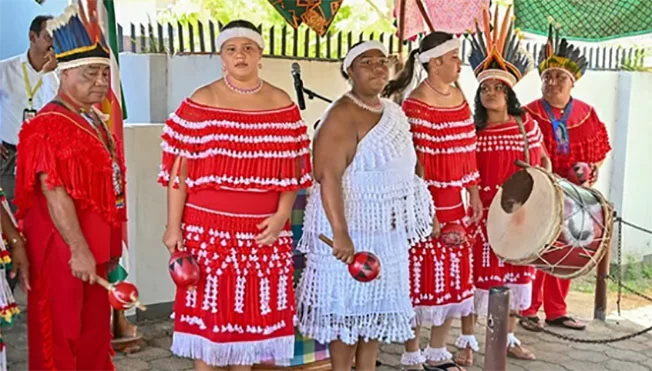
    The Krismos Bram and Sambai festivities represent a dynamic cultural performance featuring rhythmic house-to-house singing, energetic drumming, and traditional dancing. The distinctive sounds of gombay and sambai drums provide the musical foundation for celebrations that commence on Christmas Day and extend through Boxing Day. The Sambai dance, historically associated with agricultural rituals and courtship practices, unfolds around nighttime bonfires where performers blend traditional and contemporary songs reflecting community narratives.

    Cultural roles within the tradition follow established patterns: men typically assume responsibility for drumming and instrument craftsmanship, while women serve as guardians of musical compositions, dance techniques, and oral historical knowledge. This gender-based specialization has ensured the preservation of artistic elements that might otherwise face erosion through modernization and development pressures.

    This recognition marks Belize’s second inscription on UNESCO’s Intangible Cultural Heritage list, following the 2008 designation of Garifuna language, music, and culture. Belize further boasts the UNESCO World Heritage Site status of its Barrier Reef System, demonstrating the nation’s rich cultural and natural heritage portfolio.

    Rolando Cocom, Director of the Institute for Social and Cultural Research, emphasized that this international acknowledgment represents a significant advancement in supporting community-led preservation initiatives. The inscription underscores Belize’s ongoing commitment to safeguarding intangible heritage under the framework of UNESCO’s 2003 Convention.

    The Belizean delegation, led by Arreini Palacio-Morgan (UNESCO Secretary General for Belize), included cultural luminaries such as Master Drummer Emith Young and Master Dancer Sharlene Andrewin. Attendees at the session were treated to an immersive live demonstration of Krismos Bram and Sambai, offering international observers a glimpse into the tradition’s enduring vitality and cultural significance.

  • Belize Unemployment Falls to 1.9 Percent; 35% classified as ‘Informally Employed’

    Belize Unemployment Falls to 1.9 Percent; 35% classified as ‘Informally Employed’

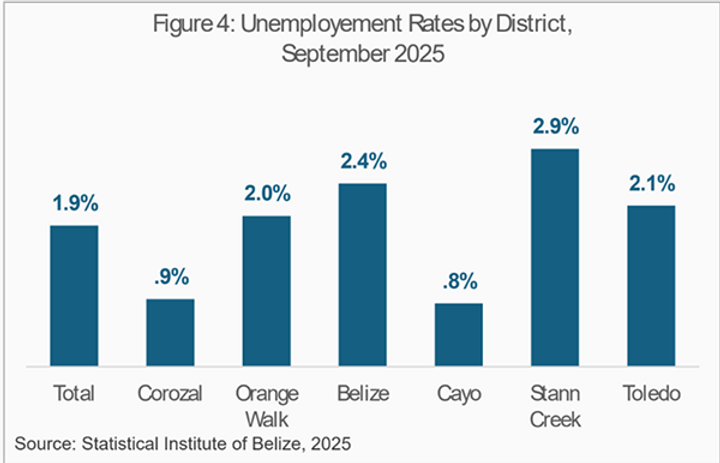
    Belize’s official unemployment rate plummeted to a historic low of 1.9% in September 2025, yet this superficially robust figure masks significant structural vulnerabilities within the nation’s labor market. According to preliminary data from the national Labour Force Survey, merely 3,421 individuals were classified as unemployed—a figure that dips below the standard economic threshold for ‘full employment,’ typically ranging from 3% to 5%. While this suggests near-total workforce absorption, economists caution that the headline number obscures deeper complexities.

    The survey reveals that from a total employed population of 178,442, a substantial proportion—64,129 workers or 35.9%—operate within the informal economy. These workers, largely concentrated in wholesale/retail trade and community/personal services, typically function without formal registration or social security protections. This prevalence of informal employment indicates widespread limitations in income security and job stability, despite their statistical classification as employed.

    Further complicating the picture is underemployment, which affects 2,465 persons or 1.4% of the workforce. Although statistically modest, these individuals work fewer than 35 hours weekly despite availability for additional work and earn significantly below the national average income. Their situation highlights a segment of the labor force that remains economically constrained despite being technically employed.

    Labor force participation rates, standing at 58.1%, also play a crucial role in interpreting the unemployment metric. With over 130,000 Belizeans outside the workforce due to household responsibilities, education, or other factors—and thus excluded from unemployment calculations—the reported rate fails to capture the full spectrum of labor market engagement. Significant gender disparities in participation further nuance this dynamic.

    Collectively, Belize’s labor market indicators paint a multifaceted economic portrait. The record-low unemployment rate, while historically notable, coexists with substantial informal employment, persistent underemployment, and moderate participation rates. These factors necessitate careful monitoring to accurately assess both the quantity and quality of employment opportunities in Belize’s evolving economy.

  • ‘Disappearing Workers’ Coming Back? Labour Force Edges Toward Pre-2024 Levels

    ‘Disappearing Workers’ Coming Back? Labour Force Edges Toward Pre-2024 Levels

    Recent Labor Force Survey data reveals a significant economic recovery underway in 2025, marking a substantial improvement from the dramatic contraction experienced the previous year. The latest figures demonstrate that workforce numbers are gradually returning to pre-decline levels, suggesting the 2024 reduction may have been transitional rather than permanent.

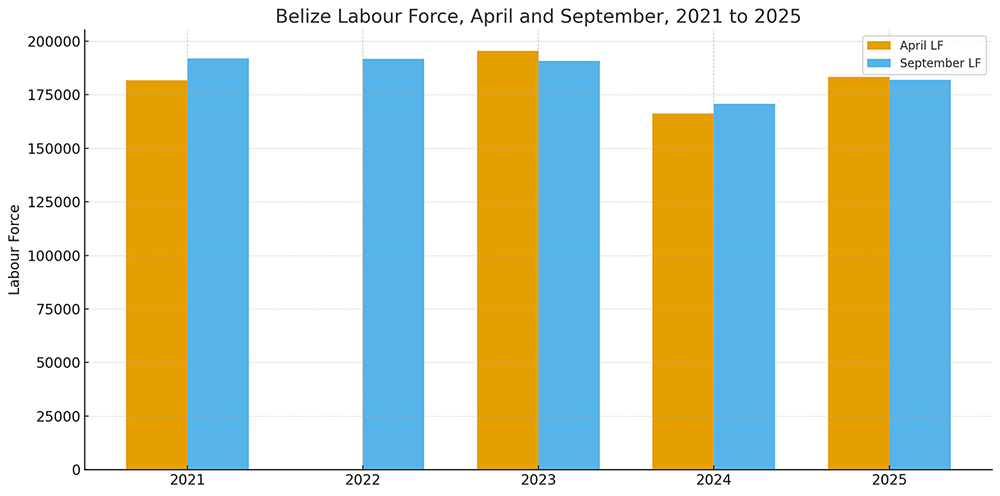
    In September 2024, the labor force experienced one of its most severe contractions on record, plummeting to 166,206 individuals after maintaining stable numbers between 190,000-195,000 for several preceding years. This sharp decline prompted serious concerns among economists and policymakers about fundamental structural changes in the labor market.

    The 2025 data, however, presents a markedly different picture. April’s figures climbed to 183,368 employed persons, followed by a September count of 181,863—both measurements representing significant improvements over 2024’s lows and moving closer to historical norms. This upward trajectory indicates that the factors driving last year’s decline may have been temporary disruptions rather than permanent alterations to workforce dynamics.

    Simultaneously, the unemployment rate has continued its positive trend, dropping to 1.9% in September 2025 with only 3,421 individuals classified as unemployed. This figure sits below September 2024’s 2.1% rate and remains consistent with economic conditions typically associated with full employment.

    The broader employment landscape reveals additional insights: approximately 64,129 workers (35.9% of all employed persons) operate within the informal economy, while underemployment affects 2,465 individuals who work fewer than 35 weekly hours but desire additional work opportunities.

    Beyond the active workforce, more than 130,000 persons remained outside the labor force in September 2025, primarily due to household responsibilities, educational commitments, or other circumstances preventing active job seeking. These demographic factors continue to influence both participation rates and unemployment measurements.

    While current labor force totals haven’t yet reached the peak levels observed between 2021-2023, the measurable recovery from 2024’s lows represents a positive development. Economists emphasize that continued monitoring will be essential to determine whether this upward movement signifies a sustained return to historical norms or reflects shorter-term adjustments in workforce participation patterns.