作者: admin

  • Josiah Hills, Christopher Khan progress to RBC Under-16 finals

    Josiah Hills, Christopher Khan progress to RBC Under-16 finals

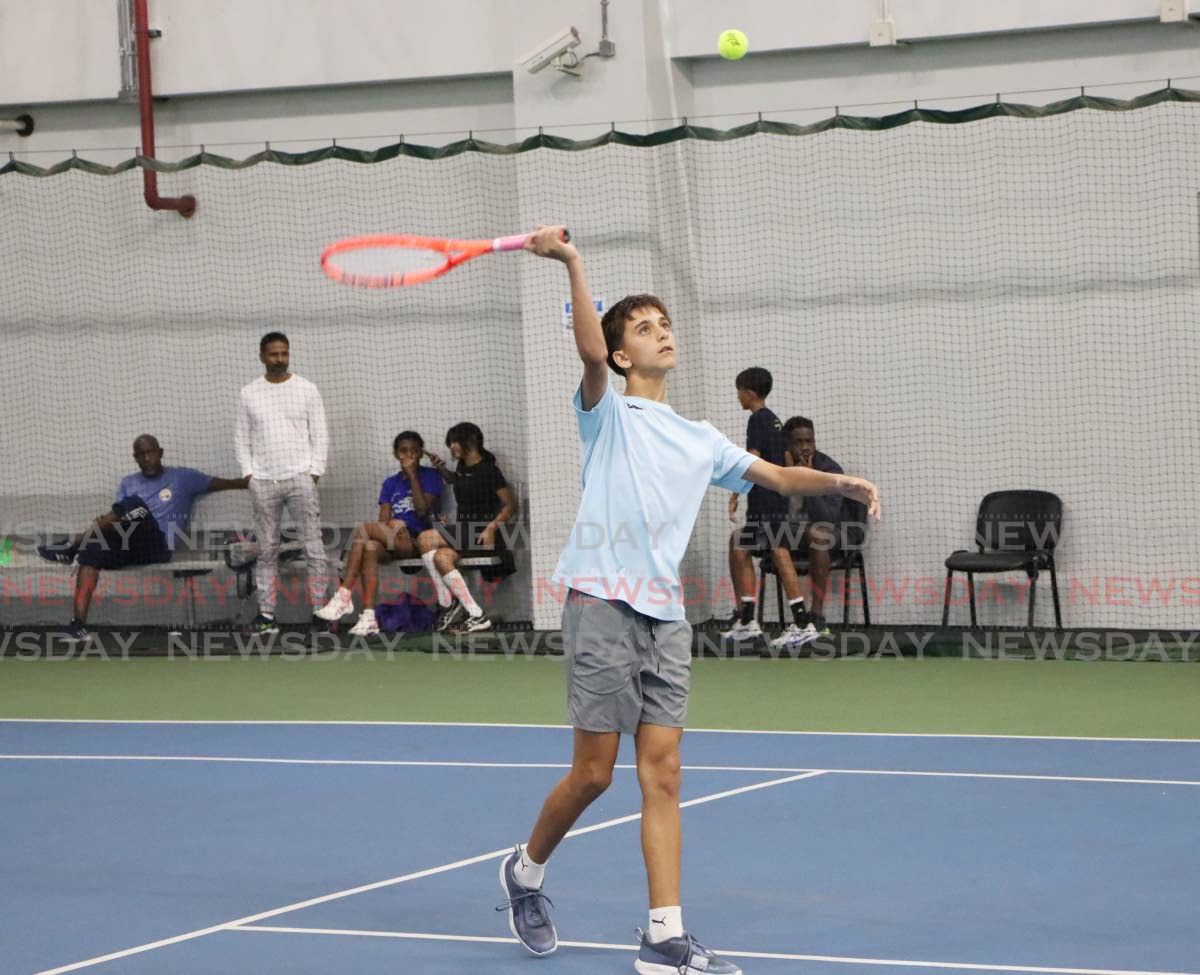
    The National Racquet Centre in Tacarigua witnessed exceptional junior tennis prowess on December 17th as the RBC Junior Tennis tournament semifinals unfolded with commanding performances from top-seeded athletes across multiple age divisions.

    In the boys’ 16-and-Under singles category, tournament favorite Josiah Hills delivered a masterclass performance, dismantling fifth-seeded Oliver Harragin with a flawless 6-0, 6-0 victory. The top-seeded player demonstrated why he holds the premier position in the draw with his dominant display. Meanwhile, second-seeded Christopher Khan faced stiffer competition from third-ranked Jovan Garibana, ultimately prevailing through determined play with scores of 6-4, 7-5 to secure his championship berth.

    The girls’ 16-and-Under division similarly saw top seeds advancing to the final round. First-seeded Makeda Bain navigated past fourth-ranked Karissa Mohammed in a match that culminated 6-0, 7-6, earning her place in the championship match. She will face second-seeded Cyra Ramcharan, who demonstrated her competitive edge with a decisive 6-1, 6-4 victory over third-ranked Suri Ramcharan.

    Younger competitors in the boys’ 12-and-Under category mirrored the pattern of seed dominance. Top-seeded Dylan Frost secured his advancement with a 4-2, 4-2 win against Daniel Ward, while second-seeded Ethan Primus overcame Zachary Anthony 4-0, 4-2. Third-seeded Austin Ward recorded a comprehensive 4-1, 4-0 triumph over Zayden Alexis, and fourth-seeded Nicholas McLetchie completed the semifinal victories with a 4-1, 4-1 performance against Malik Bain.

    The tournament continues through December 18th with championship matches determining the ultimate winners in each competitive category.

  • Building even closer China-LAC community

    Building even closer China-LAC community

    The Chinese government has formally released its latest Policy Paper on Latin America and the Caribbean, marking the third comprehensive strategic document outlining Beijing’s vision for enhanced cooperation with the region. Released on December 10, this policy framework builds upon previous achievements while charting an ambitious course for future collaboration between China and LAC nations.

    As fellow members of the Global South, China and LAC countries have cultivated increasingly robust ties despite geographical separation. The relationship has gained significant momentum since the formal establishment of the China-CELAC Forum in 2015, which provided an institutional foundation for structured cooperation. The relationship reached new heights during the Fourth Ministerial Meeting of the China-CELAC Forum held in Beijing this past May, where President Xi Jinping introduced five pivotal programs: Solidarity, Development, Civilization, Peace, and People-to-People Connectivity.

    The policy emphasizes mutual respect and equality as cornerstone principles. Both parties maintain independent foreign policies while demonstrating steadfast support for each other’s core interests and major concerns. This includes firm opposition to power politics and interference in internal affairs, with the vast majority of LAC countries adhering to the one-China principle. China has committed to advancing the Global Governance Initiative through enhanced dialogue among governments, political parties, and legislative bodies.

    Economic cooperation has yielded remarkable results, with bilateral trade reaching an unprecedented $518.4 billion in 2024 and Chinese foreign direct investment stock exceeding $600 billion. The Belt and Road Initiative has gained substantial traction, with over twenty regional nations including Trinidad and Tobago participating. Infrastructure development has flourished, with Chinese enterprises securing contracts worth more than $300 billion, including landmark projects such as Trinidad’s Phoenix Park Industrial Estate and Peru’s Chancay Port.

    The policy identifies numerous areas for expanded collaboration, including infrastructure, trade, finance, agriculture, food security, clean energy, artificial intelligence, and climate change mitigation. China also plans to strengthen ties with regional organizations including CELAC, Caricom, and ACS while enhancing cooperation in law enforcement, anti-corruption, cybersecurity, and transnational crime prevention.

    Cultural and people-to-people exchanges represent another vital dimension of the relationship. Confucius Institutes and classrooms have proliferated throughout the region, while cultural appreciation continues to grow bilaterally. China has provided 17,000 government scholarships and approximately 13,000 training opportunities for LAC nationals, with commitments to expand these programs significantly.

    The comprehensive policy framework demonstrates China’s commitment to building what it characterizes as “a shared future” with LAC nations, emphasizing mutual development, prosperity, and enhanced South-South cooperation. China positions this policy as a new beginning for practical cooperation aligned with development strategies such as Trinidad and Tobago’s Revitalization Blueprint, aiming to establish new benchmarks for international development partnership.

  • Christmas blues

    Christmas blues

    Trinidad and Tobago faces an unprecedented surge in economic hardship this holiday season, with charitable organizations reporting overwhelming demand for basic assistance. Multiple relief agencies including Is There Not A Cause (Itnac), Living Water Community, Salvation Army, Sewa International TT, TT Woman’s Forum, and the Coosal’s Group of Companies confirm alarming increases in requests for food, shelter, and financial support across the nation.

    Shelters have reached full capacity while emergency food supplies have been exhausted. Organizations note dramatic rises in unemployment-related crises, with many unable to meet rental payments despite seeking employment. The situation has become so severe that recently mobilized charities, including those providing hurricane relief to Jamaica, now find themselves stretched beyond their operational limits.

    Roman Catholic Archbishop Jason Gordon has issued an urgent appeal for public support, emphasizing that poverty levels have reached unprecedented severity. Speaking at a December 14 mass, Gordon urged those with means to sponsor meals for struggling families, noting that such gestures would provide critical relief during this difficult period.

    The current administration acknowledges inheriting these challenges from previous governments. While October budget measures introduced some support mechanisms including VAT removal on essential food items, period poverty initiatives, and utility assistance programs, these interventions appear insufficient against the scale of current need.

    Government Whip Barry Padarath revealed that ministers have begun personally contributing to provide food and beverages at ministerial Christmas events, setting an example the archbishop hopes the public will follow. The situation suggests that comprehensive reforms to social safety nets may be necessary, alongside enhanced support for civil society organizations with established community distribution networks.

  • US has becomea lawless bully

    US has becomea lawless bully

    The Trump administration is facing severe criticism for its foreign policy approach toward Venezuela while simultaneously grappling with domestic political challenges. A recent editorial letter questions the moral authority of the United States in international affairs, particularly regarding naval operations that critics have characterized as acts of piracy without substantial evidence of wrongdoing.

    The correspondence highlights a concerning shift in global perception, noting that the United States has transitioned from being regarded as a champion of legal order to being perceived as an unpredictable actor that other nations increasingly hesitate to trust. This erosion of international confidence comes amid growing domestic pressures for the administration.

    President Trump, who campaigned on explicit promises to immediately address inflation upon taking office, now confronts polling data and electoral results indicating significant potential losses in upcoming mid-term elections. Political analysts suggest these losses could include Democratic control of the House of Representatives and possibly the Senate, which would likely initiate investigations into numerous controversial actions by the administration.

    The editorial further suggests that the president may be attempting to redirect public attention from domestic controversies, including the ongoing Jeffrey Epstein scandal and worsening affordability crisis for American households. While some Republican legislators have demonstrated independence regarding the Epstein documents, questions remain about whether congressional Republicans would intervene to prevent potential military engagement with Venezuela—a conflict that critics fear might be pursued for political diversion and the expanded executive powers typically afforded during wartime.

  • Government leans in to bank ownership

    Government leans in to bank ownership

    In a significant move consolidating state influence over Trinidad and Tobago’s financial sector, Republic Financial Holdings Ltd has undergone a comprehensive board reconstitution effective December 15. The appointment of Yashmid Karamath as chairman this week finalizes the government’s pledge to assert stronger control over the nation’s most extensive banking network, casting doubt on prospects for banking liberalization.

    The leadership transition follows the retirement of former chairman Vincent Perreira, 70, who steered the institution through a period of remarkable financial growth despite customer service complaints. Under Perreira’s tenure from 2020 onward, post-tax profits demonstrated consistent growth: from $1.3 billion in 2021 to $2.2 billion in 2025, while total assets expanded from $109.2 billion to $127.1 billion. This financial performance occurred against the backdrop of pandemic-related economic challenges, though service quality concerns persisted among account holders.

    Karamath assumes leadership amidst broader board restructuring triggered by the untimely passing of director Mark Loquan and resignations of Waltnel Sosa and Shameer Mohammed. The newly configured board features several government-backed appointments including Timothy Affonso (public international law expert), Nalini Bansee (legal practitioner), Rhion Karim (security and counter-terrorism specialist), Patricia Mohammed (gender scholar with economics training), Sandra Sookram (economist), and Gregory Armorer (civil attorney). This directorate is mandated to serve a three-year term.

    This governance shift aligns with Finance Minister Davendranath Tancoo’s October budget commitment to install a majority director bloc at Republic Bank, echoing similar changes at First Citizens and EximBank. The administration has explicitly stated intentions to collaborate with these financial institutions and the National Insurance Board to fulfill public sector obligations.

    Ownership structure analysis reveals substantial government-linked entities hold dominant stakes: National Investment Fund (29.9%), National Insurance Board (18.8%), Trintrust Ltd (7%), and other state-connected holders. This ownership framework, originating from the 2008 Clico bailout, now appears permanently institutionalized under the current administration.

    While the new board establishes nominal government oversight with purported operational independence, industry observers express concern regarding this trend’s implications for privatization and competitive banking. The critical question remains whether heightened state involvement will ultimately benefit consumers who continue grappling with service deficiencies, elevated fees, unfavorable interest rates, and foreign exchange scarcity.

  • Procurement expert says profession must be people-centred, value-driven

    Procurement expert says profession must be people-centred, value-driven

    Veteran procurement leader John Dickson has issued a compelling call for the profession’s fundamental transformation, challenging deep-seated industry conventions during his keynote address at the Chartered Institute of Procurement and Supply’s Caribbean Conference and Awards 2025.

    Addressing regional supply chain leaders at Port of Spain’s Hyatt Regency on December 10, Dickson argued that procurement stands at a critical inflection point, requiring a decisive move beyond its traditional cost-cutting obsession. He proposed a radical repositioning of the function as a strategic driver of organizational value, resilience, and long-term competitive advantage.

    Dickson employed a powerful iceberg analogy to illustrate how most organizations perceive procurement: “The one-ninth that businesses see typically concerns cost reduction and cash generation,” he noted, emphasizing that “what drives this function runs much deeper than surface-level financial metrics.”

    Drawing upon four decades of industry experience, Dickson traced procurement’s evolutionary trajectory from 1990s cost control through 2000s process efficiency reforms to the digital transformation era of the 2010s. The current phase, he asserted, represents “true intelligent integration” fueled by artificial intelligence, automation, and machine learning technologies.

    However, Dickson delivered a crucial caveat against technological determinism: “Procurement needs to align intelligence with purpose. Technology alone cannot deliver meaningful change. The critical question becomes how digital tools mold into organizational direction and strategy.”

    This technological integration directly connects to procurement’s strategic relevance. Dickson challenged professionals to examine whether their function remains deeply embedded within business ecosystems or merely influences spending patterns: “When discussing the broader business agenda, that’s where procurement sometimes underperforms,” he observed, referencing conversations with executives who question why procurement rarely features at board-level discussions.

    The address gained particular resonance within the Caribbean context, where regional vulnerabilities including hurricane exposure, fuel price volatility, and global trade disruptions dominated earlier conference panels. Dickson emphasized that these realities demand procurement’s evolution from reactive problem-solving to predictive scenario planning, even when not all risks can be anticipated.

    He illustrated this imperative with a compelling case study from AstraZeneca’s COVID-19 vaccine development, which achieved in eight months what typically requires six years. This breakthrough succeeded because “suppliers didn’t engage in usual trading off or negotiation—we lacked the time. The concept of shared purpose proved critical for ecosystem collaboration.”

    This experience fundamentally shaped Dickson’s perspectives on sustainability, which he reframed not as competitive advantage but as potential disadvantage when ignored: “I perceive sustainability as competitive disadvantage when organizations fail to engage collectively, particularly in industries relying on shared supplier bases.”

    While addressing growing cybersecurity concerns and resilience-building through supplier risk assessment, Dickson firmly rejected notions of human obsolescence: “Human-centric talent isn’t disappearing—it’s transforming. Leaders should remain curious and learn from younger, digitally-fluent colleagues rather than pretending to master every emerging technology.”

    Returning to his central thesis, Dickson concluded that people remain the foundation of procurement performance: “Cultivate the soil. Care for your people. Know your people.” For a profession historically defined by savings targets, he asserted that future success hinges on deeper integration, shared purpose, and translating intelligence into consequential decisions—particularly in disruption-prone regions where theoretical concepts must yield practical resilience.

  • 5 land on-the-job training at Angostura in the new year

    5 land on-the-job training at Angostura in the new year

    In a significant workforce development initiative, five electrical program graduates have been selected for a two-month professional placement at Angostura Holdings beginning January. The selection follows the completion of an intensive nine-week training program called ‘Wired for Success,’ funded by the renowned beverage company and administered in partnership with the NESC Technical Institute (NESC-TI).

    The specialized curriculum focused on residential electrical installation with commercial applications, attracting approximately 600 applicants within days of its September 30 announcement. From this pool, thirty participants from diverse national communities were chosen to undergo the rigorous training regimen.

    During a December 17 graduation ceremony at Angostura House in Laventille, successful participants received NESC-TI certifications aligned with Caribbean Vocational Qualification standards. The event was attended by key figures including Hansen Narinesingh, Parliamentary Secretary in the Ministry of Tertiary Education and Skills Training, Angostura Holdings Chairman Gary Hunt, NESC-TI President Kern Dass, and Acting Angostura CEO Ian Forbes.

    Gary Hunt emphasized the program’s practical objectives: ‘Our aim is to provide real-world, job-ready skills that open doors. Through programmes like Wired for Success, participants have not only built technical capability but have also developed responsibility, confidence, and the professional readiness needed to succeed in a growing field.’

    The comprehensive training covered critical areas including lock-out/tag-out safety procedures, electrical laws and circuit analysis, code compliance, conduit bending and installation, and the operation of electrical testing instruments. Participants additionally gained exposure to commercial electrical applications, including foundational knowledge of splitter units used in multi-unit buildings—providing them with competitive advantages in the job market.

    Kern Dass highlighted the successful industry-education partnership: ‘Wired for Success demonstrates the impactful results achievable through collaboration between industry and NESC-TI. We take pride in partnering with Angostura to deliver relevant training that equips participants with practical, employment-ready skills.’

    The two-month on-the-job training component will enable the five selected graduates to apply their newly acquired expertise within Angostura’s operational environment, representing both a workforce transition opportunity and an investment in developing the next generation of electrical professionals.

  • Trinidad and Tobago’s Aadian Racha named in World Cup Under-19 squad

    Trinidad and Tobago’s Aadian Racha named in World Cup Under-19 squad

    Cricket West Indies (CWI) has officially announced its 15-member Rising Stars Men’s Under-19 squad for the upcoming 2026 ICC Men’s Under-19 Cricket World Cup, scheduled to take place across Namibia and Zimbabwe from January 15 to February 6.

    The selection reflects a meticulous talent identification process that prioritized performances during regional competitions and international preparatory series. The squad notably includes players who excelled in two recent seven-match Youth ODI series victories—a 5-2 triumph over England in Grenada and a closely fought 4-3 win against Sri Lanka last August and September.

    Top-order batsman Joshua Dorne has been appointed captain, cementing his leadership status following an exceptional year across both regional and youth international circuits. All-rounder Jonathan van Lange will serve as vice-captain. The squad boasts significant experience with several members, including Dorne and wicketkeeper-batsman Jewel Andrew, having represented the region at the 2024 edition. Andrew, who made history as the youngest player to represent the senior West Indies team in T20Is earlier this year, also holds the same record for ODIs which he claimed in October 2024.

    Trinidad and Tobago’s representation is limited to bowling all-rounder Aadian Racha in the main squad, with batting all-rounder Brendan Boodoo named among four traveling reserves.

    CWI’s high-performance manager Dwain Gill emphasized the strategic approach behind team selection: “This squad is the product of a deliberate and well-structured preparation and selection process. Performances in regional Under-17 and Under-19 competitions were closely monitored, with an emphasis on identifying players with specialist skills and the adaptability required for international cricket.”

    The team will benefit from the experience of Zachary Carter, Matthew Miller, Jakeem Pollard, Shaquan Belle and Vitel Lawes, all of whom played pivotal roles during the successful home series against Sri Lanka and England. Micah McKenzie brings additional experience having made his List A debut for the West Indies Academy against Sri Lanka’s Emerging Men’s team in June before earning his maiden cap for Leeward Islands Hurricanes in the 2025 CG United Super 50 Cup.

    Drawn in Group D alongside South Africa, Afghanistan, and Tanzania, the West Indies will play all group stage matches at the High-Performance Oval in Windhoek, Namibia. Preparatory warm-up matches against Ireland and Japan are scheduled for January 10 and 13 respectively in Windhoek.

    The tournament structure will see the top three teams from each group advance to the Super Six phase, followed by semifinals on February 3-4, culminating in the championship final on February 6 at Harare Sports Club in Zimbabwe.

  • Indy Premier stay perfect in ‘Jewels’ tourney

    Indy Premier stay perfect in ‘Jewels’ tourney

    Indy Premier SC from the United States continues their commanding performance at the DecembHER Football – Jewels of the Caribbean tournament, delivering an emphatic 8-0 victory against Trinidad and Tobago’s Secondary Schools Football League (SSFL) Future Stars XI in under-17 girls’ competition on December 17. The match, held at Sangre Grande recreation ground, showcased Indy’s offensive prowess as they established a 4-0 lead by the 39th minute before adding four additional goals in the second half.

    Attacking midfielder Ashlyn Bazile spearheaded the offensive onslaught with a impressive hat-trick, while substitute Kori Brown and attacker Olivia Jones contributed two goals each. Winger Zoey Montgomery initiated the scoring spree with an eighth-minute goal, despite having previously recorded three offside goals against Trinidad and Tobago’s national under-17 team during their 4-0 opening victory on December 15 at Hasely Crawford Stadium.

    In the under-20 division, Indy Premier secured a 2-0 win against Trinidad and Tobago’s national under-20 team on December 16 in Couva. Goals from Tori Brewer and captain Cadence Conrad secured the victory, though the match revealed competitive elements despite the scoreline. Under the guidance of newly appointed national women’s team coach Damian Briggs, Trinidad and Tobago’s under-20 squad demonstrated promising attacking potential through forwards Tyesha Griffith, Sonia Lamarre, Mariah Williams, and last year’s golden boot winner Orielle Martin.

    The hosts created numerous scoring opportunities throughout the match, with Williams volleying over the bar within the first minute of play. However, defensive strategies involving build-up play from the back proved costly when goalkeeper Sadiel Antoine’s errant pass led to Brewer’s opening goal in the 22nd minute. Conrad extended the lead with a spectacular 30-yard looping shot in the 54th minute that sailed over Antoine’s reach.

    Despite maintaining a clean sheet, Indy’s goalkeepers Teagan Leihgeber and substitute Gwyneth Provost were tested multiple times, making crucial saves against Martin, Steele, and Archer in the second half. The tournament continues with Indy Premier’s under-20 team facing Jamaica on December 18 at Hasely Crawford Stadium, while Trinidad and Tobago’s under-20 squad seeks their first victory against TT Women’s League Football United XI simultaneously.

  • Cops seize $10m in bootleg liquor, cigarettes from Suriname

    Cops seize $10m in bootleg liquor, cigarettes from Suriname

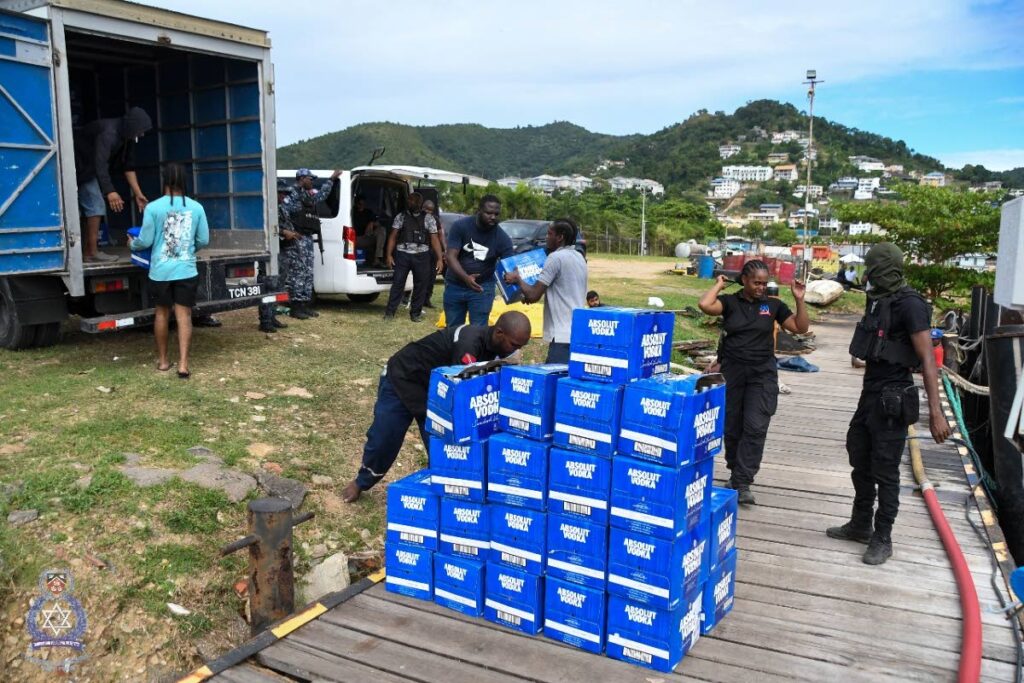
    In a significant crackdown on illicit trade, Trinidad and Tobago police have intercepted a massive shipment of contraband goods valued at over $10 million during a coordinated operation at Carenage port. The December 16th evening operation resulted in the apprehension of 16 individuals attempting to flee the scene while offloading smuggled luxury alcohol and tobacco products from Suriname.

    According to the TT Police Service (TTPS), officers from the Port of Spain Division Investigation and Operations Unit monitored a vessel docking at Shore Pier 3 around 8:15 PM. As law enforcement approached, the suspects abandoned their cargo and attempted to escape but were subsequently detained. The subsequent search revealed approximately 1,000 cases of premium vodka, 200 cases of Johnnie Walker whiskey, 200 cases of Hennessy cognac, and 1,000 cases of ATLANTA cigarettes.

    The operation, supported by multiple specialized units including the Canine Division, also led to the seizure of four transport vehicles connected to the smuggling operation. Industry experts estimate the alcohol component alone at $5.4 million, with the tobacco products valued at approximately $4.8 million.

    In related enforcement actions, tax authorities simultaneously targeted gaming establishments with substantial outstanding tax liabilities. Six businesses were served with gaming tax notices totaling $4.55 million in unpaid taxes, resulting in immediate shutdown orders for their gaming machines until compliance is achieved. A subsequent operation at a Members Club on Ariapita Avenue uncovered an additional $2.2 million in tax arrears, leading to one arrest for illegal gaming operations and the seizure of evidentiary materials and cash totaling $69,511.

    Satesh Moonasar, President of the Bar Owners Association, commended the police actions against contraband alcohol, noting that illegal imports have undermined legitimate businesses for decades. He emphasized that association members maintain strict accounting procedures for all alcohol inventory through customs stock books, making involvement in smuggling operations both risky and contrary to their business interests.

    While supporting tax enforcement efforts, Moonasar called for consistent application across all establishments to avoid perceptions of selective enforcement or victimization within the industry.