作者: admin

  • Venezuela says US $300-million oil sale used to prop up currency

    Venezuela says US $300-million oil sale used to prop up currency

    CARACAS, Venezuela—In a significant financial development, Venezuela’s interim leader Delcy Rodriguez confirmed on Tuesday the receipt of $300 million from a United States-managed sale of Venezuelan crude oil. The funds, originating from a larger $500 million transaction authorized by Washington, have been earmarked for a critical intervention in the nation’s foreign exchange market to bolster the severely weakened bolivar.

    Rodriguez announced the capital injection is specifically designated to ‘stabilize the exchange market and safeguard the income and purchasing power of Venezuelan workers.’ This move directly addresses the profound currency crisis that has gripped the nation since 2018, when hyperinflation rendered the bolivar virtually obsolete and the U.S. dollar emerged as the de facto currency for transactions.

    The release of funds follows what the U.S. government termed a ‘historic energy deal’ brokered by President Donald Trump over the weekend. President Trump stated that the oil would be sold at market price and explicitly noted that the proceeds would be ‘controlled by me, as President of the United States of America,’ underscoring Washington’s ongoing oversight of Venezuelan assets.

    Economic analysts from the firm Ecoanalitica suggest the government’s objective is to methodically narrow the substantial disparity between the official exchange rate and the prevalent black market rate for the U.S. dollar. A severe scarcity of greenbacks, a direct consequence of a six-year American embargo on Venezuelan oil, has caused the dollar’s value to skyrocket within the country.

    This development marks a shift in the complex economic standoff. Prior to the U.S. capture of former leader Nicolas Maduro in a January raid on Caracas, Venezuela was compelled to offer its crude at significant discounts, primarily to China, to circumvent the stringent embargo. Washington intensified its enforcement of these sanctions in December by seizing tankers carrying the sanctioned oil, further constricting Caracas’s revenue streams.

  • 24 derelict JUTC buses razed

    24 derelict JUTC buses razed

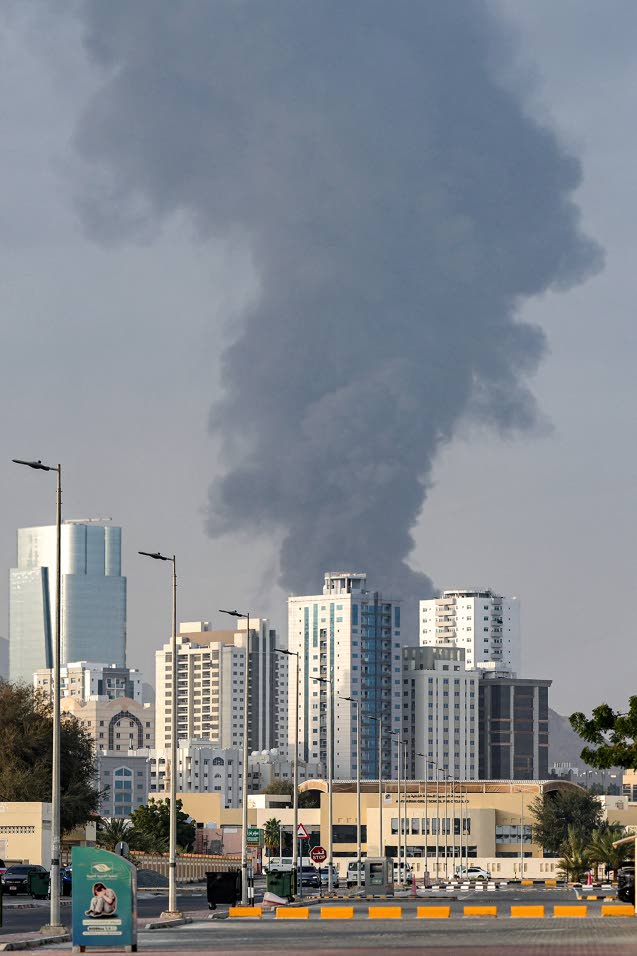
    KINGSTON, Jamaica—A significant fire erupted at the Jamaica Urban Transit Company’s (JUTC) Rockfort maintenance depot in East Kingston on Tuesday afternoon, resulting in the complete destruction of two dozen decommissioned buses. The incident, which began shortly after 3:00 pm, prompted an immediate emergency response from multiple units of the Jamaica Fire Brigade.

    Emergency crews from the Rollington Town, York Park, and Trench Town fire stations deployed four fire engines to combat the rapidly spreading flames. By approximately 4:00 pm, firefighters had successfully contained the majority of the blaze and initiated cooling operations to prevent reignition. Preliminary investigations are underway to determine the exact cause of the fire, though officials confirmed the destroyed buses had been out of service for over 15 years.

    Notably, the incident resulted in no injuries to personnel or damage to operational infrastructure. JUTC representatives initially declined immediate commentary but subsequently released an official statement confirming that the depot’s critical operations remained unaffected. The company emphasized that its active vehicle fleet, storage facilities, and essential operational equipment remained entirely untouched by the fire.

    The destruction of these aging vehicles represents a symbolic loss for Jamaica’s public transportation system, though without immediate impact on current transit services. The incident highlights ongoing challenges faced by public transport authorities in managing aging infrastructure and equipment disposal procedures.

  • Traffic flow changes expected as work ramps up on Naggo Head to Braeton road project

    Traffic flow changes expected as work ramps up on Naggo Head to Braeton road project

    KINGSTON, Jamaica—Significant traffic modifications are imminent as Jamaica’s National Works Agency (NWA) accelerates its ambitious Naggo Head to Braeton roadway enhancement initiative in St Catherine. This critical infrastructure development, valued at approximately $2 billion, forms an integral component of the Government’s Capital Expenditure (CAPEX) programme aimed at urban transportation modernization.

    Stephen Shaw, Manager of Communications and Customer Relations at NWA, recently confirmed the project’s progression in discussions with JIS News. Construction activities are being substantially intensified along the three-kilometer corridor stretching from Naggo Head to the junction of Braeton and Hellshire Road, ultimately connecting to Greater Portmore. The NWA pledges to issue timely advisories to Portmore residents and commuters regarding impending traffic flow alterations, enabling necessary adjustments to travel schedules and routes.

    Upon completion, the transformed corridor will feature a modern four-lane configuration with raised medians, synchronized traffic signaling systems, and comprehensive safety enhancements including adequate sidewalks. The project incorporates sophisticated drainage solutions and water line installations alongside dedicated ducts for fiber-optic cables, aligning with Jamaica’s National Broadband Initiative for digital infrastructure expansion.

    The CAPEX programme represents a strategic infrastructure investment framework designed to stimulate short to medium-term economic growth through targeted urban transportation improvements. Six major projects currently fall under this initiative: Grange Lane widening (St Catherine); Braeton Road and Hellshire main road dualisation (St Catherine); Arthur Wint Drive widening (St Andrew); East Kings House Road and Lady Musgrave Road widening (St Andrew); Sandy Gully Bridge enhancement along Washington Boulevard (Kingston); and improved access to Portmore via Mandela Highway and Municipal Boulevard (St Catherine).

    Concurrently, the NWA anticipates concluding the Southern Coastal Highway Improvement Project by March end, initiating a two-year defects liability period wherein contractors will address any construction-related issues. This multibillion-dollar infrastructure development spans St Andrew, St Thomas, and Portland parishes, incorporating comprehensive flood mitigation measures, roadway expansions, and safety feature installations.

  • Russian minister visits Cuba as Trump ramps up pressure on Havana

    Russian minister visits Cuba as Trump ramps up pressure on Havana

    HAVANA, Cuba—In a significant demonstration of geopolitical solidarity, Russia’s Interior Minister Vladimir Kolokoltsev commenced an official visit to Cuba on Tuesday. This high-profile engagement occurs against the backdrop of heightened tensions following recent warnings from the Trump administration regarding Cuba’s communist leadership.

    The visit underscores the deepening alliance between Moscow and Havana, both nations currently operating under Western sanctions. Since Russia’s 2022 invasion of Ukraine, the two countries have substantially intensified their bilateral relations, with an isolated Moscow actively seeking new international partnerships and Cuba desperately requiring economic support during its most severe economic crisis in decades.

    Minister Kolokoltsev utilized his platform to deliver strong condemnation of recent US military actions in Venezuela, characterizing the January 3 bombing raid that resulted in dozens of casualties as “an act of unprovoked armed aggression.” He emphasized that such developments “prove the need to increase vigilance and consolidate all efforts to counter external factors.”

    The Russian embassy in Havana confirmed the minister’s agenda includes multiple bilateral meetings focused on enhancing cooperation between the two nations. Russian Ambassador Victor Koronelli specifically noted the visit aims to “strengthen bilateral cooperation and the fight against crime.”

    Concurrently, US diplomatic personnel in Cuba engaged in their own strategic discussions. Mike Hammer, the US chief of mission in Cuba, met with the head of US Southern Command in Miami to address the evolving situation in Cuba and the broader Caribbean region. The Southern Command oversees American military operations throughout Central and South America, including recent seizures of Venezuelan oil tankers and strikes against alleged drug-trafficking vessels.

    The geopolitical significance of Kolokoltsev’s visit was further emphasized through his participation in a memorial service honoring 32 Cuban soldiers killed during the US operations in Venezuela. These soldiers, some reportedly assigned to President Maduro’s security detail, perished in the attacks that ultimately led to the Venezuelan leader’s capture and extradition to face trial in New York.

    This developing partnership revives Cold War-era alliances between Moscow and Havana, relationships that had dramatically declined following the 1991 dissolution of the Soviet bloc. The current realignment occurs as the Trump administration increases pressure on Cuba to sever ties with US adversaries including Russia, China, and Iran, while simultaneously demanding greater access to Venezuela’s substantial oil reserves.

  • ‘Shots started to ring out’: Politician gives chilling account of triple fatal police shooting

    ‘Shots started to ring out’: Politician gives chilling account of triple fatal police shooting

    A high-ranking political figure provided gripping testimony on Tuesday, detailing his eyewitness account of a deadly police operation that resulted in three fatalities thirteen years ago on Arcadia Drive in St. Andrew, Jamaica. The witness, who observed the incident from his apartment window, is a key figure in the murder trial of six law enforcement officers: Sergeant Simroy Mott, Corporal Donovan Fullerton, and Constables Andrew Smith, Sheldon Richards, Orandy Rose, and Richard Lynch.

    The defendants, all present in court with a seven-member jury, listened as the politician described the events of January 12, 2013, under prosecution questioning. From his master bedroom window, he had an unobstructed view of the midday shooting that claimed the lives of Matthew Lee, Mark Allen, and Ucliffe Dyer.

    The witness described a scene involving three vehicles: a Mitsubishi Outlander, a police pickup truck carrying five officers, and a ‘Kingfish’ police vehicle arriving later with two additional officers. Before the Kingfish’s arrival, he observed one man in a white shirt seated on the ground under police guard, another man of Indian descent near the Outlander’s front seat, and a third individual in a red shirt in the backseat, with three armed officers positioned around the vehicle, all carrying what appeared to be M16 rifles.

    The testimony revealed disturbing details: the man in the white shirt was initially seated on the ground with weapons pointed at him before hearing explosions and finding himself lying on the ground. The man of Indian descent seemed to be presenting vehicle documents to an officer when the situation escalated. The man in the red shirt exited the vehicle with raised hands, was shouted at by police, and began running—prompting immediate gunfire.

    ‘Immediately, as he put up his hands and came out of the car, and he was shouted at and he started to run. The shots started to ring out,’ the witness recalled, describing how the man fled into a yard across from the apartment complex.

    The arrival of the Kingfish vehicle brought two additional officers, one in a beige shirt with a police vest who emerged with a handgun. According to the witness, this officer ran toward the scene, shot in the direction of the man on the ground, and then moved to the front passenger seat of the Outlander. The witness stated the man in white appeared already dead when shot.

    Meanwhile, the other two officers moved toward the yard while the officer in beige pulled the Indian man from the car. Within seconds, the witness testified, this man appeared ‘lifeless’ on the ground as continuous gunfire erupted from multiple directions.

    The politician further testified that he watched the five officers collect three bodies from different locations and load them into the pickup truck, which then departed with both the bodies and the officers. The entire incident, from his arrival at the window to the removal of the bodies, lasted approximately five minutes.

    The trial faced tense moments when defense attorney High Wildman, representing Fullerton, objected to prosecution questions regarding the witness’s post-incident discussions and documentation of events, citing rules against self-corroboration. The objections grew so heated that Presiding Judge Justice Sonia Bertram Linton temporarily exited the courtroom before returning to dismiss the court for lunch.

    Background information reveals the three victims were returning from the Constant Spring Police Station where Dyer, on bail for community crimes, was fulfilling reporting requirements. Lee, who wasn’t from the area but shared a mutual friend with Dyer, had provided transportation.

    The officers were arrested and charged in August 2019—six years after the killings—following a ruling by the Office of the Director of Public Prosecutions. Fullerton faces additional charges for making a false statement to the Independent Commission of Investigations (INDECOM), whose probe was completed in 2017 but delayed by court actions.

    The trial continues on Thursday with further testimony expected from the witness.

  • Sections of communities in Westmoreland now have light

    Sections of communities in Westmoreland now have light

    A significant infrastructure milestone has been achieved in Westmoreland Parish with the successful energization of dedicated power lines servicing the National Water Commission’s (NWC) Roaring River Pump. This critical development has reinstated electrical service to numerous households across the Petersfield, Waterworks, and Shrewsbury Falls districts, marking a pivotal step in ongoing recovery efforts.

    The complex engineering endeavor, finalized last week following rigorous system validation tests, involved the comprehensive reconstruction of an extensive electrical corridor. Crews from the Jamaica Public Service Company (JPS) meticulously rebuilt over ten miles of transmission infrastructure, stretching from the central power source at the Paradise substation directly to the NWC’s vital pumping facility. The monumental scale of the project demanded the dedicated expertise of more than 100 linemen working tirelessly to ensure its timely completion.

    This achievement represents a dual victory, restoring not only power to residents but also securing the operational capacity of a crucial piece of water management infrastructure. The Jamaica Public Service Company has confirmed that its teams remain actively deployed throughout the parish, continuing their dedicated work to rebuild and strengthen the local electricity network to reach remaining affected customers in surrounding communities.

  • Green lauds farmers for rapid recovery of agricultural crops

    Green lauds farmers for rapid recovery of agricultural crops

    KINGSTON, Jamaica—Jamaica’s agricultural landscape demonstrates extraordinary resilience as Minister of Agriculture, Fisheries and Mining Floyd Green reveals a surprising surplus of vegetable crops merely three months after Hurricane Melissa’s devastating passage. The category-five hurricane had previously decimated some of the nation’s most productive farming regions, yet current production data indicates not just recovery but excess availability across multiple crop varieties.

    During a January 20 press briefing at the ministry’s Hope Gardens headquarters, Minister Green highlighted the impressive agricultural rebound, particularly noting substantial overproduction in yellow squash, cucumbers, cauliflower, lettuce, pak choi, zucchini, carrots, and string beans. This surplus phenomenon extends even to parishes that suffered severe hurricane damage, including St Elizabeth, St Ann, Westmoreland, Manchester, Clarendon, and St Thomas.

    The minister provided crucial context for the unexpected surplus, explaining that demand fluctuations within the hospitality sector have created market imbalances. “We’re observing slow movement in yellow squash, cauliflower, zucchini, and romaine lettuce primarily because these crops cater to our hotel and hospitality industry, which continues its own recovery journey post-Melissa,” Green stated.

    Compounding the situation, operational challenges within the supply chain have emerged, particularly regarding cold storage limitations exacerbated by electrical infrastructure damage. Minister Green noted the particular difficulties large-scale providers face in maintaining refrigeration capabilities without reliable grid power.

    In positive developments for consumers, market prices for numerous agricultural products have shown significant stabilization following initial post-hurricane spikes. Price reductions ranging from 14 to 77 percent have been recorded across various produce items. Watermelon prices dropped 63 percent from $880 to $330 per kilogram, while Scotch bonnet peppers—previously subject to consumer complaints—decreased by 20 percent. Additional reductions include pumpkin (33 percent), sweet pepper (20 percent), and carrot (40 percent).

    Minister Green emphasized the need for careful market management during this recovery phase, ensuring farmer profitability maintains pace with supply availability to enable continued reinvestment. The ministry remains committed to its initially projected six-month recovery timeline, with ongoing monitoring of strategic interventions to ensure agricultural sector stability.

  • Jamaica’s Under-17 Reggae Girlz get Group D World Cup draw

    Jamaica’s Under-17 Reggae Girlz get Group D World Cup draw

    KINGSTON, Jamaica—Jamaica’s Under-17 women’s national football team, known as the Reggae Girlz, discovered their path to the 2026 FIFA U-17 Women’s World Cup after the CONCACAF qualifying draw placed them in Group D. They will compete against Honduras, Guyana, Aruba, and St. Vincent and the Grenadines in the initial group stage.

    The qualifying tournament structure features twenty-eight teams divided across six groups for the first round. The top finisher from each group, plus the two most successful second-place teams, will progress to the final qualification round. They will be joined by four pre-seeded, top-ranked nations—Canada, Mexico, Puerto Rico, and the United States—who received automatic byes into the final stage.

    First-round matches are scheduled to occur between January 24 and February 2. The subsequent and decisive final round is set for March, where four teams will ultimately secure their berths for the 2026 World Cup in Morocco.

    This comes as FIFA has transitioned the U-17 World Cup to an annual event. In the previous tournament held in 2025, the CONCACAF region was represented by Canada, Costa Rica, Mexico, and the United States, with Mexico earning the bronze medal.

    Jamaica’s quest for World Cup qualification begins on January 25th with an opening match against Guyana. Their group stage campaign continues with fixtures against Aruba on January 27th, St. Vincent and the Grenadines on January 29th, 2026, and concludes with a pivotal match against Honduras on February 2nd.

  • US Supreme Court to hear Trump bid to fire Fed governor

    US Supreme Court to hear Trump bid to fire Fed governor

    WASHINGTON, United States – The US Supreme Court is poised to deliberate a consequential case this Wednesday regarding former President Donald Trump’s attempt to remove Federal Reserve Governor Lisa Cook from her position. This legal battle represents a critical test for the operational autonomy of the nation’s central bank against executive branch influence.

    In August, Trump initiated proceedings to dismiss Cook, a prominent member of the Fed’s interest rate-setting committee, based on allegations of mortgage fraud—claims which she has consistently denied. The conservative-majority court previously issued an injunction preventing Cook’s immediate removal, permitting her to continue in her role pending judicial review.

    The significance of this case is underscored by Fed Chair Jerome Powell’s planned attendance at the hearing, demonstrating institutional support for Cook. This development occurs alongside heightened pressure from the Trump administration targeting the central bank, including the initiation of a criminal investigation into Powell himself concerning renovations at the Fed’s headquarters. Powell has characterized this probe as a politically driven effort to sway monetary policy decisions.

    Cook’s potential removal—and the investigation into Powell—signals an unprecedented escalation in Trump’s campaign to exert influence over the Federal Reserve. The former president has frequently criticized the institution for resisting his calls for more aggressive interest rate cuts. A successful dismissal of Cook could allow Trump to appoint a successor more aligned with his economic agenda, potentially altering the balance of power within the board.

    Legal experts note that the case’s outcome may redefine the boundaries of presidential authority regarding independent federal agencies. Federal statute specifies that Fed officials may only be removed for “cause,” typically interpreted as misconduct or neglect of duty—a standard Cook maintains has not been met.

    The Court’s decision carries profound implications for central bank independence globally, with former Fed chairs warning that political interference could yield severe economic consequences, including inflationary pressures and market instability. This case follows a pattern of Supreme Court rulings favoring expansive presidential powers during Trump’s tenure, though the Court previously acknowledged the Fed’s unique protected status in a prior decision.

    Cook, the first Black woman to serve on the Fed’s board of governors, has stated that the allegations reference activities predating her appointment and that no formal charges have been filed. The criminal referral originated from a Trump-appointed official at the Federal Housing Finance Agency, citing discrepancies in mortgage documentation.

  • No joking matter

    No joking matter

    Seventeen years after the Manning administration initiated a massive bailout of the collapsing CL Financial empire, Trinidad and Tobago’s government has officially abandoned its pursuit of accountability through civil litigation. Attorney General John Jeremie, SC, presented the long-withheld Sir Anthony Colman Commission of Enquiry report to Parliament on January 16, revealing the state’s decision to cease funding further legal actions against the financial giant.

    The controversial bailout has cost taxpayers approximately $28 billion, with an additional $3-4 billion expended on legal fees throughout prolonged court battles. AG Jeremie emphasized the government’s commitment to a “cost-effective” approach, withdrawing from pending civil cases including a Central Bank lawsuit against CL Financial that was scheduled for hearing on January 19.

    The Attorney General simultaneously expressed skepticism regarding potential criminal prosecutions, noting this falls under the jurisdiction of the Director of Public Prosecutions. He bluntly characterized the investigation as “a joke,” citing inadequate policing resources and forensic accounting capabilities necessary to prosecute complex financial cases of this magnitude.

    The Rowley administration had previously withheld the Colman report due to concerns about defaming key individuals and compromising potential criminal proceedings. This challenge is not unique to Trinidad and Tobago—internationally, most similar cases are resolved through civil settlements due to the extreme difficulty of proving criminal intent in complex financial operations.

    While high-profile exceptions like the Enron (2001) and Bernie Madoff (2008) cases in the United States resulted in criminal convictions, most financial scandals typically end with SEC fines and civil penalties. The Colman report has exposed systemic failures within Trinidad and Tobago’s financial regulatory framework, with lessons extending beyond CL Financial/Clico to include the collapse of the Hindu Credit Union.

    Moving forward, experts recommend enhanced forensic training not only for police but also for accountants, lawyers, and various government agencies to better protect citizens’ life savings entrusted to financial institutions.