作者: admin

  • Groovy & Power Soca Semifinals lineup announced

    Groovy & Power Soca Semifinals lineup announced

    Last weekend, 80 emerging and established soca artists took the stage in Saint Lucia, competing for one of the coveted semifinal spots in the annual National Soca Monarch competition. Split evenly between the Groovy Soca and Power Soca categories, the 40 Groovy and 40 Power contenders performed for a panel of expert judges, each vying to advance in one of the most anticipated events on the Lucian Carnival calendar.

    For decades, the National Soca Monarch competition has been a cornerstone of Saint Lucia’s annual cultural celebration, drawing thousands of local and regional soca fans each year who closely track every round of the contest from preliminary performances all the way to the final showdown. After a weekend of high-energy performances that showcased the breadth of talent in the Caribbean soca scene, event organizers confirmed the quarterfinals delivered one of the most competitive lineups in recent memory.

    When the judges’ final scores were tallied, exactly half of the competing contestants earned their place in the upcoming semifinal round: 20 artists in the Groovy Soca Monarch division and 20 artists in the Power Soca Monarch division will move forward to compete for a spot in the grand finals. The semifinal showdown for both categories is scheduled to take place on June 26, 2026, giving advancing artists time to refine their performances and connect with fans ahead of the next round.

    The confirmed Groovy Soca Monarch semifinalists, alongside their competing tracks, are: Arthur Allain with *Work on Pause*, Carlton CR Roberts with *Hostage*, Danielle Du Bois with *Dancing in the Rain*, Deevon with *Momentum*, Ezra D’funmachine with *Mr Complimentary*, J’urgen with *The Other Man*, Kardo with *Finger*, Keytina with *Let Me Go*, Kisha Kay with *Done*, Mica with *Step Out*, Mighty Taker with *Where We Chipping*, MNR with *Party Count*, Nireti with *Third Party*, QPid with *Backup Plan*, Ricky T with *Not Kissing As*, Sedale with *Insane*, Shemmy J with *Everything*, Siah with *Cho*, Sly with *Captain*, and Twahzzy with *Stop It Stacy*.

    For the Power Soca Monarch division, the advancing semifinalists and their entries are: Bronx, Dhirv 2 Funny & Matta with *Mad People*, Budzilla with *Bwelay*, Carlton CR Roberts with *X-Man*, Da Great with *House Party*, Ezra D’funmachine with *Salute*, Imran Nerdy with *Today I Off*, J’urgen & Lolani with *Can’t Let You Go*, Kisha Kay with *Hot Already*, Mantius with *Fully Charged*, Mica with *Loud*, MNR with *Last Time*, Orion with *Not Going Home*, QPid with *De Fete Mad*, Ricky T with *True Colours*, Sedale, Hollywood HP & Deevon with *Bring Your Cooler*, Shemmy J with *Even If She Cryin’*, Siah with *No Brain*, Sir Lancealot with *Jusso*, Sly with *Rage (Dewange)*, and Tension with *Actimo*.

    As fans begin rallying behind their favorite artists, the countdown to the 2026 semifinal round is already underway, with expectations growing for another unforgettable showcase of Caribbean musical talent ahead of the year’s Lucian Carnival celebrations.

  • One dead, another injured in Codrington Road collision

    One dead, another injured in Codrington Road collision

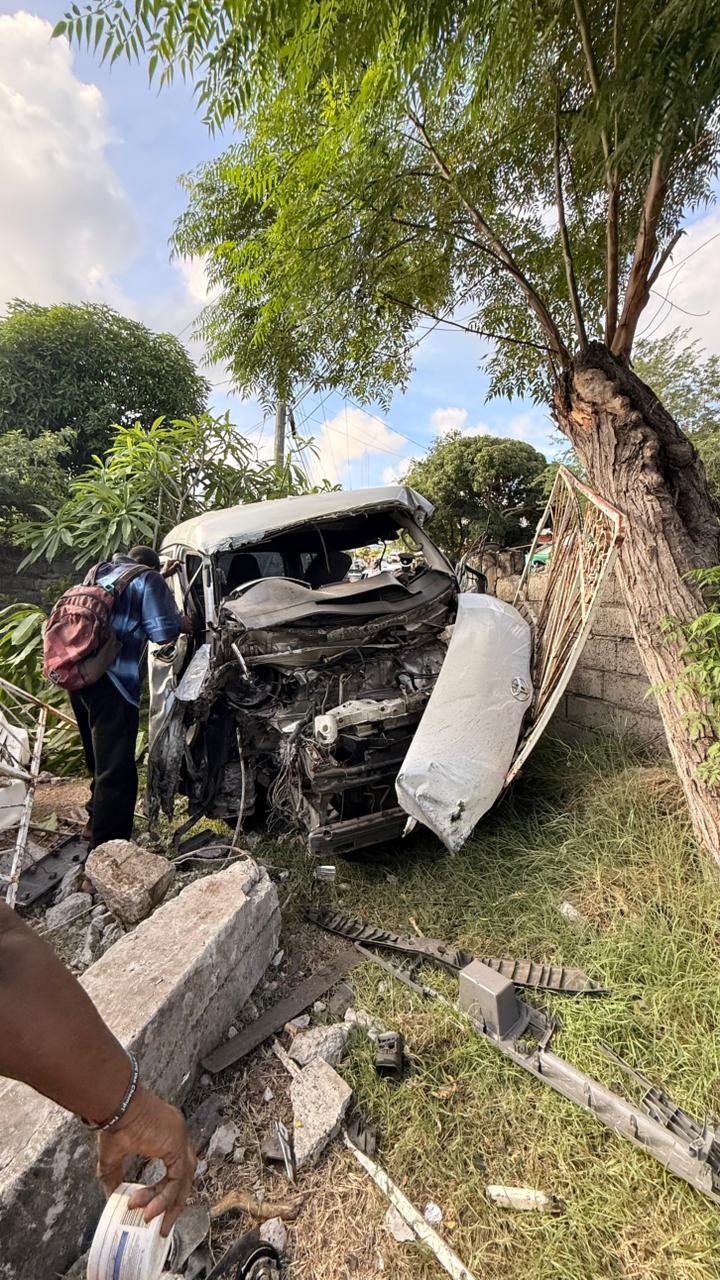
    A devastating late-night traffic collision on Codrington Road in the St. Michael district has left one person dead and a second with minor physical harm, local law enforcement confirmed Tuesday. The deadly two-vehicle crash unfolded at approximately 11:15 p.m. on Monday, according to official reports from the police department. First responders and emergency medical teams rushed to the accident site immediately after receiving distress calls, but their efforts to revive the driver of the first vehicle were in vain. Medics officially pronounced the male driver dead at the scene after detecting no vital signs. By contrast, the operator of the second involved vehicle escaped with only mild injuries and was quickly taken to receive urgent outpatient medical care. In the wake of the incident, investigating authorities have launched a public appeal for community assistance to piece together the full sequence of events. Any individual who was present in the area at the time of the collision, observed the crash unfold, or holds any piece of information that could advance the official inquiry is asked to reach out to investigators at District ‘A’ Police Station. Tips and statements can be submitted directly via two dedicated contact numbers: 430-7242 or 430-7246. As of Tuesday morning, police have not released additional details such as the identities of the involved drivers, the potential causes of the collision, or whether environmental factors like poor weather or road conditions contributed to the fatal outcome.

  • Mental health and the suicide crisis

    Mental health and the suicide crisis

    Against the backdrop of Men’s Mental Health Awareness Month, a devastating tragedy has unfolded in the small Caribbean nation of Grenada: three local men died by suicide within a single seven-day window. Unlike accidental deaths or deaths from chronic illnesses that communities spend decades mobilizing to fight, these deaths came after each man reached a breaking point, where the emotional and psychological weight they carried became too much to bear, and they made a final, irreversible choice to end their suffering.

    This painful event comes at a time when global conversations around mental health have never been more common — yet this very familiarity has ironically drained much of the urgency from the issue, particularly across Grenada and the broader Caribbean. Here, a sharp gap persists between mainstream discourse about mental wellness and the on-the-ground reality for people struggling with their psychological well-being.

    Many in the region still misframe mental health as an abstract, niche branch of medicine, disconnected from daily life. In truth, mental health shapes every moment of human experience: it colors our everyday moods, anchors our sense of safety, and quietly signals whether we are thriving or falling apart. It is the invisible canvas on which every life is painted, moment by moment, day by day. Precisely because it operates out of sight, it is rarely valued until it is lost beyond recovery. For far too many men across Grenada, this breaking point arrives far sooner than anyone expects.

    For generations, cultural norms across much of the world — and particularly in Grenada — have socialized boys from childhood to embody a rigid version of strength: do not cry, do not show weakness, provide for your family, protect others, and never lose composure. Under these unwritten rules, emotion is framed as a liability, and vulnerability is seen as proof of weakness. From a young age, boys learn to bury their unhappiness, their fear, and their exhaustion deep beneath a confident, unshakable public facade. Over time, that mask becomes the person the world knows — and eventually, the person even the man himself believes he is.

    By the time a man realizes he is drowning in psychological distress, he has spent decades performing unbroken composure. He has no language to name his pain, has never given himself permission to admit he needs help, and often has no idea where to turn for support. Even if he can bring himself to consider therapy, questions pile up rapidly: Where would I find a provider? Can I afford this? What will my friends and family say if I seek help? Isn’t this kind of care for women and children, not men? These doubts pile up, folding the growing crisis into a cycle of unspoken, unaddressed despair that festers until it reaches a catastrophic breaking point. Three deaths in one week is what that catastrophic outcome looks like.

    Global data underscores the scope of this crisis. The World Health Organization estimates that one person dies by suicide every 40 seconds worldwide, with men dying by suicide at nearly double the rate of women. In Grenada, the roots of this disparity grow from two overlapping failures: a deep-seated cultural norm that teaches men they need no help, and a grossly under-resourced support system that offers almost no help when men finally work up the courage to ask.

    Currently, Grenada has no dedicated national suicide prevention hotline. Public concern about suicide rarely lasts longer than the 24-hour news cycle. Trained mental health therapists are expensive, scarce, and notoriously difficult to book an appointment with. Psychiatric services are concentrated in limited central locations, overstretched, and surrounded by deep social stigma. Whether a man is just beginning to struggle or has already recognized his need for support, he hits the same insurmountable wall: systemic barriers to care, and a cultural script that tells him seeking help is shameful.

    This is not a failure of individual men. It is a failure of the systems designed to serve communities, and a failure of Grenadian society as a whole. It is a shared failure that touches every person who makes up the nation of Grenada.

    That said, systems are built by people, which means they can be changed by people. There are small signs of progress: recently, Grenada Broadcasting Network announced that the national government plans to launch a long-awaited national suicide hotline by the end of June. This is a welcome step in the right direction, one that deserves public recognition. But a policy announcement is not a working lifeline. The three men who lost their lives this week could not wait for the launch date. A promise only becomes a lifeline when it is a working phone number, staffed by trained, compassionate providers ready to answer calls. Until that promise is fulfilled, the gap in care remains — and three suicides in one week is a brutal reminder of how urgent that gap is.

    Beyond systemic change, there are small, critical actions every person can take right now. When was the last time you asked the men in your life how they are really doing? Not the passing, reflexive question we exchange as we walk past each other, not the polite exchange that ends with a automatic “fine, thanks” before we move on. When was the last time you sat down with your brother, your father, your friend, and asked them honestly, earnestly, how they are actually holding up? And when they give the expected answer “I’m okay,” when do you push past that politely and let them know it is safe to say otherwise? It is safe to be vulnerable, it is safe to need help.

    Suicidal despair is not strength. It has never been strength. We need our men here, alive and present with us, so we can work through struggles together. Death may feel like the only escape from unending pain, but a better future is possible — a future where men can access the help they need long before they reach an irreversible breaking point. We can no longer afford to keep burying our men in a silence that we have the power to break.

  • BWU vows to defend workers amid layoffs

    BWU vows to defend workers amid layoffs

    One of Barbados’ most established construction firms is moving forward with planned staff cuts that have put it at odds with the country’s main labor organization, even as the national construction sector sees widespread growth. 66-year-old C.O. Williams Construction Ltd., which grew from a small one-tractor earthmoving business launched by founder Charles Williams in 1960 into a leading player in the island’s civil engineering and infrastructure space, notified all employees of impending redundancies in an internal June 5 memo, with cuts set to begin as early as June 12, 2026.

    In the official notice, the firm cited mounting pressures that have eroded its ability to maintain its current headcount. General manager Marc Atwell wrote that long-running operational challenges have sharply reduced the company’s competitiveness, forcing leadership to restructure and downsize the workforce to align with current needs. The memo followed all required notification protocols under company policy and Barbadian national labor law, and Atwell directed employees with questions to reach out to the company’s human resources department for further clarity. Neither Atwell nor other company leaders have responded to additional requests for comment since the memo became public.

    While Atwell did not disclose the exact number of workers facing job loss, the Barbados Workers’ Union (BWU), the exclusive bargaining agent for the company’s employees, says approximately 30 positions are set to be cut. The union has already entered into preliminary discussions with company leadership over the cuts, but has rejected framing the downsizing as a routine administrative step and is demanding concrete evidence to justify the layoffs.

    BWU officials emphasized that every affected worker supports a household with financial and personal obligations that cannot be reduced to line items on a corporate budget. The union’s top priority, it says, is protecting the dignity, legal rights, and earned entitlements of any workers impacted by the cuts, and ensuring no employee faces unfair treatment during the selection process. Company leaders have told the union that the planned layoffs stem from broader industry pressures, including lost contracts and ongoing headwinds across Barbados’ construction sector. But union leaders have pushed back against shifting the entire burden of these challenges onto workers, who did not create the market conditions the firm is facing.

    The BWU has demanded that C.O. Williams open meaningful consultation with the union, share verifiable evidence justifying the need for cuts, commit to a fair and objective process for selecting which roles will be eliminated, and guarantee that all legally required and contractually agreed severance and benefits are paid in full to displaced workers. The organization also used the dispute to highlight a broader national priority: building a Barbadian construction sector that prioritizes skilled labor, worker experience, and decent working conditions.

    The union’s stance is firm: it opposes unnecessary job cuts and will continue to uphold the principle that workers should never be treated as disposable when businesses face economic pressure. The planned layoffs come at a time when Barbados is experiencing a nationwide construction boom, a context that makes the company’s justification for downsizing all the more questionable to union leadership.

  • Grenada champions small island priorities at 8th GEF Assembly

    Grenada champions small island priorities at 8th GEF Assembly

    From May 30 to June 6, 2026, the historic city of Samarkand, Uzbekistan played host to the 8th Assembly and Associated Meetings of the Global Environment Facility (GEF), drawing official delegations from all 186 of the institution’s member nations. Among the participating countries was the Caribbean small island nation of Grenada, which used the high-profile global gathering to center the unique needs and priorities of Small Island Developing States (SIDS) as the GEF opens its ninth four-year funding cycle.

    As the GEF’s top decision-making and governing body, the Assembly only convenes once every four years. This year’s meeting marked the official launch of the GEF-9 funding cycle, which will run from 2026 through 2030, and established the framework for the body’s new integrated Nature–Climate–Pollution agenda that will shape all global environmental financing activities for the next four years.

    Grenada’s three-person delegation to the Assembly included High Commissioner to the United Kingdom Rachér Croney, GEF Operational Focal Point Nicole Clarke-Gurley, and alternate Operational Focal Point Isabel Morris. Over the course of the week-long meetings, the delegation carried out a broad range of diplomatic and policy engagement: it delivered Grenada’s official national statement to the plenary, took part in high-level panel discussions including a focused session on the function of National Steering Committees, and joined delegations from Nigeria and Trinidad and Tobago for the official side event titled “Leaving No Country Behind”. On the sidelines of the main Assembly sessions, the delegation also held working meetings with representatives from the GEF Independent Evaluation Office and the body’s partner implementing agencies.

    A core focus of Grenada’s engagement throughout the Assembly was elevating the longstanding priority issues of SIDS, which are disproportionately vulnerable to climate change and environmental degradation despite contributing minimally to global emissions. The delegation pushed for major reforms to make global environmental finance more accessible, calling for simpler application processes and faster disbursement of funds to meet SIDS’ urgent needs. It also advocated for stronger global recognition of SIDS as equal co-designers of environmental projects, rather than passive recipients of funding, and called for consistent, long-term investment in building local institutional and operational capacity to sustain environmental outcomes.

    The Grenadian delegation welcomed the GEF-9 cycle’s commitment to a Whole-of-Society Approach, which includes expanding direct access to financing for Indigenous Peoples, local community groups, women-led organizations, and youth initiatives. It also reaffirmed Grenada’s full commitment to meeting the 30 x 30 biodiversity target laid out in the Kunming-Montreal Global Biodiversity Framework, which commits signatory nations to protecting 30 percent of global land and water areas by 2030.

    “Grenada came to Samarkand to ensure our voice is heard at the table upstream, where global priorities are set and funding decisions are shaped,” Clarke-Gurley said in remarks following the delegation’s participation. “Our focus for GEF-9 is delivering innovation and high, practical impact that the ordinary Grenadian can actually feel in their daily lives, backed by robust local capacity to sustain results long after a project wraps up.”

    Back home, Grenada has already taken concrete steps to translate the outcomes of the Samarkand Assembly into national action. The government has established a dedicated National Steering Committee to oversee GEF-9 project identification and build a more balanced national environmental project portfolio. By early July, the committee will issue a public call for project proposals to relevant government ministries, covering priority areas including climate change adaptation and mitigation, ocean conservation and the blue economy, water resource management, and waste reduction. All submitted proposals will be required to align with Grenada’s National Sustainable Development Plan 2035 and the country’s medium-term national action plan.

    Once the country’s STAR allocation — the GEF’s system for allocating funding to member states — is formally confirmed in July, Grenada will deepen its collaboration with implementing agencies, prioritizing projects that incorporate innovation, digitalization, on-the-ground capacity building, and stronger national oversight of project delivery. These coordinated planning steps reflect Grenada’s clear commitment to turning the global commitments agreed in Samarkand into tangible, long-lasting benefits for all Grenadian citizens, according to the Office of the Prime Minister.

  • COMMENTARY: Pan in Harmony deserves a standing ovation – Kudos to Jacqui Andre and team

    COMMENTARY: Pan in Harmony deserves a standing ovation – Kudos to Jacqui Andre and team

    On the evening of Saturday, June 6, 2026, St. Gerard’s Hall played host to one of the most memorable steel pan performances in recent Dominica history, as three young ensembles took the stage for the annual “Icons on Steel” charity concert held to raise funds for the Dominica Cancer Society. The audience, made up largely of older residents alongside a smaller group of young attendees, was treated to an evening of varied, high-energy musicianship from the Convent High School Steel Pan Group, and both the junior and senior rosters of Pan in Harmony.

    The thoughtfully structured performance was split into two acts and four segments, bookended by the senior Pan in Harmony band. The Convent High School group closed the first half of the show, while the junior Pan in Harmony ensemble opened the second half after a short intermission. The evening kicked off with an opening presentation from students of Convent Prep, and drew a distinguished guest in Her Excellency President Sylvanie Burton, who attended alongside her husband. After formal opening proceedings including the playing of the national anthem, an opening prayer, and remarks from Pan in Harmony manager Jacqueline Andre, master of ceremonies Charlan Commodore guided the evening’s flow without a single hitch.

    The senior and junior Pan in Harmony bands rolled out a diverse repertoire that opened with the beloved hymn *How Great Thou Art*, before moving through iconic popular tracks including Bob Marley’s *Redemption Song*, John Legend’s *All of Me*, Elvis Presley’s *Can’t Help Falling in Love*, and hits from Bill Withers, Nasio Fontaine, and Jimmy Cliff. The show was originally scheduled to close with a medley of works from Lord Kitchener, but enthusiastic audience calls for an encore of Mighty Gabby’s *Doctor Cassandra* – which had already had the crowd tapping along in their seats – led the performers to bring the track back for a second round.

    While all three performing groups delivered stunning sets, the night was stolen by the all-female Convent High School Steel Pan Group, whose outstanding performance was made even more remarkable by the fact that this was their first public appearance, and the ensemble had only been together for seven months. The students flawlessly performed complex works including Johann Strauss II’s *The Blue Danube Waltz*, Paul Simon’s *The Sound of Silence*, and Hoagy Carmichael’s *Heart and Soul*, with a level of professionalism that more than earned a standing ovation – a honor every ensemble on the night deserved. Though most of the audience remained seated to show their appreciation, the reviewer joined front-row attendee Athie Martin in dancing along to the closing encore, capping off what will go down as one of the finest steel pan events the island nation has seen in recent years.

    That said, the extraordinary success of the grassroots event also laid bare long-running challenges facing the performing arts sector in Dominica, long-time cultural sector advocate Severin McKenzie – an architect and chair of the Alwin Bully Foundation Inc. with more than five decades of arts involvement – notes in his review. Notably absent from the audience were elected politicians from all parties, state cultural agencies, and almost all major local media outlets, with only Dominica News Online in attendance. Many other key stakeholders who hold influence over the growth and development of the performing arts were also missing from the crowd.

    Despite St. Gerard’s Hall management offering the venue for the event at no cost, the facility’s conditions are far worse than they were in the 1970s, when the People’s Action Theatre staged regular productions there. It is unacceptable, McKenzie argues, that young local performers in 2026 are forced to work in substandard conditions, while the Arawak House of Culture remains shuttered and underdeveloped after suffering damage during Hurricane Maria.

    McKenzie says the Dominica Festival Commission (DFC) and Discover Dominica Authority cannot ignore the quality of work put on display at *Icons on Steel*, and is calling for Pan in Harmony to be granted a prime-time performance slot at the 2026 World Creole Music Festival, rather than being sidelined to a low-profile fringe event. The DFC holds a responsibility not just to book global stars for the annual festival, but to nurture and elevate emerging local talent, McKenzie notes. Thirty minutes of the high-quality steel pan performance showcased on June 6 would be a electrifying addition to any WCMF lineup, he argues, giving audiences a memorable local interlude between international headliners.

    The standout performance from the Convent High School Steel Pan Group also offers a clear blueprint for education authorities looking to introduce steel pan education into national school curriculums, McKenzie adds. His observation that most local media declined to cover the event points to a broader trend in Dominica: performing arts events rarely receive public attention unless they center an expensive international artist that gets extensive promotional backing. While non-Bouyon genres including steel pan, poetry, and theater have long been sidelined with little public or institutional support, the extraordinary talent on display at *Icons on Steel* offers a spark of hope for the future of local cultural expression. For that reason, McKenzie says, Jacqueline Andre and the entire Pan in Harmony team deserve widespread public recognition and ongoing support for their outstanding work nurturing the next generation of Dominican musicians.

  • Minister Kiz Johnson Calls for Greater Respect and Inclusion of Seniors During Centenarians Week

    Minister Kiz Johnson Calls for Greater Respect and Inclusion of Seniors During Centenarians Week

    As Antigua and Barbuda prepares to observe its annual Centenarians Week in 2026, the country’s top official for social and urban policy has issued a heartfelt call for all residents to lift up and celebrate the nation’s centenarians, framing these 100-year-old citizens as irreplaceable national treasures defined by wisdom, hard-won resilience and decades of lived experience.

    In her official address marking the launch of Centenarians Week 2026, Minister of Social and Urban Transformation Kiz Johnson emphasized that the annual observance serves a dual purpose: beyond celebrating the remarkable milestone of living a century, it also offers a moment to recognize the vast network of people that support centenarians across the country. This includes family members, full-time and informal caregivers, frontline healthcare workers, and local community organizations that dedicate time and resources to older citizens, Johnson noted.

    Johnson pointed to the outsized, often uncelebrated contributions centenarians have made to the growth and development of Antigua and Barbuda’s local communities and the nation as a whole. From building local economies through decades of work to raising the next generation of leaders and prioritizing collective community well-being, these elders made intentional sacrifices that laid the foundational framework modern Antigua and Barbuda is built on, Johnson explained. “Through their work, sacrifice, family, leadership, and commitment to community life, they have helped lay the foundation upon which subsequent generations continue to build,” she said in her address.

    The minister went on to reaffirm her ministry’s ongoing commitment to building neighborhoods and communities across the country that are inclusive, physically accessible, and actively supportive of all older residents. Too often, older citizens are pushed to the margins of public life, Johnson said, reinforcing the need for ongoing work to create spaces where older people can stay connected to their communities, remain socially engaged, and feel the respect and appreciation they deserve as core members of Antiguan and Barbudan society. “We must continue to foster environments where seniors remain connected, engaged, respected, and valued members of our society,” she stated.

    A key priority highlighted in Johnson’s message is expanding opportunities for intergenerational connection between young people and the nation’s centenarians. Young people growing up in a time of rapid social, economic and technological change stand to gain invaluable perspective from those who have navigated 100 years of global and local transformation, Johnson explained. She added that the cumulative wisdom of the country’s oldest citizens remains one of Antigua and Barbuda’s most underrecognized, yet most valuable, national resources.

    Closing her address, Johnson extended formal congratulations to all centenarians across Antigua and Barbuda, as well as their loved ones, and offered her wishes for a warm, joyful, and meaningful 2026 Centenarians Week celebration.

  • GIZ, Camper & Nicholsons and TAMCC collaborate

    GIZ, Camper & Nicholsons and TAMCC collaborate

    On May 29, 2026, hundreds of learners across Grenada’s education spectrum – from primary and secondary school pupils to T.A. Marryshow Community College (TAMCC) students – gathered at Camper & Nicholsons Port Louis Marina for the inaugural *Explore the Blue – Marine Pathways Event*, an innovative outreach effort designed to open young people’s eyes to the potential of the island nation’s fast-expanding blue economy. The collaborative event was coordinated by Camper & Nicholsons Port Louis Marina, the Grenada Tourism Authority and the Grenada Yacht Club, with core funding and support from the Green & Blue Skills Project, an initiative run by Germany’s Deutsche Gesellschaft für Internationale Zusammenarbeit (GIZ) GmbH, commissioned by the German Federal Ministry for Economic Cooperation and Development, and delivered in partnership with the Caribbean Community (Caricom).

    One of the event’s most anticipated highlights was a series of guided glass-bottom boat tours that gave students a rare firsthand look at the vibrant underwater ecosystems that underpin Grenada’s marine industries. Accompanied by professional marine biologists, groups traveled to Pandy Beach to learn about the ecological roles of seagrass beds and coral reefs, as well as the urgent need for marine conservation. After the ocean excursion, participants moved to the Grenada Yacht Club, where they interacted directly with marine sector business representatives to explore the wide range of professional roles available in the local blue economy.

    Zara Tremlett, General Manager of Camper & Nicholsons Port Louis Marina, praised the overwhelming energy and curiosity students brought to the day. “We ran two rotating glass-bottom boat tours made possible through GIZ’s Green & Blue Skills support,” Tremlett explained. “This wasn’t just a field trip – it was a chance for young people to connect what they learn in the classroom to the living, working ocean that drives so much of Grenada’s economy.”

    The Green & Blue Skills Project, which operates across four Caribbean small island developing states, works to reform national and regional Technical and Vocational Education and Training (TVET) systems to better equip young people – especially women and marginalized vulnerable groups – to access jobs and launch enterprises in green and blue economy sectors. In Grenada, the initiative prioritizes the entire maritime industry, covering everything from luxury yachting and marine tourism to traditional boatbuilding, fisheries, ferry transport, and vessel repair and maintenance.

    Sabine Klaus, head of the Green & Blue Skills Project, emphasized that bridging the gap between education institutions and industry is critical to meeting current and future workforce demands in Grenada. “Grenada’s blue economy holds enormous potential for inclusive, sustainable economic growth, but right now, there are far too few structured training programs and clear career pathways for young people interested in marine careers,” Klaus noted. “As a result, many local marine businesses are forced to bring in specialized experts from overseas to fill critical roles, from equipment repair to operations management, which holds back the sector’s growth.”

    Klaus added that the project will continue its work with TAMCC and local industry partners such as Port Louis Marina to expand accessible marine training programs, update curricula and qualification standards, and develop structured apprenticeship and direct employment pathways aligned with the evolving needs of Grenada’s growing blue economy.

    Akimo Murray, TAMCC’s Acting Corporate Communications Officer, framed the event as a transformative step for marine education in Grenada. “For students, getting to see and experience first-hand the concepts their lecturers discuss in the classroom is invaluable,” Murray said. “This kind of real-world engagement benefits learners, our institution, and Grenada as a whole by building a pipeline of local talent for the marine sector.”

    The Grenada National Training Agency (GNTA), which also partnered on the event, leveraged the accompanying Open House and Exhibition to connect directly with learners across all education levels, from primary school through tertiary education. GNTA Marketing and Communications Officer Kay Julien-Gutu called the event a resounding success, noting that it created a critical public space for career exploration and educational outreach. “Our team got to interact directly with the next generation of marine professionals, showcase what TVET has to offer, and share targeted guidance on careers in marine industries and yachting,” Julien-Gutu explained. “Initiatives like this help us deliver on our core mission: building strong links between education providers and industry, so Grenada’s young people are prepared to pursue sustainable, rewarding careers that benefit both themselves and their country.”

    Buoyed by overwhelmingly positive feedback from participating students, educators, and industry partners, stakeholders are now discussing the possibility of making the Explore the Blue event a regular fixture, held either annually or biannually to reach new groups of young Grenadians each year.

    As a long-standing global leader in international development cooperation with more than 50 years of experience, GIZ works with partners in roughly 120 countries worldwide to deliver practical, locally led solutions that improve livelihoods, expand economic opportunity, and advance environmental sustainability. Beyond Grenada, the Green & Blue Skills Project also operates in Dominica, St Lucia, and St Vincent and the Grenadines, addressing skills gaps across green sectors including renewable energy and climate-resilient agriculture, as well as blue economy sectors such as sustainable tourism and marine conservation. In Grenada, widespread industry reports confirm persistent shortages of qualified workers across key maritime roles, including marine technicians, marina operations staff, marine hospitality personnel, and certified seafarers – a gap the project and its local partners are working steadily to close.

  • Penny: John-Bates could return to the Senate

    Penny: John-Bates could return to the Senate

    On Saturday, at the People’s National Movement (PNM) National Women’s League Membership Meeting and Afternoon Tea held at the Fyzabad Regional Community Complex, Opposition Leader Pennelope Beckles delivered a key address pushing back against narratives that the political career of former PNM senator Janelle John-Bates has ended following her exit from the Senate. Beckles emphasized that John-Bates’ current absence from the Upper House does not close the door on a future return to the legislative body, drawing on her own political history to reinforce her argument.

    Beckles reminded attendees that she herself was removed from the Senate on two separate occasions — first in 1998, and again in 2013 — yet she now holds the position of Political Leader of the PNM. This personal trajectory, she argued, demonstrates that temporary exits from parliamentary positions do not mark the end of a political career.

    The Opposition Leader also criticized the double standard she says is applied to PNM members versus their political rivals from the United National Congress (UNC). She argued that while PNM members are held to an unusually high bar, the UNC tolerates and retains members facing corruption allegations, individuals out on bail, and those who have been subject to public commissions of inquiry, without similar consequences. “Everybody could make mistakes,” Beckles noted, adding that PNM politicians are held to “a different standard” than their opponents.

    The shakeup in the Opposition Senate bench began in April, when controversy emerged over John-Bates’ actions during a Public Administration and Appropriations Committee (PAAC) inquiry into public health service pharmaceutical procurement. It was revealed that John-Bates had assisted former PNM Health Minister Terrence Deyalsingh in editing a statement prepared for submission to the investigative committee. PNM Senator Faris Al-Rawi, who served as Deyalsingh’s attorney, also participated in drafting the statement.

    Government Senator David Nakhid referred both John-Bates and Al-Rawi to Parliament’s Privileges Committee for potential disciplinary action over the incident. However, no investigation was ever completed, as the matter expired when the First Session of the 13th Republican Parliament concluded on May 22. John-Bates was already removed from her positions on the PAAC and the Joint Select Committee on National Security following the controversy, and she formally resigned from the Senate on May 1. For weeks after her resignation, Beckles declined to publicly confirm whether John-Bates would be replaced, a decision that drew sharp criticism from the ruling government and prompted concern from independent political analysts over the unexplained delay. Last Friday, as the Senate convened, John-Bates was officially replaced on the Opposition bench by attorney Dr. Margaret Satya Rose.

  • Tour operators call for reopening of Bush Bush Sanctuary

    Tour operators call for reopening of Bush Bush Sanctuary

    For months, a key protected eco-tourism destination in Trinidad and Tobago has remained shuttered, and the nation’s leading inbound tour operator collective is pushing authorities to reverse the closure, calling the current public health measure disproportionate and damaging to local livelihoods.

    The Trinidad and Tobago Incoming Tour Operators Association (TTITOA) is demanding a targeted, evidence-based rewrite of the current policy governing access to the Bush Bush Sanctuary, a protected natural area located within the Nariva Swamp. The site was sealed off to all visitors and entry permits suspended in March 2026, after local health authorities confirmed yellow fever viral traces in a deceased howler monkey found within the sanctuary’s boundaries.

    In an official statement released this week, TTITOA Vice President Stephen Broadbridge highlighted that the prolonged full closure has already caused immediate, measurable harm to local eco-tourism businesses and community members who rely on visitor activity for stable income. Unlike many casual tourist destinations, guided tours of Bush Bush Sanctuary have operated as a core community-led sustainable tourism offering for more than 30 years, providing a consistent livelihood for hundreds of people living in surrounding settlements.

    Broadbridge added that past yellow fever scares in the region do not support a full, long-term closure. More than a decade ago, a similar event unfolded when dead howler monkeys linked to yellow fever were discovered in the sanctuary. At that time, officials allowed tours to continue, the outbreak faded on its own, and no cases of human infection were ever recorded, he noted.

    TTITOA argues that the current blanket suspension of access fails to stand up to scrutiny on both public health and economic grounds. The association points out that yellow fever risks cannot be contained to the Bush Bush Sanctuary alone: both howler monkey populations (the species in which the virus was detected) and mosquito vectors that can spread yellow fever are distributed across multiple regions of Trinidad. If risk exists nationwide, closing just one site does little to improve overall public health safety, the group says, creating an issue of policy consistency that stakeholders have repeatedly questioned.

    Further, the association notes that eco-tourists who travel to Trinidad and Tobago specifically to visit sites like Bush Bush Sanctuary are typically well-informed about regional health risks, and the vast majority obtain required yellow fever vaccinations before arriving, which drastically reduces the chance of viral transmission.

    Instead of a full site closure, TTITOA has put forward a series of alternative policy recommendations that balance public health protection with the economic survival of the local tourism sector. The group is calling for strengthened public health advisories that mandate or strongly encourage vaccination for all visitors entering the sanctuary, clear, transparent risk communication strategies for tour operators and guests, and the resumption and expansion of the government’s game warden program. The warden program would allow the state to consistently monitor the sanctuary’s ecosystem, track yellow fever activity in local animal populations, and protect the ecologically sensitive site from unsustainable activity.

    The tourism sector in Trinidad and Tobago has already faced prolonged economic strain in recent years, and TTITOA emphasizes that overly restrictive, unbalanced measures threaten the long-term viability of a sector that supports thousands of livelihoods across the country. The association is urging public health and tourism authorities to open direct dialogue with industry stakeholders to craft response measures that are both effective at protecting public health and considerate of the sector’s economic needs.

    As of press time, repeated attempts by local media to reach Tourism Minister Satyakama Maharaj and Agriculture, Land and Fisheries Minister Ravi Ratiram for comment on TTITOA’s demands have not been successful.