作者: admin

  • Fruits of farm work

    Fruits of farm work

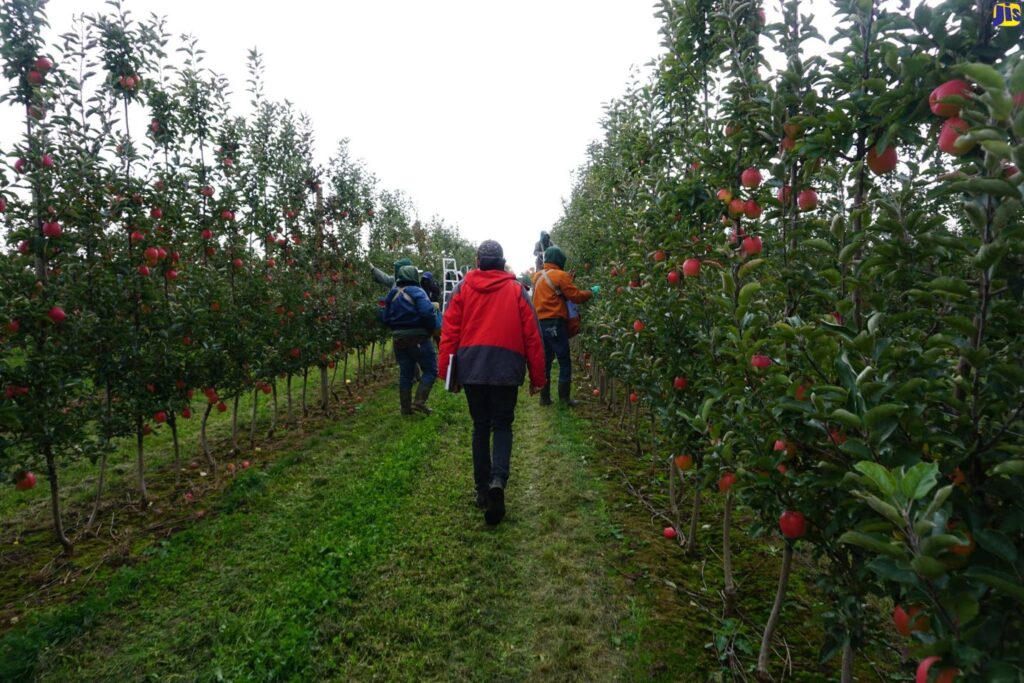
    Jamaica’s longstanding Seasonal Agricultural Workers’ Programme continues to serve as a transformative economic lifeline for countless families, creating pathways to financial stability, home ownership, and entrepreneurial success. For over six decades, this government-managed initiative has facilitated temporary agricultural employment opportunities in Canada and the United States, with recent departures marking the beginning of the 2026 season.

    Edward Gayle from St Elizabeth exemplifies the program’s life-changing impact. Initially skeptical when he first joined in 2018, Gayle now returns annually to the same Ontario farm where he has developed strong, respectful relationships with employers. His financial gains have enabled him to expand his home from a single room to a comfortable family residence, fund his children’s education, and invest in his local farming business. The program’s value became particularly evident during Hurricane Melissa, which destroyed some of his crops but spared his home and livestock—prompting plans to build more resilient hurricane-proof structures using earnings from his current work season.

    Veteran participant Oakley Rowe demonstrates even more dramatic success after 13 years in the program. The skilled construction worker and farmer has built a sturdy four-bedroom home that weathered Hurricane Melissa without damage. His achievements continue with plans to develop rental properties, leveraging the substantial weekly earnings that can reach $800 USD after taxes. Rowe emphasizes that consistent effort in the program yields tangible rewards for those with clear goals.

    Sheldon Miller of Clarendon represents the entrepreneurial spirit fostered by the program. Since 2015, Miller has utilized both earnings and acquired skills to establish a local grocery business and expand into coconut and orange farming. He stresses the importance of strategic planning, noting that overseas earnings must be invested wisely rather than spent frivolously upon return to Jamaica.

    The recent departure of 182 workers—97 on Tuesday and 85 on Wednesday—marks another season of opportunity, with 90% being returning workers. This retention rate underscores the mutual satisfaction between Jamaican workers and Canadian employers across provinces including Ontario, Nova Scotia, Prince Edward Island, and Newfoundland. Workers will engage in greenhouse agriculture and fruit/vegetable cultivation for the next eight months.

    As Jamaica approaches the program’s 60th anniversary, Minister of Labour and Social Security Pearnel Charles Jr has reaffirmed the government’s commitment to modernizing while preserving the initiative’s integrity. The minister urged participants to maintain the program’s proud legacy dating back to 1966, emphasizing health, safety, mutual support, and exemplary representation of Jamaica abroad.


  • The perfect storm

    The perfect storm

    After 32 years of operation and a remarkable journey from startup to market leader, Newsday newspaper has announced its permanent closure. The publication, which began in 1993 and achieved the status of Trinidad and Tobago’s highest-selling newspaper within two decades, succumbed to what management describes as ‘a perfect storm’ of industry challenges.

    The closure represents more than just the failure of a single publication—it symbolizes the severe pressures facing traditional print media globally. Unlike larger media conglomerates that can absorb losses across diversified portfolios, Newsday operated as a standalone entity with no corporate safety net to cushion year-on-year financial declines that have become endemic throughout the industry.

    Multiple converging factors contributed to the newspaper’s demise. The COVID-19 pandemic delivered a significant blow as nationwide shutdowns caused advertising revenue to plummet dramatically. However, management emphasizes that the pandemic was merely one element in a complex crisis that developed over more than a decade.

    Financial pressures mounted from multiple directions: raw material costs, particularly newsprint—the company’s largest expense—skyrocketed over the past ten years. Maintenance expenses for specialized printing equipment also increased substantially as manufacturers of crucial components went out of business due to industry contraction.

    The company also faced substantial legal challenges, emerging victorious from a prolonged court battle that reached the Privy Council level but left the organization over $3 million out of pocket. Despite winning costs at every judicial level, the slow pace of assessment procedures meant the company could not collect awarded funds while continuing to bear operational expenses.

    Consumer behavior shifts proved equally damaging. When Newsday increased its cover price from $2 to $3—still less than the cost of a local doubles snack—40% of readers abandoned the publication. This rejection came despite the hundreds of staff working around the clock to deliver news coverage.

    Most devastating has been the advertising collapse: print advertising revenue declined by 75% over the past decade, creating an unsustainable financial model when combined with rising production costs.

    In its farewell message, Newsday expressed pride in its legacy of ‘unwavering independence’ in serving the public and gratitude to loyal readers and dedicated staff who worked tirelessly for over two decades. The publication concluded with a warning about democracy itself being under threat when media organizations face existential crises, encouraging continued support for journalists and media colleagues throughout Trinidad and Tobago.

  • Talk Tent returns for Carnival at Queen’s Hall

    Talk Tent returns for Carnival at Queen’s Hall

    As Carnival season approaches, Trinidad and Tobago’s longest-running talk show performance, Talk Tent, prepares to captivate audiences with its unique blend of cultural storytelling, comedy, and social commentary. Established in 1983 by visionary producer Paul Keens-Douglas, this iconic event has evolved from its humble beginnings in a canvas tent on Victoria Avenue to becoming an institutionalized post-Carnival tradition at Queen’s Hall Conference Centre.

    The event’s foundation rests on bringing together distinguished ‘men of words’ – including midnight robbers, pierrot grenades, and black Indians – showcasing their verbal artistry during Carnival celebrations. Under the motto ‘Where Talk Is Art,’ the production maintains its commitment to quality family entertainment while emphasizing educational values through diverse oral traditions.

    This year’s lineup features an impressive roster of Caribbean performers: spoken word poet Seth Sylvester, performance poet Miguel Browne, pierrot grenades specialists Felix Edinborough and Keomi Serrette, calypsonian Llewellyn ‘Short Pants’ Mac Intosh, along with Farida Chapman, Avion Crooks, MC David Bereaux, and founder Keens-Douglas himself as master storyteller.

    The 2024 performances are scheduled for February 21-22 at Queen’s Hall Conference Centre in St. Ann’s. Tickets priced at $300 are available at multiple outlets including Crosby’s, RIK locations in Trincity and Gulf City, Domon’s Shoe Store in Long Circular Mall, Metropolitan Book Suppliers on Ariapita Avenue, and directly at Queen’s Hall. Attendees can also purchase exclusive show-priced books, CDs, and DVDs featuring the performing artists.

    Organizers emphasize that Talk Tent’s continued success relies on community support from patrons who recognize its vital role in preserving authentic Caribbean cultural expressions. As the release notably states: ‘There are many talk shows but only one Talk Tent!’ For additional information, interested parties can contact 632-1647, 684-1629, 376-5699, or visit the official Facebook page.

  • Walk for peace…and in peace

    Walk for peace…and in peace

    A remarkable 2,300-mile peace pilgrimage from Texas to Washington DC is underway, led by 24 Buddhist monks accompanied by their rescued canine companion, Aloka. The journey, which commenced on October 26 with an anticipated February arrival, represents a powerful spiritual mission advocating for global compassion and non-violence.

    The monks’ adopted dog, Aloka—a Sanskrit name meaning ‘light’ or ‘radiance’—has become an unexpected symbol of their message. Originally a stray from India, this ordinary-looking dog now embodies the extraordinary capacity for compassion that defines their mission. His presence alongside the orange-robed monks has created touching moments that resonate deeply with those following their journey.

    The pilgrimage took a dramatic turn on November 19 when a pickup truck collided with the monks’ escort vehicle, resulting in life-altering injuries to Venerable Phra Ajarn Maha Dam Phommasan. The accident necessitated the amputation of one of his legs. Remarkably, Phommasan responded with immediate forgiveness and compassion toward the driver, inspiring medical staff and fellow pilgrims alike.

    Paradoxically, this tragedy brought unprecedented attention to their cause. Phommasan noted that before the accident, their peace movement received little recognition. Now,沿途 communities are gathering to offer gifts and emotional support, many moved to tears by the monks’ dedication in a world increasingly characterized by division and conflict.

    The article draws parallels to local infrastructure challenges in Trinidad and Tobago, noting the dangerous conditions for pedestrians on poorly lit roads without adequate sidewalks. The commentary argues that true compassion must extend to urban planning, creating safe spaces for vulnerable road users before organizing symbolic peace walks.

    While celebrating the monks’ inspirational journey, the piece concludes with a pragmatic call to action: communities must first ensure basic safety for pedestrians before embarking on symbolic peace marches, emphasizing that practical compassion begins with protecting citizens from becoming road fatality statistics.

  • Amara excelling from classroom to crease – Nine-year-old balances cricket, school and big dreams

    Amara excelling from classroom to crease – Nine-year-old balances cricket, school and big dreams

    In Trinidad and Tobago, where cricket reigns as a national passion, nine-year-old Amara Jasmin Gopichandsingh is redefining what it means to be a young athlete. The Tabaquite Presbyterian School student demonstrates extraordinary balance between academic rigor and athletic pursuit, maintaining straight-A grades while developing into a promising cricket talent under professional guidance.

    Gopichandsingh’s cricketing journey began in early childhood as the youngest of five children in a family deeply immersed in the sport. ‘When I was really small growing up, and I went cricket with my dad, the guys on the team would always bowl the ball to me,’ she recalled. ‘There, I realized the love and passion I had for the game.’ Her family’s legacy includes two older brothers who played with South East Trinidad Zone Cricket and represented Powergen at the Under-19 level, plus parents who competed successfully in both windball and hardball leagues nationwide.

    The young athlete initially faced challenges entering a male-dominated sport. ‘I felt nervous and shy when I first started training because I was placed in a group with only boys…I would always be the last one to be chosen,’ she confessed. Through determination and skill development, she reversed this dynamic: ‘Until I started to play even better than them, and now, I’m up the line when it’s time to choose.’

    Since 2023, Gopichandsingh has trained at the Samuel Badree Cricket Academy at the University of TT Campus in Tarouba, supplementing Saturday sessions with three weekly practices with her father. Former West Indies cricketer Samuel Badree, who oversees her development, praised her attitude: ‘I would describe Amara’s attitude as one of eagerness. She is very enthusiastic, and she comes to every session with a lot of alacrity.’ He highlighted her receptiveness to coaching feedback and willingness to try new techniques as exceptional traits for a young athlete.

    Badree’s academy employs a structured development pathway, and Gopichandsingh has progressed from beginner to intermediate levels where she now practices advanced skills and drills. The program ultimately leads to hardball cricket and high-performance training for exceptional talents.

    Academic excellence remains equally prioritized through careful scheduling managed by her mother, Ameela Hosein. ‘She manages school and cricket by following her schedule and always being focused,’ Hosein noted. ‘She is not an average nine-year-old — she knows her goals, and she is determined to push herself to one day achieve all of them.’

    Beyond cricket, Gopichandsingh enjoys reading, family time, and creative writing, excelling particularly in Mathematics and English. Her aspirations include attending Naparima Girls’ College, representing Trinidad and Tobago nationally, and eventually playing for the West Indies women’s team. She also envisions becoming a teacher to share knowledge with future generations.

    To other girls considering cricket, she offers simple advice: ‘Always believe in yourselves, be confident and do not be afraid to try.’

  • The foundation for plant growth

    The foundation for plant growth

    Beneath the surface of every thriving garden lies an often underestimated hero: soil. This complex ecosystem serves as the fundamental bedrock for plant development, providing structural support, essential nutrients, and vital hydration. Comprising four primary components—minerals, organic matter, air, and water—soil functions as a dynamic living system that sustains plant life through multiple mechanisms.

    The composition of soil directly influences plant vitality, with different species requiring specific growing mediums that mimic their natural habitats. Tropical bromeliads flourish in well-draining, airy mixtures featuring orchid bark and perlite, while aroids like Philodendron and Monstera prefer chunky, organic-rich blends that balance moisture retention with proper aeration. Desert-adapted cacti and succulents demand fast-draining sandy compositions with minimal organic content, contrasting with moisture-loving ferns that thrive in humus-rich, consistently damp environments.

    Orchids present a unique case study in specialized soil requirements. As epiphytes that naturally grow on trees rather than in ground soil, they require unconventional growing media that prioritizes airflow and drainage. Various orchid species have distinct preferences: Phalaenopsis orchids perform best with fine bark and sphagnum moss, while Cattleyas prefer coarse bark with charcoal, and Dendrobiums excel in coconut husk and perlite mixtures.

    The science of soil management extends beyond simple composition. Factors such as particle size, water retention capabilities, and microbial activity collectively determine whether plants merely survive or truly thrive. By understanding these intricate relationships between soil properties and plant requirements, gardeners can create optimized environments that support robust root development, nutrient uptake, and overall plant health.

    This knowledge transforms gardening from guesswork into a scientific practice, enabling cultivators to replicate natural ecosystems within controlled environments. The result is not just healthier plants but more sustainable and vibrant landscapes that reflect a deeper understanding of botanical needs.

  • Leonce Taylor’s soca gamble – New York-based artiste in Carnival mix

    Leonce Taylor’s soca gamble – New York-based artiste in Carnival mix

    In a strategic move within the competitive soca music landscape, New York-based artist Leonce Taylor has unveiled two distinct tracks for the 2026 Carnival season—marking her first dual release strategy. The calculated gamble demonstrates Taylor’s evolving approach to navigating an industry where emerging artists must balance risk with opportunity.

    Her groovy soca offering, ‘His Loss,’ emerged from an unexpected collaboration with acclaimed songwriter Jason ‘Shaft’ Bishop following their meeting at the 2024 Caribbean Music Awards. Produced by Daddy O Productionz, Rugz Dirty Inc and Rhythym Productionz, the track delivers an empowering message for women overcoming breakups. Taylor describes the creative process as ‘mechanical’ and ‘effortless,’ with the song achieving steady radio play since its October release despite her geographic distance from Trinidad and Tobago’s core soca market.

    Complementing this is her power soca entry ‘Ready Up,’ created through collaboration with producer Alexander Gooding of Lunatix Productions and songwriter Umi Marcano. This track represents a vocal breakthrough for Taylor, pushing her range into higher registers and drawing comparisons to legendary soca vocalist Destra Garcia for its tonal qualities.

    Taylor’s artistic journey reflects both cultural preservation and professional determination. Migrating to the United States at age nine, she maintained strong connections to her Trinidadian musical roots despite growing up in a foreign environment. Her father, a music promoter who worked with renowned calypso bands, insisted she complete her education before pursuing music professionally—a condition she fulfilled by earning a psychology degree with minors in English and French.

    Now balancing motherhood, a full-time job, and pastry chef credentials alongside her music career, Taylor acknowledges the significant sacrifices required—particularly for women in the industry. She faces extended annual tours across Trinidad, St Vincent, Grenada, Belize, and multiple U.S. states while managing familial responsibilities.

    Yet the rewards justify the risks: a single performance can generate earnings equivalent to a week’s salary at her regular job. Beyond financial incentives, Taylor emphasizes the transcendent experience of connecting with audiences through music—the collective energy of raised hands and shared joy that makes the struggle worthwhile. Her dual release strategy represents both a personal gamble and professional evolution in an industry where relevance demands constant innovation.

  • Saathi founder’s generous giving – Rosemarie Dipnarine’s lifelong service

    Saathi founder’s generous giving – Rosemarie Dipnarine’s lifelong service

    For decades, 76-year-old Rosemarie Dipnarine has dedicated her existence to alleviating suffering and creating opportunities for Trinidad and Tobago’s most vulnerable populations. As the visionary founder and president of the Saathi Foundation, her humanitarian work transcends religious, cultural, and generational boundaries, establishing a legacy of compassion that began in her childhood home in Longdenville.

    Born into a modest Hindu household where happiness outweighed material wealth, Dipnarine learned the principles of service from her parents—a factory worker and homemaker who frequently labored in canefields to secure secondary education for their eight children. Her earliest philanthropic memory dates to age eight, when her mother instructed her to sell breadfruit from their tree to assist a struggling village family. “I remember asking people to buy a breadfruit, please, only eight cents for one,” Dipnarine recalled. “That is where my social work started.”

    Following a 40-year career in public service—including statistical roles at the Ministry of Planning and Development and Ministry of Health—and contributions to major cultural events like Carifesta VII and VIII, Dipnarine formalized her charitable efforts. In June 2010, she established Saathi Foundation (Serving and Aspiring Towards Helping Individuals) to address poverty systematically rather than through informal begging. The organization’s logo—designed by her son-in-law—features hands transferring food grains, symbolizing the act of giving oneself to prevent hunger.

    Saathi’s multifaceted approach encompasses food security, housing assistance, medical support, and educational sponsorship. The foundation operates on the fundamental belief that “without proper education, you are nothing,” committing to support promising students from primary school through university when necessary. Their success stories include a chemical engineering graduate who lost both parents, whose entire education and living expenses were covered by the foundation.

    Beyond education, Saathi has rebuilt homes after fires, relocated families from makeshift shelters, and constructed dignified housing for terminally ill individuals. Dipnarine emphasizes that all assistance must be provided unconditionally and respectfully: “When we give, we do not advertise or show the faces of children in need. They also have their pride.”

    The foundation sustains its operations primarily through annual fundraising events, including an upcoming lunch at Passage to Asia restaurant in Chaguanas on April 26. Dipnarine, awarded the Hummingbird Medal (Silver) in 2000 for cultural and community service, defines success as “bringing someone out of the dark part of their life and showing them the light.” Despite her advanced age, she continues leading with an instinct-driven, urgency-based approach, relying on what she describes as “angels on earth” who enable Saathi’s transformative work.

  • To a better Tobago

    To a better Tobago

    Tobago stands at a political crossroads as 42 candidates from four distinct parties prepare to contest Monday’s Tobago House of Assembly (THA) elections, competing for 15 seats of governance. The electoral landscape has undergone significant transformation since the previous administration, most notably with the absence of the Progressive Democratic Patriots (PDP) party that previously propelled Farley Augustine to power as Chief Secretary.

    The political dynamics have shifted dramatically following the fractious split that saw all elected officials except Watson Duke form the new Tobago People’s Party. In a surprising development, Mr. Duke has chosen to support Mr. Augustine, whom he describes as “his younger brother,” creating new political mathematics in Caribbean politics that essentially leaves the PDP without representation in tomorrow’s election.

    Mr. Augustine has been navigating a delicate balancing act in his relationship with the UNC-led government, maintaining notes of independence while recognizing that his position against the PNM might strengthen his ties with the Central Government. Meanwhile, infrastructure improvements are underway with the MV Blue Wave Harmony scheduled to replace the MV Cabo Star for inter-island freight transport, boasting enhanced capacity and refrigeration capabilities.

    While the PNM has focused on criticizing past administrative missteps, including military radar installation issues at Crown Point, Mr. Augustine has presented ambitious development plans including a four-year development strategy and a 20-year vision for Tobago’s future. Though some proposals, such as minimum wage increases, may exceed current economic realities, goals regarding hotel infrastructure development and tourism expansion appear both sensible and achievable.

    The island’s unique characteristics present both challenges and opportunities. While complete food security remains unlikely due to land constraints, local agricultural production aligns perfectly with the environmental tourism and sustainability markers that premium travelers seek. Tobago’s renowned “blue food” cuisine complements its famous azure waters, offering authentic experiences distinct from processed alternatives.

    Campaign activities have maintained the traditions of free and fair elections, with the Council for Responsible Political Behaviour commending parties for upholding campaign integrity. The passionate, sometimes colorful political discourse underscores Tobagonians’ deep commitment to their homeland’s future. Monday’s election results will provide a crucial mandate for the winning party to implement its vision for Tobago’s development, with strong voter turnout expected to lend legitimacy to the chosen path forward.

  • Virmala Balkaran – TTT’s new morning show host

    Virmala Balkaran – TTT’s new morning show host

    At 6 AM on January 12, while most of Trinidad and Tobago still slumbers, Virmala Balkaran will assume her position as the pioneering host of TTT Ltd’s groundbreaking morning program, ‘Trinidad and Tobago Today.’ The 34-year-old Chaguanas native will helm the two-hour broadcast that strategically follows the 6 AM news bulletin, incorporating subsequent 7 AM and 8 AM newscasts within its framework.

    Balkaran characterizes her return to TTT as both a homecoming and a professional culmination. The program is meticulously designed to engage viewers during their morning routines—providing substantive content without the intensity of evening news formats. Through credible sources and analytical depth, the show will dissect current affairs affecting both the nation and global community, while later segments will transition toward lighter topics including birthday celebrations, Carnival culture, health, and wellness.

    Her media journey began unexpectedly in 2013 following a disillusionment with politics. Although initially hesitant about media careers, a radio broadcasting course sparked her passion for human connection through broadcasting. Her breakthrough came unexpectedly in 2016 when she was thrust into anchoring coverage following the death of former Prime Minister Patrick Manning—an experience she describes as ‘destiny.’

    After leaving CNMG (now TTT) in 2017, Balkaran spent eight transformative years at TT Radio Network’s Star 94.7 FM, where she developed autonomy and digital expertise. Recognizing the importance of formal credentials in a male-dominated industry, she pursued and obtained degrees in journalism and mass communication from Costaatt while simultaneously building her digital marketing consultancy.

    Beyond broadcasting, Balkaran has established herself as a dedicated advocate, working with the Diabetes Association, serving as goodwill ambassador for Support Autism TT, and raising awareness about PCOS. She describes her philosophy as being ‘in the business of people,’ emphasizing that media influence should be leveraged for societal benefit.

    The broadcaster attributes her success to her parents’ sacrifices and her conscious effort to overcome childhood shyness through debate and drama. As she prepares for this new chapter, Balkaran sees the morning show as the perfect synthesis of her journalistic training, advocacy work, and commitment to genuine human connection.