作者: admin

  • Justice : Launch of a pilot project to reduce prolonged pretrial detention

    Justice : Launch of a pilot project to reduce prolonged pretrial detention

    In a significant move to address systemic justice issues, the Haitian government has initiated a pioneering program aimed at reducing prolonged pretrial detention and alleviating severe prison overcrowding. On January 18, 2026, the Ministry of Justice and Public Security launched the “Mobile Initiative for Reducing Prison Overcrowding and Prolonged Pretrial Detention” pilot project.

    The inaugural session took place at the Port-au-Prince Court of First Instance under the supervision of Dean Attorney Bernard Saint-Vil. The court reviewed the cases of twenty individuals who had been incarcerated for several years without trial for minor offenses, invoking the Habeas Corpus Act to secure their release.

    All twenty detainees—including Wisnel Saint Fleur, Roosevelt D’Haïti, Dienix Georges, and seventeen others—were granted habeas corpus petitions and are scheduled for immediate release. The proceedings were attended by Chief Commissioner Patterson Dorval and Deputy Government Commissioner Choubert Baptiste, representing the Public Prosecutor’s Office.

    Prime Minister Alix Didier Fils-Aimé emphasized the government’s stance, stating: “Prolonged pretrial detention constitutes a serious violation of human dignity and the normal functioning of the justice system. The State can no longer tolerate this abuse. This initiative reflects our commitment to upholding the law in an orderly, just, and human rights-based manner.”

    The initiative comes in response to alarming statistics showing approximately 80% of Haiti’s prison population currently awaits trial without conviction. Developed by the Ministry of Justice, the project is implemented through a collaboration between the Center for Analysis and Research in Human Rights and the Mobile Institute for Democratic Education, with financial backing from the United Nations Development Programme in Haiti.

    The five-month pilot program will expand beyond Port-au-Prince to include the jurisdictions of Jacmel and Les Cayes, representing a comprehensive approach to addressing one of Haiti’s most pressing judicial challenges.


  • Aunt Challenges State After Girls Taken Into Care

    Aunt Challenges State After Girls Taken Into Care

    A contentious child welfare case in Belize has sparked a familial challenge against state authorities after three young sisters—aged four, six, and eight—were removed from their home and placed in institutional care. The children’s aunt, Deyanie Staine, has publicly criticized the system for failing to prioritize family placement, asserting that capable relatives were never given consideration as alternative caregivers.

    The situation developed following the passing of the girls’ grandmother last year, with whom they had been residing. This forced the children to return to a previous living environment that subsequently drew concerns from child services. Rather than exploring kinship care options, authorities transferred the sisters directly to a state facility, a decision Staine characterizes as fundamentally flawed.

    Currently residing in the United States, Staine highlights stark contrasts between American and Belizean child welfare protocols, noting that U.S. systems typically mandate family consideration before institutional placement. She describes the Belizean approach as “twisted,” emphasizing the psychological impact on children who perceive removal as punishment rather than protection.

    The aunt further detailed systemic frustrations, including restricted visitation rights and information barriers. Despite her sister (the children’s mother) being granted supervised visitation, the family has received no information about the girls’ whereabouts for two weeks following removal. Staine also reported being excluded from court proceedings, though physically present and willing to petition for custody.

    Following public advocacy through social media channels, Staine has initiated legal proceedings to transfer the children from state care to family guardianship. Her case underscores broader debates about child welfare practices, cultural considerations in kinship care, and governmental transparency in custodial decisions.

  • Human Services Defends Child Removal Procedure

    Human Services Defends Child Removal Procedure

    In Belize, child neglect remains the predominant catalyst for state intervention, with the Belize District reporting the highest incidence rates. The Department of Human Services maintains a meticulously structured protocol when responding to allegations of child endangerment, whether through neglect, physical abuse, or sexual exploitation.

    The intervention process typically initiates with confidential reports from community sources—relatives, educators, medical professionals, or concerned neighbors. This system recently faced public scrutiny when three children removed from a hazardous domestic situation were not immediately relocated with a consenting relative.

    Shawn Vargas, Director of the Department of Human Services, provided exclusive insight into the department’s operational framework. The agency employs a ‘continuum of care’ hierarchy that prioritizes familial placement above all alternatives. Subsequent options include certified foster parents registered with the department, with institutional care representing the absolute final recourse.

    Vargas emphasized that willingness alone does not constitute suitability for child placement. ‘We maintain specific thresholds within our substitute care agreement and home evaluation criteria,’ he explained. ‘Even when family members demonstrate capability and willingness, if they fail to meet established safety benchmarks, placement cannot occur.’

    The department implements comprehensive support mechanisms for approved caregivers, including monthly grocery provisions, financial stipends, and even construction materials for home renovations when long-term placement—particularly challenging with teenage populations—requires environmental modifications.

    ‘Our paramount responsibility remains child safety and protection,’ Vargas asserted. ‘Every decision undergoes thorough investigation to ensure the most secure possible outcome for vulnerable children within our care system.’

  • New Vital Stats System Hits Early Snags

    New Vital Stats System Hits Early Snags

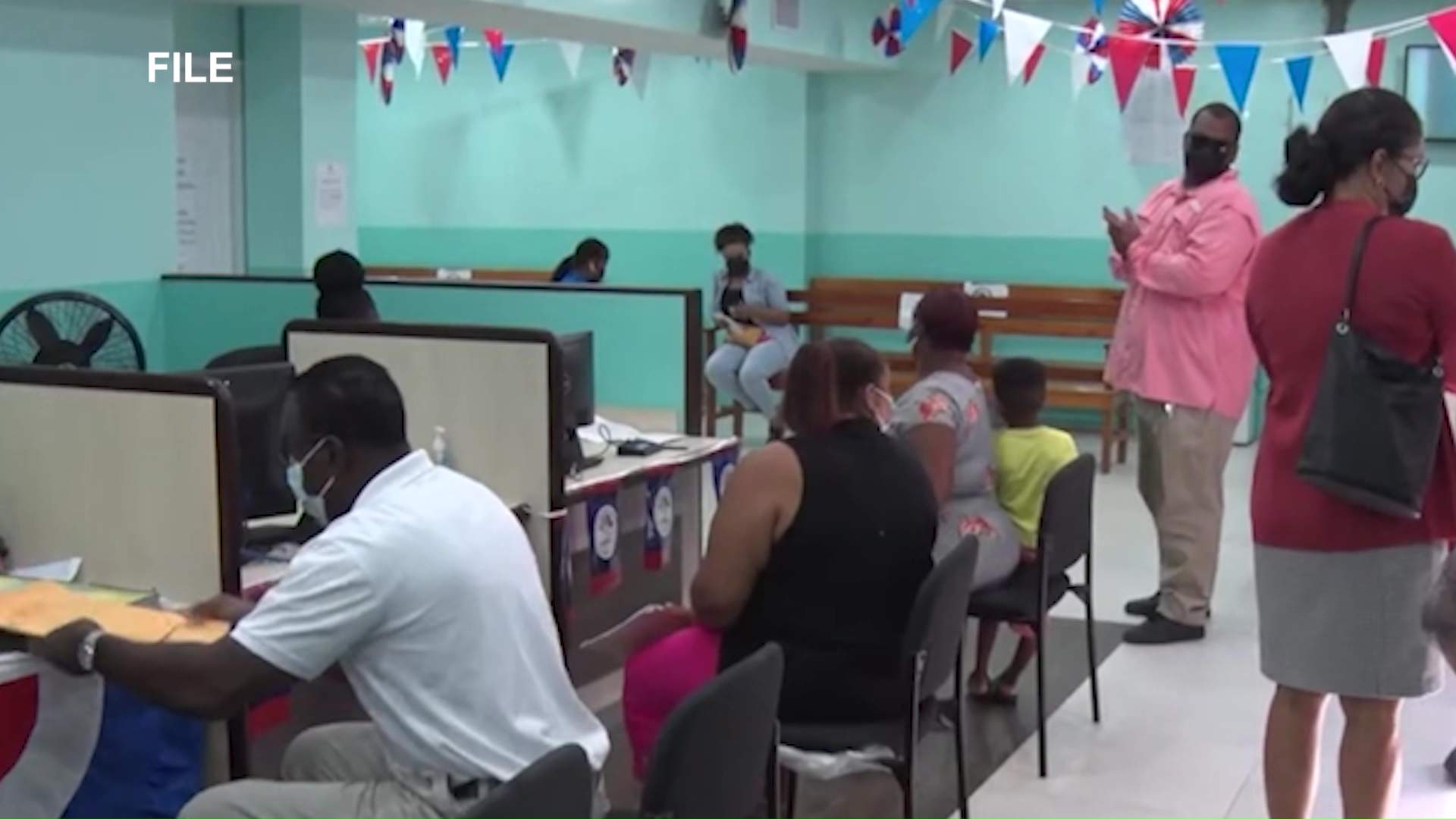
    Belize’s ambitious digital transformation of its civil registry services has encountered significant operational challenges in its initial implementation phase. The Vital Statistical Unit’s recently launched Civil Registry and Vital Statistics System, intended to streamline public access to critical documents, instead created administrative bottlenecks shortly after its December debut.

    The online platform, designed to modernize how citizens obtain life event certificates, experienced technical malfunctions that resulted in prolonged wait times and growing public dissatisfaction. While authorities have addressed most immediate technical concerns, a more substantial consequence has emerged regarding the system’s financial impact.

    Attorney General Anthony Sylvestre confirmed on Monday that the transition to the digital system has indeed resulted in decreased government revenue. Sylvestre characterized the problems as predictable implementation ‘hiccups’ during what he described as ‘an ongoing exercise’ in improving service delivery.

    Despite the financial implications, the government maintains its commitment to the digital platform, emphasizing that accessibility outweighs fiscal concerns. ‘The decision was taken that there will be a loss in revenue,’ Sylvestre stated, ‘but this is more critical and important for the development of our country and the prosperity and benefit of our people.’

    The Attorney General assured citizens that service quality is steadily improving, with the system gradually reaching the standard of efficiency expected by the Belizean public. This digital initiative represents part of the government’s broader effort to enhance vital services through technological innovation, even amid transitional difficulties.

  • MoHW Urges Measles Vaccination as Cases Rise in Guatemala

    MoHW Urges Measles Vaccination as Cases Rise in Guatemala

    Belize’s Ministry of Health and Wellness has issued an urgent public health advisory following confirmation of multiple measles cases in neighboring Guatemala. Health authorities report approximately a dozen confirmed infections in Guatemalan territories adjacent to the Belizean border, specifically identifying the departments of Izabal and Petén.

    Dr. Natalia Beer, Maternal and Child Health Technical Advisor at the Ministry, emphasized the extreme contagious nature of the measles virus and the critical importance of vaccination. “Measles represents one of the most highly contagious viral infections known,” Dr. Beer stated. “Vaccination remains the singular effective protection against this disease.”

    The Ministry reports Belize’s current immunization rates remain below the 95% threshold required for robust community protection, creating potential vulnerability to outbreak spread. Health officials are particularly concerned about cross-border transmission due to frequent travel between the two nations.

    Belize’s national vaccination protocol recommends the MMR vaccine at twelve months with a booster dose at eighteen months. Older individuals aged ten years and above qualify for the MR vaccine. The Ministry specifically advises travelers to verify their vaccination status and obtain immunization if records are unavailable or uncertain.

    Dr. Beer highlighted the particular risk to unvaccinated populations: “The measles virus possesses the demonstrated capacity to locate and infect unvaccinated individuals. This pattern explains the current situation in Guatemala where confirmed cases exclusively involve unvaccinated persons.”

    Health authorities have intensified surveillance at border entry points and are implementing public awareness campaigns regarding symptom recognition and prevention measures.

  • Yaoling Unveils Exhibit for Second Edition of Beautiful Belize City

    Yaoling Unveils Exhibit for Second Edition of Beautiful Belize City

    Visual artist Yaoling Lee has officially launched the second edition of her acclaimed publication “Beautiful Belize City,” accompanied by a comprehensive art exhibition at the Mexican Cultural Institute. The showcase, which will remain open to the public until April 23rd, features over fifty original watercolor works that provide deeper insight into Lee’s creative methodology.

    The exhibition is thoughtfully divided into three distinct sections: urban sketches capturing Belize City’s vibrant landscapes, figurative studies created with live models in her studio, and botanical illustrations of flowers sourced from her own backyard and local markets. This organizational approach allows visitors to experience the full spectrum of Lee’s artistic practice and the diverse inspirations behind her work.

    Following the remarkable success of the first edition published in 2024—which combined Lee’s visual artistry with literary contributions from twenty-two Belizean writers—this new installment presents fresh paintings and expanded narrative content. While acknowledging that writing doesn’t come as naturally to her as painting, Lee emphasizes her unique ability to document her artistic journey and the stories behind each creation.

    The project stands as a significant cultural contribution to Belize’s artistic landscape, celebrating both visual and literary talent while documenting the urban character of Belize City through multiple creative perspectives. The exhibition serves as both a retrospective of Lee’s recent work and an introduction to the enhanced content featured in the forthcoming publication.

  • Chikungunya-uitbraak bevestigd in Suriname: volksgezondheidsautoriteiten waarschuwen bevolking

    Chikungunya-uitbraak bevestigd in Suriname: volksgezondheidsautoriteiten waarschuwen bevolking

    Suriname’s Ministry of Health, Welfare, and Labor has officially confirmed an outbreak of chikungunya virus within the country, marking a significant public health development. Laboratory analyses conducted by both the Central Laboratory of the Bureau of Public Health and the Academic Hospital Paramaribo have identified eight confirmed cases of the mosquito-borne illness.

    What makes this outbreak particularly noteworthy is that none of the infected individuals had recently traveled abroad, indicating local transmission within Suriname. This pattern suggests established mosquito-borne viral circulation in the community.

    Chikungunya, a viral infection transmitted primarily by Aedes mosquitoes—the same vectors responsible for dengue, zika, and yellow fever—manifests with symptoms including sudden high fever, severe joint pain and swelling, headaches, fatigue, and occasionally skin rashes. The virus is not directly transmitted between humans but spreads when mosquitoes bite infected individuals and then transfer the virus to others.

    Health authorities have initiated comprehensive epidemiological investigations, including contact tracing, enhanced laboratory testing, and strengthened surveillance systems to contain further spread. The ministry emphasized that while serious complications are rare, joint pain can persist for weeks or even months following infection. Elderly individuals, young children, pregnant women, and those with chronic health conditions face elevated risks of complications.

    Medical guidance recommends against using aspirin or ibuprofen for symptom management, instead advising paracetamol for pain and fever relief, adequate hydration, rest, and seeking medical attention if symptoms worsen.

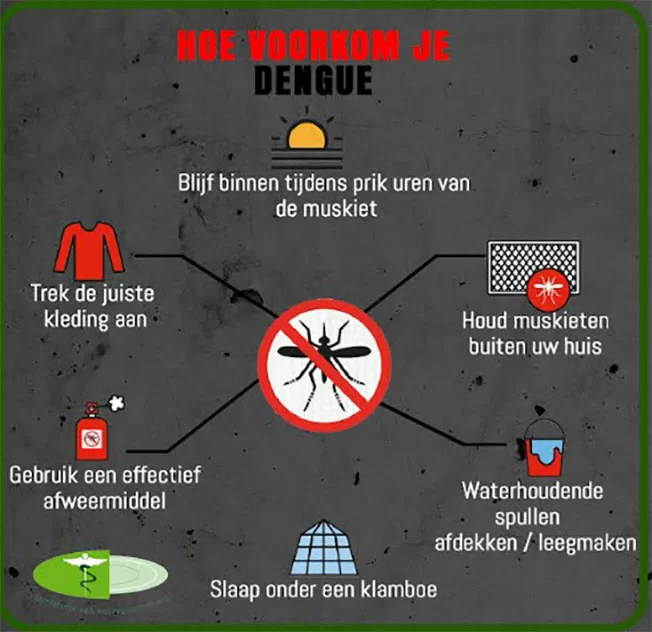
    The ministry has committed to providing timely, accurate, and transparent updates as new information emerges. Simultaneously, they urge citizens to actively participate in mosquito control efforts by eliminating breeding sites—particularly standing water in containers, tires, flower pots, and buckets—while also recommending protective clothing and insect repellents as essential preventive measures.

  • ONDA clarifies Dominican National Anthem is public domain

    ONDA clarifies Dominican National Anthem is public domain

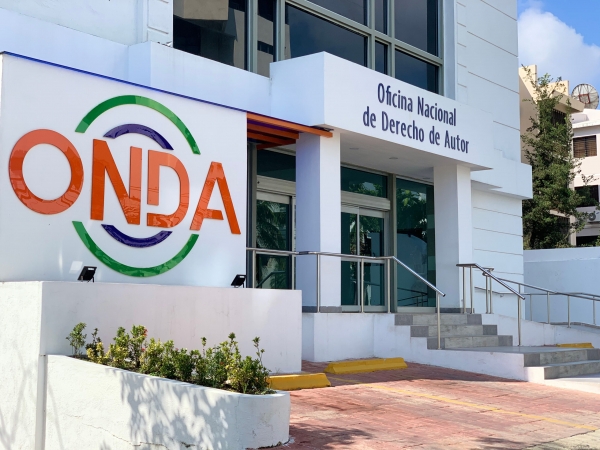
    The Dominican Republic’s National Copyright Office (ONDA) has officially declared the national anthem a protected asset of the state, firmly establishing its public domain status and rejecting any claims of private ownership. José Rubén Gonell, Director of ONDA, emphasized that the anthem falls under state administration and protection according to existing legislation.

    Gonell disclosed that a comprehensive review was conducted in collaboration with the Ministry of Culture and collective management societies to investigate potential unauthorized registration attempts. The investigation confirmed that no individual or entity has successfully claimed copyright over the national anthem within the Dominican Republic.

    The legal foundation for the anthem’s status traces back to Law 700 of 1934, which officially adopted the lyrics by Emilio Prud’Homme and music by José Reyes. This legislation effectively placed the composition in the public domain from its inception.

    Regarding digital platform controversies, Gonell explained that automated monetization systems sometimes improperly allocate royalties to content uploaders without verifying legitimate intellectual property rights. While musical arrangements and performances may generate rights for performers or arrangers, these derivative works do not affect the original composition’s protected status.

    Looking forward, ONDA is developing new regulatory measures addressing artificial intelligence-generated content, including specialized declaration forms to distinguish human and automated contributions. The office reported a significant surge in copyright registrations between 2020-2025 and advocated for legislation requiring major international digital platforms to maintain local legal representation for improved dispute resolution and enforcement capabilities.

  • House Speaker Nadir to call meeting next Monday to elect Opposition Leader

    House Speaker Nadir to call meeting next Monday to elect Opposition Leader

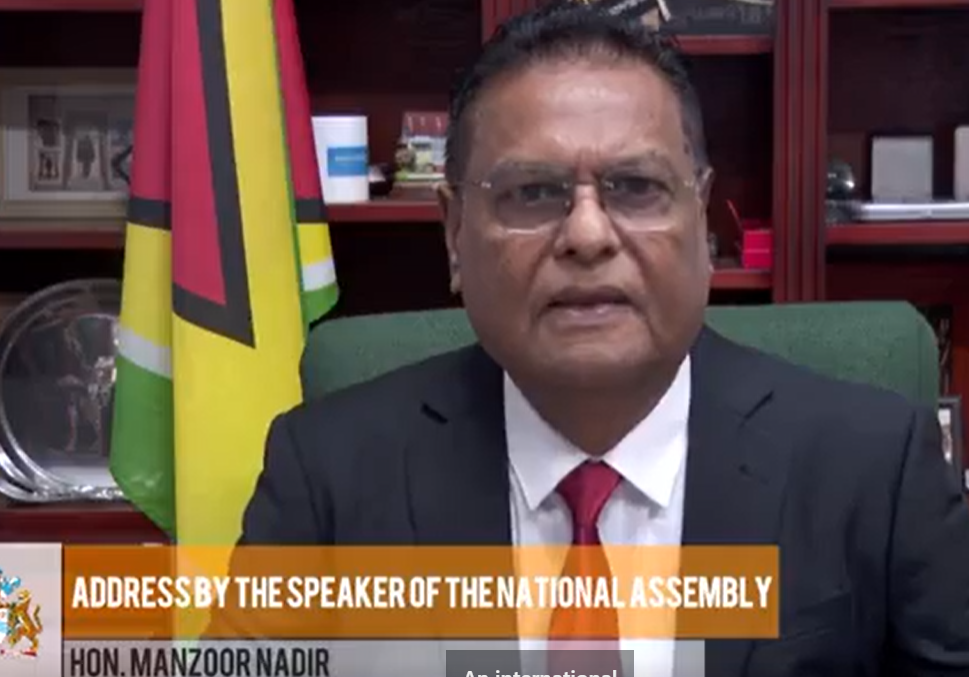
    Guyana’s political landscape faces an unprecedented constitutional dilemma as National Assembly Speaker Manzoor Nadir reluctantly announced plans to convene a special parliamentary session next Monday. The meeting, scheduled for 10 AM, will determine the election of the country’s Opposition Leader—a position expected to be filled by Azruddin Mohamed, an international fugitive wanted by United States authorities for serious financial crimes.

    Speaker Nadir, in a solemn address delivered Tuesday evening, expressed profound discomfort with the constitutional obligation forcing him to oversee an election that would potentially install a wanted criminal as Guyana’s official opposition leader. “I have found myself in this difficult position to hold the election of the Leader of the Opposition when I know that the presumptive Leader of the Opposition to be elected is an international fugitive,” Nadir stated, emphasizing the grave implications for the nation’s democratic integrity.

    The political predicament stems from last year’s electoral results where Mohamed’s We Invest in Nationhood (WIN) party secured 16 parliamentary seats, making them the largest opposition bloc ahead of A Partnership for National Unity (APNU) with 12 seats and Forward Guyana Movement with a single seat. Despite Mohamed’s fugitive status, constitutional provisions appear to mandate his election as opposition leader due to his party’s numerical advantage.

    Nadir, a veteran Guyanese statesman, issued a stern warning to opposition parliamentarians, stating that those voting for Mohamed would bear full responsibility for tarnishing the dignity of Guyana’s legislative body. “If opposition members of Parliament feel it morally right to elect an international fugitive, then the stain on our parliament and our country rests solely with them,” he declared, highlighting the moral contradiction between legal requirements and ethical governance.

    The Speaker additionally criticized both the diplomatic community and segments of the media for amplifying calls to proceed with Mohamed’s election, suggesting that external pressure had complicated an already delicate constitutional process. Nadir repeatedly referred to Mohamed as an “international fugitive” throughout his address, underscoring the gravity of the situation facing Guyana’s democratic institutions.

  • Noodtoestand Guatemala, tien politieagenten vermoord

    Noodtoestand Guatemala, tien politieagenten vermoord

    Guatemala has plunged into a state of emergency following a devastating wave of coordinated gang violence that left ten police officers dead and forced the government to implement drastic security measures. The crisis began with simultaneous prison riots across three correctional facilities on Saturday, where members of the notorious Barrio 18 gang took dozens of guards hostage.

    The violence escalated dramatically on Sunday when gang forces launched retaliatory attacks against police units throughout Guatemala City. This aggressive response came after security forces successfully regained control of a prison housing influential gang leader Aldo ‘El Lobo’ Duppie, who is serving cumulative sentences totaling approximately 2,000 years.

    On Monday, Guatemala’s parliament nearly unanimously approved a 30-day state of emergency that had already been activated by President Bernardo Arevalo. The emergency measures significantly expand police powers, allowing warrantless arrests of suspected gang members, restricting freedom of movement, and prohibiting public demonstrations. Authorities can now also implement vehicle checkpoints and search restrictions in designated areas.

    President Arevalo presided over a solemn ceremony at the Interior Ministry to honor the fallen officers, presenting flags to grieving families. ‘It pains me today to hand each of these families this flag,’ Arevalo stated, ‘a symbol of the nation that will not forget the sacrifice and dedication of its police officers who fell in the exercise of their duty.’

    The Barrio 18 gang, which operates alongside the rival MS-13 in Central American drug trafficking networks, reportedly initiated the violence to demand improved privileges for incarcerated members and leaders. This incident continues a pattern of prison unrest that began in mid-2025, including a major October escape where 20 Barrio 18 leaders fled custody—only six were recaptured, while one was killed.

    Notably, gang leader El Lobo maintains family connections to Sandra Torres, President Arevalo’s primary opponent in the 2023 elections, adding political dimensions to the security crisis. Guatemala City remains under heightened security as the government attempts to restore order amidst widespread fear and outrage.