作者: admin

  • Coco Velvet International appoints Stephanie Sirju as GM

    Coco Velvet International appoints Stephanie Sirju as GM

    Coco Velvet International Fashion & Model Management has undergone a significant leadership restructuring following the severe health deterioration of its founder, Christopher Nathan. The company has officially appointed Stephanie Sirju as its new General Manager and Fashion Director, effective immediately.

    In an emotional media release, Nathan disclosed his recent diagnosis of metastasized prostate cancer that has aggressively spread to multiple areas including his groin, spine, and ribs. The condition has resulted in paralysis from the chest downward, rendering him unable to continue his operational duties. “I am no longer able to work. I am actually paralysed from my chest down,” Nathan stated in the official communication.

    The succession plan brings Sirju, a University of Hawaii fashion program graduate, to the forefront of the organization. Despite the leadership change, Nathan will maintain ownership and continue serving as a consultant, providing guidance from behind the scenes during this transitional period.

    The company has assured clients and stakeholders that all services will continue uninterrupted across both divisions. The fashion management division continues to offer comprehensive support including event management, project coordination, lookbook production, and fashion shoot supervision for editorials, catalogues, magazine features, and digital platforms. Additionally, the company remains active in fashion show production, while the model management division continues its operations without disruption.

    Nathan emphasized that this strategic succession ensures the company’s continuity under new leadership while maintaining its established standards and service quality.


  • Trinidad and Tobago Newsday – Tuesday January 27th 2026

    Trinidad and Tobago Newsday – Tuesday January 27th 2026

    The global dietary supplement market is facing renewed critical examination as health experts and regulatory bodies call for greater transparency and scientific validation of product claims. This multi-billion dollar industry, which encompasses everything from vitamins and minerals to herbal extracts and performance enhancers, operates within a complex regulatory framework that often prioritizes commerce over conclusive clinical evidence.

    Unlike pharmaceutical drugs, supplements are not required to undergo rigorous pre-market approval for efficacy by agencies like the FDA. This regulatory gap has created a marketplace where bold health assertions frequently outpace substantiated scientific research. Current analyses reveal significant discrepancies between marketing materials and actual biochemical impacts, with many products demonstrating negligible effects in controlled studies.

    Medical professionals are increasingly warning consumers about potential risks including improper dosing, contamination with undeclared substances, and dangerous interactions with prescription medications. The absence of mandatory third-party testing has resulted in quality control issues across numerous product lines.

    Health organizations now recommend consulting healthcare providers before initiating any supplement regimen, particularly for vulnerable populations such as pregnant women, chronically ill patients, and children. This cautionary approach highlights the growing consensus that while some supplements offer genuine benefits, many others provide expensive placebo effects at best, and potential health hazards at worst.

    The industry’s future likely hinges on implementing stricter manufacturing standards, enforcing accuracy in labeling claims, and conducting large-scale clinical trials to separate scientifically validated supplements from those merely capitalizing on wellness trends.

  • Griffith urges CoP: Use the bodycams

    Griffith urges CoP: Use the bodycams

    Former Trinidad and Tobago Police Commissioner Gary Griffith has issued a forceful demand for transparency regarding approximately 1,200 body-worn cameras acquired during his administration that remain unused. This call comes amid growing public outrage over a controversial police shooting in St. Augustine that resulted in the death of Joshua Samaroo and left his common-law wife Kaia Sealy paralyzed.

    The incident, captured on CCTV footage that has since gone viral, shows Samaroo with his hands raised in what appears to be a surrender gesture moments before officers opened fire. This visual evidence directly contradicts the official police account that claimed officers were fired upon during the January 20th encounter.

    Griffith emphasized that the body camera initiative was specifically designed to prevent such contentious situations. “Twelve hundred body cameras for 7,000 police officers is more than adequate,” he stated, explaining that his administration had established strict operational protocols requiring officers to activate cameras during all patrols, roadblocks, and operations. The system included accountability measures where officers signed for equipment and supervisors verified proper usage.

    The former commissioner accused current Police Commissioner Allister Guevarro of deliberately ignoring standing orders mandating camera use. Griffith further questioned why multiple accountability measures implemented under his leadership—including tasers, pepper spray, online reporting systems, a police app, GPS vehicle tracking, and live feed cameras—had been discontinued.

    In a concerning revelation, Homeland Security Minister Roger Alexander disclosed to the Senate that a $24.9 million contract for 3,000 additional body cameras had been terminated to cut costs. Commissioner Guevarro later justified this decision by claiming the contract involved inflated prices, with cameras priced at $8,000 per unit compared to market rates of $2,500-$3,000.

    The Police Complaints Authority has joined the call for body camera implementation, stating that such technology would “enhance accountability, transparency, and public confidence in policing.” Public trust in the police service has dramatically declined from 59% during Griffith’s tenure to just 8% according to recent surveys, highlighting the urgent need for reform.

  • TTFA president lauds progress of national youth teams

    TTFA president lauds progress of national youth teams

    Trinidad and Tobago Football Association (TTFA) president Kieron Edwards has expressed strong optimism about the nation’s youth football development programs as multiple national teams engage in critical CONCACAF competitions. The association’s commitment to developing young talent appears to be yielding promising results across various age groups.

    The under-17 women’s team, currently competing in Willemstad, Curaçao, demonstrated remarkable resilience in their opening match against hosts Curaçao on January 24, fighting back to secure a 2-2 draw after trailing twice. Under coach Ayana Russell, the squad faces crucial Group F matches against Barbados (January 28) and El Salvador (February 1), with the group winner and two best second-place teams advancing to the final qualification round.

    Edwards emphasized the significance of these developments in an official statement: “The TTFA is encouraged by the continued progress being demonstrated across our national youth programmes. We extend our full support and best wishes to our under-17 women’s national team as they continue their CONCACAF qualifying campaign.”

    The men’s youth teams are similarly positioned for important competitions. The under-17 squad, guided by coach Randolph Boyce, will host the CONCACAF Men’s Under-17 qualifiers from February 3-12, facing Barbados, Mexico, Saint Martin, and Sint Maarten. Meanwhile, Marvin Gordon’s under-20 team will compete in their qualifiers in Costa Rica from February 23 to March 4.

    Preparation matches have shown encouraging results. The under-20 team displayed offensive prowess with decisive victories over St Vincent and Grenadines (6-0) and AC Port of Spain’s second team (5-0), though they were held to a 1-1 draw by Grenada in their final preparatory match.

    The association’s technical development efforts extend beyond the pitch, with acting technical director Devin Elcock recently attending a FIFA Technical Leadership Workshop in Barbados from January 12-16. Edwards highlighted this comprehensive approach: “By investing in our young players, providing meaningful international exposure and strengthening our technical leadership, we’re laying a solid foundation for sustained success.”

    This strategic focus on youth development represents a concerted effort to elevate Trinidad and Tobago’s football program to greater regional and international competitiveness.

  • International Congress on Thousand Cities sccessfully ends in Havana

    International Congress on Thousand Cities sccessfully ends in Havana

    An international congress focused on building happier, more sustainable cities through artificial intelligence and strategic communication concluded successfully in Havana. Hosted by the National Institute of Economic Research (INIE), the event brought together global experts to address urban development challenges in the digital age.

    The conference, jointly sponsored by Plaza de la Revolucion Cultural District, the University of Sao Paulo’s International Center for Innovation and Development of Thousand Cities (CIIDCMIL-USP), and the Center for Studies in Evaluation and Measurement of Communication and Marketing, achieved its primary objective of disseminating innovative approaches to urban happiness. According to Felipe Chibas-Ortiz, executive coordinator of CIIDCMIL-USP, the gathering specifically targeted overcoming cultural barriers and countering hate narratives through effective communication strategies.

    The comprehensive program featured expert panels examining media literacy, creative economy models, institutional ethics, and family dynamics. Additional sessions explored gender equality considerations, public health promotion, robotics integration, and practical guidance for developing AI-enhanced urban projects. The congress attracted participation from nine countries through both physical attendance and virtual engagement platforms.

    Distinguished participants included Cuban intellectual Miguel Barnet, Cuban Association of Social Communicators President Rosa Maria Gutierrez, INIE Director Maile Yiser, and University of Zaragoza Vice-Rector Carmen Marta-Lazo from Spain. UNESCO representation featured several high-level officials, including Paris Office Director Alton Grizzle and Media Literacy Network Director Manuel Perez Tornero.

    The event culminated in two significant cultural contributions: the presentation of the book ‘Thousand Cities: Challenges and Solutions for Sustainable Development in the Age of Artificial Intelligence’ and a special cartoon exhibition titled ‘Thanks to the Thousand Cities’ by renowned Brazilian artist Dorinho Bastos.

  • Laatste twee panda’s verlaten Japan nu relaties met China gespannen zijn

    Laatste twee panda’s verlaten Japan nu relaties met China gespannen zijn

    Tokyo’s Ueno Zoo witnessed emotional farewells Sunday as panda enthusiasts gathered for the final public viewing of twin giants Xiao Xiao and Lei Lei before their scheduled return to China this week. Their departure marks a historic moment: Japan will experience its first panda-less territory in half a century, with replacement prospects appearing dim amid deteriorating diplomatic relations between Tokyo and Beijing.

    The panda diplomacy legacy began in 1972 when China gifted the first bears to Japan following the normalization of diplomatic relations between the historically wary neighbors. These charismatic black-and-white creatures immediately captured Japanese affections, with a dozen subsequent pandas achieving national celebrity status.

    Despite the zoo’s implementation of a strict one-minute viewing limit, the final exhibition attracted massive crowds. Visitors carrying panda plush toys called the bears’ names and captured smartphone photos as the twins nibbled bamboo and roamed their enclosure. Many without reserved tickets still visited the zoo to participate in the symbolic farewell day.

    Longtime panda devotee Michiko Seki, wearing panda-print black-and-white attire, expressed satisfaction at seeing the twins healthy and feeding well. She documented the moment using the same camera purchased two years earlier to photograph their elder sister Xian Xai before her departure.

    “These animals provide immense comfort,” Seki noted. “Japan needs pandas, and I hope politicians can find some solution.”

    Beijing maintains ownership of all pandas loaned to foreign nations, including any offspring born abroad. Xiao Xiao and Lei Lei were born at Ueno Zoo in 2021.

    When questioned about potential new panda exchanges, Chinese Foreign Ministry spokesperson Guo Jiakun stated: “I know giant pandas are beloved by many Japanese people, and we welcome Japanese friends to visit them in China.”

    Japan currently faces escalating political, trade and security tensions with China. Recent remarks by Japanese Minister Sanae Takaichi regarding potential intervention in Taiwan scenarios provoked particular anger from Beijing. The relationship further strained as Japan’s consulate in Chongqing has operated without a consul for months due to China’s delayed approval of replacement diplomats.

    Economists project significant financial repercussions from the pandas’ absence. Kansai University economics professor Katsuhiro Miyamoto estimates approximately 20 billion yen ($128 million) in annual losses, warning that prolonged absence could create economic impacts measuring in tens of billions of yen.

    Panda imagery permeates Japanese culture around Ueno Zoo, appearing on confectionery, stationery, plush toys and photobooks. Local souvenir shop manager Asao Ezure considers pandas “a symbol of Ueno, a star” while expressing concern about business impacts. Despite the uncertainty, he maintains hope for their return, refusing to alter store signage featuring the twin pandas.

    The current situation represents a notable shift in China’s panda diplomacy strategy, which began with gifts to Western nations during the 1970s normalization era before transitioning to lease programs in the 1980s. Japan previously experienced diplomatic panda complications when a planned transfer to Sendai following the 2011 earthquake and tsunami was suspended during territorial disputes in 2012.

  • Bendals Primary School Classes Suspended After Fire

    Bendals Primary School Classes Suspended After Fire

    Educational operations at Bendals Primary School faced significant disruption following a destructive fire that engulfed the institution’s administrative wing during the early hours of Sunday morning. The incident prompted immediate suspension of all academic activities scheduled for Monday as authorities assess structural integrity and coordinate recovery efforts.

    Director of Education Clare Browne confirmed to local media that the blaze resulted in substantial damage to the facility’s central administrative infrastructure. While the precise origin of the fire remains undetermined, law enforcement agencies have launched a comprehensive investigation to establish causation factors and eliminate potential hazards.

    Education officials have outlined a phased resumption plan, anticipating teaching staff will return to campus by Tuesday. Preliminary assessments suggest normal educational operations could potentially restart by Wednesday, contingent upon successful completion of safety evaluations and infrastructure evaluations. School administrators emphasize that this timeline remains subject to change based on ongoing structural assessments.

    Authorities have committed to providing regular updates to parents and stakeholders as investigation milestones are achieved and recovery plans are formalized. The education department is simultaneously exploring temporary administrative solutions to minimize disruption to student learning outcomes during the reconstruction period.

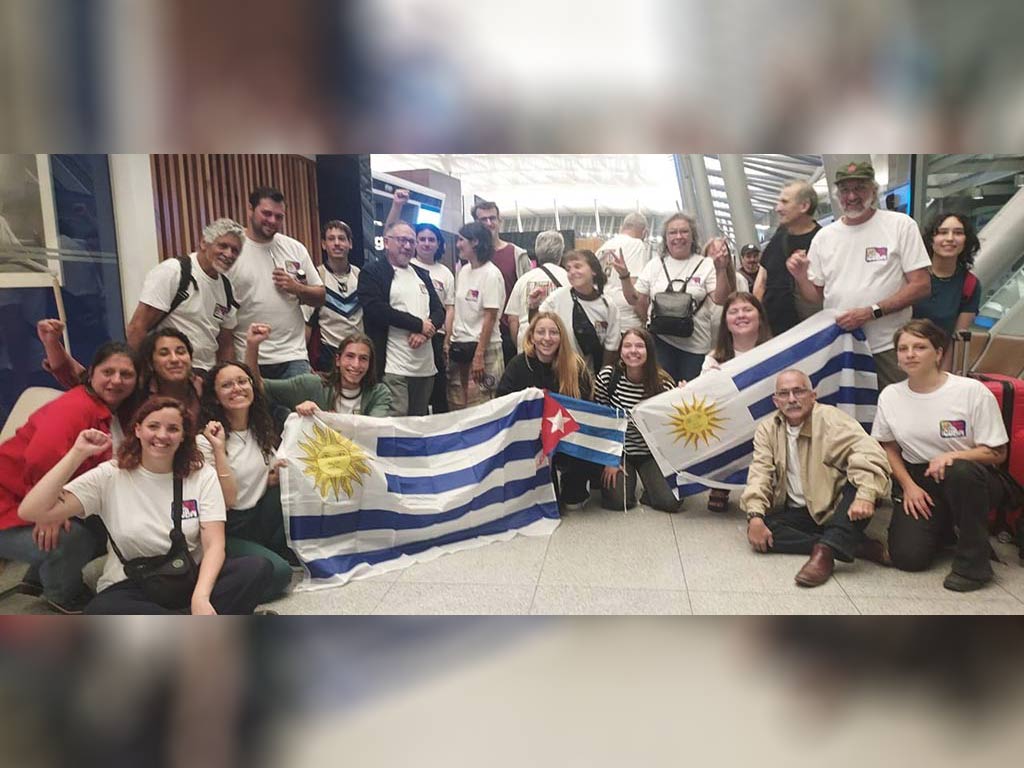
  • The Uruguayan brigade “Fidel Castro” traveled to Cuba with aid

    The Uruguayan brigade “Fidel Castro” traveled to Cuba with aid

    A contingent of Uruguayan citizens representing diverse segments of society has embarked on a humanitarian mission to Cuba, carrying both medical resources and a profound message of international solidarity. The group, formally designated as the ‘Fidel Castro’ brigade, departed from Carrasco International Airport in Montevideo with a cargo of essential medical supplies and pharmaceuticals meticulously packed in their luggage.

    Complementing the tangible aid, the delegation transported a financial contribution of approximately $17,000. This sum was accumulated through a nationwide fundraising campaign orchestrated by the Coordinating Committee in Support of the Cuban Revolution, which saw active participation from ordinary citizens, political groups, and various social organizations. These funds are expressly destined to bolster the Caribbean nation’s public health infrastructure.

    The brigade comprises a cross-section of Uruguayan society, including students, active workers, and retirees, all united by a common purpose. For many, like Lucia Moderneli, a sociology student at the University of the Republic, the journey represents the fulfillment of a deeply personal and political ambition. “I am fulfilling a political dream of expressing my support for the Cuban people, and a family dream, since my father always wanted to make this journey but couldn’t,” Moderneli explained in an interview with Prensa Latina.

    The mission is widely perceived by its participants as a reciprocal act of gratitude. For nearly two decades, Cuba’s Operation Miracle program has provided free ophthalmologic surgeries across South America, notably in Uruguay. Moderneli highlighted this legacy, expressing profound thanks on behalf of the estimated 130,000 Uruguayans—including her own grandfather—who have regained their eyesight through the skill and generosity of Cuban medical professionals. This initiative, she stated, is a modest effort to ‘return Cuba’s internationalism and cooperation with the world.’

  • Two Horses Stolen from Spring Hill Riding Club

    Two Horses Stolen from Spring Hill Riding Club

    Authorities at Spring Hill Riding Club have launched a public appeal following the overnight theft of two prized horses from their facilities. The incident, which occurred under cover of darkness, has sent shockwaves through the local equestrian community and triggered an extensive search operation.

    The missing horses, identified as Mars and Fizz, possess distinctive physical characteristics that authorities hope will aid in their recovery. Mars presents as a dark brown equine with a uniquely groomed pattern on his hindquarters—a carefully clipped design featuring both a heart and crescent moon. His companion Fizz displays a solid chestnut coloration without additional markings.

    Law enforcement officials have issued guidelines for public assistance, requesting heightened vigilance regarding any unusual equine transportation activities or sightings of unfamiliar horses in the region. The appeal extends particularly to rural property owners, trail riders, and transportation workers who might observe suspicious equine movement.

    Equestrian organizations throughout the region have been formally notified and asked to circulate descriptions of the stolen animals. Veterinary clinics, feed suppliers, and competition venues have additionally been placed on alert to prevent potential resale or concealment attempts.

    The emotional impact on stable staff and riders who developed bonds with these animals has been significant, with club representatives emphasizing the horses’ value extends beyond monetary worth to encompass deep emotional connections. Investigators continue pursuing multiple leads while analyzing forensic evidence recovered from the scene.

  • Macron says France to fast-track social media ban for under-15s

    Macron says France to fast-track social media ban for under-15s

    In a landmark policy announcement, French President Emmanuel Macron has declared his administration’s intention to accelerate the implementation of stringent social media access restrictions targeting children under the age of 15. This decisive move represents one of Europe’s most aggressive regulatory approaches to protecting youth in the digital sphere.

    The proposed framework, which would require parental authorization for social media platform access, stems from growing concerns about the psychological impact of unrestricted digital exposure on developing minds. Macron’s administration cites mounting evidence linking excessive social media usage to increased anxiety, depression, and cyberbullying among adolescents.

    This initiative forms part of a broader European digital sovereignty strategy that seeks to establish comprehensive safeguards for vulnerable populations online. The French government is reportedly collaborating with major technology firms to develop verifiable age-verification mechanisms that would enforce the proposed restrictions without compromising user privacy.

    Educational experts and child development specialists have largely welcomed the announcement, though some digital rights advocates have raised concerns about implementation challenges and potential unintended consequences. The policy is expected to undergo parliamentary review in the coming months, with potential implications for similar legislation across the European Union.

    The accelerated timeline reflects the administration’s commitment to addressing what it characterizes as a public health priority, positioning France at the forefront of global efforts to create safer digital environments for children.