作者: admin

  • COMMENTARY: Nursing Our Troubles

    COMMENTARY: Nursing Our Troubles

    Essential service providers—including nurses, teachers, and police officers—consistently face financial hardships despite incremental salary adjustments over the years. While wage increases offer temporary relief, they fail to address the escalating costs of living, including rising taxes, housing expenses, and service charges. The core issue persists: salaries simply cannot keep pace with inflationary pressures, highlighting the need for structural reforms rather than isolated pay raises.

    Beyond salaries, the primary grievances focus on housing affordability and childcare costs. Many struggle to secure decent rental accommodations or mortgages, while families with young children face significant expenses for shift-based childcare. The absence of reliable public transportation further compounds financial strain, necessitating private vehicle ownership and maintenance costs that exceed realistic salary adjustments.

    Historical policy proposals from the Antigua-Caribbean Liberation Movement (ACLM) reveal longstanding awareness of these challenges. Their 1980 and 1989 election manifestos outlined comprehensive solutions including community complexes, daycare centers, and regulated public transportation systems to reduce energy dependence and housing costs. The ACLM explicitly framed housing as a fundamental right—not a privilege—advocating for annual construction targets and rental regulation bodies similar to consumer affairs departments.

    However, implementation has been hampered by cyclical advocacy patterns. Strong bargaining entities for nurses and teachers often remain passive during favorable political administrations, only vocalizing demands during political transitions. This pattern undermines consistent progress and reframes legitimate advocacy as political opportunism.

    The solution requires sustained national commitment rather than individual migration. Retaining trained professionals—particularly in healthcare—demands addressing systemic issues through housing reforms, transportation infrastructure, and childcare support, ensuring essential workers can serve their communities without financial desperation.

  • All Saints Clinic Closure Linked to Sewage and Safety Issues, Minister Says

    All Saints Clinic Closure Linked to Sewage and Safety Issues, Minister Says

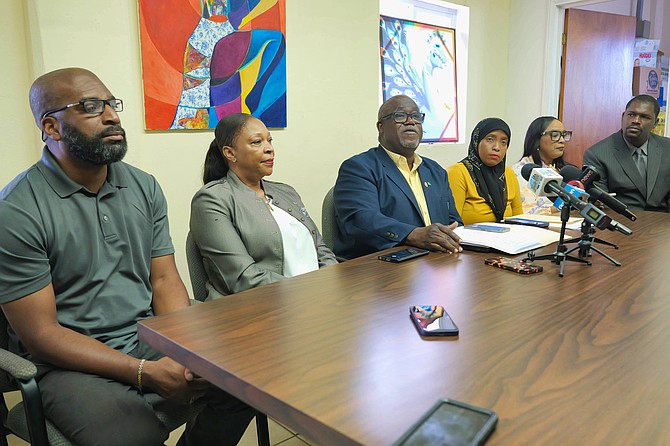
    Antigua and Barbuda’s Health Minister Sir Molwyn Joseph has provided a detailed explanation for the extended shutdown of the All Saints Community Clinic, citing critical sewage system failures and safety hazards that rendered the facility unsuitable for patient care. The disclosure came during a recent government briefing addressing community concerns over the prolonged closure.

    Minister Joseph revealed that the decision to close the clinic followed years of complaints from nursing staff about sewage fumes infiltrating essential areas of the building, including food preparation and dining spaces. The minister characterized these conditions as ‘unacceptable for healthcare delivery,’ emphasizing that the problems required comprehensive infrastructure solutions rather than temporary fixes.

    Technical investigations identified improperly designed drainage pipes as the core issue, creating persistent foul odors and genuine health risks that necessitated major corrective action. Joseph defended the government’s approach of keeping the facility closed until fundamental infrastructure problems could be properly addressed, rather than resorting to premature reopening.

    The renovation plan involves a complete redesign of the sewage system, repair of existing leaks, and facility expansion to accommodate new services including a dental clinic and enlarged pharmacy department. While acknowledging community frustration, Joseph countered claims that residents have been deprived of healthcare, noting that patients have been redirected to nearby facilities including Glanvilles Polyclinic, though he conceded transportation challenges exist and improvements are being pursued.

    The government’s objective is to reopen All Saints as a modernized healthcare facility meeting elevated public health and safety standards. Completion timelines remain dependent on progress with the necessary infrastructure work, with health officials promising further updates as designs are finalized and repairs advance.

  • Why Ghana? Minister Says The English Language Was A Major Factor

    Why Ghana? Minister Says The English Language Was A Major Factor

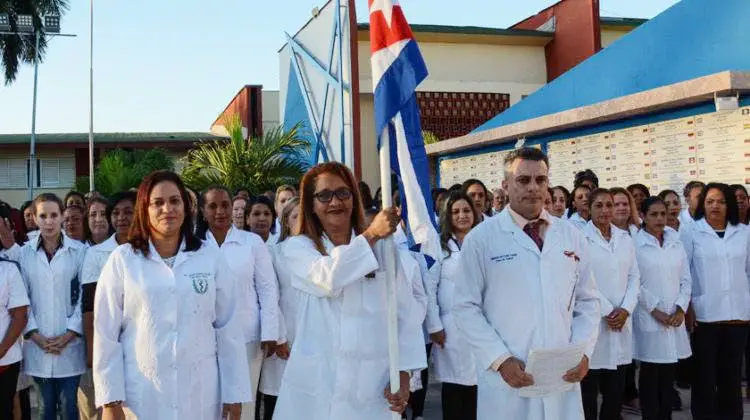
    Antigua and Barbuda’s government has formally justified its decision to recruit nurses from Ghana, emphasizing pragmatic healthcare considerations over political motives. Health Minister Sir Molwyn Joseph presented a multi-faceted rationale during a recent media briefing, highlighting three core factors: proven regional experience, English-language proficiency, and high-quality medical training.

    Minister Joseph revealed that Ghanaian nurses already have an established track record within Caribbean healthcare systems, specifically in The Bahamas and Barbados. Positive performance reports from these regional postings provided the foundational confidence that Ghanaian medical staff would integrate seamlessly into Antigua and Barbuda’s health infrastructure and meet stringent professional standards.

    Addressing potential language barrier concerns, the Minister pointed to Ghana’s historical and educational background. ‘Ghana was a colony like Antigua and Barbuda — only British,’ Joseph stated, adding, ‘I assure you that they are quite capable of speaking the King’s language.’ This shared colonial history under British rule ensures that Ghanaian healthcare professionals are trained in English-speaking environments, facilitating clear communication in medical settings.

    The Minister further challenged any perceptions of inferior medical training standards in African nations. ‘Africa has produced some of the most outstanding doctors and nurses now applying their trade in the world,’ Joseph asserted, noting that many Ghanaian medical professionals currently serve in major metropolitan centers including New York and London. He emphasized their contributions to highly specialized medical fields and research at prestigious international institutions, with many holding advanced qualifications and patents.

    The recruitment initiative represents a dual approach to addressing nursing shortages: importing immediately available qualified staff while concurrently developing domestic capabilities through expanded nurse training programs at the University of the West Indies Five Islands Campus. The government maintains that patient care standards will remain uncompromised throughout this transitional period of workforce stabilization.

  • Future Pro to Host UK Football Pathways Session in Antigua Ahead of CAF Combine

    Future Pro to Host UK Football Pathways Session in Antigua Ahead of CAF Combine

    Future Pro is set to make a significant return to the Caribbean region with an exclusive Football Pathways Evening scheduled for Wednesday, February 4th in Antigua and Barbuda. The event, strategically timed ahead of the upcoming CAF Combine, will take place at the Weatherills Hotel in St. John’s from 4:30 PM to 7:00 PM.

    The program will commence with an initial meet-and-greet session from 4:30 PM to 5:30 PM, allowing attendees to network with Future Pro representatives. This will be followed by a comprehensive presentation from 5:30 PM to 6:15 PM detailing the organization’s football development pathways. The evening will conclude with an interactive question-and-answer segment and personalized one-on-one discussions from 6:15 PM to 7:00 PM.

    Future Pro highlighted their proven track record with Antiguan talent, specifically mentioning recent successes including Kylano, who earned a trial with Blackburn Rovers’ under-21 squad, and Marco Michael, who secured a trial opportunity with FC Andorra.

    Due to limited capacity, the event requires advance registration. Interested football players and parents must pre-register by contacting Future Pro directly at the provided telephone number: +44 7894 322273. The venue will offer both parking facilities and seating arrangements, with attendees requested to gather at the outdoor lawn gazebo area.

  • Europese leiders roepen op tot eenheid in Davos na Trumps dreiging met tarieven

    Europese leiders roepen op tot eenheid in Davos na Trumps dreiging met tarieven

    European leaders demonstrated remarkable solidarity at the World Economic Forum in Davos, Switzerland, as they coordinated a firm response to former U.S. President Donald Trump’s controversial pursuit of acquiring Greenland. The gathering revealed a continent determined to present a unified stance against what they perceive as provocative American actions.

    French President Emmanuel Macron articulated Europe’s position with notable clarity, asserting that the European Union must not yield to ‘the law of the strongest.’ He characterized as ‘crazy’ the mere consideration of deploying the EU’s anti-coercion instrument against the United States. ‘We seek greater growth and stability, but we prefer respect over intimidation,’ Macron declared during the forum’s proceedings.

    European Commission President Ursula von der Leyen emphasized the imperative for Europe to adapt to rapid global transformations, advocating for the construction of a ‘new, independent Europe’ capable of navigating contemporary geopolitical challenges. Her address highlighted the strategic repositioning of European foreign policy in response to shifting international dynamics.

    Belgian Prime Minister Bart De Wever framed the situation as a critical juncture for the European project, issuing a stark warning: ‘We must tell Donald Trump: you are crossing red lines here. We stand strong together, or we stand divided.’ This sentiment was echoed by Swedish Deputy Prime Minister Ebba Busch, who cautioned that appeasing Trump’s ego would prove ineffective, urging maintenance of sharp trade measures including potential retaliatory actions.

    The diplomatic tensions escalated following Trump’s Saturday announcement of tariffs targeting European nations opposing his Greenland acquisition plans. This move triggered substantial protests across Denmark, with thousands expressing their disapproval through public demonstrations.

    United Nations Secretary-General António Guterres joined other global leaders in advocating for maximum restraint to prevent further escalation and potential loss of life. Meanwhile, Ukrainian President Volodymyr Zelenskyy expressed conditional willingness to participate in security guarantee discussions and reconstruction plans, provided the United States offers concrete commitments. He simultaneously called for increased pressure on Russia following recent severe attacks on Ukrainian territory.

    The Davos meeting effectively mirrored the complex tensions and challenges characterizing contemporary international politics, with European nations and their partners seeking equilibrium between cooperation and defending their interests against unpredictable American policy decisions.

  • Communities renew calls for action over pollution concerns at Hatillo Dam

    Communities renew calls for action over pollution concerns at Hatillo Dam

    Residents of Sánchez Ramírez province in the Dominican Republic are escalating demands for governmental intervention amid growing fears of severe contamination at the Hatillo Dam, the largest freshwater reservoir in the Greater Antilles. For over a month, communities surrounding the critical water source have observed alarming environmental changes, including a persistent and intensifying greenish discoloration of the water, which they believe signals a dire threat to public health and local ecosystems.

    Despite official statements from the Ministry of Environment in December 2025 attributing the discoloration to a naturally occurring algae bloom, local citizens remain deeply skeptical. In a significant development, community representatives have procured independent laboratory analyses that reportedly contradict the government’s findings. These tests allegedly identified dangerous bacterial contaminants, including coliforms, Pseudomonas, and fecal streptococci, alongside heightened chemical concentrations of cyanide and phosphates.

    The situation has generated widespread concern due to the reservoir’s vital role in supporting local livelihoods. Thousands depend on its waters for fishing, agricultural irrigation, and daily household use. Residents have reported foul odors emanating from the water and voiced particular alarm about vulnerabilities for children, the elderly, and farming communities whose economic stability is directly tied to the reservoir’s health.

    Calls for action are now focused on demanding that environmental and public health authorities initiate transparent, independent monitoring of the water quality and publicly disclose all findings. Community leaders are urging the implementation of immediate mitigation measures to safeguard the population and the ecosystem, vowing to sustain pressure until a conclusive resolution and tangible protective actions are provided to address what they deem an escalating public health crisis.

  • Police begin full enforcement of public Smoking Ban

    Police begin full enforcement of public Smoking Ban

    BASSETERRE, St. Kitts – The Royal St. Christopher and Nevis Police Force has initiated comprehensive enforcement of the public smoking prohibition, marking the end of an extended educational campaign period. This decisive action follows the implementation of the Smoking (Designated Areas) Act, 2023 and the Freedom of Conscience (Cannabis) Act, 2023, which collectively ban smoking and vaping in all public spaces unless conducted within officially licensed designated areas.

    Over the weekend, law enforcement authorities disseminated detailed excerpts of the legislation through social media platforms, explicitly clarifying that the restrictions apply to all smoking devices, including electronic cigarettes and vaping apparatus. The enforcement move addresses growing public concerns regarding visible non-compliance during major social gatherings, including the St. Kitts Music Festival and Carnival celebrations, where previous warnings had yielded limited tangible action.

    Police Commissioner James Sutton provided context for the delayed enforcement, emphasizing that the initial phase prioritized public education. “Smoking in public will be addressed at all levels,” Commissioner Sutton stated. “Through public engagement, address systems, entertainment venues, and advertisements, we are utilizing all available platforms to educate citizens. We recognized that despite issuing notices, the notification period was insufficient, necessitating direct community engagement regarding public smoking regulations and ticketing procedures.”

    The police confirmation indicates that enforcement activities are now actively underway, with at least one citation already issued. Authorities have reiterated that “public place” encompasses any indoor or outdoor area accessible to the public, regardless of public or private ownership. This comprehensive definition includes bars, restaurants, hotels, educational institutions, medical facilities, places of worship, government buildings, public transportation, community centers, and all roadways.

    The legislation permits smoking exclusively in areas conspicuously marked as Designated Smoking Areas with appropriate signage. Any location lacking clear designation automatically qualifies as a non-smoking zone. Violators face a fixed penalty of $500, with potential for additional penalties depending on circumstances.

    Law enforcement officials emphasize that the regulations aim to strike a balance between individual freedoms and collective public health priorities. “While the right of adults to choose to smoke is acknowledged and respected,” the police statement noted, “the collective right of all citizens to a safe and healthy environment must also be upheld.”

    Both residents and visitors are urged to maintain full compliance with the legislation as police continue enforcement operations across the federation.

  • Bezoek CCJ onderstreept rol Suriname binnen Caribische rechtsorde

    Bezoek CCJ onderstreept rol Suriname binnen Caribische rechtsorde

    A high-level delegation from the Caribbean Court of Justice (CCJ), led by President Winston Anderson, has commenced an official visit to Suriname at the invitation of the country’s Court of Justice President Iwan Rasoelbaks. The delegation, which includes Justice Peter Jamadar, the Registrar, and Chief Marshal, aims to enhance judicial cooperation between regional institutions and national legal systems.

    This strategic engagement aligns with the CCJ’s 2025-2032 Strategic Plan, which prioritizes improving access to justice, strengthening regional legal collaboration, promoting transparency, and building public confidence in judicial institutions. During their stay, the delegation will engage with members of Suriname’s judiciary, the Bar Association, parliamentarians, and other key stakeholders.

    A highlight of the visit will be the delegation’s participation in the Congress on Modernization of the Judiciary on January 22, where they will elaborate on the CCJ’s role, operational methodologies, effectiveness, institutional framework, and jurisdictional authorities.

    The current mission builds upon previous collaborative initiatives between the CCJ and Suriname. In November 2025, the Court concluded a multi-year training program on Referral Procedures in partnership with Suriname’s Bar Association. This comprehensive two-year awareness campaign, partially funded by the European Union, focused on educating legal professionals and business communities about the obligation of national judges to refer questions regarding the interpretation and application of the Revised Treaty of Chaguaramas to the CCJ in its original jurisdiction.

    As part of this ongoing cooperation, President Anderson previously presented the CCJ Original Jurisdiction Rules 2024 and accompanying Referral Manual—now translated into Dutch—to Suriname’s former Minister of Justice & Police. The CCJ anticipates constructive dialogues with Surinamese partners and aims through this visit to foster greater understanding of the Court’s role in advancing rule of law, regional integration, and legal excellence throughout the Caribbean region.

  • Scheidende VS ambassadeur Faucher: ‘Dit is geen afscheid’

    Scheidende VS ambassadeur Faucher: ‘Dit is geen afscheid’

    After completing his diplomatic assignment in Suriname, U.S. Ambassador Robert Faucher emphasized that his departure marks not an ending but the beginning of a new chapter in his four-decade relationship with the nation. During his farewell reception, the ambassador reflected on his transformative tenure while affirming his permanent personal connection to the country.

    Ambassador Faucher characterized his recent three-year term as one of the most significant phases of his diplomatic career, highlighting a period of remarkable recovery and advancement following the challenges of the global pandemic. Under his leadership, bilateral cooperation between Suriname and the United States intensified substantially across multiple sectors including energy development, educational exchange, and commercial engagement. This enhanced partnership manifested through historic business delegations and strengthened academic networks between the two nations.

    The ambassador’s personal journey with Suriname began in 1986, with subsequent visits in 2002 leading to his ambassadorial appointment. Throughout his service, he witnessed the country’s evolution into a confident nation with global perspectives. His extensive travels across all districts—from urban Paramaribo to the remote Sipaliwini region, including visits to Kwamalasamutu and the culturally significant Werehpai area—deepened his appreciation for Suriname’s natural wonders, cultural diversity, and national resilience.

    A cornerstone of Faucher’s diplomatic mission involved highlighting the shared historical narrative between the United States and Suriname. Notable achievements included the installation of the first American Battle Monuments Commission memorial in South America, commemorations of NASA rocket launches in Coronie, and the publication of “Common Past, Shared Future” documenting fifty historical connections between the nations. Most recently, a monument in Commewijne honored 35 American military personnel and diplomats who perished in the 1943 Matapica aircraft tragedy.

    The ambassador described the current bilateral relationship as the strongest in history—characterized by practical cooperation, mutual respect, and future-oriented vision grounded in shared sovereignty and developmental values. Concluding with an optimistic outlook, Faucher expressed confidence that “the best chapters in U.S.-Suriname relations remain ahead of us,” promising to return not as a diplomat but as a permanent friend of the nation.

  • Politic : The FNE undertakes structural reform

    Politic : The FNE undertakes structural reform

    In a significant address during the 33rd annual ‘Mardis de la Nation’ event on January 20, 2026, Élysée Collagène, Director General of Haiti’s National Education Fund (FNE), outlined an ambitious transformation agenda for the institution. The comprehensive reform plan aims to establish the FNE as an efficient, transparent, and financially sustainable organization capable of effectively supporting Haiti’s education system.

    Collagène’s administration began with a thorough institutional assessment that identified substantial administrative and organizational deficiencies. In response, the development of detailed financial and accounting procedures manuals has been designated as a strategic priority to address these systemic weaknesses.

    The reform initiative commenced with the temporary suspension of check distributions, creating necessary operational space for a complete overhaul of allocation mechanisms. This pause enabled the implementation of enhanced procedures designed to ensure both efficiency and integrity in fund distribution.

    A critical policy change now mandates that educational fee checks be issued exclusively to schools rather than individual recipients. This structural modification guarantees proper utilization of public funds while establishing comprehensive financial traceability. An oversight committee has been established to monitor strict adherence to this system, working directly with educational institutions and prioritizing support for children from the most vulnerable socioeconomic backgrounds.

    Confronted with application volumes dramatically exceeding budgetary capacity, the FNE has instituted a technical validation committee responsible for evaluating and selecting projects based on stringent eligibility criteria. These measures proved particularly crucial given the institution’s previous financial challenges, including a 2.3 billion gourdes debt burden in 2023.

    Through disciplined fiscal management, the FNE has achieved a remarkable financial turnaround, growing its treasury to 5.9 billion gourdes. This recovery establishes a solid foundation for sustainable operations and credible long-term support of Haiti’s national education objectives.