作者: admin

  • Projecten tot  US$ 150.000 mogelijk voor Surinaamse landbouwers

    Projecten tot US$ 150.000 mogelijk voor Surinaamse landbouwers

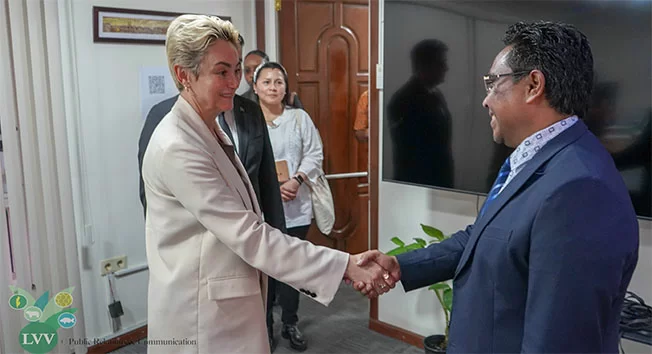
    Suriname’s agricultural sector is set to receive significant support through a new cooperation agreement with Turkey’s official development agency. During a high-level meeting between Suriname’s Minister of Agriculture, Livestock and Fisheries Mike Noersalim and Turkish Ambassador Ayse Selcan Sanli, both parties established a framework for agricultural development projects worth approximately $150,000.

    The Turkish Cooperation and Coordination Agency (TIKA), operating under Turkey’s Ministry of Culture and Tourism, will facilitate the initiative. The partnership will prioritize specific sectors identified by Suriname, including cassava, highland rice, and banana production. Both officials acknowledged Suriname’s logistical challenges but reaffirmed their commitment to strengthening the country’s agricultural infrastructure.

    Minister Noersalim proposed implementing projects in collaboration with TIKA and an experienced regional development partner, citing Peru and Colombia as potential candidates. TIKA confirmed its role as a bridge builder, connecting Surinamese institutions with Turkish and international knowledge centers through their agricultural experts.

    The development program focuses on capacity building through specialized training programs for both technicians and farmers, emphasizing climate resilience, food security, and value addition to raw products. Global examples of TIKA’s projects include greenhouse construction (as implemented in Montenegro), agricultural production support, and administrative unit development. The agency also provides direct assistance to vulnerable communities, including indigenous groups and women’s cooperatives, through equipment donations for processing products such as blackberries into juice or jam.

    The application process requires Suriname to take initiative by submitting priority projects to TIKA for feasibility assessment before presentation to headquarters. Approved projects will receive support through in-kind donations of equipment and machinery, requiring detailed specifications and need justifications.

    Minister Noersalim highlighted critical shortages in specialized personnel, particularly veterinary assistants, and emphasized the need for accelerated vocational training. Agro-processing stimulation remains a high priority to add value to local products like tropical fruits. Specific focus areas include mango, banana, cassava, and highland rice, alongside revitalizing traditional crops including cocoa, coffee, citrus, pineapple, and passion fruit.

    The agreement concludes with LVV appointing a focal point to formalize one or two concrete project proposals according to TIKA procedures. Technical online discussions will follow, with plans to organize a joint working group meeting to advance the partnership.

  • OP-ED: Seven years, 80,000 signatures, and still no major CXC reform

    OP-ED: Seven years, 80,000 signatures, and still no major CXC reform

    For seven consecutive years (2019-2026), CARICOM’s educational system has faced escalating crises surrounding examination administration, compelling students, parents, and educators to become reluctant advocates for basic fairness. With over 80,000 signatures across multiple petitions, the Caribbean Examinations Council (CXC) has transformed from a regional pride to a source of persistent public outcry.

    The crisis began in 2019 when the CSEC Mathematics exam was compromised by widespread cheating, with videos circulating of students using mobile phones during testing. The incident revealed critical security vulnerabilities and inadequate invigilation procedures.

    In 2020, confidence in CXC’s grading system collapsed when thousands of high-performing students received unexpectedly low grades. International testing experts later identified grade compression—a statistical or algorithmic error—as the probable cause, affecting approximately 20,000 students. The region’s response contrasted sharply with the UK’s compassionate handling of a similar crisis.

    The pandemic year of 2021 revealed further institutional rigidity as CXC maintained traditional exam structures despite students facing lockdowns, financial hardship, family illnesses, digital inequities, and the trauma of the La Soufrière eruption. Four petitions totaling over 30,000 signatures called for modified approaches, with Jamaica’s Education Minister and UNICEF offices across the region joining the appeals.

    Security breaches resumed in 2023 with the CSEC Mathematics Paper 2 leak, prompting 18,000 students to demand the compromised paper be discarded. In 2024, the CAPE Chemistry exam faced criticism for being misaligned with the syllabus and containing ambiguous questions, generating another 2,500 signatures demanding accountability.

    This pattern creates a moral contradiction for CARICOM, whose leaders champion international reparations for historical injustices while tolerating educational inequities affecting their own children. The contrast becomes particularly stark when comparing CXC’s approach to Cambridge’s meticulously planned 2023-2033 e-testing rollout, which includes phased implementation, pilot testing, and accommodations for digital access disparities.

    The petitions collectively represent a regional diagnostic revealing systemic weaknesses: fragile exam security, opaque grading processes, insufficient stakeholder engagement, inconsistent crisis responses, and quality assurance challenges. Yet they also demonstrate the Caribbean people’s enduring commitment to educational integrity and institutional accountability.

    As trust declines, financially privileged families increasingly turn to private alternatives, threatening CXC’s legacy and CARICOM’s educational cohesion. The resolution now depends on whether regional leaders will treat these petitions as catalysts for reform or continue to dismiss them as mere complaints, ultimately determining whether exam fairness will become a CARICOM-wide election issue.

  • WIN, APNU, PPPC govt clash on amount of oil money in budget, cost of living

    WIN, APNU, PPPC govt clash on amount of oil money in budget, cost of living

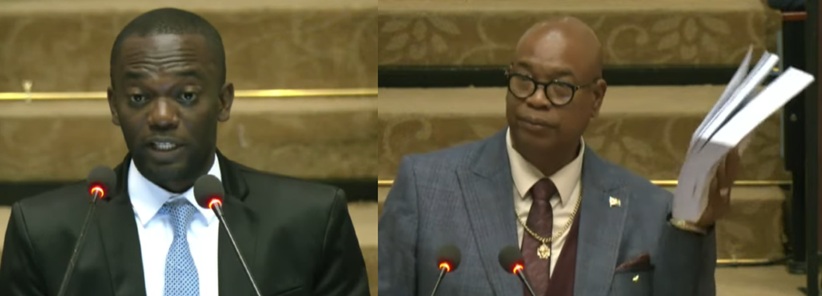
    Guyana’s National Assembly witnessed a fierce political confrontation on Monday as the opposition We Invest in Nationhood (WIN) and A Partnership for National Unity (APNU) clashed with the ruling People’s Progressive Party Civic (PPPC) government over the allocation of oil revenues in the record GYD$1.558 trillion 2026 national budget and its perceived failure to address escalating living costs.

    In his inaugural parliamentary address, WIN frontbencher Dr. Andre Lewis launched a comprehensive critique of the budget framework, arguing that it disproportionately relies on volatile oil earnings without establishing contingency plans for potential revenue shortfalls. “The budget depends heavily on oil revenues at a time when global oil prices are uncertain and projected to decline,” Lewis stated, emphasizing the absence of clear fiscal safeguards should petroleum income diminish unexpectedly.

    The opposition leader further challenged the government’s characterization of the spending plan as “People-Centred,” noting persistent challenges including inflated food prices, unregulated transportation costs, and inadequate housing availability. Lewis contended that coastal, riverain, rural, and mining communities continue experiencing stark disparities in service delivery, infrastructure quality, and economic opportunity despite the budget’s comprehensive scope.

    Public Works Minister Juan Edghill offered a robust defense of the government’s fiscal strategy, clarifying that only GY$495 billion—approximately 31.8% of the total budget—derives from petroleum revenues. “That’s the total amount of oil money that is financing this budget,” Edghill asserted, directly countering opposition claims of excessive hydrocarbon dependency.

    The minister characterized the budget as a “social contract of inclusion” deliberately designed to channel resources toward working families, small enterprises, agricultural producers, public servants, and marginalized communities. Edghill highlighted substantial allocations including GY$183 billion for education, GY$161 billion for healthcare, GY$113.2 billion for agricultural and food security initiatives, and GY$196.1 billion for transformational transport infrastructure.

    APNU representative Vinceroy Jordan joined the critique, dismissing the government’s proposed GY$5,000 pension increase and GY$3,000 public assistance boost as insufficient measures that fail to genuinely prioritize citizen welfare. Jordan advocated for a 35% salary increase for public servants—suggesting 25% as a minimum acceptable compromise—and emphasized that substantial agricultural investment represents the most viable pathway to reduce food prices and enhance national food security.

    Minister Edghill concluded by underscoring the government’s comprehensive infrastructure investments in drainage systems, road networks, bridges, ferry services, and airstrips, arguing that these developments indirectly reduce living costs by improving transportation efficiency and market accessibility, particularly in remote regions.

  • U-17 World Cup 2026 Qualifiers : Our Grenadières dominate Guatemala [3-0] and qualify for the final tournament

    U-17 World Cup 2026 Qualifiers : Our Grenadières dominate Guatemala [3-0] and qualify for the final tournament

    In a display of formidable prowess, Haiti’s U-17 women’s national soccer team, known as the Grenadières, achieved a decisive 3-0 victory against Guatemala on February 2, 2026, at the FFK Stadium in Willemstad, Curaçao. This triumph marked their fourth consecutive win in the FIFA U-17 Women’s World Cup Morocco 2026 qualifiers, securing their advancement to the final tournament stage.

    The match began with immediate intensity as Haiti established control from the opening minutes. Krystel Châtelain initiated the scoring in the 4th minute with a precise left-footed strike from a challenging angle, capitalizing on a set-piece opportunity. Merely a minute later, Keisha Gue amplified the lead with a powerful right-footed shot from outside the penalty area, demonstrating exceptional technical skill.

    As the first half concluded, Kerdina Lamour solidified Haiti’s dominance by converting a penalty kick with clinical precision into the top right corner during stoppage time. This third goal effectively sealed the outcome before halftime.

    French coach Frenoy Baptiste maintained consistency by fielding the identical starting lineup that had previously defeated the Cayman Islands. The team featured several diaspora players representing clubs in Canada, the United States, Scotland, and Puerto Rico, alongside domestic talent from Haiti.

    Following the interval, Haiti managed the game comfortably, preserving their substantial lead against Guatemala’s Mataão squad, who struggled to mount any significant offensive response. Strategic substitutions were implemented in the second half, including goalkeeper Abeegayel Favilus being replaced by Shama Jean Baptiste in the 89th minute.

    The victory positions Haiti at the summit of Group C with a perfect record: four victories, seventeen goals scored, and only one conceded. This outstanding performance guarantees their progression to the CONCACAF Champions League qualifiers’ final stage, where they will confront the confederation’s elite teams for a coveted spot in the 2026 World Cup in Morocco.

  • CfA: Facilitators for 2026 Parish-Level Youth Parliament Training Programme

    CfA: Facilitators for 2026 Parish-Level Youth Parliament Training Programme

    The Grenadian Ministry of Youth and Sports has officially announced recruitment for qualified facilitators to lead its prestigious 2026 Parish-Level Youth Parliament Training Programme. This national initiative represents a cornerstone of the country’s youth development strategy, designed to cultivate future leaders through immersive civic education.

    The program’s curriculum focuses on three core developmental areas: mastering public speaking and effective communication techniques, understanding principles of effective leadership and governance, and comprehensive training in parliamentary rules and procedures. The initiative aims to equip young Grenadians with practical skills that bridge theoretical knowledge with real-world application.

    Prospective facilitators must demonstrate substantial experience in youth development, educational instruction, or community leadership roles. Ideal candidates will possess verified expertise in working with youth populations across various community settings. The commitment requires availability for 2-3 days weekly during the April-June 2026 training period, with sessions conducted across multiple parishes at local schools and community centers.

    This parish-level training serves as the foundational stage for Grenada’s youth leadership pathway. Exceptional participants displaying outstanding debate skills, leadership qualities, and community engagement will advance to compete in the National Youth Parliament Elections scheduled for December 2026.

    The Ministry has established a February 20, 2026 application deadline, encouraging interested professionals to access detailed program information and submission guidelines through their official online portal or direct telephone contact. This program underscores Grenada’s ongoing investment in developing politically literate and civically engaged youth leadership.

  • Grenada cannot move forward divided by politics, religion and class

    Grenada cannot move forward divided by politics, religion and class

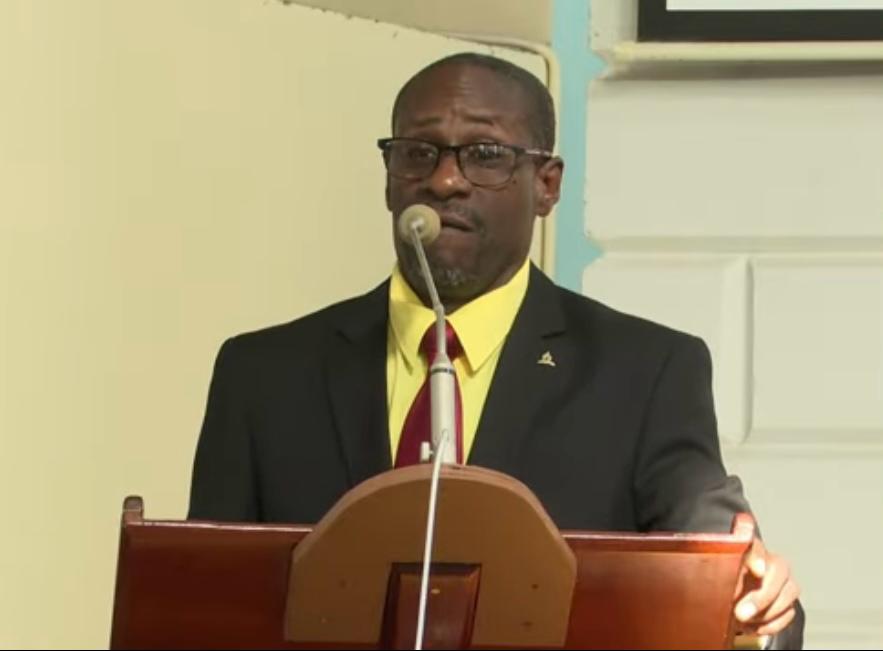
    During Grenada’s 2026 Independence anniversary interdenominational church service, prominent Seventh Day Adventist Pastor Enoch Isaac delivered a powerful sermon warning citizens about the dangers of political tribalism. Speaking at St. Peter’s Roman Catholic Church on February 1st, Pastor Isaac emphasized that national progress requires transcending divisions along political, religious, and class lines.\n\nThe religious leader defined political tribalism as \”an intense loyalty to a political group that often prioritizes group allegiance over objective truth and national interest.\” He cautioned that this mentality transforms political opponents into \”immoral enemies\” rather than legitimate adversaries, ultimately fostering hostility and degradation within society.\n\nIsaac called for a collective shift toward reconciliation and collaboration, stating that \”true transformation starts with the spiritual transformation of citizens.\” He urged parents to instill strong values in children and challenged leaders to govern with \”humility, integrity, honesty and accountability.\” The pastor specifically emphasized that churches must serve as the nation’s \”moral compass\” in this transformative process.\n\nThe service, broadcast live through Government Information Service platforms, was attended by Governor General Dame Cecile La Grenade, government ministers, opposition parliament members, and senior civil servants. Notably absent was Prime Minister Dickon Mitchell, who had traveled to Dubai for an international conference. Acting Prime Minister Lennox Andrews subsequently delivered the scheduled scripture reading in Mitchell’s absence.\n\nThroughout his address, Pastor Isaac repeatedly invoked the phrase \”ever conscious of God,\\” urging congregants to maintain this perspective while pursuing national development and the \”transformation of the Spice Isle.\”

  • Trade Unionists in Antigua and Barbuda Strengthen Capacity to Support LGBTQ+ Workers

    Trade Unionists in Antigua and Barbuda Strengthen Capacity to Support LGBTQ+ Workers

    In a significant stride toward workplace inclusivity, trade union representatives across Antigua and Barbuda have enhanced their capabilities to advocate for workers of diverse sexual orientations and gender identities. This development follows an intensive two-day workshop conducted on January 28-29, 2026, designed to foster greater understanding and operational competence regarding LGBTQ+ issues within labor environments.

    The initiative, orchestrated by Public Services International (PSI) with collaborative support from the Rainbow Network of the Dutch Trade Union Confederation (FNV), marks a pivotal component of an extensive 18-month project dedicated to promoting equal rights for LGBTQ+ individuals throughout the Caribbean sub-region. Sandra Massiah, PSI Sub-Regional Secretary for the Caribbean, emphasized the program’s strategically focused methodology, distinguishing it from previous advocacy endeavors.

    “Our current project in the Caribbean involves introspection—specifically examining dynamics within trade unions themselves,” Massiah elaborated. “We are prioritizing the education of shop stewards and union representatives to deepen their comprehension of LGBTQ+ matters and their implications in labor contexts.”

    The curriculum addressed pressing challenges confronting LGBTQ+ workers, exploring practical strategies through which unions can partner with organizations to champion and bolster the community. Interactive group sessions and facilitated dialogues covered multiple critical areas: LGBTQ+ terminology clarification, identification of vulnerable groups alongside the protective role of trade unions, implementation guidelines for ILO Convention 190 and Recommendation 206 concerning the eradication of workplace violence and harassment, and examinations of discrimination, stigmatization, and intersectionality.

    Participants expressed profound appreciation for the transformative experience. One delegate remarked that the workshop reinforced fundamental human rights principles, noting that “everyone, including LGBTQ+ individuals, deserves respect and equitable treatment.” Another described the sessions as profoundly enlightening, voicing optimism about integrating acquired knowledge into their respective union practices.

    Representatives from major labor organizations including the Antigua and Barbuda Workers’ Union, the Public Service Association, the Nurses Association, and the Union of Teachers participated actively. The event also featured expert contributions from Lina Bogle-Mienzer, a noted Labor Relations Practitioner and LGBTQ+ Advocate from Bermuda, and MESH Antigua and Barbuda, a dedicated advocacy and support organization for the LGBTQ+ community.

  • Panton: Constituency Funds Should Match “Greatest Need”, Not Voter Numbers

    Panton: Constituency Funds Should Match “Greatest Need”, Not Voter Numbers

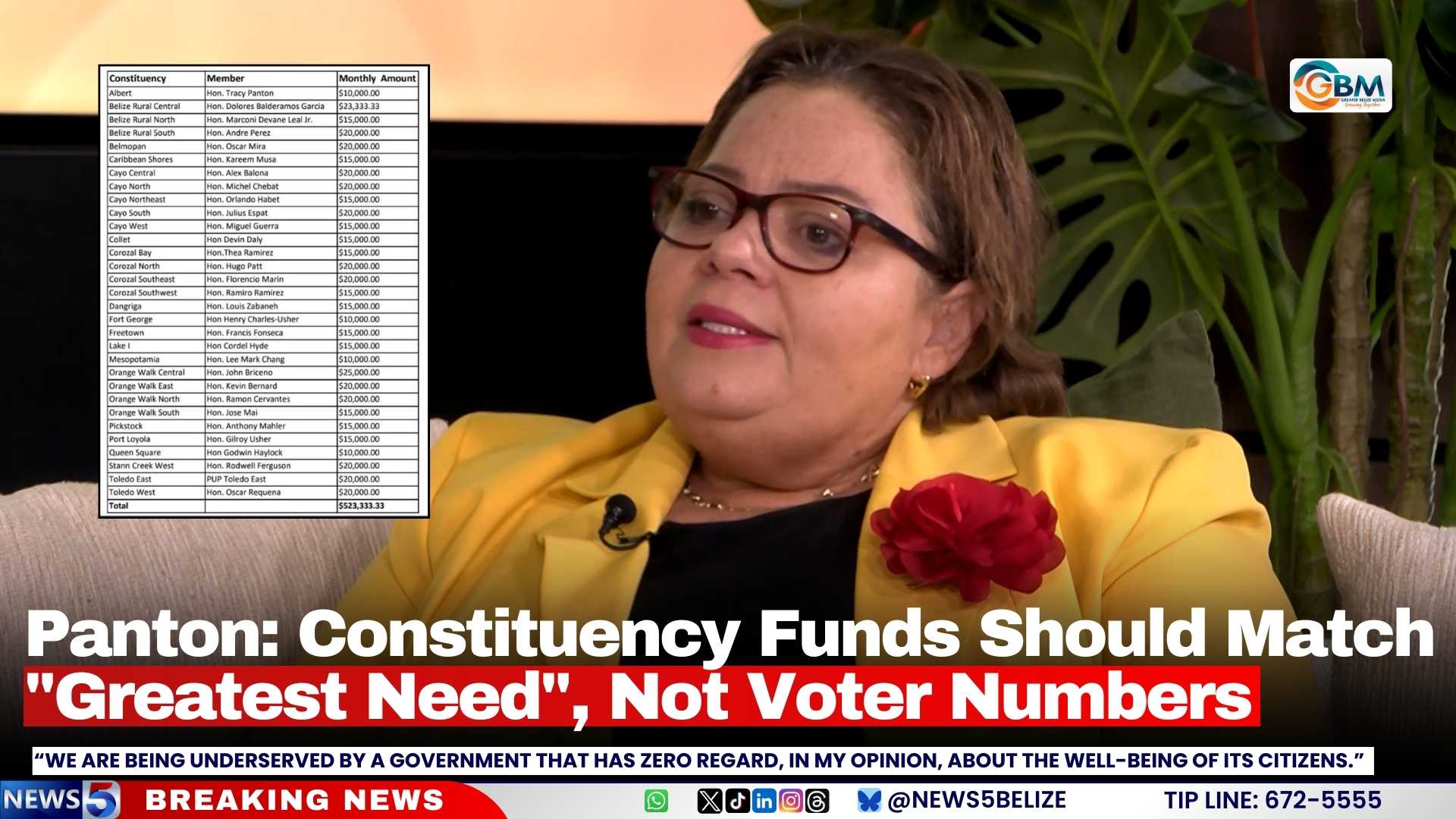
    In a recent television appearance, Belize’s Opposition Leader Tracy Panton launched a substantive critique against the current methodology for distributing Constituency Development Funds (CDF), advocating for a needs-based allocation system rather than the existing voter-based formula.

    During her interview on ‘Open Your Eyes,’ Panton explicitly rejected Prime Minister John Briceño’s premise that CDF should be proportionate to voter registration numbers within constituencies. She articulated an alternative philosophy for resource distribution: “The fundamental justification should be based on where the greatest need exists—that’s where you should concentrate the greatest resources.”

    The controversy gained quantitative substance through Freedom of Information Act disclosures obtained by Jerry Enriquez, revealing that Panton’s Albert constituency receives $10,000 monthly—approximately $3 per registered voter. Panton characterized this disproportionate allocation as “crazy,” particularly when contrasted with the Stann Creek West constituency, which despite being the nation’s most populous, receives only $20,000 monthly ($1.82 per voter).

    Panton detailed her constituency’s responsible utilization of these funds, emphasizing investments in healthcare services, educational support, housing repairs, funeral assistance, and community infrastructure projects including restoration work at the Anglican Cathedral Church. “We maintain complete financial accountability,” she noted. “We’re mandated to submit detailed monthly expenditure reports to the Ministry of Finance.”

    The Opposition Leader framed the allocation disparity within broader concerns about governmental priorities, expressing particular frustration about healthcare accessibility. “We’re debating marginal differences in per-voter funding while our citizens cannot access primary healthcare,” she stated, referencing the $50 million National Health Insurance program investment alongside troubling infant mortality rates at the Karl Heusner Memorial Hospital.

    Panton’s critique expanded to encompass overall governance priorities, emphasizing the government’s fundamental obligation to deliver services to taxpayers. She issued a compelling call to action for Belizean citizens to advocate for electoral redistricting, asserting that current practices demonstrate the government’s “zero regard for the well-being of its citizens” and result in systematic underservice of the population.

  • Fernandez wint presidentschap Costa Rica, partij boekt ruime parlementaire meerderheid

    Fernandez wint presidentschap Costa Rica, partij boekt ruime parlementaire meerderheid

    In a sweeping electoral triumph, right-wing populist candidate Laura Fernandez has secured Costa Rica’s presidency with a commanding lead, capturing nearly 45% of votes with 88% of ballots counted. The protégé of incumbent President Rodrigo Chaves has successfully avoided a runoff election while her Sovereign People’s Party (PPSO) is projected to secure 30 out of 57 parliamentary seats—a substantial legislative gain that promises significant governance advantages.

    Addressing supporters in San José, Fernandez declared the dawn of a new political era, proclaiming the end of Costa Rica’s ‘second republic’ and the beginning of a ‘third republic.’ She committed to continuing President Chaves’ hardline security policies and populist agenda, despite constitutional prohibitions on immediate presidential reelection. Fernandez indicated she would incorporate Chaves into her administration in an unspecified capacity.

    Her primary opponent, centrist politician Álvaro Ramos, conceded after securing approximately one-third of votes, pledging conditional support while maintaining critical oversight. Progressive candidate Claudia Dobles trailed significantly with less than 5% voter support.

    The election occurred against a backdrop of escalating security concerns, with murder rates reaching record highs during Chaves’ presidency. Despite this, Chaves maintained remarkable 58% approval ratings, with many citizens citing security and public health as paramount concerns.

    Fernandez’s victory aligns with a broader regional trend of right-wing populist ascendancy across Latin America, mirroring recent electoral successes in Chile, Ecuador, and Honduras. Political analysts attribute her triumph largely to potent security rhetoric that resonated with voters’ safety concerns.

    Since her election, Fernandez has prioritized strengthening security forces and combating corruption—key campaign pledges. Her administration has announced plans for enhanced legislation against organized crime and investments in modern policing technology.

    The international community has responded with mixed reactions: some nations welcome the outcome as potential stabilization, while others express concerns about possible civil rights restrictions and democratic erosion given Fernandez’s populist approach and association with Chaves’ controversial repressive measures.

    Significant economic challenges persist, with inflation and unemployment remaining pressing issues. While Fernandez has committed to fostering economic growth and job creation, specific policy details remain undefined, leaving economic stakeholders awaiting concrete implementation plans.

  • 18-Year-Old Killed in Motorcycle RTA

    18-Year-Old Killed in Motorcycle RTA

    A fatal road traffic accident on the Northern Highway has resulted in the tragic death of an 18-year-old motorcyclist. Miguel Noel Montoya lost his life on the morning of February 2, 2026, following a collision with a tow-head truck near Mile 11 at approximately 10:40 a.m.

    According to official reports, the young man was returning home from his workplace when the devastating incident occurred. Family members confirmed that despite his youth, Montoya was an experienced motorcycle rider who consistently adhered to safety protocols, including wearing protective headgear during his travels.

    Alberto Montoya, the victim’s uncle, provided a heartrending account of receiving the tragic news. “My brother came to my house and informed me that his son had died in this location,” he recounted. “I immediately drove to the scene where we discovered his body.”

    The grieving family remembered Montoya as a responsible young man with a promising future ahead of him. Described as “a good kid” who had not yet started his own family, his loss has created an irreplaceable void in their lives. “The only thing we would want is to see him back,” Alberto Montoya expressed through his sorrow, “but we can’t see him anymore.”

    Authorities continue to investigate the precise circumstances surrounding the collision. The proximity of Montoya’s residence to his workplace adds a particularly poignant dimension to this tragedy, highlighting how routine commutes can unexpectedly turn fatal.