作者: admin

  • Barita feels the chill as market-driven gains fade

    Barita feels the chill as market-driven gains fade

    BARITA Investments Limited experienced a notable shift in its financial performance for the fiscal year ending September 30, 2025, with profits declining from approximately $3.8 billion to just over $3 billion. This contraction primarily stemmed from a substantial cooling in market-driven gains, particularly investment revaluation and trading income, which plummeted by nearly 40% compared to the previous year.

    The diminished earnings underscore a significant transition in the company’s revenue composition. While valuation-led profits receded, Barita demonstrated robust growth in its fundamental operations. Fee and commission income expanded by 12%, while net interest income surged by more than 70%, reflecting enhanced yields and strategic balance-sheet management. This performance recalibration highlights the company’s evolving dependence on recurring revenue streams rather than favorable market movements.

    Operational efficiency showed marked improvement despite the earnings decline. Cash flow generation strengthened significantly, with operating activities swinging to a solid inflow following previous outflows. This enhancement resulted from rigorous working-capital management and a substantial contraction in the loan portfolio, which decreased by over one-third.

    Barita’s balance sheet continued its expansion trajectory, with total assets growing 5% to nearly $150 billion, primarily driven by increases in pledged assets and receivables. The funding structure remained heavily reliant on repurchase agreements and borrowings—characteristic of primary dealership operations. Equity levels remained stagnant due to dividend distributions and valuation adjustments in investment reserves.

    The company’s dividend policy has drawn increased scrutiny as payouts reached approximately $3 billion, effectively absorbing nearly all annual earnings. This capital allocation strategy has limited retained earnings growth, creating a tension between shareholder returns and balance-sheet flexibility amid changing market conditions.

    The comprehensive income statement reflected market volatility, turning negative as realized investment losses surpassed unrealized gains. These movements demonstrate the inherent unpredictability of mark-to-market accounting during periods of market normalization.

    Barita’s annual report filing experienced delays due to postponed completion of audited financial statements, with resubmission expected in early March. While not uncommon for financial institutions with complex balance sheets, such delays attract heightened attention during periods of market sensitivity.

    The overall financial picture indicates not distress but rather a strategic transition. As market tailwinds diminish, Barita’s future performance will increasingly depend on operational execution, pricing discipline, and risk management rather than valuation gains—a development that signals a return to fundamental performance metrics across the securities sector.

  • Learning under leaks

    Learning under leaks

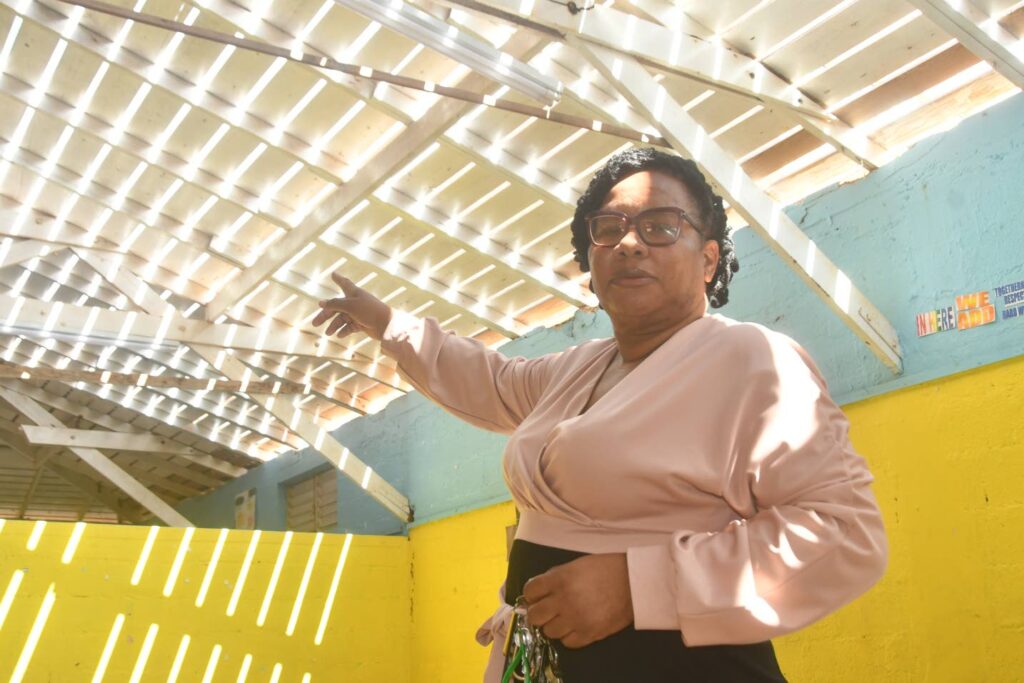
    The passage of Hurricane Melissa exacerbated long-standing infrastructure challenges at Mayfield Primary and Infant School in Southfield, St Elizabeth, where leaking classrooms had been an ongoing concern. The storm inflicted severe damage, tearing roofs from three classrooms serving grades four through six and worsening pre-existing water damage that caused concrete structures to break apart.

    Acting Principal Marion White-Cuff described the extensive damage: ‘We have relocated classes to the teacher’s lounge and another classroom. The infant department suffered complete ceiling damage with water intrusion causing structural loosening.’ The school’s perimeter fencing was compromised, though quickly repaired for security reasons.

    Financial relief is forthcoming through the 2026 Sagicor Sigma Corporate Run, which has identified Mayfield among five western Jamaican schools selected as beneficiaries. The charity event aims to raise $150 million toward repairing hurricane-affected institutions. White-Cuff expressed profound gratitude for the selection, noting that the entire school community was ‘shocked and thankful’ for the recognition among many damaged schools.

    The National Education Trust has conducted multiple assessments to guide restoration efforts. Meanwhile, school staff demonstrated remarkable resilience, spending days clearing water and debris to reopen promptly after the hurricane. White-Cuff emphasized her commitment to minimizing educational disruption: ‘I know about the loss of learning during COVID and I didn’t want that.’

    The school’s computer room remarkably escaped water damage, though the main office computer was destroyed. Contractors revealed that protective membrane installations meant to provide watertight seals were blown away during the storm, intensifying leakage issues.

    Beyond institutional damage, the hurricane impacted the school community personally—assessment revealed 24 students and one teacher suffered partial home or roof damage. The school organized a successful Christmas donation drive to support affected families.

    As the institution awaits restoration funding, White-Cuff remains determined to maintain educational continuity: ‘I will do whatever I can, and work with whatever I have to make sure children aren’t out of school.’

  • New Power Lines to Reach 150 Homes in Five Villages

    New Power Lines to Reach 150 Homes in Five Villages

    A landmark rural electrification initiative has brought transformative change to five previously underserved communities in Belize’s Orange Walk District. The collaborative project connecting Indian Church, San Carlos, San Benito Poite, Jalacte, and San Vicente to the national grid represents a significant infrastructure advancement for the region.

    For generations, residents of these villages endured unreliable electricity access that constrained domestic life, agricultural productivity, and entrepreneurial development. The newly operationalized project—spearheaded through a tripartite partnership between the European Union, Belize Electricity Limited (BEL), and the Belizean Government—has altered this reality fundamentally.

    During the official inauguration ceremony, Public Utilities Minister Michel Chebat emphasized the government’s commitment to inclusive development, stating: “This project clearly demonstrates that rural communities matter… no village is left behind in our national progress.”

    The undertaking evolved strategically from initial micro-grid conceptions to a more comprehensive grid-connection solution following extensive community consultations. BEL engineered a ten-mile interconnection to the national infrastructure, while the EU and utility provider co-financed complementary components including utility poles, transformers, distribution networks, street lighting systems, and residential wiring installations.

    Karique Marin, BEL’s General Manager for Distribution and Energy Solutions, highlighted the broader implications: “We are not merely activating electrical current; we are collectively powering socioeconomic progress. Reliable electricity possesses the transformative capacity to redefine family living standards, agricultural operational efficiency, and youth future-planning capabilities.”

    Initiated in 2021, the project now delivers sustainable power to over 150 households, creating unprecedented opportunities for agricultural enhancement, small business development, and improved quality of life across the beneficiary communities.

  • COMMENTARY: Does The Usa Really Care About Our Criteria For Accepting Deportees?

    COMMENTARY: Does The Usa Really Care About Our Criteria For Accepting Deportees?

    By Yves Ephraim

    A provocative analogy has emerged to characterize the response of Caribbean Community (CARICOM) leaders to United States immigration pressures. The narrative depicts a scenario where a woman, confronted by an overpowering assailant in her own home, abandons resistance and instead negotiates the terms of her violation. This disturbing parallel serves as a metaphor for how regional governments are handling Washington’s insistence that they accept criminal deportees.

    The core issue centers on the perceived capitulation of Caribbean leadership. Rather than issuing flat refusals to accept deportees who may destabilize their societies, these nations have engaged in procedural negotiations. Grenada’s Prime Minister, for instance, has been praised by some commentators for establishing criteria regarding transportation costs and accommodation standards for deportees. The author vehemently rejects this perspective as dangerously naive.

    The fundamental power imbalance remains unaddressed: if Caribbean nations cannot refuse deportation requests outright, what guarantees exist that negotiated standards will be honored? The article argues that establishing conditions for acceptance while lacking ultimate refusal power constitutes self-deception. The author characterizes this as a sovereignty violation comparable to historical subjugation, noting that leaders have spun this dynamic as somehow representing regional control.

    Particular scorn is reserved for suggestions that Caribbean nations might selectively accept deportees who could contribute to national development. The piece dismisses this as fantastical thinking, emphasizing that recipient countries ultimately have no meaningful selection authority. The conclusion presents a damning assessment: Caribbean leaders have surrendered to inevitable domination while pretending to negotiate terms, embodying a tragic failure of political leadership and sovereign protection.

  • Bezorgdheid over Nutrilon-babyvoeding in Suriname na internationale terugroepactie

    Bezorgdheid over Nutrilon-babyvoeding in Suriname na internationale terugroepactie

    Health authorities across multiple nations have escalated a major recall of Nutrilon infant formula products after discovering potential contamination with cereulide toxin, sparking significant concern among parents in Suriname where the affected batches remain commercially available.

    The international recall initiative, originally initiated in European countries including the Netherlands, now encompasses various Nutrilon formulations specifically designed for infants. The products under scrutiny include Nutrilon Stage 1 and specialized AR variants intended for babies with reflux conditions. This regulatory action follows comprehensive evaluations identifying specific batches containing ARA fatty acid sourced from a particular supplier believed to be the contamination origin.

    Medical experts warn that cereulide exposure can trigger severe gastrointestinal complications in infants, particularly those under six months of age. Symptoms may include persistent vomiting, diarrhea, and abdominal discomfort, necessitating immediate medical attention if observed.

    In Suriname’s Wanica district, one concerned mother shared her apprehension with local media after discovering she possessed contaminated products. She has immediately discontinued usage and initiated contact with both the retail outlet where she purchased the formula and regional suppliers, though official guidance from distributors remains pending at this time.

    The Surinamese Ministry of Health has acknowledged the developing situation and is currently conducting its own assessment. Officials have indicated that formal public guidance regarding the recalled products will be issued shortly. Meanwhile, parents are advised to scrutinize batch numbers and expiration dates on all Nutrilon products and refrain from using any items matching the officially recalled batches circulating internationally.

  • Prosecutors Signal Possible Withdrawal of Fatal Motorcycle Crash Case

    Prosecutors Signal Possible Withdrawal of Fatal Motorcycle Crash Case

    In a significant judicial development, prosecutors have indicated potential discontinuation of legal proceedings against Jameel Adams, a Bendals resident charged in connection with a tragic motorcycle accident that resulted in the death of 23-year-old Annik Lawrence in November 2022. The Director of Public Prosecutions formally notified the High Court on Thursday of the intention to potentially terminate the case, though no official withdrawal application has been submitted yet.

    The case centers on allegations of causing death by dangerous driving stemming from the November 14 incident along All Saints Road. According to official reports, the motorcycle operated by Adams allegedly lost control, ejecting both riders from the vehicle. Lawrence, who was traveling as a passenger, sustained fatal injuries and passed away shortly before her 24th birthday. Adams also suffered injuries in the crash.

    Nearly thirty months after the tragic event, the judicial process remains in limbo with no definitive timeline for resolution. The court proceedings have not disclosed the prosecution’s rationale for considering case abandonment, leaving fundamental questions unanswered about evidentiary challenges or procedural considerations influencing this potential outcome. The development represents another layer of tragedy for Lawrence’s family, who continue to await conclusive justice despite the passage of years since their loss.

  • Observers vow to address voter list concerns but ‘won’t intervene’ in poll

    Observers vow to address voter list concerns but ‘won’t intervene’ in poll

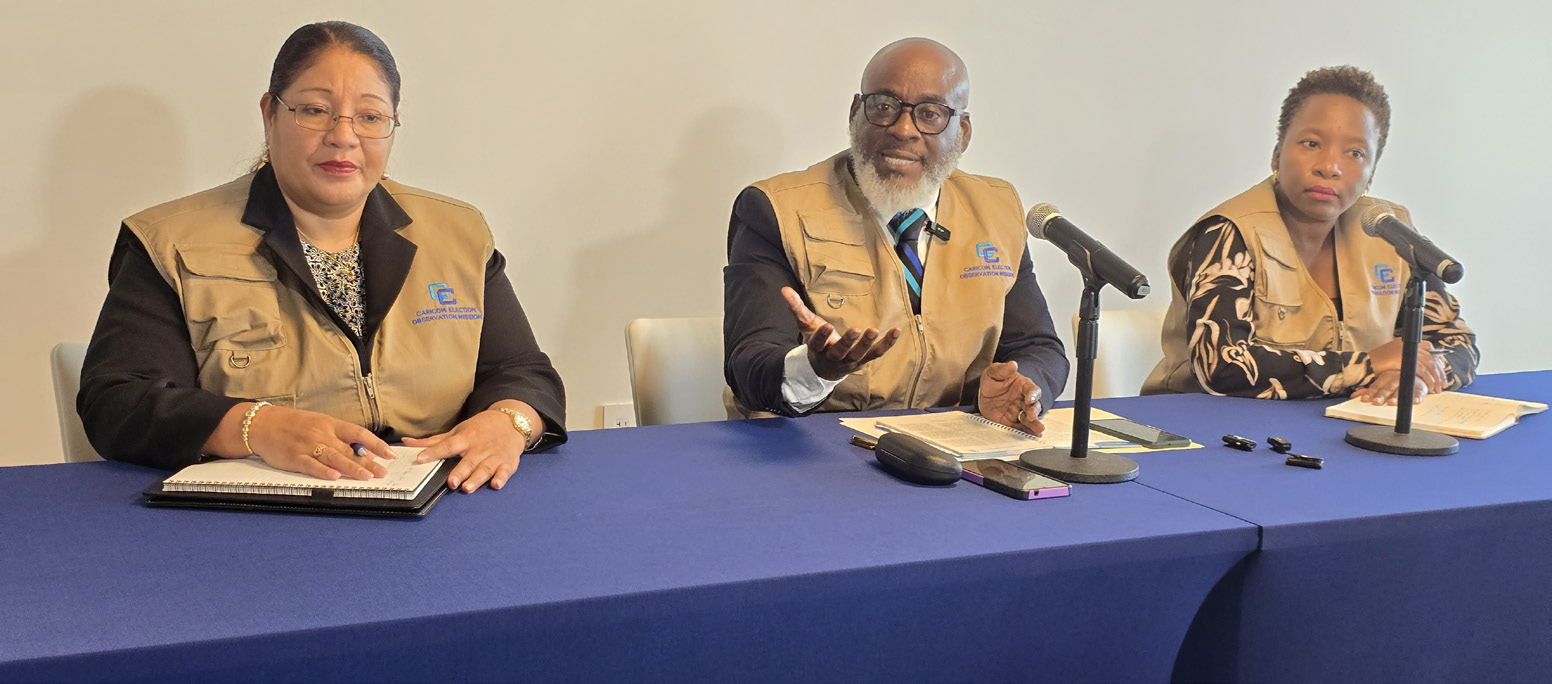
    A specialized Caribbean Community (CARICOM) Elections Observer Mission has commenced operations in Barbados ahead of Wednesday’s general election, emphasizing its commitment to addressing concerns regarding voter list integrity while maintaining strict non-interference protocols.

    The three-member delegation, arriving Thursday at the government’s invitation, held its inaugural press conference at Hastings’ Indigo Hotel where Mission Chief Ian Hughes outlined their observational mandate. The team will meticulously examine criticisms surrounding the final electoral register scheduled for publication Saturday, according to Electoral and Boundaries Commission Chairman Ramon Alleyne.

    Hughes clarified the mission’s constrained authority: “Barbados is a sovereign state, and consequently we cannot intervene in your electoral proceedings. Our function entails observation, stakeholder consultation, and ultimately, the formulation of recommendations based on factual documentation.” He emphasized that while missing voter names fall within their purview—recognizing the electoral register as fundamentally critical—any legal challenges would remain the exclusive domain of local stakeholders.

    The observers have initiated dialogues with key institutions including the police commissioner’s high command, the Barbados Christian Council, and media representatives. Scheduled meetings with Prime Minister Mia Mottley, Opposition Leader Ralph Thorne, and electoral officials will provide comprehensive insights into pre-election preparations.

    Throughout election day, the mission will monitor polling station operations from opening to ballot counting and results declaration, subsequently assessing the post-election environment. Before departing Friday, the team will issue preliminary findings, with a detailed final report to be submitted to CARICOM Secretary-General Dr. Carla Barnett for public dissemination.

    Hughes noted Barbados’s vibrant digital campaign atmosphere, observing that “social media appears to be the primary arena for political engagement,” while acknowledging traditional media’s role. He reminded citizens of their civic responsibility, stating: “Many have sacrificed their lives to secure our democratic franchise—this privilege demands thoughtful exercise.”

    The multinational team comprises senior electoral officials from Antigua and Barbuda, Belize, and Jamaica, supported by three CARICOM Secretariat staff providing logistical coordination. An additional member is expected to join the mission Saturday.

  • Anglican Primary, Sir Ira Simmons win again at schools choir competition

    Anglican Primary, Sir Ira Simmons win again at schools choir competition

    In a spectacular display of musical excellence, two Saint Lucian educational institutions have reaffirmed their dominance in the nation’s premier choral competition. The Canon Laurie Anglican Primary School and Sir Ira Simmons Secondary School both successfully retained their championship titles during Tuesday’s thrilling finale of the 4th Annual Sagicor Schools Choir Competition.

    The competition culminated with six finalist institutions—four primary and two secondary schools—battling for top honors in front of an enthusiastic audience. Canon Laurie Anglican Primary achieved an extraordinary third consecutive victory in the primary division through their innovative calypso and reggae medley performance that captivated both judges and spectators.

    Meanwhile, Sir Ira Simmons Secondary delivered a profoundly moving tribute performance dedicated to the memory of the late Nicole ‘Niki’ David, securing their continued reign in the secondary school category. Their emotionally charged presentation demonstrated exceptional technical proficiency and artistic sensitivity.

    Additional participants in this year’s finals included Augier Combined, Babonneau Primary, and Ave Maria Girls Primary at the elementary level, while Stanley Jon Odlum School of Arts, Media and Design represented the secondary division alongside the champions.

    Event organizer Jason ‘Bachelor’ Joseph, a renowned musician and cultural preservation advocate, expressed immense satisfaction with this year’s competition while acknowledging systemic challenges within music education. Joseph highlighted concerning trends in choir participation, noting practical obstacles facing educators: ‘The instrumental programmes at schools survive through individual student dedication, but coordinating larger ensembles has become increasingly difficult as teachers struggle to conduct after-school rehearsals.’

    Looking toward the future, Joseph announced significant format changes for the 2027 event, which will revert to a comprehensive music festival structure not implemented in five years. This revitalized approach will incorporate both solo and group performances, potentially addressing participation barriers while providing a more comprehensive assessment of musical development across Saint Lucian schools.

    ‘This transformation will better represent the island’s diverse musical educational landscape,’ Joseph emphasized, envisioning greater variety in performances and broader school participation in the proposed Sagicor Schools Music Festival scheduled for January 2027.

  • Caricom stuurt waarnemersmissie voor parlementsverkiezingen in Barbados

    Caricom stuurt waarnemersmissie voor parlementsverkiezingen in Barbados

    The Caribbean Community (CARICOM) has initiated a comprehensive electoral monitoring initiative in Barbados ahead of the nation’s pivotal parliamentary elections scheduled for February 11, 2026. At the formal invitation of the Barbadian government, a specialized three-member observer delegation arrived on February 5th and will maintain presence through February 13th to ensure electoral integrity.

    This CARICOM Election Observation Mission (CEOM) comprises distinguished senior electoral officials from three member states: Antigua and Barbuda, Belize, and Jamaica. The mission is spearheaded by Ian S. Hughes, Supervisor of Elections from the Antigua and Barbuda Electoral Commission, with Josephine Tamai of Belize serving as deputy chief and Andrew Smith of Jamaica completing the core assessment team. Administrative and logistical support is being provided by staff from the CARICOM Secretariat.

    Since their arrival, the observers have engaged in substantive dialogues with senior police officials, the Barbados Christian Council, and media representatives. The mission’s agenda includes forthcoming high-level meetings with Prime Minister Mia Amor Mottley of the ruling Barbados Labour Party (BLP), opposition leader Ralph Thorne of the Democratic Labour Party (DLP), the Electoral and Boundaries Commission, and various civil society organizations.

    These consultations aim to evaluate the pre-electoral environment and assess the nation’s preparedness for the democratic process. On election day, the mission will conduct comprehensive monitoring of all procedural phases—from polling station operations and voting procedures to ballot counting and results declaration. The assessment will extend to post-election developments as well.

    Following the conclusion of voting but prior to departure, the mission will issue a preliminary statement containing initial observations about the electoral process. A detailed final report with comprehensive findings and recommendations will subsequently be presented to CARICOM Secretary-General Carla Barnett before public dissemination.

    Barbados, an island nation of approximately 287,000 inhabitants, has maintained parliamentary democracy since gaining independence in 1966. The 2026 elections represent a significant examination of the country’s democratic institutions under Prime Minister Mottley’s BLP administration. Mottley, who has governed since 2018, enjoys substantial popularity due to her policies promoting economic stability, climate action, and social development. Her international stature was enhanced during Barbados’ transition to a republic in 2021.

    Nevertheless, opposition leader Ralph Thorne remains determined to challenge the incumbent government, highlighting economic concerns and advocating for political alternation. The electoral process is being closely monitored by regional and international stakeholders given its implications for democratic governance in the Caribbean.

    CARICOM, established in 1973, continues to reinforce its commitment to regional cooperation and democratic strengthening through such observation missions, underscoring the organization’s dedication to electoral transparency and institutional confidence-building across member states.

  • DLP’s last-minute manifesto launch sparks debate on election strategy

    DLP’s last-minute manifesto launch sparks debate on election strategy

    With Barbados’ snap general election approaching this Wednesday, a strategic divergence has emerged among political experts regarding the Democratic Labour Party’s (DLP) controversial decision to publish its manifesto merely days before voting commences. The move has ignited a vigorous debate on whether this constitutes a tactical misstep or a shrewd political maneuver.

    Dr. George Belle, a prominent political scientist, has expressed significant reservations about the timing. He contends that the abbreviated period between the manifesto’s release and election day severely limits voters’ capacity to thoroughly evaluate the party’s proposals. “The window for public dissemination and analysis is exceedingly narrow—effectively just Sunday through Tuesday before Wednesday’s voting,” Dr. Belle noted in his comments to Barbados TODAY. He further warned that this delay could foster negative public perceptions about the DLP’s platform and intentions.

    While acknowledging that parties sometimes withhold manifestos to prevent idea appropriation by rivals, Dr. Belle maintained that such tactical considerations should not supersede the electorate’s right to adequate information. He characterized the strategy as particularly puzzling given that this election is not perceived as marginal, where last-minute moves might sway outcomes. “This appears to be a miscalculation that may ultimately disadvantage rather than benefit the party,” he concluded.

    Conversely, regional pollster Peter Wickham offered a contrasting perspective, arguing that late manifesto launches are entrenched within Barbados’ political traditions, especially for opposition parties. He dismissed assertions that the timing necessarily indicates poor preparation, explaining that opposition parties often finalize their documents after reviewing the governing party’s proposals to enable competitive policy adjustments.

    Wickham cited historical precedent from the 1986 general election, where the DLP, under Erskine Sandiford’s leadership, secured a landslide victory with 24 seats after launching its manifesto subsequent to the Barbados Labour Party. This allowed them to strategically enhance their offerings, such as proposing a higher tax-free allowance. “This historical ‘back race’ dynamic likely informs the DLP’s current calculation,” Wickham suggested.

    He added that as an opposition party, the DLP operates with greater tactical flexibility and lower public expectations than a governing party, allowing them to assume more risk. However, Wickham conceded that the delayed release has intensified public scrutiny and suspicion regarding the party’s intentions, even while maintaining that such timing remains consistent with established political practices in Barbados.