
Tricia Jno Baptiste, a native of Dominica, has recently achieved a significant academic milestone by earning her Master’s Degree in Finance from Trinity College Dublin in Ireland. Graduating on October 28, 2025, her accomplishment was facilitated by the Ireland Fellows Programme, administered locally by the Irish Council for International Students (ICOS). While the degree itself is a notable achievement, Jno Baptiste emphasized that her experience in Ireland extended far beyond academics. She gained a robust professional network, immersed herself in Irish culture, and developed a deeper understanding of global finance and international affairs. The MSc in Finance, taught by leading academics and industry practitioners, provided her with a solid foundation for her future career. The programme fostered collaboration among students from diverse backgrounds, creating a dynamic and enriching learning environment. Throughout her fellowship year, Jno Baptiste participated in certified training sessions on leadership, conflict resolution, and time management. She also attended a ten-week Irish language course, which deepened her appreciation for Irish heritage. Additionally, she volunteered with Vision Ireland, a charity supporting individuals with visual impairments. Reflecting on her transformative journey, Jno Baptiste encouraged others from Small Island Developing States to pursue similar opportunities, highlighting the programme’s potential to inspire growth, innovation, and meaningful contributions upon returning home. The Ireland Fellows Programme, which offers fully funded postgraduate education in Ireland, aims to cultivate future leaders, enhance local capacities, and strengthen ties between Ireland and participating nations.
作者: admin
-
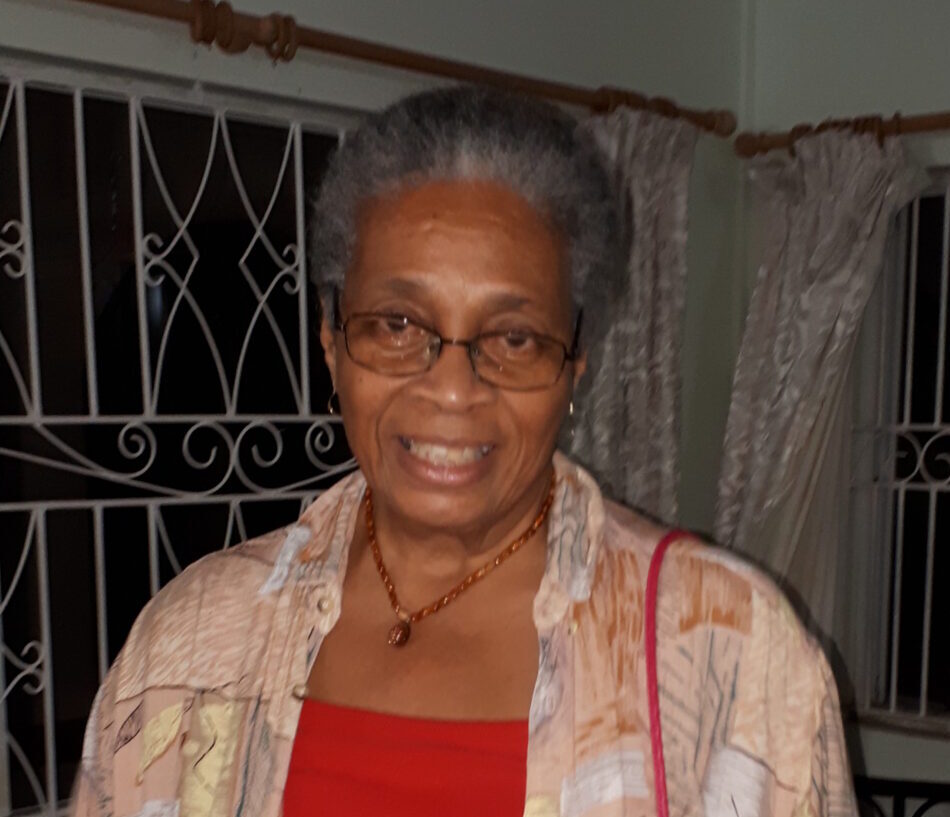
A tribute to Dr Marguerite-Joan Joseph
October marks Creole Heritage Month, culminating in International Creole Day on October 28, 2025. This year, the occasion serves as a poignant moment to honor the life and contributions of Dr. Marguerite-Joan Joseph, a remarkable figure who passed away last year. Dr. Joseph was a trailblazer in both the medical and cultural spheres, leaving an indelible mark on Grenada and beyond. As a medical doctor specializing in Obstetrics and Gynaecology, she significantly reduced maternal mortality rates during her tenure at Grenada’s General Hospital from 1992 to 2012. Beyond her medical achievements, Dr. Joseph was a passionate advocate for the revival of the French Creole language, known locally as Patois. She co-founded the Grenada Creole Society in 2009, dedicating herself to researching, documenting, and promoting the language. Her efforts included renovating a family home in Concord to serve as the Society’s headquarters, where she conducted workshops, classes, and cultural events. Dr. Joseph authored three books, including the groundbreaking “Un-Tying the Ancestors’ Tongue,” a comprehensive Patois grammar guide with an accompanying audiovisual tutorial. She also penned creole songs, including a Patois version of Grenada’s National Anthem. Her work aimed to integrate Patois into the national school curriculum, a vision she passionately pursued with the Ministry of Education. Dr. Joseph’s legacy continues to inspire, as her family and the Grenada Creole Society strive to uphold her mission of preserving and celebrating Grenada’s linguistic heritage.
-

Recall of Neutrogena Make-up Remover Ultra-Soft Cleansing Towelettes
The Prices and Consumer Affairs Division has issued a public alert regarding the recall of Neutrogena Make-up Remover Ultra-Soft Cleansing Towelettes following the discovery of potential bacterial contamination. The U.S. Food and Drug Administration (FDA) confirmed that Kenvue Brands LLC, the parent company of Neutrogena, conducted an internal investigation which identified the presence of Pluralibacter gergoviae in the product. The FDA has categorized this recall as Class II, indicating that while the product may lead to temporary or medically reversible health issues, the likelihood of severe adverse effects remains low. Pluralibacter gergoviae, as noted by the manufacturer, poses significant risks to individuals with compromised immune systems, chronic conditions, or those recovering from surgeries. The bacteria has been associated with respiratory ailments, urinary tract infections, eye infections, and even sepsis, according to Malbec Microbiology. Consumers who have purchased the affected product are strongly advised to discontinue its use and return it to the point of purchase for a full refund. For further details or support, individuals are encouraged to contact the relevant authorities.
-
8 jaar HVB – 8 fundamenten, één missie: Suriname hervormen & vernieuwen
Today marks a significant milestone in Suriname’s political landscape as the Reform and Renewal Movement (HVB) commemorates its eighth anniversary. Founded in 2015, the HVB emerged from a profound belief that the nation required a political shift—one centered on responsibility rather than power, and sustainable development over short-term gains. This anniversary is not a celebration but a moment of reflection, emphasizing the values, principles, and vision that define the movement. The HVB was born out of political disillusionment and growing distrust in traditional governance, choosing a path of renewal that prioritizes citizen voices and national interests. Over the past eight years, the movement has faced challenges but remained steadfast in its commitment to principled leadership. The HVB’s foundation rests on eight core pillars: principled politics over privileges, good governance and transparency, economic justice, social equality, national unity, responsible leadership, innovation, and unwavering loyalty to Suriname. These principles guide the movement through turbulent times, shaping its decisions and actions. The HVB aims to restore trust, inspire hope, and drive meaningful change, positioning itself not merely as a political party but as a movement for the nation’s future. As it enters a new phase, the HVB remains dedicated to collaboration, transparency, and courageous choices, working alongside citizens to build a Suriname defined by justice, stability, and prosperity. Raymond Sapoen, the movement’s political leader, expressed gratitude to supporters, critics, and partners who have contributed to its journey, reaffirming the HVB’s commitment to Suriname’s renewal and progress.
-

COMMENTARY: Brainstorming for Innovation
Brainstorming stands as one of the most potent catalysts for innovation when executed effectively. It transcends mere idea generation, fostering a dynamic environment where diverse perspectives converge, assumptions are challenged, and breakthroughs emerge. By encouraging free thinking and suspending judgment, brainstorming unlocks creative potential and surfaces unconventional ideas. This rapid ideation process helps identify multiple pathways to address complex challenges, transforming sparks of insight into refined strategies. Collaborative brainstorming sessions also facilitate compromise and unification among conflicting viewpoints, enhancing collective problem-solving. For governments and communities, innovation is both a local asset and a strategic advantage. Community-led innovation drives economic growth, diversifies industries, and attracts international attention, partnerships, and foreign investment. Grassroots innovation provides real-time insights into needs and solutions, enabling governments to craft timely and effective policies. This bottom-up approach reduces reliance on top-down guesswork, ensuring policies are grounded in practical validity. Innovation also plays a critical role in global and regional positioning, shaping how products, services, or brands are perceived in relation to competitors. To accelerate innovation, organizations must dismantle silos—isolated mindsets that hinder collaboration and information sharing. Cross-functional collaboration reveals blind spots and opens new perspectives, fostering a culture of shared goals and mutual trust. Effective brainstorming sessions should include diverse participants: subject matter experts, community stakeholders, creative thinkers, and even skeptics who challenge assumptions. Compromise is key, as it not only creates mutually acceptable solutions but also refines them to near perfection. Innovation pushes boundaries, introducing bold and imaginative concepts that challenge legacy thinking. Fresh perspectives must align with long-term goals, ensuring relevance and resonance with actual needs while considering existing best practices. Encouraging brainstorming is a strategic imperative for forward-thinking leaders, boards, and teams. Innovation demonstrates proactive, future-focused leadership, driving competitive advantage and positioning innovators as thought leaders. It also uncovers hidden opportunities and fosters civic pride, particularly through youth-led initiatives that reduce brain drain and cultivate leadership. To ignite innovation, communities must ask: ‘What challenges are we uniquely positioned to solve?’ and ‘What would make our region a global model?’ Innovation should be our legacy—recognizing, supporting, and scaling the brilliance within our communities to drive a flourishing economy that benefits all.
-
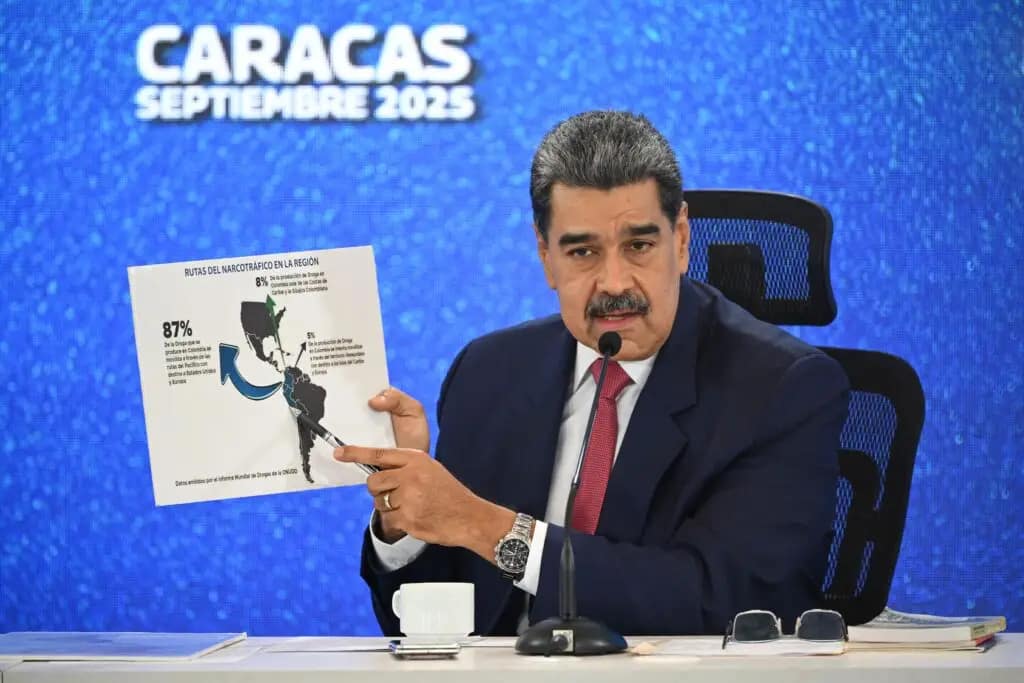
Maduro suspends energy agreements with Trinidad and Tobago
In a dramatic move, Venezuelan President Nicolas Maduro has declared the immediate suspension of energy agreements with Trinidad and Tobago. This decision came shortly after Vice President Delcy Rodríguez presented a formal proposal to halt the Energy Cooperation Framework Agreement with Port of Spain. During his weekly televised address on Monday night, Maduro accused Trinidad and Tobago of acting as a strategic outpost for the United States, labeling it the ‘aircraft carrier of the US empire.’ He stated that Venezuela had no alternative but to withdraw from treaties established a decade ago. Maduro also claimed that Trinidad and Tobago had exhausted its gas reserves before Venezuela agreed to assist under the deal.
In response, Trinidad and Tobago Prime Minister Kamla Persad-Bissessar dismissed Venezuela’s decision, asserting that her country would continue to advance its energy and economic strategies independently. ‘Our future does not depend on Venezuela and never has. We have our plans and projects to grow our economy both within the energy and non-energy sectors,’ she emphasized.
The two nations initially agreed to collaborate on gas exploration in 2018, but the project has faced significant delays, exacerbated by U.S. sanctions on Venezuela. U.S. Secretary of State Marco Rubio recently expressed support for Trinidad’s Dragon gas proposal but emphasized measures to prevent substantial benefits from reaching Maduro’s government. The Dragon gasfield, reportedly containing 119 billion cubic meters of gas, remains a focal point of contention.
Tensions in the region have escalated further with increased U.S. military presence in the Caribbean. President Donald Trump recently deployed an amphibious squadron, a nuclear-powered attack submarine, reconnaissance aircraft, and several warships to address alleged threats from Latin American drug cartels. The U.S. military has conducted airstrikes in Caribbean waters, targeting what it claims are Venezuelan-backed drug traffickers—a charge vehemently denied by Caracas. Venezuela’s Foreign Minister Yvan Gil Pinto condemned the U.S. actions at the United Nations General Assembly, describing them as an ‘illegal and completely immoral military threat.’
Trinidad and Tobago has openly supported the U.S. operations, with Persad-Bissessar advocating for the violent elimination of drug traffickers. This alignment with U.S. interests has further strained relations with Venezuela, highlighting the deepening geopolitical rift in the region.
-
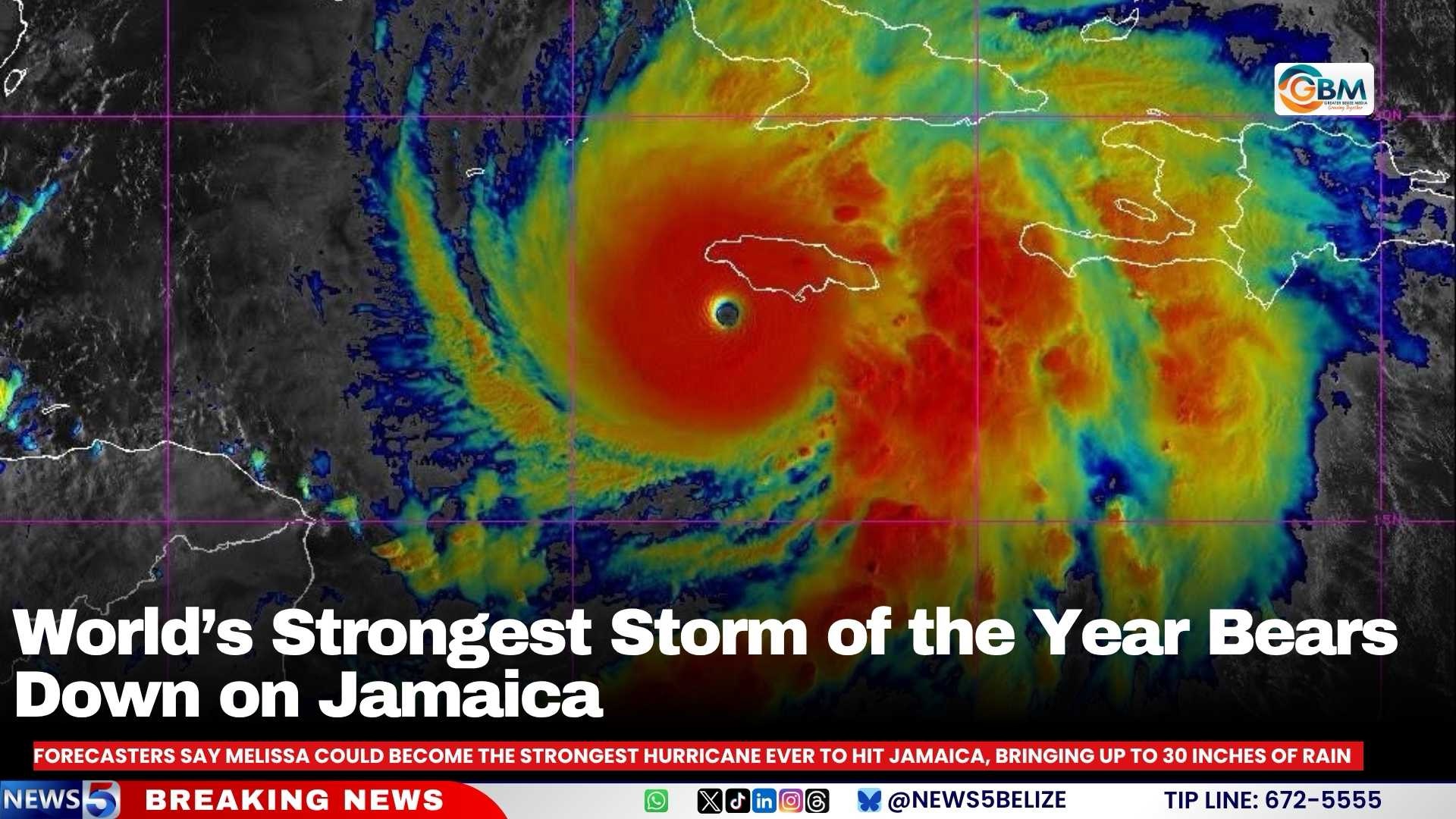
World’s Strongest Storm of the Year Bears Down on Jamaica
Hurricane Melissa, now the strongest storm of the year, is poised to strike Jamaica, bringing with it catastrophic and life-threatening conditions. The hurricane, with sustained winds of 175 mph, has been moving northward at a slow pace of around 7 mph, prolonging the period of extreme weather exposure. Meteorologists warn that Melissa could still be a Category 5 hurricane upon landfall, though the exact timing remains uncertain. Thousands of Jamaicans have already been evacuated, but the slow approach has left many in a state of prolonged anxiety and uncertainty. Forecasters predict that Melissa could become the strongest hurricane ever to hit Jamaica, with up to 30 inches of rain and a potential 13-foot storm surge along the southern coast. Similar impacts are expected in parts of Cuba, where rainfall could reach 25 inches and storm surges up to 11 feet. Residents in Kingston describe terrifying conditions, with one British woman reporting a ‘weird roar’ and a Jamaican man noting that the winds are so strong that standing up would be impossible.
-

Healthcare data protection in Barbados: Seminar signals shift from education to enforcement
The Healthcare Sector Seminar, held on October 22 and jointly organized by the Ministry of Industry, Innovation, Science and Technology and the Office of the Data Protection Commission, marked a pivotal moment for Barbados’ healthcare industry. The event, attended by a diverse group of stakeholders including the Barbados Drug Service, public and private pharmacies, medical practitioners, and ancillary healthcare providers, focused on reinforcing data protection and cybersecurity obligations within the sector. Minister of Innovation, Industry, Science and Technology Senator Jonathan Reid opened the seminar with a personal reflection on the importance of safeguarding patient information. He highlighted a common issue in healthcare settings: the repeated collection of personally identifiable information (PII), which increases risks of human error, unauthorized disclosure, and data misuse. This practice, as outlined in the Barbados Data Protection Act (2019-29), violates the principles of data minimization and purpose limitation. The seminar emphasized the need for healthcare organizations to transition from awareness to actionable compliance. Data Commissioner Lisa Greaves detailed the statutory obligations under the Act, stressing the importance of written policies, risk assessments, and the appointment of a Data Privacy Officer. She clarified that while healthcare data is not explicitly categorized as ‘sensitive’ under the Act, it must be treated as high-risk due to its deeply personal nature. Legal and Data Privacy specialist Jabarry Garnes introduced the concept of Privacy by Design, advocating for the integration of privacy protections into healthcare systems from the outset. Patricia Rowe-Seale, the government’s chief information security officer, addressed cybersecurity risks, emphasizing the need for continuous monitoring and layered defense strategies. The seminar concluded with a call for healthcare organizations to adopt compliance, privacy-focused design, and cybersecurity resilience as interconnected priorities. The road ahead presents challenges, including resistance to change and the adoption of formal privacy programs. However, the event signaled the beginning of a transformative journey toward modern, compliant healthcare practices in Barbados.
-

Much ‘Moore’ than a bar
John Moore Bar, a cherished landmark in Weston, St James, Barbados, has long been more than just a rum shop. It is a cultural hub where community, kinship, and tradition intertwine. On Saturday, the bar celebrated its grand reopening, marking a new chapter in its storied history. Proprietor Cherie Rochester, who took over from her uncle Lamonte Greedy Addison, welcomed the crowd with a heartfelt, “Welcome home everyone!” Her words resonated deeply, as she described the bar as a place where her childhood memories and roots are deeply embedded. Rochester is committed to preserving the legacy her uncle built while steering the establishment into the digital age. Known for its pioneering spirit, John Moore Bar was the first rum shop on the island to implement a point-of-sale system. Now, it is embracing QR codes for menus and digital payment systems like Bim Pay, aiming to become Barbados’ most digital rum shop. The bar’s refurbished design pays homage to its rustic charm while incorporating modern elements. The menu, featuring pizzas, tacos, and burgers made from scratch, reflects a blend of tradition and innovation. Staff are undergoing mixology training to elevate the cocktail experience. For decades, John Moore Bar has been a gathering place for locals, tourists, and even members of the constabulary. Rochester promised to maintain this sense of camaraderie. She also expressed gratitude to businessman Peter Harris for his unwavering support. The reopening ceremony, attended by Henderson Forde of Armstrong Agencies, symbolized a new era for the bar. As John Moore Bar steps into the future, it remains a tribute to its heritage and a beacon of innovation.
-

Govt stocking up on spy gears
In a significant move to enhance national security, Guyana’s National Intelligence and Security Agency (NISA) has acquired an array of sophisticated spy equipment. The procurement includes high-tech devices such as video-recording eyeglasses, wristwatches with hidden cameras, and earbuds equipped with covert recording capabilities. Additionally, NISA has invested in seven polygraph machines, eight drone jammers, and six geolocation finders. This strategic acquisition underscores the government’s commitment to leveraging advanced technology in combating crime. The use of such technology by the Guyana government traces back to 2002 when triangulation equipment was employed to track down notorious drug lord Shaheed ‘Roger’ Khan. Historical evidence presented in a U.S. court revealed that the purchase of similar equipment was authorized by a government minister, highlighting its exclusive availability to state entities. These tools have been instrumental in locating members of heavily armed gangs during periods of heightened criminal activity, primarily by interfacing with the cellphone system.