作者: admin

  • Cut red tape when lives on the line

    Cut red tape when lives on the line

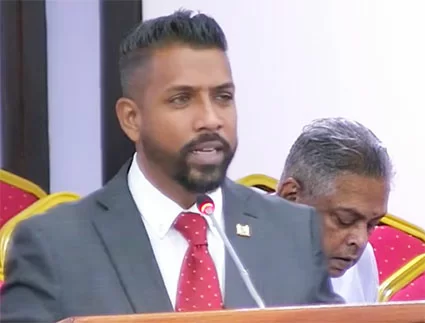
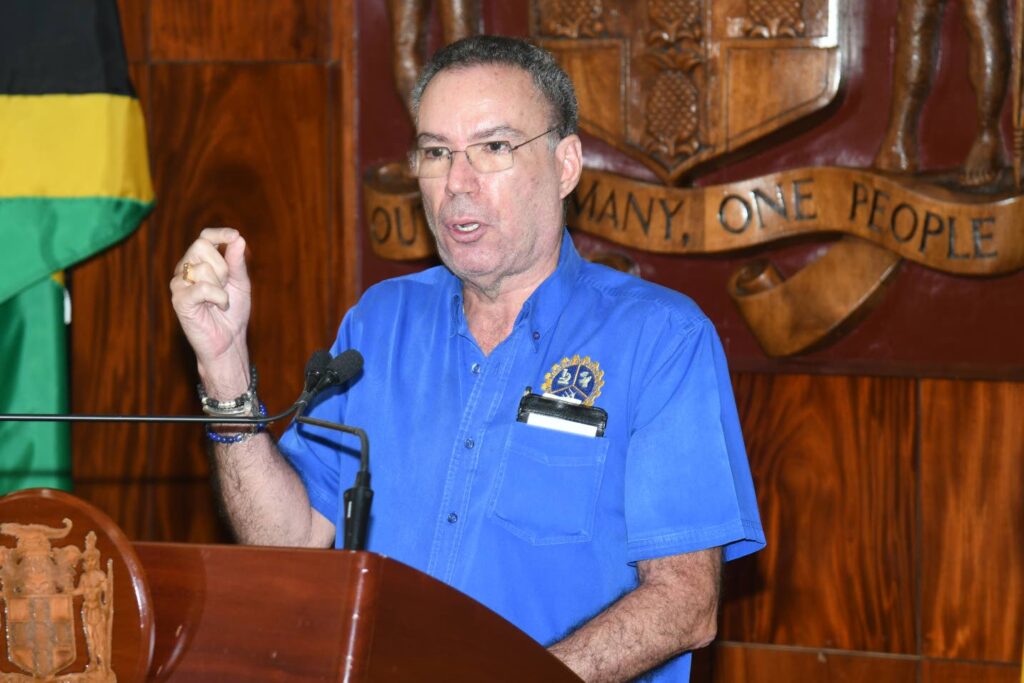
    Jamaica’s Energy and Telecommunications Minister Daryl Vaz has ignited a crucial debate about emergency governance by advocating for significant amendments to the nation’s procurement legislation. This push for reform comes in response to controversies surrounding the government’s acquisition of Starlink satellite devices during the aftermath of Hurricane Melissa in October 2025.

    Minister Vaz, speaking at a post-Cabinet press briefing, defended his decision to bypass standard procurement protocols during the national crisis. He asserted that existing frameworks fail to distinguish between routine government purchases and urgent disaster response requirements. “Extreme times require extreme actions,” Vaz stated, emphasizing that people suffering and awaiting rescue “can’t wait on a procurement process that takes weeks.”

    The hurricane, which struck Jamaica on October 28, 2025, caused catastrophic damage to telecommunications infrastructure, leaving numerous communities completely isolated. The government’s deployment of Starlink technology successfully restored internet connectivity for emergency agencies, healthcare facilities, and relief centers, potentially saving countless lives.

    Despite the practical success of the intervention, Jamaica’s auditor general subsequently reported that the procurement violated established legal procedures. This finding triggered extensive political debate regarding the balance between regulatory compliance and emergency responsiveness.

    Vaz clarified that his advocacy for legislative reform isn’t about expanding ministerial power but about creating practical mechanisms for crisis management. “You cannot have the same guidelines in normal times that you have in extreme times,” he argued, noting that the current system makes no provision for emergency scenarios where immediate action is required.

    The minister maintained respect for oversight institutions while defending his actions. “I accept fully what was said by the auditor general in relation to me getting involved in the procurement,” Vaz acknowledged, while simultaneously justifying his position based on the extraordinary circumstances.

    Prime Minister Andrew Holness has previously indicated support for reviewing procurement legislation, suggesting potential government backing for such reforms. Vaz expressed confidence that changes would be implemented, describing the need for distinction between normal and emergency procedures as “an absolute no-brainer.”

    The controversy highlights the ongoing challenge governments face in balancing accountability with operational flexibility during national emergencies. As climate change increases the frequency and intensity of natural disasters, Jamaica’s experience may serve as a case study for other nations grappling with similar regulatory dilemmas.

  • Trash crisis deepens

    Trash crisis deepens

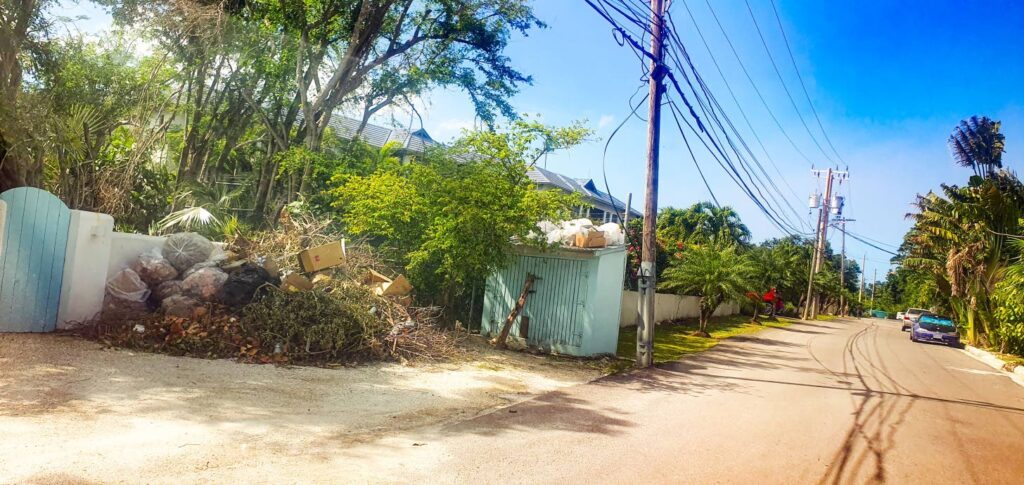
    The picturesque Jamaican resort town of Negril is confronting a severe sanitation emergency as chronic failures in garbage collection threaten both public health and its vital tourism economy. Local business leaders from the Negril Chamber of Commerce are urgently seeking high-level meetings with Local Government Minister Desmond McKenzie and National Solid Waste Management Authority (NSWMA) director Audley Gordon to address what they describe as a complete breakdown of waste management services.

    Chamber President Damian Salmon expressed profound concern about overflowing skip containers and accumulating roadside waste throughout the town’s tourist districts. ‘We’ve done everything including writing letters and contacting people, but the situation needs escalation,’ Salmon stated, highlighting the absence of communication from waste management authorities regarding equipment failures or staffing issues.

    The visual evidence along Norman Manley Boulevard and the West End reveals both public and private garbage containers spilling waste onto streets and sidewalks. Hotelier Dalton ‘Penny’ Hill of Lighthouse Inn II warned that the situation presents both aesthetic and hygienic dangers that could damage Negril’s international reputation. ‘We don’t want to lose our tourist industry,’ Hill emphasized, describing how overnight scavenging by animals creates horrific morning scenes that disturb both residents and visitors.

    Regional operations manager Dramaine Jones acknowledged systemic challenges, citing equipment problems and unexpectedly high waste volumes from tourism activities. While noting that private contractors share responsibility for collection delays, Jones revealed that plans for a local transfer station—which would eliminate the inefficient daily haul to Montego Bay’s landfill—are now ‘far advanced’ with preliminary work underway.

    The proposed transfer station solution, long advocated by local businesses, would allow collection trucks to remain in the Negril area throughout the day rather than wasting hours traveling to distant disposal sites. Jones indicated that executive director Gordon would announce details shortly, while simultaneously encouraging greater public adoption of recycling practices to reduce waste volume.

  • Stabroek News closes operations

    Stabroek News closes operations

    In a significant development for Guyanese media, the independent newspaper Stabroek News has announced its permanent closure after four decades of operation. The decision, described by the publication’s leadership as “extraordinarily difficult and painful,” marks the end of an era for one of Guyana’s most respected journalistic institutions.

    The newspaper’s demise stems from a complex confluence of factors including sustained financial pressure from state entities, an unlevel competitive landscape, and fundamental shifts in how audiences consume news. Most notably, the state-run Department of Public Information has accrued an outstanding debt exceeding G$80,000,000 for unpaid advertisements—a financial burden that has persisted despite repeated appeals for resolution. This substantial arrears represents what the publication characterizes as a deliberate tactic to starve the independent media outlet of crucial operating funds.

    Founded in the mid-1980s by David de Caires during an era of state-controlled media dominance, Stabroek News emerged as a pioneering voice in a media landscape previously limited to government-owned publications. The newspaper maintained its editorial independence despite numerous challenges, including a previous period when advertisements from state-owned companies were deliberately withheld in what was seen as an attempt to muzzle free press.

    The publication’s struggles reflect broader challenges facing traditional journalism in the digital age. As readers increasingly turn to algorithmic news feeds and online sources, the newspaper’s commitment to balanced coverage found itself at odds with contemporary click-driven metrics. Additionally, the company faced significant structural obstacles including repeated refusals for radio broadcasting licenses and a non-competitive environment where main competitors enjoyed substantial privileges.

    Beyond the political and market challenges, Stabroek News cultivated a remarkable legacy of staff loyalty through compassionate employment practices including childcare facilities, transportation services, and comprehensive benefit schemes. These measures resulted in extraordinary staff retention rates, with nearly half of employees remaining with the company for a decade or longer.

    The closure represents not just a business failure but the end of a institution that nurtured generations of readers, writers, and thinkers in Guyana. The newspaper’s leadership exits with heads “unbowed,” bequeathing a legacy of democratic discourse and civil public conversation to the nation.

  • COMMENTARY: Radio and Artificial Intelligence

    COMMENTARY: Radio and Artificial Intelligence

    As the world celebrates World Radio Day on February 13, 2026, the enduring medium finds itself at a critical crossroads between traditional broadcasting and artificial intelligence integration. This international observance, originally proclaimed by UNESCO in 2011 and formally adopted by the UN General Assembly in 2012, honors radio’s century-long legacy as a unifying force across borders and generations.

    The 2026 theme, “Radio and Artificial Intelligence: AI is a tool, not a voice,” addresses the growing presence of AI in broadcasting while reaffirming radio’s fundamental human elements. While acknowledging AI’s potential to enhance content production, archiving, translation, and accessibility, the theme emphasizes that technology should serve as a support system rather than replace the human voice, editorial judgment, and credibility that define radio broadcasting.

    Historical context reveals radio’s resilience: World Radio Day commemorates the establishment of United Nations Radio in 1946, created post-World War II as a symbol of global communication and cooperation. Despite technological evolution, radio maintains its status as a trusted, accessible, and reliable medium worldwide.

    The Caribbean region specifically honors the legacy of pioneering broadcaster Alma Mock Yen, who recently passed away. As a trainer of countless radio journalists through the Radio Education Unit and Caribbean School of Media and Communication (CARIMAC) at the University of the West Indies, her influence continues through the voices she mentored and the strengthened Caribbean broadcasting landscape.

    The observance calls for ethical AI implementation that preserves radio’s core values of trust, authenticity, and community connection. It stresses that creativity, empathy, and moral responsibility remain uniquely human attributes that technology should enhance rather than replace. This approach ensures humans maintain accountability for editorial decisions rather than deferring responsibility to algorithms.

    As celebrations unfold globally, World Radio Day 2026 serves as both a tribute to radio’s historical significance and a forward-looking framework for responsible innovation in the digital age.

  • Late-Night Shooting in Caye Caulker Leaves One Man Hospitalised

    Late-Night Shooting in Caye Caulker Leaves One Man Hospitalised

    BELIZE – A violent evening unfolded across Belize on February 13th, 2026, with two separate shooting incidents occurring within hours of each other, resulting in two men being hospitalized and multiple suspects detained.

    The first episode transpired in the tranquil tourist destination of Caye Caulker Village. At approximately 9:00 p.m., local law enforcement responded to alerts of gunfire in the Bahia precinct. During their investigation, officers intercepted a golf cart en route to the island’s medical facility. Inside, they discovered 22-year-old Dominic Castillo suffering from a severe injury consistent with a gunshot wound to his back.

    Mr. Castillo received initial emergency treatment at the Caye Caulker Clinic before being airlifted to the Karl Heusner Memorial Hospital in Belize City for advanced care. Medical authorities have reported his condition as stable. A significant breakthrough in the case occurred with the confiscation of a loaded 9mm firearm. This led to the immediate apprehension of 29-year-old Javan Moody, who is currently held for questioning regarding the weapon’s involvement.

    In a concurrent development, the capital city of Belize witnessed its own act of gun violence. Around 10:00 p.m. on Cleghorn Street, 49-year-old security guard Justo Pinelo became the victim of a shooting. He sustained injuries and was promptly transported to a medical center for treatment. Law enforcement officials confirmed the detention of two juveniles believed to be connected to this assault.

    Authorities are actively pursuing investigative leads for both cases but have not indicated any connection between the two geographically distinct events. These incidents have sparked renewed community concern regarding public safety and gun violence in the region.

  • Monorath: Duizenden vreemdelingen zonder geldige verblijfsstatus drukken zwaar op voorzieningen

    Monorath: Duizenden vreemdelingen zonder geldige verblijfsstatus drukken zwaar op voorzieningen

    Suriname’s Justice and Police Minister Harish Monorath has officially acknowledged a significant migration challenge, revealing that thousands of foreign nationals reside in the country without proper documentation. The minister’s statements came during a National Assembly session in response to inquiries from opposition member Ingrid Karta-Bink regarding foreign citizen registration and mounting pressure on public services.

    Minister Monorath identified citizens from Cuba, Haiti, Venezuela, and the Dominican Republic as the primary groups entering Suriname legally through tourist cards or CEA forms, but subsequently failing to regularize their immigration status. The minister highlighted a concerning pattern of ‘significant inflow versus limited outflow,’ noting that flights regularly arrive with 180-200 Cuban passengers while departing with fewer than 30 individuals.

    Government data suggests tens of thousands of Cuban nationals alone may have remained in Suriname without proper registration since 2019. While Surinamese law provides clear pathways for temporary residence permits (6-24 months), work authorization, and eventual naturalization, thousands have bypassed these legal requirements, creating substantial strain on the national budget.

    The unregistered migrant population has generated multidimensional consequences, particularly within healthcare and social services. Hospitals continue to provide medical care regardless of documentation status, with treatment costs reaching approximately $900 daily per patient. Additional indirect costs accumulate through traffic accidents and other emergencies that ultimately burden state resources.

    Minister Monorath expressed particular concern about children of undocumented migrants who remain outside the education system, potentially violating international child rights obligations. The minister referenced ongoing consultations with relevant agencies regarding a report to be presented in Geneva.

    In response to the crisis, interministerial discussions are underway between Foreign Affairs, Public Health, Labor, and Defense ministries to better coordinate migration and residence policies. Minister Monorath confirmed that comprehensive policy proposals addressing broader immigration and population challenges will soon be presented to the president, emphasizing the urgent need for structural solutions from financial, legal, and social perspectives.

  • HAPPENING NOW: NODS, Minister Turner Convene Emergency Meeting Over Cooks Landfill Oil Spill

    HAPPENING NOW: NODS, Minister Turner Convene Emergency Meeting Over Cooks Landfill Oil Spill

    Antigua’s National Office of Disaster Services (NODS) has initiated a high-level emergency response to address a significant environmental incident at Cooks Landfill. The agency has convened senior emergency management officials and Minister for Social and Urban Transformation Rawdon Turner to coordinate containment and mitigation efforts following the reported oil spill.

    The emergency coordination meeting represents the government’s initial multi-agency response to the developing situation. While specific details regarding the spill’s volume, origin, and environmental impact remain under assessment, the mobilization of top-level officials indicates the incident’s potential severity.

    Minister Turner’s involvement highlights the cross-governmental approach to the crisis, combining disaster management expertise with social and urban policy considerations. The collaboration suggests concerns about potential impacts on nearby communities and infrastructure, though official statements await further investigation.

    Environmental monitoring teams are expected to deploy to assess contamination risks to local ecosystems and water sources. The emergency response protocol activation follows established procedures for hazardous material incidents, though the full scope of the response will depend on ongoing situation assessments.

    Additional operational details, including containment strategies and public safety measures, are anticipated as the coordinated response effort progresses throughout the coming hours.

  • Vanderpool, Lake turn the tables at Anglican sports

    Vanderpool, Lake turn the tables at Anglican sports

    In a remarkable display of athletic prowess and team resurgence, the Canon Laurie Anglican Infant and Primary School Track Championships concluded on February 11th at the Daren Sammy Cricket Ground. The event witnessed spectacular reversals of fortune, with Vanderpool Primary ascending from last place in 2025 to claim this year’s championship title with 272 points, while Lake Infant School narrowly captured their division’s victory by a mere two-point margin.

    The primary school competition saw Vanderpool dominate with a commanding 272-point performance, substantially outpacing Vaughan (239 points) and dethroning previous champions Patterson (237 points). Weekes Primary trailed significantly with 133 points. The infant school division delivered even greater drama as Lake’s 113-point total barely edged out defending title holders King (111 points), followed by Collymore (84 points) and James (67 points).

    Vanderpool’s triumph was propelled by exceptional individual performances, particularly from Under-13 sensation Shadane James who demonstrated near-complete dominance across multiple events. James secured three gold medals in the 80m (11.5s), 150m (22.9s), and 300m (52.9s), consistently outperforming Vaughan’s Adele Clercin who managed to claim gold in the 600m (2:21.6) ahead of James’ silver medal finish.

    The Under-13 boys’ division witnessed distributed excellence with Patterson’s Kernil Euratice, Weekes’ Rahziel Alphonse, and Weekes’ Sherwayne Price each securing one gold and one silver medal. Alphonse triumphed in the 1200m (4:43.2) while Vanderpool’s Gehani Francis captured the 600m (2:07.9). Vaughan’s Je’Van Fulgence claimed the 300m title in 50.3 seconds.

    Under-11 competition featured shared honors between Vanderpool’s Hilarian Smith Jr, Kieran Dupre, and Vaughan’s Hayden Isidore. Dupre took the 80m (12.1s) while Isidore claimed the 150m (22.6s). Smith secured gold in the 600m (2:29.3) after finishing second in the 300m to Vaughan’s Nahiem Justin (55.1s).

    Patterson’s Nella Moncherry dominated the Under-11 girls division with victories in both the 80m (12.4s) and 150m (24.4s), while teammate Jhamia Albertine captured gold in the 300m (1:04.3) and 600m (2:41.0). Younger divisions saw Lake’s athletes excel with Liliana Joseph (Under-9 girls), Kimari George and Anton St Marthe (Under-9 boys), and Kamaria Harrow and Kerryson Andrew (kindergarten 40m) all claiming victories.

  • PAHO and CARPHA formalize partnership to enhance health initiatives across the Caribbean

    PAHO and CARPHA formalize partnership to enhance health initiatives across the Caribbean

    In a significant move to address pressing public health challenges, the Pan American Health Organization (PAHO) and the Caribbean Public Health Agency (CARPHA) have formally solidified their partnership through a new Framework Agreement spanning 2026 to 2030. This strategic accord establishes a comprehensive operational blueprint designed to unify health initiatives across Caribbean nations, enhancing systemic coordination and multilateral partnerships during a period of escalating health demands and constrained resources.

    The five-year pact enables both organizations to operate cohesively under the PAHO–CARICOM Joint Subregional Cooperation Strategy, prioritizing the strengthening of health infrastructures, advancing emergency readiness, and elevating health outcomes for Caribbean communities. The agreement reinforces a longstanding collaboration founded upon shared responsibility, mutual accountability, and a unified vision for regional health advancement.

    During a virtual signing ceremony, PAHO Director Dr. Jarbas Barbosa emphasized the operational value of the framework: “This Agreement enables PAHO and CARPHA to jointly develop regional strategies and action plans, implement health programmes aligned with strategic objectives, and deliver technical cooperation tailored to country-specific needs. It further establishes a transparent structure for subsidiary agreements, ensuring accountability and results-driven implementation.”

    Echoing this sentiment, CARPHA Executive Director Dr. Lisa Indar stressed the critical importance of strategic resource utilization: “Caribbean nations rightly expect limited technical cooperation resources to be deployed with maximum efficiency and strategic impact. This can only be realized through intensified collaboration, streamlined execution, reduced duplication, and minimized operational burden on Member States.”

    Historically, PAHO has provided extensive support to CARPHA across multiple domains, including the development of a Caribbean regulatory system, expansion of laboratory capabilities, climate resilience and environmental health initiatives, management of non-communicable diseases, and risk communication and emergency preparedness—particularly in foodborne disease response.

    Both organizations have expressed strong commitment to translating this renewed framework into measurable improvements in public health outcomes throughout the Caribbean region in the years ahead.

  • Unstoppable Jn Baptiste victorious at Laborie Girls

    Unstoppable Jn Baptiste victorious at Laborie Girls

    Jn Baptiste House delivered a commanding performance at the Laborie RC Girls’ Primary School track championships held Tuesday at Phillip Marcellin Ground, establishing an insurmountable lead that left other houses competing for secondary positions. According to school principal Donna Peter-Joseph, the athletic showcase commenced punctually and concluded ahead of schedule, with Jn Baptiste accumulating a remarkable 712 points through exceptional performances across multiple age divisions.

    The competition for second place intensified during the afternoon relay events, where Jn Panel House narrowly surpassed Roland House in the final relay to secure runner-up position with 520 points. Roland House finished third with 510 points, marking another disappointing result for the team.

    Jn Baptiste’s victory was propelled by outstanding performances in the Under-13 and Under-7 categories, complemented by Kishanie O’Reilly’s dominant showing in the Under-11 division. Despite Jn Panel’s sweeping victories in both Under-11 and Under-9 categories, Jn Baptiste maintained consistent excellence throughout the competition.

    In senior events, Amirah St Aimee led Jn Baptiste to victory in the 80m and 150m races, while Roland’s Eleanor Emmanuel claimed gold in the 300m. The 600m event saw Roland’s Leona Edward withstand fierce competition from Jn Baptiste athletes Leannie Francois and Jeanique McFarlane. Relay events were split between houses, with Jn Panel taking the 4×75 and Jn Baptiste securing the 4×300.

    The Under-11 division featured intense rivalry between O’Reilly (Jn Baptiste) and L’Anore Belasse (Jn Panel), with each athlete claiming multiple medals. Meanwhile, Jn Panel’s Saige Edward and Danielle Jn Charles dominated the Under-9 category, while Louisiana Simeon achieved double gold for Jn Baptiste in the Under-7 division.

    The event concluded successfully at 2:45 PM following the traditional parents’ relay, marking another incident-free edition of the annual championships.