作者: admin

  • Ice cream shop operator mowed down in Kingston

    Ice cream shop operator mowed down in Kingston

    KINGSTON, Jamaica — A devastating vehicular incident claimed the life of a local entrepreneur in downtown Kingston on Saturday evening, casting a pall over the community. Tamara Manning, a Fletcher’s Land resident and proprietor of an ice cream establishment, met with tragedy while positioned adjacent to her commercial premises at approximately 10:00 PM.

    Preliminary investigations indicate that the fatal episode unfolded when an automobile, engaged in an overtaking maneuver, collided with another vehicle before catastrophically veering onto the pedestrian walkway. Manning, who was seated on the sidewalk directly outside her business, sustained critical injuries when struck by the errant vehicle.

    Emergency medical services transported the severely injured business owner to a nearby medical facility, where attending physicians subsequently pronounced her deceased. Law enforcement authorities from the Kingston Central police division have confirmed the existence of closed-circuit television footage that comprehensively documents the entire sequence of events.

    This visual evidence reportedly depicts the initial traffic violation—an ill-advised passing attempt—that precipitated the chain-reaction collision and subsequent roadway departure. The investigative process remains ongoing as officers work to determine potential liability and whether traffic regulations were violated. The incident has sparked renewed concerns regarding pedestrian safety measures in urban commercial districts.

  • Obama deplores lack of shame after Trump racist monkey clip

    Obama deplores lack of shame after Trump racist monkey clip

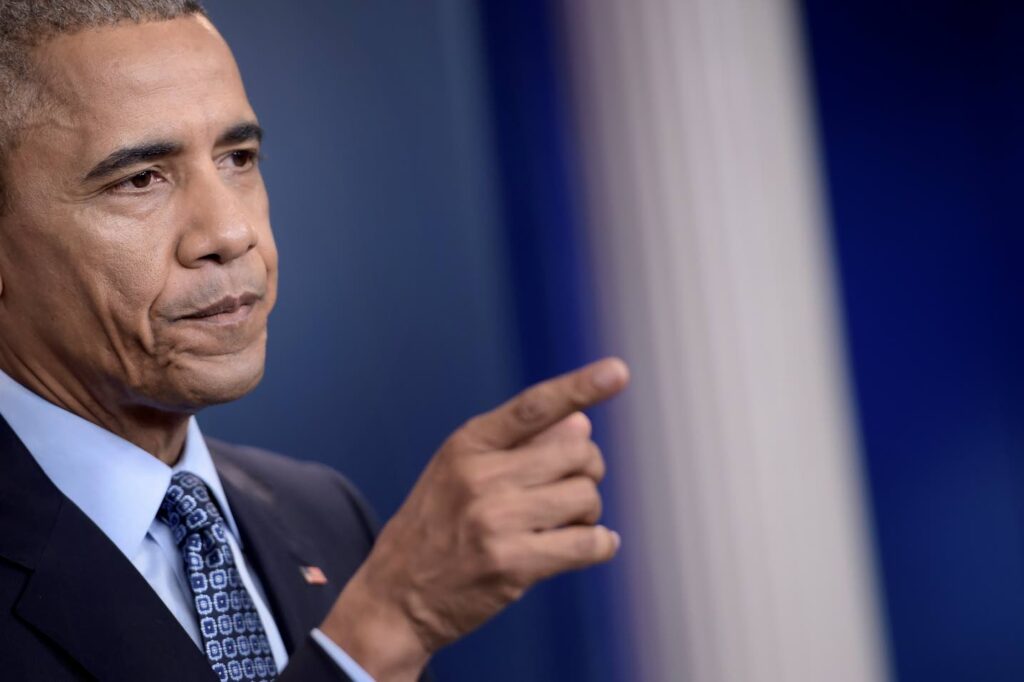
    In a significant public address, former U.S. President Barack Obama has delivered a powerful critique of the nation’s deteriorating political climate, specifically addressing the erosion of basic decorum and the emergence of authoritarian-style enforcement tactics. His comments came during a comprehensive podcast dialogue with political commentator Brian Tyler Cohen, released on Saturday.

    The interview marked Obama’s first public response to a controversial video shared on Donald Trump’s Truth Social account on February 5th, which depicted the Obamas—the nation’s first Black presidential couple—with their faces superimposed on primate bodies. The offensive imagery appeared briefly within a longer video promoting baseless conspiracy theories about the 2020 election outcome.

    Obama identified a troubling absence of shame among political actors who previously maintained respect for governmental institutions. ‘There’s this sort of clown show happening in social media and television,’ he observed, ‘and what is true is that there doesn’t seem to be any shame about this among people who used to feel like you had to have some sort of decorum and sense of propriety.’

    The former president further escalated his criticism by drawing direct parallels between Trump’s immigration enforcement operations in Minnesota and tactics employed by authoritarian regimes. He specifically referenced federal officers’ conduct during weeks-long operations that included two fatal shootings, describing their behavior as reminiscent of actions ‘we’ve seen in authoritarian countries and dictatorships.’

    Despite his grave concerns, Obama expressed optimism about democratic resilience, praising Minnesota communities that organized peaceful protests against the immigration crackdown. ‘That kind of heroic, sustained behavior in subzero weather by ordinary people is what should give us hope,’ he remarked, emphasizing citizens’ efforts to document and resist operations they deemed un-American.

    The political context surrounding these remarks remains charged, with the Department of Homeland Security experiencing a partial government shutdown as lawmakers debate funding allocations. Democratic legislators continue to oppose funding without substantial operational reforms to Immigration and Customs Enforcement (ICE) practices.

  • Ghana seeks to extradite Russian accused of filming sexual encounters with women

    Ghana seeks to extradite Russian accused of filming sexual encounters with women

    Ghanaian authorities have initiated formal proceedings to secure the extradition of a Russian national accused of covertly recording intimate encounters with women and disseminating the footage across social media platforms without obtaining consent. The individual, identified in both Ghana and Russia as a self-proclaimed ‘pick-up artist’ and online blogger in his thirties, had traveled to the African nation specifically to secretly document his interactions with women. The illicit recordings were allegedly captured using a pair of smart sunglasses equipped with a camera, which he then used to circulate the private footage online. A preliminary investigation conducted by Ghanaian officials suggests the suspect has likely departed the country. In response, Ghana’s Technology Minister has summoned the Russian ambassador to address the serious allegations. This case presents a significant diplomatic challenge, as Russia maintains a policy of not extraditing its citizens, except under extreme circumstances. Social media reports indicate this individual may have been distributing similar non-consensual footage involving women in Ghana and Kenya for several years, suggesting a pattern of predatory behavior across multiple jurisdictions.

  • Tonie-Ann Forbes lowers 60m hurdles personal best

    Tonie-Ann Forbes lowers 60m hurdles personal best

    The NCAA indoor track and field season witnessed an explosive weekend of record-shattering performances, headlined by Tonie-Ann Forbes of Texas Tech University. The Jamaican hurdler blazed to victory in the women’s 60m hurdles at the Jarvis Scott Invite in Lubbock, Texas, clocking a phenomenal personal best (PB) of 8.03 seconds. This performance not only demolished her previous season’s best of 8.08 but also propelled her into a tie for tenth on the school’s all-time list alongside compatriot Demisha Roswell.

    Forbes’s triumph was part of a broader wave of athletic excellence. At the same meet, teammate Daniel Clarke secured third in the men’s 60m hurdles with a PB of 7.78 seconds. Meanwhile, at the Tiger Paw Invitational, Brittanie Johnson of Purdue University delivered a stunning double-PB performance. She dominated the women’s weight throw with a massive heave of 21.67m, improving her mark to become the second-best in school history, and also set a new PB of 16.08m in the shot put.

    Elsewhere, Kobe Lawrence of the University of Oregon reclaimed his school’s men’s shot put record with a colossal throw of 20.16m. The Tyson Invitational saw World Championships semi-finalist Tyrice Taylor (University of Arkansas) open his season victoriously, winning the men’s 800m in 1:46.11. Further highlights included Lansford Cunningham of Tusculum University resetting the school’s long jump record with a leap of 7.55m after a dramatic series of fouls, and Shakiel Dacres of East Carolina moving to fifth on their all-time list with a PB shot put of 16.96m.

  • West Indies first team into T20 World Cup Super Eights

    West Indies first team into T20 World Cup Super Eights

    In a commanding display of cricketing prowess, the West Indies national team became the inaugural qualifier for the Super Eight stage of the ICC T20 World Cup following a resounding nine-wicket triumph over Nepal on Sunday. The decisive Group C encounter at Mumbai’s iconic Wankhede Stadium saw the Caribbean side demonstrate superior skill in both bowling and batting disciplines.

    After winning the toss and electing to field, the West Indies bowling attack immediately applied pressure on the Nepalese lineup. Matthew Forde delivered an exceptional bowling performance, conceding just 10 runs across his four overs while claiming the crucial wicket of Nepal’s captain Rohit Paudel for a mere 5 runs. The bowling unit, spearheaded by Jason Holder’s impressive figures of 4-27, systematically dismantled Nepal’s top order, reducing them to 22-3 within the powerplay and eventually 46-5 by the 11th over.

    Nepal’s innings found temporary stability through Dipendra Singh Airee’s resilient 58-run contribution and a 54-run seventh-wicket partnership with Sompal Kami, who remained unbeaten on 26. These efforts propelled Nepal to a final total of 133-8 from their allotted 20 overs, though the score proved insufficient against the West Indies’ formidable batting lineup.

    The Caribbean response was both clinical and efficient. Captain Shai Hope anchored the chase with an unbeaten 61 from 47 deliveries, featuring five boundaries and three maximums. His partnership with Shimron Hetmyer, who contributed 46 not out from 32 balls, proved decisive as the duo assembled an unbroken 91-run stand. The West Indies reached their target of 134 in just 15.2 overs, securing victory with 28 deliveries remaining.

    This result eliminates Nepal from tournament contention while cementing the West Indies’ position as serious contenders for the T20 World Cup title. The comprehensive nature of their victory sends a strong message to other participating nations as the competition progresses to its next phase.

  • Fiscal watchdog warning triggers company tax deadline overhaul

    Fiscal watchdog warning triggers company tax deadline overhaul

    Jamaica’s government has enacted a significant reform to its corporate tax collection schedule, advancing the filing and payment deadline to April 15 annually in response to a formal warning from the nation’s fiscal watchdog. The legislative amendment, detailed in the 2026 Fiscal Policy Paper, moves the company profits tax deadline from March to provide enhanced fiscal stability and earlier revenue visibility.

    The policy shift originates from a February 2025 assessment by the Independent Fiscal Commission (IFC), which identified a critical structural vulnerability in Jamaica’s revenue framework. The commission’s Economic and Fiscal Assessment Report highlighted that excessive reliance on tax inflows during the final two weeks of March created substantial fiscal deviation risks with minimal opportunity for in-year adjustments.

    This reform addresses what experts termed a ‘concentration risk’ where a significant portion of annual income tax collections traditionally arrived in the fiscal year’s closing fortnight. Under the previous schedule, any revenue shortfall during this critical period would jeopardize legally binding fiscal targets, including Jamaica’s commitment to reduce public debt to 60% of GDP by 2027/28.

    The revised timeline offers dual advantages: corporations gain additional breathing room for final payments, alleviating cash flow pressures, while the government acquires earlier insights into revenue performance. This enhanced visibility enables more timely policy adjustments should collections deviate significantly from projections.

    Notably, this administrative reform does not constitute a tax increase or alter statutory rates. Instead, it represents a strategic recalibration of the fiscal calendar to strengthen economic resilience. The timing proves particularly relevant given current economic headwinds, including recovery efforts from Hurricane Melissa that have created additional downward pressure on fiscal performance.

    Within Jamaica’s rules-based fiscal framework that projects total expenditure of approximately $1.441 trillion for FY2026/27, this adjustment demonstrates how structural reforms can sometimes outweigh revenue measures in safeguarding economic stability.

  • December weddings, destination ‘I Do’s’ drive 2026 interest

    December weddings, destination ‘I Do’s’ drive 2026 interest

    Jamaica’s wedding sector is experiencing a remarkable surge in demand for 2026 despite nationwide declines in marriages and increasing divorce rates, according to industry professionals. Wedding planners report unprecedented interest for the upcoming year, driven by significant shifts in how couples approach their celebrations—moving away from grandiose events toward more personalized, intimate experiences.

    Industry leaders indicate that inquiries for 2026 are substantially higher than previous years, with December emerging as the preferred month for nuptials. Destination weddings continue to be a major growth driver, even as couples deliberately reduce guest lists and exercise greater budget consciousness.

    Kara-Ann Boyne-Anderson, Creative Director at Petals and Promises, revealed her 2026 calendar is already fully booked with up to two weddings scheduled per weekend. She noted a significant increase in destination ceremonies, with approximately 80% of her clientele originating from Canada, the United States, and other Caribbean nations.

    “Couples are increasingly choosing destination weddings with intentionality,” Boyne-Anderson explained. “The era of weddings as mere events has passed—they are now curated experiences. Clients are planning further ahead to manage budgets effectively and make deliberate choices about celebration elements.”

    Julian Hylton, CEO of Future Events and co-founder of Terri Events, along with wedding planner Terri Myrie, confirmed a substantial increase in 2026 inquiries, though confirmed bookings haven’t yet reached 2025 levels. They observed a distinct trend toward smaller gatherings, with couples frequently taking DIY approaches to planning.

    Myrie highlighted the impact of social media trends and “wedding tax”—where suppliers charge premium rates for wedding services—as factors driving this shift. “We’re rarely seeing weddings with 200-300 guests anymore. Most celebrations now range between 80-120 guests, with micro-weddings of approximately 50 people becoming increasingly common,” she stated.

    Hylton noted adapting her business model to accommodate couples seeking greater cost control. “Many clients ask if they can use our venue while handling other arrangements themselves. While some vendors restrict external services, we’ve adapted to this more flexible approach,” she explained.

    Despite slower booking momentum compared to previous years, planners remain optimistic about achieving approximately 40 weddings for the year. December has gained particular popularity as couples leverage time off work and seek warmer climates for destination ceremonies, with September and October also showing growing interest.

    The industry’s resilience contrasts with recent statistics from the Statistical Institute of Jamaica, which recorded a continued decline in marriages from over 15,000 in 2022 to 14,167 in 2023, and further dropping to 12,470 in 2024. Planners emphasize that despite these figures, the fundamental desire to celebrate love through marriage remains strong, driving continued demand for specialized wedding services.

  • Quick to wed, quicker to walk

    Quick to wed, quicker to walk

    Jamaica is experiencing a concerning societal shift as marriage rates plummet while divorces surge, prompting leading relationship expert Bishop Dr. Carla Dunbar to issue a stark warning about modern attitudes toward marital commitment. Recent data from the Statistical Institute of Jamaica reveals marriages have declined dramatically from over 15,000 in 2022 to just 12,470 in 2024, while divorce filings have risen consistently from 3,310 to 3,729 during the same period.

    Dr. Dunbar, an accomplished counseling psychologist and licensed sex therapist, identifies a disturbing trend where couples approach separation with a ‘hire purchase’ mentality—abandoning relationships when immediate results aren’t achieved. She attributes this crisis to inadequate preparation for marriage, noting that many couples prioritize wedding ceremonies over the lifelong commitment they signify.

    ‘The accessibility of divorce has created a dangerous convenience,’ Dr. Dunbar explained to the Jamaica Observer. ‘Previously, people invested more effort into resolving marital issues because separation was more difficult. Now, divorce has become as easily obtainable as fast food—you simply drive through and collect your papers.’

    The expert criticized modern society’s demand for instant gratification, emphasizing that marriage requires patient cultivation like any living organism. ‘A child isn’t born an adult immediately, nor do you obtain a university degree instantly. Marriage demands time, tenderness, and committed effort from both parties to thrive,’ she argued.

    Dr. Dunbar specifically called upon church ministers and marriage officers to strengthen premarital counseling programs, noting that even pastors often insufficiently study biblical teachings on marriage. She warned against rushing couples to the altar without ensuring their emotional readiness for partnership realities, conflict resolution, and long-term sacrifice.

    Highlighting the spiritual dimension, Dr. Dunbar referenced Hebrews 13:4, stating that honoring marriage requires corresponding actions. She advocates for comprehensive counseling both before and after marriage ceremonies, rejecting abbreviated two-day sessions as insufficient for preparing couples for marital rigors.

    The relationship expert remains open to training marriage officers and pastors, emphasizing that successful marriages require maintenance through spiritual guidance and practical commitment rather than temporary emotions or romantic fantasies.

  • Middle-class dream for Tivoli Gardens

    Middle-class dream for Tivoli Gardens

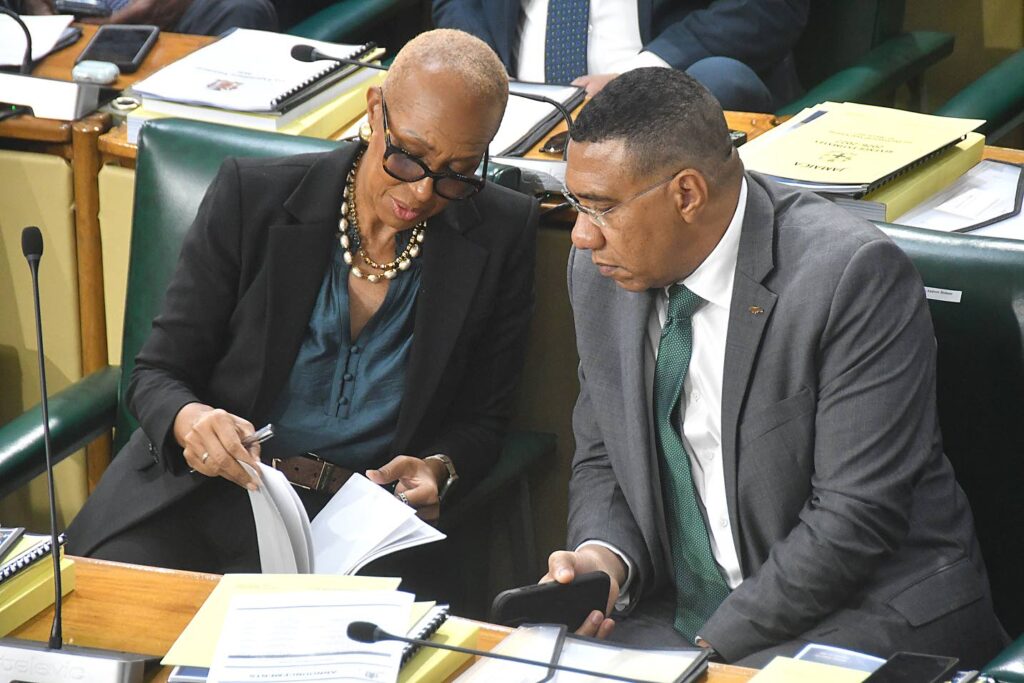
    Tivoli Gardens, a community once globally defined by the violent 2010 security operation to capture former strongman Christopher Coke, is now undergoing a remarkable socioeconomic transformation. According to local Councillor Donovan Samuels of the Jamaica Labour Party, the area is demonstrating significant renewal and possesses the tangible potential to evolve into a middle-class neighborhood.

    In an interview with the Jamaica Observer during the ceremonial opening of parliament, Councillor Samuels articulated a vision of profound change. He described Tivoli Gardens not as a problem area but as a leadership brand, emphasizing continuous efforts to improve both community infrastructure and individual lives. The improved national economy has directly benefited residents through increased employment opportunities, specialized training programs, and visibly enhanced living standards.

    The community’s historical stigma as a violence-prone zone is gradually fading, replaced by growing social acceptance. Samuels recalled that during the 1970s, providing a Tivoli Gardens address would generate immediate pushback, whereas today it increasingly meets with welcoming responses. This cultural shift is supported by diverse community activities encompassing cultural events, health initiatives, and workforce development programs accessible to all residents.

    Samuels projects that within the next five to ten years, Tivoli Gardens could complete its transition to a genuine middle-class society. This optimism stems from observable behavioral changes among younger generations who are pursuing education with notable success—obtaining Caribbean Secondary Education Certificate (CSEC) qualifications and university degrees before securing quality employment.

    A cornerstone of this transformation is the Tivoli Mural Project, initiated in 2022 as a creative response to community trauma. The project’s first phase transformed 5,000 square feet of walls—some still bearing bullet holes from the 2010 operation—into powerful murals symbolizing hope and resilience. The second phase expanded this artistic reclamation dramatically, with seventy international artists creating large-scale murals across 35,000 square feet of community walls.

    These artistic interventions have stimulated intellectual development among youth, who now engage in critical discussions interpreting mural themes. This development of analytical capacity aligns perfectly with the project’s fundamental intention: to cultivate thoughtful citizens capable of independent interpretation and dialogue, further accelerating Tivoli Gardens’ remarkable journey toward renewal and social elevation.

  • Remembering Bunny Rugs… 12 years on

    Remembering Bunny Rugs… 12 years on

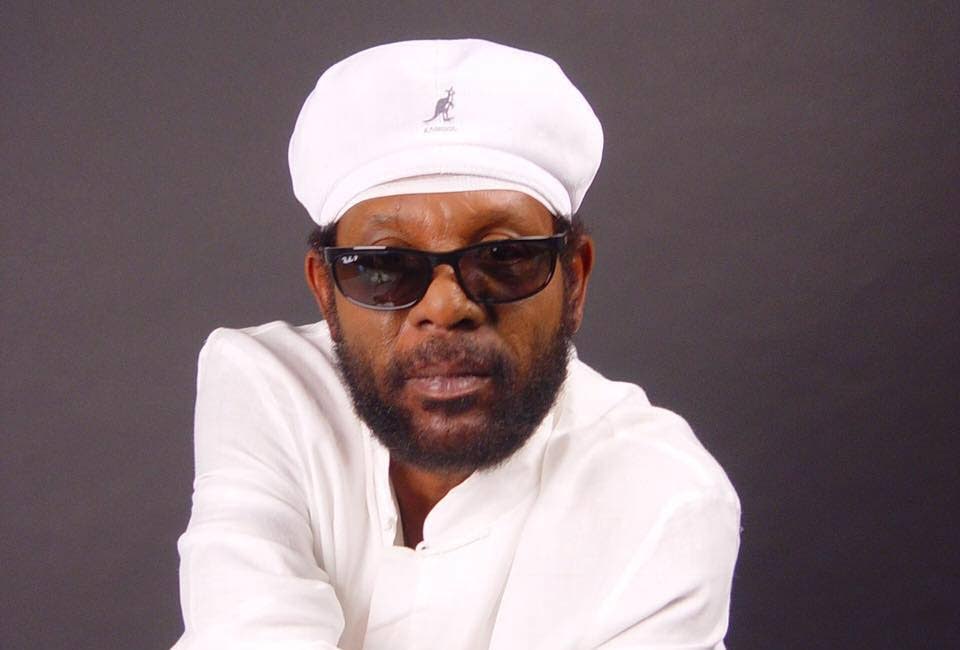
    As Jamaica’s annual Reggae Month celebrations unfold this February, the festivities carry a poignant tone following recent losses within the music community. Among those being honored is William ‘Bunny Rugs’ Clarke, the legendary Third World frontman whose death on February 2, 2014, left an irreplaceable void in Caribbean music.

    Beyond his iconic status as lead vocalist for the Grammy-nominated band, Clarke’s journey reveals a multifaceted artist of remarkable depth. His musical origins trace back to church choirs in Manchester parish, where he first cultivated his vocal talents. Surprisingly, before committing to music, Clarke trained as a visual artist at Jamaica School of Arts and Crafts (now Edna Manley College) for over two years.

    Clarke’s professional breakthrough came with Inner Circle in 1969, preceding Jacob Miller’s tenure as lead singer. His relocation to New York in 1973 introduced an unconventional interlude—driving a yellow cab and working on Wall Street before joining Third World in 1976.

    The origin of his distinctive stage name combines childhood and adult experiences: ‘Bunny’ derived from his grandmother’s observation of his rabbit-like energy, while ‘Rugs’ referenced his habit of sleeping on floors during touring days.

    His collaborative work with legendary producer Lee ‘Scratch’ Perry at Black Ark studio (under the name Bunny Scott) showcased his individual brilliance before catapulting to fame with Third World. The band’s 10 Grammy nominations underscored their global impact, while Clarke’s 2016 posthumous Order of Distinction (Officer Class) recognized his enduring cultural contributions.

    Though synonymous with Third World, Clarke’s solo discography—including 1995’s ‘Talking To You’ and 2012’s ‘Time’—revealed more personal artistic dimensions. Intriguingly, he shared a February 6 birthday with Bob Marley, a coincidence many regard as spiritually significant for reggae’s evolution.

    His legacy continues through daughter Adriana, who discovered her own musical voice after performing at her father’s memorial services. ‘A confidence came that I never had before,’ she told the Jamaica Observer in 2019, embodying the enduring influence of a man who helped shape reggae’s global identity.