
The World Health Organization (WHO) has issued a stark warning about the ongoing prevalence of violence against women and girls in the Americas, including the Caribbean. Ahead of the International Day for the Elimination of Violence against Women and Girls on November 25, new estimates reveal that one in three women aged 15 and older in the region has endured physical or sexual violence in their lifetime. Intimate partner violence remains the most common form, affecting one in four women aged 15-49, while one in eight has suffered sexual violence from non-partners. Young women aged 15-19 face significant risks, with 21% experiencing partner violence before turning 20. Older women are also vulnerable, as 23% of those aged 65 and above report such abuse. Dr. Jarbas Barbosa, Director of the Pan American Health Organization (PAHO), emphasized that violence is preventable and stressed the importance of high-quality data to address the issue effectively. Despite increased awareness and interventions, progress in reducing violence has been slow, and countries in the Americas are unlikely to meet Sustainable Development Goal 5.2, which aims to eliminate all forms of violence against women. Britta Baer, PAHO’s advisor on violence prevention, highlighted the underreporting of sexual violence due to stigma and shame, urging strengthened access to post-rape care. The WHO’s comprehensive study, analyzing data from 2000 to 2023 across 168 countries, underscores the urgent need for informed policy decisions. Violence against women has severe consequences, including physical injuries, mental health issues, and perpetuated cycles of abuse. PAHO is supporting countries through evidence-based strategies like the RESPECT framework, which focuses on empowering women, reducing poverty, and transforming gender norms. The health sector plays a critical role in early identification, clinical care, and connecting survivors to broader services. PAHO is also facilitating regional dialogue and capacity-building to scale up effective interventions. As part of the 16 Days of Activism 2025, PAHO will host a hybrid event on November 24 with UN Women and the World Bank to present new estimates and discuss proven interventions. Dr. Barbosa reiterated that violence against women remains a regional priority, calling for sustained investments and collective action to eliminate this pervasive issue.
作者: admin
-
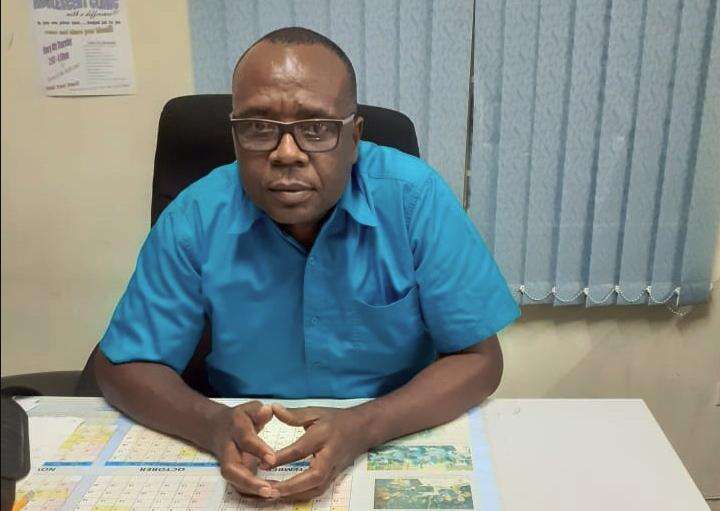
Parents, guardians urged to store household chemicals properly
In the aftermath of Hurricane Melissa, Gerald Miller, the Health Promotion and Education Officer for Westmoreland, Jamaica, has issued a stern warning to parents and guardians regarding the safe storage of household chemicals. With many schools still closed, children are spending more time at home, increasing the risk of accidental poisoning. Miller emphasized the importance of keeping sanitizing products and other hazardous substances out of children’s reach to prevent health crises. ‘We are asking parents to be extremely careful to secure these chemicals, as accidental ingestion could place immense strain on our already overburdened health facilities,’ he stated. Miller acknowledged the challenges faced by families in securing storage spaces but urged them to improvise solutions, even if it means hiding chemicals in unconventional places. The call for vigilance comes as the health sector grapples with the added pressures of hurricane recovery efforts.
-

Jamaica to know play-off opponents on Thursday
KINGSTON, Jamaica — The Jamaican national football team, known as the Reggae Boyz, is set to discover their semi-final opponents in the FIFA World Cup play-offs during Thursday morning’s official draw. The draw will determine the matchups for the crucial qualifiers scheduled for March in Mexico. Jamaica, who missed out on an automatic qualification after a 0-0 draw against Curacao in their Concacaf Group B clash on Tuesday, is among six teams vying for the final two spots in the 2026 World Cup, which will be hosted by the United States, Canada, and Mexico. Curacao secured the top position in the group with 12 points, narrowly edging out Jamaica, who are aiming to return to the World Cup for the first time since 1998. The play-offs will feature teams from various confederations, including Suriname (Concacaf), Iraq (Asian Federation), the Democratic Republic of the Congo (African Federation), Bolivia (Conmebol), and New Caledonia (Oceana). According to the format, DR Congo (ranked 56th) and Iraq (ranked 58th) will receive byes to the semi-finals, while Jamaica (ranked 70th) and Suriname (ranked 123rd) will avoid facing each other in the first round due to their shared Concacaf affiliation. The winners of the initial matches will advance to face DR Congo and Iraq, with the ultimate victors securing their place in the World Cup.
-

IR expert hopes for US-Venezuela dialogue
Recent statements by US President Donald Trump and Venezuelan President Nicolas Maduro have sparked cautious optimism for a potential de-escalation of tensions between the two nations in the Caribbean. Maduro, during his television program ‘Con Maduro’ on November 17, expressed willingness to engage in talks with US officials, a sentiment echoed by Trump, who confirmed Venezuela’s request for formal discussions. Caribbean Policy Consortium co-chairman Prof Anthony Bryan emphasized the importance of dialogue, stating, ‘Dialogue is always better than sabre rattling.’ These developments come amidst a significant US military presence in the region, including the arrival of the aircraft carrier USS Gerald R Ford and its strike group. The deployment, which began in August, has been framed by the US as part of anti-narcotics efforts, though critics, including the UN and European Union, have raised concerns about extra-judicial killings. Trinidad and Tobago Prime Minister Kamla Persad-Bissessar has supported the US military presence while reaffirming her country’s sovereignty and refusal to be used as a launchpad for attacks on Venezuela.
-
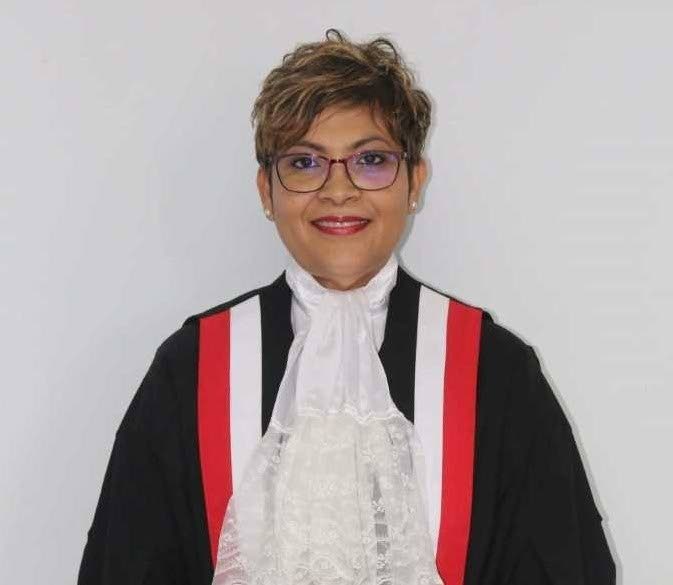
Penal man acquitted of arson, malicious damage, assault charges
In a significant legal development, Sarabjit Harripersad, a resident of Penal, was acquitted of multiple criminal charges, including arson, malicious damage, assault, battery, and resisting arrest. The verdict was delivered by a San Fernando jury on November 18 after nearly three hours of deliberation at the Princes Town Judicial Centre. Justice Lisa Ramsumair-Hinds presided over the trial, while Harripersad was represented by a legal team comprising attorneys Larry Williams, Enrique Singh, and Alejandro Gocking. The charges stemmed from an incident on May 10, 2024, at Bheemul Branch Trace, San Francique Road, Penal, where Harripersad was accused of setting fire to a house, destroying a vehicle, and assaulting individuals. The defense successfully argued that the prosecution’s case was riddled with inconsistencies and contradictions among witness testimonies, undermining its credibility. Key discrepancies included conflicting accounts of where the alleged assault occurred, whether gasoline was poured, and the sequence of events. The defense emphasized that these inconsistencies rendered the prosecution’s case unreliable, leading to Harripersad’s acquittal. State attorneys Charmaine Samuel and Davenand Ramsaran led the prosecution.
-
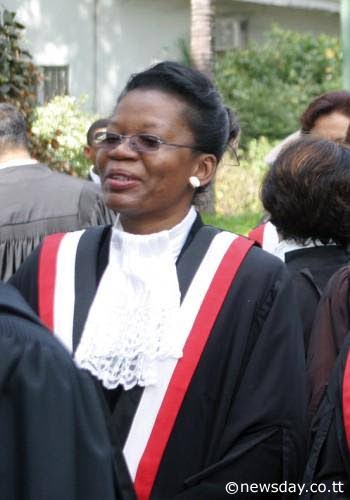
High Court awards TTEC estate constable $1.1m for wrongful dismissal
In a landmark ruling, Farad Mohammed, a former estate constable dismissed from the Trinidad and Tobago Electricity Commission (TTEC) in 2017, has been awarded over $1.1 million in damages. The High Court determined that his termination violated the company’s disciplinary code, marking a significant victory for Mohammed and the Estate Police Association (EPA).
Mohammed’s dismissal followed an internal disciplinary hearing in February 2017, where he was found guilty of tampering with company property. The incident occurred in October 2016 when Mohammed, while on patrol at TTEC’s Frederick Street offices in Port of Spain, noticed the emblem of a company vehicle had come loose. He claimed he placed it in his pocket to prevent it from falling off, intending to reattach it later. TTEC initially charged him with theft and tampering, though the theft charge was later dropped.
Mohammed and the EPA contested the dismissal, arguing that TTEC’s disciplinary code limited the penalty for a first-time tampering offense to a 30-day suspension with a threat of dismissal. However, the Special Tribunal upheld the termination in 2019, stating the code was merely a guide.
In 2020, Mohammed and the EPA, represented by attorneys Kevin Ratiram and Michael Rooplal, sought judicial review. On January 31, Justice Joan Charles ruled that TTEC was bound by its disciplinary code and lacked the authority to dismiss Mohammed. She overturned the tribunal’s decision, ordered his reinstatement, and directed a damages assessment.
During the assessment before Master Wrenerson Lochan, it was agreed that Mohammed’s lost earnings from 2017 to his reinstatement amounted to $924,656.79. TTEC’s legal team argued for a 40% reduction, citing Mohammed’s conduct, but his attorneys countered that the code prohibited dismissal, absolving him of responsibility. Lochan rejected TTEC’s request, ordering the full payment of $924,656.79, plus $87,355.73 in interest and $109,599 in costs, bringing the total award to over $1.1 million.
-
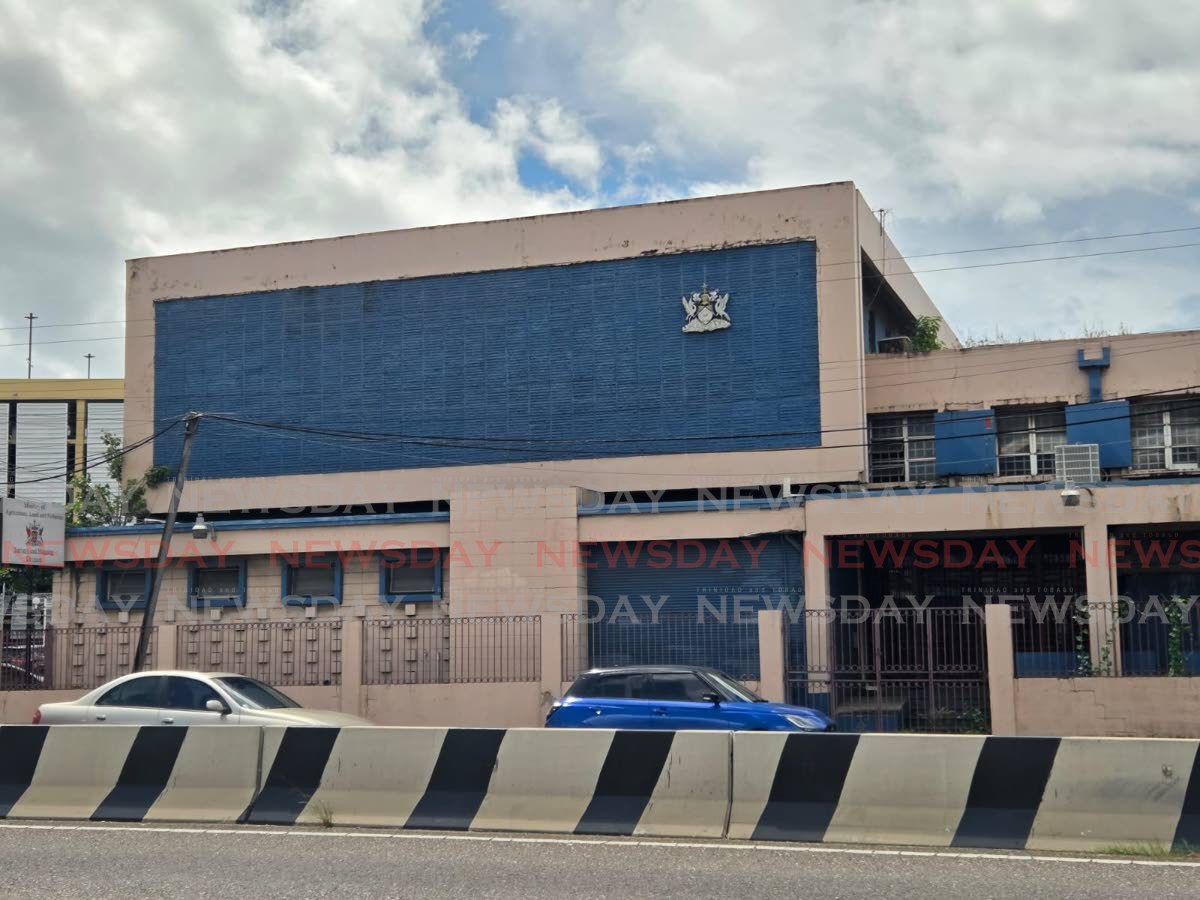
Body found in abandoned Agriculture Ministry building
The discovery of a decomposing body in an abandoned Ministry of Agriculture building in Port of Spain, Trinidad, has left authorities puzzled. On November 17, at approximately 6:30 am, an anonymous passerby alerted the Police Command Centre about a foul odor emanating from the old Surveys and Mapping Division building on Wrightson Road. Responding officers, granted access by an MTS official, found the severely decomposed remains of a man inside. The individual, of African descent with a rasta hairstyle, was shirtless and clad in brown long pants. Police noted no visible signs of violence on the body. The district medical officer declared the man dead and ordered the body to be transported to the Forensic Science Centre in St. James for an autopsy. Investigators remain uncertain how the man entered the building, as a lock was found on the front gate during a subsequent visit on November 19, with all doors and windows appearing secure. The Central Police Station has taken charge of the investigation, seeking to unravel the circumstances surrounding this mysterious death.
-
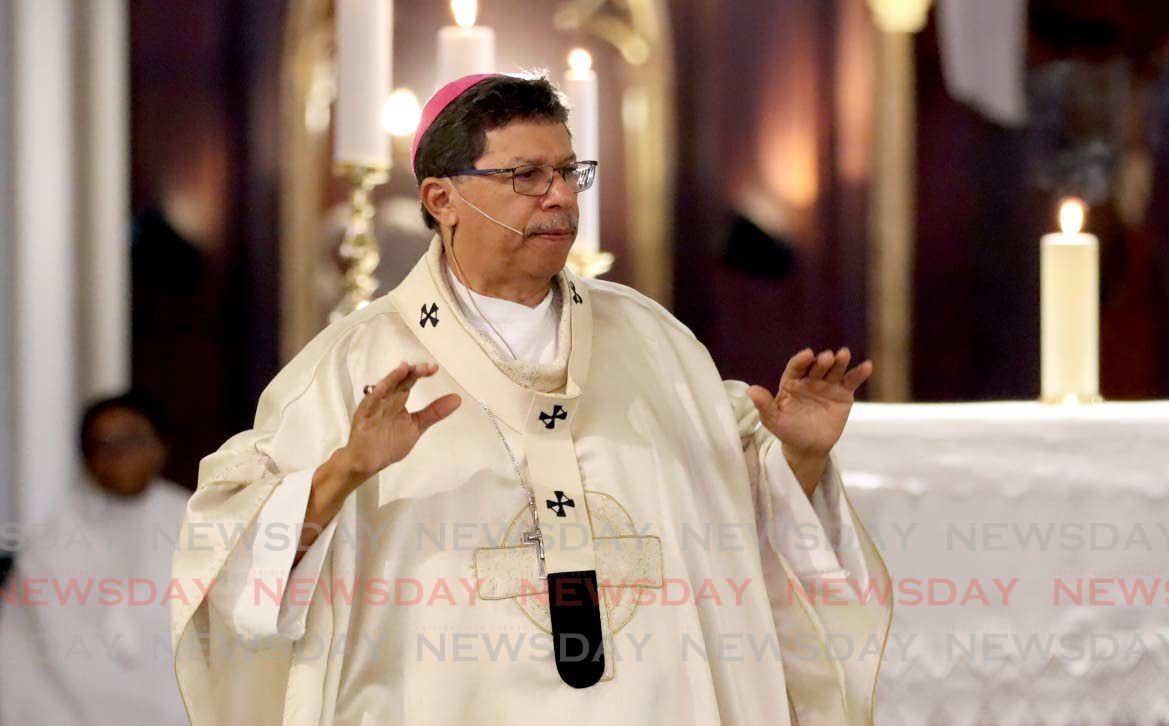
Catholic Church urges leaders: Calm the troubled waters
The Catholic Church has voiced strong opposition to Trinidad and Tobago’s (TT) government’s recent decision to conduct mass deportations of detained Venezuelan migrants. In a statement issued on November 17 by the Catholic Commission for Social Justice (CCSJ) of the Archdiocese of Port of Spain, the Church expressed solidarity with the Antilles Episcopal Conference (AEC), Archbishop Charles Jason Gordon, and the Conference on Theology in the Caribbean Today (CTCT). The CCSJ raised concerns over escalating geopolitical tensions in the Southern Caribbean, including lethal military strikes on vessels suspected of drug trafficking and the growing humanitarian crisis affecting migrants across the region. The Church warned that the Caribbean’s longstanding reputation as a ‘zone of peace’ is under threat, particularly with the significant presence of US military forces, including the USS Gerald R Ford, in the Caribbean Sea. The CCSJ urged regional leaders to prioritize dialogue over confrontation and to consider the potential repercussions of US President Donald Trump’s actions on TT and the wider region. The commission criticized the US naval operations near Venezuela, which have led to the deaths of 83 people since September, raising fears of extrajudicial killings. The CCSJ emphasized that such actions violate international human rights laws and Catholic teachings on the sanctity of life. While acknowledging TT’s right to secure its borders, the Church insisted on adherence to international law, particularly the principle of non-refoulement, which prohibits returning refugees to countries where they face persecution. The CCSJ also highlighted the closure of the UNHCR national office in TT, which has exacerbated the crisis by leaving thousands of migrants without access to registration or protection. The Church called for political restraint, regional unity, and diplomatic efforts to maintain peace. It urged Caribbean governments to prioritize humanitarian protection and to strengthen regional diplomacy. The CCSJ announced plans to expand partnerships with civil society to support migrants and refugees, emphasizing that they are ‘children of God’ and not political pawns. The commission recommended a pause on mass deportations, renewed engagement with UNHCR and the International Organization for Migration, and the incorporation of the 1951 Refugee Convention into TT law. Additionally, it called for public education to counter misinformation and promote solidarity, as well as collective action to safeguard human dignity.
-
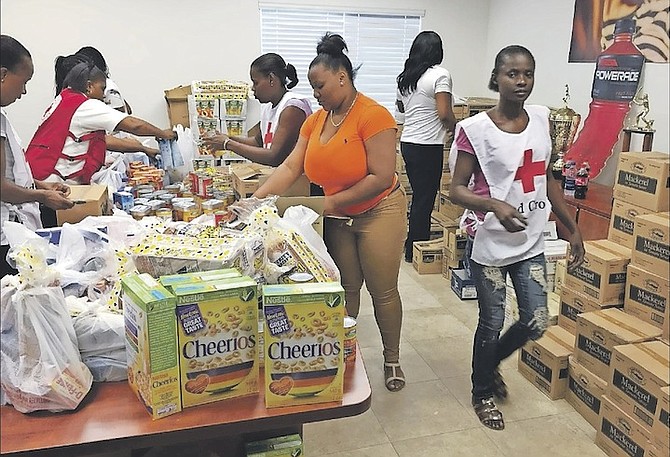
Soaring demand pushes GB food aid groups to their limit
Grand Bahama’s leading food aid organizations are grappling with unprecedented demand as residents increasingly rely on non-profits to supplement their shrinking grocery budgets. The Grand Bahama Red Cross Society and Reach Out Ministries report a significant rise in weekly inquiries, walk-ins, and requests to join their feeding programs, highlighting the growing economic hardship on the island. Kimberly Outten, administrator at the Grand Bahama Red Cross, revealed that their Meals on Wheels service, which provides hot meals to disabled and elderly residents five days a week, has been operating at full capacity for months. Despite serving approximately 50 to 55 individuals, the program is unable to meet the escalating demand. Many seeking assistance have already exhausted other options, such as Social Services and churches, only to be redirected to the Red Cross. In addition to Meals on Wheels, the organization distributes monthly grocery parcels to 22 families, but new requests continue to strain resources, with 12 to 20 weekly walk-ins seeking help. The needs often extend beyond food, with requests for home repairs and rent assistance, which the Red Cross cannot provide. As Thanksgiving approaches, the organization is preparing for its Feed the 10,000 initiative, a community-supported mass feeding event expected to exceed 10,000 meals. Reach Out Ministries is experiencing similar pressures, with founder Dudley Seide noting a steady stream of calls for assistance, including 60 to 70 weekly requests. The ministry continues its weekly Sunday feeding program and is gearing up for Thanksgiving and Christmas initiatives. Seide emphasized the acute need among older residents, many of whom face financial instability due to delayed pensions and unemployment.
-

SpaceX eyes new booster landings before year’s end
SpaceX is on track to resume Falcon 9 booster landings in Bahamian waters before the end of the year, with plans for up to 20 additional recoveries at the Exuma Sound site pending government approval. The announcement was made during the Ministry of Education’s Starlink rollout event at CH Reeves Junior High School. Sarah Gillis, a SpaceX engineer, revealed that the company is nearing completion of regulatory requirements for a second landing at the same deep-water site used for the historic recovery on February 18. ‘We are currently finalizing the regulatory process to ensure the environmental review is complete and that all monitoring and upkeep requirements are met,’ Gillis stated. ‘We are close to achieving a second landing in Exuma and are collaborating with regulatory authorities to expedite the process.’ Gillis added that SpaceX aims to complete another landing by the end of 2025, with a target set for this year. ‘We don’t have much time left this year, so it should happen soon,’ she noted. Future landings will exclusively use the Exuma Sound site, with SpaceX planning up to 20 additional recoveries once approvals are secured. Environmental concerns arose following February’s landing, particularly regarding marine impacts and sonic booms. Gillis emphasized that the ongoing review includes comprehensive assessments. ‘We’ve conducted extensive modeling and predictions to ensure safety,’ she explained. ‘The site is sufficiently distant from sensitive areas, minimizing risks. We will also implement rigorous monitoring before, during, and after the landing to track any environmental impact. All predictions indicate minimal impact, aside from the instantaneous sound of the sonic boom.’ Discussions with Bahamian regulators have been positive, according to Gillis. Falcon 9 landings are a key component of SpaceX’s reusability program, which reduces launch costs by enabling boosters to return to Earth for multiple uses. An Environmental Impact Assessment released in September found the first landing had ‘minimal’ environmental effects but identified gaps in underwater noise measurements, recommending enhanced monitoring for future missions.