作者: admin

  • Residents question water outages, tanker response

    Residents question water outages, tanker response

    Across three rural districts of Barbados, thousands of residents have spent up to a full week grappling with no running water, as critical infrastructure upgrades and unexpected technical failures shut down local water supplies – and left many questioning the delayed response and long-term planning of the island’s water authority. The outages, which hit communities in St George, St John, and St Philip starting last week, stemmed from two overlapping issues: a required pump replacement at the Bowmanston Pumping Station and an unplanned electrical fault at the separate St John Pumping Station. But for many families already dealing with chronically low water pressure, the extended outage and slow arrival of emergency water tankers have amplified long-simmering frustrations over misaligned water distribution infrastructure.

    Barbados TODAY sent reporters to central and southeastern parts of the island earlier this week to document the ongoing crisis, speaking with dozens of residents who detailed daily disruptions to work, family care, and basic household needs. In the small St George community of Sweet Vale, long-time resident Adrian Brewster told reporters his neighborhood had been without consistent water for four full days, with one neighbor on higher ground facing persistent outages for as long as two months. Brewster explained that low water pressure prevents any meaningful flow to homes positioned uphill, forcing those households to trek down to the community’s public standpipe to collect every drop of water they need. For his uphill neighbor, who keeps livestock to support his family, the situation is particularly dire: only in the earliest hours of the morning, around 3 a.m. when most of the community is asleep, does pressure climb high enough to allow him to fill containers and bathe alongside his family. If he waits even until 5 a.m., the water stops flowing entirely.

    Brewster noted that a single emergency water tanker visited the area two days after his pipes ran dry, and no additional trucks have been seen since. He lives adjacent to the public standpipe, which has only operated intermittently through the outage, running for just a few hours at a time before cutting out completely. “I’ve timed it – sometimes you’ll have water for three hours, other times nothing at all,” he told reporters, laughing bitterly at the unreliable service. While water did trickle back into his home late Sunday, the pressure remains far too low for normal use. “It runs, but it runs so slow. Just yesterday it didn’t come on at all until around 6 in the evening,” he said.

    After decades of reliable service in the area, Brewster said these persistent water problems only started recently, following government-led pipe replacement work in the region. He added that what confuses him most is the area’s assignment to the Bowmanston water system, when Sweet Vale sits much closer to the Golden Ridge Pumping Station. “I can’t understand why our water has to come all the way from Bowmanston when Golden Ridge is right here,” he said. The Golden Ridge reservoir actually draws its water from the same Bowmanston aquifer, but local residents argue connecting local homes directly to Golden Ridge would resolve many of their pressure issues.

    Not all residents in the area have been equally affected: one Sweet Vale resident who installed a private water tank years ago to adapt to inconsistent supply told reporters she did not face a full outage, but she recalled past outages when emergency trucks never arrived, forcing her to call friends for water to care for her elderly household member. She also echoed Brewster’s confusion over the fragmented distribution system, noting that different sections of the small Sweet Vale community are split between the Bowmanston and Golden Ridge systems for no clear reason.

    In Bayley Alley, a community that only just received its first official piped water connections after years of relying on shared community water tanks serving roughly 50 households, residents spent four days without running water. Resident Jeremy told reporters that while the community sits lower on the hill, allowing them to retain a small amount of water, pressure remained extremely low through the outage, even after a single tanker visit.

    Similar stories of extended outages and rare emergency assistance came from St John’s Sherbourne community, where the Shorey family told reporters they had been without water since the previous Thursday, with only a single water tanker arriving at midday the previous day – the only emergency support they had seen since the outage began. Like many other residents affected, the Shoreys already had a private water tank on their property to store water amid increasingly frequent outages in recent years. In Four Roads, one resident reported going almost a full week without water, and never seeing an emergency tanker at all.

    Multiple residents confirmed that the outage was caused by two technical issues: an electrical fault at the St John Pumping Station and a faulty pump that required replacement at Bowmanston. The Barbados Water Authority (BWA) released its first official statement on the outage at 5:46 p.m. on Monday, confirming that the St John Pumping Station had been brought back online after crews discovered and repaired a leaking joint on the facility’s main pipe. Reporters also confirmed that a full pump replacement was required to restore full service to the affected districts. In a follow-up update released Wednesday, the BWA announced that all technical issues affecting the St John facility had been fully resolved. The authority noted that water service would return to normal gradually as the distribution system repressurizes, with customers in the affected areas of St George, St John, and St Philip seeing a progressive restoration of supply over the coming days. The BWA also issued an apology for the widespread disruption and thanked affected customers for their patience and understanding through the outage.


  • Dominica Football Association unveils squad for CONCACAF Nations League 2026

    Dominica Football Association unveils squad for CONCACAF Nations League 2026

    The Dominica Football Association (DFA) has officially announced its 22-player roster for the upcoming 2026 CONCACAF Nations League during an event held at the association’s headquarters in Bath Estate, Roseau. The selected group strategically blends seasoned homegrown talent with Dominican players plying their trade at professional and semi-professional clubs across North America and the Caribbean, marking a deliberate approach to leveraging the full breadth of the nation’s available football talent.

    The final squad features players drawn from multiple domestic Dominican sides including South East, Portsmouth Bombers, Dublanc, WE United, Middleham United, and Mahaut Soca Strikers. Beyond the country’s borders, the roster also includes athletes competing in Grenada’s Grenades FC, Canada’s York University, and several clubs across the United States such as Orlando City and Pinellas County United Pelicans. The full list of called-up players is as follows: Taran George, Reon Cuffy, Javid George, Savio Anselm, Troy Jules, Lyan Edwards, Jervanie Xavier, Jahil Alexander, Audel Laville, Nicholas Harve, Marcus Bredas, Eustace Marshall, Jaylan Jno Ville, Sidney Lockhart, Titus Sandy Jr, Tobi Jno Hope, Donte Newton, Dwight Eloi, Dhamario Challenger, Dale Dangleben, and Briel Thomas.

    This roster composition underscores the DFA’s long-standing strategy to cast a wide net for Dominican talent, regardless of where players are currently based. By integrating both domestic-based athletes who maintain consistent match fitness in local leagues and those who have developed their skills in more competitive overseas competitions, the association aims to field a competitive side for the regional tournament.

    With the official announcement now public, all selected players have shifted focus to intensive pre-tournament preparations, as they gear up to represent the Caribbean nation on the CONCACAF regional stage. The unveiling formally kicks off Dominica’s 2026 Nations League campaign, and local football supporters across the country and the broader Dominican diaspora are already gearing up to follow the national team’s progress as the competition gets underway in the coming weeks.

  • Platform for creative sector work ‘coming’

    Platform for creative sector work ‘coming’

    Barbados is moving forward with a targeted government initiative to transform its creative sector into a sustainable, year-round economic driver, with plans to launch a dedicated digital platform connecting local creative practitioners with paid gig opportunities, Culture Minister Senator Shane Archer has announced.

    The project, which has been in development following extensive input from young creative workers across the island, aims to address longstanding barriers in the sector, including inconsistent income streams, difficulty matching practitioners with clients, and low uptake of national social security contributions among independent creative workers. Senator Archer emphasized that creative professionals spanning writing, spoken word performance, visual arts, music and other disciplines are already poised for expansion, but require structured support to turn their natural talents into stable, long-term businesses.

    “I honestly believe that all sectors in our creative industry are ready for the next step, and are ready to earn all year round,” the minister said. “The point that we have to make is that we need to upscale our young people and our people that are involved in these industries.”

    The concept for the digital platform grew out of a recent gig economy workshop hosted by the Division of Youth and Culture at the Lloyd Erskine Sandiford Centre, where hundreds of young creative workers shared their experiences and needs with policymakers. Once developed, the platform will streamline connections between two groups: creative workers seeking steady projects, and local businesses in need of creative services – from a guitarist for a St Lucy restaurant to a live performer for an east coast hotel event. Beyond matching, the platform will include a built-in “gig calculator” that helps practitioners set competitive, fair service rates while accounting for required National Insurance (NIS) contributions.

    This new initiative aligns with a broader national strategy first outlined by Prime Minister Mia Mottley, who called for collaboration between government technology bodies and local young software developers to build a digital framework for the National Portable Benefits Programme back in 2025. Mottley’s original plan centered on supporting gig and non-traditional workers to access National Insurance and Social Security Service (NISSS) benefits, a priority the creative sector platform will advance by encouraging consistent contributions from independent creatives.

    Senator Archer noted that the COVID-19 pandemic highlighted just how critical social security coverage is for workers in irregular employment, making NIS participation a core focus of the new programme. “We will have to encourage our persons within the creative sector to also pay the NIS, to also invest in their future because, as we saw through COVID, NIS was important,” he said.

    The ultimate objective of the platform, the minister added, is to empower existing creative professionals to scale their businesses while creating new pathways for emerging talent to build careers in the creative industries, supporting broad-based year-round economic growth across the sector.

  • Two football players shine at DFA unveiling of its senior men’s squad for 2026/27 CONCACAF Nations League

    Two football players shine at DFA unveiling of its senior men’s squad for 2026/27 CONCACAF Nations League

    The Dominica Football Association (DFA) has officially pulled back the curtain on its senior men’s national team roster for the upcoming 2026/27 CONCACAF Nations League, building a balanced squad that blends veteran campaigners, players based outside the Caribbean nation, and exciting up-and-coming youth prospects.

    One of the most high-profile names on the team list is Titus Sandy Jr., a young talent who made history earlier this year when Orlando City SC selected him as the 46th overall pick in the 2025 MLS SuperDraft. Currently plying his trade with Orlando City B in MLS NEXT Pro, Sandy Jr. has already gotten a taste of top-flight North American soccer, after joining the senior Orlando City squad on a short-term Major League Soccer deal in 2025.

    Another selection that marks a key milestone for Dominican football is the inclusion of 16-year-old Taran George, a prospect from the local Sagicor South East FC. The teenage talent is set to step into a senior national team setup for the first time, a breakthrough moment that underscores the DFA’s proactive approach to nurturing local emerging talent and giving young players opportunities to compete on the international stage. George’s addition injects even more youthful energy and untapped potential into a squad already gearing up for a grueling six-match group stage.

    Beyond the two breakout prospects, the roster also features a handful of Dominican footballers currently plying their trade at overseas clubs and academies. Standouts among this group include Nicolas Harve of York University, Troy Jules of Grenades FC, and Tobi Jno Hope of Pinellas County United Pelicans.

    For this edition of the Nations League, Dominica has been drawn into League B Group A, where it will face off against three opponents: Guyana, Puerto Rico, and the Cayman Islands. Per CONCACAF’s competition structure, each side will play every other team in the group home and away, meaning Dominica will compete in a total of six group-stage matches as it vies for the top spot.

    Dominica’s campaign kicks off on September 24, 2026, with an opening home fixture against the Cayman Islands at Roseau’s Windsor Park. Three days later, on September 27, the team will stay in Roseau to host Puerto Rico for their second group match. The national side will then travel to Mayagüez, Puerto Rico, for consecutive away fixtures against Guyana, scheduled for October 1 and October 4.

    The final two matches of Dominica’s group stage, against Puerto Rico and the Cayman Islands respectively, are set to take place during the November FIFA international window, though exact match dates and host venues have yet to be finalized by the DFA and CONCACAF. With only the group winner earning a spot in the League B Championship, every fixture will carry high stakes, as Dominica aims to turn heads and deliver strong results throughout the tournament.

  • Antigua and Barbuda Drafts Laws to Prepare for Possible Deep-Sea Mining

    Antigua and Barbuda Drafts Laws to Prepare for Possible Deep-Sea Mining

    The Caribbean nation of Antigua and Barbuda has begun advancing draft legislation designed to regulate and govern emerging deep-sea mining activities within its maritime territory, marking a proactive step as global interest in extracting mineral resources from the deep ocean continues to grow.

    As international debates over the environmental risks and economic opportunities of deep-sea mining intensify, the small island developing state is moving ahead to establish clear legal guardrails before any large-scale exploration or extraction projects can move forward. The legislative package is expected to outline requirements for environmental impact assessments, stakeholder consultation, revenue sharing, and liability protocols for potential ecological damage linked to seabed mining.

    Deep-sea mining targets polymetallic nodules, hydrothermal vent deposits, and other mineral-rich formations on the ocean floor, which contain critical metals like cobalt, nickel, and manganese that are key inputs for manufacturing electric vehicle batteries and renewable energy technologies. For small coastal states like Antigua and Barbuda, the emerging industry offers the possibility of new economic revenue streams to support national development, but also carries significant risks to fragile deep-sea ecosystems and existing ocean-dependent industries such as tourism and commercial fishing.

    Environmental advocacy groups have repeatedly warned that deep-sea mining could cause irreversible harm to biodiversity, as deep-sea habitats are home to many unique, undiscovered species and play a critical role in global ocean carbon cycles. The drafting process in Antigua and Barbuda is being closely watched by both industry proponents, who see the move as a step toward unlocking untapped mineral resources, and conservationists, who are calling for strict precautionary measures to protect marine ecosystems before any operations are approved.

  • VVI: Drie wegen springen eruit in analyse verkeersongevallen

    VVI: Drie wegen springen eruit in analyse verkeersongevallen

    Three major thoroughfares in Suriname – Indira Gandhiweg, Martin Luther Kingweg, and Garnizoenspad – have emerged as the country’s most accident-prone routes, registering a disproportionately high share of severe and fatal traffic collisions, prompting a data-driven initiative to improve road safety across the nation.

    The Verkeersveiligheidsinstituut (VVI, or Road Safety Institute of Suriname) has launched a comprehensive mapping project to catalog high-risk roads and dangerous intersections using real-world traffic collision data. The compiled insights are designed to enable the Ministry of Public Works and Spatial Planning (OWRO) to implement targeted, evidence-based interventions rather than relying on broad, unfocused upgrades.

    Purcy Landveld, Deputy Director for Data, Education and Outreach at VVI, confirmed that initial analysis of collected incident reports has flagged the three routes for urgent prioritization. The institute is currently conducting detailed black spot analyses to pinpoint exactly which intersections and road segments carry the highest collision risk, rather than generalizing risk across entire routes.

    This data-centric approach is rooted in the reality that Suriname’s traffic landscape is rapidly evolving: the total number of registered vehicles continues to rise, overall mobility levels are increasing, and road user behavior is also shifting over time. VVI’s core goal through this project is to drive long-term, structural reduction in the number of traffic injuries and fatalities across the country.

    OWRO is already moving forward to act on VVI’s data, with plans to conduct targeted investigations and infrastructure upgrades at high-risk sites. Lucretia Beeldstroo, Deputy Director for Traffic and Mobility at OWRO, noted that a formal Terms of Reference has already been finalized for the project. A competitive tender process will be launched to select engineering firms to carry out detailed assessments of Indira Gandhiweg and Martin Luther Kingweg, the two highest-priority routes. Assessments will go beyond just reviewing past collision data to examine underlying conditions that may increase crash risk.

    To capture an accurate picture of traffic dynamics, new surveillance cameras will be installed at busy, high-risk intersections to track traffic flow patterns and identify dangerous maneuvers by road users. Evaluations will also cover multiple infrastructure factors, including vehicle speed limits, road lighting and visibility, road marking quality, pedestrian crossing facilities, and right-of-way protocols at intersections. Following assessments, immediate low-cost upgrades will also roll out across multiple sites: new road markings will be added, and missing or outdated traffic signs will be replaced to improve clarity for road users. Beeldstroo emphasized that the ministry is pursuing all feasible improvements within existing budget and resource constraints to cut collision risk.

    Landveld, however, stresses that infrastructure upgrades alone cannot solve Suriname’s road safety crisis. A cohesive, effective national road safety policy requires sustained cross-sector collaboration between government ministries and all relevant stakeholder agencies, he says. VVI is positioning itself as a central convener to bring all parties together, translating raw traffic data into actionable, site-specific safety measures.

    “That is VVI’s core mission: bring all stakeholders to the table, turn raw traffic data into concrete interventions, and work collaboratively to build safer roads for all Surinamese road users,” Landveld said.

  • Flavours of Grenada showcases opportunities across UK and Europe

    Flavours of Grenada showcases opportunities across UK and Europe

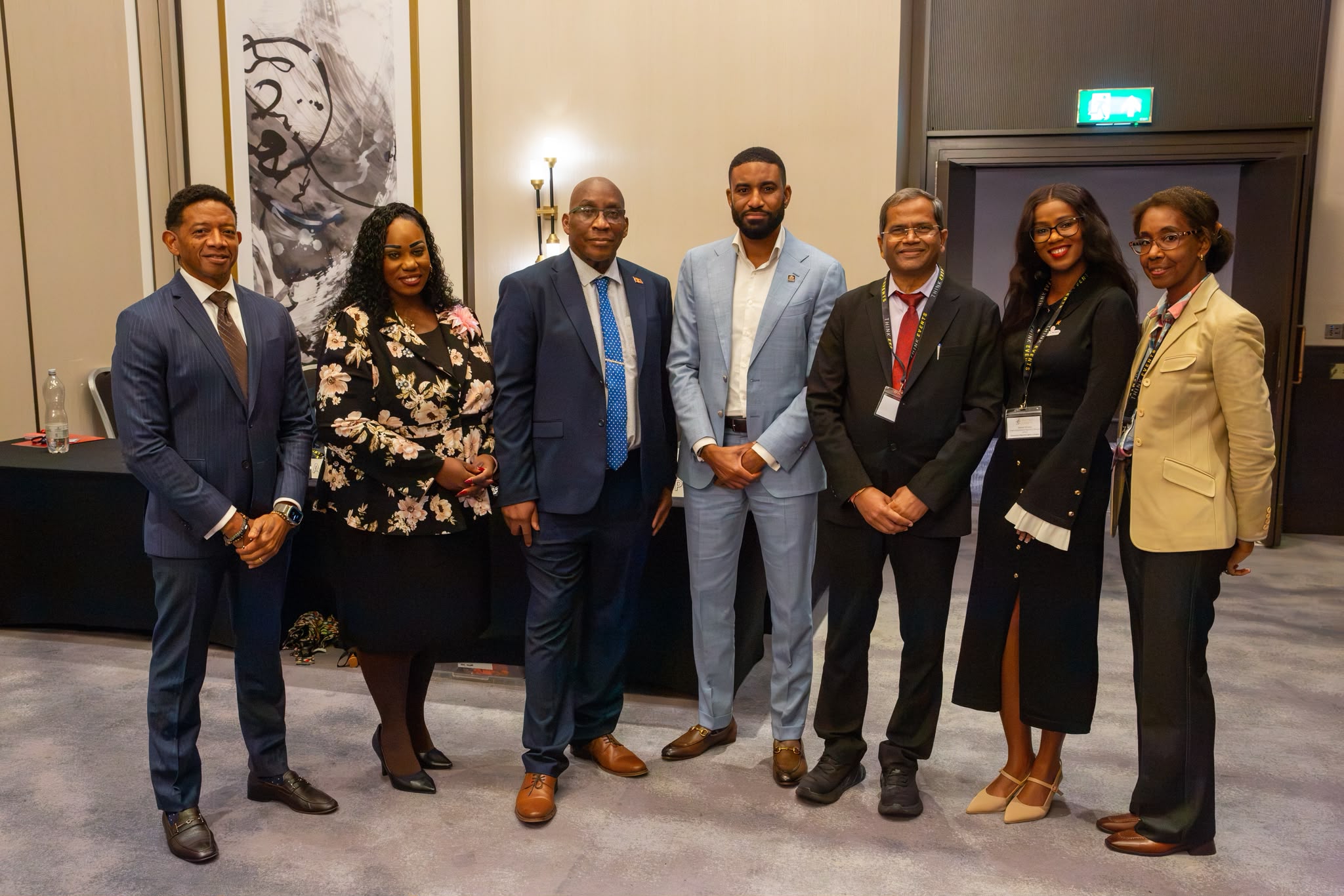
    On September 8, the High Commission for Grenada to the United Kingdom launched *Flavours of Grenada 2026: An Investment, Trade & Tourism Showcase* at London’s Hilton London Metropole, bringing together a cross-section of global stakeholders to explore Grenada’s expanding economic potential. The one-day event drew government leaders, institutional investors, corporate executives, representatives from international bodies, tourism industry leaders, and diplomatic community members, all gathering to align on Grenada’s core economic development priorities and map out untapped collaborative opportunities.

    Far more than a simple exhibition of the island nation’s signature goods and scenic tourism offerings, the 2026 showcase was structured as a targeted engagement platform designed to link Grenada’s national development goals with international capital, specialized expertise, global market access, and long-term strategic partnerships. The event’s agenda combined high-level ministerial addresses, sector-specific breakout discussions, and a dedicated exhibition space highlighting Grenada’s world-renowned export products, including its multi-award-winning craft chocolate and premium aged rum. Chaired by British-Grenadian actor Fraser James, the forum opened with formal welcome remarks from Her Excellency Rachér Croney, Grenada’s High Commissioner to the UK, followed by a landmark keynote address from Grenada’s Minister of Finance, the Honourable Dennis Cornwall. In his address, Minister Cornwall delivered a comprehensive breakdown of Grenada’s current macroeconomic landscape, outlined the nation’s priority growth sectors, detailed its updated regulatory framework and investor incentive programs, and walked attendees through practical pathways for both new and existing businesses looking to enter or expand their operations in the country.

    Sector-wide discussions throughout the day covered a wide range of high-growth areas of opportunity, including Grenada’s overall investment and trade climate, the nation’s popular citizenship by investment program, targeted tourism development projects, climate adaptation strategies and renewable energy initiatives, the burgeoning Blue Economy, and the transformative Project Polaris development initiative. Alongside Minister Cornwall and High Commissioner Croney, featured speakers included Renee Moses, Head of Immigration, Migration and Diasporic Affairs; Randall Dolland, Chairman of the Grenada Tourism Authority; Suresh Yadav, Director of the Climate Change and Oceans Directorate at the Commonwealth Secretariat; and Dr Brendon LaGrenade, Grenada’s Chief Philanthropic Officer for Project Polaris.

    In her remarks, High Commissioner Croney emphasized that the event was conceived to do more than just highlight Grenada’s investment appeal: it was built to foster tangible, action-oriented connections that move beyond discussion to deliver real collaborative progress. “At a time when Britain is continuing to redefine and strengthen its trade and investment relationships internationally, Grenada offers a compelling gateway to opportunities in the Eastern Caribbean, and we look forward to turning the expressions of interest into meaningful action,” she said.

    Minister Cornwall echoed this sentiment, highlighting Grenada’s proven economic resilience amid overlapping global economic and climate challenges, paired with the nation’s commitment to disciplined fiscal management. “The economy has continued to grow, supported by tourism, reconstruction activity and investment inflows,” he noted. “More importantly, Grenada is positioning itself not as an aid-dependent microstate, but as a high-performing small island economy seeking strategic partners for its next phase of development and expansion. The forum demonstrated the breadth of opportunities available across several sectors, and I am encouraged by the caliber and seriousness of the investors willing to be a part of Grenada’s development.”

    The showcase also shone a spotlight on the critical role of international collaboration in advancing Grenada’s climate action, renewable energy expansion, and infrastructure development goals. Yadav reaffirmed the Commonwealth Secretariat’s ongoing commitment to supporting Grenada’s growth, noting that “Grenada has taken substantial measures to attract private sector investment, and we in the Climate Change, Ocean, Energy and Natural Resources Directorate, are pleased to support Grenada both on the ground and through policy reform, to help make it a viable destination for investment in energy and infrastructure.”

    From its inception, *Flavours of Grenada 2026* was designed to achieve four core goals: establish Grenada as a trusted, competitive investment destination in the Caribbean; build direct trade and institutional partnerships between Grenadian and global entities; align the nation’s development priorities with expertise and capital from the UK, Europe, and the broader Commonwealth; and translate on-site discussions into tangible, on-the-ground projects and long-term partnerships. The ultimate outcome the event targeted is delivery: converting initial investor interest into active due diligence, strengthening cross-institutional collaboration, opening new trade routes for Grenadian goods, and encouraging international stakeholders to join a upcoming Trade and Investment Mission to Grenada organized by the High Commission.

    For the Grenadian High Commission, these strengthened international relationships are a core pillar of the nation’s broader socio-economic development strategy. By bringing global investors, businesses, and institutions into closer contact with Grenada’s market, the island nation can expand access to critical capital and specialized expertise while opening new international markets for local Grenadian enterprises, supporting domestic entrepreneurship, and creating sustainable, long-term employment and economic opportunity for local communities.

    The day’s programming concluded with a cultural networking reception that gave attendees an immersive taste of Grenadian culture, featuring curated tastings of the nation’s premium rum and award-winning chocolate, authentic local delicacies, and live traditional music. Rather than leaving with only marketing materials and exchanged business cards, attendees were invited to leave with concrete next steps: a potential partnership to develop, a new project to explore, and a personal invitation to visit the island nation. As organizers emphasized, Grenada is ready to engage, ready to accommodate new investors, ready to streamline processes for business growth, and open for international partnership.

    The High Commission for Grenada extended formal gratitude to all speakers, attendees, and supporting sponsors that made the 2026 showcase a success, including The Ben Delo Foundation, TTSOLS Ltd., Silversands, Ora Caribbean, the Grenada Tourism Authority, the Grenada Immigration Migration Agency, Coyaba Beach Resort, and Think Events London.

  • Canadian miner eyes first gold at Eagle Mountain in two years

    Canadian miner eyes first gold at Eagle Mountain in two years

    On September 10, 2026, Canada-based gold exploration and development firm Mako Mining announced major progress on its high-stakes Eagle Mountain gold project in Guyana, after formalizing a binding mineral agreement with the Guyanese government that paves the way for full construction and long-term operations. The agreement secures a stable regulatory, fiscal and operational framework for the project through Mako’s 100% owned Guyanese subsidiary, Stronghold Guyana Inc., marking one of the largest private mining investments in Guyana’s recent history.

    Per the terms of the agreement, which is structured under Guyana’s existing Mining Act, Mako will benefit from 10 years of legal stability for all prospecting, mining and operating authorizations, paired with fixed fiscal terms that align with standard industry agreements finalized in Guyana in recent years. After the initial 10-year term, both parties have agreed to either extend the agreement on the same terms or renegotiate terms in good faith. The deal also formalizes Mako’s binding commitments to local employment, workforce training, environmental stewardship, community development and the prioritization of qualified Guyanese workers, local goods and domestic contractors, matching the terms of other comparable national mining agreements.

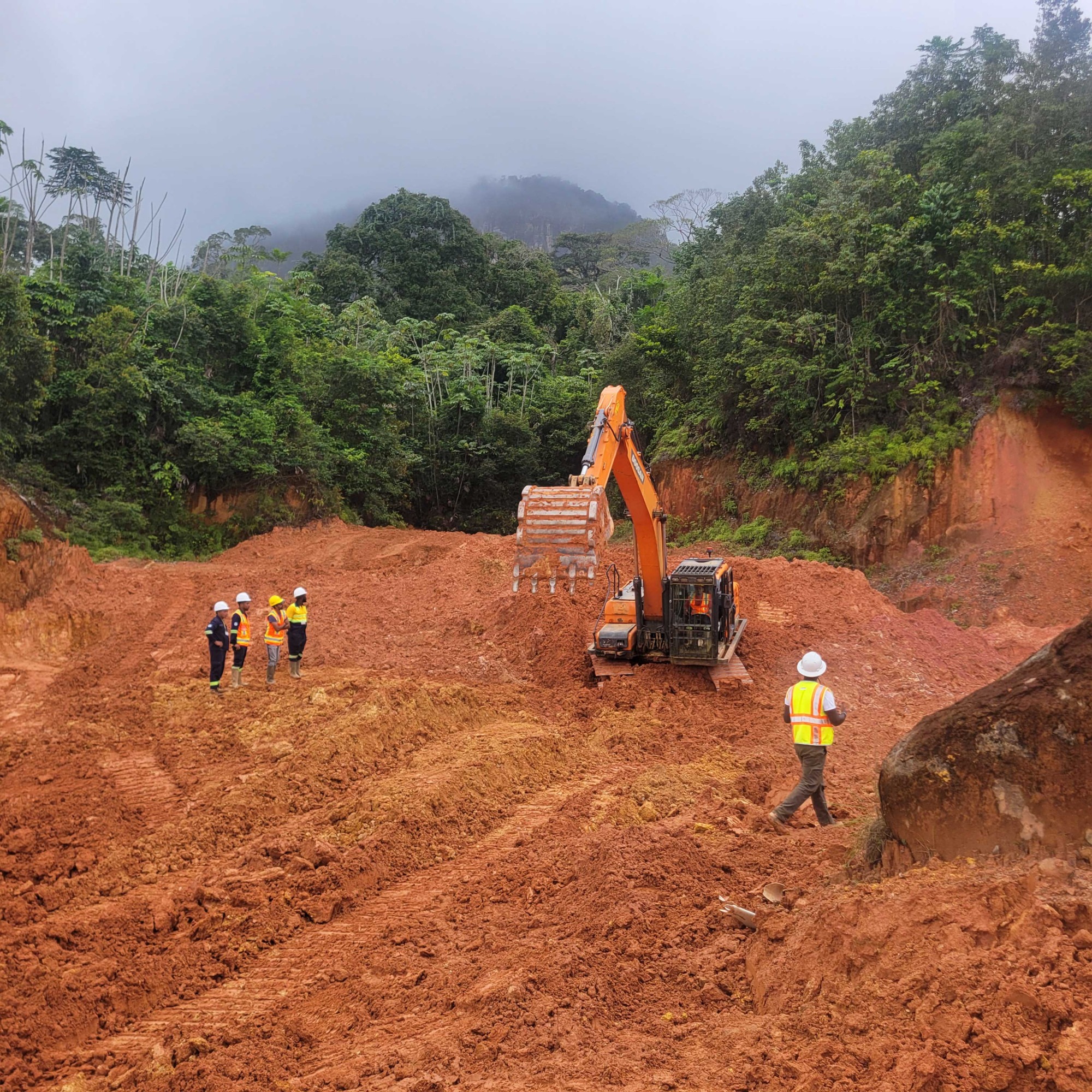
    Mako Mining CEO Akiba Leisman confirmed that the company is investing up to $120 million to develop the open-pit Eagle Mountain site, which sits near Mahdia in Guyana’s Region 8, Potaro-Siparuni, approximately 200 kilometers southwest of the capital Georgetown. To date, the firm has already injected more than $30 million into early-stage development, completing preliminary work on minor on-site infrastructure. Full-scale major construction is scheduled to kick off in the third quarter of 2027, with a 14 to 15-month build timeline that puts the project on track to pour its first gold by December 2028.

    Current geological assessments peg the site’s total gold resources across all categories at approximately 1.8 million ounces. Mako’s 2024 mine plan initially targeted extraction of 1.2 million ounces from the open-pit operation, with an expected recovery of roughly 1.1 million ounces of refined gold. Leisman noted that the company will complete an updated reserve estimate over the next 12 months ahead of full construction, to refine production projections. The mine is currently projected to have a 15-year operational lifespan, and will directly employ approximately 250 local Guyanese workers once operational.

    In line with its community and regulatory commitments, Mako will begin annual funding for local development initiatives no later than 24 months after the mining license is granted, or 12 months after production launches, whichever comes first. The company has also committed to ongoing annual contributions to Guyana’s Ministry of Natural Resources Training Centre, earmarked for workforce skills development, capacity building and institutional improvement across the country’s mining sector.

    Guyana’s Ministry of Natural Resources noted that Mako has operated in the country for more than a decade, building deep, long-standing ties to Guyana’s mining industry and local communities. The ministry called the mineral agreement signing a transformative milestone for the development of the Eagle Mountain resource, noting that it reflects the government’s ongoing commitment to attracting responsible private investment to grow Guyana’s natural resources sector.

    Mako Mining President Steve Parsons emphasized that the agreement eliminates key regulatory uncertainty for the project, de-risking the development by locking in clear legal and fiscal terms. “The commitments around local employment, training, environmental protection and community growth align directly with Mako’s core operating values, which have guided our successful work across our global portfolio of mining assets,” Parsons said. “We greatly value the partnership and support from the Ministry of Natural Resources and the Guyana Geology and Mines Commission, and we look forward to continuing this collaborative approach as we advance the Eagle Mountain project.”

    Looking ahead, Mako’s next key milestone is securing final environmental authorization from Guyana’s Environmental Protection Agency (EPA). The company submitted its full Environmental and Social Impact Assessment (ESIA) to the EPA in March 2026, and completed the mandated public comment period in June of the same year. Mako plans to submit the final revised ESIA, incorporating feedback from local stakeholders and regulatory bodies, in the fourth quarter of 2026, with a final permitting decision from the EPA expected shortly after that.

    The Ministry of Natural Resources reaffirmed its commitment to supporting responsible development, stating that it will continue working alongside the GGMC, EPA and other relevant national agencies to support Mako’s progress, while enforcing full compliance with Guyanese law and protecting the country’s environmental, social and long-term economic interests.

  • Temporary road closure: Belmont, St George

    Temporary road closure: Belmont, St George

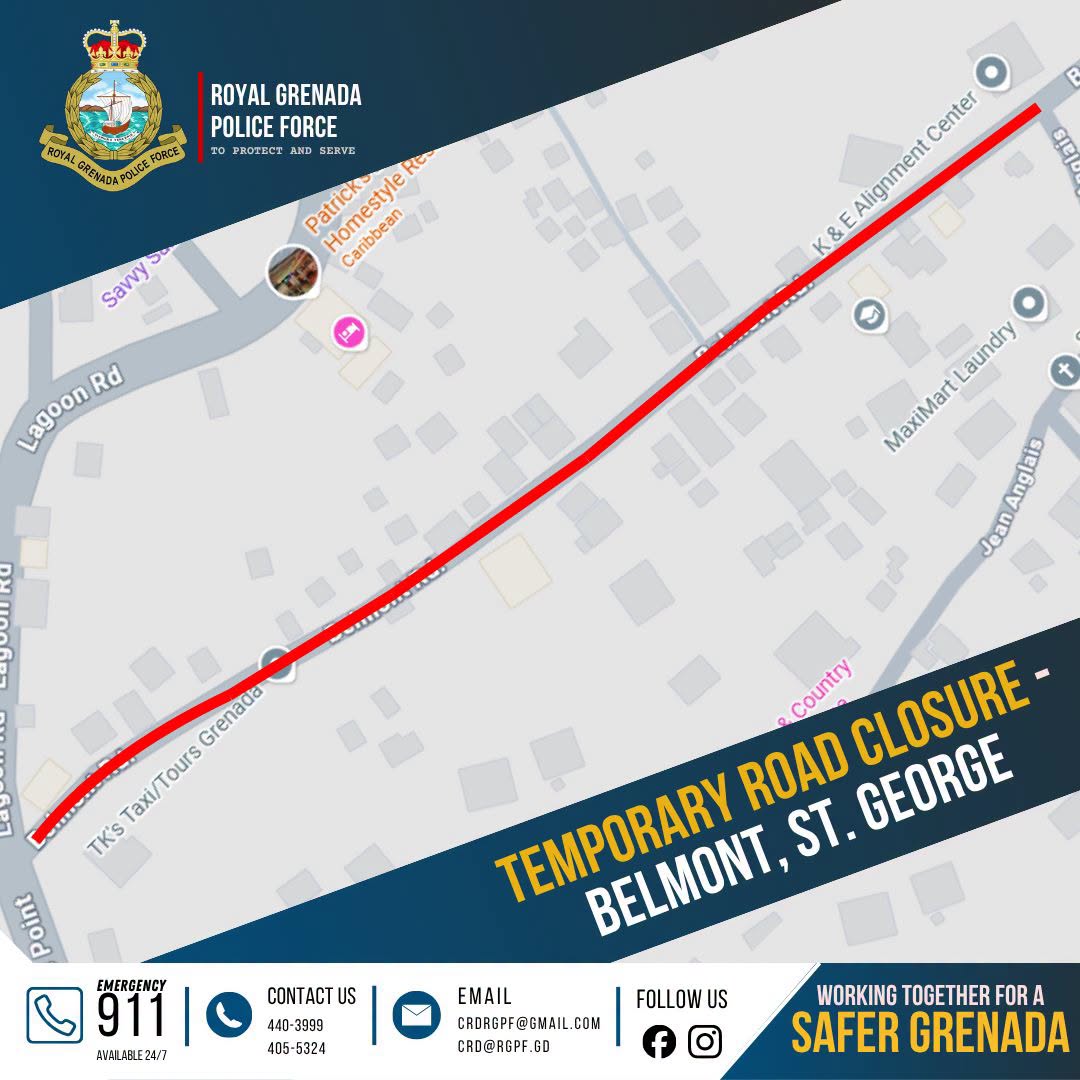
    Drivers and commuters in Grenada are being given advance notice of an upcoming full road closure that will affect access through one of Belmont’s busiest corridors next year. The Traffic Department of the Royal Grenada Police Force (RGPF) has officially announced that a central stretch of Belmont Minor Road will be completely closed to all motor vehicle traffic on Sunday, September 13, 2026. The closure will run from 7 a.m. through 6 p.m., covering an 11-hour window that spans most of the day. The affected segment stretches from the junction of Belmont Minor Road and Jean Anglais Public Road all the way to the intersection with Belmont Main Road at the traffic light, a heavily traversed connection for local and through traffic. The closure is being implemented to make way for critical concrete construction work being carried out by the Grenada State Engineering Construction Group Ltd. RGPF confirmed that the restriction is necessary to ensure worker safety and allow the construction team to complete the project work efficiently within the scheduled time frame. The law enforcement agency has issued a formal apology to motorists, local businesses, and residents for any travel disruptions or inconvenience that the temporary closure may cause, and urged all road users to plan alternate routes and adjust their travel schedules accordingly ahead of the date. RGPF also said it expects full cooperation from the general public to ensure the work can proceed smoothly and wrap up on schedule. This announcement was originally released via the Office of the Commissioner of Police, Grenada. Source: Office of Commissioner of Police

  • US Court Allows Subpoenas for PM Browne’s Son in Alfa Nero Legal Fight

    US Court Allows Subpoenas for PM Browne’s Son in Alfa Nero Legal Fight

    A long-running legal battle over the ownership of the luxury superyacht Alfa Nero took a new turn this week when a United States court ruled that investigative subpoenas targeting the son of Antigua and Barbuda’s Prime Minister Gaston Browne can move forward. The case, which has drawn international attention due to its ties to a sitting head of government, centers on conflicting claims over the 269-foot vessel, which was originally seized from a Russian oligarch amid international sanctions following Russia’s full-scale invasion of Ukraine in 2022.

    Antigua and Barbuda’s government auctioned off the Alfa Nero in 2023, selling the superyacht to a Vietnamese entrepreneur for $67 million. However, the original sale collapsed after the buyer failed to complete the required payment, leaving the ownership of the multi-million dollar vessel in limbo. A subsequent second auction was held, with Prime Minister Browne’s own son, Pascal Browne, emerging as the winning bidder for a reduced price of $47 million. This transaction immediately sparked allegations of conflict of interest and unfair bidding practices from parties that had competing interests in the yacht.

    The current legal action, which was filed in a U.S. federal court by parties challenging the ownership transfer, sought subpoenas to obtain financial records and testimony from Pascal Browne to investigate whether any improper dealings or undisclosed connections influenced the second auction’s outcome. Legal representatives for Pascal Browne had attempted to block the subpoenas, arguing that the U.S. court lacked proper jurisdiction over the prime minister’s son and that the legal requests were overly broad and unnecessary. But the court rejected those arguments in its recent ruling, clearing the way for the subpoenas to be enforced.

    Legal observers note that the ruling opens a new phase of discovery in the case, which could bring increased political pressure on Prime Minister Gaston Browne back in Antigua and Barbuda, as opposition figures have already criticized the transaction as a non-transparent deal that benefits the prime minister’s family. The Alfa Nero dispute remains one of the most high-profile legal cases involving a sanctions-seized Russian asset to date, with implications for how such assets are auctioned and transferred in international jurisdictions.