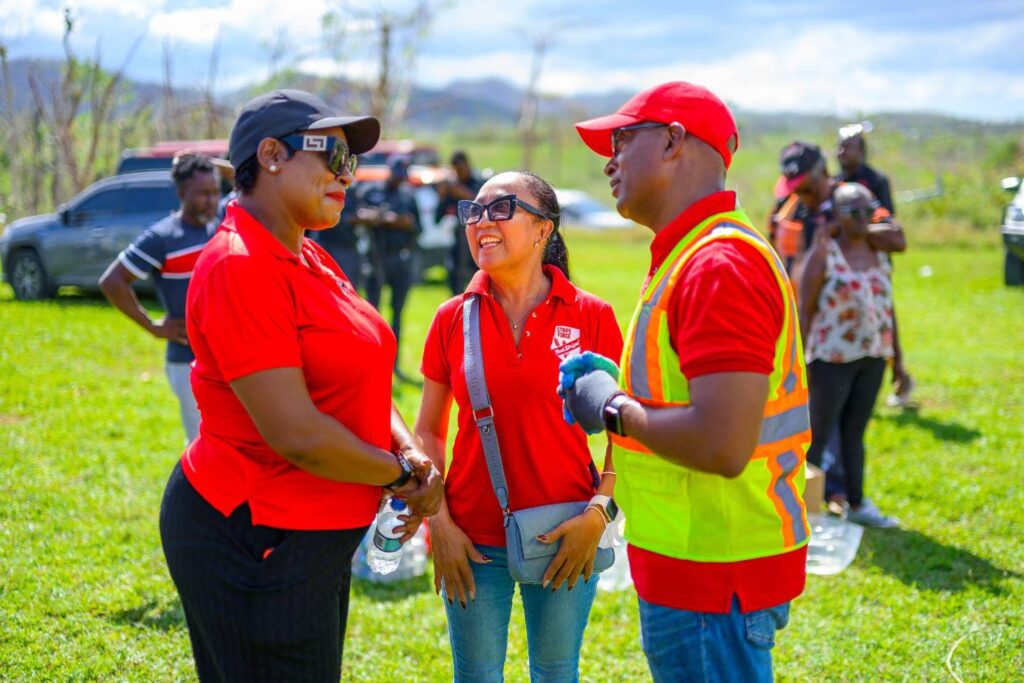
In the wake of Hurricane Melissa’s devastation, Red Stripe has been at the forefront of relief efforts in western Jamaica, providing critical support to families whose lives and livelihoods have been severely disrupted. Last week, the company extended its community outreach to Haughton Grove in Hanover, one of the areas most affected by the storm. Three trucks laden with food, water, cleaning supplies, and care packages arrived in the district, marking the first organized relief effort since the hurricane struck. Volunteers distributed essential items, including 200 cases of water, 60 cases of Malta beverages, clothing, cleaning materials, and meal boxes, to help families meet their immediate needs. The initiative was made possible through a partnership with Paramount Trading Jamaica Ltd. Member of Parliament for Hanover Eastern, Andrea Purkiss, who assisted in the distribution, expressed her gratitude, emphasizing the urgent need for support. Among the beneficiaries was 72-year-old Lola Dehaney, who has endured multiple hurricanes in her lifetime. She shared her emotional experience, stating, ‘Me feel so grateful for them. God couldn’t send a better gift.’ Nearby, 58-year-old Violet White highlighted the challenges of contacting her daughter in London due to damaged communications and rising living costs. Red Stripe’s relief efforts also extended to communities in Westmoreland, including Aldair, Retirement, Belmont, and Whitehouse, where the company distributed 500 care packages and 22 water drums. Residents in these areas recounted losing roofs, livestock, and small businesses. Red Stripe’s Head of Corporate Affairs, Dianne Ashton-Smith, emphasized the company’s commitment to recovery, stating, ‘Our goal is to help communities get back on their feet as quickly as possible.’ The company’s broader contributions include distributing approximately 1,000 cases of Malta and bottled water, supporting the Office of Disaster Preparedness and Emergency Management (ODPEM), and enlisting the help of brand ambassadors like Usain Bolt and Masicka. Additionally, Red Stripe donated $15 million to the I Love Jamaica Telethon, in partnership with the Ministry of Culture, Gender, Entertainment, and Sport. Ashton-Smith concluded, ‘As families across Hanover and Westmoreland continue the long process of rebuilding, they do so strengthened by partnerships that reflect the true spirit of Jamaica’s neighbours, communities, and companies working side by side toward recovery.’
作者: admin
-

‘A terrible tragedy’
A devastating bus accident on the PJ Patterson Highway in St Catherine, Jamaica, has resulted in five fatalities and left 15 others hospitalized, according to reports up to press time on Wednesday. Among the deceased were three males and two females, with a two-year-old child among the injured. The crash occurred around 3:00 pm in the eastbound lane, just a few hundred meters before the Vineyard toll booth. Preliminary investigations suggest that a tyre blowout may have caused the minivan to collide with a guardrail, flip multiple times, and eject several passengers. Emergency services, including police, firefighters, and medical teams, responded swiftly to the scene. Dr. Lucien Jones, a road safety advocate and vice-chairman of the National Road Safety Council, expressed deep shock and urged drivers to exercise extreme caution. He emphasized the importance of adhering to road safety regulations, including the use of seat belts and avoiding speeding. The tragedy has brought the total number of road fatalities in Jamaica this year to 342, prompting renewed calls for stricter enforcement of traffic laws and the implementation of the demerit point system to deter reckless driving.
-
Rapid home solution
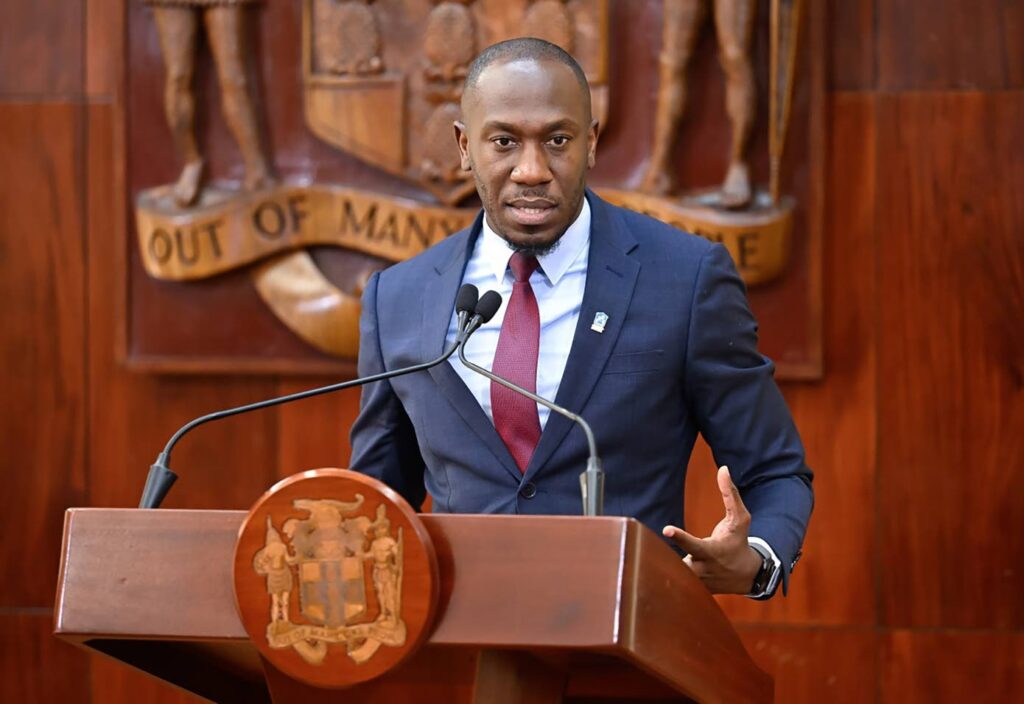
In a decisive move to address the housing crisis exacerbated by Hurricane Melissa, the National Housing Trust (NHT) has initiated the deployment of 2,500 semi-permanent modular homes. These units, part of a broader plan to install 5,000 homes, are being strategically placed on lands with existing water and sewerage systems to expedite construction and reduce timelines significantly. Dwayne Berbick, Assistant General Manager for Corporate Communications and Public Affairs at NHT, emphasized the shift in strategy during a press briefing on Wednesday. The initiative prioritizes NHT-owned properties in hurricane-affected regions such as St Elizabeth, Westmoreland, and Hanover, where infrastructure is already partially developed. The modular homes, constructed from expanded polystyrene (EPS) prefabricated units, are designed for rapid assembly, energy efficiency, and resilience against severe weather conditions. Each 400-square-foot, two-bedroom unit comes pre-wired with essential amenities, including bathrooms, kitchens, and living areas. This prefabricated approach minimizes on-site labor and accelerates the delivery of homes to families displaced by the hurricane. Beyond the initial phase, the NHT is exploring additional land acquisitions and collaborating with government agencies to extend the program’s reach to a broader population in need. The Rapid Housing Deployment Initiative is a critical component of the government’s comprehensive recovery package, which includes disaster grants, peril insurance support, and mortgage relief.
-
IICA and CARDI initiate portable seed storage initiative
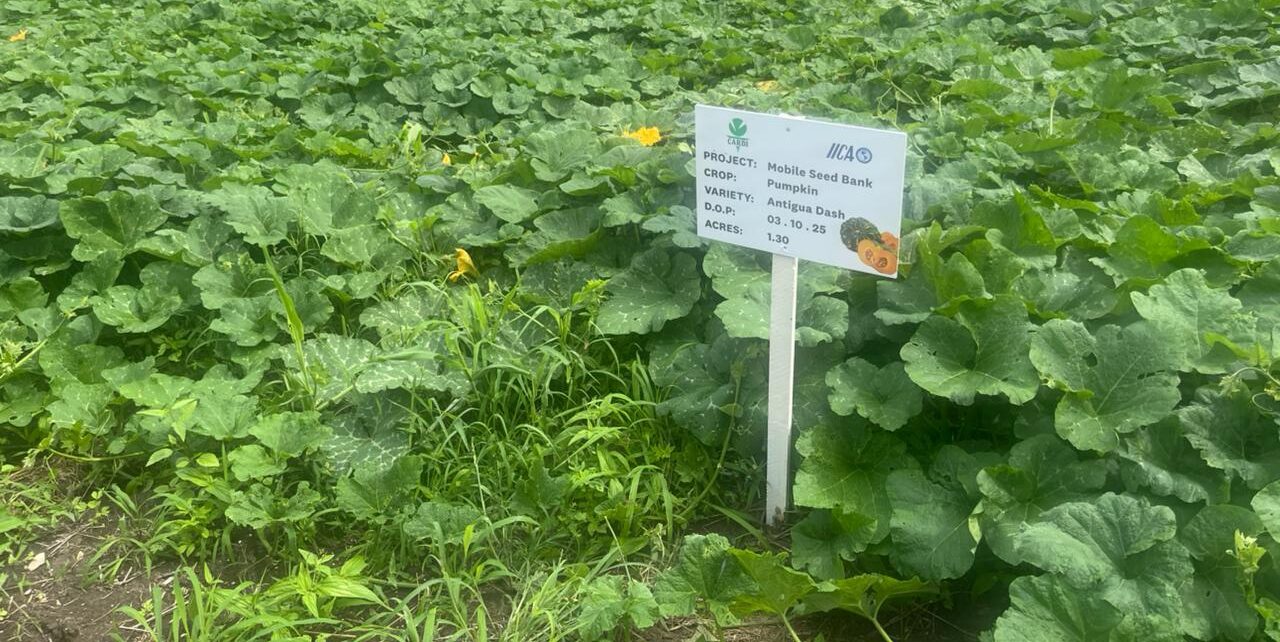
The Inter-American Institute for Cooperation on Agriculture (IICA), in collaboration with the Caribbean Agricultural Research and Development Institute (CARDI), has initiated a groundbreaking Mobile Seed Bank Project aimed at bolstering disaster resilience and food security across the Caribbean. This initiative, part of the Regional Disaster Response Roadmap, seeks to establish a robust, sustainable seed supply system capable of addressing critical shortages of high-quality seeds following natural disasters such as hurricanes, volcanic eruptions, and earthquakes. Funded by IICA, the project also aims to create a regional seed reserve to ensure farmers have access to quality planting materials during both disaster and non-disaster periods. The initiative emphasizes the conservation of traditional heirloom seed varieties and reduces dependency on costly imported seeds. Dominica, Antigua and Barbuda, and Belize have been designated as regional hubs for seed production, storage, and distribution. The project integrates innovative technologies, including agricultural drones for farmland mapping and utility vehicles for seed collection and farmer outreach. Dr. Curt Delice, IICA’s Special Affairs Coordinator for the Caribbean, highlighted the project’s dual focus on immediate disaster recovery and long-term agricultural rehabilitation. Junior Greene of CARDI underscored the proactive nature of the initiative, which aims to produce and distribute climate-resilient seed varieties. Gregory Bailey, Director of Agriculture in Antigua and Barbuda, emphasized the strategic importance of the Mobile Seed Bank in building a resilient, climate-smart agricultural sector, stating that a resilient seed system is essential for sovereignty, stability, and survival. The project includes training sessions on seed management and climate-smart agriculture, alongside consultations with regional Ministries of Agriculture to establish protocols for cross-border seed movement.
-
Uniek eerbetoon in New Delhi: Surinaamse vlag schittert op de Qutub Minar
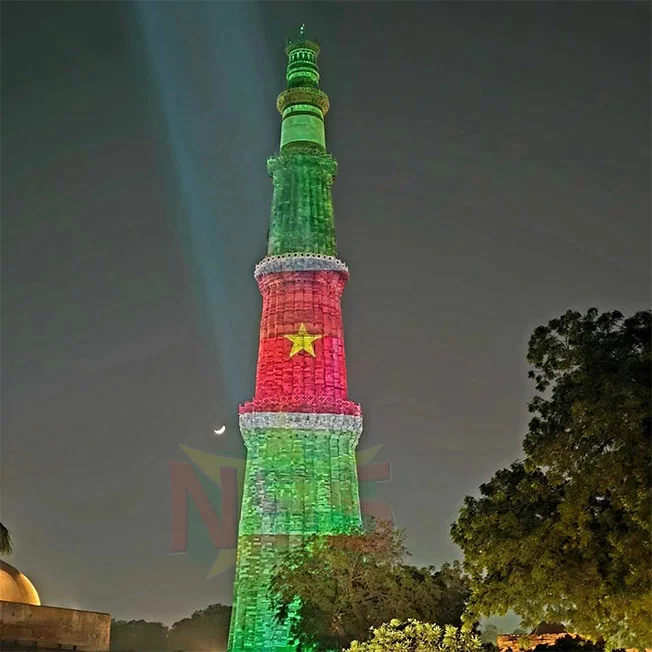
In a remarkable diplomatic gesture, the Surinamese Embassy in New Delhi commemorated 50 years of Suriname’s independence by illuminating the iconic Qutub Minar in the colors of the Surinamese flag. This rare honor, granted only to a select few countries and special international occasions, underscores the strong diplomatic ties between Suriname and India. The event took place on the evening of November 25, 2025, and was witnessed by thousands of onlookers and tourists, with images widely shared across social media platforms. The Qutub Minar, a UNESCO World Heritage Site located in South Delhi, stands as one of India’s most impressive historical structures. At 73 meters tall, it is the world’s tallest brick minaret, renowned for its intricate red sandstone architecture and marble detailing. Surinamese Ambassador Arunkoemar Hardien described the illumination as ‘an honorable recognition,’ highlighting its significance in the long-standing friendship between the two nations. India and Suriname have maintained close diplomatic relations for decades, rooted in historical migration connections and ongoing collaboration in areas such as culture, education, health, agriculture, and technology. The illumination of the Qutub Minar not only serves as a visual tribute but also symbolizes respect for Suriname as a democratic nation celebrating its 50th anniversary. This event marks a significant milestone in Suriname’s international Srefidensi celebrations of 2025.
-

Book Fair Postponed, but KDP Support Continues at Public Library — AI Book Evolution Event Set for Tomorrow
The highly anticipated Book Fair, a key event of the Ah Head Mek Book – National Authors’ Week, has been postponed indefinitely, as announced in an official update this morning. Originally slated to take place at the National Public Library, the fair’s delay stems from unforeseen circumstances. Organizers have assured the public that a new date will be communicated once logistical arrangements are finalized. Despite this setback, the initiative remains committed to supporting aspiring authors. Today, facilitator Peetron Thomas will be available at the Public Library to assist individuals interested in KDP writing, self-publishing, and book development. This opportunity is particularly valuable for those who missed the workshops held earlier in the week. Meanwhile, tomorrow’s featured event, ‘AI Book Evolution,’ will proceed as planned. The session will be hosted virtually via Google Hangouts, with access details provided to participants who contact (268) 775-1595. National Authors’ Week continues to unfold, with further updates expected as activities progress.
-
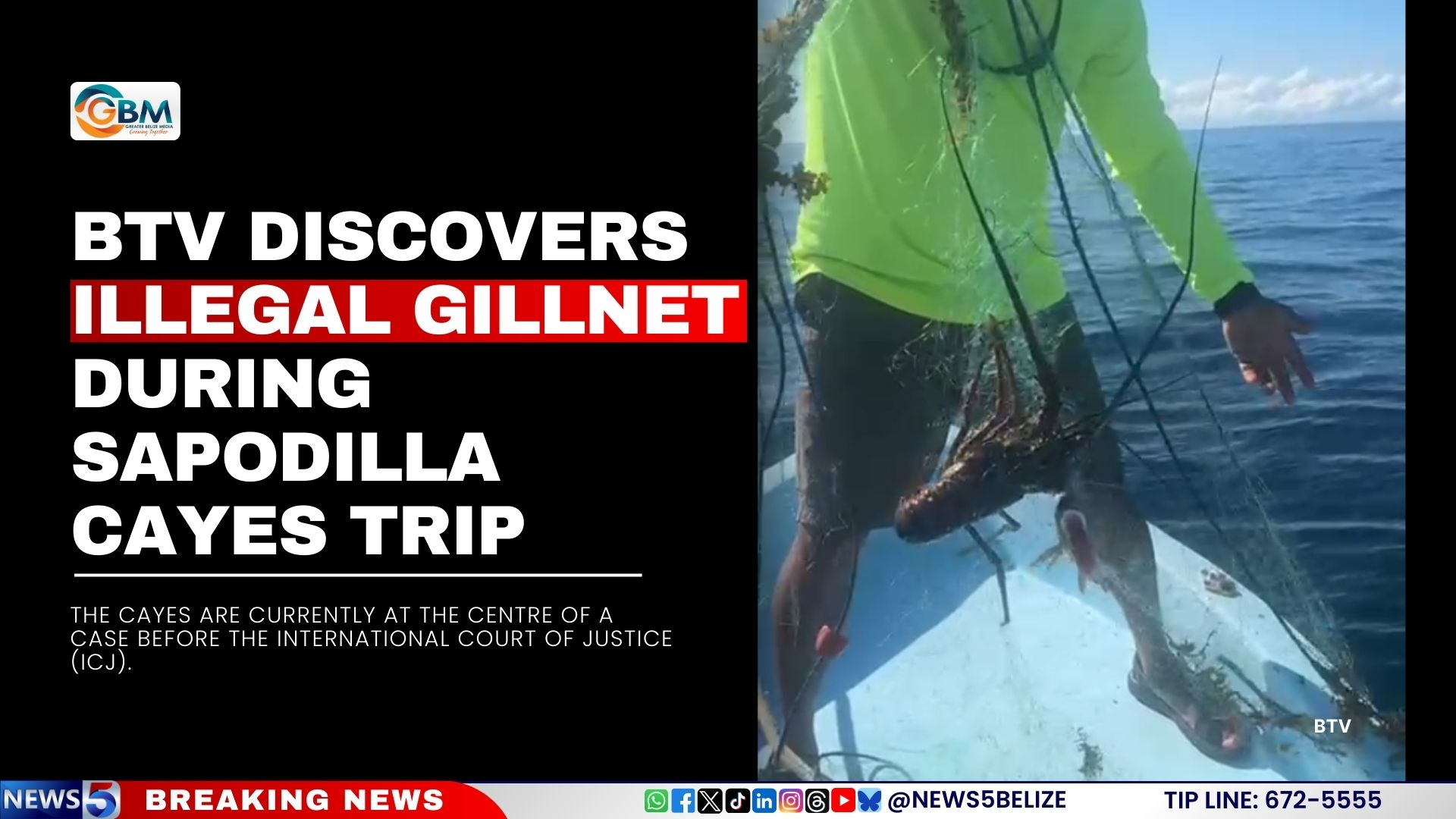
BTV Discovers Illegal Gillnet During Sapodilla Cayes Trip
On November 26, 2025, the Belize Territorial Volunteers (BTV) set out on a mission to the Sapodilla Cayes, a region of significant national importance currently under scrutiny at the International Court of Justice (ICJ). The group’s objective was to educate Belizeans about the ecological and cultural value of these cayes. However, their journey took an unexpected turn when they stumbled upon an illegal Guatemalan gillnet in Belizean waters. The discovery was prompted by a suspicious bottle floating in the area, which led the team to the nearly 400-foot-long net. The BTV promptly retrieved and destroyed the gillnet, which was located approximately four miles west of Hunting Caye, an area that includes a Belize Coast Guard base and a ranger station. Unconfirmed reports suggest that enforcement patrols in the region may have been reduced to avoid escalating tensions with Guatemalan fishers, especially as ICJ hearings are ongoing this week. This incident highlights the ongoing challenges in protecting Belize’s maritime boundaries and resources.
-

Why crowd sizes still matter in politics
As Saint Lucia’s election campaign gains momentum, the debate over the significance of crowd sizes in determining electoral success has intensified. Political analysts and candidates alike are divided on whether large rallies translate into votes, with some dismissing them as irrelevant while others see them as a crucial indicator of popularity. This discourse highlights the complex interplay between perception and reality in electoral politics. On one side, politicians boast about their ability to draw massive crowds, while opponents argue that such gatherings do not guarantee victory. Meanwhile, many voters remain indifferent, believing that elections are decided at the ballot box, not at rallies. However, the truth lies somewhere in between. Crowd size does matter, but its impact depends on how it is interpreted within the broader context of a campaign. Elections are not just about votes; they are also about mobilizing support, generating enthusiasm, and shaping public perception. In Caribbean politics, where energy and excitement are vital, large crowds serve as a visible manifestation of a candidate’s ability to connect with voters. They create a sense of momentum and legitimacy, influencing both participants and observers. Behavioural science explains this phenomenon, noting that people are drawn to groups they perceive as successful. The ‘bandwagon effect’ plays a significant role, as individuals often align themselves with what appears to be the popular choice. Crowds also provide emotional validation and social cohesion for supporters, boosting campaign morale. However, relying solely on crowd size can be misleading, as history has shown that even massive rallies do not always translate into electoral victories. Ultimately, while crowd size shapes perception, it is the ballot box that determines the outcome. The challenge for politicians is to strike a balance between generating visible support and addressing the substantive issues that truly matter to voters.
-
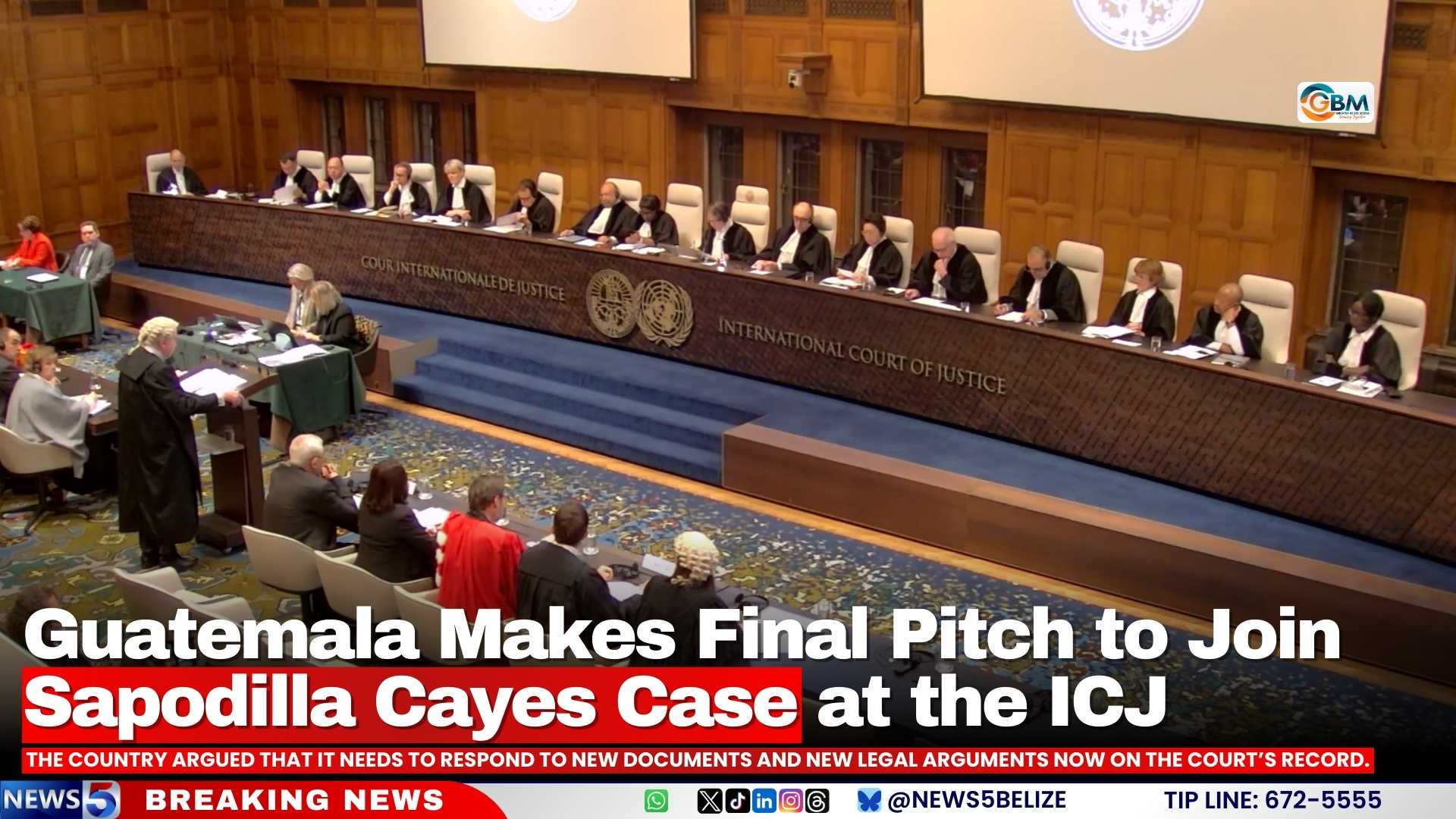
Guatemala Makes Final Pitch to Join Sapodilla Cayes Case at the ICJ
Guatemala has made a final appeal to the International Court of Justice (ICJ) to intervene in the ongoing sovereignty dispute between Belize and Honduras over the Sapodilla Cayes. The Central American nation argues that its long-standing territorial claim could be significantly impacted by the Court’s eventual ruling. The request was presented during a morning session at the Peace Palace in The Hague, presided over by ICJ President Judge Iwasawa. This marks Guatemala’s second round of oral arguments under Article 62 of the ICJ Statute. Representing Guatemala, Sir Michael Wood emphasized that the country’s legal interests are at stake, as a ruling favoring either Belize or Honduras could prejudice Guatemala’s claim. Wood dismissed Honduras’s objections as lacking legal reasoning and being repetitive, asserting that the case is a clear example of when Article 62 applies. Guatemala clarified that it is not seeking to introduce a new dispute with Honduras or reopen its existing case with Belize but aims to protect its legal claim over the cays. Honduras had previously argued that Guatemala’s intervention is unnecessary, given the ongoing Belize-Guatemala case. However, Wood countered that this is irrelevant, as the focus should be on whether Article 62’s conditions are met. Guatemala also refuted Honduras’s reliance on Article 59, which prevents ICJ rulings from binding third states, stating that a judgment can still affect a state’s legal interests without being binding. The country highlighted that the Belize-Honduras case introduces a new dimension to the territorial dispute, necessitating its intervention to address new legal arguments and documents. Guatemala’s Agent, Ambassador Ana Cristina Rodríguez Pineda, concluded by stressing that intervention would not only safeguard Guatemala’s interests but also assist the Court in reaching a more informed decision. The Court will continue hearings with Belize and Honduras presenting their arguments on Guatemala’s request.
-

Thursday, Friday and beyond: Why SVG must quantum leap now
St. Vincent and the Grenadines (SVG) stands at a pivotal moment in its history, poised to break free from decades of political stagnation and economic mismanagement. After nearly 25 years under a government marred by corruption and self-enrichment, the nation is awakening to the possibility of a brighter future. The Vincentian people, particularly the critical thinkers and long-silent masses, are now asking: What kind of nation do we want to become? The answer may lie in the example set by Taiwan, a small nation that transformed itself into a global powerhouse through inclusive institutions, transparent governance, and technological innovation. SVG, rich in natural resources and a resilient agrarian culture, has the potential to emulate Taiwan’s success. By adopting integrity legislation, fostering meritocracy, and investing in education and technology, SVG could become the agricultural innovation hub of the Caribbean within 5 to 10 years. The upcoming election on November 28, 2025, represents a critical juncture for the nation. It is not merely about changing leadership but about ushering in an era of governance that prioritizes national interest over partisan survival. SVG’s transformation must also include a cultural renaissance, recognizing the contributions of its artists, farmers, and diaspora, and addressing the long-overdue recognition of its national heroes, particularly women. By thinking in decades rather than election cycles, SVG can craft a long-term vision for its future, ensuring that it becomes a model of success for small nations worldwide. The choice before SVG is clear: to rise from the ashes of mismanagement and claim a future defined by discipline, integrity, and progress.