作者: admin

  • BDF Commander Dismisses Vehicle Misuse Claim

    BDF Commander Dismisses Vehicle Misuse Claim

    Belize Defense Force Commander Brigadier General Anthony Velasquez has formally addressed and dismissed allegations regarding the potential misuse of military vehicles in southern Belize. The controversy emerged after concerns were raised about an officer allegedly using an assigned BDF vehicle for personal errands, particularly in connection with his voluntary service on a local school board.

    In an official statement, Commander Velasquez provided comprehensive clarification regarding military protocols. He explained that commanding officers are permanently assigned vehicles as part of their operational requirements, enabling them to respond immediately to defense needs at any hour. The officer in question commands approximately four hundred soldiers across the Toledo district and must maintain constant mobility readiness.

    Regarding the school board involvement that triggered the complaint, Velasquez emphasized that such community service is not only permitted under BDF regulations but actively encouraged. The officer receives no personal compensation for this voluntary role, aligning with the military’s longstanding tradition of community engagement throughout Belize.

    The Commander characterized the allegations as ‘mischief’ designed to create unnecessary controversy, asserting that both the vehicle assignment and community service participation fall squarely within established military guidelines. He maintained that the officer has fully complied with all protocols while fulfilling his duties to both the defense force and the local community.

    The BDF has confirmed this concludes their investigation into the matter, finding no evidence of resource misuse or protocol violations.


  • UEH-CEP Electoral Chair : First big day of exchanges

    UEH-CEP Electoral Chair : First big day of exchanges

    In a landmark initiative to strengthen Haiti’s democratic foundations, the State University of Haiti (UEH) and the Provisional Electoral Council (CEP) have launched a comprehensive academic-electoral partnership. The UEH-CEP Electoral Chair convened its inaugural symposium at Port-au-Prince’s Karibe Hotel, gathering electoral advisors, academic scholars, international experts, and civil society representatives to address the critical challenges facing Haiti’s 2026 general elections.

    Established through a July 2025 agreement between UEH and CEP, this pioneering chair represents a strategic effort to inject scientific rigor into Haiti’s electoral processes. The symposium, themed ‘Challenges, Issues and Opportunities of the Next General Elections in Light of Electoral Experiences in Haiti,’ served as a platform for candid assessment and forward-looking solutions.

    UEH Representative Me Florence Mathieu inaugurated proceedings by emphasizing the need for thoughtful dialogue, positioning the university as an intellectual compass guiding Haiti’s democratic future. Patrick Saint-Hilaire, representing Haiti’s Episcopal Conference at the CEP, underscored elections as fundamental acts of sovereignty, noting that credible elections remain the singular path to restoring state authority amid ongoing legitimacy crises and security challenges.

    International electoral expert Dong Nguyen Huu provided historical context, observing that Haitian elections have typically been crisis-driven rather than periodically stable events. While acknowledging systemic weaknesses, he recognized the substantial institutional knowledge accumulated since 1990 that now requires modernization.

    Former CEP member Me Carlos Hercule identified three primary obstacles for 2026: dysfunction within the National Identification Office (ONI), territorial control by armed groups, and excessive international financial dependence. He outlined essential success factors including executive branch neutrality, reliable voter rolls, and modernized litigation processes.

    Security expert Me Paul Rachel Cadet presented alarming statistics showing voter participation plummeting from 70% in 1990 to approximately 20% in recent elections. His proposed solutions encompassed total transparency through digital traceability systems, comprehensive civic education reframing voting as an act of dignity, and stringent sanctions for electoral violence.

    The consensus emerged that electoral success in 2026 transcends technical preparation, requiring fundamental governance overhaul. Professor Jean Eugène Pierre-Louis concluded by advocating for patriotic commitment across sectors to establish these elections as Haiti’s ‘royal road’ to lasting stability. The UEH-CEP Electoral Chair now stands as a strategic cornerstone for building Haitian democracy on sustainable, evidence-based foundations.

  • Luis Encarnación appointed Director of Electoral Observatory for Latin America

    Luis Encarnación appointed Director of Electoral Observatory for Latin America

    SANTO DOMINGO – In a significant move to bolster electoral integrity across Latin America, the International Conservative Leadership Council (ICLC) has named political scientist Luis Encarnación as Director of its Electoral Observatory for the region. The appointment signals a strategic effort to address growing institutional challenges and reinforce democratic governance standards.

    Encarnación brings extensive expertise to this critical role, having served as an accredited electoral observer before judicial and electoral authorities throughout the Americas. Holding advanced degrees in political science and public administration, his professional background encompasses coordinating international observation missions, conducting technical analyses, and facilitating cross-border cooperation initiatives.

    The newly appointed director will operate from the Dominican Republic, where he currently resides, spearheading collaboration among academic institutions, civil society organizations, and global partners. His mandate focuses on enhancing transparency, strengthening institutional frameworks, and restoring public confidence in electoral processes during a period of heightened political sensitivity across the region.

    Encarnación’s credentials include receiving the 2023 Youth Leadership Award from The Napolitans Victory Awards, which acknowledged his emerging influence in political education and institutional development. The ICLC emphasized that this strategic placement reinforces their regional presence and aligns with their broader mission to advance democratic norms, civic engagement, and responsible governance throughout Latin America.

  • Rift Widens Inside Canoe Association Ahead of La Ruta Maya

    Rift Widens Inside Canoe Association Ahead of La Ruta Maya

    BELIZE CITY – A deepening internal crisis within the Belize Canoe Association has cast uncertainty over the upcoming La Ruta Maya Belize River Challenge, one of the nation’s premier sporting events. With just days remaining before the iconic four-day river marathon, the association’s leadership stands publicly divided over a controversial finish line relocation and allegations of organizer mistreatment.

    The conflict emerged when race organizers moved the traditional finish line from the BelCan Bridge to Haulover Creek, triggering immediate backlash from competitors. While paddlers remain committed to participating in the weekend event, significant factions within the sport’s governing body are advocating for protests including boycotting the new finish line and refusing media cooperation with the event’s broadcast partner, Love FM.

    Association President Jesus Linares maintains a conciliatory stance, emphasizing practical considerations given the event’s imminent start. “We can’t change it for this year because the race is Friday,” Linares stated, acknowledging the logistical impossibility of reversing the decision. “Whoever goes must respect the race and its rules.” Linares urged competitors to prioritize safety after four exhausting days on the river, warning that any attempt to continue past the official finish line would occur without safety oversight.

    In stark contrast, Vice President Elvin Penner has emerged as the rebellion’s vocal leader, accusing organizers of longstanding mistreatment of athletes. Penner publicly declared a media blackout against Love FM, stating: “I am not granting Love FM one single interview – not as vice president, not as Elvin Penner, not as Coop Sheet Metal’s team manager.” He framed the protest as a moral stand, challenging fellow association members to join his boycott.

    The safety discourse has become particularly contentious. While Linares characterizes the warnings about continuing past the finish line as legitimate safety concerns, Penner interprets them as intimidation tactics. “The message they sent through our president is: you protest and you drown, we’ll watch you drown,” Penner asserted, framing the organizers’ position as fundamentally antagonistic to competitors.

    This internal rift transcends typical pre-race disagreements, revealing fundamental divisions about athlete representation, organizational transparency, and the balance of power between event organizers and participants. The outcome of this weekend’s event may determine not only the future course of the legendary river challenge but potentially reshape the leadership and governance of Belize’s canoeing community.

  • Petition on Cuba sent to president, foreign affairs minister

    Petition on Cuba sent to president, foreign affairs minister

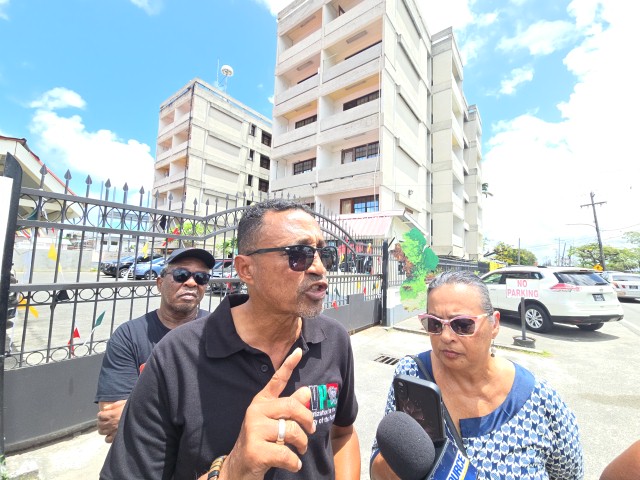
    A coalition of 146 Guyanese organizations and prominent individuals delivered a forceful petition to President Irfaan Ali and Foreign Minister Hugh Todd on Thursday, demanding immediate action against United States policies targeting Cuba. The petition specifically calls for Guyana to condemn the U.S. fuel embargo against Cuba and reverse its decision to terminate the nearly 50-year-old Cuban Medical Brigade program.

    The document, endorsed by 11 organizations and 135 citizens, characterizes the U.S. fuel restrictions as ‘immoral, illegal and barbaric,’ warning they constitute a ‘man-made humanitarian crisis’ approaching genocide. Signatories argue that preventing Cuba from accessing petroleum products cripples essential services including medical care, food production, electricity generation, and water systems.

    Beyond medical cooperation, petitioners urged resistance to U.S. pressure to end scholarship programs enabling Guyanese students—currently 45—to pursue medical studies in Cuba. They framed Cuba’s punishment as retaliation for exercising sovereignty and self-determination, noting the country poses no threat to the United States or other nations.

    Gerald Perreira, leader of the Organisation of Victory of the People party who delivered the petition, questioned U.S. reliability as an ally during subsequent remarks. He referenced historical context where the U.S. allegedly encouraged Venezuelan aggression against Guyana during the Burnham administration, contrasting it with current geopolitical alignments. Perreira expressed skepticism about Venezuelan invasion capabilities due to military hardware deterioration from embargoes and challenging border terrain.

    The petition concludes with a challenge to Guyana’s sovereignty claims, stating: ‘If Guyana is a sovereign and independent nation, as is so often claimed by our Government, then there can be no rationale for joining this shameful and barbaric attempt to destroy Cuba.’ Signatories included late former WPA co-leader Dr. Rupert Roopnaraine among other notable figures.

  • KHMH Completes Interviews for New CEO

    KHMH Completes Interviews for New CEO

    Belize’s leading tertiary healthcare facility, the Karl Heusner Memorial Hospital (KHMH), is advancing toward the selection of a permanent Chief Executive Officer following the conclusion of candidate interviews in February. The position has remained unoccupied since October 2025 upon the departure of former CEO Chandra Nisbet-Cansino.

    During the five-month interim period, hospital operations have been managed through a provisional administrative framework while the Board of Directors conducted a comprehensive search for qualified leadership. The selection process reached a critical milestone last week as the board completed final interviews with a shortlisted cohort of candidates.

    Notable contenders for the executive position include Ann-Marie Thompson, recognized for her role as Acting Labour Commissioner during the peak of Belize’s COVID-19 pandemic response. The candidate pool also features Sharine Reyes, the hospital’s incumbent Financial Director, and Timothy Seguro, a current assistant administrator with prior experience as KHMH’s Acting CEO. Additional candidates comprise Dr. Gilroy Middleton, former CEO within the Ministry of Immigration, and Gilda Diaz Hall.

    The hospital’s board is presently conducting final evaluations of the candidates before submitting its official recommendation. Health sector observers anticipate an appointment decision within coming weeks, which will determine leadership for Belize’s most essential public medical institution.

  • Senator Glenfield Dennison Responds to Critics

    Senator Glenfield Dennison Responds to Critics

    Union Senator Glenfield Dennison is confronting mounting scrutiny following the emergence of a leaked six-figure legal invoice that has ignited controversy regarding his involvement in the BTL severance dispute. The document implies that Dennison may have offered external legal services during his tenure as a Crown Counsel—an allegation he vehemently denies.

    In an exclusive statement, Senator Dennison asserted that he never accepted any payment from the workers’ group, characterizing the invoice as merely a strategic negotiating tool rather than a genuine claim for compensation. “I have been unequivocally clear to the BCWJ that I have zero fees for them,” Dennison stated. “This work was conducted entirely within my capacity for social justice advocacy.”

    The senator further defended his ethical standing, emphasizing that he would not feel justified accepting compensation from workers whose severance packages he did not directly secure. Regarding the invoice’s existence, Dennison explained it was presented to demonstrate the market value of legal services as part of negotiation tactics, encouraging settlement rather than costly litigation.

    Addressing potential violations of public service regulations, Dennison expressed confidence in his understanding of judicial legal services guidelines, suggesting media outlets might be misinterpreting the rules. The senator indicated willingness to have his case serve as a potential test case, noting his constitutional appointment as senator for the Trade Union Congress justifies his representation of workers’ interests.

    As the political debate intensifies, Dennison maintains readiness to defend his actions through appropriate channels, insisting his conduct remains within established regulatory boundaries.

  • Conservation Leaders Unite at ECOLNES Summit 2026

    Conservation Leaders Unite at ECOLNES Summit 2026

    BELIZE CITY – March 5, 2026 marked a pivotal moment for environmental conservation in Belize as 150 sector leaders convened at the Civic Centre for the landmark ECOLENS Summit 2026. Hosted collaboratively by the Protected Areas Conservation Trust (PACT) and the Belize Fund for a Sustainable Future, the gathering represented an unprecedented unification of government officials, NGOs, academic institutions, and grassroots organizations.

    The summit served as a critical progress assessment toward Belize’s ambitious conservation targets, particularly the ’30 by 30′ initiative aiming to protect 30% of the nation’s ocean territory by 2030. Minister Orlando Habet of Sustainable Development, Climate Change & Solid Waste Management emphasized the instrumental role of PACT in securing vital climate financing through international mechanisms including the Adaptation Fund and Green Climate Fund.

    Minister Andre Perez of Blue Economy and Marine Conservation delivered a powerful address centering on human-focused conservation strategies. “While legislation and scientific collaboration remain crucial,” Perez stated, “our ultimate focus must revolve around people. Livelihoods matter profoundly as we implement conservation measures that ensure no community is left behind.”

    The conference identified three primary challenges requiring immediate attention: enhanced enforcement across protected zones, science-based management protocols, and bridging the financial gap in marine conservation. The timing holds particular significance as PACT celebrates its 30th anniversary while the Belize Fund marks its fourth year of operation.

    Abil Castañeda, Executive Director of PACT, framed the event as a launching point for “a new conservation age” in Belize. “This summit enables us to dream collectively about the next thirty years,” Castañeda explained. “We’re pushing the necessary buttons today to shape what effective conservation will resemble three decades from now.”

    The full-day program featured keynote presentations, panel discussions, and an interactive marketplace showcasing sustainable livelihood initiatives. Dr. Leandra Cho-Ricketts, Executive Director of the Belize Fund, expressed measured optimism regarding Belize’s conservation trajectory, noting the government’s commitment to advancing beyond numerical targets toward achieving effective management of protected areas.

    The ECOLENS Summit 2026 ultimately succeeded in its primary objective: creating a collaborative platform for stakeholders to align strategies and accelerate collective action toward preserving Belize’s extraordinary biodiversity for future generations.

  • Blue Economy Minister Sets Record Straight on Skimmers

    Blue Economy Minister Sets Record Straight on Skimmers

    BELIZE CITY – The Minister of Blue Economy, Andre Perez, has publicly addressed and dismissed circulating concerns regarding the operational status of Belize’s sargassum skimmers. Contrary to reports suggesting the vessels were abandoned, Minister Perez clarified that both skimmers have been actively undergoing scheduled routine maintenance for the preceding two weeks.

    In a statement made on March 5, 2026, Perez emphasized that the machinery is expected to be fully operational and redeployed for seaweed harvesting by the upcoming week. Dismissing images depicting rust and neglect as misleading, the Minister attributed the vessels’ current state to the normal wear of marine equipment and the ongoing servicing process.

    Furthermore, Perez revealed that the government’s strategy to combat the recurring sargassum influx is being significantly bolstered. Additional cleanup machinery is slated to arrive and commence operations shortly, forming a critical expansion of the nation’s mitigation efforts. The Minister stressed that the existing skimmers, while vital, are insufficient alone to manage the scale of the challenge, making the new equipment essential for an effective response.

    The government’s proactive stance aims to ensure the protection of Belize’s coastline and tourism industry from the environmental and economic impacts of sargassum seaweed.

  • ‘Portion Matters’ says MOHW on Healthy Dieting Practices

    ‘Portion Matters’ says MOHW on Healthy Dieting Practices

    BELIZE CITY – In response to mounting public discourse surrounding national dietary guidelines, Belize’s Ministry of Health and Wellness (MOHW) has clarified its position on healthy eating practices, emphasizing that portion control is as critical as food selection in combating obesity. This development follows significant online debate sparked by a ministry-issued flyer promoting affordable, nutritious meals, which some citizens questioned for its practicality and nutritional value.

    The controversy emerged during World Obesity Day observances, drawing attention to Belize’s escalating obesity rates. While the initial flyer intended to showcase locally available, healthy options, it unexpectedly ignited a vibrant public conversation about realistic dietary practices.

    Robyn Daly, Technical Advisor for Nutrition at MOHW, expressed enthusiasm about the ongoing dialogue. “We’re very pleased that we’re having this conversation,” Daly stated. “The feedback from the postings has generated substantial reviews, comments, and engagement – which we welcome.”

    Daly clarified that the displayed foods represented merely examples of nutritious local options, not comprehensive dietary prescriptions. The critical missing component, she explained, was portion guidance. “When we talk about obesity, we also need to look at portion,” Daly emphasized. “The foods did not talk about portions. They were just pictures of foods that we have locally available here.”

    The nutrition advisor acknowledged the oversight while celebrating the public’s heightened health consciousness. She confirmed that additional educational materials are in development, promising more comprehensive nutritional information in future communications. These will include broader food categories, notably fruits, which were absent from the initial flyer despite being both healthy and affordable.

    MOHW officials indicate they will leverage this unexpected public engagement to amplify nutrition education efforts nationwide. The ministry views the lively exchange as an opportunity to foster sustained dialogue about healthy eating habits, portion management, and affordable nutrition options accessible to all Belizeans.