作者: admin

  • BEL Chairman Marshalleck Resigns After Five Years

    BEL Chairman Marshalleck Resigns After Five Years

    Belize Electricity Limited (BEL) has announced the forthcoming departure of its Board Chairman, E. Andrew Marshalleck, S.C., effective December 31, 2025. Marshalleck will conclude his five-year leadership tenure that witnessed substantial advancements in the nation’s power infrastructure.

    Appointed to the Board in December 2020, Marshalleck’s chairmanship was marked by significant strategic achievements. Under his guidance, BEL executed critical enhancements to the national grid, most notably expanding generation capacity by 30 megawatts and boosting transmission substation capacity by 92 MVA. These infrastructural investments yielded a dramatic improvement in system reliability, reducing network outages by more than 30 percent compared to pre-2021 performance metrics.

    A landmark accomplishment during his term was the finalization of Belize’s inaugural power purchase agreement for a utility-scale solar energy facility, signaling a strategic pivot toward renewable energy sources.

    In a formal statement reflecting on his service, Marshalleck expressed gratitude for his tenure, stating: ‘I am grateful for the opportunity to have served and for the chance to meet and work with many of the talented managers and employees of BEL … they, together with the people of Belize, deserve a truly successful BEL.’

    The company’s announcement did not specify reasons for the leadership transition. Marshalleck’s successor will be Lyn Young, the former Chief Executive Officer of the utility company.

  • Services, vehicles, guns, ammo excluded from VAT-free shopping

    Services, vehicles, guns, ammo excluded from VAT-free shopping

    The Inland Revenue Department (IRD) has unveiled comprehensive operational guidelines for the nation’s inaugural VAT Zero-Rated Day scheduled for this Friday, marking the New Democratic Party administration’s first implementation of this fiscal policy measure. This temporary tax suspension represents a significant consumer stimulus initiative targeting non-commercial purchases across multiple retail sectors.

    The tax exemption framework specifically applies to transactions involving VAT-registered businesses supplying eligible tangible goods to non-commercial consumers. Critical eligibility requirements mandate that all tax-exempt products must be physically present in merchant inventory at close of business on Thursday, with both sale and full payment processing occurring exclusively during Friday’s designated tax holiday period.

    Comprehensive eligibility categories encompass consumer electronics (televisions, computers, smartphones), household appliances (refrigerators, stoves, washing machines), food and beverages including alcoholic items, clothing and footwear, furniture selections, building materials, automotive parts excluding complete vehicles, cosmetics and toiletries, alongside general merchandise including toys, books and kitchenware.

    The exclusion list maintains several significant categories outside the tax relief program. All service-based transactions remain fully taxable, including tourism and hospitality services. Prepared meals and beverages from restaurants, hotels and similar establishments remain subject to standard VAT rates. Additional exclusions encompass motor vehicles, tobacco products, firearms and ammunition, with hire purchase arrangements similarly excluded from tax exemption benefits.

    The IRD has expressed anticipation for seamless implementation of this economic stimulus measure, encouraging public participation while emphasizing strict adherence to published guidelines for both retailers and consumers.

  • DSB opent feestmaand met vijfde editie van ‘Kresneti Fatu’

    DSB opent feestmaand met vijfde editie van ‘Kresneti Fatu’

    Suriname’s De Surinaamsche Bank N.V. (DSB) launched the festive December season in grand style with the fifth edition of Kresneti Fatu, an event made particularly significant by coinciding with the bank’s 160th anniversary celebrations. The festival emphasized community cohesion, joyful camaraderie, and the celebration of meaningful shared moments.

    The charitable dimension of the event saw proceeds from DSB’s food stands donated to Stichting SU Aid, which this year will direct its support to the hematology and oncology department of Sint Vincentius Hospital, providing crucial assistance to medical care in these specialized fields.

    Young attendees enjoyed a specially designed children’s area featuring creative craft activities, bounce houses, and dynamic dance workshops conducted by the Myztikals group. These young participants later showcased their newfound skills during the evening program, delivering proud moments for watching parents.

    The stage program presented a diverse array of performances blending dance, vocal presentations, and acts from both established and emerging artists. A particularly spontaneous and heartfelt moment occurred when the audience collectively sang ‘Happy Birthday’ to honor Father Esteban Kross. The festive evening culminated in a spectacular laser and fireworks display that illuminated the night sky.

    Looking ahead to New Year’s Eve, DSB has announced special year-end celebrations in keeping with its anniversary year. The bank will host a distinctive closing event at the facade of its headquarters building, promising various performances and a traditional pagara ceremony to bid farewell to the year in elegant style.

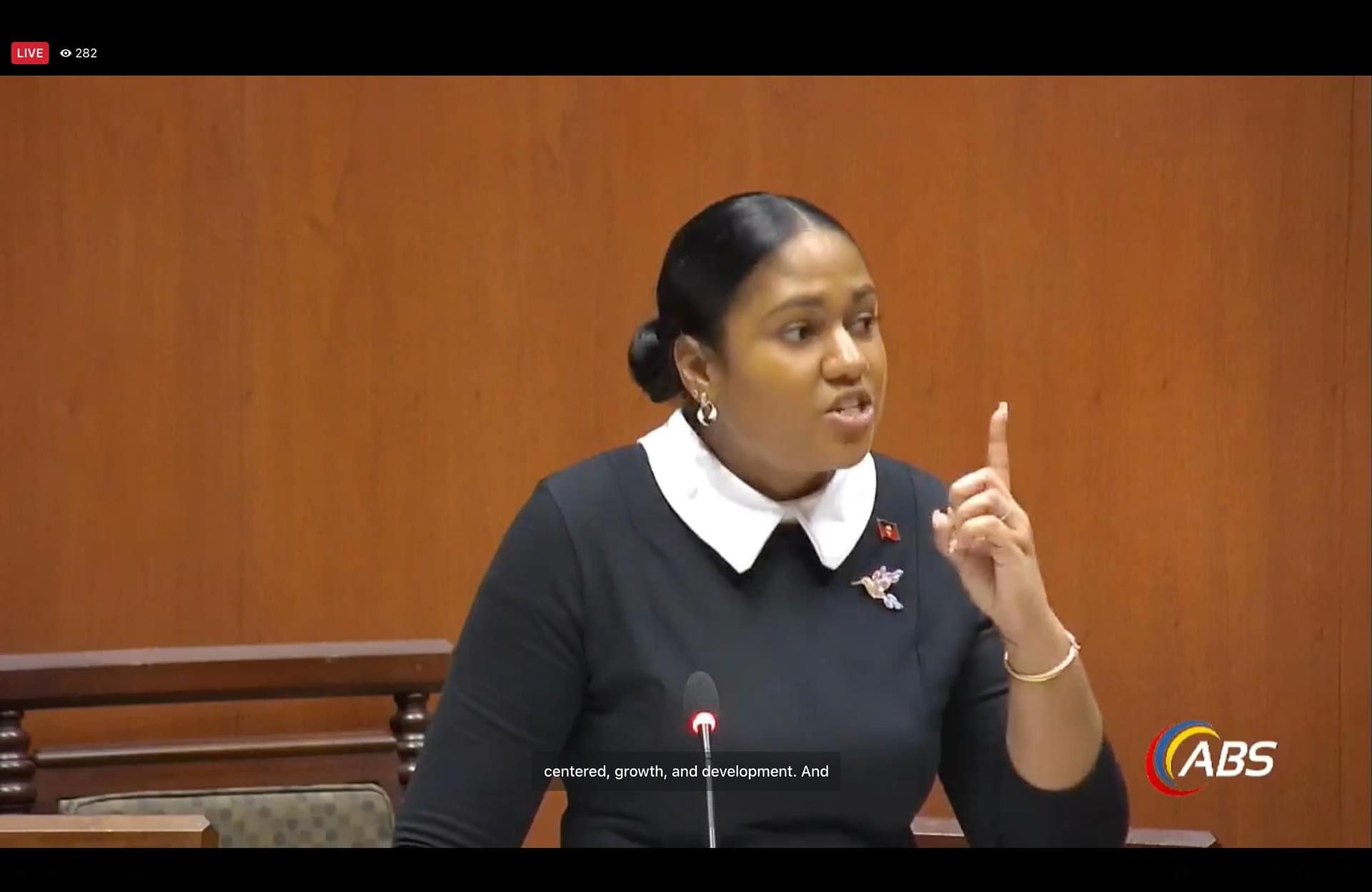
  • Minister Maria Browne Rebukes presentation from Opposition leader Jamale Pringle

    Minister Maria Browne Rebukes presentation from Opposition leader Jamale Pringle

    A significant political confrontation unfolded in Antigua and Barbuda’s Parliament as Minister Maria Browne delivered a stern reprimand to Opposition Leader Jamale Pringle regarding his conduct during legislative proceedings. The exchange, characterized by its intensity, highlighted the deepening political divisions within the nation’s governance framework.

    Minister Browne, representing the ruling administration, articulated strong objections to what she characterized as ‘unsubstantiated allegations and inflammatory rhetoric’ presented by the opposition leader. Her rebuke focused particularly on the manner of presentation rather than merely its content, suggesting Pringle’s approach undermined parliamentary decorum and the seriousness of the legislative process.

    The opposition leader’s presentation, which preceded Browne’s response, reportedly contained criticisms of current government policies and their implementation. While the specific policy domains under discussion remain unspecified in initial reports, the confrontation appears to reflect broader tensions between the governing and opposition parties regarding national direction and governance standards.

    Political analysts observe that such public confrontations between high-ranking government officials and opposition leadership typically indicate heightened political tensions that may influence upcoming legislative debates and potentially affect bipartisan cooperation on critical national issues. The incident marks another chapter in the ongoing political dialogue between Antigua and Barbuda’s major political factions.

  • GFNC: Farm to Table standards

    GFNC: Farm to Table standards

    Grenada is mobilizing a nationwide initiative to transform food safety from a health precaution into a comprehensive national strategy. This effort engages every segment of the food supply chain—from agricultural production to consumer practices—to safeguard public health, enhance export competitiveness, and protect the island’s vital tourism industry.

    At the production level, farmers and fishermen constitute the first defense line. Their adherence to hygienic handling of crops, livestock, and seafood establishes the foundation for everything that follows. The use of clean irrigation water and contamination-free storage methods is particularly crucial for Grenada’s signature exports, including spices, cocoa, and fresh fruits.

    Processing facilities—including bakeries, spice processors, and juice manufacturers—serve as critical intermediaries. These operations are implementing Hazard Analysis and Critical Control Points (HACCP) principles to systematically identify and mitigate potential hazards before products reach markets. This adoption of international standards not only protects consumers but also positions Grenadian products favorably in global trade.

    The distribution and retail sector functions as the final checkpoint before food reaches consumers. Supermarkets and distributors bear responsibility for maintaining cold chains, ensuring proper storage conditions, and providing accurate labeling. Any failure in these areas can compromise the entire safety system, making retail establishments crucial guardians of public trust.

    Consumers complete the safety cycle through proper food handling practices in homes. Simple measures including thorough handwashing, adequate cooking, and adherence to storage instructions transform food safety from a regulatory requirement into a community-wide culture of protection.

    Grenada’s strategy incorporates internationally recognized frameworks including the European Union’s Regulation (EC) 852/2004 alongside HACCP methodologies. This integrated approach promises significant national benefits: reduced foodborne illnesses, strengthened export credentials for agricultural products, and enhanced reputation as a premium tourism destination. The Grenada Food and Nutrition Council (GFNC) spearheads this comprehensive effort, recognizing that food safety represents both a public health imperative and an economic investment in the nation’s future.

  • Upcoming World Bank Webinar explores economic prospects for Sargassum

    Upcoming World Bank Webinar explores economic prospects for Sargassum

    The Caribbean region has been confronting a monumental environmental phenomenon since 2011 as massive quantities of sargassum seaweed from the Great Atlantic Sargassum Belt continuously wash ashore across its coastlines. This persistent marine invasion typically peaks between April and August annually, affecting more than twenty island nations with profound ecological and socioeconomic consequences.

    According to World Bank assessments, the Caribbean islands collectively expend over $120 million each year on cleanup operations alone. The decomposing algae releases hazardous gases that threaten public health while simultaneously smothering critical marine ecosystems including coral reefs, seagrass beds, and mangrove forests—vital habitats that sustain fisheries, tourism industries, and coastal community livelihoods.

    In response to this challenge, the World Bank has organized an innovative webinar titled ‘Turning Sargassum into Opportunity: creating jobs in the midst of an ec-challenge’ scheduled for Tuesday, December 9. This virtual gathering aims to reframe the sargassum crisis by exploring its potential as a valuable renewable resource rather than merely an environmental nuisance.

    The session will convene policymakers, industry pioneers, community representatives, and technical experts to examine practical strategies for converting sargassum biomass into economic assets. Entrepreneurial initiatives across the Caribbean are already demonstrating the algae’s potential applications in bioenergy production, agricultural fertilizers, industrial materials, cosmetics, and various bio-based products.

    These emerging enterprises are generating employment opportunities, fostering technological innovation, and strengthening community resilience against environmental shocks. The webinar will particularly focus on the interconnected impacts of sargassum influxes on tourism and fisheries sectors, emphasizing the need for comprehensive strategies that both protect natural resources and promote sustainable economic development in vulnerable coastal regions.

  • Maximum EC$100,000 fine under new fisheries regulations

    Maximum EC$100,000 fine under new fisheries regulations

    Grenada has implemented comprehensive new fisheries regulations establishing robust protections for marine mammals within its territorial waters. Published in the 5 December Government Gazette as Statutory Rules and Order (SRO) 43 of 2025, these regulations introduce significant penalties for violations, including fines up to EC$100,000 (approximately US$37,000) and potential imprisonment.

    The legislative framework mandates specific protocols for fishermen encountering marine mammals during operations. Vessel operators are now required to immediately release any accidentally captured or entangled mammals using methods that minimize stress and harm. The regulations further stipulate that crew members must assist in release operations unless personal safety is compromised.

    Protected species under the new rules include multiple cetaceans and marine mammals found in Grenadian waters: Humpback Whales, Sperm Whales, various dolphin species (Bottlenose, Spinner, and Atlantic Spotted), Pilot Whales, False Killer Whales, Pygmy Sperm Whales, West Indian Manatees, and seals. For unidentified species, the regulations require photographic documentation and detailed reporting to the Fisheries Division for scientific verification.

    This regulatory overhaul directly addresses compliance requirements under the US Marine Mammal Protection Act, successfully averting a scheduled January 2026 ban on Grenadian fish and fish products entering the American market. The potential embargo, announced in August 2025, threatened an industry generating over EC$50 million annually for the island nation.

    The legislation does include limited exemptions for scientific research authorized by the Minister and emergency situations where human life or marine mammal welfare is imminently endangered. In such cases, individuals must exercise reasonable care during interventions and report any takings or harassment incidents to the Chief Fisheries Officer within 48 hours.

    Grenada’s parliamentary approval process saw both legislative chambers endorsing amendments to the Fisheries Act approximately three weeks prior to the regulations’ official publication, demonstrating coordinated governmental action to protect both marine ecosystems and economic interests.

  • Experts Warn Trump Strikes Could Trigger New Venezuelan Migration Wave

    Experts Warn Trump Strikes Could Trigger New Venezuelan Migration Wave

    Political analysts are raising alarms that potential U.S. military actions against Venezuela could unleash a catastrophic migration crisis across South America. The warnings come amid heightened tensions between the Trump administration and the government of Nicolás Maduro, with the former accusing Venezuela of facilitating drug trafficking and exporting migration problems.

    Despite President Trump’s assertions that Venezuela has ‘dumped hundreds of thousands of people from prisons’ into the United States, CNN reports no evidence exists to support claims that Venezuelan migrants disproportionately served prison sentences. The administration has maintained an aggressive posture, conducting maritime strikes against suspected drug vessels since September and openly threatening imminent attacks on cartel operations within Venezuelan territory.

    Immigration policy expert Gil Guerra of the Niskanen Center cautioned that even limited military engagement could spark widespread panic. ‘Any kind of military strike would cause panic and disrupt supply chains,’ Guerra explained, ‘and it would be very easy for rumors to spread and push people to flee.’

    Research from the Niskanen Center projects devastating human consequences: brief internal conflict could displace 1.7 to 3 million Venezuelans within years, while prolonged combat might force over 4 million to flee—numbers that would overwhelm neighboring Colombia and Brazil, still recovering from the 2017 migration crisis.

    Contrasting this assessment, former U.S. Ambassador to Venezuela James Story expressed skepticism about limited strikes causing significant displacement. ‘If the US took kinetic action, it would pale in comparison to the millions who’ve already fled,’ Story told CNN, adding that only ‘widespread, sustained military combat’ would likely create a new humanitarian crisis.

    The divergent expert opinions highlight the unpredictable nature of military intervention and its potential to exacerbate what is already one of Western Hemisphere’s most severe migration emergencies.

  • The Electoral Office of Dominica reports high level of trust in voter verification accuracy

    The Electoral Office of Dominica reports high level of trust in voter verification accuracy

    The Commonwealth of Dominica’s Electoral Office has implemented a sophisticated, multi-tiered verification system to ensure the integrity of its ongoing Voter Confirmation process, according to Chief Elections Officer Anthea Joseph. In an official audio statement, Joseph detailed the comprehensive security measures designed to guarantee both the accuracy and legitimacy of voter records.

    The verification process employs a structured three-phase approach: initial automated software screening, detailed review by designated editing officers, and final authorization by chief registering officers. This sequential framework creates multiple checkpoints to safeguard against inaccuracies and fraudulent entries.

    The system’s automated features provide enhanced security by flagging potential discrepancies such as duplicate entries with identical names. When duplicates are detected, verifiers receive alerts enabling comprehensive side-by-side data comparison. Advanced authentication tools including facial recognition technology, ID image comparison, and signature verification allow officials to thoroughly scrutinize flagged cases.

    Notably, the system demonstrates remarkable sensitivity in distinguishing between individuals with similar facial features, reportedly capable of differentiating even identical twins through subtle facial characteristic analysis. This technological capability ensures maintenance of procedural integrity in challenging verification scenarios.

    The Electoral Office reminds applicants to arrive ‘camera ready’ for their identification photographs, which will serve dual purposes for security verification and eventual Voter ID cards. The Voter Confirmation process enables electors previously listed on the revised May 2025 registry to transfer to the new voters list, a mandatory requirement for participation in upcoming national and local government elections.

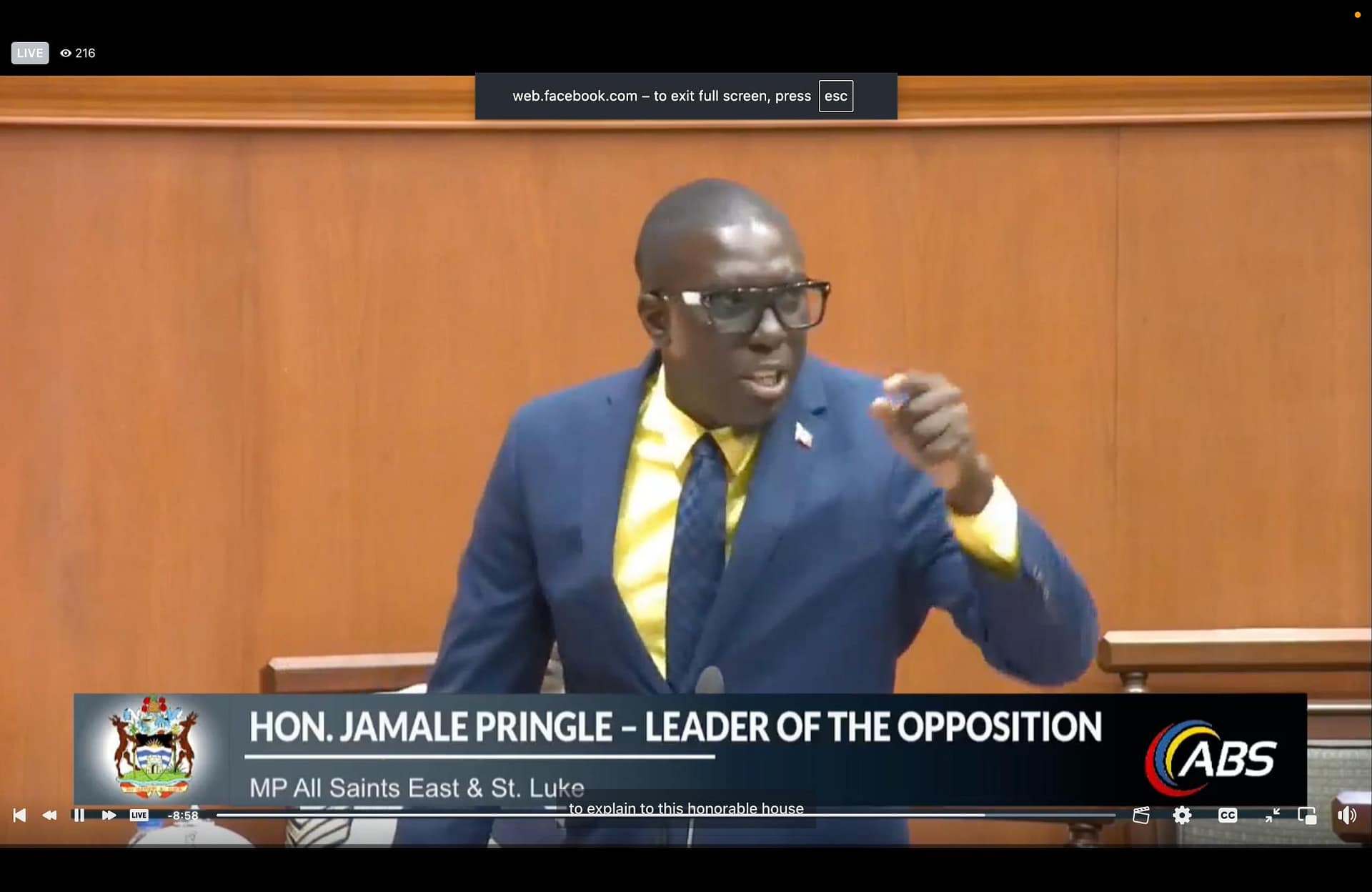
  • Pringle accuses PM of ‘double standards’ in handling ministerial misconduct

    Pringle accuses PM of ‘double standards’ in handling ministerial misconduct

    Opposition Leader Jamale Pringle has leveled serious allegations against Prime Minister Gaston Browne, accusing him of employing “double standards” in addressing ministerial misconduct within the administration. The accusations emerged during Monday’s parliamentary budget debate, where Pringle drew sharp contrasts between Browne’s historical handling of ministerial dismissals and his current approach to the ongoing vehicle-procurement controversy.

    Pringle presented a detailed comparative analysis of previous ministerial terminations, highlighting three specific cases. He referenced the 2020 dismissal of former Education Minister Michael Browne, who was removed following police charges despite subsequent acquittal. The opposition leader also cited the termination of Dean Jonas, who was reportedly fired due to what the prime minister characterized as “toxic relationships” with staff members. Additionally, Pringle noted the 2018 removal of Asot Michael after British investigators questioned him, though no formal charges were ever filed.

    These historical precedents stood in stark contrast to the current administration’s response to the vehicle-procurement allegations, according to Pringle. He asserted that the prime minister’s public statements indicate a marked reluctance to implement similar consequences when “the matter involves someone close to home.”

    The opposition leader’s critique extends beyond individual cases to broader governance concerns. Pringle emphasized that the inconsistent application of accountability measures raises fundamental questions about governmental consistency and integrity. He maintained that the public cannot reasonably be expected to accept variable enforcement standards based on personal relationships within the administration.

    Pringle’s allegations form part of a comprehensive criticism of the government’s procurement and oversight mechanisms. He has formally called for an independent investigation into the vehicle procurement matter, dismissing the prime minister’s proposed internal review as fundamentally inadequate to address the seriousness of the allegations.