作者: admin

  • Joshua knocks out Paul to win Netflix boxing bout

    Joshua knocks out Paul to win Netflix boxing bout

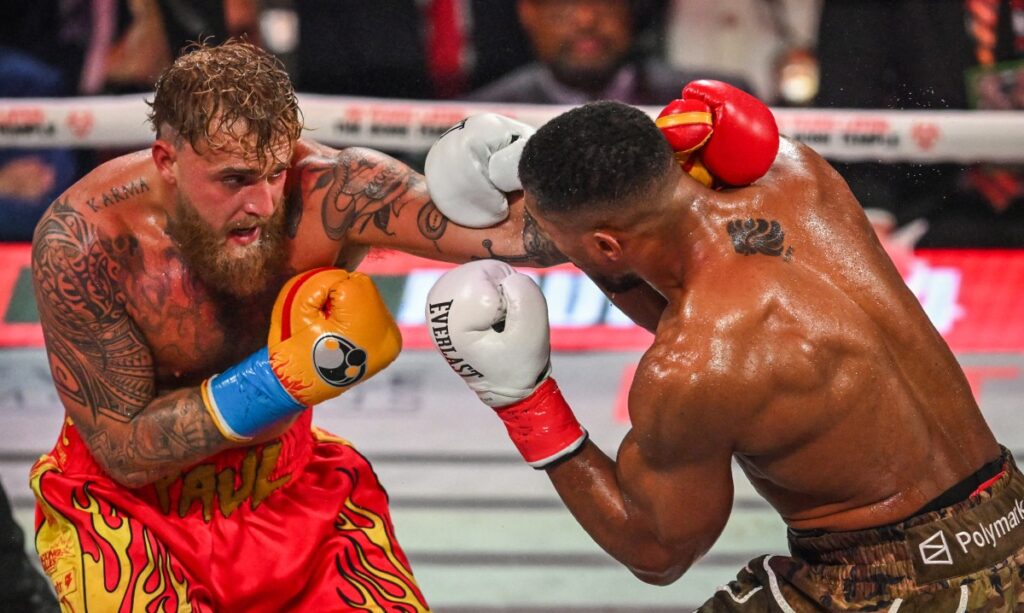
    MIAMI – In a highly anticipated crossover event that polarized the boxing world, former unified heavyweight champion Anthony Joshua decisively ended his contest against social media personality Jake Paul with a sixth-round knockout. The Friday night spectacle, streamed globally on Netflix from Miami’s Kaseya Center, culminated with Joshua connecting a devastating right hand that sent Paul collapsing to the canvas.

    The bout, which guaranteed both participants a share of a monumental $184 million purse, highlighted the dramatic disparity in experience between the two-time world champion and the YouTube creator turned pugilist. Despite concerns from boxing purists about the matchup’s legitimacy, Paul demonstrated unexpected resilience by surviving into the middle rounds before Joshua’s superior power and technique proved overwhelming.

    The contest featured awkward moments that drew criticism from spectators and officials alike. Referee Christopher Young openly expressed frustration during the fourth round, chastising both fighters with audible remarks about the disappointing quality of action. Paul frequently resorted to unorthodox tactics, including dropping to the canvas and attempting to grapple with Joshua’s legs.

    Post-fight medical evaluation confirmed Paul’s suspicion of a double jaw fracture, visible in a radiograph shared on his social media platforms. Joshua acknowledged his own performance fell short of ideal, stating: ‘The end goal was to get Jake Paul, pin him down and hurt him. It took longer than expected but the right hand finally found its destination.’

    Despite the one-sided outcome, Joshua offered respect for his opponent’s determination: ‘I want to give him his props – he got up time and time again. It takes a real man to do that.’ Paul remained characteristically optimistic despite the loss, vowing to continue his boxing ambitions: ‘I gave it my all. Anthony’s one of the best to ever do it. I’m gonna come back and get a world championship.’

    With this victory, Joshua now looks toward a potential historic showdown with fellow British heavyweight Tyson Fury in 2026, potentially ending years of failed negotiations between the two champions.

  • Coaches chase maiden glory as Cornwall, Clarendon battle for Ben Francis Cup

    Coaches chase maiden glory as Cornwall, Clarendon battle for Ben Francis Cup

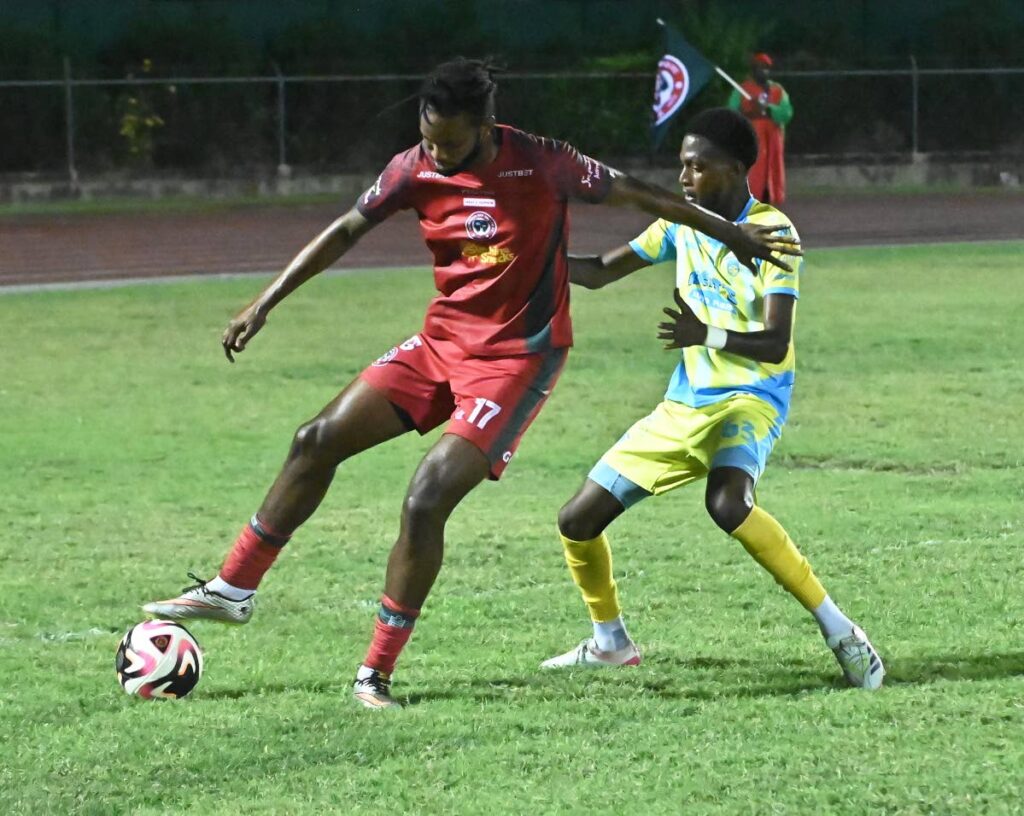
    Two emerging coaching talents in Jamaican high school football are poised for a monumental confrontation in the Ben Francis Cup final this afternoon at the National Stadium. Cornwall College’s Hector Wright and Clarendon College’s Devon Anderson, both in their inaugural seasons leading their respective programs, seek to secure their first major trophy at 3:00 pm kickoff.

    Wright assumed leadership at Cornwall College following Theodore Whitmore’s departure, having previously served as assistant coach for the historically successful program. Meanwhile, Anderson brought substantial experience from successful tenures at Holy Trinity High and Hydel High in urban competitions when he succeeded Lenworth Hyde at Clarendon College.

    The match represents significant opportunity for both institutions. Cornwall College aims to claim their first championship title since making history as the first daCosta Cup team to capture the ISSA Champions Cup in 2018. Their opponents, Clarendon College, pursue their fifth Ben Francis Cup victory after claiming the trophy in 2023 and now appearing in consecutive finals.

    Both coaches acknowledge the transformative potential of a championship victory for their nascent tenures. Wright characterized his squad as ‘resilient,’ emphasizing that maximum effort regardless of fatigue would constitute success. His team rebounded impressively after narrowly missing daCosta Cup semi-final qualification, demonstrating mental fortitude according to Friday’s statements to the Jamaica Observer.

    Anderson described his inaugural season as a ‘roller coaster’ adaptation period involving new competition structures, player personnel, institutional expectations, and administrative dynamics. His extensive experience in high-pressure scenarios includes guiding Holy Trinity to the 2014 ISSA Flow Cup final and achieving Manning Cup finalist status with Hydel.

    The Clarendon coach noted several players returned from last year’s squad that fell to St Elizabeth Technical in the Ben Francis final, creating heightened motivation despite physical exhaustion from an intense schedule. Their path to the final included a narrow quarter-final defeat to Christiana High in daCosta Cup play, followed by victories over Garvey Maceo High and a dramatic 4-1 penalty shootout triumph against Manning’s School after a 1-1 regulation draw.

  • EAGLES RISE!

    EAGLES RISE!

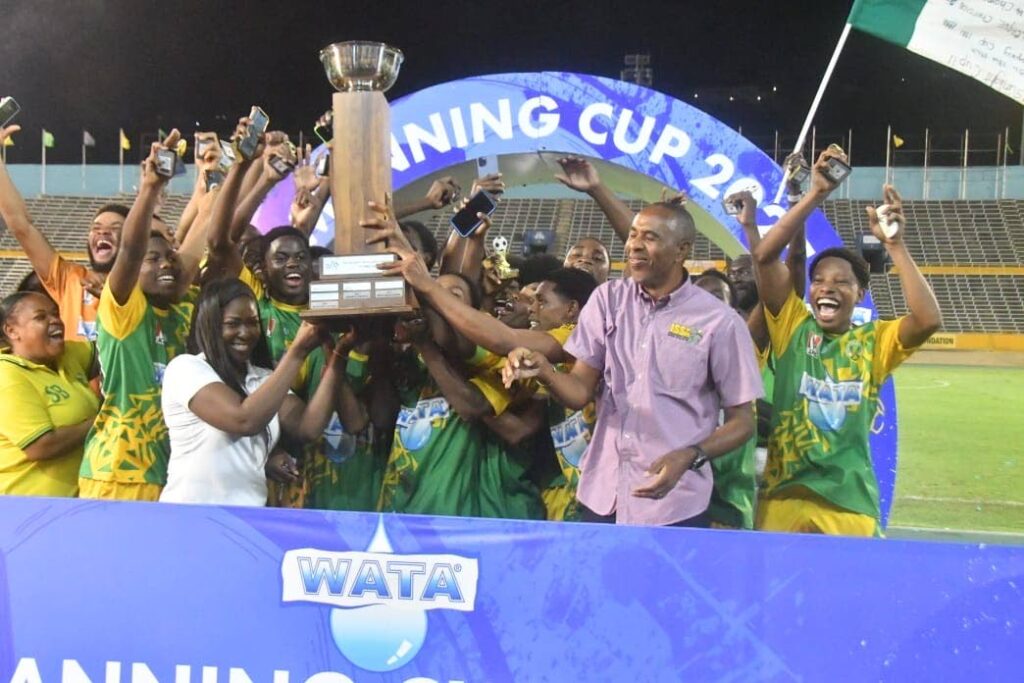
    Excelsior High School triumphed over Jamaica College (JC) with a decisive 2-0 victory in the ISSA Wata Manning Cup final at the National Stadium on Friday, ending a two-decade championship drought. The long-awaited win marks their eighth Manning Cup title, with their previous victories dating back to 1953 and 2004.

    The breakthrough came in the 57th minute when Kimarley Scott demonstrated clinical precision, capitalizing on a turnover forced by Excelsior’s relentless pressure. JC’s commitment to playing out from the back proved costly as their midfield was dispossessed, allowing Scott to strike decisively from inside the penalty area.

    As regulation time expired, Shamarie Chambers—whose long throws had threatened throughout the contest—delivered another spectacular service that Kivann Salmon converted in the 96th minute, securing the victory beyond any doubt.

    The match began as a tactical battle between two impeccably coached sides. JC, undefeated throughout the season until this final, created several promising opportunities. Jamone Lyles fired over the crossbar in the 10th minute, while Duwayne Burgher missed narrowly from close range nine minutes later. JC’s Dontae Logan and Malique Bucknor also orchestrated dangerous attacks that ultimately failed to produce goals.

    Excelsior’s strategy leveraged long balls and set pieces to exploit Scott’s speed and technical ability, consistently testing JC’s defensive resolve. Meanwhile, Chambers’ prodigious throw-ins created persistent problems for Jamaica College’s backline.

    The victory carries particular significance for Excelsior, who suffered defeats in last year’s Walker Cup and Under-16 finals. For Jamaica College, the loss represents their first and only defeat of the season, despite having beaten Excelsior 2-1 in quarterfinal action earlier this month.

  • BIG BOYS RUMBLE!

    BIG BOYS RUMBLE!

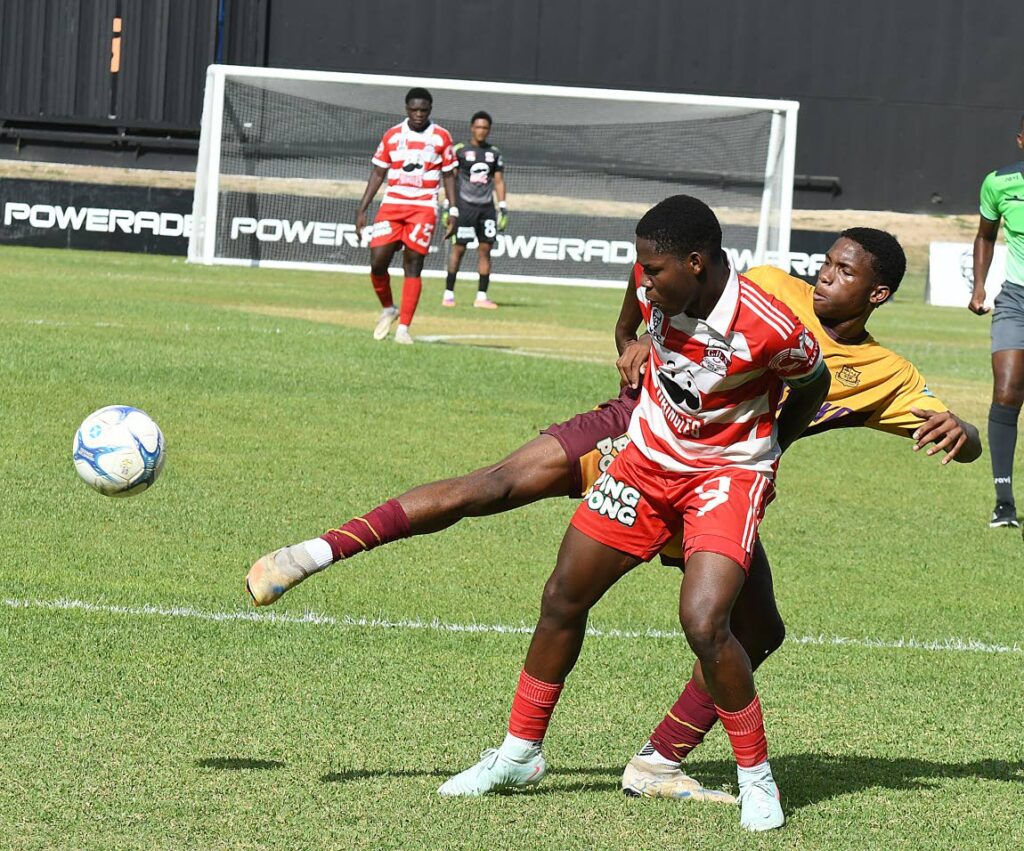
    The National Stadium prepares to host a monumental clash in Jamaican schoolboy football as undefeated St Elizabeth Technical High School (STETHS) confronts Glenmuir High in the ISSA daCosta Cup final this evening at 6:00 pm. This championship duel represents a classic showdown between STETHS’s impeccable defensive record and Glenmuir’s proven resilience, setting the stage for a tactical battle between two battle-hardened squads.

    STETHS enters this final pursuing a historic achievement: becoming the sixth team in recent history to complete an entire season undefeated while simultaneously chasing their sixth hold on the prestigious daCosta Cup trophy. Their campaign has been characterized by defensive mastery, conceding merely six goals across 19 matches while keeping 13 clean sheets. Coach Omar ‘Rambo’ Wedderburn emphasizes that statistical dominance means little unless players “follow instructions” and “carry out their responsibilities” effectively in the championship decider.

    Standing opposite them is Glenmuir High, a three-time champion program that has established itself as the most consistent rural area school over the past three seasons. Despite winning back-to-back ISSA Champions Cup titles, Glenmuir seeks redemption after suffering heartbreak in last year’s daCosta Cup final and semifinal exits in previous campaigns. Their journey to this final demonstrated remarkable character, rallying from a goal deficit to defeat Dinthill Technical 2-1 in Wednesday’s semifinal clash.

    The narrative extends beyond the pitch, with both teams overcoming adversity beyond athletic competition. Their seasons were extended by several weeks due to Hurricane Melissa’s late October passage, which left trails of destruction across Jamaica, adding emotional weight to their championship pursuits.

    Glenmuir’s evolution under Coach Andrew Peart, who now prepares for his second final in three seasons, reveals a team transformed since their humbling 2-6 defeat to Clarendon College three years ago. Peart notes their semifinal comeback exemplifies newfound resilience: “We can win in more ways than one — whether we lead from the start or we have to come from behind.” His tactical emphasis focuses on starting stronger, controlling game tempo, and converting opportunities clinically.

    The match also represents a regional power shift challenge. Clarendon-based schools have dominated the past six daCosta Cup titles, with Clarendon College claiming four and Garvey Maceo securing two. STETHS, as the only St Elizabeth school to win since 1964, last raised the trophy in 2015, making this final an opportunity to break Clarendon’s stronghold on rural schoolboy football supremacy.

  • Inside CWI’s crisis of credibility

    Inside CWI’s crisis of credibility

    Cricket West Indies (CWI), the historic governing body of Caribbean cricket, is confronting severe allegations of deteriorating governance standards that critics describe as an “incestuous oligarchy.” The organization, once celebrated for its cricketing excellence, now faces mounting scrutiny over its executive dysfunction and problematic power distribution structures.

    The core issues stem from CWI’s convoluted governance framework, which appears heavily influenced by political connections, competing obligations, and a conspicuous absence of accountability. This complex web of public funding, political ties, and administrative loyalties has created an environment where genuine oversight is notably lacking. The deteriorating situation has triggered eroding confidence among key stakeholders: fans report feeling increasingly alienated, sponsors express uncertainty about their investments, and regional governments demonstrate visible frustration.

    Despite repeated calls for enhanced conflict-of-interest policies, minimal substantive changes have materialized. Insiders acknowledge difficulty locating properly articulated safeguards within CWI’s constitutional documents or legal frameworks. Current leadership maintains that their internal controls have “matured” and that governance standards rival global sports organizations, but these assertions contrast sharply with ongoing controversies and diminishing public trust.

    An important structural nuance often overlooked in the debate is the CWI president’s role as a non-executive position. Daily operations theoretically fall under the CEO and management team’s jurisdiction, not subject to presidential “whims and fancies.” Financial and strategic committees were specifically designed to distribute authority appropriately. However, the perceived overlap of responsibilities—particularly the president chairing key committees—continues to blur lines between diligent oversight and disproportionate dominance.

    While defenders attribute concerns to misconceptions, governance experts emphasize that perception frequently carries equal weight to reality in institutional trust. The apparent existence of competing loyalties, especially involving political figures or public officials, fundamentally undermines confidence in impartial decision-making. The principle that the president “must act solely in the interests of West Indies cricket” becomes challenging to reconcile with external national or political obligations.

    The organization now faces a critical juncture as the current president announces his decision not to seek re-election. The board must determine whether to accept this stance quietly or demand a more definitive separation. Should this leadership vacuum become a breeding ground for speculation, both structural and reputational damage may intensify.

    West Indies cricket requires governance that inspires stability rather than suspicion—modern stewardship guided by transparency, competence, and collective vision rather than insularity or political influences. Until substantive reforms occur, the echoes of institutional decline threaten to overwhelm the legendary roar of Caribbean cricket.

  • Fix toilet, bench problem at City Gate

    Fix toilet, bench problem at City Gate

    A glaring deficiency in public amenities at two of Trinidad’s most frequented locations has triggered substantial public dismay, highlighting systemic infrastructure neglect. City Gate, Port of Spain’s primary transportation hub serving hundreds of daily commuters including schoolchildren, exhibits critically inadequate facilities with merely a single functional female toilet available for massive public use.

    The situation becomes particularly dire for vulnerable demographics including elderly citizens, pregnant women, and disabled individuals who find no wheelchair-accessible facilities. The absence of baby changing stations further compounds the problem, denying mothers basic infant care infrastructure.

    Parallel deficiencies plague the Queen’s Park Savannah food court, another popular public gathering spot. During a December 13 visit, the author experienced firsthand the embarrassing reality of insufficient sanitation facilities. Despite the area’s popularity among food vendors and visitors, only one toilet exists which frequently remains locked during operational hours.

    The infrastructure crisis extends beyond sanitation to include inadequate seating arrangements. City Gate suffers from insufficient benches for commuters awaiting PTSC bus services, despite known reliability issues with public transportation.

    Critical questions emerge regarding compliance with Occupational Safety and Health Agency (OHSA) regulations, particularly concerning clean water availability and overall facility maintenance. While authorities cite concerns about socially displaced persons misusing facilities, the solution of hiring security personnel remains unimplemented.

    The author’s frustration reflects broader public sentiment toward perceived stagnation in societal development, with comparisons to ‘banana republic’ conditions and ‘caveman era’ infrastructure. As 2025 progresses, citizens demand urgent modernization of public facilities across Trinidad’s popular gathering points, calling for immediate action from relevant ministries and administrative bodies.

  • Merry Monarch’s missing pieces

    Merry Monarch’s missing pieces

    While steel beams rise for the iconic North Stand at Port of Spain’s Carnival grounds, deeper structural questions surround Trinidad and Tobago’s premier cultural celebration. The National Carnival Commission (NCC) confirms the stand’s construction remains on schedule for mid-January completion at nearly 50% reduced cost from 2025—a tangible example of the government’s expenditure-tightening measures.

    Yet beneath surface-level preparations, significant planning ambiguities persist. Since August’s official launch with the underwhelming “You Go Love This” theme, observable policy drift has characterized the approach to February’s festivities. Critical elements including the parade route remain undiscussed, while marketing efforts have seemingly been limited to a discreetly launched website. Prize money allocations for major events still await formal announcement through proper press conferences.

    Culture Minister Michelle Benjamin’s July-ordered spending audit has yielded minimal public updates, though her August reference to an Inter-American Development Bank study on Carnival’s revenue impact suggests broader economic considerations. The allocated $137 million budget shows negligible reduction from previous $140 million allocations, yet fresh memories persist of the minister’s contentious funding disputes with Emancipation Day stakeholders.

    Additional complications emerge from the Prime Minister’s restrictions on state facility fetes—triggering logistical challenges and community dissatisfaction—and newly enacted noise pollution measures targeting fireworks. The shadow of August’s abruptly canceled Independence Day events, justified by security concerns during a state of emergency, continues to influence perceptions despite the situation’s normalization.

    Geopolitical tensions and speculation about US military activities contribute further layers of uncertainty to the planning landscape. Nevertheless, stakeholders including the NCC proceed with determination, embodying Carnival’s enduring spirit: regardless of challenges, the show must go on.

  • School Rugby Union, GEB bring Christmas cheer to Success Laventille

    School Rugby Union, GEB bring Christmas cheer to Success Laventille

    In a heartwarming display of community solidarity, the TT Schools’ Rugby Union partnered with the Trinidad and Tobago Police Service’s Guard and Emergency Branch to distribute Christmas hampers at Success Laventille Secondary School on December 17. The initiative, now in its third consecutive year, brought together sports officials, law enforcement officers, and student athletes to spread festive cheer throughout the Success Village community.

    Patrice Des Vignes, President of the Schools’ Rugby Union, personally presented the charitable donations to acting principal Stacey Lezama. The event saw significant participation from police officers who double as rugby advocates—including Success Laventille coach Joseph Quashie and Schools’ Rugby Union Vice-President Emmanuel Joseph. Young athletes Ky-mani Charles and Tariq Osborne actively assisted in the hamper distribution, embodying the program’s spirit of youth engagement and social responsibility.

    According to an official release, the initiative transcended mere material support by delivering ‘hope, joy and reassurance to families in need.’ The collaboration between sporting organizations and protective services highlighted rugby’s capacity to foster character development, unity, and civic duty beyond athletic competition. The program demonstrates how sports can serve as a catalyst for social development and community upliftment.

    The release extended gratitude to Police Commissioner Allister Guevarro and TTPS leadership for facilitating officer participation in this meaningful venture. Their institutional support proved instrumental in strengthening community-police relations while spreading seasonal goodwill. This ongoing partnership continues to show that combining sportsmanship with public service creates lasting impacts, particularly during the holiday season of giving.

  • ‘A woman is not the property of a man,’ judge says in 2020 Avocat Village killing

    ‘A woman is not the property of a man,’ judge says in 2020 Avocat Village killing

    In a landmark ruling addressing domestic violence, High Court Justice Trevor Jones has issued a powerful judicial condemnation against gender-based violence while sentencing Vishal Birju for the 2020 killing of Gabriella Amanda Dubarry, the mother of his child. The court accepted a plea agreement that reduced the charge from murder to manslaughter by reason of provocation, resulting in a final sentence of 12 years and 23 days after accounting for time served.

    The case stems from the January 9, 2020 incident where Birju, disguised in women’s Islamic clothing, forced entry into Dubarry’s Avocat Village residence. The 28-year-old insurance agent was preparing for work when the masked intruder confronted her. According to evidence presented, Dubarry’s mother recognized Birju’s voice and fled the premises, hearing gunshots moments later. She returned to discover her daughter fatally wounded by gunshots to the head and torso, while Dubarry’s infant child, present during the attack, miraculously remained unharmed.

    Justice Jones delivered a stern message alongside the sentencing, emphasizing that “society must understand that a woman is not the property of a man” and that “the retributive sentence must reflect this.” The judge further recommended that the Office of the Director of Public Prosecutions reconsider accepting plea agreements in cases involving domestic violence and allegations of infidelity.

    During the proceedings, Birju expressed remorse for his actions, particularly acknowledging the impact on his young son: “I turned my son’s fairytale life into a nightmare when I took his mother from him. The person I’ve caused the most pain to was him.”

    Police investigations revealed that Birju had purchased the .38-caliber firearm weeks earlier and confessed to acting under stress related to custody disputes and ongoing conflicts with Dubarry’s family. He subsequently led officers to where he had discarded the weapon following the shooting.

    Legal representation included Michelle Ali and Shuzvon Ramdass from the Public Defenders’ Department for Birju, while state prosecutors Solange Devenish and Josiah Soo Hon represented the prosecution.

  • Trinidad and Tobago Under-20s blank WoLF XI for first ‘Jewels’ win

    Trinidad and Tobago Under-20s blank WoLF XI for first ‘Jewels’ win

    Trinidad and Tobago’s Under-20 women’s football team claimed their inaugural victory in the DecembHER Football – Jewels of the Caribbean tournament with a decisive 2-0 triumph over TT Women’s League Football (WoLF) United XI on December 18 at Hasely Crawford Stadium, Mucurapo.

    The week-long competition showcases both Under-17 and Under-20 divisions, featuring national teams from Trinidad and Tobago, Jamaica, and US-based club Indy Premier SC across both age categories. Additional participants include the Secondary Schools Football League (SSFL) Future Stars XI in the Under-17 bracket and the WoLF XI in the Under-20 group.

    Following challenging opening matches that saw TT’s Under-17 squad suffer consecutive defeats against Indy Premier (4-0) and Jamaica (2-1), and the Under-20 team fall 2-0 to Indy Premier on December 16, the national program finally celebrated success two days later.

    Flanking sensation Sonia Lamarre emerged as the match’s definitive hero, netting both goals in a performance that demonstrated exceptional technical quality. The dynamic winger broke the deadlock in spectacular fashion during the 24th minute, cutting inward from the right flank before unleashing a perfectly curved left-footed strike from approximately 25 yards that found the upper corner.

    Despite numerous additional opportunities, including a narrowly missed long-range free kick from Madison Campbell just before halftime, the score remained 1-0 deep into the second half. TT coach Damian Briggs’s strategic substitution of attacking midfielder Orielle Martin nearly produced a second goal in the 76th minute, but WoLF goalkeeper Akilah George made a crucial save.

    The WoLF XI nearly equalized during a frantic goalmouth scramble in the 86th minute that saw the ball strike the crossbar, with attackers J’Eleisha Alexander and Onika Denoon unable to provide the finishing touch. Lamarre ultimately secured the victory in stoppage time, heading home from close range after defender Kaitlyn Darwent delivered an accurate corner from the right side.

    The result positions Trinidad and Tobago (three points) just one point behind group leaders Jamaica and Indy Premier (both four points), who played to a 2-2 draw in the day’s earlier match. The tournament continues with critical matches at Sangre Grande Recreation Ground on December 20, culminating in championship finals at Hasely Crawford Stadium on December 21.