作者: admin

  • Honduras: Liberal candidate questions election results

    Honduras: Liberal candidate questions election results

    The Honduran presidential election remains in a state of deadlock as the country’s two dominant right-wing parties contest an increasingly narrow margin. Preliminary results from the National Electoral Council (CNE) place National Party (PN) candidate Nasry Asfura ahead of his rival, Liberal Party (PL) candidate and prominent television personality Salvador Nasralla, by a slim margin of approximately 33,000 votes.

    In a strategic move, the Liberal Party has consented to a CNE-initiated special recount of 2,792 ballot boxes flagged for inconsistencies, a process encompassing nearly half a million votes that commenced earlier this week. However, Nasralla has issued a firm ultimatum, declaring that this initial review is insufficient for a conclusive outcome.

    The central point of contention lies with an additional 8,845 polling stations formally challenged by the Liberal Party. Nasralla asserts these stations were marred by significant biometric system failures and other critical technical irregularities, potentially affecting around 1.8 million ballots. He has publicly demanded that the CNE proceed without delay or corruption to inspect every one of these challenged boxes following the current limited recount.

    “I challenge the authorities to open these ballot boxes,” Nasralla stated. “If, upon review, the National Party holds more votes—even if alterations occurred within the electoral warehouse—I will concede. However, we will categorically reject any proclaimed final result until the votes from all 8,845 challenged polling stations we have duly identified are fully counted and verified.”

    Nasralla contends that a thorough and transparent audit of these disputed votes would ultimately swing the election in his favor, projecting a lead of over 149,155 votes against the Nationalists once all inconsistencies are reconciled. He maintains that Honduran electoral law grants the CNE full authority to mandate these special reviews, emphasizing that the party’s objective is not to disrupt the process but to ensure ultimate transparency and a result that genuinely reflects the will of the electorate.

  • Venezuela: Security forces’ work highlights in 2025

    Venezuela: Security forces’ work highlights in 2025

    The Venezuelan government has substantially enhanced its national security infrastructure through a major deployment of operational vehicles and equipment to multiple law enforcement agencies. This strategic initiative delivered approximately 300 pickup trucks outfitted with advanced camera systems and a new fleet of motorcycles to bolster crime-fighting capabilities across the nation.

    The comprehensive equipment distribution benefited numerous security divisions including the Bolivarian National Police, General Directorate of Military Counterintelligence, Extortion and Kidnapping Command, Special Operations units, Presidential Honor Guard Special Forces, and the Anti-Drug Command. Additional recipients included the Commando Action Groups, Tactical Operations Unit, Caracas Police, Directorate of Special Actions, Fire Department, and Civil Protection services.

    Interior, Justice, and Peace Minister Diosdado Cabello emphasized that this represents a significant national government investment in ensuring all security agencies achieve optimal operational readiness. The initiative forms part of the Bolivarian Revolution’s ongoing commitment to public safety under the direct guidance of President Nicolás Maduro.

    Cabello highlighted the systematic campaign against armed criminal organizations, characterizing it as a ‘dedicated and joint’ endeavor involving all security forces. He particularly underscored the coordinated police-military-civilian unity being deployed throughout Venezuelan territory.

    Among the notable achievements cited by officials was a documented reduction of 340 homicides compared to 2014 statistics, which authorities attribute to these coordinated security efforts. Venezuelan officials further asserted that the country now maintains one of the world’s lowest crime rates as a result of these comprehensive security measures.

  • Gaza: Org calls for aid to removal of tons of explosives

    Gaza: Org calls for aid to removal of tons of explosives

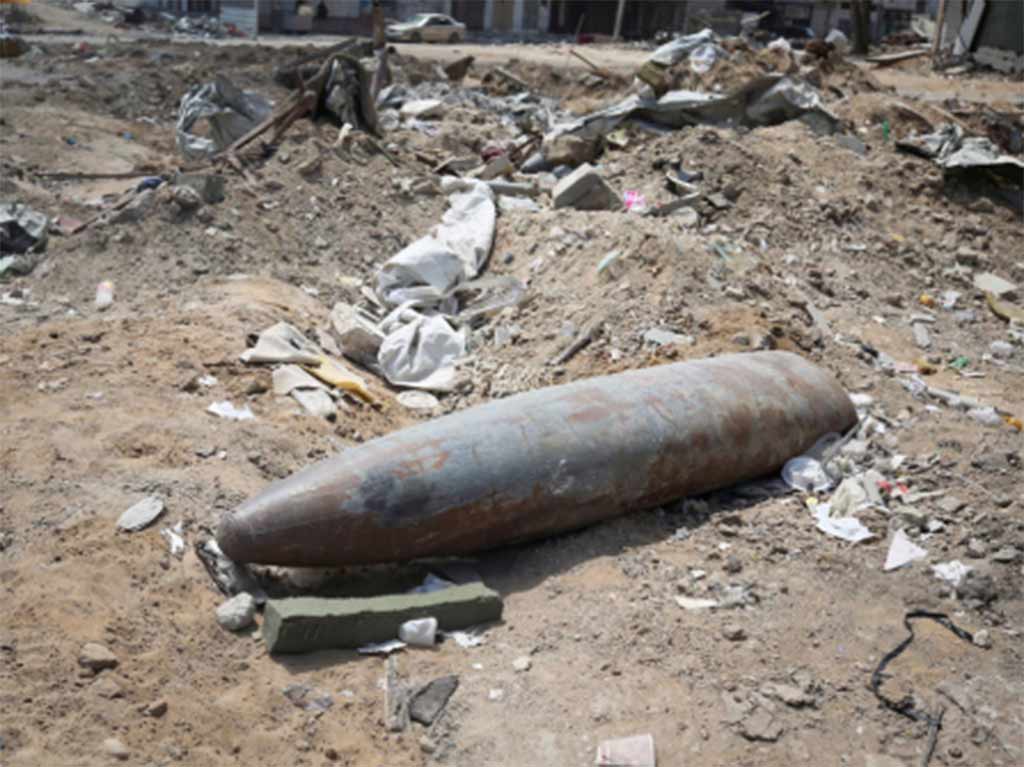
    Gaza’s Civil Defense organization has issued a formal condemnation holding international bodies, Israel, and the United States accountable for civilian casualties resulting from unexploded ordnance in the conflict-ravaged territory. The statement characterizes the failure to protect residents from explosive remnants as a direct violation of the Geneva Convention and its additional protocols.

    The organization specifically criticized the effectiveness of the US Coordination Center in Gaza, asserting that despite multiple high-level discussions, their interventions have yielded no tangible improvements on the ground. This indictment comes amid growing concerns about the lethal legacy of explosive contamination throughout the coastal enclave.

    Julius van der Walt, Chief of the United Nations Mine Action Programme in the Occupied Palestinian Territories, recently emphasized the severity of the situation. He confirmed that more than two years of intensive Israeli military operations have created widespread contamination with explosive materials throughout Gaza.

    Van der Walt further elaborated that this hazardous environment not only endangers Gaza’s inhabitants but also severely impedes humanitarian aid delivery and reconstruction efforts. The presence of unexploded ordnance transforms basic survival activities and recovery operations into potentially life-threatening endeavors, creating a complex emergency layered upon the existing humanitarian crisis.

  • Sudan: UN denounces massacre in  refugee camp

    Sudan: UN denounces massacre in refugee camp

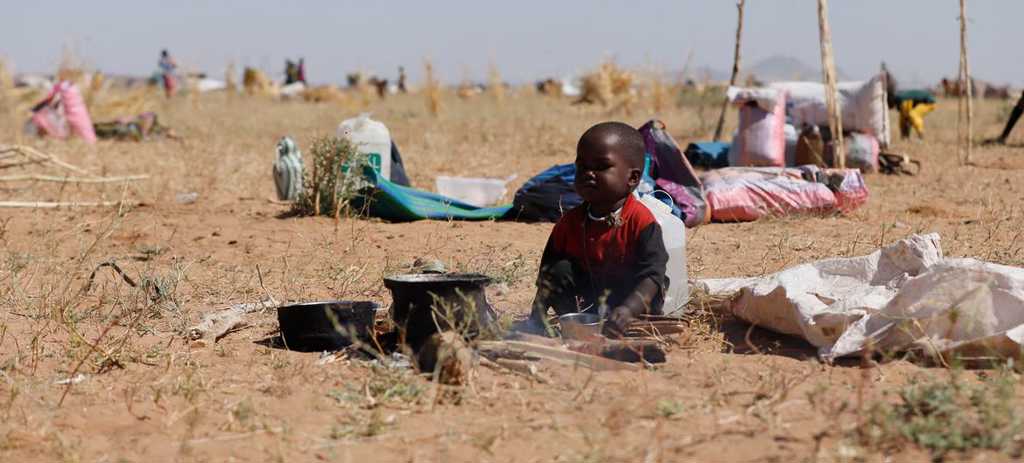
    A newly released United Nations report has documented systematic atrocities committed by the Rapid Support Forces (RSF) against the Zamzam camp for internally displaced persons in Sudan’s Darfur region. The assault occurred during the paramilitary group’s ongoing siege of El Fasher, the provincial capital of North Darfur state, marking a significant escalation in the country’s internal conflict.

    The Zamzam camp, previously recognized as Sudan’s largest sanctuary for internally displaced persons, had provided refuge to approximately 500,000 vulnerable civilians before the April offensive. The UN investigation reveals the camp became a direct target of RSF operations as fighting intensified around the strategic city of El Fasher.

    Sudan has been gripped by violent internal warfare since April 2023, when long-simmering tensions between military leadership factions erupted into open combat. The conflict primarily pits the national army under General Abdel Fattah al-Burhan against the RSF paramilitary forces commanded by General Mohamed Hamdan Dagalo. What began as a power struggle between rival military leaders has evolved into a full-scale humanitarian crisis, with the Zamzam camp attack representing one of the most severe incidents against civilian populations.

    The international body’s report provides comprehensive evidence of the RSF’s campaign against the displaced persons camp, detailing methods that violate international humanitarian law. The findings underscore the rapidly deteriorating security situation in Darfur, where civilian infrastructure and humanitarian shelters have increasingly become battlegrounds in the conflict between the two military factions.

  • Big Changes Are Coming to Belize’s Power Grid

    Big Changes Are Coming to Belize’s Power Grid

    Belize’s national energy infrastructure is poised for a comprehensive technological transformation following a landmark financing agreement between Belize Electricity Limited (BEL) and the Caribbean Development Bank (CDB). The utility company has secured a $27.53 million financing package representing the largest direct loan ever extended by CDB to the company.

    The financing arrangement, notable for being the first provided without a Belizean government guarantee, comprises a $27.2 million loan complemented by a $330,000 grant through Canada’s Supporting Resilient and Green Energy initiative. BEL will contribute an additional $7.05 million in counterpart funding to complete the financial structure.

    At the core of this initiative is the nationwide deployment of Advanced Metering Infrastructure (AMI) featuring approximately 115,000 smart meters. This technological overhaul will enable near real-time energy monitoring capabilities, remote operational functions, and enhanced loss control mechanisms across the national grid system.

    BEL Chief Executive Officer John Mencias characterized the agreement as a demonstration of institutional confidence, stating: “This represents a landmark milestone that reflects CDB’s trust in BEL’s financial stability, governance, and management practices.”

    Alexander Augustine, CDB portfolio manager, emphasized the project’s significance in developing a smarter and more climate-resilient energy grid for the Caribbean nation.

    The implementation phase has already commenced in key regions including Belize City, Ambergris Caye, and Placencia, with a comprehensive three-year timeline established for nationwide deployment of the smart grid technology.

  • T&T Has ‘No Part to Play’ in U.S. Venezuela Oil Blockade

    T&T Has ‘No Part to Play’ in U.S. Venezuela Oil Blockade

    In a definitive statement addressing the escalating tensions between the United States and Venezuela, Trinidad and Tobago’s Prime Minister Kamla Persad-Bissessar has explicitly declared her nation’s non-involvement in the proposed American blockade of sanctioned Venezuelan oil tankers. The political leader emphasized that her country’s sovereign interests would guide its decisions rather than external pressures.

    The declaration follows U.S. President Donald Trump’s Tuesday announcement authorizing a naval blockade against Venezuela, alleging President Nicolás Maduro’s administration utilizes oil revenues to fund narcotics trafficking and criminal operations. Venezuela has vehemently condemned these measures as an act of ‘resource theft’ and imperialistic aggression, accusing Washington of attempting to commandeer its national assets.

    Prime Minister Persad-Bissessar clarified that while Trinidad and Tobago maintains security cooperation with the United States, this partnership focuses exclusively on domestic crime prevention rather than international interventions. ‘My primary responsibility lies with Trinidad and Tobago’s welfare,’ she stated. ‘The United States may pursue its strategic interests, just as we will pursue ours.’

    The Prime Minister highlighted significant improvements in national security, citing a substantial reduction of 240 homicides compared to the previous year and drug interdictions exceeding $200 million in value. Regarding Venezuela’s termination of gas agreements with Trinidad, Persad-Bissessar noted the nation’s energy independence, emphasizing expanded domestic oilfield operations and ongoing collaborations with international energy firms. ‘While Venezuelan resources would be welcome, they are not essential to our economy,’ she asserted. ‘We have over a century of oil and gas production without relying on Venezuelan crude.’

    This development occurs against the backdrop of Caracas’ October suspension of gas agreements, culminating in Monday’s official termination of all energy contracts and negotiations with Trinidad and Tobago.

  • OP-ED: From Haiti to Dominica – Yves Joseph’s journey shows how labour migration fuels the Blue and Green Economy

    OP-ED: From Haiti to Dominica – Yves Joseph’s journey shows how labour migration fuels the Blue and Green Economy

    In the pre-dawn tranquility of Grange, Portsmouth, Yves Joseph tends to the fertile volcanic soil that has become his adopted home. His journey from Haiti to Dominica began not as a migration plan but as a 2006 visit to follow his Dominican wife, whom he met while studying agriculture in Cuba. What began as a personal pilgrimage evolved into a nearly two-decade contribution to Dominica’s agricultural sector, embodying the transformative potential of migrant integration.

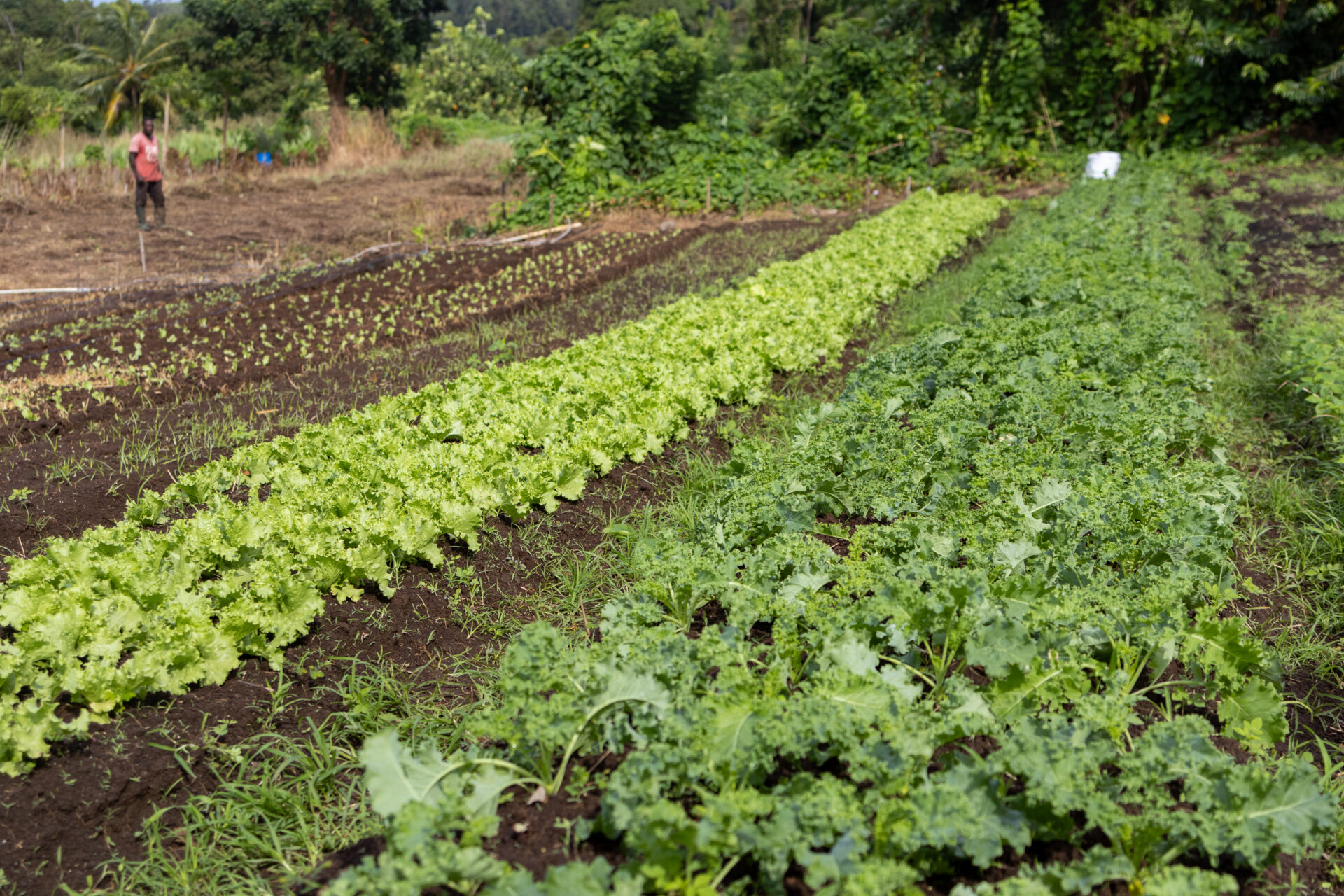
    Yves’ farm, Joseph’s Best Eco Produce, stands as a testament to disciplined land stewardship and agricultural expertise. Operating one of the island’s most productive vegetable farms, he supplies supermarkets, restaurants, and direct consumers across Portsmouth and Roseau with diverse crops including lettuce, kale, carrots, cucumbers, cabbage, peppers, and herbs. Despite consistent market demand for fresh local produce, Yves faces Dominica’s critical agricultural labor shortage that threatens national food production.

    “I have land. I have water. I have fertile soil. I have the knowledge and willingness to produce,” Yves states. “But I need labourers.” This shortage forces continued reliance on imported vegetables despite Dominica’s rich agricultural potential.

    Migrant workers, particularly from Haitian communities, have provided foundational support to Dominica’s food systems for decades. Beyond filling labor gaps, they introduce innovation, enhance quality standards, and create new markets. Yves exemplifies this contribution through his technical expertise gained in Cuba, implementing advanced water supply systems, soil health management, crop rotation techniques, and sustainable apiculture.

    His beekeeping operation represents more than secondary income—it’s a vital ecological component. “Bees are life,” Yves emphasizes. “If we do not have bees, we will die.” His bees enhance farm productivity through pollination while producing world-class honey recognized for its purity, medicinal properties, and unique flavors derived from Dominica’s biodiversity. This apiculture work opens doors to agro-tourism, high-value exports, natural product development, and rural employment opportunities.

    The human narrative behind this agricultural contribution reveals deeper dimensions. Yves found acceptance in Dominica that many migrants worldwide still seek. “Dominica accepted me,” he recalls. “I embraced her as my second home.” In return, he has contributed nearly twenty years as a farmer, worker, taxpayer, community member, and now Dominican citizen.

    His story reflects broader Caribbean experiences where migration drives development rather than threatening it. As Dominica advances its Blue and Green Economy vision, labor migration must transition from peripheral concern to strategic priority. The proposed creation of an agricultural labor migration hub would connect farmers with skilled workers, increase public understanding of migrant contributions, inspire youth agricultural careers, foster local-migrant collaboration, support agro-processing innovation, and strengthen national food security.

    On International Migrants Day 2025, Yves Joseph’s journey demonstrates what becomes possible when migrants are welcomed, included, and empowered: strengthened agricultural sectors, enhanced food security, sustainable production methods, and new entrepreneurial pathways. His farm represents not just land cultivation but a hub of hope, proving migration represents not burden but bloom—the very growth Dominica needs to thrive.

    Yves seeks not charity but opportunity—to feed Dominica with what Dominica can grow. His story reframes labor migration from crisis to opportunity, reminding us that migrants don’t just arrive in countries; they help nurture them. The future of healthier food, thriving farms, and progress in sustainable economies depends on embracing those ready to build it.

  • Syria welcomes final lifting of US sanctions

    Syria welcomes final lifting of US sanctions

    The Syrian Ministry of Foreign Affairs has formally welcomed recent United States decisions to ease economic sanctions, characterizing the move as a pivotal development for the nation’s future. In an official statement released Wednesday, the Ministry described the policy shift as a critical measure that will substantially reduce humanitarian pressures on Syrian civilians and establish foundations for economic recovery and long-term stability.

    Damascus extended diplomatic gratitude toward the United States government, while simultaneously acknowledging supportive Arab nations and international partners. The statement specifically recognized these countries’ diplomatic efforts in advocating for sanctions relief, noting their contributions to regional security objectives and respect for Syrian sovereignty.

    Furthermore, the Foreign Ministry paid tribute to Syrian citizens both domestically and within the diaspora community for their resilience in defending national dignity. Their persistent advocacy in international forums was credited with highlighting humanitarian needs and bringing legitimate grievances to global attention.

    The government framed the sanctions easing as an inaugural step toward large-scale reconstruction and economic development. Syrian authorities issued a renewed call for national unity, urging all expatriates and domestic citizens to collaborate in rebuilding efforts.

    Concurrently, Damascus invited investment from allied nations and encouraged Syrian business leaders to evaluate emerging opportunities within the reconstruction landscape. The statement positioned current developments as creating favorable conditions for international partnerships and economic revitalization.

  • Haiti: gang attack on public transportation condemned

    Haiti: gang attack on public transportation condemned

    Haiti’s Arcahaie commune faced severe disruption as the Viv Ansanm gang coalition brought normal activities to a complete standstill. According to reports from Haiti Libre, the Haitian National Police intervened decisively, neutralizing six gang members during intense armed confrontations.

    Local media investigations reveal these criminal elements have waged a systematic campaign against critical infrastructure since 2014. Their targets have included the strategic port facility, educational institutions ranging from schools to universities, and multiple police stations and prison complexes. Government buildings have not been spared, with attacks documented against ministries, bank branches, and the historically significant National Printing Office established in 1804.

    The gang’s destructive reach extended to economic assets, including the arson attack on a massive 96,000-square-meter warehouse within the free trade zone. Civilian and religious targets suffered similarly, with assaults on private vehicles, a religious seminary, and Haiti’s inaugural Baptist church—an institution serving the community for over 180 years. More than a dozen pharmacies also fell victim to these attacks.

    In April 2024, the gang demonstrated their escalating boldness by burning down the residence of Frantz Elbé, then serving as commander-in-chief of the Haitian National Police. The group’s notoriety reached alarming new heights when they opened fire on a Spirit Airlines aircraft during its landing procedure. This attack forced the plane to make an emergency landing in the Dominican Republic, resulting in injuries to a flight attendant and highlighting the gang’s capacity to threaten aviation security.

  • Chilean lawmakers slam granting president power to dissolve Congress

    Chilean lawmakers slam granting president power to dissolve Congress

    Chile’s political landscape has been plunged into turmoil following the introduction of controversial legislation that opponents claim threatens the nation’s democratic foundations. The proposed bill, put forward by independent lawmaker Gaspar Rivas—a former member of the conservative People’s Party—would grant the president unprecedented authority to dissolve Parliament under specific circumstances.

    The legislation stipulates that if Parliament either rejects a presidential message or introduces modifications that substantially alter its core intent, the president would obtain the power to dissolve the legislative body. Following such dissolution, the president would be authorized to govern exclusively by decree with the force of law for a period of up to six months, effectively bypassing traditional legislative oversight.

    This proposal has triggered immediate and widespread condemnation across Chile’s political spectrum. Legislator Lorena Fries of the left-leaning Broad Front (Frente Amplio-FA) characterized the initiative as marking ‘the beginning of the erosion of democracy and the Rule of Law,’ warning that it opens ‘a dangerous path’ by undermining essential checks and balances between governmental branches.

    Fries emphasized that the proposal fundamentally disrupts one of the foundational pillars of Chile’s political system—the existence of three independent branches of government with mutual controls. Her concerns were echoed by fellow FA lawmaker Emilia Schneider, who declared the initiative ‘extremely serious’ and cautioned that its approval ‘would imply a great deterioration for democracy’ that Chile neither needs nor deserves.

    The legislation has generated unusual unity in opposition, drawing criticism from political parties representing diverse ideological positions who share concerns about the potential concentration of executive power and the erosion of democratic safeguards.