
In Santo Domingo, the Dominican Republic faces significant challenges in enforcing the Law on Comprehensive Management and Co-processing of Solid Waste (Law No. 225-20), despite its October 2, 2025, deadline for compliance. Many businesses continue to distribute plastic bags for free, directly violating the regulation. The law also bans the use of expanded polystyrene (foam) containers for food and beverages, mandating a shift to sustainable alternatives within five years. However, most supermarkets, grocery stores, and retail outlets have yet to meet this requirement. Article 172 of the law emphasizes the transition to reusable or biodegradable bags to combat environmental pollution, foster responsible consumption, and align with the Sustainable Development Goals (SDGs). Producers are required to participate in extended responsibility programs and use oxodegradable or biodegradable materials, while businesses must provide recyclable, eco-efficient bags with environmental awareness messaging. The Ministry of Environment and Natural Resources is tasked with conducting annual evaluations to ensure compliance. Lawmakers have debated extending the deadline by another five years to accommodate small and medium-sized businesses, but President Luis Abinader rejected the proposal, supporting industrial and environmental groups advocating for strict enforcement. Although the Senate announced plans to review a modified proposal, progress remains stalled. Environmental organizations are urging immediate sanctions and stronger policies to curb single-use plastics and ensure adherence to the law.
作者: admin
-

iciHaiti – Chile : AGCID South-South Cooperation Scholarships, registrations open
The Haitian Ministry of Foreign Affairs has officially announced the opening of applications for the 2026 South-South Cooperation Scholarship Program, facilitated by the Chilean Agency for International Development Cooperation (AGCID). This initiative aims to bolster human capital development by enabling professionals from Latin America and the Caribbean to pursue master’s degrees at Chilean universities. The program underscores Chile’s commitment to fostering educational and professional growth across the region. Applicants must meet several requirements, including securing a letter of admission from a Chilean university, providing a validated medical certificate, submitting a detailed curriculum vitae, and crafting a compelling cover letter. Additionally, candidates must present a brief description of their intended field of study and thesis topic, a Spanish language certificate, and an academic letter of recommendation. Interested individuals are encouraged to reach out to Ms. Katherine Oliveri Astorga, Head of Studies in Chile, for further details. Applications must be submitted electronically to both the Ministry of Planning and External Cooperation (Focal Point) and the Embassy of Chile in Haiti by October 30, 2025, at 1:00 p.m. Successful candidates will be notified in November 2025, with courses commencing between March 1 and September 30, 2026. For more information and to apply, visit the official AGCID website.
-

FTC faces ultimatum over power rate documents
The Fair Trading Commission (FTC) of Barbados is under pressure to reverse its decision not to compel the Barbados Light and Power Company (BLPC) to release critical financial documents, or face potential legal action from consumer advocates. This standoff follows a series of exchanges between FTC counsel Alrick Scott and senior counsel for the intervenors, Hallop. In a recent letter, Scott reiterated the FTC’s stance, asserting that there is no statutory obligation to mandate the release of the requested reports. He emphasized that the Utilities Regulations Act applies only during active rate review proceedings, which the FTC claims have concluded. Gollop, representing intervenor Ricky Went, countered that the proceedings are not closed and warned that legal action could be pursued if the FTC does not comply within seven days. The intervenors are demanding access to several key documents, including audited financial reports and compliance filings, which they argue are essential for transparency and accountability. The FTC maintains that any further discovery should be handled through the High Court, where BLPC’s rate review decision is currently under appeal. The outcome of this dispute could set a significant precedent for regulatory transparency and consumer rights in Barbados.
-
Guyana joins Early Warning System to tackle “new psychoactive substances”
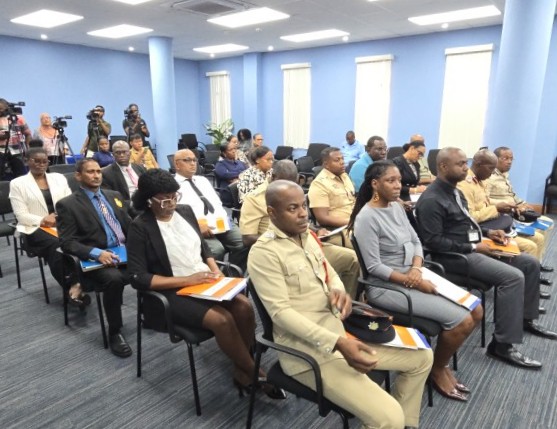
Guyana has taken a significant step in the fight against New Psychoactive Substances (NPS) by launching its Early Warning System (EWS) on Thursday, October 9, 2025. The initiative, spearheaded by Curt Richards, Head of the Guyana Drug Information Network (GUYDIN), aims to intercept and reduce the use of these synthetic drugs, which mimic traditional narcotics like marijuana and cocaine but often evade legal classification and detection. The EWS will connect law enforcement, health, and forensic sectors in real time, enabling rapid information sharing and proactive measures to prevent the spread of these substances. James Singh, Head of the Customs Anti-Narcotics Unit (CANU), emphasized that the system is designed to anticipate and prevent harm rather than react after the fact. The EWS aligns with international best practices and involves collaboration with the Ministry of Home Affairs, the Guyana Forensic Sciences Laboratory, the Ministry of Health, and international partners such as the Organisation of American States’ Inter-American Drug Abuse Control Commission (CICAD) and Italy. Pernell Clarke, a CICAD Specialist, highlighted the evolving nature of the Caribbean’s drug trade, noting the increasing presence of synthetic drugs like fentanyl, which are often mixed with other substances, leading to overdoses and deaths. Guyana’s EWS launch follows similar initiatives in six other Caribbean countries, including Barbados and Jamaica, where synthetic drugs have already caused significant public health issues. The government of Guyana has pledged to sustain the EWS as a permanent tool for national safety and regional cooperation.
-

Caribbean Airlines Cancels Regional Flights for October 10 Due to Tropical Storm Jerry
Caribbean Airlines has announced significant schedule changes to its regional flights due to the adverse weather conditions caused by Tropical Storm Jerry. The airline issued a travel advisory on October 9, 2025, alerting passengers to disruptions expected on October 10. Affected customers with confirmed bookings can rebook their flights without incurring change fees, provided the rebooking is done in the same cabin and completed by November 6, 2025. All changes must be processed through the Caribbean Airlines Call Centre or at a Caribbean Airlines Ticket Office. However, the airline has clarified that it will not cover transportation costs to alternate airports or hotel expenses for affected passengers. Specific flights, including BW 266 (Trinidad to St. Maarten), BW 267 (St. Maarten to Trinidad), BW 268 (Trinidad to Antigua to St. Kitts), and BW 269 (St. Kitts to Antigua to Trinidad), have been canceled. Passengers on these routes will be accommodated on the next available services. Caribbean Airlines encourages travelers to register for real-time flight notifications and updates via their website or check the flight status tab on the homepage for the latest information.
-

Kind overlijdt na familiedrama aan de Cocobiacoweg
A harrowing family tragedy unfolded on Thursday evening around 8:48 PM on Cocobiacoweg, leaving a community in shock. Authorities received an urgent report of a man allegedly assaulting his wife and children while armed with a knife. Upon arrival, police officers and emergency medical personnel encountered a devastating scene. A one-year-old infant had sustained stab wounds and, despite immediate medical intervention, succumbed to the injuries. The suspect, identified as the child’s father, was apprehended at the scene. The mother and any other potential victims were swiftly attended to by emergency services. In response to the incident, relevant agencies, including Youth Care and Victim Support, were promptly mobilized. Law enforcement officials have launched a comprehensive investigation to determine the circumstances surrounding this heartbreaking event.
-

U.S makes request to install radar equipment and send personnel to Grenada
The Ministry of Foreign Affairs, Trade and Export Development of Grenada has officially acknowledged a request from the United States government for the temporary installation of radar equipment and deployment of associated technical personnel at the Maurice Bishop International Airport (MBIA). The request is currently under meticulous review by the Ministries of National Security, Legal Affairs, and Foreign Affairs, in collaboration with the Grenada Airports Authority and other pertinent agencies. The Government of Grenada emphasizes that any decision will be made in strict adherence to national protocols, ensuring thorough technical and legal evaluations are completed. Authorities have reassured the public that the decision-making process will prioritize Grenada’s sovereignty, public safety, and national interests, including safeguarding the tourism industry, the traveling public, and the country’s economic stability. The review process underscores Grenada’s commitment to balancing international cooperation with the protection of its national interests.
-

Raquel Peña presents Augusto Taveras with the 2025 Oscar de la Renta Emigrant Award
Santo Domingo – In a prestigious ceremony at the National Theater, Vice President Raquel Peña presided over the 2025 Dominican Emigrant Award, named in honor of the late fashion icon Mr. Oscar de la Renta. The event, organized by the Ministry of Foreign Affairs (MIREX), celebrated the remarkable contributions of Dominicans abroad, with this year’s top accolade awarded to Augusto Taveras, founder of the Rancheros Unidos Foundation in New York. Taveras was recognized for his extraordinary social work, which has profoundly impacted hundreds of families in Los Ranchos de Babosico, Santiago de los Caballeros.
Through his foundation, Taveras has constructed and donated over 500 fully equipped homes, established schools, sports facilities, and health centers, and supported scholarship and medical programs in collaboration with local institutions. In her address, Vice President Peña lauded the dedication of Dominicans overseas, emphasizing that their achievements embody ‘the heart of an entire nation.’
Foreign Minister Roberto Álvarez underscored the importance of protecting Dominicans abroad as a cornerstone of President Luis Abinader’s foreign policy. María Alejandra Castillo, MIREX’s director of Specialized Diplomacy, added that true legacy is measured ‘in touched lives and shared hope.’ Alongside the award, Taveras received a cash prize of one million pesos, sponsored by Banreservas.
The seventh edition of the event also honored nine other Dominicans from Canada, the United States, Spain, and Scotland for their excellence in fields such as psychology, medicine, education, technology, and community leadership. The selection committee, chaired by Haydee Rainieri with José Luis ‘Pepín’ Corripio as permanent advisor, highlighted the global impact of Dominican emigrants.
The ceremony brought together government officials, diplomats, business leaders, and cultural figures, culminating in Vice President Peña’s closing remarks, where she described Dominican emigrants as ‘ambassadors of the best of our nation,’ embodying the spirit and values of the Dominican Republic worldwide.
-

QUESTION: Should Owners Be Charged After Dog Attacks?
In the wake of a vicious dog attack that left 27-year-old Shabu Nedwell with severe injuries, Antigua and Barbuda finds itself embroiled in a heated debate over accountability. The incident, involving pitbulls, has reignited discussions on whether the dogs’ owner should face criminal charges or if the focus should shift to euthanizing dangerous dogs to prevent future tragedies. The central question remains: Who is to blame—the dogs, their owner, or the system that permits such incidents to recur? This tragic event has sparked widespread concern among citizens, prompting calls for stricter regulations and enforcement to ensure public safety. As the nation grapples with these complex issues, the broader conversation about responsible pet ownership and animal control measures continues to gain momentum. The case serves as a stark reminder of the potential dangers posed by inadequately managed aggressive animals and the urgent need for comprehensive legal and societal reforms.
-
Jerry is passing just east of Barbuda this evening
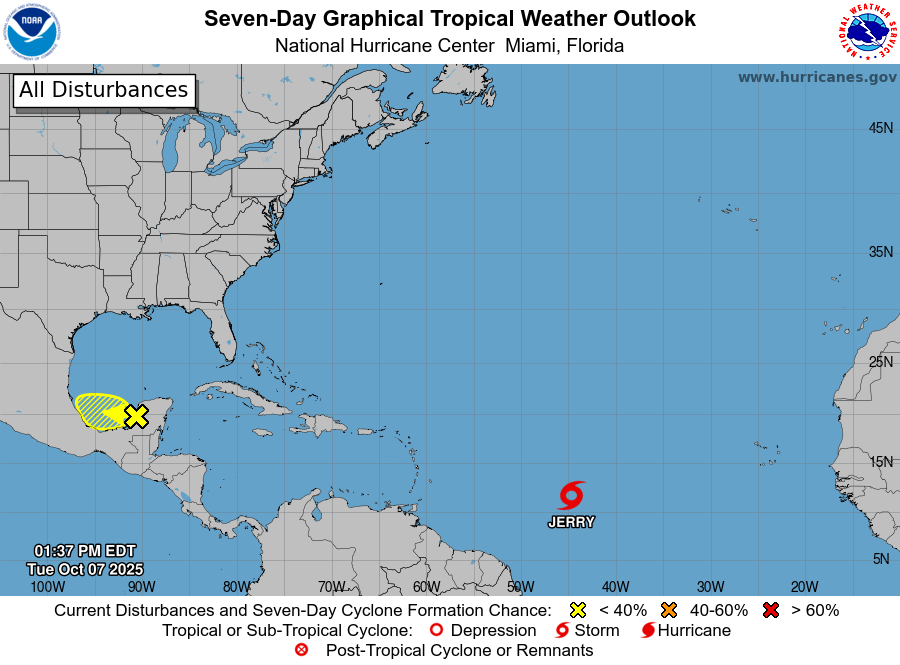
Tropical Storm Jerry continued its west-northwest trajectory on Thursday evening, passing just east of Barbuda and posing significant threats to the northern Leeward Islands. The storm, with maximum sustained winds nearing 65 mph (100 km/h), brought heavy rainfall and strong winds to the region. According to the National Hurricane Center, the storm’s center was located near latitude 17.5 North and longitude 61.1 West, approximately 45 miles (75 kilometers) east of Barbuda, as of 8 p.m. Tropical storm-force winds extended up to 175 miles (280 kilometers) from the center, affecting a wide area. Tropical Storm Warnings remain active for Barbuda, Anguilla, St. Barthelemy, St. Martin, Sint Maarten, Guadeloupe, and nearby islands. A Tropical Storm Watch has also been issued for Antigua, St. Kitts, Nevis, Montserrat, Saba, and St. Eustatius. Forecasters predict that Jerry will turn northwest later tonight, with a slightly slower northward motion expected on Friday and Saturday. The storm is anticipated to bring 4 to 6 inches of rain to Barbuda and 2 to 4 inches to other parts of the Leewards, increasing the risk of flash flooding in low-lying and mountainous areas. Additionally, swells generated by the storm are creating dangerous surf and rip current conditions across the Leeward and Virgin Islands, with similar conditions expected to reach the Greater Antilles in the coming days. Residents and authorities are urged to remain vigilant and take necessary precautions to mitigate the storm’s impact.