Haiti witnessed a series of significant events this week, reflecting the nation’s multifaceted challenges and achievements. On October 9th, two armored vehicles belonging to the Bank of the Republic of Haiti (BRH) were targeted by heavily armed individuals at Champ-de-Mars. One vehicle carried soldiers from the Haitian Armed Forces (FAD’H), while the other was unoccupied. Fortunately, no injuries were reported in the attack. Meanwhile, in Delmas, Mayor Wilson Jeudy unveiled the municipal budget for the 2025-2026 fiscal year, projecting a record one billion gourdes. This marks a substantial increase from the previous year’s 800 million gourdes, aimed at enhancing the municipality’s investment capacity. On a brighter note, Prime Minister Alix Didier Fils-Aimé praised the Haitian national football team, the Grenadiers, for their 3-0 victory against Nicaragua in the 2026 World Cup qualifiers, expressing national pride in their performance. However, security concerns persist, as eight armored vehicles sent by the Haitian National Police (PNH) to Petite-Rivière de l’Artibonite were blocked by protesters demanding action against the ‘Gran Grif’ gang. In a separate development, the French Institute in Haiti is hosting the ‘Wild Haiti’ exhibition, showcasing the country’s rich biodiversity. Internationally, U.S. President Trump signed an executive order imposing a $5,000 fine for each illegal alien aged 14 or older detained, with no possibility of appeal.
作者: admin
-
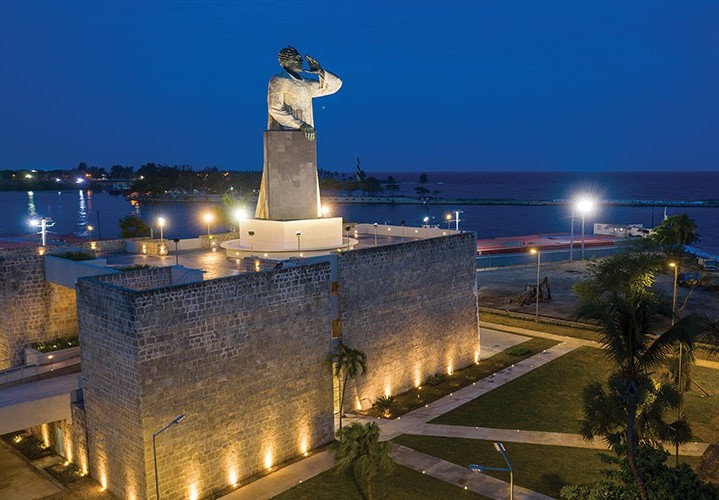
Parlacen honors Fray Antonio de Montesinos for defense of Indigenous rights
In a significant historical tribute, the Commission on Indigenous and Afro-descendant Peoples of Parlacen commemorated Fray Antonio de Montesinos (1475-1540), a Spanish Dominican missionary renowned for his groundbreaking 1511 Advent sermon. Delivered merely nineteen years after the discovery of the Americas, Montesinos’ sermon was a bold denunciation of the mistreatment of indigenous peoples on Hispaniola, advocating for their rights and dignity. His powerful message condemned the abuses of Spanish colonizers and called for adherence to principles of charity, justice, and Christian law in interactions with the native population. Montesinos’ advocacy played a pivotal role in shaping the Laws of Burgos (1512), enacted by King Ferdinand “The Catholic,” which aimed to regulate the treatment of indigenous peoples. His influence also extended to inspiring Bartolomé de las Casas, a fellow Dominican and lifelong defender of indigenous rights. The tribute took place at the Montesinos monument in Santo Domingo, a site inaugurated in 1983 and now a prominent tourist attraction. Angola Didiez, president of the Parlacen commission, led the event, emphasizing Montesinos as a historic figure who “marked a before and after” in the fight for human dignity.
-

Major supermarkets reaffirm Bajan-made sugar supply
Two prominent Barbadian supermarket chains, Massy Stores (Barbados) Ltd and Jordans Supermarket, have refuted claims by Minister of Agriculture Indar Weir that excessive sugar imports are harming the local sugar industry. Both retailers confirmed on Thursday that their shelves are stocked exclusively with domestically produced and packaged sugar, emphasizing their commitment to supporting local producers.
-
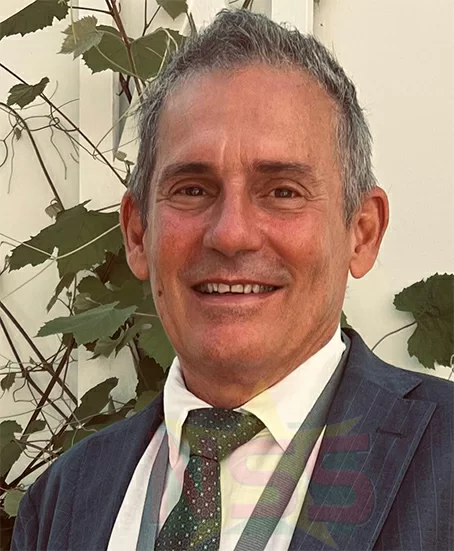
Rudolf Elias: Zonder plan wordt olie een vloek, geen zegen
Rudolf Elias, the former Managing Director of Staatsolie Maatschappij Suriname N.V., has been appointed as the President-Commissioner of the state-owned company. In an interview with Starnieuws, Elias expressed his enthusiasm for contributing once again to Suriname’s future. He emphasized that without a solid plan, oil—and even more oil—could become a curse rather than a blessing. “We must collectively advocate for a well-thought-out strategy,” he stated. Elias highlighted the importance of a broad societal discussion and a robust roadmap to counteract the so-called ‘oil curse,’ citing examples from Venezuela, Nigeria, and Guyana. He warned that without proper planning, 80% of Suriname’s population could face increasing poverty rather than prosperity. Alongside Elias, Sergio Akiemboto (Chief of Staff at the President’s Office), Aroon Samjhawan, Ewald Poetisi, Rudie Chin Jen Sem, Chantal Doekhie, and Edgar Caffé have been appointed to the new Board of Commissioners of Staatsolie. Elias served as Managing Director from 2015 to 2020, during which Suriname made its first significant offshore oil discoveries. Under his leadership, the company charted a strategic course towards participation in offshore projects and the enhancement of local content in the oil industry. Since leaving Staatsolie, Elias has remained active as an entrepreneur, consultant, and speaker on sustainable development and energy policy. Over the years, he has been a strong advocate for transparency, good governance, and long-term planning in the energy sector. His return as President-Commissioner is seen within the industry as a step towards strengthening policy, oversight, and continuity in the strategic development of the company.
-

SSA ‘wildcat strike’ prompts workers, management to review incentive scheme
Tensions between workers and management at the Sanitation Service Authority (SSA) in Barbados are being urgently addressed following a recent wildcat strike that disrupted refuse collection services across the island. The dispute centers around a performance incentive scheme tied to specific operational goals, which workers claim has been unfairly implemented. Discussions, currently at a sensitive stage, aim to determine whether changes to the scheme are necessary. A source close to the talks revealed that the industrial action was prompted by dissatisfaction with the payments made under the scheme, despite targets not being met. In July, refuse collectors protested the amounts paid and other working conditions, leading to a stoppage that left collection vehicles idle and raised concerns about service disruptions. The performance allowance was paid even though only 34% of the targets were achieved, a decision management described as a gesture of good faith. Workers also raised issues regarding personal protective equipment (PPE) and back pay. A follow-up meeting between the SSA and the National Union of Public Workers (NUPW) has taken place, with both parties working to ensure alignment before the next payment cycle. SSA spokesman Carl Padmore confirmed the strike was in response to the incentive payments, emphasizing the scheme’s intent to motivate staff through clearly defined targets. While progress is being made, the situation remains delicate as both sides strive for a resolution.
-
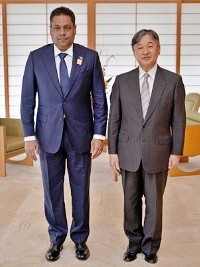
Diplomacy : Laurent Saint Cyr met with Emperor Naruhito of Japan
In a significant diplomatic engagement, Laurent Saint Cyr, President Pro Tempore and Coordinator of Haiti’s Transition Council, held pivotal meetings with Japanese Prime Minister Shigeru Ishiba and Emperor Naruhito during his official visit to Japan. The discussions with Prime Minister Ishiba centered on the current economic landscape and mutual interests, with Saint Cyr emphasizing Japan’s support for the deployment of the Gang Suppression Force (GSF) following its approval by the United Nations Security Council. Prime Minister Ishiba reaffirmed Japan’s longstanding commitment to Haiti, highlighting decades of assistance, particularly after the devastating 2010 earthquake and through funding for the Multinational Security Support Mission. He expressed a keen interest in bolstering Haiti’s military capabilities and reiterated Japan’s dedication to fostering stability, peace, and security in the Caribbean nation. Saint Cyr, in turn, underscored the Transitional Council’s determination to restore security with international support, paving the way for timely elections. Additionally, Saint Cyr was granted an audience with Emperor Naruhito at the Tokyo Imperial Palace on October 8, 2025. This cordial meeting reinforced the enduring friendship and cooperative ties between Haiti and Japan, focusing on shared interests and mutual respect.
-
Het is niet het volk dat faalt, maar de politiek
For generations, the stereotype that ‘Surinamers are lazy’ has been deeply ingrained in the collective consciousness. In recent years, another cliché has emerged: ‘Surinamers avoid entrepreneurship and prefer government jobs.’ However, it is time to challenge these narratives and recognize that the root of Suriname’s stagnation lies not with its people but with successive governments since 1975. Politicians often campaign on promises of fostering entrepreneurship, yet their actions frequently contradict these pledges. Behind the scenes, small and emerging businesses are discouraged or even dismantled to protect the interests of party sponsors and influential capitalists. What is most troubling is that the supporters of these political parties are often ordinary citizens—economically vulnerable and dependent individuals who may not fully grasp how their leaders systematically oppress them, sometimes even fueling division and racial tensions. As a society, we remain fixated on ethnic and political differences rather than addressing the true causes of our stagnation. If Suriname is to achieve genuine progress, its people—regardless of political affiliation, ethnicity, or religion—must hold their leaders accountable. Only by demanding responsibility for their policies and choices can we build a fairer and more prosperous Suriname. Sranan sa wini!
-
Economy : Adoption of a budget of 345 billion (2025-2026)
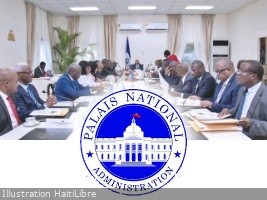
In a significant move toward economic recovery and state restoration, Haiti’s Council of Ministers convened an extraordinary meeting on October 9, 2025, at the National Palace in Port-au-Prince. This marked a symbolic return to the premises, which had been under the control of criminal gangs since January 2024. The meeting, chaired by Presidential Advisor Leslie Voltaire and attended by Prime Minister Alix Didier Bien Aimé, resulted in the adoption of a 345 billion gourdes budget for the 2025-2026 fiscal year. The budget, developed in collaboration with the Ministry of Economy and Finance (MEF) and the Ministry of Planning and External Cooperation, underscores the government’s commitment to restoring public security, organizing democratic elections, stabilizing macroeconomic indicators, and improving living conditions. Notably, 70% of the budget will be financed through tax and customs revenues, with no new tax measures introduced. Sectoral priorities include significant allocations for salaries (35%), public security and elections (16%), and education (15%). The government also emphasized support for local production, protection of investments, and adjustments to the General Tax Code. Despite reports of gunfire near the palace during the meeting, officials denied any disruption, affirming the council’s focus on advancing Haiti’s strategic priorities.
-
QEH cancer machine faces fresh setback
Cancer patients and advocates in Barbados are grappling with heightened distress and uncertainty as the commissioning of a state-of-the-art radiotherapy machine at the Queen Elizabeth Hospital (QEH) faces yet another delay, now pushed to the end of November. The postponement has exacerbated concerns over access to life-saving treatments, particularly amid a lack of official communication. Vincent Yearwood, Interim Coordinator of the Men’s Cancer Support Group, expressed frustration, noting that the $10-million linear accelerator, crucial for high-precision radiation therapy, remains non-operational despite being delivered to Barbados last year. Yearwood revealed that at least one patient has been forced to seek treatment in Trinidad, underscoring the ongoing challenges faced by those in urgent need. QEH spokesman Shane Sealy attributed the latest delay to construction adjustments, citing a two-millimeter floor discrepancy that required correction to meet the machine’s exacting specifications. While the adjustments have been completed, the installation is now slated for completion by late November. The delay has drawn sharp criticism from Deputy Prime Minister Santia Bradshaw, a breast cancer survivor, who emphasized the urgency of the situation during a parliamentary debate. Bradshaw lamented the loss of lives due to the delay, urging health authorities to expedite the process. Health Minister Davidson Ishmael acknowledged the setbacks, attributing them to the complexities of constructing a specialized facility for the radiation equipment. Meanwhile, the Barbados Cancer Society has raised alarms over the rising incidence of colon cancer, with prostate cancer remaining the most prevalent and aggressive form among men in the country.
-

FLASH : Council of Ministers abandon the project of a new Constitution
In a significant political development, Haiti’s extraordinary Council of Ministers, led by Transitional Presidential Advisor Leslie Voltaire and attended by Prime Minister Alix Didier Fils Aimé, announced on October 9, 2025, the abandonment of the proposed new Constitution. This decision marks a pivotal shift in the nation’s governance strategy. To facilitate this change, the Council repealed four key laws: the Decree of July 17, 2024, which established the Steering Committee of the National Conference; the Orders of July 24 and September 2, 2024, which appointed and supplemented the Steering Committee members; the Order of September 18, 2024, which appointed members of the Provisional Electoral Council (CEP) and set their terms of office; and the Referendum Decree of June 24, 2025. These actions underscore the Transitional Executive’s commitment to fostering institutional, political, and legal frameworks that support free, inclusive, and credible general elections, aligning with the principles of the amended 1987 Constitution.