作者: admin

  • US-Venezuela tensions, price hike on drinks, smokes: Hard times for Carnival

    US-Venezuela tensions, price hike on drinks, smokes: Hard times for Carnival

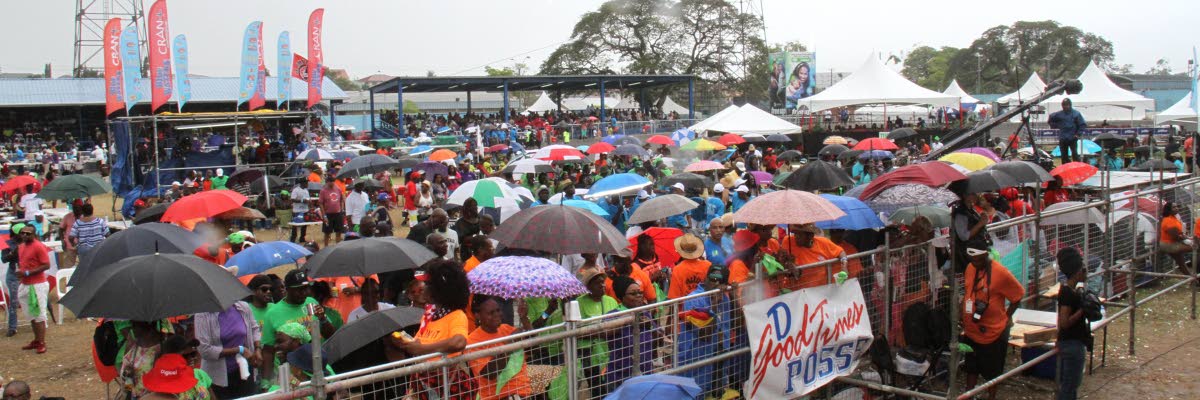
    As the Christmas season concludes, Trinidad and Tobago prepares for its iconic Carnival 2026 amidst unprecedented challenges that threaten to diminish its traditional scale and vibrancy. The festival, typically a burst of cultural celebration, confronts a perfect storm of economic pressures and international tensions that cast uncertainty over its execution.

    The Trinidad Carnival Bands Association (TTCBA) maintains that preparations are proceeding with determination. President Mark Ayen confirmed that construction of essential infrastructure like the North Stand and main stages is underway, while pan events have already seen successful runs. Despite acknowledging geopolitical concerns, Ayen emphasized that the organization is moving forward based on available information, noting continued inquiries about the event.

    A significant financial burden has emerged from the government’s recent budget measures. Finance Minister Davendranath Tancoo announced a doubling of duties on alcohol and tobacco, substantially raising costs for band operators. Petle Claverie, leader of medium-sized band Petle Mas, explained that bands face unavoidable financial strain since costume prices were set months before the tax announcement. This leaves bands with no choice but to absorb these unexpected costs rather than passing them to consumers.

    Claverie detailed how bands are implementing mitigation strategies, including considering more economical beverage brands and tighter management of road drink distribution. He noted that medium and small bands are particularly vulnerable to these market shocks due to limited sponsor support compared to larger competitors.

    The geopolitical tension between Venezuela and the United States presents another concern. While Claverie’s band reports no cancellations from its primarily local membership with foreign participants connected through family networks, he expressed worry about last-minute international travelers who might opt for alternative carnivals in Miami or other global locations that have adopted Trinidad’s Carnival model.

    Adding to the challenges, bandleader Leo Lakhan of Antourage Productions revealed a 20% decrease in registrations compared to typical years, attributing this decline to economic pressures and newly emerging customs delays for imported materials. Despite these obstacles, Lakhan joined cultural advocates in calling for national participation, emphasizing that Carnival remains an essential part of Trinidad’s cultural identity that deserves preservation through current difficulties.

    Contrasting with these concerns, Minister of Culture and Community Development Michelle Benjamin has publicly predicted Carnival 2026 will be a bumper season, creating a divergence between official optimism and grassroots realities facing band operators and participants.

  • Some residents not affected by parties: Xperience moves to Skinner Park

    Some residents not affected by parties: Xperience moves to Skinner Park

    Trinidad and Tobago’s Carnival 2026 preparations have encountered significant logistical challenges following the government’s abrupt prohibition of entertainment events at major venues. Prime Minister Kamla Persad-Bissessar announced on November 12 an immediate ban on fetes at Brian Lara Cricket Academy, citing noise pollution concerns raised by neighboring communities. The administration subsequently extended restrictions to Hasely Crawford Stadium and Jean Pierre Complex, compelling event organizers to urgently seek alternative locations.

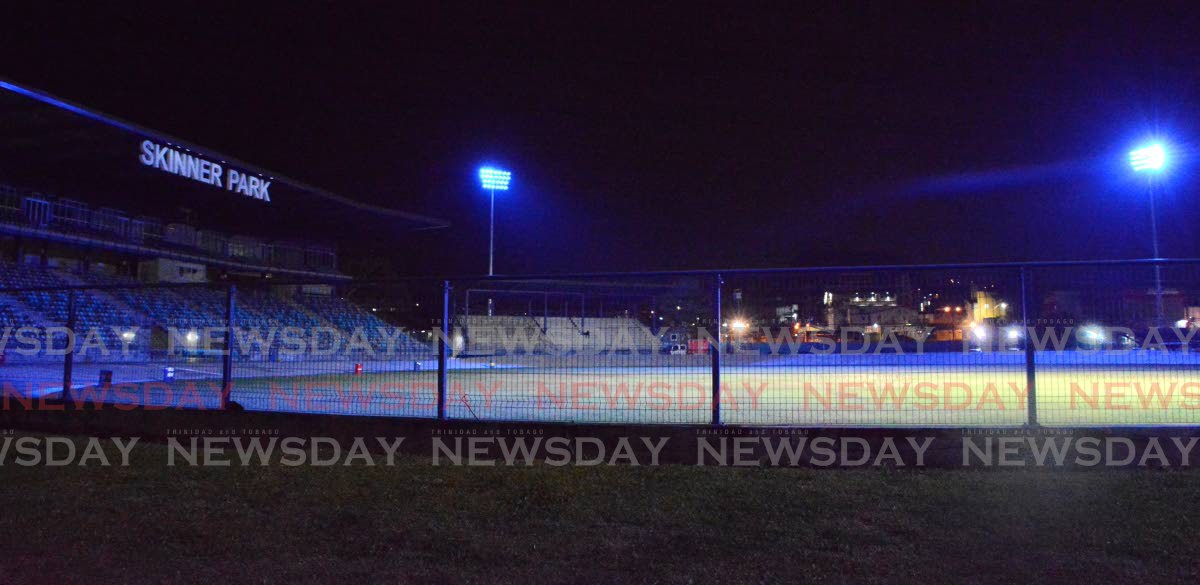
    Sheldon Stephen, prominent entrepreneur and organizer of the acclaimed Xperience Fete, has been forced to relocate his signature event to Skinner Park in San Fernando. As head of Lollabee Group of Companies, Stephen expresses particular concern for residents near the new venue, noting that Skinner Park potentially places spectators closer to residential areas than the previous Brian Lara Cricket Academy location.

    Renowned for innovative stagecraft featuring proscenium arch designs, pyrotechnics, 3D monuments, and advanced LED technology, Stephen’s Xperience Fete typically attracts 12,000-15,000 attendees. Despite the venue change, Stephen anticipates maintaining comparable attendance numbers for the January 17 event, which will commence at 3 AM.

    The organizer has diligently followed all regulatory protocols, including obtaining approval from the Environmental Management Authority and adhering to noise restriction policies. Stephen emphasizes the event’s southern identity, confirming that while this year’s celebration will remain in southern Trinidad, future editions may require additional venue considerations.

    Local residents near the originally prohibited venue expressed mixed reactions to the government’s decision. A 65-year-old Tarodale community resident described the cancellations as “an overdone hate game,” asserting that the music never disrupted her sleep patterns. Similarly, 73-year-old Lystra Martinez reported minimal disturbance from previous events.

    However, the restrictions have adversely affected local performers like Tekel Sylvan, a stilt walker whose revenue has significantly decreased without the regular events at Brian Lara Cricket Academy. Sylvan notes that the proximity of the previous venue allowed him to avoid transportation costs and secure consistent bookings, which have notably diminished since the implementation of the ban.

  • Trump’s Venezuelan siege

    Trump’s Venezuelan siege

    In a startling escalation of military aggression, former President Donald Trump’s actions have precipitated a global crisis that now threatens to erupt into widespread conflict. During a radio interview on December 26, 2025, the Republican leader casually disclosed that U.S. forces had executed a significant military strike within Venezuelan territory, remarking with characteristic bluntness: “We hit them very hard.

    This revelation, delivered offhandedly during a little-noticed Boxing Day broadcast, preceded further disturbing details shared three days later. While hosting Israeli Prime Minister Benjamin Netanyahu at the White House, Trump added: “We hit all the boats and now we hit the implementation area.” These statements confirm an alarming expansion of operations against the Maduro administration that began with maritime operations and has now progressed to apparent land strikes.

    The human cost of these operations has reached devastating proportions. Prior to Christmas, the U.S. military’s campaign achieved a grim milestone with at least 100 lives lost in what human rights organizations describe as extrajudicial executions. Subsequent strikes have pushed the death toll to approximately 107, with bodies continuing to wash ashore along Venezuela’s coastline.

    This military escalation has been accompanied by a comprehensive display of force in the Caribbean Sea, including seizures of oil tankers, increased bounties on President Nicolás Maduro’s head, and reportedly, a direct ultimatum delivered by Trump himself. The justification for these actions has shifted dramatically from initial claims about Venezuela “emptying their prisons into the USA” to more recent assertions about reclaiming “oil, land and other assets that they previously stole from us.”

    The international community has responded with unprecedented statements supporting Venezuelan sovereignty. Russian President Vladimir Putin personally called Maduro on December 11, while China implicitly accused the United States of “unilateral bullying.” The potential involvement of these global powers in any military confrontation remains uncertain, yet their positioning underscores the grave risks inherent in Trump’s provocative strategy.

    Despite earlier concerns that two nationals may have perished in maritime strikes, the Trinidad and Tobago government has maintained support for American actions even as the world moves closer to what critics describe as a manufactured Armageddon.

  • Why we need more hope in 2026

    Why we need more hope in 2026

    As the year concludes with traditional exchanges of goodwill and personal resolutions, Dr. Jamelia Harris examines the profound role of hope as both individual virtue and collective societal force. While hope has long been recognized in theological contexts as an active motivator that sustains effort and prevents despair, its manifestation at the societal level represents a shared belief in achievable progress through combined efforts.

    Political strategists have consistently leveraged this powerful emotion, as evidenced by campaign slogans from Barack Obama’s “Yes We Can” to Donald Trump’s “Make America Great Again.” Trinidad and Tobago’s political landscape similarly reflects this pattern, with Dr. Keith Rowley’s 2015 “Let’s Do This” and Kamla Persad-Bissessar’s 2025 “When UNC wins, everybody wins” both tapping into collective optimism—though with varying degrees of credibility.

    Recent research across Caribbean labor markets reveals striking regional contrasts. During studies conducted with university students in Barbados, Guyana, Jamaica, and Trinidad, Guyanese students emerged as uniquely optimistic about post-graduation employment prospects. This sentiment aligns with Guyana’s extraordinary economic performance, including its world-leading 44% growth in national output during 2024. Beyond statistical indicators, conversations across Guyanese society—from taxi drivers to trade unionists—consistently reflected this collective confidence in a brighter future.

    Trinidad and Tobago presents a concerning counter-narrative where collective hope appears to be steadily diminishing. Labor market engagement has reached historic lows, with participation rates declining from 61.8% in 1984 to 55.1% currently. This trend is particularly pronounced among male workers, whose participation has plummeted from over 80% to just above 60%, while female engagement remains below 50% despite slight improvements.

    The erosion of collective engagement extends beyond economic spheres. Democratic participation has deteriorated significantly, with 2025 voter turnout hitting a record low of 54% compared to 66.8% in 2015. Simultaneously, civic engagement through charitable organizations has declined from 13.7% during 2005-2009 to 9.6% in the 2010-2014 reporting period according to World Values Survey data.

    These interconnected trends create a dangerous feedback loop: diminishing hope reduces collective engagement, which subsequently worsens socioeconomic conditions, further eroding hope. Breaking this cycle requires concerted national effort and serious engagement with fundamental questions about national identity, shared aspirations, resource allocation, and inclusive development strategies.

    Dr. Harris concludes with a hopeful aspiration for 2026: that Trinidad and Tobago might begin earnestly addressing these essential questions about its collective future.

  • Real fireworks curfew test

    Real fireworks curfew test

    As midnight celebrations approach, concerns mount over the effectiveness of fireworks restrictions despite official curfew measures. Gordon Laughlin, in a letter to Newsday editors, predicts widespread public noncompliance with established time limits, highlighting the perennial gap between regulation and real-world enforcement.

    The concise yet pointed correspondence, submitted electronically just 25 minutes prior to publication, questions the fundamental premise of time-based fireworks prohibitions. Laughlin’s observation centers on the predictable pattern of celebratory excess continuing well beyond mandated cutoff times, suggesting this year’s celebrations will follow the same trajectory of previous years.

    Enforcement capabilities rather than legislative frameworks emerge as the critical factor in determining the success of noise and safety regulations. The letter implies that without visible and consistent enforcement presence, even well-intentioned restrictions become merely symbolic gestures. This critique touches upon broader themes of civic responsibility, the psychology of public compliance, and the practical challenges of regulating celebratory behavior during communal events.

    The timing of this publication, appearing on the eve of celebrations, adds urgency to its message regarding the implementation of public safety measures during high-intensity celebratory periods.

  • Social safety the key to unlocking future investments

    Social safety the key to unlocking future investments

    Trinidad and Tobago stands at a critical economic crossroads as it enters 2026, with escalating petty crime emerging as a significant barrier to its potential as a Caribbean economic hub. Despite possessing substantial natural resources, strategic geographic positioning, and a dynamic cultural landscape, the nation faces mounting security challenges that undermine investor confidence and constrain national development.

    While violent crimes typically capture media attention, the persistent prevalence of everyday offenses—including vehicle break-ins, residential burglaries, bag-snatching incidents, and fraudulent activities—is progressively damaging Trinidad and Tobago’s international reputation. This pattern of criminal activity is influencing perceptions not only among citizens but within the global business community, where security considerations are becoming increasingly central to investment decisions.

    The country’s established industrial foundation, robust energy sector, and access to international trade routes have long positioned it as one of the Caribbean’s most promising economies. However, in discussions spanning from corporate boardrooms in Port of Spain to international investment forums, concerns about personal and property safety now feature prominently alongside traditional business considerations. Executives and investors are increasingly inquiring about employee security, customer safety, and operational continuity.

    Recent crime statistics reveal a troubling upward trajectory in urban centers including downtown Port of Spain, Laventille, Beetham Gardens, Sea Lots, and Cocorite. Over the past two years, reported incidents of robbery, vandalism, and commercial property crimes have increased substantially, with property crime levels remaining persistently elevated. Local residents consistently identify theft and home invasions among their primary safety concerns, while business owners report recurring losses that impact profitability and expansion plans.

    The economic implications extend beyond immediate financial losses. Security concerns directly influence operational predictability and costs, deterring investment in technology parks, logistics hubs, and hospitality infrastructure. Companies hesitate to commit resources when employee safety during commutes appears uncertain, customer foot traffic may decline due to safety perceptions, and insurance premiums continue rising in response to crime patterns.

    International benchmarks highlight these challenges. The 2024 Legatum Prosperity Index ranked Trinidad and Tobago 56th overall, acknowledging strengths in personal freedom and living conditions while noting concerning performances in safety and security (84th), investment environment (79th), and enterprise conditions (98th). These metrics underscore how security perceptions directly impact business confidence and economic competitiveness.

    Domestically, small and medium enterprises demonstrate heightened caution, delaying expansion plans, limiting operating hours, and reducing reinvestment due to security concerns. This restrained business activity suppresses innovation, constrains job creation, and weakens consumer spending—creating a cycle that affects broader economic vitality.

    Addressing these challenges requires comprehensive strategies combining modern policing methodologies, judicial reforms, and community engagement. Data-driven law enforcement deployment, enhanced surveillance capabilities, and neighborhood-based initiatives have demonstrated effectiveness in other Caribbean nations, where crime reduction has correlated with increased tourism and foreign investment. Parallel reforms in judicial processing of minor offenses could reinforce rule of law perceptions and deter criminal behavior.

    Ultimately, public safety represents both a social imperative and an economic necessity. Collaborative efforts involving government agencies, private sector organizations, and community groups can rebuild trust and reduce risks. Simultaneously, youth education and employment initiatives address underlying socioeconomic factors contributing to criminal activity while investing in national human capital development.

    For Trinidad and Tobago to fully realize its potential as a Caribbean gateway, security must become foundational to its development strategy. Through coordinated action against petty crime, the nation can enhance its international standing, attract diversified investment, and establish conditions for sustainable prosperity—positioning itself not merely as economically competitive but as globally respected.

  • Friends for the Road and TTSPCA partner for Carnival 2026

    Friends for the Road and TTSPCA partner for Carnival 2026

    In an innovative fusion of cultural celebration and social responsibility, the acclaimed Che Lovelace-directed J’Ouvert band Friends for the Road (FFTR) has established a groundbreaking charity partnership with the Trinidad and Tobago Society for the Prevention of Cruelty to Animals (TTSPCA) for Carnival 2026.

    This collaboration transcends conventional sponsorship arrangements, representing a philosophical alignment between contemporary Carnival expression and compassionate community engagement. Founded by renowned artist Che Lovelace and his creative collaborators, FFTR has evolved into a movement that harmonizes J’Ouvert’s ancestral traditions with meticulously curated modern Carnival experiences.

    The multi-faceted partnership will feature co-branded awareness campaigns, strategic donation collection points at FFTR events, and collaborative promotional content highlighting TTSPCA’s vital animal welfare mission. This initiative reflects the band’s core ethos that Carnival fundamentally serves as a ritual of connection—to cultural heritage, community bonds, and social consciousness.

    Band representatives emphasized that selecting TTSPCA as their official charity partner naturally extends their belief that Carnival should positively impact the broader community. The collaboration creates innovative avenues for masqueraders and supporters to contribute to animal welfare through accessible, celebratory channels during Carnival festivities.

    TTSPCA leadership expressed enthusiasm for the partnership, recognizing the unprecedented platform to amplify public awareness, enhance community engagement, and support their ongoing rescue and rehabilitation operations nationwide. As Trinidad and Tobago’s sole open-admission animal shelter, TTSPCA provides critical services including temporary care for abandoned animals, low-cost spay/neuter programs, and collaborative educational initiatives with other NGOs.

    Both organizations envision this partnership extending beyond Carnival 2026 into future initiatives that simultaneously uplift communities, protect vulnerable animals, and strengthen Trinidad and Tobago’s cultural fabric. The collaboration demonstrates how traditional celebrations can evolve to incorporate meaningful social impact while maintaining their essential cultural character.

  • Rhino Waste Solutions and EVA Foundation spread clean holiday cheer

    Rhino Waste Solutions and EVA Foundation spread clean holiday cheer

    Rhino Waste Solutions, a division of Rotoplastics Trinidad Limited, has initiated a significant community outreach program focused on enhancing sanitation standards and environmental stewardship in southern Trinidad. The initiative, launched during the holiday season, involved the distribution of over 5,000 rolls of garbage bags to various communities within the Siparia and Fyzabad regions on December 11 and 17.

    The comprehensive program reached more than 15 educational institutions, religious organizations, and community groups. According to company representatives, this environmental initiative is designed to continue into the new year with plans to distribute an additional 7,000 rolls of garbage bags to 26 schools, orphanages, senior care facilities, and community organizations across southern Trinidad. The timing of these distributions aligns with the beginning of the new academic term to maximize impact.

    The corporate social responsibility effort is being conducted in partnership with the registered non-governmental organization EVA Foundation and enjoys support from Siparia West/Fyzabad councillor Jason Ali. The collaboration aims to address the seasonal increase in waste generation during the Christmas period when communities typically experience heightened disposal challenges.

    Councillor Ali emphasized that the donation would substantially augment the Siparia Borough Corporation’s waste management operations by providing residents with practical tools for more effective waste containment. Educational professionals from recipient schools noted that the contribution would support daily maintenance of clean and safe learning environments, as schools typically consume multiple garbage bags each day for sanitation purposes.

    This holiday initiative follows Rhino Waste Solutions’ previous collaboration with the Arima Borough Corporation in July, which involved the donation of four 65-gallon wheelie bins to support recreational facility revitalization projects. The company has indicated plans to expand similar donation programs to northern and central regions of Trinidad in the future.

  • No risk, no story: Keshorn credits coach for golden 2025

    No risk, no story: Keshorn credits coach for golden 2025

    In a remarkable career resurgence, Trinidad and Tobago’s javelin sensation Keshorn Walcott has ascended to the pinnacle of his sport once again, capturing the World Athletics Championships gold medal in Tokyo with a spectacular 88.16-meter throw on September 18, 2025. This triumphant achievement culminated an extraordinary season that began with uncertainty but transformed into glory through strategic coaching changes and mental transformation.

    The 32-year-old Olympic champion attributes his successful comeback to German biomechanics expert Dr. Klaus Bartonietz, whom he partnered with early in 2025. ‘I took a risk. As they say, no risk, no story,’ Walcott revealed during his acceptance speech after receiving Trinidad and Tobago Olympic Committee’s Sportsman of the Year award on December 29—his third such honor following previous wins in 2012 and 2016.

    Walcott’s journey to world championship gold required overcoming psychological barriers that had previously hindered his performance at global competitions. ‘I went to every World Championship believing it wasn’t for me,’ he confessed. ‘Most of the time, every World Championship year, I would be having some sort of injury or some sort of problems.’

    The Toco-born athlete described how a shift in mindset proved crucial: ‘This time, it was about really believing that it was possible. I just needed to make some small changes.’ This mental breakthrough, combined with Bartonietz’s technical expertise, created the perfect formula for success.

    With his world championship victory now complement his Olympic gold (2012) and bronze (2016), Walcott has set ambitious targets for the 2026 season. He aims to surpass the 90-meter barrier—a feat he previously accomplished a decade ago in Lausanne with a national record of 90.16m. The upcoming season presents multiple opportunities for excellence, including the Central American and Caribbean Games, Commonwealth Games, Diamond League circuit, and the inaugural World Athletics Ultimate Championship in Budapest.

    Despite his renewed success, Walcott maintains that no achievement can replicate the euphoria of his unexpected Olympic gold as a teenager in London. Nevertheless, he expressed profound gratitude for the recent recognition from his national Olympic committee, acknowledging the significance of having his dedication and hard work validated by the sporting community.

  • Aniqah Bailey, Nicholas Romany conquer Hardest Mile at Santa Rosa

    Aniqah Bailey, Nicholas Romany conquer Hardest Mile at Santa Rosa

    In an impressive display of athletic prowess, national middle-distance runners Nicholas Romany and Aniqah Bailey emerged victorious at the fourth annual Hardest Mile race held on December 26. The event provided thrilling alternative entertainment for spectators during the Boxing Day horse-racing festivities at Santa Rosa Park in Arima.

    Over 100 determined runners tackled the demanding sandy terrain in pursuit of conquering the challenging one-mile course. Nicholas Romany demonstrated exceptional strategic racing, timing his final move perfectly to overtake Christopher Mitchell on the last bend. Romany crossed the finish line in an impressive 5 minutes and 1 second, securing the men’s title. Mitchell, who had maintained the lead for much of the race, finished just three seconds behind at 5:04 to claim second place.

    Darius Harding captured third position in the men’s category with a time of 5:07, followed by Keron Ali (5:18) and former Carifta boys’ under-20 5,000-meter champion Tafari Waldron (5:29) in fourth and fifth places respectively.

    Seventeen-year-old Aniqah Bailey delivered a remarkable performance in the women’s category, successfully defending her title with a significantly improved time of 5:52 compared to her previous winning time of 6:57. The rising star Nyla Kerr, aged just 14, claimed second place with a time of 6:04, demonstrating exceptional promise for future competitions.

    The women’s category saw intense competition for third place, with Alexia John (6:29) narrowly edging out April Francis (6:31). Twelve-year-old Chennai Moore completed the top five with a time of 6:41, also earning second place in the girls’ under-14 age group behind Kerr.

    Additional age category winners included Haqpera Khafra (women’s 20-29), Guswil George (men’s 40-49), Bauke Groen (men’s 50-59), and Beatrice Charles, who impressed in the women’s 60-plus category. The event showcased both elite athletic talent and inspiring participation across multiple age groups, highlighting the growing popularity of alternative sporting events during traditional holiday celebrations.