作者: admin

  • Antigua Sailing Week: A New Way to Experience Antigua’s Stunning Destinations

    Antigua Sailing Week: A New Way to Experience Antigua’s Stunning Destinations

    Antigua Sailing Week undergoes a revolutionary transformation in 2026, reinventing itself as a sophisticated point-to-point cruising event that combines leisurely sailing with optional competitive elements. Scheduled for April 22-26, the reimagined format emphasizes flexible, cruise-in-company sailing while maintaining the event’s prestigious maritime heritage.

    The restructured event offers participants two distinct experiences: competitive crews can engage in optional racing courses announced daily, while cruising yachts benefit from assigned start and arrival times that allow for relaxed navigation. The carefully crafted itinerary follows an anti-clockwise route around Antigua’s spectacular coastline, featuring intentionally short, navigable legs designed to maximize time for swimming, relaxation, and curated shoreside experiences.

    The journey commences at the historic Nelson’s Dockyard, a UNESCO World Heritage Site, where participants gather for registration and briefings followed by a festive cultural evening. The five-day itinerary includes stops at Nonsuch Bay, where optional hiking trails and water sports await; Maiden Island, featuring a private beach party at The Hut’s exclusive venue; and Ffryes Bay, home to one of Antigua’s most celebrated beaches with an all-day beach festival showcasing local cuisine and entertainment.

    The event concludes with a memorable return sail to Nelson’s Dockyard for final awards and closing celebrations. With 15 entries already confirmed and growing, the 2026 edition reflects a global shift toward lifestyle-driven sailing events that prioritize discovery, connection, and celebration. Early entry fees of US$14 per foot remain available until January 8, 2026, after which rates increase to US$16 per foot.


  • Beginning January 1, a new 1% federal remittance tax in the United States will take effect

    Beginning January 1, a new 1% federal remittance tax in the United States will take effect

    A significant shift in U.S. financial policy will take effect on January 1, 2026, introducing a new taxation structure for specific international money transfer methods. The legislation imposes a 1% remittance tax exclusively on transactions funded through physical cash, money orders, or cashier’s checks, potentially affecting how millions of Americans send money abroad.

    The tax framework creates a clear distinction between payment methods. While traditional cash-based payments will incur the additional levy, digital and electronic payment options remain exempt. This includes debit cards, credit cards, bank account transfers, digital wallets (Google Pay, Apple Pay, Vigo Money), and prepaid cards such as the Western Union Prepaid Visa® Card.

    Financial service providers are already implementing strategies to help customers navigate the new regulations. Western Union, as a leading money transfer operator, emphasizes that recipients abroad will not experience any reduction in received amounts regardless of the sender’s payment method. The tax exclusively applies to the sender’s transaction costs based on their chosen payment option.

    Consumers have multiple pathways to avoid the additional expense. Retail locations can process debit card payments without the tax, while digital platforms and mobile applications provide completely tax-free transfer options when using electronic payment methods. The Western Union Prepaid Visa Card offers an intermediate solution, allowing users to load cash onto the card initially then execute international transfers without incurring the 1% levy.

    The legislation represents a deliberate policy choice to encourage digital payment adoption while maintaining cash-based transfer options for those who prefer them. Financial analysts suggest this could accelerate the transition toward electronic international money transfers, potentially affecting retail money transfer locations that primarily handle cash transactions.

    Industry experts recommend that frequent senders begin adapting their transfer habits well before the 2026 implementation date to ensure seamless continuation of their international financial support without additional costs.

  • No Stopping Tizzy. Resilient and Energized, Antigua’s Soca Headliner Returns to T&T Carnival

    No Stopping Tizzy. Resilient and Energized, Antigua’s Soca Headliner Returns to T&T Carnival

    Driven by an unwavering passion for Soca music, Antiguan artist Tizzy is making a powerful comeback on the regional stage, targeting Trinidad and Tobago’s Carnival 2026 as her platform for resurgence. The vibrant performer, known for hits like ‘Expose,’ is channeling fresh energy through recent singles ‘Fire Marshall’ and ‘Freak in De Fete,’ signaling her determined return to the spotlight.

    Following a period of deep personal reflection and strategic rebranding, Tizzy approaches her musical journey with renewed purpose. “My motivation in this business is life itself,” the artist revealed, emphasizing her desire to inspire others through her narrative of resilience. “I want audiences to witness my journey—through both triumphs and challenges—and recognize the power of perseverance in pursuing one’s passion.”

    The accomplished singer recently achieved a significant milestone with her sophomore album ‘Jus Ah Come,’ which she proudly claims as her entirely independent artistic accomplishment. This project marks a departure from her previous releases under ElAkru Music, though she maintains strong connections with the label and acknowledges the steadfast support of her husband Rohan Hector, who serves as both manager and producer.

    Tizzy describes Soca as more than mere entertainment—it represents a profound cultural expression for Caribbean identity. “This powerful, energetic genre provides the soundtrack for our collective release,” she explained. “After working throughout the year, Soca offers that annual opportunity to shed inhibitions and celebrate our heritage.”

    Her recent collaborations demonstrate this artistic vision: ‘Fire Marshall’ (penned by Emerge Media) and ‘Freak in De Fete’ (written by Barbados’ Jus D) capture Tizzy’s untamed performance energy. The artist’s 2025 season proved exceptionally successful, with three well-received tracks—”Big Ben,” “Charge Up,” and the Viking Ding Dong collaboration “When Last”—garnering substantial acclaim during Antigua’s carnival celebrations.

    Building on established relationships with Trinidadian bands like Destra, Atlantik, and D All Starz, Tizzy has been actively promoting her music through radio tours and recently released a new visual companion for ‘Freak in De Fete.’ With plans to unveil two additional Power Soca tracks in the coming weeks, the artist anticipates an impactful presence at Carnival 2026 and beyond, viewing her recent achievements as merely the beginning of greater accomplishments.

  • “Let Minimum Wage Board do its job” – BEC

    “Let Minimum Wage Board do its job” – BEC

    A significant dispute has emerged in Barbados between business leaders and the government regarding the implementation of future minimum wage increases. The Barbados Employers’ Confederation (BEC) has formally requested that the government permit the Minimum Wage Board to complete its legally mandated review before announcing any further adjustments to wage policies.

    The controversy stems from the recent Budget announcement which outlined predetermined minimum wage increases for both 2025 and 2026. According to the proposed changes set to take effect January 21, 2026, the national minimum wage would increase from $10.50 to $10.71 per hour, while security guards’ sectoral minimum wage would rise from $11.43 to $11.66 per hour—representing a two percent increase across both categories.

    The BEC, while expressing support for fair compensation practices, has raised substantial concerns about the government’s approach. The employers’ group emphasized that announcing increases prior to the Board’s comprehensive review represents a departure from established tripartite engagement protocols that typically involve thorough economic analysis and stakeholder consultation.

    In their official statement, the Confederation warned that minimum wage adjustments create significant ripple effects throughout the economy, potentially raising operational costs and threatening business sustainability. The organization specifically cautioned that such preemptive increases could inadvertently jeopardize job creation and, in severe cases, potentially lead to workforce reductions.

    The employers’ body further argued that frequent, unreviewed annual increases introduce market instability and unpredictability, ultimately placing undue pressure on the very businesses and workers that minimum wage policies are designed to support.

    In response to these concerns, Minister of Labour Colin Jordan has defended the government’s position, stating that the increases are intended to alleviate pressure on low-income workers without destabilizing businesses. The Minister indicated that Cabinet had signaled its intention to introduce annual indexation months earlier as part of the 2025 Budget framework.

    Minister Jordan also noted that work is currently underway through the Minimum Wage Board to assess the impact of the June 2025 increase and to develop a Barbados-specific indexation model, with Cabinet expected to ultimately consider the Board’s recommendations.

    Despite these assurances, the BEC maintains that all future wage adjustments must follow the legally established process, allowing the Board to complete its analytical work before final decisions are made. The Confederation has urgently called for the government to respect the institutional process to ensure that minimum wage decisions are fair, sustainable, and truly serve the best interests of workers, employers, and the national economy.

  • GIZ Request for Proposals: Supervision check dam

    GIZ Request for Proposals: Supervision check dam

    The German development agency GIZ has issued a formal Request for Proposals seeking qualified construction supervision consultants for Grenada’s Climate-Resilient Water Sector (G-CREWS) Project. This initiative targets the enhancement of critical water infrastructure through specialized retrofitting operations.

    The successful candidate will provide expert oversight for up to 55 working days between February 2 and June 30, 2026. Primary responsibilities include supervising construction and modernization activities at three key dam intake sites: Zulu Dam, Mirabeau Dam, and Mt Plaisir Dam. The consultant must ensure all infrastructure installations strictly adhere to designated technical specifications and quality standards.

    A critical component of the role involves integrating comprehensive environmental protections, climate variability adaptations, and social safeguards—including gender-sensitive approaches—throughout the supervision process. The consultancy package additionally offers an optional provision for extending services to two additional sites beyond the core assignments.

    Interested parties must submit separate technical and pricing proposals in PDF format to [email protected] before the deadline of 4:30 PM Eastern Caribbean Time on January 20, 2026. All email submissions must include the specific subject line ‘Supervision check dam’ for proper processing. GIZ will provide automated confirmation receipts for all electronically received bids.

    Detailed specifications and requirements are available in the attached Terms of Reference document. This project represents a significant step in strengthening Grenada’s water security against climate-related challenges.

  • Diaz-Canel: ICAP is a bridge between peoples, a voice for just causes

    Diaz-Canel: ICAP is a bridge between peoples, a voice for just causes

    Cuban President Miguel Díaz-Canel has publicly commemorated the 65th anniversary of the Cuban Institute of Friendship with the Peoples (ICAP), utilizing social media platform X to honor the institution originally established by revolutionary leader Fidel Castro.

    In his digital tribute, Díaz-Canel emphasized the organization’s enduring relevance, stating: ‘Guided by Fidel’s visionary principles and foundational ideology, ICAP maintains—and now more than ever—its crucial mission of bridging nations and championing humanity’s most noble causes.’

    The President characterized the anniversary celebrations as possessing ‘particular symbolic importance,’ noting that ICAP’s headquarters has served as a epicenter for ‘dedication to peace, international friendship, and global solidarity throughout its sixty-five years of operation.’

    Echoing these sentiments, Foreign Minister Bruno Rodríguez extended official congratulations to ICAP and its personnel through the same digital platform. Rodríguez specifically recognized the institution’s ‘effectual and demanding efforts in advancing solidarity and friendship, while defending Cuba against imperialist aggression and supporting righteous global causes.’

    The commemorative events included a central ceremony held preceding the anniversary date, featuring ICAP President Fernando González. During his address, González portrayed the organization as ‘a fortress of ideals, a laboratory of friendship, and a strategic component in safeguarding the Revolution’s legacy.’

  • Syrian city imposes curfew after sectarian violence

    Syrian city imposes curfew after sectarian violence

    The Syrian government has declared an overnight curfew for the coastal province of Latakia, effective from 5:00 PM local time Tuesday through 6:00 AM Wednesday, in response to escalating sectarian violence. The security measure exempts emergency personnel including medical workers, ambulance services, and firefighters from the restrictions.

    Interior Ministry spokesperson Noureddine al-Baba, in official communications with the state-run SANA news agency, called upon Latakia’s residents to maintain lawful conduct and preserve public safety. The spokesman specifically cautioned citizens against responding to provocative language and destabilizing actions that threaten national cohesion.

    al-Baba emphasized the state’s firm stance against acts of vandalism and aggression targeting civilian property or dignity, characterizing such behavior as explicit violations of Syrian law. He warned that perpetrators would face full legal consequences for actions undermining stability.

    The curfew implementation follows reports from local sources and monitoring groups indicating several western Syrian regions have experienced violent riots and sectarian clashes in recent hours. These disturbances have primarily targeted members of the Alawite community, representing a significant escalation in regional tensions.

  • Unemployment in Brazil falls to 5,2% in November

    Unemployment in Brazil falls to 5,2% in November

    Brazil’s labor market has achieved a significant milestone, recording its lowest unemployment rate since the inception of the National Continuous Household Sample Survey (PNAD Continua) in 2012. This historic low underscores a notable improvement in the country’s employment landscape.

    According to the latest data, approximately 5.6 million Brazilians actively sought employment without success between September and November. This figure marks a slight improvement from October, which saw 5.9 million workers in search of jobs.

    The formal employment sector has demonstrated substantial growth, with the Brazilian Institute of Geography and Statistics (IBGE) identifying 39.4 million formal workers in the quarter ending November. This expansion reflects strengthened economic stability and increased formalization in the workforce.

    Concurrently, Brazil’s overall employment numbers have reached unprecedented levels. The nation now boasts 103 million employed individuals, representing an increase of 1.1 million jobs compared to November 2015. This record-breaking employment figure highlights the sustained recovery and growth of Brazil’s labor market amid broader economic challenges.

  • Noboa declares prison perimeters in Ecuador security zones

    Noboa declares prison perimeters in Ecuador security zones

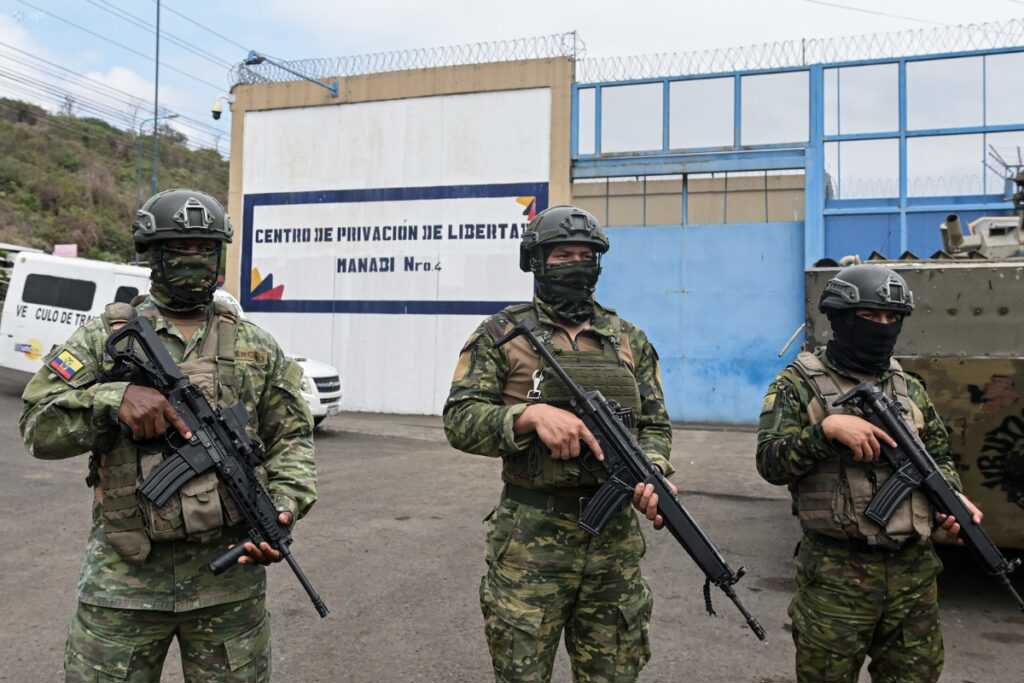
    In a decisive move to confront organized crime, the Ecuadorian government has authorized the establishment of classified security perimeters under military jurisdiction within the nation’s prison system. This strategic initiative, formally documented on April 7, 2024, stems directly from President Daniel Noboa’s declaration of an internal armed conflict, which mandated the Ministries of Defense and the Interior to develop comprehensive technical frameworks for securing penitentiary facilities.

    The newly implemented measures represent a significant militarization of prison security. The Armed Forces are now vested with full control and operational responsibility over these restricted zones, though the policy explicitly clarifies that this does not equate to military ownership of the physical locations. The multi-faceted security protocol includes the deployment of advanced anti-drone technology systems, capable of remotely inhibiting or destroying unauthorized unmanned aerial vehicles attempting to breach prison airspace.

    Further bolstering the crackdown, the government has enacted stringent telecommunications controls, including signal jamming within prison confines to sever illicit communication channels. Construction activities near penitentiaries face severe restrictions, with an outright ban on tunnel excavation and limitations on the erection of any vertical or horizontal structures within the newly defined security boundaries.

    This aggressive policy is a direct response to the government’s assessment that Ecuador’s prisons serve as primary epicenters of criminal violence. Statistical evidence underscores the crisis: since 2021, nearly 600 inmates have been killed, predominantly in violent clashes between rival gangs operating from within the penitentiary centers, highlighting the urgent need for enhanced security intervention.

  • Warnings about AI and the electoral risks in Brazil for 2026

    Warnings about AI and the electoral risks in Brazil for 2026

    The integrity of democratic elections worldwide is facing an unprecedented threat from sophisticated artificial intelligence tools capable of generating convincing fake multimedia content. Since 2018, electoral processes have been systematically undermined by disinformation campaigns, but the emergence of accessible deepfake technology in 2025 has dramatically accelerated this concerning trend.

    Cybersecurity authority Rodolfo Avelino, speaking with Brasil de Fato’s radio station, characterized 2025 as a period of ‘impressive growth’ for AI manipulation tools. These advanced systems can now seamlessly replicate voices and visual appearances, creating fabricated content that challenges human discernment capabilities. The technological evolution has effectively blurred the line between authentic media and synthetic manipulations, creating unprecedented challenges for voters, journalists, and election authorities.

    The Brazilian legislative response, known as the AI Regulation Bill (PL 2338, 2023), remains stalled in the Chamber of Deputies despite the escalating threat. Professor Avelino attributes this legislative paralysis to multiple factors, including significant corporate lobbying efforts regarding technology governance. The expert expressed minimal optimism for substantial regulatory progress in 2026, anticipating that more comprehensive policy measures are unlikely to reach voting stages.

    The proposed legislation, under discussion for approximately five years, seeks to establish critical accountability frameworks including control mechanisms, impact responsibility protocols, and economic benefit distribution structures for AI technologies. Its continued stagnation leaves a dangerous regulatory vacuum during a period of rapidly advancing synthetic media capabilities.