作者: admin

  • Lucky Numbers Deliver $370K Mega Bingo Payday

    Lucky Numbers Deliver $370K Mega Bingo Payday

    Dated April 13, 2026

    What started as an ordinary session of one of the world’s most popular casual games has unfolded into a transformative windfall for a man from southern Belize, who walked away with a $370,000 Mega Bingo grand jackpot after matching all his required winning numbers. After mandatory tax deductions, the lucky winner still expects to take home approximately $315,000 — a sum large enough to reshape his long-term personal and financial trajectory. In a first-hand account following his win, the recipient shared the unexpected story of his lucky numbers and laid out his cautious plans for the new fortune.

    The winner explained that he has participated in Mega Bingo since the game’s launch, but stepped away from playing for an extended period before returning to the activity. When he resumed buying tickets, he stuck to the same set of numbers without ever making a change, and did not purchase a ticket for every draw, keeping his spending consistent and low-key.

    As the recent draw unfolded, he began to notice a pattern: he kept missing out on smaller secondary prizes by just a single number. With only three numbers left to be called — including G-47, drawn three turns before the 49th ball — he still had one unmarked spot left on his card. Coming so close, he figured his streak of near-misses could not continue. When the announcer called O-75, he checked his ticket and realized he had matched the final number, locking in the full jackpot.

    For the winner, the windfall first and foremost means he can now provide meaningful support for his mother and the loved ones who have stood by him over the years. He emphasized that he plans to take a deliberate, slow approach to managing the money, rejecting the idea of making rushed, impulsive decisions. He noted that unplanned spending can drain a large windfall surprisingly quickly, so careful consideration of every major financial move will be his top priority going forward.

    This report is a transcribed version of an evening television newscast, with Kriol-language dialogue transcribed using a standardized spelling system for published distribution.

  • Weekend Sports: Sprints, Goals, and Slam Dunks

    Weekend Sports: Sprints, Goals, and Slam Dunks

    As we wrap up the first half of April 2026, Sports Monday host Paul Lopez brings audiences a comprehensive breakdown of the most exciting action from Belize’s busy weekend of youth and elite amateur sports across three different disciplines. The weekend’s marquee event was the 25th edition of the BEL Junior Cross Country Cycling Classic, which kicked off Sunday morning with 30 up-and-coming male riders departing the Succotz Ferry in western Belize for a grueling cross-country route ending 47 miles away in Belize City. The competitive field included five international riders, hailing from Mexico, Guatemala, and the Cayman Islands, adding an extra layer of regional competition to the domestic event.

    Early in the race, Keith Enwright Jr. of Team G Flow and Stephan Pelayo of Team Misfits broke away from the main peloton to build an early lead, but the pair were eventually reeled back in by the chasing pack. It was G Flow’s Amaad Cherington who made the race-defining move around the 35-mile mark, launching an aggressive attack that opened a three-minute gap over the field and saw him ride solo for more than 12 miles. Cherington’s solo break held until just 12 miles from the finish line, when a four-rider chase group caught him, setting up a five-man sprint for the overall title along Belize City’s final stretch.

    Cherington set a blistering pace into the final straight, but it was Enwright who found an extra gear coming from behind, surging past the entire leading group to take an unexpected first-place finish. Cayman Islands rider Ryan Thompson crossed second, while Griga Cycling’s Jamaal Tablada rounded out the top three podium. Speaking to reporters after the win, an shocked Enwright said he never expected to take the top spot, having planned to set his teammate Cherington up for the victory as a lead-out man. “I’m not a sprinter,” Enwright explained. “When I saw Amaad start to fade and the Cayman rider coming for the line, I just kept pushing and ended up out front. I still can’t believe it happened.”

    The women’s junior cross country race followed a similar route starting in Roaring Creek rather than the western ferry crossing, and 17-year-old Irani Baki delivered a dominant back-to-back title defense. Baki rode solo from start to finish, a repeat of her 2025 winning performance, crossing the line well clear of the chasing pack to claim the crown. The young rider, who competed in the elite women’s cross country event just two weeks prior, said she was hoping for a tighter race to push her, but was pleased to secure her second consecutive junior title. Baki is now set to travel to Paris for a specialized training block as she continues to develop her cycling career.

    From the cycling course, the weekend’s action shifted to football pitches across Belize, with matches held in both the Belize District First Division and the youth-focused Future Football League. In the First Division matchup between Tutbay Football Club and Ceasar Ridge FC, Tutbay got off to a blistering start, scoring inside the first minute of play when Kevaughn Tablada capitalized on defensive chaos in the box to put his side up early. Ten minutes later, Leon Jones extended Tutbay’s lead with a perfectly placed header off a corner kick. Though Ceasar Ridge managed a late consolation goal, Tutbay held on to secure a 2-1 victory. Over in the Future Football League, Future FC claimed two wins on the weekend: they beat Ladyville 2-1 in their first matchup, followed by a dominant 4-0 shutout in a second fixture between the two sides.

    The final set of weekend action came from the National Elite Basketball League, which hosted three games across two days. On Friday night at the Belize City Civic Center, the Belize City Defenders faced off against the Dangriga Dream Ballers. The first half remained tightly contested, with the two sides trading baskets through the first two quarters, but the Defenders exploded in the third quarter to build an unassailable lead. The Dream Ballers had no answer for the Defenders’ offensive push, and the game ended in a lopsided 90-50 win for the home side.

    Saturday brought a two-game slate of basketball action. In the first matchup hosted in Belize City, the San Pedro Tiger Sharks faced the Orange Walk Running Rebels in one of the weekend’s closest contests. The game remained tight through the final buzzer, with the Tiger Sharks edging out the Rebels by just two points, 81-79, to add another win to their 2026 season record. In the evening game in San Ignacio, the Cayo Western Ballaz hosted the Corozal Spartans, pulling away in the second half to secure a 98-82 victory. This recap marks the end of this week’s Sports Monday broadcast; coverage of all upcoming Belizean sports action will return next week. This report is a transcribed version of a televised evening newscast.

  • Forde: GBV battle must extend beyond disasters

    Forde: GBV battle must extend beyond disasters

    On Monday, the government of Barbados issued a public call for ramped-up, cross-community action to eliminate gender-based violence (GBV), coinciding with the launch of a two-day capacity-building workshop hosted at UN House by the United Nations Population Fund (UNFPA) and Barbados’ Bureau of Gender Affairs. The event centers on strengthening coordination mechanisms for addressing gender-based violence during humanitarian and public emergencies.

    Speaking at the workshop’s opening, Minister of People Empowerment and Elder Affairs Adrian Forde emphasized that the battle against GBV requires unwavering effort, no matter the broader social or environmental context. “Gender-based violence permeates every corner of our society, full stop,” Forde stated. “That means our fight has to be consistent and equal, regardless of whether we are confronting a natural disaster or a period of relative stability.”

    Forde pointed to data collected after Hurricane Melissa impacted Jamaica as a stark illustration of how crises exacerbate existing gender inequalities. When disasters strike, he explained, women bear a disproportionate burden of harm. “When water infrastructure fails, that creates unique challenges for women. Shortages of food, basic supplies and menstrual hygiene products hit women far harder than any other demographic during a disaster,” he noted.

    The minister outlined the progress Barbados has already made in building a coordinated national response to GBV. Back in 2019, the country’s Cabinet approved the formation of a National Committee on Gender-Based Violence, which was given the mandate to draft a comprehensive national action plan to tackle the issue. Operating through the Bureau of Gender Affairs, the committee launched structured stakeholder coordination meetings the same year to strengthen existing response systems, and Forde praised the body’s progress to date.

    “Thanks to the committee’s data collection and planning work, we are now in a far stronger position to outline exactly what steps Barbados will take to protect vulnerable community members from harm,” Forde said.

    Even as he celebrated progress, Forde stressed that significant gaps remain, particularly in resourcing responses to GBV during emergencies tied to the climate crisis. He framed equitable resourcing for women in crises as a matter of climate justice, noting that there is an urgent need to get mitigation and adaptation resources directly to women when disasters strike.

    “This is a fair and entirely just demand,” Forde said. “This government is committed not just to listening to the painful cries of women across our country, but to delivering concrete action that responds to their needs.”

    Beyond policy and systemic change, Forde made clear that eliminating GBV requires a whole-of-society approach that engages every member of the public. Every person has a role to play as an active participant in the fight, he argued: when abuse is witnessed, community members cannot stay silent. “If you see someone being abused, you have to do more than just notice it. You have to speak up, alert authorities, and offer help when it is safe to do so,” he said. “That same selfless, proactive approach matters just as much when our country is facing a natural disaster.”

    Forde added that the government is also working to strengthen the country’s legislative framework to ensure courts handle GBV cases with appropriate firmness. Legislative reform is a critical pillar of the national response, he explained, because strong laws must underpin all efforts to combat violence. “The message we send can’t just come from ministers and stakeholders at the table. It has to be backed by our legal system,” he said. “We are committed to making sure that cases of gender-based violence are met with the full force of the judicial system.”

  • Barbados, St Lucia forge blue economy ties over fish feed from waste

    Barbados, St Lucia forge blue economy ties over fish feed from waste

    A senior delegation of fisheries industry stakeholders from Saint Lucia has arrived in Barbados to kick off a six-day peer-to-peer learning exchange centered on a groundbreaking local fish silage initiative that is redefining sustainable blue economic growth across the Caribbean.

    The core goal of the visit is for the visiting delegation to gain a full, actionable blueprint to replicate Barbados’ innovative model, which converts discarded fish processing byproducts into two high-value agricultural goods: nutrient-dense animal feed and organic bio-fertilizer. By diverting thousands of tons of organic waste from overcrowded landfills and cutting regional reliance on costly imported feed stocks, the project has been widely recognized as a game-changing foundation for expanding the Caribbean’s sustainable blue economy.

    At the official opening ceremony held at UN House in Hastings, Yvette Diei-Ouadi, a fisheries and aquaculture officer with the Food and Agriculture Organization’s (FAO) Subregional Office for the Caribbean, formally welcomed the Saint Lucian team, outlining that the visit is structured around three key priority objectives. While mastering the technical process of turning fish waste into silage remains the central focus, the agenda also dedicates significant time to addressing a pressing market access barrier currently facing Saint Lucia. As Diei-Ouadi explained, Saint Lucia currently holds a ban on exporting fish and fish-based products to the United States, a restriction Barbados successfully overcame after years of targeted work. The island’s accumulated experience in lifting this trade barrier offers critical actionable lessons for Saint Lucia to follow.

    Diei-Ouadi emphasized that Barbados’ trade success was not the outcome of a single standalone project, but the result of a coordinated sequence of targeted interventions launched all the way back in 2018. “It was never one single project – it was a whole suite of connected initiatives that brought us to where we are today,” she noted. “We started with very modest seed funding through FAO’s Technical Cooperation Programme (TCP), a small grant delivered at the formal request of the government of Barbados.”

    The economic imperatives driving the fish silage model are impossible to ignore for Caribbean nations: imported animal feed makes up more than 70% of total livestock production costs across the region. By scaling local production of fish silage feed, Barbados has built a critical buffer against volatile global commodity market shocks, most notably the dramatic feed price spikes that followed the outbreak of the Russia-Ukraine conflict. Diei-Ouadi pointed out that the timing of the initiative put it in the spotlight exactly when regional actors needed it most. “Our project gained widespread attention when the Russia-Ukraine conflict sent grain and feed prices skyrocketing, and producers across the Caribbean were struggling with cost increases,” she said. “We were able to show that we had already developed a local solution that was completely insulated from global instability halfway across the world.”

    Beyond its economic benefits, the project also tackles a pressing environmental challenge facing Barbados. Every day, hundreds of tons of fish waste are dumped in the island’s landfills, where anaerobic decomposition releases methane – a greenhouse gas more than 20 times more potent than carbon dioxide at trapping heat in the atmosphere. Diverting this waste to fish silage production eliminates these harmful emissions while creating economic value from material that would otherwise be discarded.

    Wayne Smith, executive director of Barbados Ruminants Farm Services, detailed how a cohort of young agricultural entrepreneurs repurposed an abandoned facility donated by the Ministry of Agriculture into a central production hub for the initiative. A key innovation that makes the model accessible to small local producers is its adoption of a biological silage production process that uses locally sourced molasses from Barbados’ domestic sugar industry, rather than relying on imported chemical acids to preserve the silage.

    “It became clear very early that the biological method was the right path for our smallholder farmers,” Smith explained. “The acid-based process required importing key inputs, which drove up costs and created supply chain risks. The biological method gives small producers far more flexibility and control over their production.” Diei-Ouadi added that the choice to adapt the model to use local inputs proved its worth during the COVID-19 pandemic, when global supply chain disruptions made importing any inputs nearly impossible – leaving the local biological pathway as the only viable option to keep the project running.

    The learning exchange also addresses a less technical but equally critical challenge: shifting entrenched mindsets within the regional agricultural sector. Discussions during the opening session revealed that some established veterinary services have been slow to embrace locally produced fish silage, continuing to prioritize more expensive imported commercial feed concentrates. Smith noted that multinational feed companies invest heavily in marketing to maintain market share, making it harder for local alternatives to gain traction. “When 70% of your total production cost goes to feed, you have no choice but to build local systems that bring that number down,” he emphasized.

    The success of Barbados’ fish silage initiative has already spurred follow-on development, including the launch of the Youth Agribusiness Incubator Centre, which Diei-Ouadi described as a regional center of excellence for sustainable agricultural innovation across the Caribbean. The project has also built lasting community connections: a permanent WhatsApp coordination group created for fishers and producers remains one of the most active professional networks in the sector. Diei-Ouadi added that the initiative is already driving long-term change for fisheries governance: Barbados’ Ministry of Agriculture is now reallocating budget resources that previously covered fish waste removal costs to other high-priority fisheries development activities, since fishers now retain their processing waste to contribute to silage production.

    As the Saint Lucian delegation prepares to begin hands-on technical training this week, the cross-island learning mission stands as a powerful example of targeted cooperation within the Caribbean Community (Caricom) as member states work toward the shared goal of cutting extra-regional food imports by 25% by 2030.

  • Malecón Center: detached cornice was non-structural

    Malecón Center: detached cornice was non-structural

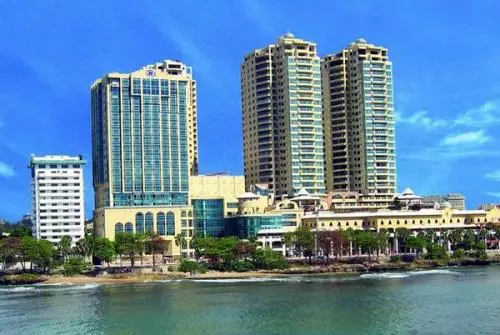
    A partial structural failure has occurred at one of Santo Domingo’s prominent landmarks after intense weather swept through the Dominican capital on Monday afternoon. The Board of Directors of Malecón Center confirmed that a decorative cornice broke free from the building’s north-facing exterior, brought down by the harsh meteorological conditions that impacted the region that day.

    In an official public announcement, the facility’s administration moved quickly to reassure the public and residents about the nature of the damage. The fallen element, they explained, is a decorative plaster feature included in the building’s original architectural plans, and never formed a core part of the property’s load-bearing structural system. This key distinction means the incident does not compromise the overall stability of Malecón Center, and poses no ongoing threat to people who live in or visit the space.

    While no people were harmed in the collapse, the falling debris did cause limited material damage to the property. The condominium’s in-house technical team is currently conducting a full on-site assessment to map out the full extent of the harm, and will move forward with all necessary restoration work once the evaluation is complete.

    The Board of Directors used the statement to reaffirm its long-standing commitment to three core priorities: maintaining rigorous safety standards across the facility, carrying out consistent proactive upkeep, and keeping residents fully informed of all relevant developments. It also extended its gratitude to property residents for their patience and collaboration as the repair process gets underway.

  • “Ask up there, not me,” chair says after FSC blunder

    “Ask up there, not me,” chair says after FSC blunder

    In a landmark 77-page written judgment delivered last Friday, High Court Justice Dr. H Patrick Wells has thrown out a bid by the Financial Services Commission (FSC) to force the liquidation of local general insurer Equity Insurance Company Ltd, ruling the regulator failed to meet the legal threshold for its request and that pushing forward with winding-up proceedings now would fatally undermine an ongoing statutory appeal process launched by the company. The ruling leaves the door open for the FSC to re-file its application at a later date, with Justice Wells noting the regulator may renew its request at the earliest once the pending appeal before the FSC’s own Appeals Tribunal reaches a final resolution. He further added that if the tribunal experiences unreasonable delays in concluding the case, the FSC retains the right to approach the High Court for procedural directions.

    The dispute between the regulator and Equity Insurance stretches back to August of last year, when the FSC seized operational control of the company and moved to revoke its general insurance license, citing long-unresolved violations of multiple financial sector regulations and what the commission described as ongoing risks to the interests of the insurer’s policyholders. Equity Insurance contested that decision, arguing the FSC’s action violated fundamental due process requirements, and launched a statutory appeal to the recently established FSC Appeals Tribunal, which is currently reviewing the challenge.

    Outlining the core legal reasoning behind his ruling in a five-point conclusion, Justice Wells clarified that the commission is not legally required to proceed under Section 57 of the Insurance Act, noting the regulator’s choice to pursue winding-up under Section 56 of the legislation was a discretionary decision it was entitled to make, despite knowing the associated legal requirements. He also struck down the FSC’s key legal argument that the Bankruptcy and Insolvency Act governs any liquidation of Equity Insurance, pointing out that insurance firms are explicitly excluded from the scope of that act under the statutory definition of “corporation” laid out in Section 2 of the legislation.

    Most critically, the justice found the FSC had failed to establish a prima facie case sufficient to convince the court to grant leave for a winding-up petition. “There are substantial and genuine disputes on the alleged facts that challenge the basic premise of the reasons for seeking leave to present a winding-up petition,” the ruling read, noting that the lawfulness and reasonableness of the FSC’s decision to revoke Equity Insurance’s license remains the central question before the Appeals Tribunal. Justice Wells emphasized the tribunal is a statutory body explicitly created by parliament to hear appeals from regulated entities aggrieved by FSC decisions, and overriding that process would not only deny Equity Insurance access to justice, but also erode the institutional integrity of the tribunal, rendering its statutorily mandated proceedings meaningless.

    The judge further added that nearly all of the core factual claims the FSC relies on to support its winding-up bid are already being challenged in two active legal processes: the appeal before the FSC Appeals Tribunal and separate pending judicial review proceedings in the High Court. On the procedural matter of security for costs, Justice Wells explained that the question only arises if the court first determines the FSC has successfully established its case for leave. Once that threshold is met, the court sets a reasonable amount for security, and leave is only finalized once the security is provided; failure to meet the requirement results in leave being denied. He added that courts retain the discretion to accept a formal undertaking as security in exceptional circumstances, even if the practice is uncommon.

    The ruling also confirms a prior decision from the FSC Appeals Tribunal handed down during a March 12 case management conference, where tribunal chair and retired High Court judge Christopher Blackman rejected the FSC’s request to suspend Equity Insurance’s appeal. Blackman noted the FSC had been aware of the opportunity to request a suspension from the High Court prior to appearing before the tribunal, and had chosen not to do so, meaning the tribunal could not grant the stay at that stage. “If they wanted me to stop, they should have asked the High Court. If the High Court had issued an order, so be it. But don’t pass up the opportunity to go to the higher court, and then come back to me. No, sir. You went up there. Ask up there. Don’t ask me,” Blackman said at the time.

    The FSC Appeals Tribunal is scheduled to hold its next procedural session on April 30 at 10 a.m., where members will review progress of the case to date, set a timeline going forward, and schedule a hearing for the substantive appeal, which is expected to take place between late May and early July. In addition to dismissing the winding-up bid, Justice Wells awarded costs to Equity Insurance, with the final amount to be agreed by both parties or assessed by the court if no agreement is reached. Senior Counsel Larry Smith, Alrick Scott SC and T’Shara Seal are representing Equity Insurance in the proceedings, while Garth Patterson SC appears for the FSC.

  • Some fuel arrive in Guyana, more expected- PM Phillips

    Some fuel arrive in Guyana, more expected- PM Phillips

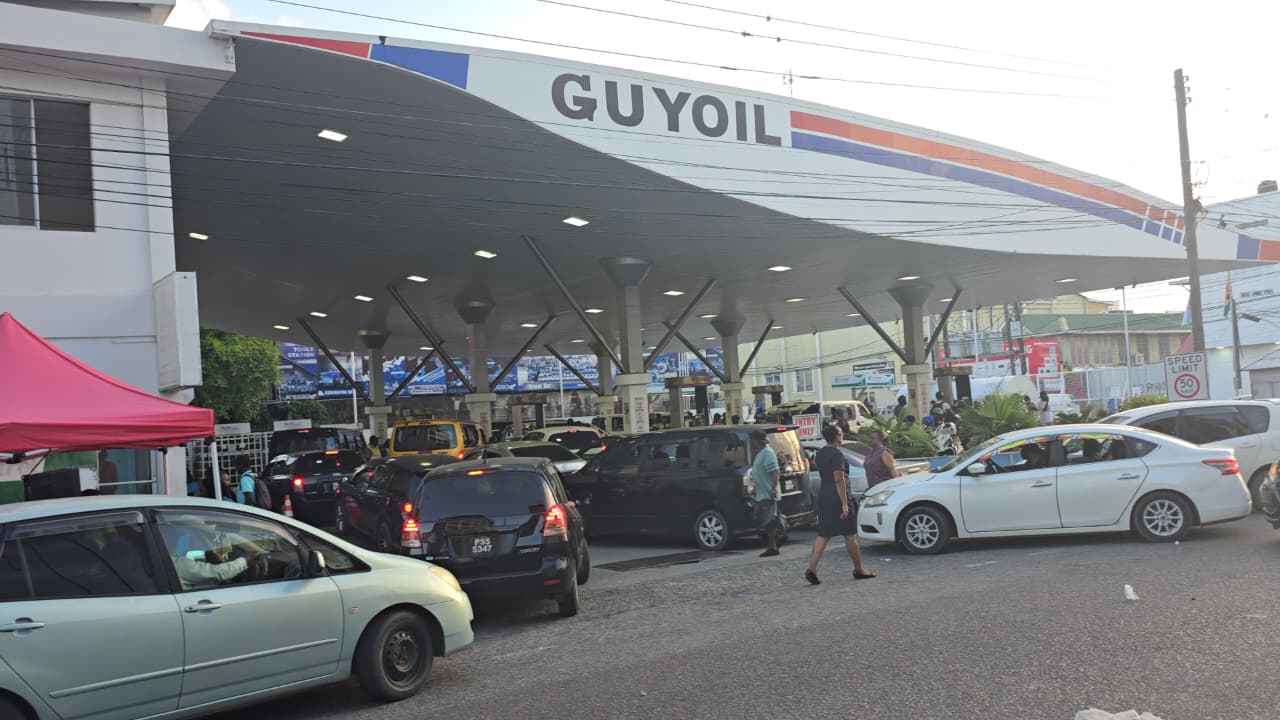
    On Monday, 13 April 2026, widespread panic buying of fuel broke out across Guyana, leaving queues stretching for blocks outside filling stations and empty pumps at many outlets, prompting the country’s top leadership to step forward to reassure the public that the temporary disruption would be resolved quickly with ample new supplies already arriving.

    Widespread stockpiling was triggered after a major fuel shipment delay for SOL, the operator of Mobil-branded fuel outlets across the country, left its stations completely out of gasoline and diesel. According to President Irfaan Ali, the delay occurred after one of SOL’s petroleum tankers lost its anchorage and was forced to return to port, disrupting the scheduled delivery timeline. Prime Minister Mark Phillips, addressing the public Monday night, confirmed that the delayed shipment has now arrived in Guyana and is currently being offloaded to distribution networks.

    The Prime Minister emphasized that there is no justification for ongoing panic buying or hoarding, noting that multiple importers have already landed large volumes of fuel and additional large consignments are scheduled to arrive through the first half of this week. Detailed arrival schedules for all major national fuel suppliers confirm that new supplies are already entering the market:

    On Monday 13 April at 2 p.m., Rubis Guyana Inc. took delivery of 10,000 barrels of gasoline, 6,700 barrels of low-sulphur diesel, and 4,500 barrels of ultra-low-sulphur diesel, alongside 3,000 barrels of gasoline and 14,000 barrels of diesel that arrived for SOL. Offloading for these shipments began immediately, with distribution rolling out to filling stations by Monday evening.

    Looking ahead, SOL is scheduled to receive an additional 12,000 barrels of gasoline and 6,000 barrels of diesel at 2:20 p.m. on 14 April. Rubis will take another 10,000 barrels of gasoline, 18,000 barrels of diesel, and 3,000 barrels of avjet at 3 p.m. the same day. For Guyana Oil Company (GUYOIL), two large shipments carrying a combined 21,000 barrels of gasoline and 9,000 barrels of diesel are scheduled to arrive and begin offloading on the morning of Thursday 15 April.

    With the supply shortage prompting many consumers to stockpile fuel in unsafe plastic containers, the Prime Minister issued a critical public safety warning. He reminded Guyanese that all petroleum products are highly flammable, and storing fuel in unapproved, non-industrial containers creates severe fire hazards that can lead to catastrophic injury, loss of life, and widespread property damage.

    Phillips added that the Guyana government will maintain close oversight of the fuel market through the resolution of the disruption, and will implement all necessary measures to ensure consistent, reliable access to fuel for all consumers across the country.

    Monday’s unprecedented long queues at filling stations marked the most severe public panic over fuel supplies the country has seen since the 1980s, when Guyana faced a crippling foreign exchange crisis and broad economic recession that left critical goods in short supply.

  • Gazcue hit hard by sudden storm, dozens of vehicles affected

    Gazcue hit hard by sudden storm, dozens of vehicles affected

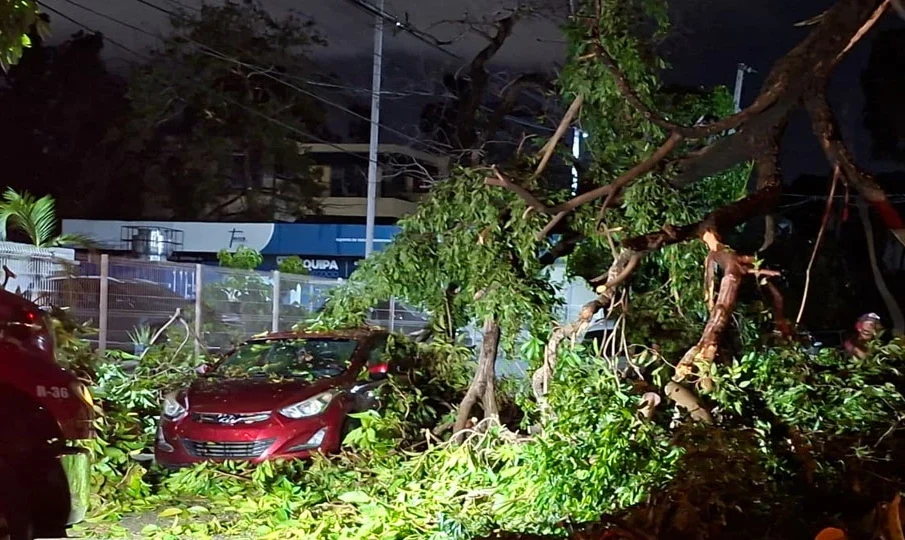
    On Monday afternoon, an unanticipated severe weather system characterized by torrential rainfall, large hail and destructive wind gusts barreled through Santo Domingo’s National District, leaving a trail of extensive destruction that hit the Gazcue neighborhood particularly hard. The fast-intensifying storm caught local residents off guard, triggering a series of disruptions that upended daily life across the affected area.

    Strong wind gusts reached enough force to uproot fully grown trees, sending the massive vegetation crashing onto public roadways and parked or moving vehicles. The blockages immediately snarled traffic, leaving commuters and local residents stranded for extended periods and creating chaotic, high-tension conditions across the sector. Multiple residential properties also reported substantial material damage: shattered window panes were widespread, and outdoor structures including awnings and backyard gazebos were completely destroyed by the powerful winds. Loose debris and household items were scattered across yards and streets by the gusts, adding to the cleanup burden facing the community.

    In addition to structural and property damage, the severe weather knocked out critical electrical infrastructure, leaving the vast majority of Gazcue without power immediately after the storm passed. Local utility companies quickly dispatched response teams to the area to conduct full damage assessments and begin restoration work. As of the latest updates, emergency management officials have confirmed that no storm-related injuries have been reported, though fallen tree debris continues to cause major traffic congestion throughout the neighborhood as cleanup efforts proceed.

  • Republic Bank introduceert online rekening openen via RepublicOnboard

    Republic Bank introduceert online rekening openen via RepublicOnboard

    In a major push to modernize retail banking services and enhance customer accessibility, Republic Bank has announced the launch of a groundbreaking end-to-end digital account opening platform named RepublicOnboard, announced in a recent public statement dated April 13.

    Unlike traditional account opening processes that require mandatory in-person visits to a bank branch, the new solution empowers customers to complete their entire application from any location, at any time. Every step of the journey, from initial application submission to identity verification, is conducted completely online, cutting out lengthy wait times and paperwork that have long frustrated banking customers.

    To complete their application, users simply upload digital copies of required documentation, including government-issued proof of identity, confirmation of residential address, and income information if available. Identity verification is finalized through a secure, encrypted selfie-check process that matches the user’s photo to their official identity document. Republic Bank confirmed that the new platform is directly integrated with its core banking infrastructure, a design choice that guarantees both high-level security for user data and a smooth, efficient onboarding experience. As an added convenience, customers are automatically enrolled in the bank’s existing digital banking services, including online banking and mobile banking apps, immediately after their account is approved.

    The platform offers customers a range of account options to suit different needs, including the no-monthly-fee e-free checking account, a standard giro account, and a personal savings account. The e-free option, which charges no recurring monthly maintenance costs, is expected to be particularly popular among consumers who rely almost exclusively on digital banking services and have little need for in-branch support.
    Republic Bank also emphasized that its existing ATM services will remain fully operational for customers following the launch. Account holders can still withdraw funds in both Surinamese dollars (SRD) and United States dollars (USD), with a daily withdrawal limit of SRD 20,000 that carries no extra transaction fees.

    Industry observers note that the launch of RepublicOnboard marks a key milestone in Republic Bank’s broader strategy to expand digital transformation and customer-centric service delivery across the regional banking sector. The move aligns with a global industry trend toward fully digital banking experiences, as financial institutions compete to meet rising consumer expectations for flexible, accessible financial services.

  • BAM: Safeguard Foreday Morning

    BAM: Safeguard Foreday Morning

    As Barbados’ beloved annual Crop Over festival approaches, a leading cultural organization is sounding the alarm over growing threats to one of the celebration’s most iconic centerpieces, calling for urgent regulatory action to safeguard the island’s cultural and tourism heritage.

    Bryan Worrell, head of the Barbados Association of Masqueraders (BAM), has renewed his organization’s appeal to national cultural authorities to protect the legacy of Foreday Morning and other signature Crop Over events, amid mounting concerns that unregulated private parties are siphoning attendees away from the flagship j’ouvert celebration. These concerns are widely shared among the roughly 40 official Foreday Morning band leaders, who have formally submitted a petition to the National Cultural Foundation (NCF) and the Ministry of Culture to address the issue. Since the petition was filed, Worrell confirmed that ongoing discussions are underway to develop a formal, long-term solution to the mounting pressure on official events.

    At the core of BAM’s proposal is the creation of a national registry for official cultural events on Barbados’ national calendar. Worrell argues that key fixtures including Foreday Morning, Grand Kadooment and Bridgetown Market deserve special protected status to limit direct competition from private events. He warned that the current threat to Foreday Morning is not an isolated issue: without intervention, other major Crop Over attractions could face the same erosion of attendance in coming years.

    “What’s to say that in another year or two that Grand Kadooment doesn’t come under the same threat that Foreday Morning is?” Worrell posed in an interview with reporters. He emphasized that BAM’s objection centers on private events holding their activities on the exact same night as official Foreday Morning, which splits the reveller base and undermines the long-standing traditional celebration.

    While much of the recent public attention has focused on Twisted Entertainment, the organizer of the popular Tipsy Music Festival that launched a competing private jump this year, Worrell stressed that the problem is systemic. Over the past several years, there has been a steady rise in the number of private foreday-style events, with another new private gathering, Stain’d, announced for this year backed by Vida by Esquire (VXE) and other local partners.

    Worrell explained that two potential paths forward exist to resolve the conflict: establishing the protected national event registry, or updating national legislation to formalize protections for official cultural events. In the near term, however, BAM is focused on brokering a voluntary agreement to shift competing private events to different dates, an arrangement that would protect the livelihoods of the dozens of small businesses and band leaders that organize the official Foreday Morning celebration each year.

    Addressing a common talking point from supporters of private events – claims that official Foreday Morning is unsafe for attendees – Worrell pushed back firmly, noting that there is no empirical evidence to back up these assertions. He pointed to more than a decade without any major reported safety incidents at the official event, and outlined the layered security framework that is already in place to protect participants.

    “Each registered band has its own security, along with the police service, along with the BDF on the route, along with excellent lighting… ambulance services are there to respond, so we have everything in place that will make your event safe and sound,” Worrell explained.

    Beyond preserving cultural tradition, Worrell emphasized that Foreday Morning is a critical economic and tourism asset for Barbados, drawing large numbers of international visitors who specifically travel to the island to experience the authentic cultural event. “That’s why we feel so strongly about it…as one of the highlighted events on the calendar that it should [have] that additional protection to ensure that it lives on,” he said.

    When reached for comment on the ongoing negotiations between BAM and cultural authorities, Akil Franklin, corporate communications specialist at the NCF, declined to provide any statement on the status of talks.