作者: admin

  • Saint Lucian boxers to take up Guadeloupe scholarships

    Saint Lucian boxers to take up Guadeloupe scholarships

    Two emerging boxing talents from Saint Lucia have been selected for an elite athletic development program in the Caribbean region. Hervé Charlemagne, 17, and Daniel Martin, 18, have secured coveted scholarships to undertake a comprehensive three-month training immersion at the Centre de Ressources, d’Expertise et de Performance Sportive (CREPS) in Guadeloupe, commencing January 11.

    The young welterweights have demonstrated exceptional prowess in regional competitions. Charlemagne, hailing from Bexon, achieved historic distinction by capturing the bronze medal at the 2023 Central American and Caribbean School Sports Games in Venezuela—marking Saint Lucia’s inaugural international boxing medal. Meanwhile, Martin, originating from Grande Riviere, Gros Islet, has established himself as a two-time gold medalist at the Organisation of Eastern Caribbean States championships, most recently triumphing in 2024 as a novice competitor.

    Both athletes share an educational background at St. Mary’s College, with Charlemagne currently representing the institution and Martin advancing to Sir Arthur Lewis Community College on scholarship. Martin brings additional international perspective having previously resided in the United Kingdom, where he attended Patricia D James Secondary School.

    The Saint Lucia Boxing Association (SLBA) has characterized this opportunity as a transformative milestone in athletic development. President David Christopher commended the boxers’ dedication, stating: ‘This scholarship recognizes the exceptional commitment and potential demonstrated by these young athletes. Such prestigious opportunities are earned through relentless discipline and performance.’

    During their immersion, the boxers will access world-class training facilities, advanced coaching methodologies, sports science support systems, and competitive sparring with elite partners. The comprehensive program includes preparatory administrative processing, medical evaluations, and orientation sessions to ensure optimal adaptation to the CREPS training environment.

    Christopher emphasized the broader implications for national sports development: ‘The CREPS program provides exposure to elite training environments that are instrumental for athlete advancement. The knowledge and experience gained will not only elevate individual careers but also enhance the competitive landscape of boxing throughout Saint Lucia.’

    The CREPS Guadeloupe Immersion Programme maintains international recognition for cultivating elite competitors across multiple sporting disciplines, representing a significant investment in Caribbean athletic talent development.
  • CARICOM collaborates with partners to launch three-part Crop Protection Training

    CARICOM collaborates with partners to launch three-part Crop Protection Training

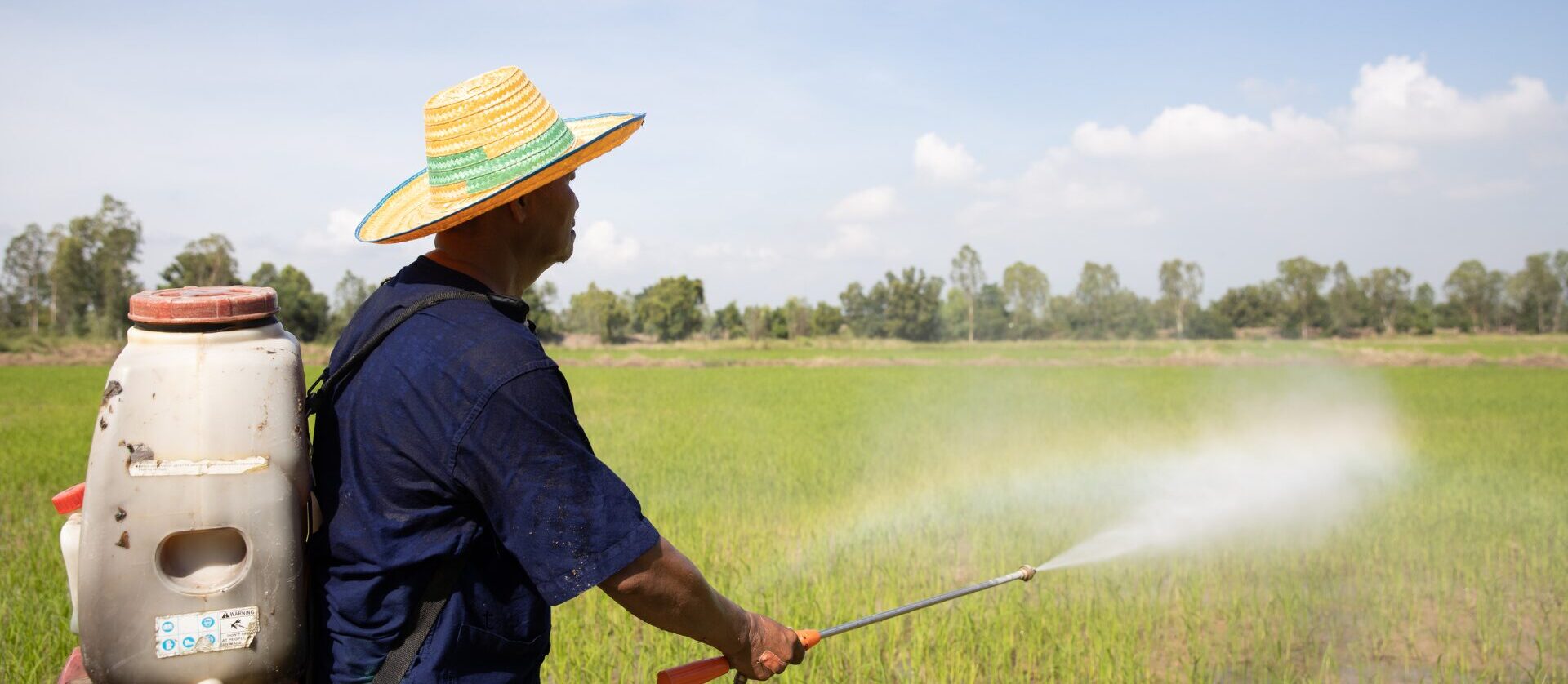
    The Caribbean Community (CARICOM) has unveiled an ambitious educational initiative designed to transform agricultural practices across member states. A comprehensive three-level Crop Protection training program will launch on January 26, marking a significant step toward enhancing food security and sustainable farming methods throughout the region.

    Developed through a strategic partnership between the CARICOM Secretariat, the Caribbean Agricultural Research and Development Institute (CARDI), and COLEAD—a non-profit organization dedicated to sustainable agriculture—this six-week online course offers self-directed learning for agricultural professionals. The program specifically targets farm supervisors, horticulturists, production managers, crop protection specialists, and packhouse supervisors seeking to advance their expertise.

    The curriculum follows a progressive structure that begins with fundamental crop protection concepts, introducing participants to essential plant pest and disease identification alongside chemical control methods. Intermediate modules delve deeper into pest organism behavior, disease epidemiology, weed competition dynamics, and herbicide resistance management, with practical applications for both field and post-harvest scenarios. The advanced tier focuses on sophisticated integrated pest management (IPM) techniques, including observational methods, intervention threshold establishment, and case study-based solution development.

    This initiative directly supports CARICOM’s Vision 25 x 2025 + 5 strategy, which aims to reduce the region’s food import expenditures by 25% through enhanced local agricultural production, improved trade mechanisms, and climate-resilient farming practices. The program represents a critical capacity-building component within broader infrastructure investments targeting transportation and storage systems.

    Agricultural stakeholders throughout the food production and processing sectors are encouraged to enroll in this transformative educational opportunity, which promises to elevate pest management standards while promoting environmental sustainability and economic development across the Caribbean region.

  • Belizean Students Left in Limbo After Fraud Case

    Belizean Students Left in Limbo After Fraud Case

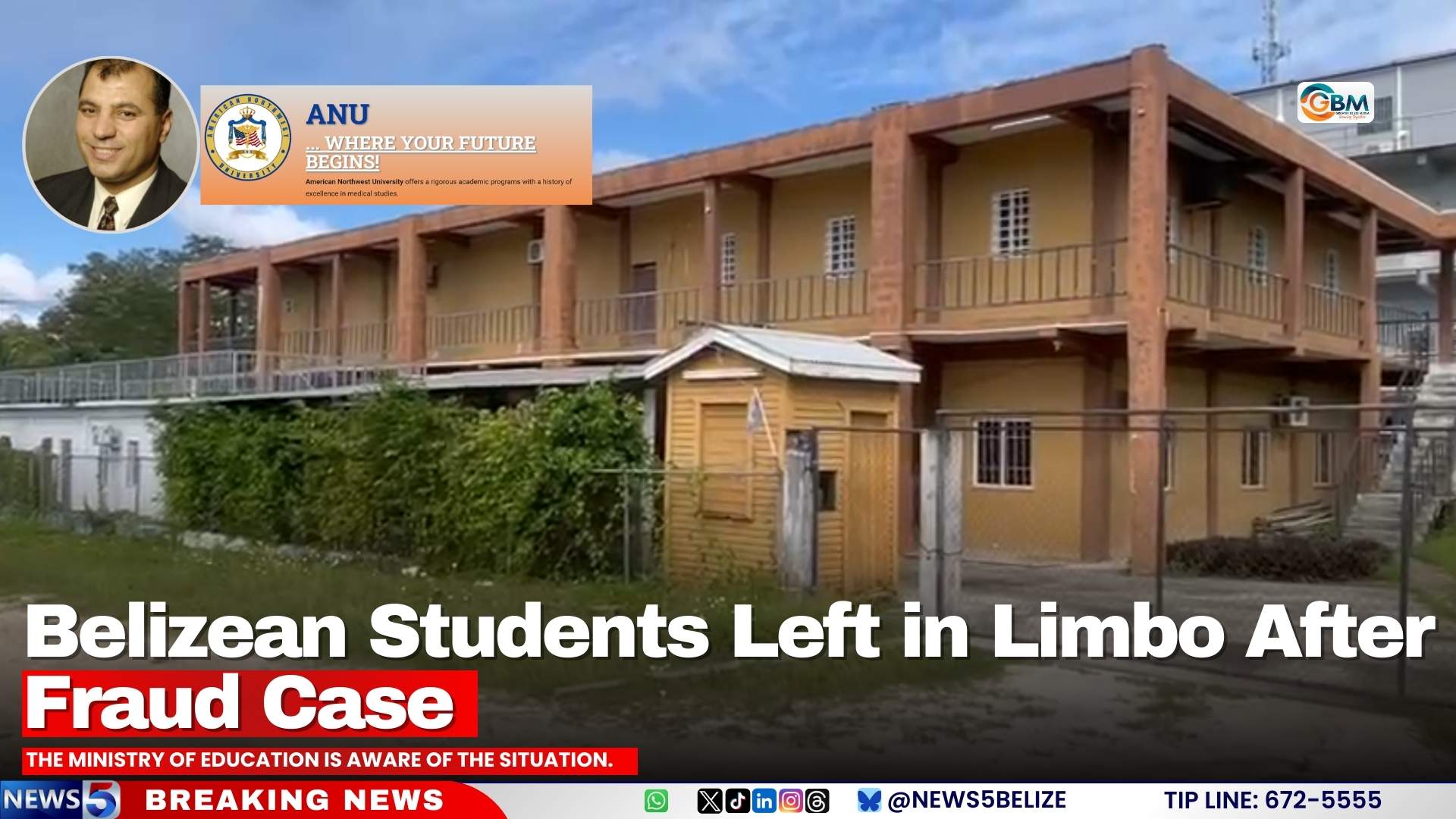
    Medical students in Belize confront profound educational and financial turmoil following the criminal indictment of their university dean in a major U.S. healthcare fraud case. Dr. Mohammad Khamis, identified as Dean and CEO of American Northwest University (ANU) in Belmopan, faces multiple felony charges in Illinois for allegedly defrauding Medicaid and Medicare programs of over $1 million.

    According to the Illinois Attorney General’s Office, Dr. Khamis operated four medical practices and pharmacies in Chicago while submitting fraudulent claims for medical services supposedly performed during periods when he was actually abroad. The services were allegedly conducted by an unlicensed student from his non-certified medical school in Bosnia.

    The scandal has left Belizean students at ANU in crisis, with the university compound now locked and faculty reportedly unpaid. Students describe investing years of family savings and personal sacrifice into their medical education, only to face complete uncertainty about their academic futures.

    One distressed student shared: ‘This institution was my starting point for everything. My parents fully funded my education, and now it feels like their money has been wasted. We’ve covered not just tuition but all living expenses through years of financial strain.’

    Students have criticized both the university administration and Belize’s Ministry of Education for inadequate oversight, noting the institution operated without a final charter. In an anonymous collective statement, they described themselves as ‘victimized by an international fraud scheme and total lack of regulatory oversight,’ demanding immediate government intervention to secure academic records and address their precarious situation.

    The Ministry of Education has acknowledged awareness of the developing situation but has not yet announced specific remedial measures for the affected students.

  • Saint Lucians rally to denounce US actions in Venezuela

    Saint Lucians rally to denounce US actions in Venezuela

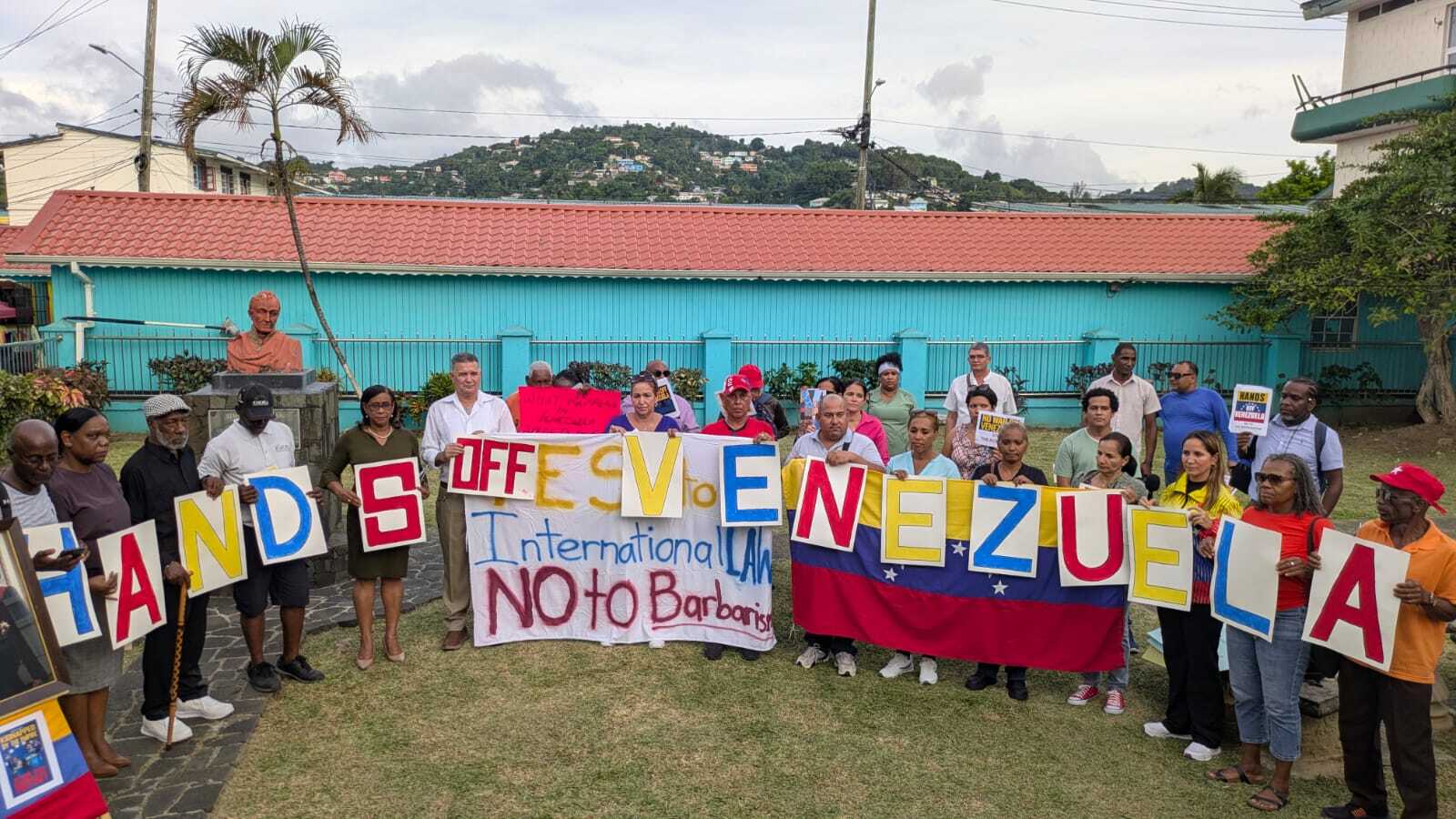
    A significant demonstration of regional solidarity unfolded in Castries, Saint Lucia, as citizens gathered at Bideau Park to voice staunch support for Venezuela amidst escalating geopolitical tensions. The rally, orchestrated by the interim Saint Lucia/Venezuela Association, served as a powerful rebuke against recent United States military operations targeting Venezuelan territories.

    The carefully chosen venue held profound historical symbolism, featuring busts of Venezuelan liberator Simón Bolívar and Saint Lucian freedom advocate Jean Baptiste Bideau, whose heroic rescue of Bolívar from drowning centuries ago mirrored the contemporary theme of regional protection.

    Venezuelan Ambassador Leiff Escalona expressed profound gratitude for the overwhelming support from Saint Lucian citizens and diplomatic counterparts, particularly noting the presence of Cuban embassy officials. “From the initial reports of US aerial bombardments targeting four Venezuelan cities, my office received numerous calls from concerned Saint Lucians,” Ambassador Escalona revealed. “This public display of solidarity confirms our shared commitment to peace.”

    Trevor Heath, representing the organizing association, characterized US military maneuvers as “barbaric acts of aggression” that threaten the entire Caribbean basin. Reading from an official statement, Heath condemned “the Trump administration’s blatant attempt to orchestrate regime change against democratically elected President Nicolás Maduro” and denounced the “calculated seizure of Venezuela’s oil resources for American corporate interests.”

    Cuban Ambassador Yenielys Linares amplified these concerns, labeling the January 3rd incidents as “illegal and irrational acts of aggression.” She revealed disturbing repercussions already affecting Caribbean students in Cuba, with one Saint Lucian scholar expressing fear about returning to studies amid regional instability. “Who granted Trump authority to designate which nation follows Venezuela as the next target?” Ambassador Linares posed to the assembled crowd.

    Veteran journalist Earl Bousquet provided crucial historical context, documenting 70 US military interventions in Latin America and the Caribbean between 1947-1983. “The pattern demonstrates alarming consistency—from Grenada in 1983 to Panama in 1989, Haiti in 2004, and now Venezuela in 2026,” Bousquet cautioned. He highlighted the recent reformulation of the Monroe Doctrine into the “Donroe Doctrine” as explicit confirmation of American expansionist intentions.

    Bousquet, dressed in black to memorialize 32 Cuban and 80 Venezuelan casualties from the recent attacks, emphasized that meaningful solidarity requires tangible sacrifice. “The United States demonstrates willingness to spill blood for oil, particularly as Venezuela redirects 68% of its petroleum exports to China, diminishing US energy leverage,” he analyzed.

    The protest concluded with unified demands for President Maduro’s safe return, complete military withdrawal from the region, and immediate resumption of diplomatic negotiations. The collective message resonated clearly: the Caribbean remains determined to preserve its status as a zone of peace against foreign intervention.

  • VS neemt Russische tanker met Venezolaanse banden in beslag

    VS neemt Russische tanker met Venezolaanse banden in beslag

    In a significant escalation of maritime tensions, the United States has seized the Russian-flagged tanker Marinera (formerly known as Bella-1) in international waters. This decisive action forms part of President Donald Trump’s aggressive strategy to regulate oil supply across the Americas and pressure Venezuela’s socialist government toward alignment with US interests.

    The seizure occurred following a dramatic two-week pursuit across the Atlantic Ocean, during which the vessel was tracked by US Coast Guard and military assets. The operation gained additional complexity as Russian submarines and naval vessels were observed in the vicinity, creating a tense standoff between the world powers.

    Russia has issued a vehement diplomatic response, condemning the seizure as a gross violation of international law and characterizing it as an unlawful, politically motivated act. The Kremlin has demanded immediate clarification from Washington and warned that such actions risk significantly heightening international tensions, particularly given existing strains over the Ukraine conflict.

    This incident represents the latest development in America’s sustained pressure campaign against Venezuela since the deposition of Nicolás Maduro. US authorities have systematically blocked sanctioned vessels from entering or exiting Venezuelan waters, targeting the OPEC member’s crucial oil exports.

    The Marinera had previously attracted attention last month when it refused boarding attempts and subsequently reflagged under Russian registry. In a parallel operation, US Coast Guard units intercepted another fully-loaded tanker, the Sophia, with Venezuelan connections near Northeast South America—marking the fourth such interception in recent weeks.

    Russian state broadcaster RT aired footage showing US helicopters circling the Marinera, reporting apparent attempts to board the sanctioned vessel, which was reportedly empty at the time of seizure.

  • Boy, 8, Recovering After RTA; Mother Speaks to News 5

    Boy, 8, Recovering After RTA; Mother Speaks to News 5

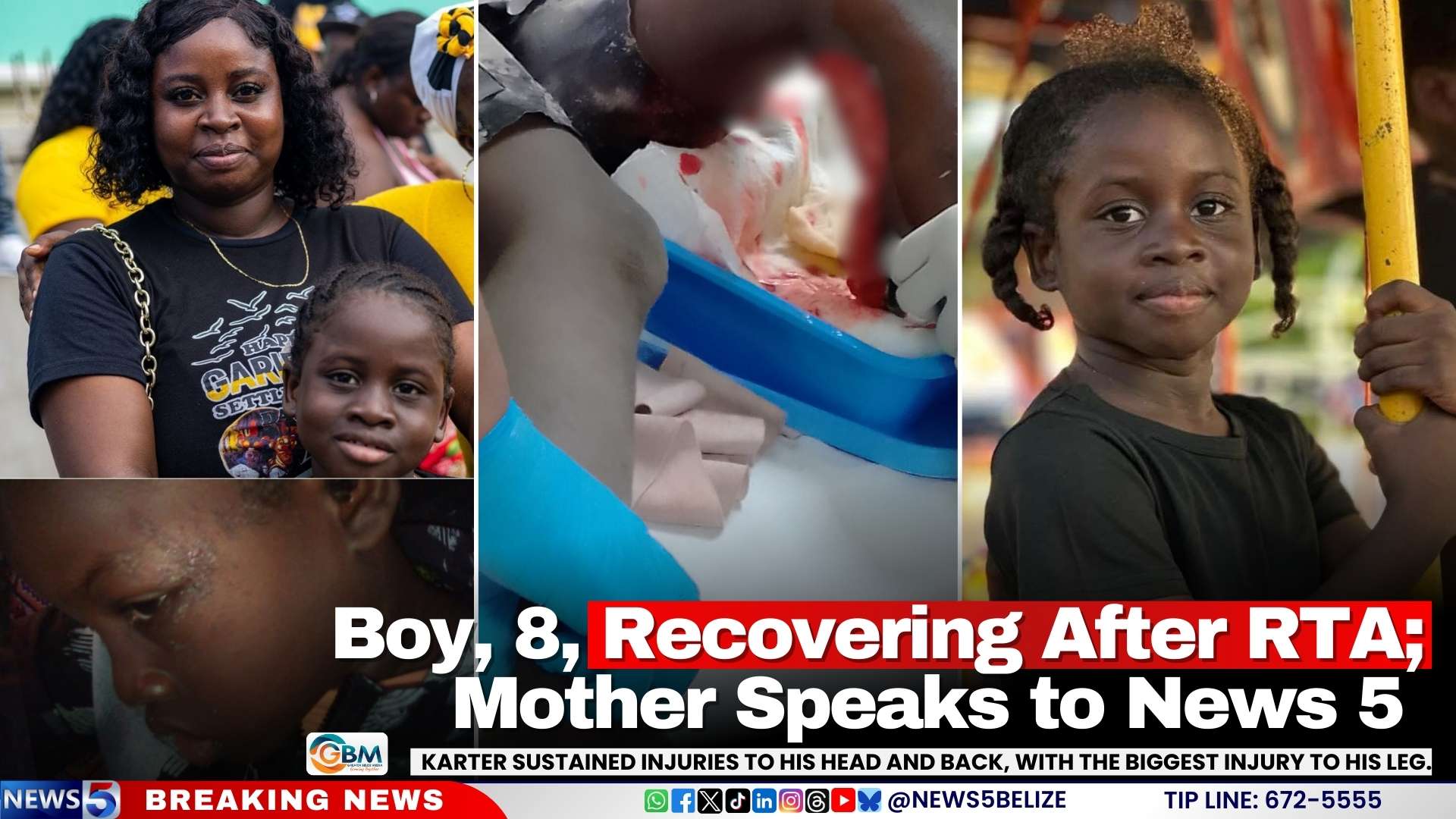
    An eight-year-old student from Hopkins, Stann Creek District, is undergoing recovery following a traumatic traffic incident that occurred near his school premises on Tuesday afternoon. Karter Benedit, a Standard Two pupil at Holy Family RC Primary School, suffered significant injuries when a motorcycle collided with him while he was crossing the street alongside classmates.

    The child was immediately transported to Southern Regional Hospital for emergency treatment. Medical professionals performed approximately 12-15 stitches to address head trauma, while also treating serious leg injuries that involved exposed back muscles. According to medical assessments, the boy narrowly avoided permanent mobility damage due to the white tissue remaining undamaged.

    Dyny Martinez, Karter’s mother, recounted the harrowing experience of receiving the emergency call from school authorities. She described the urgent transfer to Dangriga hospital for specialized admission and treatment. Physicians have indicated a minimum two-week recovery period for the young patient.

    Law enforcement authorities have confirmed that a suspect is currently in custody regarding the incident. This event has ignited community discussions about road safety measures near educational institutions. Martinez has publicly advocated for enhanced traffic controls, including speed bumps and increased police monitoring of motorcycle operators near school zones.

    The timing coincides with announced transportation safety initiatives by national authorities. Chester Williams, CEO of relevant transportation authorities, recently disclosed that the Ministry of Transport is evaluating comprehensive measures to improve motorcycle training protocols and enforcement procedures. These developments include deploying additional traffic officers equipped with body cameras, dashboard cameras, speed detection devices, and breathalyzer technology.

  • Ocean Academy Forced to Operate Without Proper Classrooms

    Ocean Academy Forced to Operate Without Proper Classrooms

    In an extraordinary display of community solidarity, Ocean Academy on Caye Caulker Village has commenced its new academic term utilizing improvised learning spaces after its primary campus became unavailable for classes. The educational institution has implemented an innovative distributed learning model across multiple repurposed facilities throughout the island community.

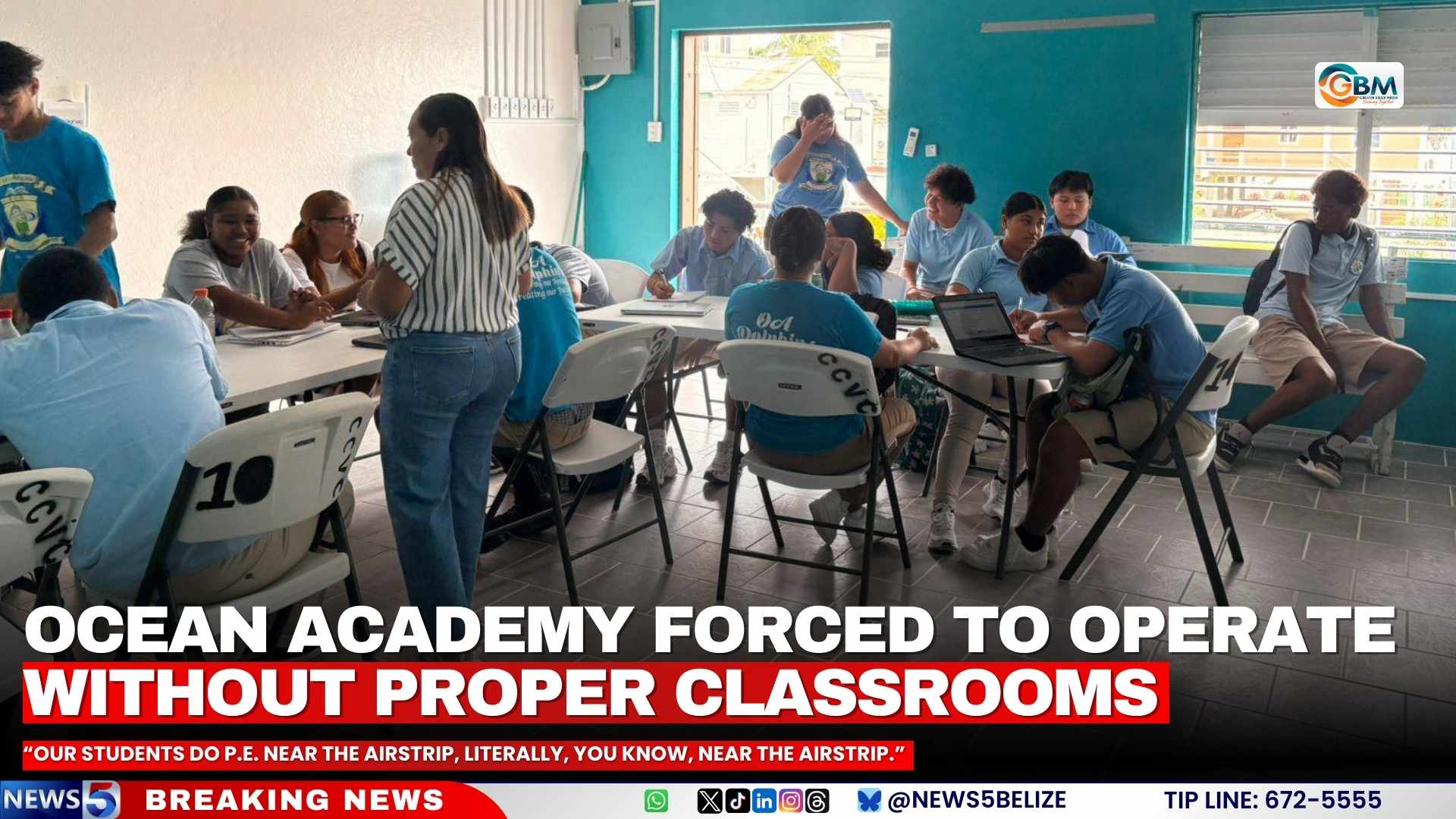
    Principal Noemi Zaiden revealed that contingency planning began prior to the holiday break, with school administrators working diligently to secure alternative teaching environments. The village council contributed crucial spaces including their community center and NEMO emergency operations room, while a former waterfront restaurant previously operating as Fantasy Dining was additionally converted for educational purposes.

    “Our team has been transporting infrastructure daily – this morning alone we moved over fifty desks and chairs to prepare these spaces,” Zaiden reported. The single-story restaurant building, while unable to accommodate the entire student body, has enabled the reinstatement of in-person instruction for several classes through carefully coordinated rotational schedules.

    Physical education sessions are currently conducted adjacent to the island’s airstrip, maintaining both academic programming and vital social interaction opportunities. “These touchpoints significantly impact student development,” Zaiden emphasized. “Social connectivity remains equally important as curricular concepts during this transitional period.”

    The school community awaits governmental authorization to implement a more permanent solution, having already secured approximately 90,000 Belize dollars through local and international fundraising efforts. Prefabricated structures stand ready for deployment on designated land, though administrative approval remains pending despite earlier indications of scheduled meetings.

    While Area Representative Andre Perez has projected construction commencement by May, Zaiden maintains focus on immediate educational continuity. “Our present concern addresses the interim period until then,” she stated. “Our students’ learning cannot be postponed.”

    The principal extended gratitude to educators, parents, and community members for their sustained support under challenging circumstances, particularly acknowledging teachers’ dedication to both academic quality and student welfare. As the term progresses, the school community maintains hope for imminent approval of their constructed solution, advocating for students’ fundamental right to “safe, dry spaces conducive to learning.”

    News Five has initiated contact with Belize’s Ministry of Education seeking official commentary regarding the authorization timeline.

  • Nation Bids Farewell to ‘Teacher Gen,’ Educator and Foster Mother Who Shaped Generations

    Nation Bids Farewell to ‘Teacher Gen,’ Educator and Foster Mother Who Shaped Generations

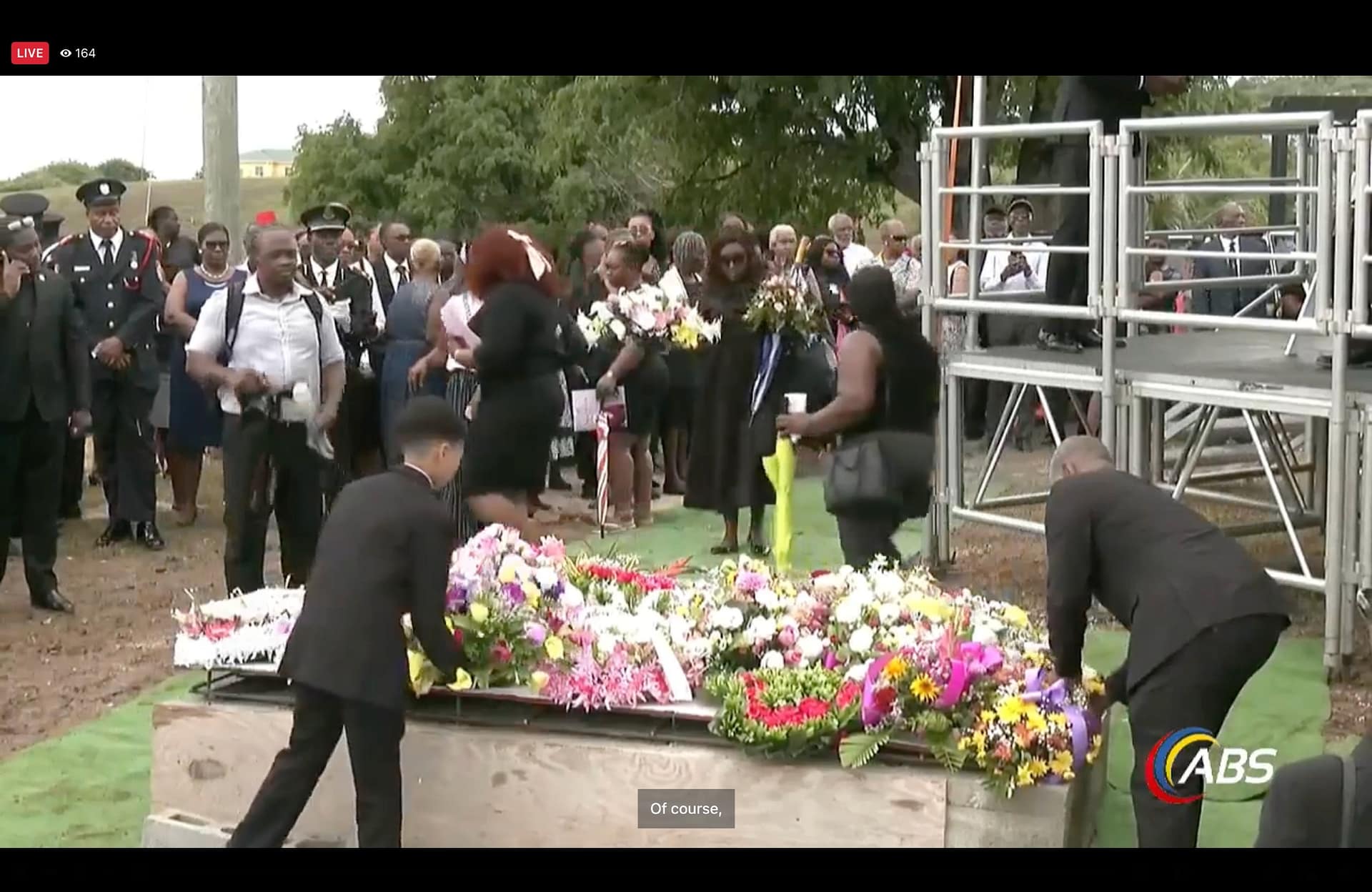
    The Spring Gardens Moravian Church in Antigua became a national gathering place this week as citizens from all walks of life united to honor the extraordinary legacy of Genevieve Catilda Smith, universally known as ‘Teacher Gen.’ The revered educator and foster mother received an official state funeral attended by Prime Minister Gaston Browne, government officials, clergy members, and countless former students whose lives she transformed.

    Smith’s remarkable 90-year journey exemplified selfless service through dual vocations: revolutionary educator and compassionate caregiver. Her innovative teaching methods—incorporating movement, song, and rhythm—pioneered inclusive education decades before such approaches became mainstream. She specialized in nurturing students others had dismissed as ‘unteachable,’ demonstrating unwavering belief in every child’s potential.

    Beyond the classroom, Smith’s home operated as a sanctuary for vulnerable youth. She formally fostered over 60 children and provided informal care to countless others escaping abuse, neglect, or poverty. Her household operated under two non-negotiable principles: education and faith. When space ran out, she creatively arranged housing with neighbors while covering all expenses personally.

    Her humanitarian impact expanded regionally during the Montserrat volcanic crisis, when she opened her doors to displaced families without hesitation. Deeply rooted in her Moravian faith, Smith continued teaching adult literacy classes well into her eighties while maintaining her own passionate pursuit of knowledge, frequently returning from book ships with bags overflowing with reading materials.

    The funeral service beautifully reflected the multidimensional nature of her contributions through scripture, original music performed by her son Rev. Dr. Olson Patmore Smith, and poetic tributes from her granddaughter Janora Smith-Kellman. In her eulogy, daughter Rev. Denise Smith-Lewis portrayed a woman who lived her faith through quiet action rather than public recognition.

    Clergy members appropriately characterized Smith as a ‘nation builder’ whose true legacy resides not in official titles but in generations of children she steadied—who themselves became parents, professionals, and community leaders. As the procession concluded at Floretta Gardens Cemetery in her native Potters village, the nation was left with Teacher Gen’s enduring lessons: that love always makes room, discipline harmonizes with compassion, and a single dedicated life can educate an entire nation.

  • Grenada Tourism Authority vacancy: Research Officer

    Grenada Tourism Authority vacancy: Research Officer

    The Grenada Tourism Authority (GTA), the national organization responsible for destination marketing and promotion, has announced a career opportunity for a Research Officer to join its team. This permanent position represents a strategic investment in data-driven tourism development aimed at stimulating economic prosperity across the Caribbean nation.

    The successful candidate will play a pivotal role in advancing Grenada’s tourism sector through comprehensive market intelligence and analytical insights. The position demands a unique combination of advanced research capabilities and practical application within the Caribbean tourism context.

    Core competency requirements include sophisticated qualitative and quantitative research skills, with particular emphasis on analytical processing of diverse information sources. The role requires exceptional critical judgment to identify issues and develop practical solutions while managing priorities within strict deadlines. Teamwork and interpersonal skills are essential, as the position involves collaboration across multidisciplinary teams and establishing professional credibility with stakeholders.

    Technical prerequisites include advanced proficiency in Microsoft Excel and demonstrated experience with Statistical Package for the Social Sciences (SPSS). Applicants must possess document management software expertise, including Microsoft Office Suite, with additional consideration given to those familiar with Adobe Creative Suite and Canva platforms.

    The minimum qualifications specify a bachelor’s degree in Economics, Marketing, Business, Tourism or related disciplines, complemented by three years of professional experience in data gathering environments. The GTA emphasizes its organizational values of positivity, respect, transparency, commitment, and excellence in seeking candidates who embody these principles.

    Interested professionals must submit their curriculum vitae and cover letter through the official portal at puregrenada.bamboohr.com/careers/57 before the application deadline of January 26, 2026. The selection process will only contact candidates who meet the specific requirements outlined for this research-focused position.

  • U.S. defends expansion of visa bond program covering 38 countries, including Dominica and Antigua

    U.S. defends expansion of visa bond program covering 38 countries, including Dominica and Antigua

    The United States has significantly expanded its controversial visa bond initiative, nearly tripling the number of countries whose citizens must post financial guarantees ranging from $5,000 to $15,000 when applying for certain U.S. visas. The State Department confirmed the program will now apply to passport holders from 38 nations, with the latest expansion adding 25 countries effective January 21, 2026.

    This policy enhancement follows previous additions made in 2025 and represents one of the most extensive applications of visa bonds to date. The newly affected nations span multiple continents, including Algeria, Angola, Bangladesh, Cuba, Dominica, Fiji, Nepal, Nigeria, Venezuela, and Zimbabwe, among others. They join earlier additions such as Bhutan, Botswana, and Zambia, which faced implementation dates throughout 2025.

    U.S. authorities defend the measure as an essential mechanism to ensure compliance with visa terms and reduce overstay rates. The program operates under INA Section 221(g)(3) and a Temporary Final Rule, utilizing Department of Homeland Security data tracking B1/B2 visa violations. Officials emphasize that bond payment doesn’t guarantee visa approval but will be refunded if the application is denied or if the holder fully complies with all conditions during their stay.

    The expansion occurs within a broader context of tightened U.S. entry requirements that include mandatory in-person interviews, extensive social media history disclosures, and detailed accounts of applicants’ travel and living arrangements. Critics argue the financial requirements create prohibitive barriers for citizens from affected nations, most of which are developing countries across Africa, Latin America, and Asia. Administration supporters maintain the program represents a necessary safeguard for immigration enforcement.

    Implementation will occur on staggered dates, with most new countries beginning enforcement on January 21, 2026, while earlier additions like Malawi, Zambia, and Tanzania already faced requirements in 2025. This policy shift underscores the administration’s continued focus on restricting immigration pathways through financial deterrence mechanisms.