作者: admin

  • Will it be Ciceron or Gros Islet? Carnival Queen Pageant rivalry heats up

    Will it be Ciceron or Gros Islet? Carnival Queen Pageant rivalry heats up

    The National Carnival Queen Pageant, one of Saint Lucia’s most anticipated annual cultural events, is gearing up for its 2024 installment, bringing with it all the beloved fanfare that has made it a staple of the island’s summer calendar. From fiery social media debates between supporter groups to tense sponsorship competition and the time-honored inter-regional rivalries that draw audiences year after year, this year’s iteration is on track to deliver all the excitement pageant fans have come to expect.

    Following a series of regional auditions, organizers have narrowed the field to nine finalists representing constituencies across the island: Ciceron (Castries South), Desruisseaux (Micoud South), Gros Islet, Mabouya Valley (Dennery North), Dennery South, and La Clery (Castries North). Castries South in fact boasts two finalists this year, Faith Edward and Sydney James, both hailing from the Ciceron community. Gros Islet is sending three delegates to the competition: Adel Montoute, Derrelle DuBois from Grande Riviere, and Simone Sonson from Reduit. The 2023 crown was claimed by Ermele Tisson, a contestant from Choiseul, who will pass on her title at the July 4 event.

    The pageant has already garnered playful public attention from two sitting members of parliament, who have opened up about their regional loyalties in lighthearted interviews ahead of the main event. While many local politicians typically avoid picking favorites to keep an air of neutrality, both MPs have been open about where their loyalties lie, much to the amusement of pageant followers.

    Dr Ernest Hilaire, Saint Lucia’s Minister for Tourism and Culture and the sitting MP for Castries South, spoke at the official sashing ceremony for contestants, noting that this year’s pageant has him more excited than he has been in any previous year. Joking with the audience, he quipped that his heightened anticipation had nothing to do with Castries South fielding two contestants from the Ciceron community, barely hiding his amusement as he made the tongue-in-cheek comment. Hilaire confirmed he will be in attendance at the July 4 finals to cheer for Edward and James, alongside all other competing delegates who he said he expects to deliver strong performances.

    Kenson Casimir, Minister for Education, Youth Development and Sports and MP for Gros Islet, which is sending three contestants to the competition, has a long history of providing financial support to local delegates, and confirmed he will extend that support equally to all three Gros Islet contestants this year, with no preferential treatment for any candidate.

    What makes Casimir’s support particularly notable is that one of his constituency’s delegates, Adel Montoute, is the daughter of Spider Montoute, Casimir’s former political opponent. When asked if he would favor Montoute less because of the family’s political history, Casimir was refreshingly honest. He told reporters he is openly rooting for a Gros Islet candidate to take the crown, and specifically said he would be overjoyed to see Montoute win.

    Casimir explained his personal connection to Montoute: the candidate hails from Marie Therese Street in Gros Islet, the same neighborhood where Casimir was born and raised. Drawing on longstanding local tradition of inter-neighborhood rivalry within Gros Islet, he noted that he would be proud to see a candidate from his home street take the title, while also adding that DuBois and Sonson both have strong shots at victory as well. Speaking ahead of the pageant, Casimir shared that he is already counting down the days to the July 4 event, confident that his constituency’s delegates will put on a show to remember.
  • Nevis Participates in High-level Geothermal Dialogue Ahead of Global Sustainable Islands Summit 2026

    Nevis Participates in High-level Geothermal Dialogue Ahead of Global Sustainable Islands Summit 2026

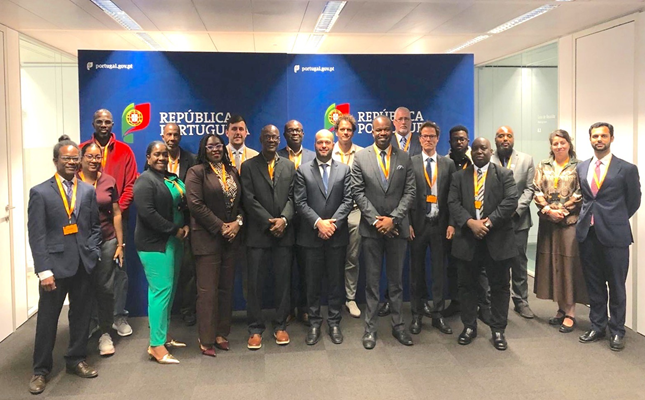
    As the 2026 Global Sustainable Islands Summit (GSIS) approaches, a three-member delegation from St. Kitts and Nevis, including Naftalie Errar, Project Coordinator at the Nevis Electricity Company (NEVLEC) and lead for Nevis’ transformative Geothermal Energy Project, is participating in a high-level regional geothermal study tour across Portugal. The trip, organized under the European Union’s landmark Global Gateway initiative, has sparked growing international attention on Nevis’ emerging potential to become a trailblazer for geothermal power across the Caribbean.

    The study visit kicked off in Lisbon with opening strategic discussions headlined by Portugal’s Secretary of State for Energy, Jean Barroca, bringing together senior energy officials from across the Caribbean. Participating island nations include Dominica, Grenada, St. Lucia, Saba, St. Vincent and the Grenadines, alongside St. Kitts and Nevis. Key regional governing bodies — the Organisation of Eastern Caribbean States (OECS), the Caribbean Centre for Renewable Energy and Energy Efficiency (CCREEE), and the Caribbean Electric Utility Services Corporation (CARILEC) — are also represented at the event, underscoring the widespread regional commitment to advancing accessible, scalable clean energy solutions for small island states.

    After wrapping up initial talks in Lisbon, the full delegation will travel to the Azores archipelago, stopping at the islands of São Miguel and Terceira for on-site engagement with local geothermal plant operators and energy institutions. These hands-on sessions are designed to give Caribbean stakeholders firsthand insight into proven geothermal operations, covering critical topics from grid integration strategies and sustainable resource management to innovative financing structures and risk mitigation frameworks.

    For Nevis, the lessons from the Azores hold particularly high stakes. Like most small Eastern Caribbean island nations, Nevis grapples with a constrained national power grid, some of the highest electricity costs in the world, and acute vulnerability to global energy market shocks. The Azores, a Portuguese island archipelago that has successfully integrated geothermal energy into its local energy system, offers a tested, economically viable model that aligns directly with Nevis’ unique geographic and energy challenges.

    Insights gained from the study tour will directly shape Nevis’ ongoing work to move its geothermal project from the development phase into full-scale commercial power generation. For the island, the project is far more than an energy infrastructure investment: it represents a cornerstone for long-term energy independence, downward pressure on household electricity costs, and strengthened overall economic resilience.

    The Portugal study visit will culminate at the GSIS 2026, set to take place April 20–22 in Gran Canaria, Spain, where delegation members will join a high-profile EU-Caribbean roundtable focused on expanding energy and infrastructure partnerships. The roundtable will create critical connections between Caribbean energy decision-makers and European public and private sector stakeholders, opening doors to new financing opportunities, tested policy frameworks, and targeted implementation support for regional geothermal projects.

    As global momentum accelerates around equitable sustainable development for small island states, Nevis has emerged as an active, forward-thinking leader through its geothermal ambitions and consistent participation in high-level international climate forums. Beyond the tangible benefits for Nevis residents, the island’s geothermal project has the potential to serve as a replicable blueprint for renewable baseload power across the Caribbean. If successful, it could also lay the groundwork for expanded cross-island energy collaboration, including the future export of surplus clean power to neighboring island nations.

  • Special Immigration Order 2025

    Special Immigration Order 2025

    On Thursday, April 16, 2026, the official online public notice portal of Jamaica published a brief official announcement directing readers to an external document containing the full text of the 2025 Special Immigration Order, released by the country’s Ministry of National Security. The notice, posted at 11:19 PM local time, provides a direct link to the portable document format (PDF) copy of the official order, enabling members of the public, immigration stakeholders, legal professionals, and affected individuals to access the full regulatory text for review and compliance.

    As a core regulatory document governing immigration matters within Jamaica’s jurisdiction, the Special Immigration Order outlines updated rules, entry requirements, residency provisions, and procedural adjustments for non-citizens seeking entry, stay, or status adjustment in the country. The public release of this order aligns with the government’s commitment to transparency around national security and immigration policy, allowing all impacted parties to familiarize themselves with new regulatory frameworks before any provisions take full effect.

    Immigration regulations are a key component of a country’s national security infrastructure, and public notice of updates to these rules ensures that all stakeholders, including travel operators, legal advisors, and prospective migrants, have sufficient time to adapt their processes and plans to meet the new requirements. The Ministry of National Security has not released additional commentary alongside the published notice, directing all inquiries to the official document linked in the portal announcement.

  • COMMENTARY: Cultivating community through Art

    COMMENTARY: Cultivating community through Art

    Opening with a timeless reflection from Michelangelo, the conversation around art begins with one of humanity’s most enduring questions: what makes art meaningful to ordinary people? Far from the distant, mystified practice that it is often made out to be, art is fundamentally a subjective expression of an artist’s perspective, and every audience member brings their own lived experience to interpreting it. This inherent subjectivity is not a flaw—it is what makes art such a powerful unifying force, capable of bridging divides between generations, ethnic groups, and religious communities across the globe.

    The very word “art” traces its roots back to the Latin term ars, which translates to skill, craft, or creative practice. While the first recorded written use of the term dates to 13th-century European manuscripts, linguistic historians believe its variants were in use as early as the founding of the Roman Empire. For many, the first formal introduction to art comes in high school, where it is often sidelined as an extracurricular or less important subject. But this overlooks a key opportunity: integrating art into core school curricula alongside other disciplines unlocks unique creative benefits for students that extend far beyond the art room.

    This principle is at the heart of the STEAM education framework, which adds Arts to the original STEM focus on Science, Technology, Engineering, and Mathematics. STEAM uses artistic practice as a gateway to drive student inquiry, collaborative dialogue, and critical thinking. Research and education experts widely agree that this interdisciplinary approach boosts cognitive function and improves reading proficiency, making it a critical investment in long-term student success. That is why advocates argue governments around the world must increase public investment in cultural and creative arts—investment that delivers returns across every area of education and social development.

    The United Nations Educational, Scientific and Cultural Organization (UNESCO) has long recognized art’s global public value. In 2019, UNESCO officially proclaimed World Art Day, an annual global observance held every April 15, to celebrate artistic expression, expand access to art around the world, and honor art’s contributions to global development. The date of April 15 was chosen specifically to honor Leonardo da Vinci, who the organization holds up as a global symbol of freedom of expression, tolerance, and cross-cultural brotherhood. UNESCO’s charter for the day emphasizes that art nurtures creativity, innovation, and cultural diversity, while fostering the open dialogue and curiosity that are foundational to building a free, peaceful, and equitable world. When we protect artistic freedom and support artists, we build the conditions for a more connected and peaceful global community.

    Each year, World Art Day focuses on a new theme that reflects evolving global priorities for artistic engagement. The 2026 theme, unveiled ahead of the April 15 observance, is “A Garden of Expression: Cultivating Community Through Art”. This framing positions art as a shared, living practice: just as a garden thrives when tended collectively by a community, art grows deeper meaning when it is shared, nurtured, and co-created among groups of people. The theme centers building social connection, collective unity, and shared cultural expression, while highlighting art’s unique ability to create feelings of belonging that bind communities together. Beyond celebrating finished artistic works, the 2026 observance also shines a spotlight on K-12 arts education, noting that widespread access to creative learning paves the way for more inclusive and equitable education systems globally.

    For people of all artistic skill levels, there are countless accessible ways to participate in World Art Day 2026, no matter where you live. One of the most popular ways to celebrate is to explore local cultural institutions: many museums and community art galleries host special themed exhibitions and offer discounted or even free admission for the annual observance. If you have ever wanted to explore your own creativity, the day is the perfect occasion to experiment with a new art form—from painting and drawing to sculpting and photography, the joy of creating is open to everyone, regardless of experience. For those looking to connect with other art lovers in their area, local art studios and community centers often host free or low-cost special workshops and classes for World Art Day, giving attendees the chance to learn a new creative skill and build connections with fellow creators in their region.

    As iconic American artist Georgia O’Keeffe once put it: “I found I could say things with color and shapes that I couldn’t say any other way – things I had no words for.” This is the core power of art that World Art Day seeks to celebrate: it gives voice to the ideas and connections that bind us, even when we cannot put those feelings into words.

    This commentary was written by Wayne Campbell, an educator and social commentator focused on how development policy shapes culture and gender equity.

  • UWI Five Islands expands community outreach and academic offerings

    UWI Five Islands expands community outreach and academic offerings

    The University of the West Indies (UWI) Five Islands campus has announced a significant expansion of both its community engagement efforts and academic program portfolio, marking a key milestone in the institution’s growth trajectory in the Caribbean region.

    Long positioned as a regional higher education hub focused on accessible learning, the Five Islands campus has ramped up its community outreach to address pressing local needs. New initiatives include free financial literacy workshops for small business owners across Antigua and Barbuda, STEM outreach programs for underserved secondary school students, and collaborative environmental conservation projects with local coastal protection nonprofits. University leadership notes that these programs are designed to bridge the gap between academic research and community action, bringing institutional resources directly to residents who stand to benefit most.

    Parallel to its community-focused expansion, the campus has added 6 new undergraduate and graduate degree programs aligned with growing regional industry demand. The new offerings include a bachelor’s degree in sustainable tourism management, a master’s program in digital public governance, and certifications in climate resilience planning—fields projected to drive job growth across the Caribbean over the next decade. Campus administration reports that enrollment for the new programs will open for the upcoming fall semester, with need-based scholarships available to support local students.

    Local education stakeholders have welcomed the expansion, noting that the moves will strengthen the campus’s role as a driver of social and economic development for Antigua and Barbuda, while expanding access to world-class UWI education for students across the Eastern Caribbean.

  • Jules takes first place in US collegiate pole vault event

    Jules takes first place in US collegiate pole vault event

    A group of talented Saint Lucian collegiate track and field athletes turned in a series of impressive results at weekend competitions across the United States, led by 19-year-old Naya Jules of Garden City Community College, who claimed a historic victory at the Tabor Invite held in McPherson, Kansas.

    Jules, who hails from Babonneau, not only took home the gold medal in the women’s pole vault but also broke her institution’s school record in the event with a clearance of 3.08 meters, the second-highest mark of her young career. Beyond her pole vault win, the young talent put in strong work across two additional disciplines: she secured third place in the javelin throw with a 40.16-meter effort, marking the third time this season she has topped the 40-meter threshold, and notched a fourth-place finish in the 100-meter sprint hurdles. Aided by a 5.4 meter-per-second tailwind, Jules clocked a new personal best of 16.87 seconds in the hurdles race, capping off a breakout weekend for the Broncbusters standout.

    Jules’ performance headlined a broader week of strong results for Saint Lucian athletes competing at the NCAA and collegiate levels, with other competitors earning podium positions and personal bests at meets spanning from Illinois to Texas.

    At the Chicagoland Championships in Elmhurst, Illinois, Cagini Pilgrim, a sophomore from Castries competing for Lewis University, earned a silver medal in the men’s 200-meter dash, crossing the line in 21.58 seconds. Pilgrim also competed at the Bison Outdoor Classic, where he placed 17th in the same event with a time of 21.85 seconds.

    Down in College Station, Texas, Lauralyn Clifford, a senior transfer at the University of Texas at San Antonio, extended her consistent form in the women’s hammer throw at the 44 Farms Team Invitational hosted at E.B. Cushing Stadium. Clifford notched her fourth consecutive throw over 58 meters, recording a mark of 58.24 meters to claim fourth place overall.

    At the Bucknell Outdoor Classic, Malaika George, a freshman at St Bonaventure University and an alumna of St Joseph’s Convent, ran a new personal best of 1:00.65 in the women’s 400-meter dash. The result moved George up to third on the program’s all-time performance list, and she also competed in the same event at the Bison Outdoor Classic, placing 50th overall with the same personal best time.

    Several other Saint Lucian athletes also recorded notable results across the week’s slate of competitions. Miguel Charlery took first place in the men’s 100-meter dash at the Delaware Invite with a time of 11.10 seconds. At the Duke Invitational, Asa Francis clocked 1:51.87 to place 21st in the men’s 800-meter, while Rayshawn Harris finished 10th in the men’s 800-meter at the Bison Invite with a time of 2:01.78. Jasmine Stiede placed fifth in the women’s 800-meter at the Arkansas Spring Invite, running 2:14.65.

    Aasia Laurencin turned in a pair of strong sprints at the Seminole Invite, placing seventh in the women’s 100-meter in 11.76 seconds and taking third in the women’s 200-meter with a time of 23.73 seconds. At the Jo Meaker Classic, Kereser Augustin placed 34th in the women’s 200-meter (24.94 seconds) and fifth in the women’s 400-meter (54.75 seconds). Raelyn Cyril placed fourth in the women’s 400-meter at the UIL 6A District 23 Meet (57.36 seconds), while Maiya Landers placed ninth in the same event with a time of 1:00.97. Carleen Lionel recorded a 12.52-second 100-meter (20th) and 25.39-second 200-meter (10th) at the Rutgers Relays. Narlia Albert placed 16th in the women’s 100-meter (13.87 seconds) and 24th in the women’s 200-meter (28.80 seconds) at the Delaware Invite. Rounding out the results, Natalie Albert threw 53.35 meters to claim fifth place in the women’s hammer throw at the Crimson Tide Invite.

  • Barbados Reggae Weekend set for global streaming as ticket sales surge

    Barbados Reggae Weekend set for global streaming as ticket sales surge

    Barbados’ highly anticipated annual Reggae Weekend is gearing up for its 2025 run from April 24 to 26, and organizers have announced a game-changing expansion that will bring live performances from the iconic Kensington Oval to reggae fans across three continents via a pay-per-view streaming platform. Early ticket sales have already outperformed expectations, with purchases recorded from as far-flung European markets as Germany and Ireland, signaling the event’s rapidly growing global footprint.

  • Lula hekelt bedreigingen Trump, roept op tot respectvolle leiderschap

    Lula hekelt bedreigingen Trump, roept op tot respectvolle leiderschap

    On April 16, Brazilian President Luiz Inacio Lula da Silva delivered a scathing rebuke of U.S. President Donald Trump’s approach to global diplomacy during a sharp interview with Spanish newspaper El País, ahead of his planned meeting with Spanish Prime Minister Pedro Sanchez in Barcelona. Lula’s comments centered on what he frames as a dangerous pattern of coercive, intimidation-driven foreign policy from the Trump administration, arguing that global leadership must be rooted in mutual respect rather than rule through fear.

    In the interview, Lula specifically called out Trump’s April 7 threat to erase Iranian civilization amid escalating tensions between the U.S. and Iran, saying “Trump has no right to wake up in the morning and threaten an entire country. He was not elected to do that, and the U.S. Constitution does not grant him that authority.” The Brazilian leader framed Trump’s foreign policy as a fundamentally deceptive project, one rooted in the false assumption that Washington’s military and economic power gives it an inherent right to dictate global rules to other nations.

    “No person or country has the right to spread fear among others,” Lula emphasized. “Powerful nations carry a greater responsibility to uphold and preserve global peace, not to undermine it.” Lula, who has positioned himself as a leader committed to dialogue and mutual respect, also addressed the ongoing political crisis in Venezuela, calling for fully free and sovereign elections that are free from any United States interference. His comments came in response to a January 3 surprise raid by U.S. special forces that resulted in the capture of Venezuelan President Nicolás Maduro.

    Lula made clear that the United States has no legitimate claim to govern Venezuela, saying “It is neither normal nor democratic for a foreign power to assume it can control the future of another sovereign nation. This has no place in the modern international order.”

    The tensions between Lula and Trump stretch back more than a decade, with deep political divides tying the two leaders’ domestic rivals together. Lula’s main opponent in Brazil’s most recent presidential election was far-right former president Jair Bolsonaro, a close ally of Trump who is currently serving a 27-year prison sentence for his role in an attempted coup against Brazil’s democratic government.

    Now 80 years old, Lula also reflected on the advanced age of both he and the 79-year-old Trump, recalling the restraint he showed when Trump imposed steep tariffs on Brazilian goods and issued sanctions against judges involved in the criminal proceedings against Bolsonaro. Those measures were ultimately reversed after diplomatic pushback. Lula argued that mature, responsible diplomacy is the only appropriate path forward for relations between the two nations.

    “Two major countries, led by two men in their 80s, need to approach each other with a great deal of maturity and intentional diplomacy,” Lula said.

  • JCI West Indies VP visit boosts Saint Lucia’s push to host regional convention

    JCI West Indies VP visit boosts Saint Lucia’s push to host regional convention

    As countdown preparations for Junior Chamber International (JCI) West Indies’ 66th National Convention ramp up, regional executive Laurel Jonas has wrapped up a four-day working visit to host nation Saint Lucia, wrapping up on April 12.

    The landmark annual gathering of the regional JCI chapter is scheduled to run from October 7 to 11 across Saint Lucia, drawing young professional delegates from every corner of the Caribbean bloc. Beyond simple networking, the convention is designed to deliver targeted skill-building: attendees will take part in interactive training modules focused on honing leadership capabilities and strengthening capacity for impactful community development projects, while also deepening existing professional bonds and expanding their cross-regional professional networks.

    Jonas, who serves dual roles as National Executive Vice President of JCI West Indies and the chapter’s supervising officer, centered her visit on coordination with the local JCI St. Lucia executive body and general membership. Over the four days, her agenda included a full review of the local chapter’s overall operational performance, collaborative mapping of growth opportunities to expand community impact, and hands-on progress checks for convention readiness.

    Jade Ella Albert, public relations officer for JCI St. Lucia, shared details of Jonas’ visit, noting that the regional executive led specialized training workshops focused on workplace professionalism and executive leadership. These sessions were tailored to upskill the local organizing team, laying a strong foundation for the convention’s successful execution.

    Albert emphasized that Jonas’ in-person visit highlights JCI West Indies’ unwavering commitment to equipping the Saint Lucia team to deliver a dynamic, world-class gathering that will leave a lasting impression on all delegates. Beyond training and performance reviews, Jonas also contributed to high-level strategic talks and partnership negotiations with potential sponsors and supporting entities, strengthening the collaborative framework required to deliver the convention at the highest international standard.

    Right now, the local JCI St. Lucia team is deep in active planning to welcome hundreds of regional delegates this October. As the organizing drive continues, the chapter is issuing a call for collaboration: the group is inviting aligned individuals, local businesses, and mission-driven organizations with a commitment to corporate social responsibility to explore partnership opportunities to support the convention and JCI St. Lucia’s ongoing community initiatives.

    Albert noted that these partnerships offer mutual value: beyond contributing to tangible, meaningful community development across Saint Lucia and the wider region, partners will gain targeted visibility and direct engagement within JCI’s growing network of young, forward-thinking leaders.

    As part of the global JCI movement, both JCI St. Lucia and JCI West Indies are core components of a voluntary international network that brings together young professionals and entrepreneurs between the ages of 20 and 40. The global organization’s core mission centers on creating accessible development opportunities that empower young people to drive positive, lasting change across their communities.

  • Police Strengthen community ties with friendly patrol in St. Aroment

    Police Strengthen community ties with friendly patrol in St. Aroment

    On Wednesday, April 8, 2026, the small neighborhood of St. Aroment in Dominica opened its doors to a new kind of law enforcement engagement, as members of the Commonwealth of Dominica Police Force (CDPF) brought their proactive community outreach program directly to local residents.

    Hosted as a chapter of the ongoing “Meet and Greet Foot Patrol” initiative, the event ran from 4:00 PM to 8:00 PM, and was organized in close partnership with Police Assisting Communities to Excel (P.A.C.E), a local group focused on bridging the gap between police and the public. Unlike traditional reactive patrols, this outreach effort centered on face-to-face, informal connection: officers walked through the neighborhood’s streets, stopping to chat with homeowners, local business owners, and passersby at every turn.

    According to an official update posted to the CDPF’s public Facebook page, the four-hour engagement was structured around listening first. Officers prioritized hearing residents’ unaddressed safety concerns, responding to questions about local policing protocols, and sharing actionable, practical advice on crime prevention and personal safety for community members. Beyond immediate problem-solving, the patrol also served a critical reassurance purpose: police representatives confirmed that regular visible foot patrols will remain a permanent fixture in the neighborhood, a commitment designed to reinforce public confidence and sustain a steady sense of security across St. Aroment.

    Early feedback from the community far exceeded law enforcement expectations, participating officers reported. Local residents turned out in droves to greet the patrol, with many openly expressing gratitude for the force’s decision to show up and engage directly rather than only responding to emergency calls.

    This St. Aroment visit is not an isolated effort. It is part of a broader island-wide series of outreach activities rolled out by the CDPF, which aims to strengthen trust-based relationships between law enforcement and the communities they serve, one neighborhood at a time. The overarching end goal of the campaign is to collaboratively build safer, more connected neighborhoods across Dominica by opening lines of communication between police and residents.