作者: admin

  • CARICOM marks 10th Girls in ICT Day with focus on empowering young women in tech

    CARICOM marks 10th Girls in ICT Day with focus on empowering young women in tech

    As the 10th annual International Girls in ICT Day approaches on April 23, 2026, the CARICOM Girls in ICT Partnership is finalizing preparations for a full slate of cross-regional activities designed to expand opportunity for young women in the digital space.

    Founded to address persistent gender imbalances in the tech sector, International Girls in ICT Day is observed globally every year, with a core mission of encouraging more girls and young women to pursue academic pathways and professional careers in information and communication technology – an industry that has become the backbone of modern work, global communication, and international commerce.

    This year’s regional celebration, coordinated by the CARICOM Secretariat, centers on the unifying theme: “Empower, Educate, Elevate: Building a Future-Ready CARICOM with Girls in ICT.” The official opening ceremony is scheduled to kick off at 10 a.m. Atlantic Standard Time, with featured addresses from key stakeholders including CARICOM Secretary-General Carla Barnett, youth representative Shakiah Lewis, and International Telecommunication Union representative Cosmas Luckyson Zavazava.

    Event organizers project robust participation from across the 15-nation bloc, bringing together a diverse cross-section of attendees: secondary and post-secondary students, K-12 and college educators, leading tech industry professionals, regional and international development partners, and community organizers. The gathering is intentionally structured to create open forums for authentic dialogue, exchange of lived experiences, and co-creation of actionable strategies to narrow and ultimately close the gender gap in technology and digital-focused careers.

    All day on April 23, a full schedule of virtual programming will be streamed live to global audiences via CARICOM’s official digital channels and the Restore A Sense of I Can (RSC) platform, making the event accessible to participants who cannot attend in person. The lineup of sessions includes a “Youth Spotlight: Next Gen Leaders Speak” panel featuring young women already working in Caribbean tech, a moderated discussion on “Achieving Gender Parity in the Age of AI,” hands-on interactive coding workshops for beginners, and open roundtables that unpack the ongoing systemic and cultural barriers girls and women face when entering and advancing in the ICT sector.

    As the Caribbean Community advances its ambitious regional digital transformation agenda, event organizers emphasized that inclusive initiatives like Girls in ICT Day are critical to ensuring that marginalized groups are not excluded from the benefits of the digital transition. By equipping young women with the confidence and technical skills to thrive in tech roles, the region as a whole strengthens its competitive position in an increasingly digital global economy.

    The CARICOM Girls in ICT Partnership is a multi-stakeholder coalition that brings together representatives from national government ministries, CARICOM’s core institutional bodies and their affiliated partners, international development agencies, youth-led organizations, women’s advocacy groups, and established ICT-focused nonprofits and programs.

    Any individual interested in joining this year’s celebration can register for the event by scanning the QR code included on the official event promotional flyer.

  • Voter ID Replacements Surge Past 30,000 as Election Nears

    Voter ID Replacements Surge Past 30,000 as Election Nears

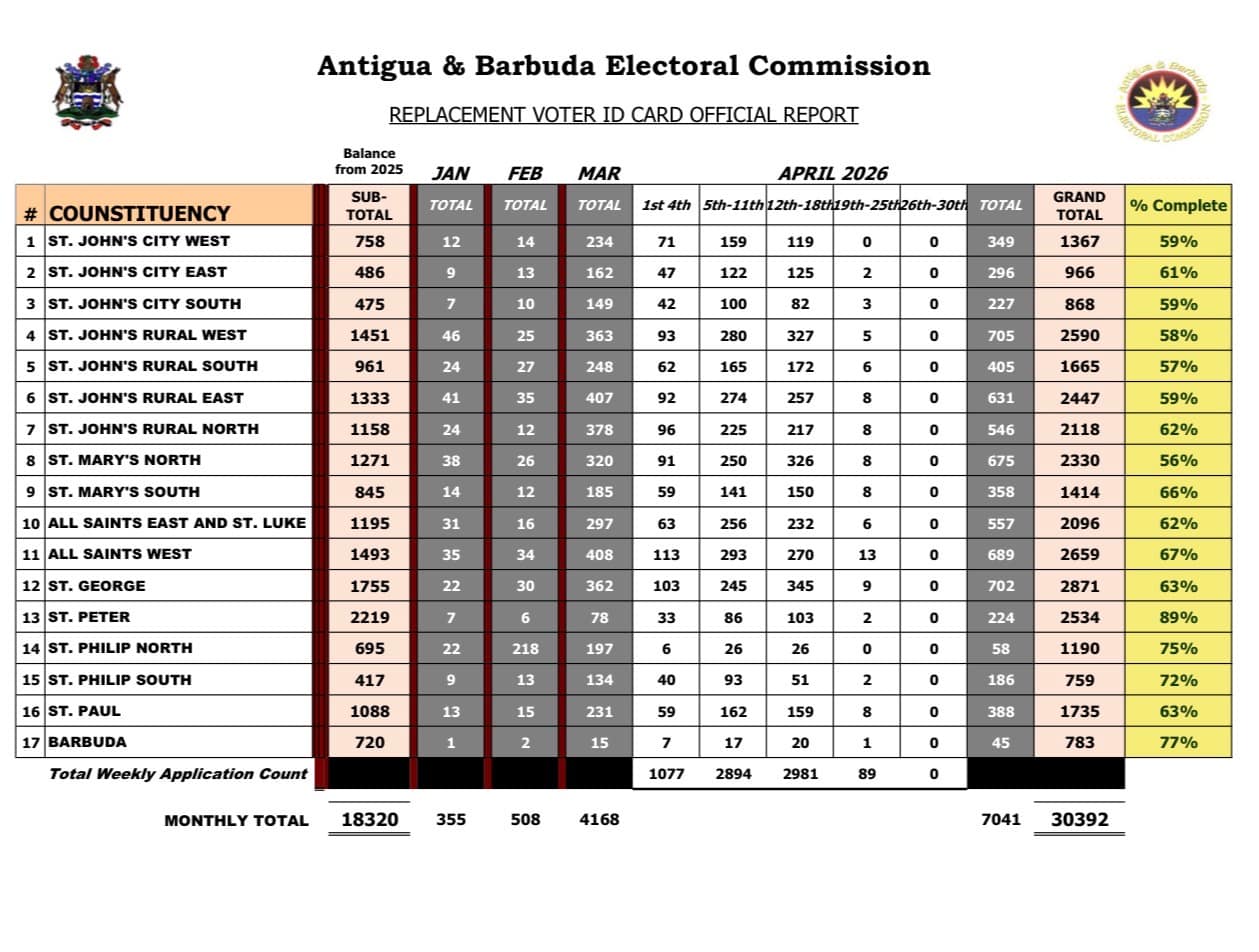
    As the clock counts down to Antigua and Barbuda’s upcoming April 30 general election, official data from the Antigua and Barbuda Electoral Commission (ABEC) confirms that replacement requests for voter identification cards have surged past the 30,000 threshold, bringing most electoral districts close to full compliance with pre-election voter registration requirements.

    The commission’s official *Replacement Voter ID Card Report* documents that a total of 30,392 replacement applications had been processed by the end of April 2026, a figure that highlights a dramatic acceleration in voter activity over the past month. Activity began at a measured pace at the start of the year, with just 355 applications submitted in January and 508 in February. The first major uptick came in March, when applications jumped to 4,168, and momentum has only grown as polling day approaches.

    April has emerged as the busiest month for the replacement drive by far, with 7,041 applications processed in the month to date. The highest demand was recorded in the middle of April: between April 5 and 11, the commission handled 2,894 requests, and the following week (April 12 to 18) saw an even higher 2,981 applications, making these two weeks the most active period of the entire pre-election replacement campaign.

    When broken down by constituency, progress varies across the country but every district has already crossed the 50% completion mark. The rural constituency of St. Peter leads all districts with an 89% completion rate, followed by the island of Barbuda at 77% and St. Philip North at 75%. Other constituencies including All Saints West (67%), St. Mary’s South (66%), and St. George (63%) have also posted solid participation rates. The slowest progress has been recorded in more densely populated urban constituencies around the capital St. John’s: St. John’s Rural South stands at 57% completion, while St. John’s Rural West is at 58%.

    For weeks, ABEC has run a public outreach campaign urging all eligible voters to replace or update their existing voter ID cards ahead of polling day, a step the commission says is critical to preventing delays and ensuring voting runs smoothly on election day. With the April 30 vote just days away, the latest data shows a sustained nationwide push by voters to complete the ID process ahead of the general election.

  • Saint Lucia qualify for Pan Am Table Tennis

    Saint Lucia qualify for Pan Am Table Tennis

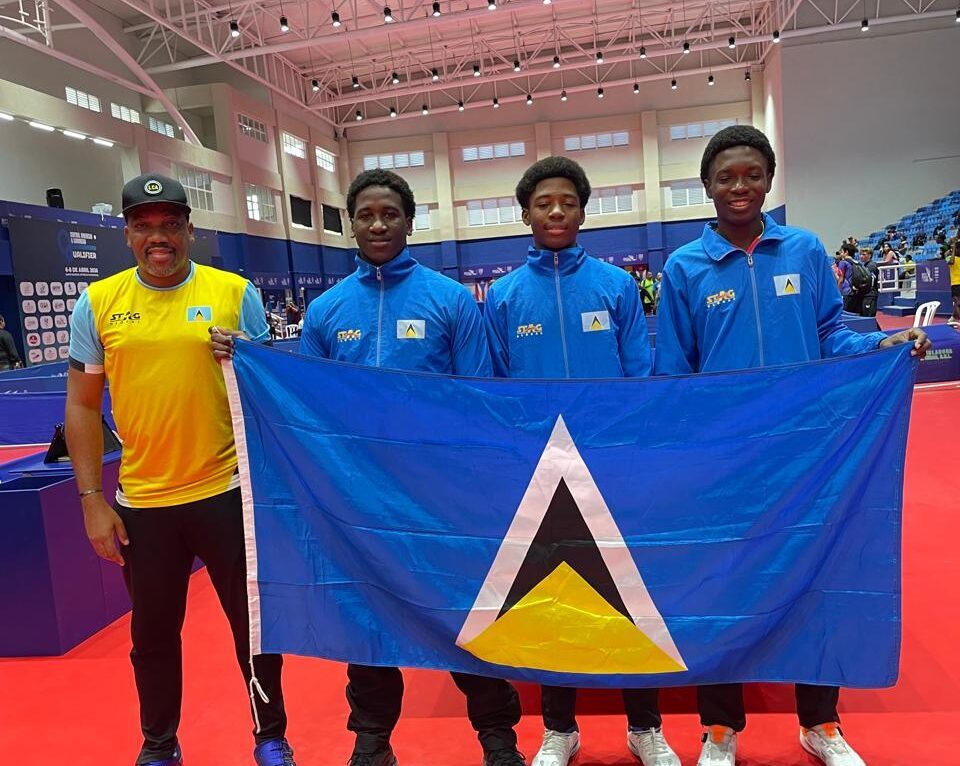
    Over the weekend, the Caribbean leg of the ITTF Americas Youth Championships wrapped up its under-19 boys’ team competition in Santo Domingo, with three young table tennis players from Saint Lucia producing a remarkable underdog performance to claim third place overall and punch their ticket to the continental finals slated for Guatemala this August.

    Held at the capital’s Parque del Este Table Tennis Hall, the regional qualifier drew six competing nations, split into two preliminary groups of three. For Saint Lucia’s trio of Manie Eleuthere, Leshon Francis, and Kamari Harris — all top finishers from the country’s national Secondary School Championships, hailing from Castries Comprehensive Secondary School, Ciceron Secondary, and St Mary’s College respectively — a top-two finish in Group 1 was required to advance to the semifinal round and lock in qualification for the August 23-30 continental tournament.

    Saint Lucia’s campaign got off to a tough start, suffering a tight 3-0 opening defeat to higher-ranked Puerto Rico. Both Francis and Eleuthere pushed their Puerto Rican opponents Cuadro and Ayala to the brink in close contests, with Cuadro edging Francis in a decisive fifth set 14-12, while Harris also dropped his match against Ayala, leaving Saint Lucia winless heading into their do-or-die preliminary matchup with Jamaica.

    The young Saint Lucian side rallied spectacularly against Jamaica, pulling off a tense 3-2 victory to secure their knockout stage berth. Francis opened the tie with a dominant 3-0 sweep of Jayden Ebanks, claiming each set by comfortable margins, before Eleuthere defeated the Jamaica-based overseas competitor Joel Lamm in four sets to put Saint Lucia up 2-0. Jamaica fought back: Gmarco Smith downed Harris in four sets, then Lamm blanked Francis 3-0 to level the overall tie at 2-2, setting up a decisive winner-takes-all match between Eleuthere and Ebanks.

    With a vocal pro-Jamaica crowd looking on, Ebanks took the opening set 11-8. Eleuthere, however, stayed calm and reeled off three consecutive set wins to seal the victory, securing second place in Group 1 for Saint Lucia and booking his country’s place at the continental championships later this year.

    In the semifinal round, the unseeded Saint Lucian side fell to host nation the Dominican Republic in a 3-0 defeat, leaving them tied for third place overall with Group 2 runners-up Trinidad & Tobago. Eleuthere dropped his contest against Rafael Cabrera 3-0, while Francis fell 3-1 to Ramon Vila, and Harris suffered a 3-1 loss to Alexander Tejada. Even with the semifinal defeat, the team’s third-place finish marks a successful regional run, and qualifying for the continental finals represents a major milestone for youth table tennis in Saint Lucia.

    This week, the ITTF Americas Caribbean Youth Championships continue in Santo Domingo, with men’s singles and women’s team competition kicking off for young athletes across the region.

  • BVI and ECLAC leaders urge faster action on Sustainable Development Goals at regional forum

    BVI and ECLAC leaders urge faster action on Sustainable Development Goals at regional forum

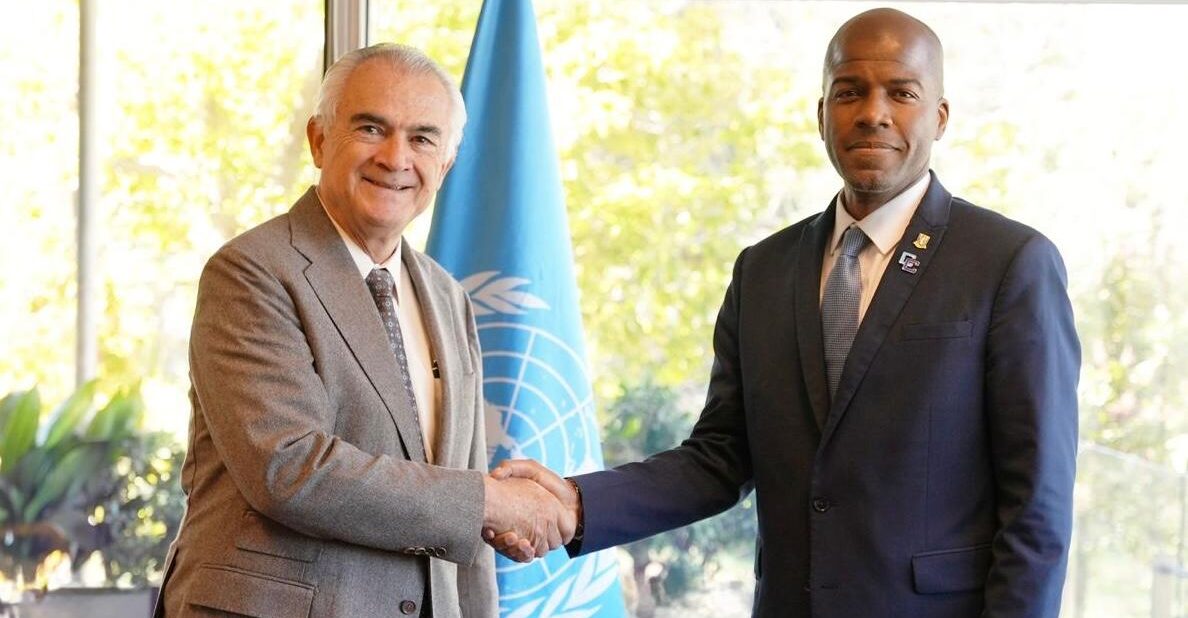
    Against the backdrop of the recently concluded 9th Meeting of the Forum of the Countries of Latin America and the Caribbean on Sustainable Development in Santiago, Chile, senior representatives from the United Nations Economic Commission for Latin America and the Caribbean (ECLAC) and the British Virgin Islands (BVI) held a critical bilateral discussion focused on accelerating sustainable development across the region. The meeting brought together Benito Wheatley, BVI Special Envoy and Vice Chair of ECLAC’s 40th Session, and ECLAC Executive Secretary José Manuel Salazar-Xirinachs, as part of ECLAC’s ongoing cross-regional engagement work.

    According to an official press statement released by the BVI government, both leaders converged on a shared urgent message: global progress toward the UN Sustainable Development Goals (SDGs) in the region is severely off track, with just 19% of targets currently implemented. With only four years remaining until the 2030 deadline for full SDG adoption, the pair emphasized that immediate, coordinated action is required to close the existing gap.

    Wheatley opened the discussion by commending ECLAC and Salazar-Xirinachs for the body’s consistent, targeted focus on addressing persistent regional development gaps and rolling out inclusive productive development strategies. He noted that when these frameworks are adopted and adapted by national governments across Latin America and the Caribbean, they can unlock transformative, tangible economic and social progress that benefits marginalized and vulnerable communities across the region.

    The BVI envoy also went on to stress the growing importance of expanding technical cooperation across the Latin America and Caribbean region, particularly in three high-priority areas: climate and disaster resilience, cross-border investment, and accessible technology transfer. He highlighted that most regional economies are operating with extremely constrained fiscal space, driven primarily by heavy national debt loads and repeated emergency spending required to respond to unforeseen external shocks. In this context, targeted investment has become one of the most critical tools for sustaining long-term, inclusive growth across the subregion, he added.

    Responding to Wheatley’s remarks, Salazar-Xirinachs reaffirmed ECLAC’s longstanding commitment to supporting sustainable development efforts in the BVI and all Caribbean Small Island Developing States (SIDS). He pushed back against the narrative that middle-income classification – a category that includes most Caribbean nations – eliminates the need for continued international support. For SIDS, which face outsized vulnerability to climate disasters and global economic volatility, sustained international assistance remains non-negotiable for advancing the SDGs, he noted.

    Salazar-Xirinachs also recognized the BVI’s active leadership role during the recent Forum meeting. In his capacity as Vice Chair of the Caribbean Development and Cooperation Committee, Wheatley led a dedicated Caribbean-focused panel exploring the implementation of the Antigua and Barbuda Agenda for SIDS through expanded South-South cooperation.

    Closing the discussion, Wheatley reaffirmed the BVI’s unwavering commitment to both regional collaboration and the global sustainable development agenda. “Through our various leadership roles within UN ECLAC, the British Virgin Islands will continue to advocate for the Caribbean to ensure the subregion’s priorities, including climate resilience, are taken into account in the inter-governmental deliberations of the wider region on the 2030 Agenda, and that there is closer collaboration between the Caribbean and Latin America on the implementation of the SDGs in the remaining period,” he stated.

    The 9th Forum of the Countries of Latin America and the Caribbean on Sustainable Development was hosted in the Chilean capital from April 13 to 16, 2026, bringing together hundreds of government officials, UN representatives, and civil society stakeholders to align on sustainable development action.

  • Gros Islet Police Divisional Headquarters opens

    Gros Islet Police Divisional Headquarters opens

    A milestone in public safety infrastructure for Saint Lucia was reached on Monday, April 20, when the $35 million Gros Islet Police Divisional Headquarters officially opened its doors to the public. Commissioned earlier this year by Prime Minister Philip J. Pierre on February 19, the modern facility sits on a sprawling 2.6-acre plot of land purpose-built for law enforcement operations.

    Following the inauguration of the new headquarters, the Royal Saint Lucia Police Force announced a coordinated restructuring of policing operations across the northern district, with services now distributed across two key sites: the existing Rodney Bay Police Station and the newly completed Gros Islet facility. All policing units that previously operated out of the temporary Gros Islet Human Resource Centre location have completed their relocation to the purpose-built headquarters.

    As part of the organizational shakeup, the Rodney Bay Police Station has been reassigned to the island’s Rangers Unit, a specialized law enforcement team tasked with safeguarding Saint Lucia’s popular coastal beaches, protected national parks, and historic heritage monuments. The restructuring does not remove regular police presence from the site, however: Gros Islet District officers will continue to maintain a joint operational footprint at Rodney Bay alongside the Rangers Unit.

    The new headquarters was developed to address a pressing need for expanded and upgraded security capacity in the northern region of Saint Lucia, an area that has seen explosive growth in residential development, commercial activity, and tourism over the past 10 years. Beyond basic office space, the multi-purpose facility comes equipped with a full suite of law enforcement amenities, including on-site police barracks for officers, a secure detention holding area, a regulated armoury, an on-site gym, and dedicated office spaces for specialized units ranging from criminal investigations to traffic enforcement and special support services.

  • CRICKET WEST INDIES: Kevin Wickham- Honouring his father through his performances on the field

    CRICKET WEST INDIES: Kevin Wickham- Honouring his father through his performances on the field

    For 23-year-old Barbados Pride batsman Kevin Wickham, every stride across the cricket pitch is more than just a routine movement—it is a living tribute to the man who shaped his love for the game, his late father Herbert. Two years after Herbert’s passing, every perfectly timed stroke through the offside and every desperate dive at the boundary is stitched with quiet memory, as Wickham has channeled his grief into purpose, stepping onto the field not just as an athlete, but as a son carrying forward his father’s legacy.

    Just over a week ago, Wickham cemented his place in West Indies regional cricket history by becoming only the third Barbadian to score centuries in both innings of a first-class regional match since 2000, joining elite company with current West Indies captain Kraigg Brathwaite (who achieved the feat against Guyana in 2015) and former all-rounder Ryan Hinds (who did so against the Leeward Islands in 2006). Facing Jamaica Scorpions’ bowling attack, the stylish right-hander delivered a dominant first-innings knock of 153, decorated with six fours and 12 towering sixes, before following up with an unbroken sparkling 108 in the second innings—marking a career-defining performance that followed a prolonged period of personal and professional struggle.

    In a post-match reflection, Wickham opened up about the hardest stretch of his young career, which came immediately after his father’s death. He was in Jamaica when he received news of Herbert’s declining health, and rushed home to be with his family. After returning to the pitch following the funeral, he struggled enormously with his form, as the loss hit him far harder mentally than it ever could physically. “The guys showed me a lot of support because it was more mental than physical, and having their support kept me above ground and helped me maintain high standards and be where I am supposed to be,” he explained.

    Herbert, Wickham recalled, was his earliest and most loyal supporter, following a quiet, old-school routine: he never attended matches in person, but never missed one, tuning in to radio broadcasts to track every run his son scored. “Every time I came home, he could tell me how much I scored, what I should and shouldn’t have done,” Wickham said. “To this day I miss him because I miss having those conversations, and when I’m not doing too well, I try to think back to his advice.” That steady guidance is what carried him through his recent record-breaking knock.

    Both centuries came when his team was in a precarious position, and Wickham stuck to the same mindset his father taught him: protect the wicket, build the innings, and put the team in a strong position. “The first innings century was very special to me because that is now my highest first class score, so that is a very good achievement because I came at the stage where the team was in a bit of trouble, so my aim was to stay at the crease for as long as possible and get a good total for the team,” he said. “The second one I found myself in a similar position where the team was in a bit of trouble, but the mindset was the same: get the team in a good position.”

    Wickham first emerged as one of the Caribbean’s most promising young talents after a standout century against Zimbabwe at the 2022 Under-19 World Cup, but the transition from youth cricket to senior first-class cricket has not been without its challenges. “This phase has been different, a lot tougher in terms of expectations after coming out of Under-19 cricket because I had a few low scores, but coach always told me just to stick to my plans and when the runs are coming stay in decent touch as long as possible because in cricket a player will have more failures than success,” he noted.

    Looking ahead, Wickham has set a clear personal target of scoring three centuries in the ongoing bilateral series, with two already under his belt. To date, he has notched five first-class centuries in just 22 matches, holding a batting average above 40—impressive numbers that mark him as one of the region’s most exciting emerging prospects. For Wickham, though, every run is more than just a statistic: it is a chance to honor the man who started it all, who he knows is still walking alongside him, cheering every knock from beyond the boundary.

  • COMMENTARY: “Constitutional Reform Is All In The Design And Not Just Form”

    COMMENTARY: “Constitutional Reform Is All In The Design And Not Just Form”

    Constitutional reform debates across the Caribbean are frequently shaped by a persistent, flawed argument put forward by critics and some legal practitioners: that foundational constitutional documents are unchanging, set in stone, and ought to be treated like unalterable last wills and testaments. This misinterpretation directly contradicts long-standing guidance from leading jurists, including Lord Bingham, who ruled in the 2002 case *Reyes v. R* that while constitutional text deserves respect, it should never be read as narrowly as a private will, commercial deed or shipping charterparty. Instead, constitutions demand generous, purpose-driven interpretation that adapts to the evolving needs of the societies they govern.

    This does not mean that constitutions should be tinkered with at every parliamentary session, of course. But the critique that borrowed amendments from Western democracies are inherently incompatible with Caribbean constitutional systems, and thus must be discarded entirely, misses a critical point: the compatibility of imported reforms relies not on their superficial form, but on the intentionality of their design to fit local governance needs. Indigenous or borrowed amendments alike are valid if well-crafted, regardless of how closely they align with the traditional Westminster model that frames most Caribbean constitutions.

    This debate has come to a head in Antigua and Barbuda, where commentator Gavin Emmanuel recently argued that two prominent reform proposals – fixed election dates and term limits for prime ministers – are both structurally incompatible with the Westminster system enshrined in the country’s 1981 constitution. This claim, however, rests on a harmful colonial-era trap that requires all Caribbean constitutional changes to hew closely to the original Westminster blueprint, effectively placing legal handcuffs on independent nations’ constitutional evolution. This uncritical acceptance of the status quo echoes the outdated logic endorsed by figures like Sir Eric Williams, who claimed if the British constitution worked for Britain, it would automatically work for the Caribbean – framing the region as what V.S. Naipaul called “Mimic Men” and calypsonian Mighty Gabby termed “Choir Boys”, unthinking imitators of colonial governance structures rather than independent architects of their own democracies.

    The reality of constitutional change tells a different story. If all amendments had to align strictly with original Westminster principles, the Caribbean would never have replaced the Judicial Committee of the Privy Council with the Caribbean Court of Justice, removed the British monarch as head of state in several nations, or expanded fundamental human rights protections through judicial interpretation. All of these changes departed from traditional Westminster assumptions, and all were successfully implemented because they were designed for local needs, not because they fit a colonial mold. Independence demands that Caribbean nations shape their own constitutional trajectories, not lock them into 20th-century colonial frameworks.

    On the specific question of fixed election dates, Emmanuel’s claim of incompatibility overlooks a key precedent: other Westminster systems, including Canada and Australia, have already adopted fixed election dates without triggering constitutional crisis. To argue that Antigua and Barbuda cannot do the same is to perpetuate a colonial standard that holds Caribbean nations to a different, more restrictive rule than established Western democracies.

    Emmanuel correctly notes that Section 60(1) of Antigua and Barbuda’s constitution grants the Governor General the power to dissolve parliament on the prime minister’s advice ahead of elections. But if the public and parliament endorse fixed election dates as part of constitutional reform, this section can simply be amended or repealed. A constitution is not an unchangeable will: adjusting core provisions to reflect the public’s democratic will is a routine part of constitutional reform. If the constitution mandates a fixed election date, the old provision granting unfettered prime ministerial power to call elections no longer serves a purpose, and its removal is straightforward constitutional drafting, not activist overreach.

    Critics who argue fixed dates eliminate needed flexibility for political crises also miss the mark, because flexibility can be baked directly into the design of the reform. The constitution can explicitly outline well-defined emergency scenarios – such as the collapse of a government after a successful no-confidence motion, when the sitting prime minister refuses to resign or a successor cannot be formed – that allow the Governor General to dissolve parliament early. These exceptions can be clearly defined with specific thresholds, such as a supermajority vote in the House of Representatives, to prevent partisan abuse.

    Contrary to Emmanuel’s claim that fixed dates force governments and voters to wait for an election even when confidence has collapsed, the design of the reform can explicitly accommodate these scenarios. What is more, the current system of unfixed election dates is far from the neutral, crisis-driven mechanism its defenders claim. In practice, sitting prime ministers almost always call snap elections for strategic partisan advantage, when they believe their party is most likely to win, rather than in response to a genuine collapse of public confidence. When confidence actually does decline, incumbents often cling to power as long as possible, gambling that political fortunes will improve before they are forced to call an election. The supposed flexibility of the current system thus serves strategic partisan gain far more than it serves democratic fairness, predictability, or equity.

    Emmanuel also argues that fixed election dates would create a conflict with the Governor General’s constitutionally mandated reserve power to dissolve parliament after a no-confidence motion, claiming that a statutory fixed date would be overridden by the constitution’s supremacy clause and thus be rendered void. This ignores the core point that proponents of fixed election dates in Antigua and Barbuda have always proposed embedding the reform directly in the constitution, not enacting it as a conflicting standalone statute. Unlike the United Kingdom, which operates with an unwritten constitution, Antigua and Barbuda has a codified supreme constitution, so fixing election dates as an amended constitutional provision eliminates any conflict between statute and constitutional law. Exceptions for early dissolution can be written directly into the amended constitutional text, along with clear guidance on whether the electoral term clock resets after an early election or returns to the original fixed schedule.

    Multiple design options are available to achieve the core goal of reform: reducing the prime minister’s prerogative power to call snap elections for partisan gain. The most straightforward approach would amend the constitution to remove the existing power to call early elections, replace it with a clear mandate for general elections every five years on a fixed date, and add enumerated exceptions for defined emergencies and no-confidence scenarios. This structure aligns with democratic priorities of fairness and transparency while retaining flexibility for genuine political crises.

    In conclusion, the Caribbean must urgently move past the outdated idea that the traditional Westminster system is an immutable constitutional structure that cannot be adapted to local needs. Decades of academic analysis, official constitutional reform commission reports, and public calls for change have made clear that the region needs a brand of constitutionalism that reflects its own democratic values, not colonial-era norms. Whether reforms are borrowed from other democracies or designed from home, what matters most is not alignment with an inherited model, but intentional, thoughtful design that fits the needs of Caribbean people. At the end of the day, constitutional reform in the region always comes down to one core principle: it is all in the design.

  • LETTER: Ay Ya me born!

    LETTER: Ay Ya me born!

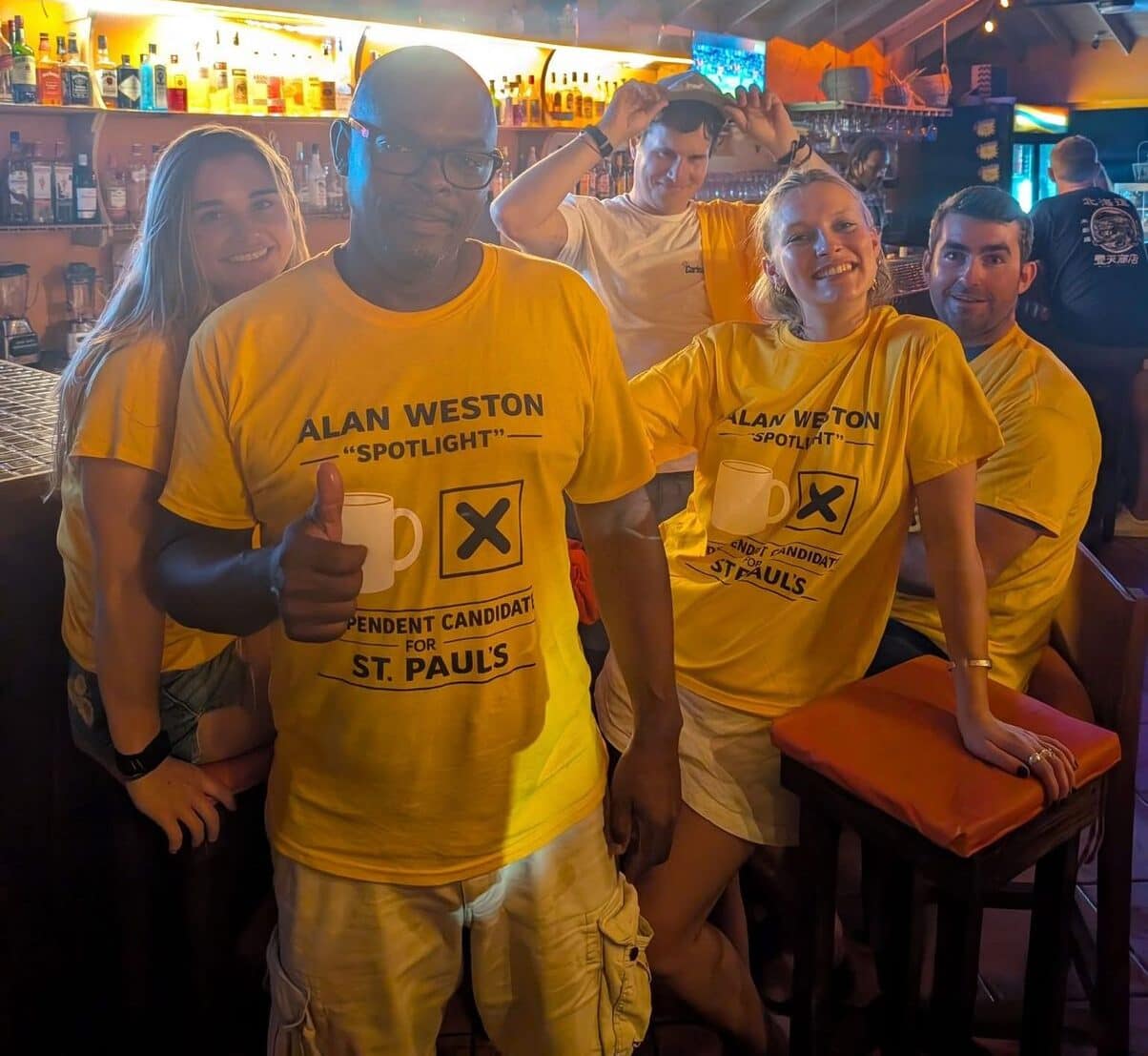
    In an open letter to the editor published on ANR’s opinion platform, a born-and-raised Antiguan has broken a long-held personal commitment to stay out of local St. Paul political affairs, leveling serious accusations against independent candidate Alan Weston and his backers that have stirred fresh tension around foreign influence in Antigua and Barbuda’s domestic politics.

    The author, who has long publicly opposed the gradual Caucasianisation of the popular tourist district English Harbour, says recent developments tied to Weston’s campaign left them no choice but to speak out. At a time when Antigua and Barbuda is part of the global movement demanding reparations for the transatlantic slave trade, the writer argues the alleged foreign control of Weston’s campaign evokes a harmful modern resurgence of the exploitative mentality that defined chattel slavery.

    Multiple visits past Weston’s campaign headquarters on Dockyard Drive revealed a foreign white national running daily operations, according to the letter. The unnamed author claims this same foreign individual, who hails from South Africa – the country that institutionalized apartheid under white minority rule – attempted to seize control of the local Sailing Academy to advance private business interests. After being denied formal approval for that takeover, the writer alleges, the foreign figure instead used financial leverage to back Weston, a local candidate, as a proxy to challenge the existing political system.

    The author questions whether the South African national holds the required legal work permit or permanent residency status to operate in Antigua, highlighting what they frame as a violation of local immigration and business regulations. To back up the claims of foreign backing, the letter includes attached photographs showing key Weston supporters. Among these backers, the author notes, is a Citizenship by Investment (CIP) passport holder who traveled specifically to Antigua to add their name as an official nominator for Weston’s candidacy – a move the author says proves the candidate is controlled by outside interests with deep financial ties to the campaign.

    A second flashpoint for the author was public commentary from prominent local figure Eli Fuller, who publicly described Weston as both a brave person and a patriot. The writer pushes back sharply against that characterization, arguing that Weston has essentially sold out his national heritage to the highest bidder. Adding a layer of familial irony to the situation, the author points out that Weston’s own grandfather, John Meade, was a staunch, lifelong supporter of the Antigua Labour Party and a trusted right-hand ally of former Prime Minister Vere Cornwall Bird Sr. The writer concludes that Meade would be deeply ashamed of his grandson’s actions, spinning in his grave at the idea of Weston accepting backing from foreign interests.

    The publication notes that all opinions expressed in platform contributor content, including this letter, are solely those of the author and do not represent the official views of ANR.

  • Gunmen kill three in St James attack

    Gunmen kill three in St James attack

    A quiet weekend gathering at a popular coastal drinking spot in Barbados descended into violence on Sunday night, when a targeted shooting left three men dead and another fighting for life. According to official police statements, emergency dispatchers received the first reports of gunfire at the Thunder Bay Beach Bar, located in Lower Carlton, St James, at approximately 8:42 p.m., as crowds of beachgoers were gathered at the waterfront venue.

    Preliminary investigative findings have outlined a clear sequence of events: three unidentified male suspects exited a silver-colored vehicle before opening fire into the group of people assembled at the bar. The hail of bullets hit four men, leaving all four with critical injuries. Emergency medical responders confirmed that one of the wounded victims was pronounced dead at the scene immediately after a physician conducted an on-site assessment.

    The three remaining injured survivors were rushed to a nearby medical treatment facility not by official emergency ambulances, but by private vehicles brought to the scene by other people at the bar. In the days following the shooting, two of the three hospitalized victims have since succumbed to their wounds, pushing the total death toll from the attack up to three, according to police updates. The condition of the fourth surviving victim has not been released publicly as of the latest update.

    Local law enforcement has not announced any suspect identifications or arrests to date, and active investigations into the motive and perpetrators of the attack are still ongoing. In a public appeal for community cooperation, police have urged any members of the public who were present at the scene, or who have any information related to the shooting, the suspects, or the silver vehicle used in the attack, to come forward with details. Tipsters can submit anonymous information through Crime Stoppers at 1800-8477, reach the 24-hour police emergency line at 211, or contact the Holetown Police Station directly at 419-1700.

  • SVG sink Saint Lucia in women’s football

    SVG sink Saint Lucia in women’s football

    The 2026 CONCACAF Women’s Championship Qualifiers have delivered another disappointing result for the Saint Lucia national women’s football team, who slipped to the bottom of their group after falling to a fourth straight defeat on Saturday, April 18. Hosted at the Daren Sammy Cricket Ground, the tight contest ended in a 1-0 win for St. Vincent and the Grenadines (SVG), leaving Saint Lucia still scrambling for solutions to reverse their poor run of form.

    The only goal of the match came early, in the 14th minute, after a foul was called against Saint Lucia’s Krysan St. Louis just outside the attacking half. That set piece opportunity fell to 25-year-old SVG midfielder Karesha Iton, a Chatham United central player who stepped up to take the 35-yard attempt. Iton unleashed a powerful, soaring strike that caught Saint Lucia’s goalkeeper completely off guard; the ball bounced just in front of the net before rolling across the goal line. What made the moment even more special for Iton is that it marked her first ever international goal, coming in only her second senior cap for SVG’s national side, the Lady Heat.

    Despite the lopsided final result on the scoreboard, possession statistics told a very different story. Saint Lucia dominated the ball for 58.2% of the match, and outshot SVG 11 attempts to six. However, the hosts struggled with final precision: only five of their 11 shots were on target, and just four came from inside the 18-yard box. St. Louis, Kayla Polius and Kyla Lionel all notched two shots apiece to lead Saint Lucia’s attacking efforts, but none could find the back of the net to equalize.

    For SVG, the three points capped off an impressive late turnaround in their qualifying campaign, closing out their group stage participation with two consecutive wins. They finished third in Group A with a 2-0-2 record, despite conceding 24 goals across their four matches. For Saint Lucia, the defeat extended a miserable run: the side has conceded 18 goals across five qualifying matches, while managing to score only one goal of their own, remaining rooted to the bottom of the group table. Mexico closed out Group A play with a flawless 4-0 record to secure their place at the top of the standings.