作者: admin

  • Former cop cries at guilty verdict

    Former cop cries at guilty verdict

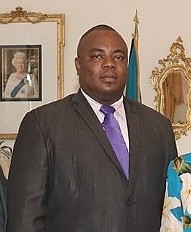
    In a landmark verdict that has sent shockwaves through the Bahamian law enforcement community, former Assistant Police Superintendent Sonny Miller was convicted on ten drug-related charges for his involvement in a sophisticated narcotics smuggling operation. The emotional proceedings saw the 47-year-old former Police Staff Association chairman break down in tears as Deputy Chief Magistrate Shaka Serville delivered the guilty verdict, describing the case as extraordinary and unforgettable.

    The conviction stems from a June 2022 operation where authorities intercepted 181 pounds of cocaine and 31 pounds of marijuana with an estimated street value exceeding $1.4 million on the remote island of Acklins. The investigation, a collaborative effort between the Royal Bahamas Police Force and the United States Coast Guard, revealed Miller’s alleged participation in receiving narcotics transported via aircraft from Venezuela.

    Critical testimony came from two Colombian nationals, Christhian Gaviria Aragon and Christhian Garcia Aristizabal, who previously pleaded guilty to drug trafficking charges in 2023. Both received reduced 46-month sentences in exchange for their cooperation with prosecutors. Aragon provided particularly damning evidence, alleging that Miller threatened him at gunpoint when a Coast Guard helicopter appeared during the operation, claiming he feared for his life during the encounter.

    During the two-month trial, the prosecution presented compelling video evidence showing Miller’s police vehicle repeatedly leaving and returning to the crime scene with doors and rear hatch open. A silver tin was visibly positioned near the vehicle’s door, contradicting Miller’s testimony that he was merely performing his duties as the officer in charge of Acklins.

    Miller maintained his innocence throughout the proceedings, testifying that he had approached the suspects tactfully after discovering them unloading drugs from an aircraft. He claimed he requested backup and drew his firearm to effect arrests upon hearing an approaching helicopter. The former superintendent further alleged improper conduct during his interrogation, including being denied food and medication.

    Magistrate Serville ultimately found the accounts of the Colombian nationals and other officers more credible than Miller’s version of events. Defense attorney Bjorn Ferguson’s argument that the prosecution was attempting to “ride a parade of inferences to a conviction” was rejected in the final verdict.

    Miller has been remanded to the Bahamas Department of Correctional Services pending sentencing scheduled for February 24, with his distraught family members expressing their anguish on the courthouse steps. The former high-ranking officer retains the right to appeal within seven days of sentencing.

  • ‘ Zero VAT on food as long food as long as PLP in govt’

    ‘ Zero VAT on food as long food as long as PLP in govt’

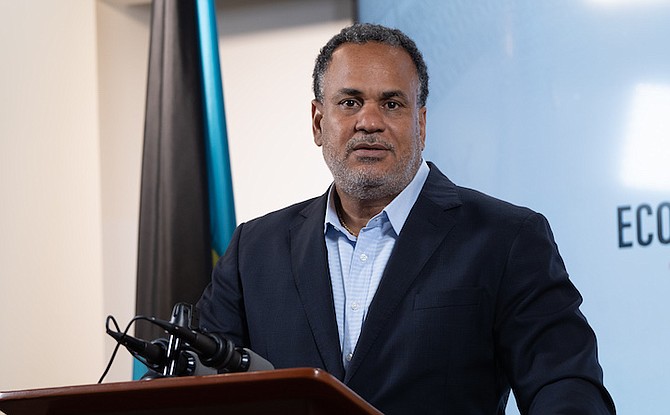
    NASSAU, BAHAMAS – Economic Affairs Minister Michael Halkitis has declared that a zero Value Added Tax (VAT) rate on all unprepared grocery items will become a permanent fixture if the ruling Progressive Liberal Party (PLP) retains power following the upcoming general election. The announcement came during an Office of the Prime Minister press briefing where Halkitis emphatically stated, ‘As long as the Progressive Liberal Party is in power, VAT on grocery will be zero.’

    The minister’s comments addressed mounting speculation about whether the administration’s recent VAT elimination—reducing the tax from five percent to zero—represented a temporary measure or enduring policy. Halkitis positioned the move as part of the government’s broader tax reduction agenda and ongoing initiatives to alleviate the nation’s high cost of living pressures.

    The opposition Free National Movement has characterized the VAT exemption as a strategically timed election tactic. Halkitis refuted these claims, maintaining that Prime Minister Philip Davis has consistently advocated for complete VAT removal on food items and that strengthened public finances now enable this fiscal change. ‘We feel very confident that we can, because of the growth that we experienced in the economy, absorb any revenue loss associated with this reduction,’ Halkitis asserted, referencing October’s International Monetary Fund assessment which noted economic improvement.

    The policy shift is projected to reduce government revenues by approximately $15 million annually. This follows previous VAT adjustments: the tax stood at 12% under the former Free National Movement administration, was reduced to 10% in 2022 by the Davis government (while controversially expanding to previously exempt breadbasket items), and was then cut to 5% on groceries in January 2025 before the current elimination.

    While consumers have welcomed the relief, major supermarket chains have expressed practical concerns about implementation timelines. Debra Symonette, president of Super Value, indicated her 13-store chain might require an extension beyond the April 1 deadline to adjust pricing across thousands of items representing 80% of sales. Minister Halkitis dismissed these concerns, expressing confidence that retailers’ modern automated systems would facilitate compliance within the standard three-month adjustment period. He additionally urged retailers to refrain from price gouging, emphasizing ongoing global affordability challenges.

  • A&E staff protest conditions at Cornwall Regional Hospital

    A&E staff protest conditions at Cornwall Regional Hospital

    Healthcare professionals at Cornwall Regional Hospital’s Accident and Emergency Department in St. James, Jamaica, have initiated organized demonstrations to protest what they describe as intolerable working conditions and inadequate patient care facilities.

    Medical staff, including physicians and nursing personnel, assembled outside the healthcare facility holding prominently displayed placards that highlighted systemic deficiencies within the institution. The protest represents an escalating frustration among healthcare workers who have reached their threshold for enduring substandard operational environments.

    Among the most alarming revelations emerging from the demonstration was the staggering ratio of medical equipment to patients, with protesters chanting about approximately fifty patients being dependent on a single blood pressure monitoring device. This critical shortage of essential medical equipment underscores the severe resource constraints affecting both staff effectiveness and patient safety.

    The protesting healthcare workers have issued an urgent appeal to relevant governmental authorities and administrative bodies, demanding immediate intervention to address the deteriorating conditions. Their grievances encompass multiple facets of hospital operations, ranging from inadequate medical equipment to broader systemic issues compromising both staff welfare and patient treatment standards.

    This organized action by medical professionals signals a potentially critical juncture for Jamaica’s healthcare infrastructure, particularly within the public hospital system where resource allocation challenges have persisted. The protest at Cornwall Regional Hospital highlights the ongoing struggle between healthcare workforce expectations and institutional capabilities in delivering quality medical services.

  • PM backs call for a kinder Jamaica

    PM backs call for a kinder Jamaica

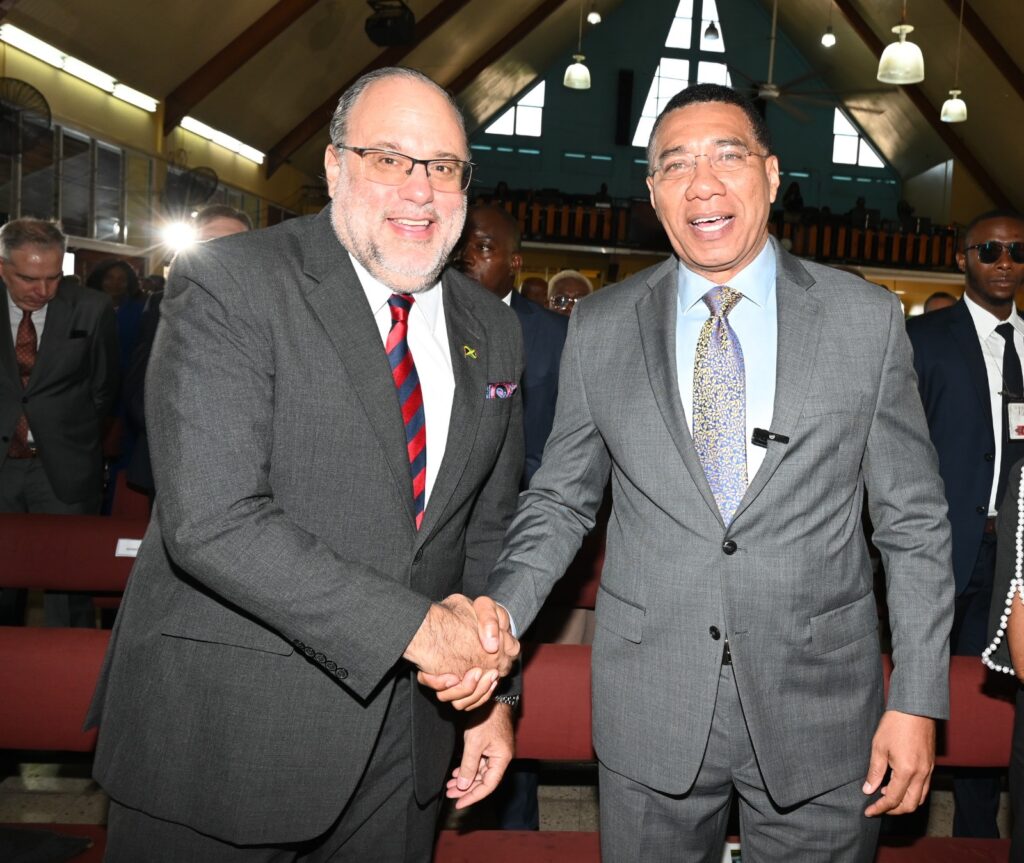
    KINGSTON, Jamaica — A powerful appeal for national unity and compassionate discourse has emerged from Jamaica’s highest leadership levels following the 46th annual National Leadership Prayer Breakfast. Prime Minister Andrew Holness has publicly endorsed Senior Pastor Reverend Peter Garth’s urgent message advocating for an end to destructive criticism and malicious character attacks within Jamaican society.

    During his keynote sermon at Boulevard Baptist Church in St. Andrew, Reverend Garth challenged Jamaicans to abandon vulgar criticisms and embrace mutual respect. “We are all in this together and we need all persons on deck if we are going to rebuild Jamaica,” Garth emphasized, framing national progress as dependent on collective goodwill rather than divisive rhetoric.

    Prime Minister Holness, in subsequent remarks to Observer Online, characterized the pastor’s message as both timely and transformative. “I am particularly heartened by the message today,” Holness stated. “There are those who will stand on the sideline and criticise unnecessarily, unreasonably and unjustly—that is not serving the interest of the nation.”

    The event, which adopted the theme “Caring for our Neighbour,” served as a platform for examining the social risks associated with helping others. Both leaders addressed the growing cynicism that discourages civic engagement, with Garth specifically referencing Hurricane Melissa’s devastation in October as a case where criticism overshadowed relief efforts.

    Holness highlighted the historical significance of the prayer breakfast, established in 1981 following Jamaica’s divisive 1980 general election, as a stabilizing force in national life. “It reaffirms that Jamaica is a Christian society,” he noted, “and gives us an opportunity to hear words directly transmitted to leaders to guide us.”

    Reverend Garth concluded with a call to action: “Let us continue our efforts to restore lives and rebuild homes. Let us respond to the needs of our brothers and sisters in Jamaica. Let us care for our neighbors.” This dual endorsement from religious and governmental leadership signals a coordinated effort to address Jamaica’s social discourse challenges.

  • The cost of what we ignored

    The cost of what we ignored

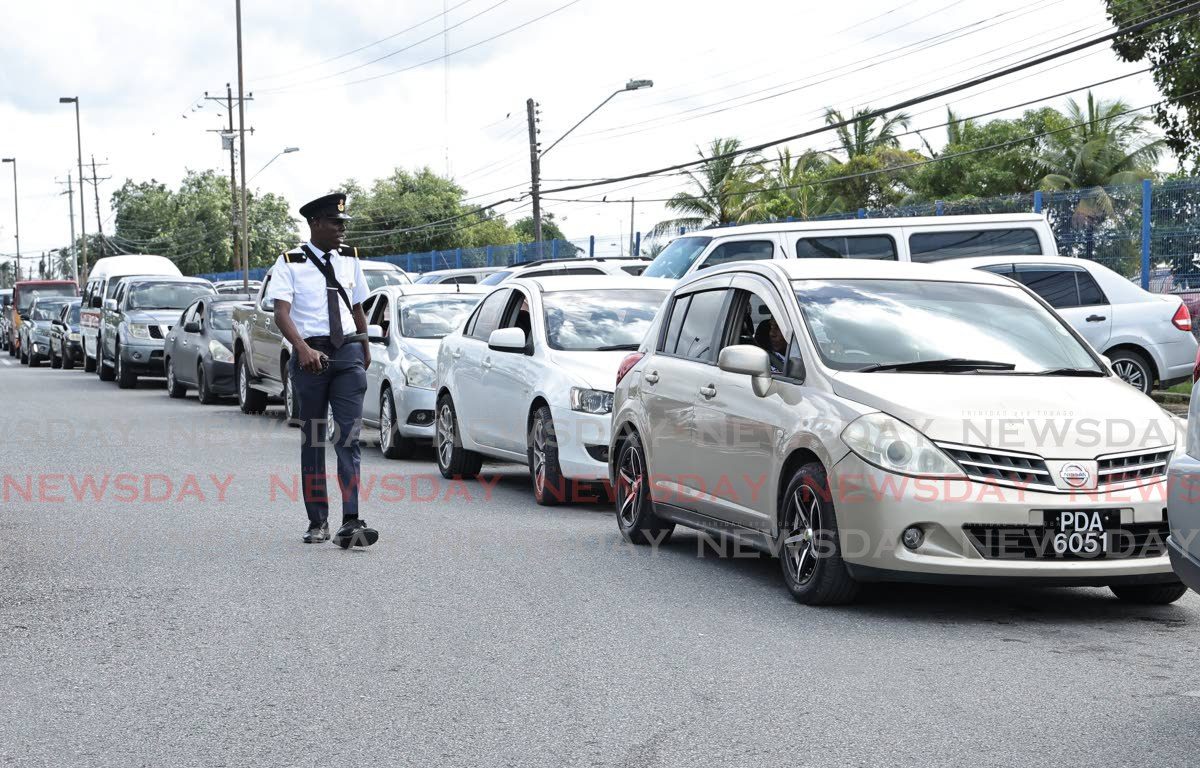
    The recent public outcry over stringent traffic penalties in Trinidad and Tobago has largely centered on the financial burden of fines, yet this reaction overlooks a more fundamental issue: these traffic violations are not newly invented offenses. Rather, they represent behaviors that were systematically ignored, normalized, and tacitly accepted over many years. The true damage occurred long before authorities began issuing tickets.

    For decades, enforcement agencies and previous administrations failed to consistently implement existing regulations or establish proper systems for vehicle ownership documentation, mandatory inspections, and insurance verification. This institutional neglect created an environment where speeding, reckless driving, and operating vehicles without valid credentials became commonplace practices.

    The current public response stems not from newly introduced legislation but from the abrupt termination of longstanding tolerance. Offenses frequently occur because drivers traditionally operated with the understanding that enforcement only happened during visible police presence. This pattern reveals critical weaknesses in the nation’s road safety management approach, which cannot rely exclusively on physical officer deployment.

    A proposed solution involves creating an anonymous online reporting portal managed by law enforcement, enabling responsible citizens to submit verified photographic or video evidence of dangerous driving, illegal parking, distracted operation, and hazardous overtaking maneuvers. Such a system would complement traditional policing methods by introducing an additional layer of accountability and deterrence. When motorists recognize that unsafe behavior can be documented and reported at any time—not merely when patrol vehicles are present—the culture of impunity dominating roadways may finally begin to diminish.

    The consequences of years of institutional neglect have proven fatal. Dangerous driving has resulted in preventable fatalities, leaving families in mourning and placing unnecessary strain on an already overburdened healthcare system. Road indiscipline has exacerbated traffic congestion, reduced national productivity, increased vehicle maintenance costs, and driven insurance premiums upward.

    These are not abstract policy concerns but daily realities for citizens who have suffered injuries, inconveniences, and financial hardships due to behaviors that persisted without consequence. While current fines are criticized as excessive, nations often admired for their development maintain strict enforcement standards. The discomfort arises from imposing first-world enforcement mechanisms upon a system historically characterized by inconsistency.

    Fines are fundamentally designed not for popularity but for deterrence and life protection. Trinidad and Tobago must confront a cultural reality where flexibility frequently supersedes urgency, rules became negotiable, and compliance remained optional. When authorities abruptly demand strict adherence after years of lax enforcement, public resistance becomes predictable.

    The core issue transcends monetary penalties and questions whether society is prepared to acknowledge and correct long-ignored behaviors. Achieving first-world standards requires more than financial disincentives—it demands consistent enforcement, institutional credibility, active citizen participation, and public trust. Until these elements align harmoniously, resistance will persist not as rebellion but as reaction to sudden discipline in a system that tolerated disorder for too long.

  • In defence of the increased fines

    In defence of the increased fines

    Trinidad and Tobago’s persistent crime problem represents a complex societal challenge that transcends economic conditions, according to expert analysis. Despite economic fluctuations from oil boom periods to times of hardship, criminal activity has remained consistently high, suggesting deeper systemic issues beyond mere poverty.

    The core issue identified is societal tolerance for minor infractions that gradually escalates into acceptance of more serious crimes. This phenomenon aligns with the established criminological “broken windows” theory, which posits that unchecked minor disorder signals absence of authority and encourages more severe criminal behavior.

    New York City’s successful crime reduction strategy in the 1990s serves as a compelling case study. Through rigorous enforcement of minor violations including fare evasion, vandalism, and public disorder, the city achieved a remarkable 70% reduction in homicides between 1990 and 2000. This demonstrated that consistent standards enforcement within the general population directly contributes to public safety.

    In contrast, Trinidad and Tobago exhibits concerning patterns of daily lawlessness: dangerous overtaking maneuvers, driving on road shoulders, excessive speeding, littering from vehicles, disregard for noise regulations, and treating traffic signals as optional. These behaviors collectively indicate a culture where enforcement remains sporadic and consequences uncertain.

    The analysis emphasizes that ignoring minor offenses creates a reactive rather than proactive law enforcement approach to major crimes. When citizens repeatedly witness unpunished violations, confidence in the rule of law diminishes, while criminals interpret the tolerance as permission for more serious offenses.

    Police statistics consistently reveal that many serious offenders have histories of multiple minor infractions, suggesting that early intervention opportunities could prevent escalation. Zero tolerance enforcement doesn’t imply brutality but rather consistent application of existing laws to create fairness and order.

    The path forward requires demonstrating through daily actions—not just speeches—that disorder will no longer be tolerated without consequence. Rebuilding trust necessitates stopping reckless drivers, fining illegal dumping, and enforcing traffic laws consistently rather than only responding to tragedies.

    Trinidad and Tobago possesses adequate legislation but lacks consistent implementation. Changing the crime narrative requires acknowledging that violence doesn’t exist in isolation but grows from cultivated neglect. The fundamental solution lies in clearly and consistently demonstrating that all disorder, regardless of scale, will face consequences.

  • China, Canada reach ‘landmark’ deal on tariffs, visas

    China, Canada reach ‘landmark’ deal on tariffs, visas

    BEIJING — In a historic diplomatic breakthrough, Canadian Prime Minister Mark Carney and Chinese President Xi Jinping announced a comprehensive bilateral agreement on Friday, marking the first top-level meeting between the nations in eight years. The accord signals a definitive thaw in relations following years of retaliatory measures and trade disputes.

    The leaders unveiled what Prime Minister Carney characterized as a ‘landmark deal’ establishing a ‘new strategic partnership’ between Canada and China. This framework encompasses significant trade concessions and tourism facilitation measures designed to rebuild economic bridges between the two countries.

    Central to the agreement is China’s commitment to dramatically reduce tariffs on Canadian canola products, slashing rates from the current 84% to approximately 15% by March 1. This reversal is particularly significant as China was previously Canada’s largest market for canola seed before recent trade frictions.

    In a major tourism development, China will implement visa-free entry for Canadian visitors, while Canada will import 49,000 Chinese electric vehicles under preferential tariff rates of 6.1%. Prime Minister Carney noted this brings EV tariffs ‘back to levels that existed prior to recent trade frictions.’

    President Xi, welcoming his counterpart in the Great Hall of the People, emphasized that bilateral relations had reached a critical turning point during their October meeting on the sidelines of the APEC summit. ‘Our meeting last year opened a new chapter in turning China-Canada relations toward improvement,’ Xi stated, adding that stable bilateral development ‘serves the common interests of our two countries.’

    The diplomatic reconciliation follows a particularly strained period beginning in 2018, when Canada arrested Huawei executive Meng Wanzhou on a U.S. warrant, prompting China’s retaliatory detention of two Canadian citizens on espionage charges. Subsequent years saw both nations impose reciprocal tariffs on exports, with additional allegations of Chinese election interference in Canada.

    Prime Minister Carney’s outreach forms part of a broader strategy to diversify Canada’s economic partnerships amid turbulent relations with the United States. Former President Donald Trump’s aggressive tariff policies on Canadian steel, aluminum, vehicles, and lumber have compelled Ottawa to seek alternative markets. While the U.S. remains Canada’s dominant trading partner—purchasing approximately 75% of Canadian exports in 2024—China currently accounts for less than 4% of Canadian exports, though Ottawa emphasizes it remains Canada’s second-largest market.

    During his Beijing visit, which included meetings with Premier Li Qiang and scheduled discussions with business leaders, Carney continues to advance his stated goal of doubling Canada’s non-U.S. exports by 2035.

  • St Vincent gov’t to boost surveillance and monitoring of La Soufriere volcano

    St Vincent gov’t to boost surveillance and monitoring of La Soufriere volcano

    The government of St. Vincent and the Grenadines is implementing a major enhancement of its volcanic surveillance capabilities for La Soufrière, the island’s most active volcano. This comprehensive strategy involves the creation of new technical positions, the installation of eight additional monitoring stations across the mountain, and significant technological upgrades to existing infrastructure. The initiative follows the volcano’s devastating explosive eruption in April 2021, an event that commenced with increased activity in December 2020. That eruption blanketed the island in ash, necessitated the evacuation of more than 20,000 residents, and caused extensive disruption over a four-month period of heightened activity, which culminated in its last major explosive event around April 22, 2021.

    The cornerstone of this effort is the recently renovated and retrofitted Volcano Observatory, a project financed by a concessional loan from the World Bank totaling EC$4.6 million (approximately US$1.7 million). During the facility’s handover ceremony, Disaster Management Minister St. Clair Leacock outlined the government’s commitment. Key roles, including a geoscientist and a seismic technician, are slated to be filled this year. The revitalized observatory is designed to facilitate advanced volcanic research, support community-based early warning systems, and host international academic studies. Furthermore, the National Emergency Management Organisation (NEMO) has been allocated an additional EC$1 million grant specifically for the procurement of seismic stations and state-of-the-art monitoring equipment.

    Minister Leacock highlighted the technical sophistication of the new systems and issued a public appeal against vandalism or theft of the critical equipment. He emphasized that the devices are essential for national safety, stating, ‘My Government will continue to ensure that the La Soufriere Monitoring Unit of NEMO continues to receive the support to ensure that La Soufriere volcano is constantly monitored.’ He also acknowledged and praised the foundational work in disaster preparedness and monitoring established by the previous administration, framing the new upgrades as a continuation of that vital legacy.

  • Antigua to recruit nurses from Ghana, insists it has not ended programme with Cuba

    Antigua to recruit nurses from Ghana, insists it has not ended programme with Cuba

    The Government of Antigua and Barbuda has finalized an agreement to recruit 120 nursing professionals from Ghana, scheduled to arrive in January 2026, while simultaneously maintaining its longstanding healthcare partnership with Cuba despite mounting pressure from the United States to terminate the arrangement.

    Health Minister Sir Molwyn Joseph confirmed the Ghanaian nurses will be strategically deployed across the Sir Lester Bird Medical Centre, community health clinics, and educational institutions to strengthen both hospital and community-based healthcare services. This initiative represents a significant expansion of the nation’s healthcare workforce aimed at improving service delivery and alleviating pressure on existing medical staff.

    Communications Director Maurice Merchant clarified that the new recruitment does not signify termination of the Cuban health program, describing the Cuba-Antigua medical collaboration as ‘currently going through a period of transition.’ He emphasized the government’s appreciation for Cuba’s historical contributions to the national healthcare system while dismissing speculation about the program’s discontinuation as politically motivated attempts to ‘muddy the waters’ between Cuba and the United States.

    The government’s dual approach includes both international recruitment and domestic capacity building, with 15 local nurses recently receiving scholarships to pursue master’s degrees at the University of the West Indies Five Islands Campus. Merchant acknowledged the challenge of retaining highly-trained Antiguan nurses who frequently accept better-compensated positions in North American and European healthcare systems.

    This development occurs against the backdrop of intensified US diplomatic pressure characterizing Cuba’s medical missions as ‘exploitative labour practices.’ The US Embassy in Barbados issued a statement condemning what it described as a ‘modern-day forced labour scheme’ where the Cuban government allegedly retains 80-95% of medical professionals’ salaries while charging recipient nations premium rates. The US government has urged Caribbean nations to terminate these arrangements, asserting they represent financial burdens on local taxpayers and ethical violations of medical workers’ rights.

    The Antiguan government maintains its sovereign right to determine its healthcare partnerships while working toward long-term self-sufficiency in medical staffing, balancing immediate healthcare needs with diplomatic considerations in the complex geopolitics of Caribbean medical cooperation.

  • Amir “Drumzey” Ramjattan – the master of many drums

    Amir “Drumzey” Ramjattan – the master of many drums

    At just 25 years old, Amir ‘Drumzey’ Ramjattan has emerged as a transformative figure in Caribbean music, mastering an extraordinary array of percussion instruments that bridge traditional culture with contemporary sound. The Las Lomas native has become the most sought-after percussionist across Carnival and chutney soca scenes, demonstrating unparalleled versatility on instruments ranging from the dholak and tabla to congas and digital rhythm machines.

    Ramjattan’s musical journey began within his multigenerational household, where music permeated daily life from spiritual morning bhajans to evening chutney soca sessions. His immersion in percussion started organically while accompanying his mother, 2025 Chutney Soca Monarch Queen Reshma Ramlal, to performances. However, it was his grandfather’s gift of tabla drums on his ninth birthday that ignited his profound connection to rhythmic artistry, leading to formal training at The Mahatma Gandhi Institute for Cultural Co-operation.

    The young musician’s career breakthrough came in 2014 when he began recording live percussion tracks at prestigious studios like Pungalunks Factory and Maha Productions. His innovative approach transcended seasonal popularity, enabling artists to qualify for international competitions and claim monarch titles. Ramjattan’s artistic vision reached its pinnacle in 2025 when he managed and directed his mother’s victorious Chutney Soca Monarch campaign—a deeply personal achievement that represented years of shared dedication.

    Despite facing challenges including skepticism from veteran musicians and financial constraints, Ramjattan maintains an exhaustive performance schedule as core drummer with KI and the Band 3veni, while collaborating with major acts like Ravi B and Karma. His international presence has expanded significantly through Caribana performances and his inaugural Holland tour, where he played for audiences exceeding 25,000 people.

    Beyond the stage, Ramjattan maintains a sacred connection to music through performances at Hindu festivals, demonstrating his unique ability to navigate both spiritual and celebratory spaces. Looking forward, he aims to inspire younger generations through artistic direction, songwriting, and fostering unity within the industry—determined to create a legacy that eliminates doubts for aspiring musicians pursuing their cultural calling.