作者: admin

  • Community hygiene at Silver Lake receives boost with rehabilitation of washroom facility

    Community hygiene at Silver Lake receives boost with rehabilitation of washroom facility

    The small, close-knit community of Silver Lake in Roseau, Dominica, is celebrating a long-awaited upgrade to its core public infrastructure: a fully rehabilitated public washroom facility, delivered at a total project cost of over EC$33,000. The transformative project was spearheaded by a collaborative partnership between the Rotary Club of Dominica and the Community Policing Team of the Commonwealth of Dominica Police Force, turning a crumbling, decades-old facility into a modern, hygienic public space built to serve local families for generations, according to an official statement released by the Rotary Club.

    First constructed in 1982, the original washroom had suffered from decades of wear and tear, leaving it badly in need of comprehensive renovations long before the project broke ground. The successful restoration is more than just an infrastructure upgrade—it reflects a shared commitment among partnering organizations to lifting quality of life, upholding public dignity, and advancing community health in one of Roseau’s most active neighborhoods. Last Thursday, community members, senior government officials, and police representatives gathered for an official handover ceremony to mark the completion of the milestone project.

    During the ceremony, Honourable Rayburn Blackmoore, Dominica’s Minister for National Security and Legal Affairs, commended the cross-sector collaboration as a blueprint for effective civic action. “This is exactly how partnerships between civil society and public institutions should work—delivering real, tangible improvements that directly benefit everyday citizens,” Blackmoore remarked. Honourable Chekira Lockhart-Hypolite, Parliamentary Representative for Roseau South, echoed that praise, emphasizing that strategic investments in local community infrastructure lay the foundation for stronger, more resilient neighborhoods. Police Commissioner Lincoln Corbette also reaffirmed the Dominica Police Force’s ongoing commitment to rolling out community-centered public safety and development initiatives across the island.

    Rotary Club of Dominica’s President expanded on the deeper meaning of the project beyond construction work. “This is not just a project of bricks and mortar. This rehabilitation is about restoring dignity, protecting public health, and nurturing shared community pride for every resident of Silver Lake,” the President said.

    The handover event saw high turnout from local residents, many of whom shared open gratitude for the much-needed upgrade to a public amenity they use daily. Attendees also noted that the project aligns perfectly with the decades-long public service mission of the Rotary Club of Dominica, which has operated continuously since it received its official charter in 1974. The club forms part of Rotary International District 7030, a regional network that stretches across the Caribbean from St. Kitts to Suriname, uniting more than 3,200 Rotarians across 75 local member clubs all committed to community development work.

    With the revamped washroom now open and operational, Silver Lake residents are set to enjoy cleaner, safer, and more dignified living conditions. The successful outcome of the project stands as a powerful reminder of what can be accomplished when civil society organizations and public institutions work together toward a shared community goal. Those seeking additional information on the Rotary Club of Dominica and its ongoing projects can visit the organization’s official website at www.rotary-dominica.org.


  • “This is the Place for You”: Belize Book Fair Calls on All Readers & Writers

    “This is the Place for You”: Belize Book Fair Calls on All Readers & Writers

    As nations around the globe prepare to mark World Book and Copyright Week, Belize has stepped forward with a vibrant two-day literary gathering designed to nurture the country’s reading culture and lift up homegrown creative voices. Scheduled to run across Wednesday and Thursday, the 2026 Belize Book Fair is being organized by the Belize Book Sector Network, and is being hosted at the iconic House of Culture in the heart of Belize City.

    For attendees, the event offers far more than a simple display of printed works. Visitors will have the chance to browse a curated, extensive collection of publications created entirely by Belizean writers and creators, schedule one-on-one meetings with the authors behind their favorite books, and participate in a series of structured panel conversations covering three critical topics for the local literary ecosystem: expanding access to literacy, growing the domestic publishing industry, and strengthening copyright protections for local creators.

    Panel sessions kicked off on the morning of the first day, wrapping up the first day’s programming at 3 p.m., with all discussion and exhibition activities continuing through the second day of the fair. In opening comments, Felene Cayetano, president of the Belize Book Sector Network, highlighted the steady growth the book fair has experienced since its launch, noting that this year’s iteration benefits from a more streamlined, expansive, and well-organized programming schedule than any previous edition.

    Cayetano emphasized that the fair is intentionally designed to welcome a wide cross-section of attendees, not just dedicated published authors or lifelong book enthusiasts. From casual readers who pick up a book a few times a year to emerging writers still honing their craft, and even small business owners looking to break into the publishing industry, all community members are encouraged to attend. “This is the place for you,” Cayetano said, extending an open invitation to all Belizeans with an interest in the written word.

  • Why Was Corozal Man Murdered?

    Why Was Corozal Man Murdered?

    A violent fatal shooting has shaken the quiet community of Corozal Town, leaving local resident Santos Antonio Escobar, 55, dead and law enforcement officials working to uncover the circumstances behind the killing that unfolded on a Tuesday evening.

    The incident took place in the Rainbow Town neighborhood, specifically along 5th Street North, shortly after 8:30 p.m. Multiple residents in the area told local authorities they heard more than 18 rounds of gunfire ring out in the residential block. In the immediate moments after the shooting, witnesses spotted a white vehicle moving slowly away from the crime scene, a detail that has become a key early lead for investigating officers.

    Preliminary accounts of the attack outline a sudden, public act of violence: Escobar had only just returned to his home from Belmopan, and was gathered outside his residence catching up with family members when an unidentified male suspect approached the group. Before bystanders could react, the suspect opened fire on Escobar, inflicting multiple life-threatening gunshot wounds.

    In a frantic attempt to save his father’s life, Escobar’s son immediately drove the injured man to the nearest medical facility, Corozal Community Hospital. Despite the rapid response to get him care, medical staff at the hospital confirmed Escobar was pronounced dead shortly after his arrival.

    As of the latest update, law enforcement officials have not released any confirmed information about a potential motive for the killing. Investigators are currently working through witness statements, examining physical evidence collected from the crime scene, and following up on tips from community members to identify the shooter and determine why the attack was carried out. Local residents have been urged to contact police with any additional information that could assist the ongoing investigation.

  • More Support for vulnerable families, elderly and disabled

    More Support for vulnerable families, elderly and disabled

    During the recent presentation of the 2026/2027 national budget to the House of Assembly, Prime Minister Philip J. Pierre of Saint Lucia has outlined a bold, equity-centered package of social protection and inclusion measures designed to uplift vulnerable populations, curb violent crime, and drive inclusive national development through targeted public investment.

    Reaffirming the administration’s core commitment to closing social gaps and ensuring full participation for all members of Saint Lucian society, Pierre’s budget combines expansions to existing support programs with a slate of new, community-focused initiatives addressing longstanding social challenges.

    A centerpiece of the new plan is the Public Assistance Programme (PAP), a targeted cash transfer scheme that currently delivers critical financial support to roughly 3,500 low-income households across the island. To maintain the program’s effectiveness and ensure support reaches those who need it most, the Ministry of Equity has launched a comprehensive eligibility review, updating beneficiary rolls to reflect changing community needs.

    Public safety, particularly the prevention of crime and violence among at-risk young people, is another top priority outlined in the budget. Working in cross-sector partnership with the Saint Lucia Social Development Fund, local non-governmental organizations, and faith-based community groups, the Ministry of Equity is developing grassroots interventions that go beyond traditional law enforcement to address the root causes of criminal involvement, especially among young men. As part of this strategy, the government will revive neighborhood youth and sports clubs to give young people structured, positive after-school outlets that reduce the likelihood of antisocial behavior.

    Addressing the ongoing crisis of gun violence that has disrupted communities across the island, Pierre acknowledged the severe harm the issue has inflicted on Saint Lucian society. To counter the trend, the government will ramp up targeted, community-embedded public safety efforts, coordinating closely with community policing units and partner organizations to prevent violence and support at-risk neighborhoods.

    The budget also places new focus on supporting aging populations through the development of a so-called “silver economy” and expanded elder care infrastructure. The Ministry of Equity and Ministry of Health are nearing completion of a new residential elder care facility in Soufrière, and will expand training for healthcare workers to better manage age-related conditions such as dementia. Additional funding will also be directed to organizations supporting people living with Alzheimer’s and other neurodegenerative conditions.

    A series of legislative reforms are also on the agenda to align national laws with modern equity standards. The government will conduct a review of existing legislation governing the age of sexual consent and the legal definition of childhood to create more consistent, protective frameworks. Planned updates to the Adoption Act will also streamline the adoption process and make it more inclusive, particularly for prospective parents living with disabilities.

    A landmark development highlighted by Pierre is the upcoming national rollout of the National Disability Registry, a new centralized database that will generate reliable, disaggregated data to inform more equitable policy design, improve social service delivery, and guide inclusive national budgeting. Work is also ongoing to update national disability legislation to bring it in line with international human rights standards, advancing goals of equality, dignity, and accessibility for disabled Saint Lucians. Other upcoming priorities for the financial year include establishing a dedicated accessible government department for people with disabilities and expanding core social protection services across the island.

    To fund this expanded social agenda, the government has increased total social investment allocations from $7.5 million in the 2025/2026 fiscal cycle to $9 million for 2026/2027, representing a 19.3 percent budget increase. Pierre emphasized that this uplift reflects the administration’s growing commitment to centering social investment and community support in national planning. Thirty-eight percent of the total social budget will be directed to the Department of Equity, with a large portion earmarked for operational support at elder care facilities including the Marian Home and the St Lucia Home.

    Additional funding will also flow to key cultural and national heritage institutions, including the Saint Lucia National Trust and the National Archives, to preserve national identity and expand public access to the country’s cultural heritage. In the justice sector, sustained support for the Legal Aid Authority will guarantee that low-income residents retain fair, equal access to legal recourse.

    Youth and sports organizations, including local youth and sports councils, the Saint Lucia Cadet Corps, and the national Scout movement, will also receive expanded resourcing as part of the government’s strategy. Pierre framed this investment as a deliberate effort to strengthen the core social fabric that binds Saint Lucian communities together, laying the groundwork for long-term, inclusive national growth.

  • Special Envoy Demands Action After Cop’s Domestic Abuse Case Collapses in Court

    Special Envoy Demands Action After Cop’s Domestic Abuse Case Collapses in Court

    A high-profile domestic abuse case against a serving Belizean police officer has ended in dismissal after the victim withdrew her cooperation, sparking urgent calls for administrative action from the country’s top family and children’s welfare official.

    On Monday, a local magistrate threw out all charges against 39-year-old Phillip Garbutt, a constable with the department’s Traffic Support Unit, after 38-year-old Deidra Jacobs, Garbutt’s common-law wife and the alleged victim, told the court she did not wish to proceed with the prosecution. Jacobs, a caregiver who alleged Garbutt attacked her and her 8-year-old son during a February 17 altercation at their Watermelon Street home, denied under questioning from prosecutors that she had been threatened, coerced, or bribed to drop the case. With no cooperating complainant, the prosecution had no evidence to present, forcing the magistrate’s ruling to dismiss both the wounding charge connected to Jacobs and the harm charge linked to her son, and Garbutt — who represented himself in court — was released immediately.

    The case first gained widespread public attention after graphic security footage from inside the family home circulated widely across social media platforms. Official police allegations outline that during the dispute, Garbutt choked and punched Jacobs multiple times. When the child stepped in to defend his mother, Garbutt slapped him, resulting in injuries classified as wounding for Jacobs and harm for the child per medical examinations.

    Rossana Briceño, Belize’s Special Envoy for the Development of Families and Children, has publicly decried the outcome, releasing an official statement expressing deep concern and outrage over the alleged incident. Briceño’s office emphasized that the accused’s status as a sworn police officer — a role that requires him to protect public safety and uphold the law — makes the alleged abuse even more disturbing.

    The Special Envoy’s office is now pushing for urgent administrative intervention from senior government and law enforcement leadership, including the Minister of Police, the Chief Executive Officer of the Ministry of Home Affairs, and the Commissioner of Police. The office is calling for Garbutt to be immediately removed from active duty and held accountable through internal police disciplinary processes, regardless of the collapsed criminal prosecution.

    “No officer should ever stand above the law,” the official release read. “Those who fail in their fundamental duty to protect citizens — even more so when the violence is committed against their own family inside their home — forfeit the privilege of wearing the police uniform.”

    The collapsed case has reignited public debate in the country over barriers to prosecuting domestic violence, particularly when perpetrators serve in law enforcement, with advocates noting that victim intimidation often goes unreported even when victims deny coercion on the stand.

  • Another Young Man Found Murdered

    Another Young Man Found Murdered

    A young life has been cut short in Belize, as law enforcement launches a homicide investigation into the death of 19-year-old Jamir “Jam” Cambranes, a Belize City-based technician residing on Euphrates Avenue. His bullet-riddled body was recovered from thick underbrush off the Burrell Boom/Hattieville Road, marking the latest in a disturbing string of violent deaths and unresolved missing persons cases rocking the Central American nation.

    Details of Cambranes’ final hours paint a grim picture. The 19-year-old left his family home on Tuesday evening on bicycle, telling those close to him he planned to meet two acquaintances traveling in a silver Chevrolet Equinox. That meeting turned out to be his last: contact with Cambranes was cut off shortly after he arrived at the prearranged meeting spot.

    Emergency services received the first official report of a shooting in the area just after 1:00 a.m. Wednesday, and local law enforcement dispatched officers to the scene immediately. It was not police, however, that located Cambranes’ remains: his girlfriend used location tracking to pinpoint the approximate position of his cell phone along the roadside. His brother and brother-in-law then conducted an independent search of the surrounding terrain, finding the teen’s body hidden in nearby bushes, where he had sustained multiple gunshot wounds.

    As the investigation moves forward, authorities have confirmed they are currently reviewing security camera footage from areas near the crime scene and Cambranes’ home in hopes of identifying potential suspects or persons of interest. As of the latest update, no arrests have been made in connection with the killing, and police have not released any information about possible motives for the attack.

    The tragedy has already sparked an outpouring of grief from Cambranes’ loved ones and the broader Belizean community. Friends and relatives have rallied around the 19-year-old’s family, sharing messages of support and solidarity — with many urging Cambranes’ immediate family to stay strong in the face of their devastating loss.

    Most concerning for many Belizeans is that Cambranes’ murder is far from an isolated incident. In recent weeks, the country has seen a sharp uptick in homicides and unresolved missing persons cases that have left communities on edge. The growing list of young victims includes 24-year-old Dangriga delivery worker Steve Lewis, 17-year-old Alwin Marin Jr., and 19-year-old Jaheil Westby, another Belize City resident. Jericho Humes, also from Dangriga, was initially reported missing before his body was discovered days later. As of the latest update, two other Belizeans — 23-year-old Lidahni Martinez and 28-year-old Deborah “Bree” Arthurs — remain unaccounted for, leaving their families in agonizing limbo.

  • Caribbean urged to prepare for hotter, drier conditions as El Niño develops

    Caribbean urged to prepare for hotter, drier conditions as El Niño develops

    Two leading Caribbean climate research institutions are calling for coordinated, cross-sector preparedness across the region as a developing El Niño event is projected to bring prolonged hotter and drier conditions through 2026 and 2027, raising the threat of cascading, compound climate hazards.

    The Caribbean Institute of Meteorology and Hydrology (CIMH) and the University of the West Indies Climate Studies Group Mona (UWI CSGM) issued the formal warning on 22 April 2026, noting that the event will likely bring extended periods of below-average rainfall and unusually high humid heat, with far-reaching consequences for communities and economies across the Caribbean. Dr. Cedric Van Meerbeeck, a climatologist at CIMH, explained that without proactive planning, these overlapping hazards could trigger severe socio-economic damage by straining water supplies, disrupting agricultural output, and increasing public health risks from heat stress.

    Historical data underscores the severity of El Niño-related risks for the region: past major events have been tied to crippling droughts such as those recorded in 2009–2010 and 2014–2016, while also elevating the likelihood of extreme heat events, out-of-control wildfires, marine heatwaves that trigger widespread coral bleaching. This pattern of overlapping impacts was already observed during the record-breaking hot years of 2010, 2023, and 2024. The institutions add that regions already grappling with persistent drought—particularly in the Eastern Caribbean—will likely see delayed recovery of groundwater and surface water reserves during the upcoming 2026 wet season, which is scheduled to begin as early as May.

    While El Niño is historically associated with reduced Atlantic hurricane activity, experts stress that hurricane and extreme rainfall risks cannot be dismissed, as even a single powerful storm can cause catastrophic damage. Past examples include Hurricane Andrew, which devastated the Bahamas in 1992, and Tropical Storm Erika, which left widespread destruction in Dominica in 2015.

    Professor Michael Taylor, co-director of UWI CSGM, emphasized that the current forecast points to an emerging multi-hazard regime, where heat, drought, and marine climate impacts coincide and reinforce one another. “Our research has long pointed to these compound extremes as a serious threat to life and livelihoods in the Caribbean,” Taylor noted in the joint statement. “With advance warning of a looming multi-hazard threat, preparedness is imperative—requiring coordinated and integrated action across and within sectors and a strong regional approach.”

    This growing pattern of interconnected climate risks hits the region’s most critical economic and social sectors particularly hard. Reduced rainfall paired with elevated temperatures can drive major agricultural losses, undermining regional food security and threatening the livelihoods of rural communities. Public health risks are also projected to rise, including degraded water quality, increased transmission of vector-borne diseases, and a surge in heat-related illnesses. Water and energy infrastructure will face growing strain, as demand for cooling rises—especially for Caribbean nations that rely on hydroelectric power or freshwater-cooled energy generation.

    Broader economic ripple effects are also expected to impact key industries including tourism, fisheries, and maritime shipping. Because the Caribbean is heavily dependent on imported goods, global supply chain disruptions tied to El Niño can hinder trade, logistics, and access to critical goods and services. Governments have been advised to conduct proactive risk assessments for supply chains, transportation networks, and key regional trade routes, pointing to recent drought-related disruptions at the Panama Canal— a critical transit hub for goods bound for the Caribbean and U.S. East Coast— that have already driven up food costs and weakened regional food security.

    Forecast accuracy for El Niño typically improves starting in May, so Van Meerbeeck has urged all stakeholders to monitor updated projections closely, noting that regional climate teams will continue tracking conditions and releasing timely updates. Decision-makers and the public are encouraged to look out for guidance from the upcoming Caribbean Climate Outlook Forum (CariCOF), hosted by CIMH and scheduled for the week of 24 May. The forum will bring together regional climate experts, staff from National Meteorological and Hydrological Services, and stakeholders from climate-sensitive sectors to deliver targeted guidance ahead of the approaching wet and hurricane season. Residents are also advised to access location-specific updates through their national meteorological services.

    CIMH principal Dr. David Farrell emphasized that early awareness and proactive action are the most effective tools to reduce harm, noting that timely, actionable climate data is critical to supporting evidence-based decision-making across the region. “Proactive measures are vital for mitigating the impacts of extreme weather events on climate sensitive sectors, communities, and national economies,” Farrell said.

    Farrell also reaffirmed CIMH’s ongoing commitment to strengthening regional climate resilience, noting the institute has expanded its strategic focus to include water resource management, marine systems, earth observation, and climate forecasting to improve early warning services across the Caribbean. In recent years, CIMH has dedicated substantial research effort to mapping how climate hazards like El Niño generate cascading cross-sector impacts that drive socio-economic harm across the region. This research directly supports the development of risk-informed climate adaptation programs, which are central to building long-term resilience to climate change and growing climate variability in the Caribbean.

    Strengthening early warning systems and expanding public access to clear, actionable climate information remains a top priority for the institute, Farrell added, and thanked regional governments and development partners for their ongoing support of CIMH’s work to improve early warning capacity across the Caribbean.

  • Solar Kits Handed Over from Peoples Republic of China to Department of Environment To Support Vulnerable Households

    Solar Kits Handed Over from Peoples Republic of China to Department of Environment To Support Vulnerable Households

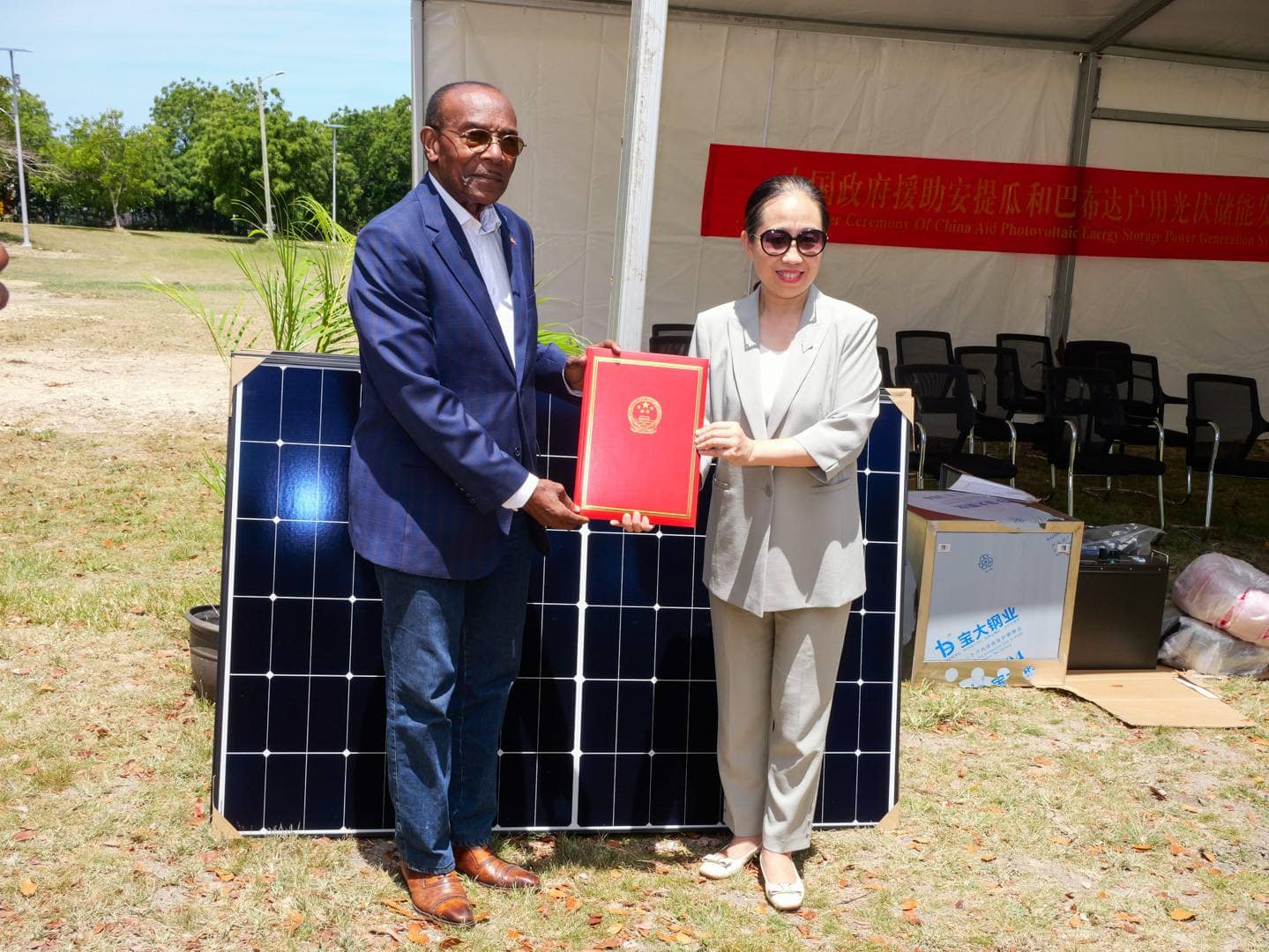
    A landmark handover ceremony marking the delivery of climate-friendly solar energy kits to benefit low-income and vulnerable households across Antigua and Barbuda was recently hosted by the nation’s Department of Environment, kicking off a new initiative aligned with the government’s long-term priorities. This program stands as a concrete manifestation of the Antigua and Barbuda government’s sustained pledge to advance inclusive sustainable development, boost national climate resilience, and elevate living standards for marginalized communities across the twin-island nation. Delivering the ceremony’s feature address, Sir Molwyn Joseph, Minister of Health, Wellness, Environment and Civil Service Affairs, underscored the critical role that scalable renewable energy solutions play in strengthening community-level preparedness for climate impacts and easing widespread energy insecurity across the country. Joseph explained that the rollout of these solar kits is more than a one-off donation: it represents a deliberate, foundational step toward embedding climate-smart technological solutions into the country’s core national social support infrastructure, ensuring long-term benefits for at-risk groups. Beyond the direct distribution of equipment, the initiative also includes a targeted technical training program designed to build local workforce capacity in the installation, routine maintenance, and long-term management of residential solar energy systems. This component is crafted to guarantee that the project remains sustainable and delivers maximum impact for generations to come, rather than relying on external expertise for ongoing upkeep. Representatives from the project’s implementing partner, China’s Hengtianyuan Lighting Group, also joined the formal event. Mr. Wang Baolong, the group’s representative, reaffirmed the company’s long-term commitment to supporting Antigua and Barbuda’s development goals by delivering high-quality, reliable, and sustainable energy solutions tailored to the nation’s unique needs. Also in attendance was Her Excellency Jiang Wei, Ambassador of the People’s Republic of China to Antigua and Barbuda, who highlighted the deep, enduring bilateral partnership that has grown between the two countries over decades. Ambassador Jiang emphasized that this generous donation is a reflection of China’s consistent, ongoing support for Antigua and Barbuda’s national climate adaptation priorities and its broader sustainable development agenda. The ceremony concluded with a formal moment of institutional agreement, as Ambassador Jiang and Minister Joseph signed the official Handover Certificate, formalizing the transfer of the full shipment of solar kits to the government and people of Antigua and Barbuda. Once deployed, the kits will deliver clean, consistent energy to households that have long struggled to access reliable grid electricity, directly improving daily living conditions for vulnerable families while also supporting the nation’s national carbon emissions reduction targets. In closing, the Antigua and Barbuda Ministry of Environment extended sincere gratitude to both the government and people of the People’s Republic of China and Hengtianyuan Lighting Group for their productive partnership and generous contribution to the initiative.

  • First autism awareness walk deemed a success

    First autism awareness walk deemed a success

    The small Caribbean nation of Saint Lucia has entered a new chapter in neurodiversity advocacy, hosting its inaugural community autism awareness walk in the town of Micoud on April 19. Event organizers have hailed the groundbreaking gathering as an unqualified “massive success”, marking a long-awaited step forward for autism acceptance and inclusion across the island.

    The walk brought together hundreds of attendees from all walks of life, uniting local residents, neurodiverse advocates, family members of autistic people, and public service representatives behind a shared mission of raising public understanding of autism. In a show of official government commitment to disability inclusion, Saint Lucia’s Minister for Persons with Disabilities Jeremy Norbert joined the procession to voice his support for the cause.

    The historic event was spearheaded by Police Constable WPC 772 Elien of the Micoud Police Station, developed through a collaborative partnership between the local police department and Island Voices for Autism, Saint Lucia’s leading community support group for autistic individuals and their families. Cross-sector public service collaboration was a core part of the walk’s success, with multiple local agencies stepping in to reinforce the event’s focus on holistic community well-being. Members of the Micoud Fire Service marched alongside other participants, while clinical staff from the Micoud Health Centre set up on-site testing stations offering free health screenings for attendees, including checks for blood sugar, blood pressure, and cholesterol levels.

    Adding an emotional, unifying soundtrack to the day was the event’s official anthem “Different Beats Same Heart”, which played repeatedly throughout the walk. The track was specially written by Geraldine Michel and Dania Joseph, two members of the Island Voices for Autism team, and its central message of shared community despite neurodiverse differences made it a perfect symbol for the day’s advocacy goals.

    To keep the event accessible to all community members, organizers offered completely free registration for all participants. Attendees left the gathering with complimentary healthy snacks and small commemorative tokens of appreciation, reinforcing the warm, welcoming, and inclusive atmosphere that defined the milestone event. For local autism advocates, the successful turnout and cross-community backing of the first walk has laid a strong foundation for future annual advocacy events, helping to build a more accepting and supportive environment for autistic Saint Lucians across the country.

  • Gas Leak Blaze Destroys Home of 19

    Gas Leak Blaze Destroys Home of 19

    A devastating accidental fire sparked by a disconnected gas line has completely destroyed a multi-person residence on Marina Drive in San Pedro Town, leaving 19 residents – nine of them children – displaced just hours after the blaze broke out on Tuesday evening.

    Local emergency response teams confirmed that the fire spread with extraordinary speed, and when first responders arrived shortly before 8 p.m., the elevated residential structure was already completely swallowed by raging flames. Preliminary investigation into the cause of the incident has painted a clear picture of how the disaster unfolded: 31-year-old housekeeper Naisy Chi was in the middle of frying an egg when a flexible fuel hose connected to an external gas tank unexpectedly slipped loose. Uncontrolled gas quickly ignited, catching a nearby rug on fire before the blaze extended to other parts of the structure in minutes.

    Firefighters, commanded by Fire Chief Kenneth Mortis, worked aggressively to bring the blaze under control and prevent it from spreading to neighboring properties. Beyond the efforts of official emergency teams, dramatic footage captured from the scene shows immediate community solidarity: local neighbors rushed to the site to assist, carrying buckets of water and deploying nearby garden hoses in a valiant attempt to slow the fire’s spread before professional crews arrived.

    Unfortunately, the battle to save the home was unsuccessful. The entire structure and every personal belonging inside were reduced to ash. Further compounding the family’s misfortune, authorities confirmed that the property held no insurance coverage to cover rebuilding or replacement costs. As of the latest update, officials have not released a confirmed estimate for the total monetary damage caused by the fire.

    In a stroke of good fortune amid the crisis, no injuries or fatalities have been reported connected to the blaze. The 19 displaced residents are now turning to the wider public for support, asking for donations of shelter, clothing, food and other essential supplies to help them rebuild their lives after the sudden loss.